Home Theatres: Resale Considerations & Usability
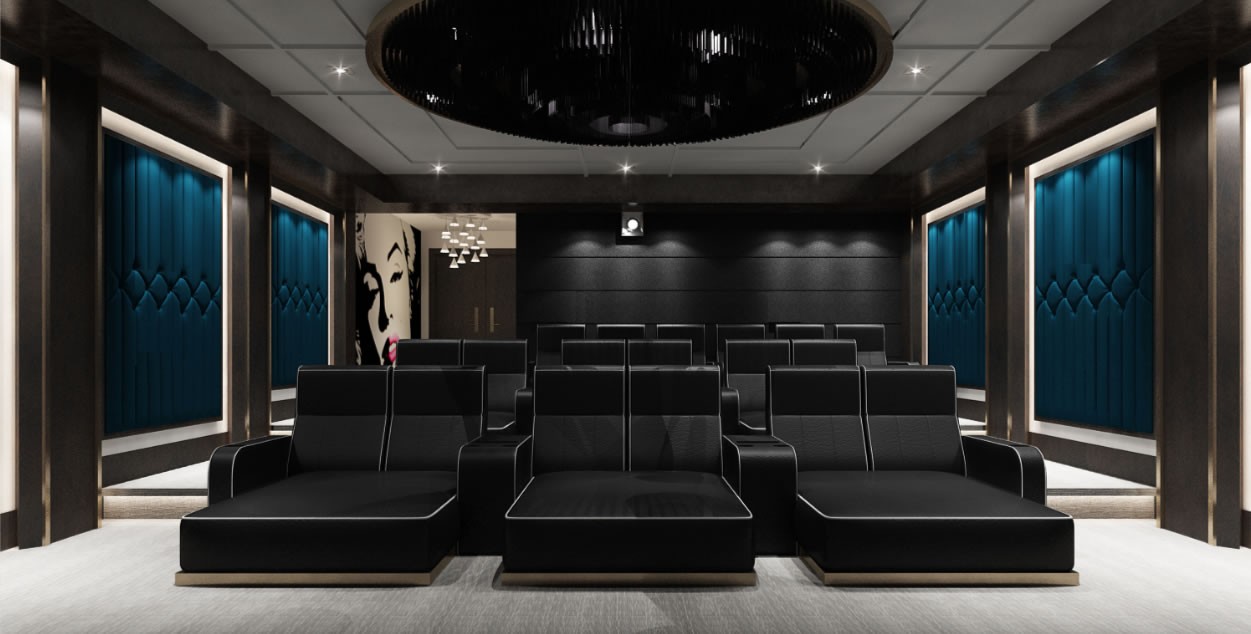
What a Home Theatre Actually Is (and Why Most of Them Fail)
Home theatres are one of the most misunderstood “features” in residential real estate.
Sellers think they’re value multipliers.
Buyers think they’re either amazing… or a nightmare they’ll have to rip out.
Most realtors quietly hope the buyer doesn’t ask too many questions.
The truth is brutal but simple:
A home theatre only adds value if it’s usable, adaptable, and reversible.
Anything else is just a dark room with wires.
Let’s start by defining what a home theatre actually is—and what it absolutely is not.
1. A Real Home Theatre vs a “Movie Room”
Not every room with a projector deserves to be called a home theatre.
A real home theatre has:
Purpose-built acoustic control
Intentional room proportions
Proper sound isolation
Thoughtful screen size-to-distance ratios
Electrical capacity planned for audio-visual load
Seating that doesn’t trap future owners into one lifestyle
A fake home theatre usually has:
One massive screen
One oversized couch
Black walls
Exposed wires
Zero sound isolation
No plan for resale
Key real estate rule:
If the room only works for one type of buyer, it’s a liability—not a feature.
2. Why Home Theatres Are Resale-Sensitive
Unlike kitchens or bathrooms, home theatres are highly personal.
What one owner calls “cinema quality,” another calls:
Too dark
Too loud
Too niche
Too expensive to maintain
Too permanent
This is why home theatres sit in a dangerous category of real estate features:
High cost
Narrow audience
Easy to get wrong
Hard to undo cheaply
Translation:
If it can’t convert back into a normal living space easily, resale suffers.
3. The Three Types of Home Theatres (and Only One Ages Well)
Type 1: Dedicated, Purpose-Built Theatre Rooms
These are the classic:
No windows
Tiered seating
Full acoustic treatment
Projector + surround sound
Pros:
Incredible experience
Serious buyers appreciate them
Can be a differentiator in higher-end homes
Cons:
Expensive
Hard to repurpose
Very taste-specific
Can scare off buyers with kids, work-from-home needs, or downsizing plans
Resale verdict:
⚠️ High risk unless the rest of the house already competes at a high level.
Type 2: Hybrid Media Rooms (Best for Resale)
These are:
Regular rooms that can function as theatres
Hidden wiring
Retractable screens
Neutral finishes
Convertible lighting
Pros:
Flexible
Easy to rebrand as family room / lounge / playroom
Appeals to the widest buyer pool
Cons:
Less “wow” factor
Requires smarter planning
Resale verdict:
✅ This is the sweet spot.
Type 3: Improvised “Basement Cinemas”
You know the type:
One wall painted black
Cheap projector
Couch against the wall
Echoes everywhere
Pros:
Cheap to install
Fun for the current owner
Cons:
Looks unfinished
Sounds bad
Often needs to be stripped out
Resale verdict:
❌ Neutral to negative. Buyers mentally deduct renovation costs.
4. Usability Always Beats Impressiveness
Here’s a rule that holds up in every market:
Buyers value options, not owner fantasies.
A home theatre that:
Only works at night
Only fits one seating layout
Only works with specific equipment
Requires blackout conditions
Has confusing controls
…will be underused and undervalued.
High-usability theatres:
Have natural light control, not total darkness
Use standard electrical layouts
Allow furniture flexibility
Don’t require an instruction manual
Witty truth:
If a room needs a tutorial, buyers will mentally delete it.
5. Sound Isolation: The Quiet Dealbreaker
This is where most home theatres quietly kill resale.
Poor sound isolation causes:
Noise bleeding into bedrooms
Bass vibration through floors
Complaints from family members
Reduced livability
And once buyers imagine:
Kids asleep upstairs
Zoom calls nearby
Neighbours complaining
…the “cool theatre” becomes a problem room.
Proper sound isolation includes:
Double-stud or staggered-stud walls
Resilient channels or isolation clips
Dense insulation (not foam panels)
Solid-core doors with seals
What doesn’t count:
Foam panels
Fabric wall treatments
“Soundproof” curtains
Egg cartons (yes, people still do this)
Important:
Acoustic treatment ≠ sound isolation.
Buyers who know the difference will spot shortcuts immediately.
6. Screen Size, Viewing Distance & Why Oversized Screens Hurt Value
Bigger is not better.
Oversized screens:
Force fixed seating positions
Limit room use
Cause eye fatigue
Make rooms feel smaller
Smart proportions:
Screen width ≈ 30–40° field of view
Viewing distance ≈ 1.2–1.6× screen width
Ceiling height must support sightlines without neck strain
When these aren’t respected:
The room feels uncomfortable
Buyers subconsciously reject it
The theatre becomes “dead space”
Real estate reality:
Comfort sells better than specs.
7. Lighting: Why Darkness Isn’t the Goal
A good home theatre doesn’t aim for darkness—it aims for control.
Resale-friendly lighting:
Dimmable recessed lights
Wall sconces on separate circuits
Cove lighting
No exposed bulbs
Red flags:
One master switch
Pitch-black rooms
No task lighting
No daylight option
Buyer psychology:
If a room feels unusable during the day, buyers assume it’s wasted square footage.
8. The Furniture Problem No One Talks About
Built-in tiered seating looks impressive—and destroys flexibility.
Tiered seating issues:
Fixed use
Hard to remove
Expensive to rebuild
Limits buyer imagination
Better alternatives:
Flat floors
Modular seating
Platform risers that can be removed
Space that fits standard furniture sizes
Rule:
If it can’t become a normal room in one weekend, resale risk increases.
9. When a Home Theatre Adds Real Value
A home theatre helps resale only when:
The house already supports that level of feature
The room is adaptable
The build quality is obvious
The equipment is secondary to the space itself
Buyers don’t want your speakers.
They want a room that can become whatever they need next.
Acoustics, Soundproofing & Structural Reality
What Actually Works, What’s Fake, and What Buyers Notice Instantly
This is where most home theatres quietly fail.
Not because the speakers are bad.
Not because the screen isn’t big enough.
But because sound behaves in ways homeowners don’t anticipate, and buyers feel it immediately—even if they can’t explain why.
Let’s clear up the biggest misconception first.
1. Acoustic Treatment ≠ Soundproofing (And Confusing Them Is Expensive)
These two terms are constantly misused, often interchangeably, and almost always incorrectly.
Acoustic treatment:
Improves sound inside the room
Controls echo, reverb, clarity
Makes dialogue intelligible
Makes explosions less muddy
Soundproofing:
Stops sound from leaving the room
Protects the rest of the house
Prevents bass vibration travelling through structure
Most home theatres only do the first.
Buyers expect both.
Why This Matters for Resale
A buyer can tolerate:
Average speakers
Older equipment
A projector they’ll replace
They cannot tolerate:
Bass rattling bedrooms
Dialogue bleeding into offices
Floors vibrating during movies
If the sound travels, the theatre becomes a liability.
2. What Real Soundproofing Actually Requires (No, Foam Isn’t It)
True soundproofing is structural.
It is not décor.
The physics problem:
Sound travels through:
Air
Walls
Floors
Framing
Ductwork
Stopping it requires mass, separation, and damping.
Proper soundproofing elements buyers respect:
1. Wall construction
Double-stud walls or
Staggered-stud framing
Minimum: resilient channels or isolation clips
If you see:
Single stud walls
No decoupling
Standard drywall only
You’re not soundproofed. You’re decorated.
2. Drywall & mass
Double drywall layers
Damping compounds between layers
Heavier materials outperform “soft” materials
Important:
Soft foam absorbs sound reflections—it does not block sound transmission.
3. Ceiling isolation
This is where most theatres fail completely.
Without:
Isolation clips
Separate ceiling framing
Dense insulation above
Bass will travel straight into bedrooms.
Buyers with kids or upstairs bedrooms will instantly clock this—even subconsciously.
4. Doors (the weakest link)
A hollow-core door destroys sound isolation.
Proper theatre doors:
Solid-core
Sealed frames
Door sweeps
Compression seals
Glass doors?
Only acceptable if they’re:
Laminated
Double-pane
Fully sealed
Otherwise, they’re just noise leaks with hinges.
3. HVAC: The Silent Dealbreaker
If there’s one thing sellers forget completely, it’s this:
Home theatres generate heat. A lot of it.
Between:
Projectors
Amplifiers
Receivers
Bodies
Lighting
A theatre without proper ventilation becomes uncomfortable fast.
Bad HVAC design looks like:
One supply vent
No return vent
Loud airflow noise
Temperature swings
Good HVAC design includes:
Separate supply and return
Oversized ducts for low-noise airflow
Independent zoning
Silent diffusers
Buyer psychology:
If the room feels stuffy, buyers imagine it unused.
4. Acoustics Inside the Room: Clarity Beats Loudness
This is where acoustic treatment does matter—but only if done correctly.
What good acoustics do:
Make dialogue clear
Reduce listener fatigue
Improve soundstage
Reduce volume needed
What bad acoustics do:
Cause echo
Muddy bass
Harsh highs
Listener exhaustion
Proper acoustic treatment includes:
Bass traps in corners
Absorption panels at reflection points
Diffusion on rear walls
Balanced coverage (not overkill)
Red flags buyers notice:
Foam tiles everywhere
Random panel placement
Overly “dead” rooms
Cheap materials sagging or peeling
Design truth:
If the room looks like a recording booth, buyers get uncomfortable.
5. Room Shape: The Thing You Can’t Fix Later
Equipment can be replaced.
Room geometry cannot.
Ideal proportions:
Rectangular rooms
No perfect cubes
Balanced width-to-length ratio
Adequate ceiling height
Problematic shapes:
Square rooms (standing waves)
Low ceilings
L-shaped spaces
Sloped ceilings without acoustic planning
When geometry is wrong:
Bass piles up
Certain seats sound awful
Buyers sense “something’s off”
They may not know why—but they won’t love the room.
6. Floor Construction & Vibration
This matters more than people realize.
Concrete slabs:
Excellent for theatres
Minimal vibration
Strong resale confidence
Wood-framed floors:
Require isolation
Can transmit bass through structure
Often need added mass or floating floors
If bass shakes:
Furniture
Railings
Light fixtures
Buyers will imagine long-term annoyance.
7. Electrical Noise & Signal Quality
Messy wiring kills perceived quality.
What buyers like:
Dedicated circuits
Clean panels
Organized racks
Concealed cabling
What scares buyers:
Extension cords
Daisy-chained power bars
Overloaded outlets
Mystery switches
Real estate reality:
If the electrical setup looks confusing, buyers assume future problems.
8. The Biggest Acoustic Mistake Sellers Make
They build for volume, not clarity.
Loudness impresses during demos.
Clarity impresses during ownership.
Buyers don’t want:
Shaking walls
Earthquake bass
Neighbour complaints
They want:
Clear dialogue
Comfortable listening
Control
9. Resale Truth: Buyers Feel Sound Before They Think About It
You can hide:
Old projectors
Outdated receivers
Average speakers
You cannot hide:
Vibrations
Echo
Heat
Noise bleed
And once a buyer feels those problems, the room becomes a deduction—not a feature.
Equipment Lifespan, Technology Obsolescence & Why Hardware Rarely Adds Value
This is the part sellers hate hearing.
You can spend $100,000 on audio-visual equipment and still add exactly $0 to resale value.
Not because the gear is bad.
Not because buyers don’t like movies.
But because technology ages faster than real estate.
Let’s break this down honestly.
1. Why Buyers Don’t Care About Your Gear
Buyers walk into a home theatre and think one of three things:
“Cool… I’ll replace this.”
“I don’t understand any of this.”
“How much will it cost to remove?”
Very rarely:
“Wow, I’m paying extra for these speakers.”
Why?
Audio formats change
Video standards evolve
Streaming platforms update
Personal preferences differ wildly
Your perfect system is someone else’s future renovation.
2. Equipment Lifespan vs Home Lifespan
This mismatch is where expectations fall apart.
Typical equipment lifespan:
Projectors: 5–8 years
TVs: 7–10 years
Receivers/processors: 5–7 years
Speakers: 15–25 years (sometimes longer)
Control systems: 3–6 years
Home lifespan:
50–100+ years
Buyers know this—even if subconsciously.
They don’t value depreciating tech the way they value:
Structural prep
Sound isolation
Electrical capacity
Layout flexibility
3. Projectors vs Large TVs: The Resale Reality
Projectors
Pros:
True cinematic feel
Large screen sizes
Clean aesthetic when screen retracts
Cons:
Bulb replacement costs
Heat output
Noise
Ambient light sensitivity
Rapid resolution obsolescence
Buyers often think:
“I’ll replace this anyway.”
Large-format TVs
Pros:
Simpler
Brighter
Lower maintenance
Easier upgrades
Cons:
Fixed size
Less cinematic feel
Dominates wall visually
Resale verdict:
Neither adds meaningful value on its own.
What matters is whether the room supports either option cleanly.
4. Audio Systems: Where Money Disappears Fastest
High-end speakers are impressive—until resale.
The problem:
Personal taste varies
Brands age
Formats change
Buyers fear setup complexity
A $40,000 speaker system to you looks like:
A dust collector
A negotiation lever
A removal cost
Hard truth:
Buyers assume the equipment is included only because removing it is annoying.
5. Wiring: The Only “Equipment” That Actually Matters
Here’s where value quietly hides.
High-value infrastructure:
Conduit in walls
Pull strings
Multiple HDMI runs
Ethernet everywhere
Speaker wire to key positions
Low-value infrastructure:
Proprietary cables
Outdated connectors
Hard-coded layouts
Buyers love flexibility.
They hate being locked into someone else’s system.
6. Control Systems: The Fastest Way to Date a Theatre
Touchscreens.
Custom remotes.
Automation apps.
They look futuristic… for about five minutes.
Common buyer reactions:
“What happens if this breaks?”
“Can I use my phone instead?”
“Who services this?”
If controls require:
Manuals
Specialists
Subscriptions
Resale confidence drops.
7. Built-In Equipment Racks: Convenience vs Commitment
Built-in racks:
Pros
Clean look
Organized
Cons
Fixed layouts
Poor ventilation if done wrong
Hard to update
Remote racks (closet-based):
Pros
Easier upgrades
Noise reduction
Cleaner theatre room
Resale verdict:
Remote racks age better—especially when paired with conduit.
8. Heat, Noise & Maintenance: Buyer Anxiety Factors
Buyers mentally subtract value when they see:
Overheating equipment
Loud fans
Tight cabinets
No ventilation
They imagine:
Failures
Service calls
Replacement costs
Even if everything works now.
9. The One Rule That Protects Resale Value
Design the room, not the system.
Rooms last.
Systems change.
If the room:
Is acoustically solid
Is well-isolated
Has proper power
Has ventilation
Is flexible
Then buyers can imagine their system—not yours.
10. When Equipment Actually Helps Resale (Rare Cases)
There are exceptions—but they’re narrow.
Equipment may help if:
It’s simple
It’s modern
It’s easy to replace
It’s clearly optional
Example:
Flush-mounted TV
Basic surround wiring
Clean, neutral speakers
Not:
20-speaker arrays
Proprietary control systems
Brand-centric showcases
11. Seller Mistakes That Kill Negotiations
Listing equipment costs in marketing
Over-explaining specs during showings
Treating tech like a permanent upgrade
Refusing to remove systems buyers don’t want
Buyer translation:
“This owner overbuilt emotionally, not strategically.”
12. Smart Real Estate Framing
The best listings say:
“Flexible media room with integrated wiring and sound isolation.”
Not:
“$75,000 Dolby Atmos system with custom calibration.”
One sounds adaptable.
The other sounds like a problem.
Costs, ROI & When a Home Theatre Helps or Hurts Value
This is the part most sellers skip and most buyers care about the most.
A home theatre is not automatically a value-add.
In many cases, it’s a neutral feature.
In some cases, it’s a negative.
The difference comes down to context, execution, and reversibility.
1. The Cost Spectrum (What People Actually Spend)
Let’s get realistic about numbers.
Entry-level “theatre-style” room
(usually resale-neutral)
Basic wiring
TV or small projector
Minimal acoustic treatment
Standard drywall
No sound isolation
Cost: $5,000–$15,000
Resale impact: Neutral
Mid-range hybrid media room
(best resale outcome)
Proper wiring and conduit
Acoustic treatment
Flexible lighting
Decent HVAC planning
Convertible layout
Cost: $20,000–$50,000
Resale impact: Neutral to mildly positive
Dedicated purpose-built theatre
(high risk, narrow upside)
Sound isolation construction
Double drywall, isolation clips
Custom HVAC
Tiered seating
High-end equipment
Cost: $60,000–$150,000+
Resale impact: Highly market-dependent
Key insight:
Cost does not correlate with resale value.
2. Why ROI Is Usually Limited
Unlike kitchens or bathrooms, home theatres:
Don’t increase functional square footage
Don’t improve daily livability for most buyers
Serve a niche lifestyle
Most buyers mentally file them under:
“Nice, but optional.”
Optional features rarely command strong premiums.
3. When a Home Theatre Helps Value
A home theatre can help when:
1. The house already competes at that level
Large square footage
High-end finishes throughout
Multiple entertainment spaces
Strong overall architecture
In these homes, a theatre feels appropriate, not excessive.
2. The room is adaptable
Flat floors
Neutral finishes
Hidden wiring
No permanent seating
Normal ceiling heights
Buyers can reimagine the room without demolition.
3. The execution is obviously professional
Buyers may not know how it was built, but they feel:
Comfort
Quiet
Control
Quality
This creates confidence.
4. When a Home Theatre Hurts Value
This is where sellers get blindsided.
1. When it replaces a high-demand room
Turning:
A main-floor living room
A primary bedroom
A home office
…into a dark theatre often backfires.
Buyers immediately think:
“I have to undo this.”
2. When it’s irreversible without cost
Red flags:
Tiered concrete seating
Permanent stage structures
Removed windows
Extreme dark finishes
If reversal requires:
Structural work
Significant expense
Buyers subtract value mentally.
3. When sound travels
Noise complaints are one of the fastest ways to kill enthusiasm.
If buyers hear:
Bass upstairs
Echo in hallways
Vibration through floors
They don’t care how expensive the system was.
5. The “Opportunity Cost” Buyers Calculate
Buyers don’t just look at what exists.
They look at what could exist instead.
A theatre competes with:
Guest suite
Home office
Gym
Playroom
Rental potential
Aging-in-place layouts
If the theatre blocks flexibility, it loses.
6. Market-Specific Reality
High-density urban markets
Space flexibility is king
Dedicated theatres rarely add value
Media rooms perform better
Suburban family markets
Hybrid spaces do best
Sound isolation matters
Nighttime usability is scrutinized
High-end or estate properties
Dedicated theatres can work
Only if execution matches the house
Buyers expect professional-grade builds
7. The Myth of “But It Cost So Much”
Buyers don’t pay for sunk costs.
They pay for:
Function
Comfort
Flexibility
Confidence
Not invoices.
8. Seller Strategy: How to Frame a Theatre Correctly
Good framing:
“Sound-isolated media room with flexible layout and integrated wiring.”
Bad framing:
“Custom-built theatre with $100,000 Dolby Atmos system.”
The first invites imagination.
The second invites negotiation.
9. Buyer Strategy: How to Evaluate One Quickly
Ask yourself:
Can I use this room differently?
Does sound stay contained?
Is ventilation adequate?
Does the layout feel comfortable?
How hard would it be to undo?
If the answer to undoing is “expensive,” be cautious.
When to Walk Away
Walk away—or discount aggressively—if:
The room is too specialized
Sound isolation is poor
HVAC is inadequate
The space replaces something more valuable
The seller insists the tech adds value
These theatres don’t age well.
Inspection Checklist, Buyer Questions & the Final Verdict
This is where theory turns into leverage.
You don’t need to be an audio engineer to evaluate a home theatre.
You need to know what actually matters, what’s cosmetic, and what could quietly cost you money after closing.
This section is designed to be practical, blunt, and usable during real showings.
The Home Theatre Inspection Checklist
(Use this mentally—or literally—when walking the room)
A. Room & Layout
Is the room rectangular and proportional?
Does ceiling height feel comfortable when seated?
Can the furniture layout change?
Are sightlines natural, not forced?
Red flag: Seating only works in one exact position.
B. Sound Isolation
Close the door and listen outside the room
Is bass audible elsewhere?
Do floors or railings vibrate?
Ask yourself:
Would I be comfortable watching something loud here at night?
If not, resale suffers.
C. Walls, Ceilings & Structure
Are walls unusually thick?
Is there any visible decoupling (double walls, offset framing)?
Is ceiling construction different from the rest of the house?
You’re looking for signs of intentional construction, not decoration.
D. Doors & Openings
Solid-core door?
Tight seals?
Light bleed around the frame?
A hollow door = sound leakage.
E. HVAC & Comfort
Is there a dedicated supply and return?
Does airflow sound loud?
Does the room feel stuffy after a few minutes?
Heat problems show up fast in theatres.
F. Electrical & Wiring
Dedicated circuits?
Clean outlets?
No extension cords or power bars?
Conduit visible or documented?
Messy wiring = future headaches.
G. Lighting Control
Multiple lighting zones?
Dimming?
Usable during the day?
If it’s only comfortable in total darkness, usability drops.
H. Equipment Placement
Is equipment overheating?
Are cabinets ventilated?
Is noise noticeable?
If fans are audible during quiet scenes, buyers notice.
Questions to Ask the Seller (or Their Realtor)
These questions sound intelligent without being technical.
Ask:
“Was the room built with sound isolation, or mainly acoustic treatment?”
“Are there dedicated electrical circuits for the theatre?”
“Is HVAC zoned separately for this room?”
“Can the layout be easily converted back to a standard room?”
“Are there records or plans from the build?”
If They Don’t Know (Very Common)
Say nothing dramatic.
Just note it.
Unknowns in specialized rooms translate into:
Lower confidence
Higher perceived risk
Negotiation leverage
Silence here is information.
What NOT to Ask (It Weakens Your Position)
Avoid:
“How much did this cost?”
“What brand are the speakers?”
“Is this Dolby Atmos certified?”
Those questions frame the room emotionally, not financially.
You’re buying real estate—not a showroom.
How Buyers Should Mentally Price a Home Theatre
Use this framework:
Value is in:
Structural prep
Isolation
Comfort
Flexibility
Value is NOT in:
Equipment cost
Brand names
Seller enthusiasm
If the room:
Can adapt easily
Feels comfortable
Doesn’t disturb the house
Treat it as a bonus.
If not, treat it as space to be corrected.
How Sellers Should Prepare for Resale
If you’re selling a home with a theatre:
Do this:
Neutralize finishes
Remove overly personal décor
Simplify controls
Emphasize flexibility
Provide basic documentation
Do NOT:
Over-explain specs
Insist on equipment value
Refuse buyer modifications
Treat the room as untouchable
Buyers want ownership, not inheritance.
When to Walk Away (No Negotiation)
Walk away—or discount aggressively—if:
Sound bleeds badly
HVAC is inadequate
The room replaced a critical space
The build is irreversible
The seller insists it’s a major value-add
These theatres age poorly and resell worse.
The Final Verdict
A home theatre is never automatically good or bad.
It’s only good if:
It respects the house
It respects future owners
It respects flexibility
The best home theatres don’t scream:
“This is a theatre!”
They quietly say:
“This room can become whatever you need.”
That’s what holds value.