Outdoor Pools: Drainage, Winterization & Longevity
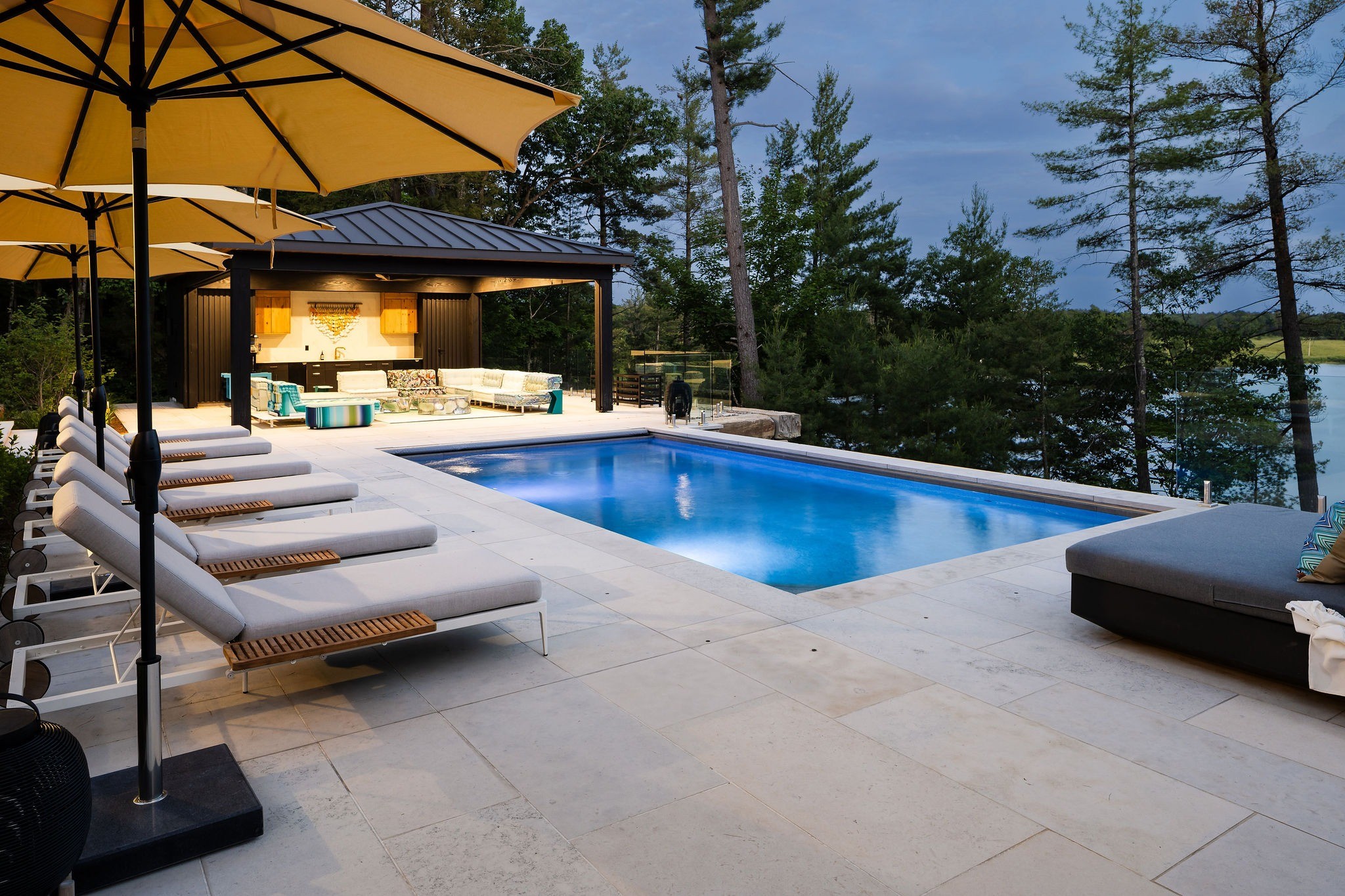
Nothing screams “dream backyard” like an outdoor pool. Crystal-clear water. Perfect landscaping. The faint scent of chlorine on a summer evening. But before you jump in, understand this: pools are living, expensive, structural ecosystems masquerading as luxury features.
Many buyers get seduced by sparkling water and ignore the things that actually determine whether a pool is an asset or a multi-decade liability. Drainage, winterization, and long-term maintenance are where most pools quietly bleed value. Skip these, and that Instagram-ready pool becomes a money pit, structural hazard, and headache factory.
We’re going deep: foundations, drainage, structural types, winter strategies, environmental effects, and lifecycle costs.
1. Pool Types: Concrete, Vinyl, Fiberglass — Know What You’re Buying
The type of pool determines your maintenance, lifespan, and structural risk.
Concrete Pools (Gunite or Shotcrete)
Pros: Fully customizable shape and depth, highly durable, long lifespan
Cons: Expensive, porous (requires resurfacing), prone to cracking if subgrade or drainage is poor
Concrete pools are highly dependent on structural prep. One inch of poor soil compaction can lead to uneven walls, floor cracking, and tile failure. Reinforcement (rebar or post-tension cables in premium builds) can prevent cracks—but only if installed correctly.
Vinyl Pools
Pros: Lower initial cost, smooth surface, flexible
Cons: Liners wear out (~7–15 years), sensitive to punctures, require precise wall support
Vinyl is forgiving to minor ground movement, but if the frame shifts or drainage fails, the liner will tear or wrinkle, becoming expensive to replace.
Fiberglass Pools
Pros: Pre-fabricated, smooth, quick installation, low maintenance
Cons: Expensive shell, transportation limits size and shape, requires perfect subgrade
Fiberglass pools are strongest when installed on perfectly graded, well-draining soil. Any settlement can lift corners, stress fiberglass, or cause cracking.
Key Insight: The pool type is mostly cosmetic and maintenance-driven; structural longevity always comes down to soil, drainage, and installation quality, not the shell material.
2. Subgrade & Structural Integrity
A pool isn’t a bathtub you drop in the ground. It’s a miniature engineering project.
Soil Preparation
Remove topsoil and organic matter
Import engineered fill if native soil is weak
Proof-roll and compact in lifts
Use geotextile separation if soil is clay-heavy or expansive
Expansive soils—common in parts of BC—can heave with water and shrink during dry seasons. Without proper prep, your pool shell is fighting the Earth itself.
Reinforcement
Concrete pools: rebar grids or post-tension cables in high-end builds
Walls must be supported against lateral soil pressure
Fiberglass: thick, rigid shell supported by uniform bedding sand/gravel
Even minor mistakes in reinforcement or bedding will manifest as cracks, tile failure, or warped shell.
3. Drainage: Where Pools Often Die Slowly
Pools are deceptively dependent on water management. Water outside the pool is just as dangerous as water inside.
Surface Drainage
Surrounding deck must slope 1–2% away from the pool
Prevent water from pooling near coping, steps, or mechanical rooms
Subsurface Drainage
Drainage pipes or French drains beneath the deck prevent water from saturating soil under the pool
Critical in high-water-table areas, heavy rainfall regions, or clay soils
Why Poor Drainage Kills Pools
Hydrostatic pressure pushes water into or under pool shells
Walls can bow, tiles crack, plaster fails
Basement pools or ones near foundations can compromise nearby structures
Pro Tip: If you see a pool in a low spot with standing water after rain, ask for soil reports and drainage diagrams. If none exist, factor $20–50k+ to fix subsurface issues.
4. Winterization: Don’t Let Frost Ruin Years of Investment
Winter is where a pool’s weaknesses show, especially in freeze–thaw climates like much of Canada.
Key Winterization Steps
Drain partially — some water must remain to maintain pressure balance
Protect plumbing — blow out lines, use antifreeze in vulnerable systems
Cover the pool — tight, secure covers prevent debris and ice damage
Check water chemistry — prevents corrosion, scaling, and algae over winter
Common Mistakes
Leaving water at the wrong level, stressing walls
Not securing covers; ice and snow add weight
Skipping chemical balancing, leading to staining or equipment corrosion
Tip: Even the fanciest pool is at risk if winter prep is DIY and rushed. Professional winterization is expensive but prevents catastrophic repairs.
5. Decking & Coping: Aesthetic or Structural? Both.
Decking is more than style; it protects walls, prevents tripping hazards, and helps with drainage.
Materials: Concrete, stone, pavers, wood
Slope: Must direct water away from pool and house
Expansion gaps: Avoid cracked decks; improper gaps lead to water infiltration
Coping: Properly sealed coping prevents edge water penetration
Even minor deck errors create chronic moisture issues, which erode pool walls and affect safety.
6. Equipment Rooms & Mechanical Systems
Pumps, filters, heaters, and automation systems must be in accessible, ventilated, and flood-protected locations
Equipment should be on a slightly raised pad to prevent water damage
Plumbing must accommodate winterization without disconnecting the entire system
Neglecting mechanical planning leads to frequent service visits, high replacement costs, and downtime.
7. Environmental & Climate Considerations
Rain-heavy regions: Subsurface drainage is critical; winterization must account for saturated soil
Freeze–thaw climates: Insulate plumbing, cover pools, prevent hydrostatic pressure build-up
Hot, dry climates: Evaporation increases chemical demand; surrounding landscaping must be irrigation-aware
Every pool is a micro-environment. Ignore local climate, and your “dream backyard” becomes a seasonal repair nightmare.
8. Inspection Checklist (Actionable, No-BS)
Structural & Shell
Visible cracks in walls or floor
Evidence of previous repairs
Shell type & reinforcement confirmation
Deck & Drainage
Deck slope & expansion gaps
Subsurface drainage systems
Pool water level vs surrounding grade
Equipment
Pump, filter, heater, automation age & maintenance
Winterization plan and equipment isolation
Environmental
Sun exposure & wind impact on debris
Freeze–thaw exposure
Surrounding landscaping affecting runoff
Miscellaneous
Safety features: fencing, covers, alarms
Accessibility & convenience for maintenance
9. Cost Considerations: Repair vs Rebuild
Minor resurfacing & deck repair: $5k–$15k
Mechanical upgrades: $10k–$25k
Structural repair (walls, shell reinforcement): $25k–$60k
Full rebuild (decking, shell, equipment, filtration, landscaping): $80k–$150k+
Many buyers underestimate costs by a factor of 3–5x if drainage, subgrade, or winterization has been ignored.
10. When to Walk Away
Visible cracks or shifting walls without documentation
Drainage unclear or visibly poor
Winterization consistently ignored
Equipment at end-of-life or unsafe
Surrounding soil unstable, expansive, or saturated
A pool isn’t just water; it’s an engineered system. If any of these factors are unknown or mismanaged, the financial and structural risk is enormous.
Surface & Finish Materials — How Plaster, Pebble, and Tile Affect Longevity and Maintenance
If drainage, structure, and winterization form the skeleton of a pool, the surface is its skin. It’s what you see, feel, and touch daily—but don’t be fooled: the wrong surface can accelerate deterioration, hide structural problems, or dramatically increase maintenance costs.
We’re going to dissect the three main pool surfaces: plaster, pebble (aggregate), and tile, highlighting pros, cons, maintenance expectations, and the subtle signs of hidden issues.
1. Plaster: The Classic Choice That Ages Fast
Plaster, usually a mixture of cement, marble dust, and additives, is the traditional pool finish. It’s smooth, affordable, and versatile—but it’s also the most temperamental surface if installation or maintenance isn’t perfect.
Pros:
Affordable: $4–8 per sq. ft. installed
Smooth texture, pleasant underfoot
Can be tinted or customized with color additives
Cons:
Lifespan: 7–12 years before resurfacing
Porous: absorbs water if cracks or micro-fissures form
Stains easily from metals, algae, or chemicals
Installation Pitfalls:
Applied too thin: leads to rapid etching and pitting
Cured improperly: plaster cracks or delaminates
High pH or improper chemical balance in the water: accelerates erosion
Inspection Tip: Look for tiny white “chalky” areas or sandpaper-like texture—these are early signs plaster is wearing down and may require resurfacing sooner than advertised.
2. Pebble (Aggregate) Finishes: Durable, Textured, but Not Invisible
Pebble or aggregate surfaces embed small stones into plaster for a textured, long-lasting finish. They’re modern, resilient, and visually striking, but not maintenance-free.
Pros:
Longer lifespan: 12–20 years
Resists chemicals better than plaster
Textured finish reduces slipperiness
Cons:
Rougher surface: can abrade feet if stones are exposed
More expensive: $8–15 per sq. ft. installed
Installation-sensitive: poor embedding can lead to loose stones or uneven texture
Installation Considerations:
Surface must be perfectly smooth before pebbles are applied
Chemical balance during curing is critical to prevent micro-cracks
Proper bonding to the shell is non-negotiable
Inspection Tip: Run your hand across steps, benches, and shallow areas—if stones feel loose or surface feels uneven, it’s an early warning.
3. Tile: Aesthetic Luxury With High Cost and Fragility
Tile is often chosen for decorative purposes: accents, steps, borders, waterlines. But full-tiled pools exist, and while visually spectacular, they introduce unique risks.
Pros:
Lifespan: 15–30+ years if installed properly
Highly customizable patterns, colors, and textures
Very smooth, non-porous, easy to clean
Cons:
High cost: $20–40 per sq. ft. for full installation
Grout lines are susceptible to cracking, staining, and algae
Poor installation leads to loose or chipped tiles
Structural Dependencies:
Tile surfaces reveal cracks faster than plaster—tiles lift or grout pops when the shell moves
Substrate must be perfectly level and reinforced to prevent cracking
Sensitive to freeze–thaw cycles—without proper winterization, tiles crack and detach
Inspection Tip: Tap tiles lightly with a coin—hollow sounds indicate delamination. Check grout lines for cracks or missing material.
4. Color and UV Considerations
Regardless of material, color and UV exposure affect longevity:
Light colors: Reflect sunlight, reduce heat absorption, less visible fading, but stains show more easily
Dark colors: Retain heat, may accelerate chemical degradation, but hide minor stains and debris
UV-resistant coatings: Can extend surface lifespan by 2–5 years
5. How Surfaces Interact With Structural Issues
Surfaces don’t just age—they signal the health of the underlying pool shell:
Plaster cracking: often mirrors minor shell movement or subgrade shifts
Pebble delamination: can indicate poor bonding or freeze-thaw stress
Tile grout separation: usually means structural stress or hydrostatic pressure issues
Key Insight: A perfectly smooth, intact surface does not guarantee a sound shell; conversely, minor surface wear doesn’t always mean catastrophic structural failure. Look for patterns, not just individual flaws.
6. Maintenance Expectations: The Real Cost
Even the most robust finish requires ongoing care:
Surface | Typical Lifespan | Resurfacing Frequency | Maintenance Notes |
|---|---|---|---|
Plaster | 7–12 years | Every 7–12 years | Acid washing, monitoring pH, minor cracks patched annually |
Pebble | 12–20 years | Every 12–15 years | Regular brushing, chemical balance, occasional spot repairs |
Tile | 15–30+ years | Grout repair 5–10 years | Deep cleaning, tile inspection, grout sealing |
Pro Tip: Ask for resurfacing history, last chemical balancing, and any prior repairs. A surface with repeated patches may indicate chronic underlying issues.
7. Inspection Checklist for Pool Surfaces
Visual cracks, chips, or pitting
Texture consistency (smooth for plaster, evenly embedded for pebble)
Tile adhesion (hollow tap, missing grout, lifted edges)
Discoloration patterns (may indicate water chemistry problems)
Evidence of prior patching (especially on plaster)
Waterline condition (mineral deposits, algae growth, efflorescence)
8. Surface Choice vs Climate
Freeze–thaw regions: Pebble or tile with reinforced shell is safer than plaster
Hot, sunny regions: Lighter plaster or pebble surfaces reduce heat absorption and water evaporation
Humid regions: Tile or pebble may resist algae and chemical staining better than plaster
Environmental alignment is critical. Wrong surface in the wrong climate accelerates deterioration.
9. Cost Analysis: Surface Lifespan vs Replacement
Surface | Resurfacing Cost | Typical Replacement Cycle |
|---|---|---|
Plaster | $5k–$15k | Every 7–12 years |
Pebble | $12k–$25k | Every 12–20 years |
Tile | $25k–$60k | Grout maintenance every 5–10 years, full re-tile rarely (<30 years) |
Insight: Lifetime cost matters more than initial price. A cheap plaster pool resurfaced 3–4 times in 30 years may exceed a pebble or tile pool’s total cost.
Surface finishes are more than aesthetics. They are diagnostic tools, maintenance predictors, and functional assets.
A pool with a stunning tile finish over a poorly reinforced shell is a ticking time bomb. A slightly worn plaster pool with proper drainage, winterization, and shell reinforcement may last decades with minimal issues.
Rule of thumb: Surface matters for comfort, play, and beauty—but structural integrity, drainage, and environmental planning always come first. Surfaces reveal problems and hint at future expenses—they do not prevent them.
Winterization & Seasonal Management — Freeze, Covers, Chemicals, and Preventing Catastrophic Damage
Owning an outdoor pool is not just about summer swims and Instagram posts—it’s about surviving the offseason. In climates with cold winters or heavy rainfall, winterization is the difference between a pool that lasts decades and one that becomes a money pit.
Many buyers underestimate winterization. They assume draining the pool and throwing a tarp over it is enough. Spoiler: it isn’t. Poor winterization is the silent killer of pools, especially concrete or tile pools.
1. Why Winterization Matters
Winter exposes pools to multiple threats:
Freeze–thaw cycles – Water expands when it freezes, exerting up to 1,700 pounds per square inch against pool walls and plumbing.
Water infiltration – Rain and snow can seep into cracks, joints, and subgrade, creating hydrostatic pressure that lifts or cracks the pool shell.
Chemical imbalance – Stagnant water without proper chemical treatment can corrode metals, stain surfaces, or foster algae growth.
Debris accumulation – Leaves, dirt, and twigs trap moisture and promote staining or surface deterioration.
A properly winterized pool is structurally safe, chemically balanced, and easy to reopen in spring.
2. Steps to Winterize a Pool
Step 1: Drain & Balance Water
Partially drain water to just below skimmer and return line level (for concrete pools).
Adjust pH, alkalinity, and calcium hardness to prevent corrosion or scaling during cold months.
Add winter chemicals: algaecide, chlorine stabilizer, and pool shock.
Pro Tip: Never fully drain a concrete pool in cold climates—it may lift due to hydrostatic pressure from groundwater.
Step 2: Protect Plumbing
Blow out all water lines with compressed air or pump antifreeze into low points.
Shut off pumps, filters, and heaters.
Drain heaters and inline equipment.
Failing to winterize plumbing can lead to cracked pipes, broken filters, and catastrophic equipment failure in spring.
Step 3: Cover the Pool
Use a heavy-duty, tensioned pool cover
Ensure the cover is securely anchored and slope-drained so water and snow don’t pool
Debris-catching covers prevent leaves and organic matter from contaminating water
Cheap or loose covers are worse than none, as water accumulates, creating weight and freezing hazards.
Step 4: Deck & Surrounding Area
Clean decking to prevent stains
Remove ladders, slides, and removable equipment
Ensure deck drainage is clear to prevent standing water near pool walls
Standing water around the pool in winter transmits hydrostatic pressure to the pool walls and can accelerate plaster delamination or tile popping.
Step 5: Equipment & Storage
Remove pumps, filters, heaters, and store in dry, heated space if possible
Inspect hoses, valves, and electrical connections for wear
Lubricate moving parts to prevent corrosion
Insider Tip: Many pools fail due to neglected pumps or heaters during winter, not the pool shell itself.
3. Seasonal Chemical Management
Pools are chemical ecosystems. Winter is a dormant period, but chemistry still matters:
Stabilize chlorine to prevent algae blooms
Maintain proper pH and alkalinity to protect metal fixtures
Monitor calcium hardness to prevent plaster etching or scaling
Shock pool before cover removal to kill lingering bacteria
Neglecting chemistry can mean a weeks-long cleanup nightmare in spring, including acid washing plaster or replacing tiles.
4. Special Considerations by Climate
Cold, Freeze-Prone Regions
Hydrostatic relief valves may be necessary in concrete pools
Subsurface drainage is critical to prevent wall lifting
Cover weight and tension must withstand snow accumulation
Rain-Heavy or Humid Regions
Maintain clean gutters and deck drainage
Avoid stagnant water on covers
Inspect for algae on exposed walls or coping
Hot, Dry Regions
Evaporation is a bigger concern than freezing
Cover prevents chemical loss and debris accumulation
UV degradation can damage vinyl covers; select UV-resistant materials
5. Common Winterization Mistakes
Draining pools fully in freeze-prone climates
Skipping plumbing blowouts or antifreeze application
Using cheap or ill-fitting covers
Neglecting chemical balance before cover installation
Forgetting to check perimeter drainage and deck runoff
Even minor oversights create structural, chemical, or cosmetic damage that compounds over years.
6. Inspection Checklist: Winterization Preparedness
Cover type, condition, and secure anchoring
Evidence of previous freeze–thaw stress (cracks in shell, coping separation)
Plumbing lines and equipment winterized properly
Drainage around the pool: no standing water or clogged channels
Chemical balance maintained before winter
Evidence of professional winterization vs DIY
7. Cost Considerations
Winterization Task | Typical Cost (Residential) |
|---|---|
Professional chemical prep & partial drain | $200–$600 |
Equipment removal, blowouts, antifreeze | $300–$1,000 |
Heavy-duty winter cover | $500–$2,500 |
Hydrostatic relief system installation | $1,500–$5,000 |
Full professional winterization package | $1,500–$3,500 |
Insight: Skimping on winterization may save $200–$500 short-term but lead to $10k–$50k+ in spring repairs, especially in concrete or tile pools.
8. When to Walk Away
Pool shows repeated freeze–thaw damage or cracks
Winterization history unknown or inconsistent
Subsurface drainage appears inadequate
Equipment too old or poorly maintained
Covers and surrounding deck have not been winterized for multiple seasons
A pool that cannot be winterized effectively is a ticking financial and structural time bomb.
Winterization separates “Instagram-ready summer pools” from long-term assets. A sparkling summer pool is meaningless if it fails after a single winter.
Structural integrity, surface choice, chemical management, and deck drainage all converge in winterization. Skipping any step invites cracks, corrosion, algae, and ultimately expensive, avoidable repairs.
Pools are living investments. Treat them like high-value structures, not just seasonal toys. Proper winterization is your insurance policy for decades of enjoyment—and a major determinant of resale value.
Drainage & Subsurface Considerations — Protecting Your Pool from Water, Soil, and Hydrostatic Pressure
If winterization is the insurance policy, then drainage and subsurface management are the structural foundation. You can have the best surface, the sturdiest walls, and the fanciest winterization plan, but if your pool sits on poorly drained soil or lacks proper subsurface protection, you’re inviting long-term problems—sometimes catastrophic ones.
Let’s dig into how proper drainage and subsurface planning prevent cracking, tilting, wall bowing, and other “silent killers” of outdoor pools.
1. Understanding the Forces at Play
Hydrostatic Pressure
Water in soil around the pool exerts hydrostatic pressure against the pool walls and floor. During heavy rains or spring thaw, pressure can rise quickly:
Concrete pools may bow outward or crack
Vinyl liners may bubble or tear
Fiberglass shells may lift at corners or deform
Key insight: Hydrostatic pressure is subtle. Pools may look fine for years, then suddenly shift during wet seasons if drainage is inadequate.
Soil Movement & Expansion
Clay soils expand when wet, shrink when dry
Sand or silt may erode under structural load
Compaction and subgrade preparation are critical
Even high-end fiberglass pools are not immune—improper subgrade can cause shell stress or tilting.
2. Surface Drainage: Moving Water Away
Decks, patios, and landscaping must shed water away from the pool:
Deck slope: 1–2% away from pool edge
Sloped landscaping: ensure rainwater doesn’t pool at shell perimeter
Gutters and downspouts: direct water safely away
Common mistakes: flat decks, clogged drains, or landscaping that funnels water back to pool walls. These often accelerate plaster wear and tile failure.
Pro Tip: Walk around after a heavy rain. Any puddles near the pool edge? That’s your “red flag” for future problems.
3. Subsurface Drainage Systems
Good pools are designed to channel water away below the surface. Options include:
Perimeter French Drains
Perforated pipes around pool perimeter
Embedded in gravel for easy water flow
Redirects water to storm drains or safe areas
Hydrostatic Relief Valves
Pressure-release systems built into the pool shell
Prevents walls from bowing during high groundwater periods
Sloped Gravel Beds
Uniform bedding material prevents settling
Allows water to flow under pool, reducing hydrostatic lift
Subsurface Waterproofing
Optional liners or membranes between soil and shell
Particularly useful in clay-heavy or high-water-table areas
Key Insight: Without these, even minor rain events can lift, crack, or tilt your pool. Subsurface drainage isn’t just “nice to have”—it’s essential.
4. Groundwater & High Water Table
Pools in areas with high groundwater levels (e.g., Vancouver, Richmond, or flood plains) require careful planning:
Hydrostatic relief valves are critical
Drainage swales and collector pipes are mandatory
Full shell anchoring may be necessary
Failing to account for groundwater can result in pool shells floating or shifting, often years after construction. This is not repairable cheaply—entire shells may require lifting or rebuilding.
5. Soil Types & Risk Factors
Clay: Expands when wet, shrinks when dry. Pressure on walls increases, plaster cracks, tiles loosen.
Silty soil: Prone to erosion, undermines foundation.
Sandy soil: Good drainage but may settle unevenly if not compacted.
Rocky soil: Provides stability but may require additional leveling and custom subgrade preparation.
Before buying a home with a pool, ask for soil reports or request a geotechnical inspection. Many sellers do not disclose soil risk, but it can determine structural longevity.
6. Deck & Landscaping Integration
Drainage is not isolated to the pool—it must work with decks, patios, and surrounding landscaping:
Use permeable surfaces near pool to reduce runoff stress
Install drains under hardscapes to prevent water accumulation
Maintain vegetation and prevent roots from disrupting subgrade
Even a small slope miscalculation can cause decades of water-related damage to both the pool and surrounding property.
7. Inspection Checklist: Drainage & Subsurface
Evidence of past pooling near shell or deck
Condition of perimeter drains (French drains, catch basins)
Hydrostatic relief valves installed and functional
Slope of deck, coping, and surrounding landscaping
Soil type and compaction history (geotech reports if available)
Signs of past structural shifting (tilted walls, cracked plaster, uneven tile)
8. Cost Considerations
Drainage & Subsurface Task | Typical Cost |
|---|---|
Surface deck regrading | $3k–$8k |
Perimeter French drain installation | $5k–$15k |
Hydrostatic relief valve installation | $1.5k–$5k |
Soil stabilization/compaction | $5k–$20k |
Subgrade repair under existing pool | $20k–$50k+ |
Key Insight: Subsurface drainage repairs are often the most expensive part of pool restoration. Buyers frequently underestimate these costs by 2–3x.
9. When to Walk Away
Pool shows consistent water accumulation near walls despite decking
Subsurface drainage is unknown or absent
Groundwater historically high, and no hydrostatic relief exists
Visible signs of wall bowing, cracking, or tilting
Soil type is high-risk, and previous owners ignored mitigation
Even a perfectly surfaced, winterized pool can fail structurally if drainage and soil are mismanaged.
Drainage and subsurface considerations are the hidden foundation of pool longevity. They are rarely glamorous, invisible in summer photos, and easily overlooked. Yet they determine whether your pool is a joyful asset or an expensive headache.
Every prospective pool owner, buyer, or inspector should approach this topic with the same rigor applied to foundations, plumbing, and winterization. Minor oversights now can become major structural issues tomorrow.
A pool is more than a hole in the ground filled with water—it’s a hydraulic, structural, and environmental system. Respect the subsurface, and the pool will reward you for decades. Ignore it, and even the most beautiful backyard becomes a cautionary tale.
Inspection Checklist, Cost Analysis & Red Flags — How to Decide If a Pool Is Truly Worth It
So you’ve studied surface materials, winterization, drainage, and subsurface engineering. You understand why concrete, vinyl, and fiberglass pools behave differently, and you know how soil, slope, and hydrostatic pressure can silently kill your dream backyard. Now comes the ultimate test: how to evaluate a pool like a pro, make informed cost projections, and determine if this pool is a long-term asset—or a ticking liability.
1. The Comprehensive Pool Inspection Checklist
Here’s a detailed, step-by-step checklist to guide you through a professional-quality evaluation:
A. Surface & Finish
Check for cracks, pitting, or delamination in plaster
Inspect pebble or aggregate finish for loose stones
Tap tiles lightly for hollow sounds; check grout integrity
Look for discoloration, staining, or algae patches
Assess wear patterns near steps, shallow areas, and waterline
B. Structural Integrity & Shell
Inspect for wall bowing, floor settlement, or shell cracking
Ask for engineering or construction documentation (rebar, post-tensioning, fiberglass subgrade)
Look for evidence of past repairs or patching
Verify shell type and thickness, especially for concrete pools
C. Drainage & Subgrade
Confirm deck slope of 1–2% away from the pool
Check for perimeter drainage (French drains, catch basins)
Look for signs of hydrostatic pressure: wall bulges, coping separation
Review soil type, compaction, and geotechnical reports if available
Inspect landscaping for water runoff patterns
D. Equipment & Plumbing
Evaluate pump, filter, heater, automation system age and condition
Inspect valves, hoses, and plumbing lines for leaks or corrosion
Confirm winterization capacity for pipes and pumps
Check electrical safety and grounding
E. Winterization
Ask about historical winterization practices
Inspect cover condition, anchoring, and drainage
Verify chemical balancing before cover installation
Confirm hydrostatic relief valve functionality if in freeze-prone regions
F. Safety & Compliance
Check fencing, self-closing gates, and alarms
Confirm local building code compliance
Review insurance implications for pool ownership
2. Cost Analysis: What to Budget for Repairs, Upgrades, and Replacement
Pools are expensive—not just to build, but to maintain. Here’s a realistic breakdown of costs by category:
Category | Minor Maintenance | Medium Repairs | Major/Replacement |
|---|---|---|---|
Surface | $5k–$15k (plaster resurface) | $12k–$25k (pebble refinishing) | $25k–$60k (full tile replacement) |
Drainage | $3k–$8k (deck regrading) | $5k–$15k (French drains) | $20k–$50k (subgrade repair) |
Winterization | $200–$600 (chemicals & drain prep) | $1k–$3.5k (professional winterization) | $3k–$5k (equipment replacement due to freeze damage) |
Equipment | $500–$1,500 (pump filter tune-up) | $3k–$10k (heater or automation replacement) | $15k–$40k (full equipment replacement) |
Structural | $5k–$15k (minor crack repair) | $15k–$40k (shell stabilization) | $50k–$150k+ (full rebuild) |
Insider tip: Always multiply the initial repair quote by 1.2–1.5 to account for hidden issues, especially subsurface or hydrostatic-related problems. Pools often hide $10k–$50k problems below the surface.
3. Red Flags That Should Make You Walk Away
Cracking & Wall Bowing
Hairline cracks are often cosmetic, but patterns or wide cracks indicate subgrade or structural failure.
Poor or Unknown Drainage
Flat decks, no perimeter drains, standing water after rain—these all spell expensive future fixes.
Improper Winterization
Evidence of freeze damage, missing covers, or neglected chemical balance—especially critical in cold climates.
Aging or Neglected Equipment
Pumps, heaters, and filters older than 10–12 years without upgrades may fail. Replacement can rival the pool’s resale value.
Unknown Soil Conditions or Subgrade History
Expansive clay, poorly compacted fill, or unverified geotechnical reports—risk of structural failure skyrockets.
Repeated Cosmetic Patching
Multiple plaster patches, tile re-grouts, or surface overlays may signal chronic issues.
Drainage Conflicts with Landscaping
Decks or landscaping directing water toward the pool, rather than away, increase hydrostatic pressure risk.
4. Lifecycle Management: Planning for the Next 10–30 Years
Owning a pool isn’t just about the current year—it’s a decades-long commitment. Here’s a realistic lifecycle perspective:
0–5 years: Equipment check-ups, surface cleaning, chemical balance, and minor deck maintenance.
5–10 years: Surface resurfacing for plaster, minor tile/grout repair, filter/pump servicing.
10–20 years: Major equipment replacement, pebble resurfacing, potential deck repair.
20+ years: Structural reinforcement, complete shell replacement, full tile or pebble redo.
Key insight: The older the pool, the more hidden risk exists. Pools older than 20 years without professional inspections can carry $50k+ hidden repair costs.
5. Making the Decision: Is the Pool Worth It?
Questions to Ask Yourself:
Are structural issues minor or catastrophic?
Is the cost of fixing drainage, shell, or equipment realistic?
Can winterization and maintenance be managed in-house or affordably outsourced?
Does the pool’s presence increase property enjoyment or market value enough to justify investment?
Decision Framework:
Green Light: Structurally sound shell, proper drainage, good winterization history, minor surface wear, manageable costs.
Caution: Minor drainage issues, aging equipment, previous surface patches—expect $10k–$25k upgrades.
Walk Away: Structural cracks, hydrostatic pressure issues, neglected winterization, unknown soil/subgrade, or combined repair costs exceeding 25–30% of property value.
Final Thoughts: Pools Are Assets Only When Evaluated Like Real Assets
A pool is not just a luxury item. It’s a living, engineered system with plumbing, drainage, chemical balance, surface chemistry, and structural load. Many buyers treat pools as ornaments; the smart ones treat them as real, high-maintenance infrastructure.
When evaluating a pool:
Think about long-term costs, not just “how pretty it looks”
Treat inspection as a forensic exercise—look for hidden red flags
Consider winterization, drainage, and surface integrity as primary factors
Never underestimate soil, hydrostatic pressure, or winter freeze cycles
A well-designed and maintained pool is a lifestyle asset for decades. A neglected or poorly engineered pool is a silent liability that will bleed time, money, and frustration.