HVAC Systems: Zoning, Efficiency & Lifespan
Heating, ventilation, and air conditioning—HVAC—is the silent backbone of every comfortable home. A well-designed system keeps indoor temperatures consistent, maintains air quality, and can save hundreds—or even thousands—on energy bills. Yet, it’s also one of the most misunderstood and expensive systems to repair or replace.
This guide covers:
How zoning systems work and why they matter
Efficiency ratings (SEER, AFUE, HSPF) and what they really mean
Lifespan expectations for furnaces, air conditioners, and heat pumps
Maintenance routines and seasonal considerations
Inspection checklists for homeowners or buyers
“When to walk away” scenarios for failing or outdated HVAC
By the end, you’ll know how to evaluate, maintain, and optimize your home’s HVAC, so it keeps you comfortable and doesn’t bankrupt you.
1. Why HVAC Design Matters
A good HVAC system isn’t just about turning on heat or air conditioning—it’s about:
Consistent comfort: Avoid hot and cold spots throughout the house
Energy efficiency: Reduce utility bills without sacrificing comfort
Air quality: Filter out dust, allergens, and pollutants
Longevity: Systems last longer when properly designed, maintained, and balanced
Witty insight: A bad HVAC system is like a bad relationship—inconsistent, expensive, and always leaving you uncomfortable.
2. Core Components of HVAC
A. Furnace / Boiler
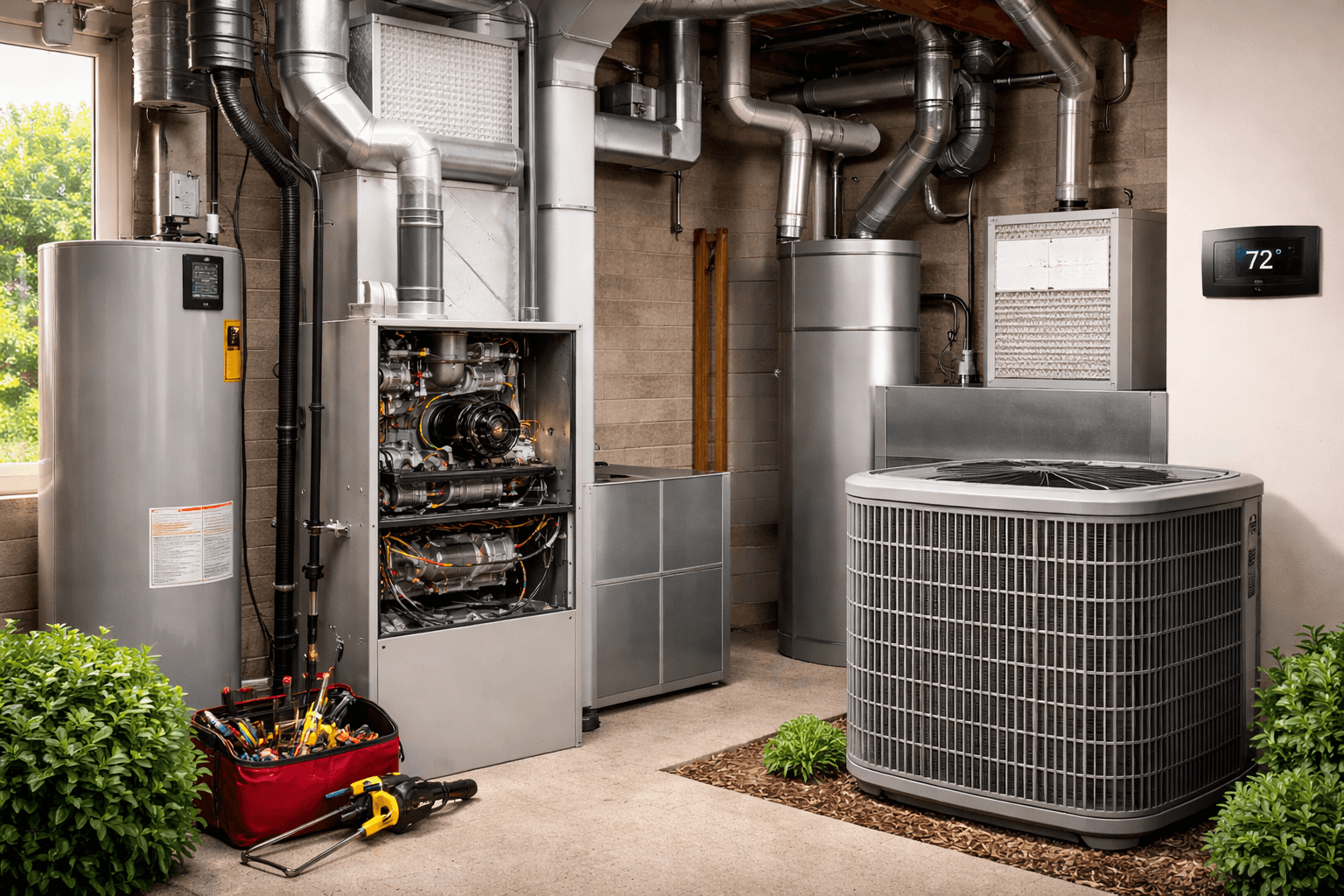
Purpose: Heat air (furnace) or water (boiler) to warm the home
Fuel types: Natural gas, propane, oil, electric
Efficiency rating: AFUE (Annual Fuel Utilization Efficiency); higher = less fuel wasted
B. Air Conditioner / Heat Pump
Purpose: Cool air or heat in heat pump systems
Efficiency rating: SEER (Seasonal Energy Efficiency Ratio) and HSPF (Heating Seasonal Performance Factor)
Heat pumps: Provide both heating and cooling, increasingly popular in moderate climates
C. Ductwork / Piping
Distributes heated or cooled air/water throughout the home
Leaks or poor insulation reduce efficiency significantly
Zoning dampers can isolate sections for customized temperature control
D. Thermostats & Controls
Programmable or smart thermostats improve efficiency
Zoning systems allow different temperatures for bedrooms, living areas, or bonus spaces
Humidity controls maintain comfort and prevent mold
Insight: Even the most efficient furnace or AC unit is useless if ductwork leaks 20–30% of conditioned air.
3. HVAC Zoning: Comfort Without Waste
A. What Is Zoning?
Divides a home into independent zones controlled by separate thermostats
Dampers in ductwork open/close to direct airflow where it’s needed
Ideal for multi-story homes or large open layouts
B. Benefits
Reduces energy waste by heating/cooling only occupied areas
Increases comfort—no more fighting over thermostat settings
Can extend the lifespan of HVAC equipment by reducing constant full-house operation
C. Considerations
Proper design is critical—poor zoning can cause pressure imbalances and uneven airflow
Adding zoning to existing homes can require duct modifications and additional controls
Witty insight: HVAC zoning is like Netflix profiles—everyone gets their preferred setting without hogging the system.
4. Efficiency Ratings: What the Numbers Mean
Understanding ratings helps compare systems fairly:
A. SEER (Cooling Efficiency)
Seasonal Energy Efficiency Ratio for AC units
Higher SEER = more cooling per unit of electricity
Current minimum: SEER 14–16 depending on region
Premium systems: SEER 20+
B. AFUE (Heating Efficiency)
Annual Fuel Utilization Efficiency for furnaces
90%+ AFUE = 90% of fuel converted to heat, 10% wasted
Older furnaces often <80%—costly to operate
C. HSPF (Heat Pump Efficiency)
Heating Seasonal Performance Factor
Higher HSPF = more heating per unit of electricity
Modern units: 8–12+ HSPF
D. Energy Star & Utility Rebates
Look for certified equipment; may qualify for rebates or incentives
Helps offset installation costs and ensures minimum efficiency standards
Insight: Don’t just look at unit age—a newer, inefficient unit can cost more to run than a properly maintained older high-efficiency system.
5. Lifespan Expectations
Component | Typical Lifespan | Notes |
|---|---|---|
Furnace | 15–25 yrs | Gas furnaces last longer; regular maintenance extends life |
Air Conditioner | 10–15 yrs | Heat pumps similar; replace if refrigerant leaks or efficiency drops |
Ductwork | 20–30 yrs | Proper sealing and insulation critical for longevity |
Thermostat / Controls | 5–10 yrs | Smart thermostats may outlast programmable units |
Boiler | 20–30 yrs | Cast iron boilers last longest; steel may corrode faster |
Insight: Lifespan is heavily maintenance-dependent. Regular inspections, filter changes, and system balancing can add 5–10 years.
6. Common Problems & Warning Signs
Uneven heating or cooling
Rising energy bills despite stable usage
Frequent cycling or short runs
Strange noises or odors
Visible leaks or rust in components
Witty insight: Ignoring warning signs is like listening to your car’s “check engine” light as background noise—eventually, it’s catastrophic.
7. Inspection Checklist
Before buying a home or evaluating a system:
System Components
Furnace/boiler age and efficiency rating
AC or heat pump SEER/HSPF
Ductwork condition: leaks, insulation, alignment
Thermostats and zoning controls operational
Maintenance History
Filter replacement records
Recent service inspections
Refrigerant levels and leaks checked
Functionality
Even temperature distribution
Proper airflow and pressure in all zones
No unusual noises or odors
Safety
Carbon monoxide detectors operational
Venting for gas or oil systems intact
Electrical connections secure
Insight: Skipping a thorough HVAC inspection is like buying a car without looking under the hood—you’ll pay for it later.
Maintenance, Seasonal Preparation & Efficiency Optimization
Even the best HVAC system will fail prematurely without consistent maintenance and seasonal care. Skipping routine upkeep can cost hundreds in energy bills, shorten equipment life, and lead to expensive repairs. Think of your HVAC system as the heart of your home: keep it healthy, and the house functions optimally; neglect it, and everything downstream suffers.
1. Filters: The First Line of Defense
A. Types of Filters
Fiberglass: Inexpensive, low efficiency, replaced every 1–3 months
Pleated filters: Medium efficiency, captures dust, pollen, and pet dander
HEPA filters: High efficiency, recommended for allergy-sensitive households
B. Replacement & Cleaning
Change every 1–3 months depending on type, occupancy, and pets
Check for dust buildup—a clogged filter reduces airflow, forcing your HVAC to work harder
Reusable filters should be washed and dried thoroughly
Witty insight: Running an HVAC with a clogged filter is like trying to breathe through a paper towel—uncomfortable, inefficient, and not sustainable.
2. Seasonal Maintenance Checklist
A. Spring / Cooling Season Prep
Inspect AC coils for dirt, debris, and corrosion
Check refrigerant levels and pressure
Clear condensate drain to prevent water damage
Test airflow and thermostat calibration
B. Summer / Peak Cooling
Inspect duct insulation for wear
Clean outdoor condenser unit of leaves and debris
Monitor energy bills for unusual spikes
Ensure zoning dampers operate correctly
C. Fall / Heating Season Prep
Furnace inspection: burners, heat exchangers, and venting
Inspect flue or chimney for blockages (for gas/wood systems)
Test airflow in all zones
Check thermostat and zoning controls
D. Winter / Peak Heating
Ensure vents and registers are unobstructed
Monitor humidity levels to prevent dry air issues
Schedule emergency service if you notice strange noises, odors, or uneven heating
Pro tip: A seasonal inspection and tune-up can extend your system’s life by 5–10 years and prevent emergency breakdowns.
3. Efficiency Optimization Strategies
A. Zoning Adjustments
Program thermostats for time-of-day and occupancy
Reduce heating/cooling in unused rooms
Balance airflow to prevent hot or cold spots
B. Ductwork Integrity
Inspect for leaks, especially at joints or transitions
Insulate ducts in unconditioned spaces
Seal with mastic or foil tape (avoid standard duct tape—it fails quickly)
C. Smart Controls
Programmable thermostats reduce energy waste
Smart thermostats learn usage patterns and optimize heating/cooling
Integration with humidity and ventilation controls improves comfort
D. Coil & Condenser Maintenance
Clean indoor evaporator and outdoor condenser coils annually
Inspect fins for damage and straighten as needed
Ensure proper clearance around outdoor units for airflow
Witty insight: Efficiency is a system-wide game; the fanciest furnace or AC does nothing if airflow is leaking or dampers are stuck.
4. Lifespan Extension & Major Maintenance
Replace filters regularly (your first and easiest step)
Schedule annual professional inspections for both heating and cooling
Flush and clean condensate lines to prevent clogs and water damage
Lubricate moving parts where applicable
Monitor refrigerant levels to avoid overworking compressors
Address minor issues early—unattended small problems often lead to full component failure
Insight: HVAC longevity is directly proportional to preventive care—ignore maintenance, and you’re gambling with equipment that could cost $10,000+ to replace.
5. Common Warning Signs of HVAC Trouble
Rising energy bills with no change in usage
Uneven heating/cooling in different rooms
Strange noises: banging, rattling, or whistling
Poor airflow from vents
Frequent cycling on/off
Unusual odors (burning, moldy, or chemical)
Visible leaks or ice on coils
Pro tip: If multiple signs appear, schedule a professional inspection immediately—waiting often triples repair costs.
6. Cost Considerations
Component | Annual Maintenance | Major Repairs | Replacement | Lifespan |
|---|---|---|---|---|
Furnace | $100–$300 | $500–$1,500 | $3,000–$8,000 | 15–25 yrs |
Air Conditioner | $100–$300 | $400–$2,000 | $3,500–$10,000 | 10–15 yrs |
Heat Pump | $150–$350 | $500–$3,000 | $4,000–$12,000 | 10–20 yrs |
Ductwork | $50–$200 | $200–$1,500 | $1,500–$5,000 | 20–30 yrs |
Thermostat | $0–$50 | $50–$200 | $100–$500 | 5–10 yrs |
Insight: Spending $150–$300 a year on maintenance can prevent a $5,000–$10,000 emergency replacement. Maintenance is insurance you actually use.
7. Inspection Checklist
Before buying a home or evaluating an HVAC system:
System Components
Furnace/boiler age and efficiency rating (AFUE)
AC/heat pump SEER and HSPF ratings
Ductwork inspected for leaks, insulation, and alignment
Thermostat and zoning controls operational
Maintenance & Records
Filter change history
Coil cleaning and refrigerant check
Annual professional inspections
Service records for repairs
Performance
Even heating/cooling in all zones
Airflow adequate in every room
Thermostat accurately reflects room temperature
Safety
CO detectors operational (for gas systems)
Venting intact and compliant
Electrical connections secure
Pro tip: Treat this checklist like a full physical exam for your home—HVAC is invisible until it fails, and then it becomes immediately expensive and inconvenient.
Climate-Specific Considerations, Upgrades & “When to Walk Away”
HVAC isn’t one-size-fits-all. The system that works beautifully in Vancouver might struggle in Calgary or Toronto, and climate impacts both design choices and longevity. Understanding these nuances ensures comfort, efficiency, and avoids costly mistakes.
1. Climate-Specific Considerations
A. Cold Climates
Challenges: Freeze/thaw cycles, extreme low temperatures, snow/ice buildup
Key Features:
High-AFUE furnaces (>90%) or cold-climate heat pumps
Proper insulation and ductwork sealing to prevent heat loss
Freeze protection for outdoor components (heat pump lines, condensate drains)
Maintenance Tips:
Inspect heat exchangers annually
Check refrigerant levels before winter
Clean or replace filters more frequently if home is sealed tightly
B. Hot Climates
Challenges: High cooling loads, sun-exposed homes, humidity control
Key Features:
High-SEER air conditioners
Zoned cooling for multi-story homes
Dehumidification and ventilation controls
Maintenance Tips:
Clean condenser coils monthly during peak cooling season
Inspect duct insulation for heat absorption
Ensure outdoor units have adequate shade but maintain airflow
C. Humid Climates
Challenges: Mold growth, condensation in ducts, poor indoor air quality
Key Features:
Integrated dehumidifiers or heat pump with humidity control
Proper duct sealing to prevent moisture infiltration
Air purifiers or HEPA filtration for allergens
Maintenance Tips:
Regularly inspect and clean condensate drains
Monitor humidity and adjust dehumidifiers accordingly
Inspect ductwork for mold or mildew buildup
D. Dry Climates
Challenges: Low humidity causing dry skin, static, and wood cracking
Key Features:
Humidifiers integrated into the system
Balanced airflow for optimal comfort
Filter upgrades to prevent dust accumulation
Maintenance Tips:
Inspect humidifiers before winter heating season
Maintain proper humidity levels (30–50%)
Clean or replace filters frequently
Pro tip: Ignoring climate-specific issues is like wearing sandals in the snow—comfort is impossible, and damage is inevitable.
2. Efficiency Upgrades & Retrofits
Even if your HVAC isn’t failing, there are ways to improve performance and reduce energy costs.
A. Retrofitting Older Systems
Upgrade thermostats to programmable or smart units
Add zoning to balance airflow across floors
Seal and insulate ducts to prevent energy loss
Replace inefficient units nearing end-of-life
B. High-Efficiency Equipment
New high-SEER AC units, high-AFUE furnaces, or heat pumps
Variable-speed compressors for better temperature control
Multi-stage furnaces for consistent heat without short cycling
C. Energy-Saving Controls
Smart thermostats that adjust based on occupancy or weather
Integrated humidity controls for comfort and reduced energy use
Sensors to monitor system performance and alert to inefficiencies
D. Ventilation & Air Quality Improvements
HRV (Heat Recovery Ventilator) or ERV (Energy Recovery Ventilator) units
UV lamps in ducts to reduce mold and bacteria
HEPA or MERV-rated filters for cleaner indoor air
Witty insight: Investing in efficiency upgrades is like giving your HVAC a turbo boost—it performs better, lasts longer, and costs less to run.
3. Inspection Checklist for Climate & Upgrades
Before buying a home or planning retrofits:
System & Climate Compatibility
Heating capacity appropriate for winter lows
Cooling capacity appropriate for summer highs
Humidity controls for high or low humidity regions
Energy Efficiency & Upgrades
Thermostat type (manual, programmable, smart)
Zoning dampers installed and functional
Duct sealing and insulation intact
Air filtration and ventilation systems appropriate
Maintenance History
Professional inspection and servicing records
Refrigerant level and leak checks
Filter change history
Pro tip: Use this checklist like a climate-proof audit—the wrong system in the wrong region will cost you comfort and money for years.
4. Common “Walk Away” Scenarios
Even a beautiful home can be doomed by a failing HVAC system if red flags appear.
A. Undersized or Oversized Units
Oversized AC cycles too frequently, causing wear and humidity issues
Undersized furnace or AC struggles to meet load, leading to discomfort and high energy bills
B. Ductwork Problems
Leaks exceeding 20% of airflow
Poorly insulated ducts in attics or crawl spaces
Collapsed or kinked ducts in retrofits
C. Outdated Equipment
Furnace older than 20 years, AC/heat pump older than 15 years
Systems with R-22 refrigerant (phased out, costly to recharge)
Components failing repeatedly despite repairs
D. Poor Zoning or Controls
No zoning in multi-story homes
Thermostat misalignment causing uneven temperatures
Manual controls with no upgrade path
E. Evidence of Neglect
Dirty coils, clogged condensate lines, rusted or corroded parts
No service history or missed maintenance
Indoor air quality problems (dust, mold, odor)
Witty insight: A failing HVAC is a silent money pit—ignore it at your peril. If multiple red flags exist, it’s better to walk away than buy a home with invisible monthly headaches.
5. Cost Considerations
Component | Typical Cost | Efficiency Upgrade | Notes |
|---|---|---|---|
Furnace | $3,000–$8,000 | High-AFUE replacement | Gas vs electric; older units may need full replacement |
Air Conditioner | $3,500–$10,000 | High-SEER unit | Heat pumps may combine heating/cooling in one |
Heat Pump | $4,000–$12,000 | Cold-climate models | Efficient, long-lasting, dual-purpose |
Ductwork | $1,500–$5,000 | Sealing & insulation | Older homes often need retrofits for efficiency |
Thermostats | $100–$500 | Smart & programmable | ROI in energy savings within 2–5 years |
Ventilation/HRV/ERV | $2,000–$6,000 | Integrated ventilation | Improves air quality, reduces energy waste |
Insight: Don’t ignore the hidden costs of inefficiency—a poorly maintained HVAC can easily cost thousands in energy bills and repairs over its lifetime.
Advanced Diagnostics, Lifespan Planning & Cost vs Replacement Analysis
Even after understanding climate, efficiency, and maintenance, the real challenge is knowing when a system is approaching the end of its useful life, how to spot hidden issues, and when to invest in repairs versus replacement. HVAC systems are expensive, invisible, and unforgiving; making the wrong call can cost tens of thousands over a decade.
1. Advanced Diagnostics: Knowing What’s Really Happening
Professional HVAC technicians don’t just turn the thermostat up and hope for the best—they perform data-driven diagnostics. Here’s what you need to know:
A. Load Calculations
Determines heating/cooling capacity needed for your home
Factors: square footage, ceiling height, insulation, window types, occupancy
Oversized or undersized units lead to inefficient operation, uneven comfort, and short cycling
Insight: You wouldn’t buy a car without checking horsepower vs payload; why buy an HVAC without checking load vs capacity?
B. Airflow & Pressure Testing
Ensures ducts are distributing air evenly
Detects leaks, restrictions, or improperly sized ducts
Often done with manometers to measure static pressure
C. Refrigerant & Heat Exchange Efficiency
Low refrigerant or dirty coils reduce cooling capacity and increase energy costs
Heat pump efficiency drops with dirty coils or low refrigerant
Annual checks prevent compressor burnout, which can cost $2,000–$4,000
D. Electrical & Safety Checks
Inspect wiring, circuit breakers, and fuses
Test safety switches, flame sensors, and limit switches
Carbon monoxide checks for gas systems
Witty insight: HVAC diagnostics is like a medical checkup for your home—the silent symptoms can become expensive emergencies if ignored.
2. Lifespan Planning: Maximize the Investment
A. Component Lifespans Recap
Component | Typical Lifespan |
|---|---|
Furnace | 15–25 yrs |
Air Conditioner | 10–15 yrs |
Heat Pump | 10–20 yrs |
Ductwork | 20–30 yrs |
Thermostats & Controls | 5–10 yrs |
Ventilation / HRV / ERV | 15–20 yrs |
B. Extending Lifespan
Regular filter replacement (every 1–3 months)
Professional inspections annually or semi-annually
Coil cleaning, refrigerant checks, and lubrication
Zoning adjustments to reduce stress on the system
C. Component Replacement Strategy
Prioritize critical components: compressor, heat exchanger, blower motor
Replace minor components during routine maintenance to avoid cascading failures
Document all work and dates; aging systems benefit from proactive maintenance
Insight: Planning for lifespan is like investing in retirement—small, consistent maintenance yields long-term payoff.
3. Repair vs Replacement Analysis
Not every issue warrants a full system replacement. Here’s a decision-making framework:
A. When Repair Makes Sense
Minor refrigerant leaks
Dirty coils or clogged condensate lines
Short cycling caused by sensor or thermostat issues
Single-component failure on systems under 10 years old
B. When Replacement Is Better
System older than 15–20 years with recurring breakdowns
Inefficient AFUE/SEER/HSPF ratings leading to high bills
Major component failure (compressor, heat exchanger)
Systems using phased-out refrigerants (R-22)
C. Cost vs Lifespan
Scenario | Repair Cost | Replacement Cost | Notes |
|---|---|---|---|
Minor issue | $100–$500 | N/A | Immediate fix; extends life slightly |
Major component failure | $1,000–$3,000 | $3,500–$12,000 | Evaluate remaining lifespan |
Old, inefficient system | $500–$2,000/yr maintenance | $4,000–$12,000 | Replacement may save energy and reduce repair headaches |
Witty insight: Repairing a 20-year-old AC is like patching a boat with duct tape—it floats for a while, but sinking is inevitable.
4. Emergency Planning & Red Flags
Even with maintenance, HVAC can fail suddenly. Being prepared saves time, money, and comfort.
A. Emergency Scenarios
Compressor burnout in summer heat
Furnace failure during a cold snap
Flooding or power surge damaging controls
Frozen heat pump lines during extreme cold
B. Red Flags
Strange noises or vibrations
Frequent cycling on/off
Uneven temperature distribution despite adjustments
Rising utility bills with no behavioral change
Visible water or refrigerant leaks
C. Emergency Action Plan
Know your local HVAC service providers and emergency numbers
Keep filters, basic tools, and replacement parts on hand
Understand warranty coverage and service agreements
Document serial numbers and system specs for rapid replacement if needed
Insight: HVAC emergencies are not a time to improvise—having a plan prevents panic, wasted energy, and rushed, expensive repairs.
5. Inspection Checklist: Final Layer
Before buying a home or evaluating an HVAC system, ensure these advanced diagnostics and planning points are reviewed:
System Performance
Heating/cooling meets load for square footage
Airflow balanced in all zones
Refrigerant levels correct and coils clean
Component Condition
Blower motors, compressors, heat exchangers inspected
Electrical connections, breakers, and safety switches functional
Thermostat and zoning controls operational
Maintenance History & Documentation
Annual professional inspections completed
Service records for repairs and component replacements
Filter and coil cleaning schedule followed
Emergency Preparedness
Service providers identified for emergency calls
Replacement parts and filters accessible
Warranty information documented
Witty insight: Treat this checklist like a pre-flight inspection for your house—ignore it at your peril. HVAC may be invisible until it fails spectacularly.
Practical Buying Tips, Red Flags & Expert Recommendations
Even after understanding zoning, efficiency, maintenance, climate considerations, and lifespan planning, the most important skill is knowing how to evaluate HVAC when buying a home or planning upgrades. A brilliant system can make a house feel like heaven; a neglected or mismatched system can make it a money pit. Here’s everything you need to know.
1. How to Evaluate HVAC When Buying
A. Ask the Right Questions
Age of the system: “How old are the furnace, AC, or heat pump?”
Maintenance history: “Are there records of annual inspections, filter changes, coil cleaning?”
Zoning & controls: “Are there multiple zones? Are thermostats programmable or smart?”
Energy efficiency: “What are the SEER, AFUE, or HSPF ratings?”
Repairs & upgrades: “Have major components been replaced or repaired recently?”
Pro tip: Asking specific, technical questions signals to sellers and realtors that you know what matters, reducing the risk of surprises.
B. Inspect the System Yourself
Even if you hire a home inspector, walk through the system yourself:
Check for leaks, corrosion, rust, or unusual odors
Test airflow from vents in all rooms
Observe the system during a heating or cooling cycle
Listen for strange noises, rattles, or vibrations
Insight: Think of this as a pre-flight check—seeing the system in action often reveals issues inspection reports don’t capture.
C. Consider the Home’s Layout & Climate
Multi-story homes benefit from zoning
Open-concept layouts may require larger ductwork or variable-speed systems
Extreme climates require proper sizing; an undersized furnace or AC leads to discomfort and high bills
Check insulation, window quality, and orientation—they impact HVAC efficiency
Witty insight: Buying a home with an HVAC mismatch is like filling a bathtub with a thimble—it will never meet demand.
2. Red Flags That Warrant Caution
HVAC system age exceeds 15–20 years
Frequent repairs or recurring component failures
Leaks, corrosion, or rusted ductwork
Poor or missing maintenance records
Uneven heating/cooling despite adjustments
Systems using R-22 refrigerant (outdated, expensive to recharge)
Short cycling or constant on/off operation
Insight: Multiple red flags justify negotiation, further inspection, or walking away. HVAC is invisible until it fails—don’t get caught by surprise.
3. Negotiation Strategies
Use inspection reports and maintenance records to justify price reductions
Estimate replacement costs for old or failing systems (furnace: $3,000–$8,000, AC: $3,500–$10,000, heat pump: $4,000–$12,000)
Factor in energy savings potential with new high-efficiency units
Request seller credits or repairs before closing if major components are near end-of-life
Pro tip: A confident buyer armed with HVAC knowledge often saves thousands or avoids future headaches.
4. Cost-Saving Strategies
A. Preventive Maintenance
Annual inspections, filter replacements, and coil cleaning extend system life
Proper zoning reduces energy use and wear
B. Upgrades vs Full Replacement
Smart thermostats, zoning, and duct sealing can boost efficiency without replacing the whole system
For systems nearing end-of-life, replacement may be cheaper long-term than repeated repairs
C. Energy Incentives & Rebates
Many high-efficiency furnaces, AC units, and heat pumps qualify for rebates and tax credits
Check local utility programs for incentives on smart thermostats and duct sealing
Witty insight: Spending a few hundred on maintenance or a rebate-eligible upgrade can prevent a $10,000 emergency.
5. Expert Recommendations
A. Professional Inspections Are Essential
Always have an HVAC professional evaluate the system before purchase
Focus on airflow, efficiency, ductwork, and climate suitability
B. Document Everything
Keep service records, replacement receipts, and inspection reports
Track filter changes and seasonal maintenance for lifespan planning
C. Plan for the Long Term
Consider replacement timelines: furnaces 15–25 yrs, AC 10–15 yrs, heat pumps 10–20 yrs
Budget for proactive upgrades, energy efficiency improvements, and emergency contingencies
D. Prioritize Comfort & Health
Ensure ventilation and filtration are adequate
Check humidity control for comfort and mold prevention
Remember: HVAC isn’t just a convenience—it impacts air quality, sleep, and health
Insight: HVAC knowledge isn’t just technical—it’s strategic. The right system can increase home value, reduce costs, and make life comfortable year-round.
Walk-Away Scenarios
You should seriously reconsider a property if:
Multiple critical components are at end-of-life with no service history
Zoning or capacity is fundamentally inadequate for the home’s layout
Ductwork is damaged, inaccessible, or poorly designed
Refrigerant or efficiency standards are obsolete
Sellers refuse to provide inspection or maintenance documentation
Witty insight: Walking away isn’t defeat—it’s avoiding a money pit disguised as a beautiful home.
Final Takeaways
HVAC is the backbone of comfort, health, and efficiency in any home
Understanding zoning, efficiency ratings, climate considerations, and lifespan allows informed decisions
Regular maintenance extends system life and prevents costly emergencies
Smart upgrades and preventive care can save thousands in energy and repair costs
Walk away if the system’s age, condition, or design is fundamentally inadequate
Pro tip: Treat HVAC like a long-term investment, not a background utility—your comfort, energy bills, and home value depend on it.