/
/
The 2% Interest Illusion: How Canada’s Tax-Free Capital Gains Disconnect Homeowners From Economic Reality
The 2% Interest Illusion: How Canada’s Tax-Free Capital Gains Disconnect Homeowners From Economic Reality

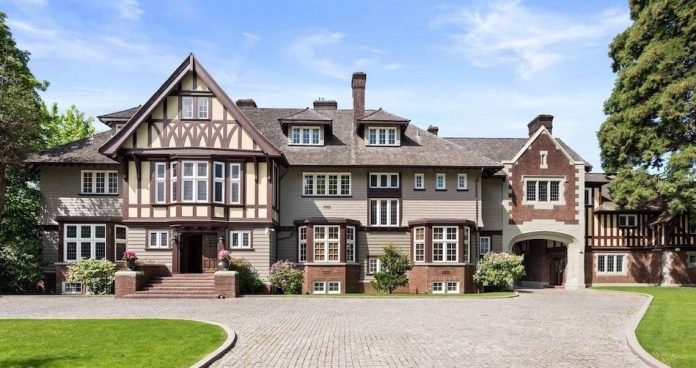
For the last twenty years, Canada hasn’t really had an economy. We’ve had a housing market with a few coffee shops and maple syrup stands attached to the side.
The "Canadian Dream" used to be about hard work and upward mobility. Today, it’s about timing and tax avoidance. We’ve traded the lab coat for the Realtor’s business card, and the results are exactly as messy as you’d expect. At the heart of this mess lies a psychological hallucination we’ll call the 2% Interest Illusion.
It’s the intoxicating belief that a glass box in Yaletown or a teardown in Kitsilano isn’t just a place to sleep, but a tax-free ATM that makes you smarter than a hedge fund manager.
Vancouver: Ground Zero for the Hallucination
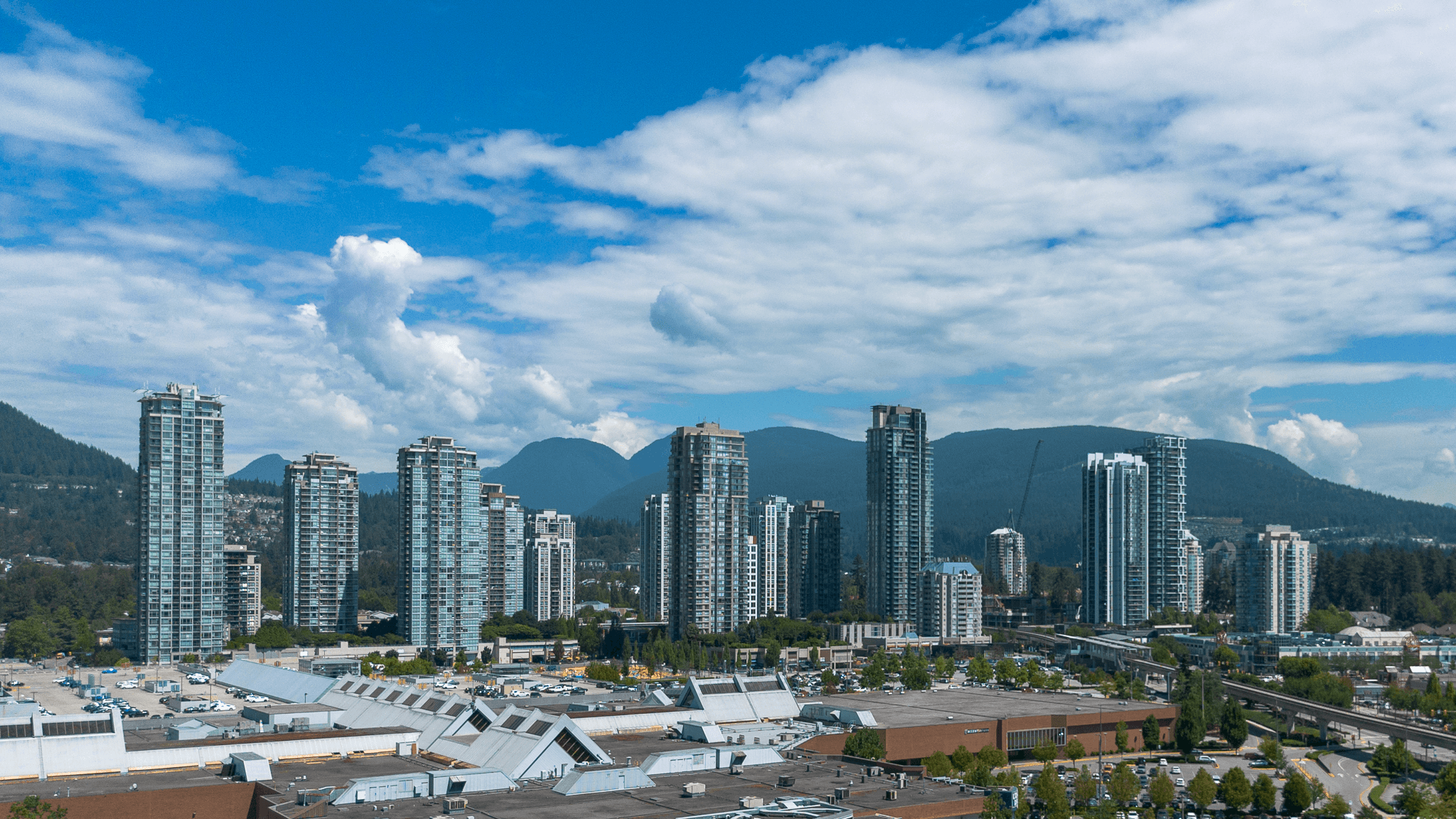
If you want to see the 2% Interest Illusion in its final, most grotesque form, you don't look at the Island—you look at Vancouver. Vancouver is the high-altar of Canadian real estate worship.
In Vancouver, the disconnect between what people earn and what they own has reached a level of absurdity that would make a Victorian-era duke blush. We are talking about a city where the average detached home sits comfortably north of $2 million, while the median household income struggles to clear $90,000.
The math doesn’t work. It never worked. The only reason the lights are still on in the West End is because of the Principal Residence Exemption (PRE)—the ultimate "get out of jail free" card that allows homeowners to harvest millions in profit without ever paying a dime to the CRA.
The Holy Grail of Tax Loopholes
In Canada, the PRE is more sacred than the Charter of Rights and Freedoms. It’s the rule that says if you live in your house, you can sell it for a $3 million profit and the government doesn’t get a single cent.
In any other context, if you made $500,000 on an investment, the government would be at your door before the check cleared. But in housing? You’re a "savvy investor."
The Math of the Delusion:
The Vancouver Worker: A senior software developer at a top tech firm earns $200k. After taxes, student loans, and a $3,500 rent payment for a one-bedroom, they are lucky to save $30k a year.
The Vancouver Homeowner: A couple bought a bungalow in East Van in 2011 for $800k. In 2024, it’s worth $2.1 million.
The homeowner "earned" $1.3 million tax-free for the difficult labor of existing in a building. The developer would have to work for forty years to save that same amount of after-tax cash. When "sitting" pays better than "coding," your city doesn't have a future; it has a countdown.
Borrowed Time and 2% Money
The illusion only worked because money was essentially free. For a decade, the Bank of Canada kept interest rates so low they were practically subterranean.
When you can borrow a million dollars at 2% interest, you aren’t "buying" a house; you’re renting a massive pile of capital. Because the gains were tax-free, Vancouverites stopped looking at the total price of a home. They only looked at the monthly payment.
This created a feedback loop of insanity:
Rates drop: Buyers "afford" more.
Prices spike: Because everyone bids with the bank's money.
Equity surges: Homeowners feel like geniuses because their net worth jumped $200k while they were at brunch.
The HELOC trap: They borrow against that "tax-free" equity to buy a Tesla or a secondary condo in Kelowna, further fueling the fire.
We started treating our homes like they were high-growth tech stocks, forgetting that, unlike a tech company, a house doesn't produce anything. It just sits there, slowly rotting and requiring a new roof every twenty years.
The Culture of the "Asset Class"
This isn't just an economic problem; it’s a social divorce. We’ve split British Columbia into two distinct tribes: The Asset Class and The Labor Class.
The Asset Class doesn't care about inflation or wage growth. Why would they? Their "wealth" is pegged to the scarcity of land. In Vancouver, they are the ones at community meetings fighting against "missing middle" housing because "neighborhood character" is just code for "my tax-free capital gains."
Meanwhile, the Labor Class—the nurses, the teachers, the young families—are realizing that no matter how hard they work, they can't outrun the PRE. You cannot save your way into a market that grows by $150,000 a year tax-free when your salary is taxed at the source.
The Victoria Ripple: Why the Island Should Be Worried
Victoria is the release valve for Vancouver’s psychosis. When a homeowner in Vancouver finally decides they’ve had enough of the rain and the traffic, they sell their $2.5 million bungalow, take their tax-free windfall, and head to the Island.
They arrive in Oak Bay or Fairfield with "house money." They don't care about Victoria's local wages because their wealth wasn't created by a Victoria salary—it was created by the Vancouver Illusion. This imports the disconnect to our shores, pricing out the local workforce and turning Victoria into a gated community for the beneficiaries of the mainland's bubble.
The Hangover: Higher for Longer
The 2% Interest Illusion relied on one thing: perpetual cheap debt. Now that rates have hit 5% and 6%, the mask is slipping. The "tax-free gain" is a ghost if you can't find a buyer who can afford the $8,000-a-month mortgage.
We are currently in the "Standoff Phase." Sellers are clinging to 2021 prices because they feel "entitled" to those gains, while buyers are looking at their bank accounts and realizing the math has fundamentally broken. The disconnect is finally hitting a wall.
You can ignore economic reality for a decade if the government subsidizes your debt and ignores your capital gains, but you can't ignore it forever.
The Vancouver Anomaly: A City Where Math Goes to Die
If you want to understand the 2% Interest Illusion, you have to look at Vancouver—the city where the laws of economics were treated like minor suggestions for fifteen years.
Vancouver is the epicenter of a unique global experiment: What happens when you combine an incredibly desirable geography with a tax code that rewards land-holding over labor? The answer is a city that has effectively seceded from the Canadian economy.
In a normal world, home prices are tethered to local wages. If a city’s residents earn $100k, they can afford a certain price of housing. But in Vancouver, the local wage is a rounding error. As of early 2026, the benchmark price for a detached home in Vancouver is hovering around $1.85 million, even after a "softening" of the market. To qualify for that mortgage, a household needs to earn roughly $450,000 a year. But the median household income in Vancouver is nowhere near $450,000. It’s closer to $95,000. This gap—the "Vancouver Chasm"—is bridged entirely by the 2% Interest Illusion and the tax-free windfalls of the Principal Residence Exemption.
The "Paper Millionaire" Psychology
For a generation of Vancouverites, the PRE didn’t just save them money on a sale; it fundamentally altered their personality.
When your house earns $200,000 in a single year tax-free, and your actual job as a mid-level manager at a logistics firm pays you $110,000 (of which the government takes $35,000), a psychological switch flips. You stop seeing yourself as a worker. You start seeing yourself as a Capitalist.
This has led to the "Wealth Effect" on steroids. Vancouver homeowners haven't been living within their means; they’ve been living within their equity. This is where the HELOC (Home Equity Line of Credit) comes in—the silent engine of the Vancouver lifestyle.
By 2024, Canadian HELOC debt hit a staggering $179 billion. In Vancouver, this meant that even if your salary didn’t go up, you could still afford a kitchen renovation that costs as much as a small condo in Edmonton, a brand-new electric SUV, and annual trips to Whistler. Why not? The house was "paying for it."
The Illusion in Action:
You borrow $100,000 at 2.5% (the old rate).
Your interest payment is a measly $200 a month.
Your house value grows by $150,000 that same year.
Result: You are "up" $50,000 and you have a new kitchen.
This is the "free money" hallucination that disconnected an entire city from the reality of debt. But in 2026, the renewal notices are hitting the mailboxes, and that 2.5% interest rate has been replaced by 5.8%. The "free" kitchen is suddenly costing $600 a month in interest alone, and the home's value is no longer jumping six figures every twelve months.
Cannibalizing Productivity: The National Emergency
This isn't just a Vancouver tragedy; it’s a Canadian disaster. Because we’ve incentivized everyone to dump every spare cent into their primary residence, we have effectively cannibalized our national productivity.
According to recent data from Scotiabank and Alberta Central, Canada is in the midst of a "productivity emergency." Why? Because we spend as much on "homeownership transfer costs" (realtor fees, taxes, and legal fees) as we do on machinery, equipment, and intellectual property combined.
We are a G7 nation that has decided it is more profitable to sell houses to each other than it is to build companies. When a Vancouver entrepreneur sees that they can make a 15% return on a "fixer-upper" in East Van with zero tax, or a 10% return on a startup that requires 80-hour weeks and has a 50% capital gains tax on the back end, the choice is obvious.
The 2% Interest Illusion hasn't just made us house-poor; it has made us innovation-poor. We have diverted the capital that should have built the next Shopify or Slack into the pockets of boomers in West Vancouver who are sitting on tax-free gold mines.
The Intergenerational Wall: The Bank of Mom and Dad
The final stage of the 2% Interest Illusion is its transformation into a hereditary system. In 2026, we are witnessing the largest intergenerational wealth transfer in history—over $1 trillion is moving from Boomers to their kids.
A significant portion of this is the "Bank of Mom and Dad." In Vancouver, 31% of first-time buyers only got into the market because of a gift or loan from their parents. The average gift has surged to over $115,000.
This isn't "helping the kids." This is the PRE in a trench coat. It is the tax-free gains of the parents being used to artificially prop up the prices for the children, creating a closed loop that locks out anyone whose parents didn't have the foresight to buy a house in 1988.
We have created a Two-Tier Reality:
The Inheritors: Young professionals who use their parents' tax-free windfalls to keep the "Illusion" alive.
The Outsiders: Brilliantly talented people who move to Seattle or Austin because they realize that in Vancouver, their talent is irrelevant—only their pedigree matters.
The 2026 Reality Check: The Slow Puncture
The 2% Interest Illusion is currently experiencing a "slow puncture." In January 2026, benchmark prices in Vancouver fell for the 10th straight month. It’s not a crash—yet—but it’s a fundamental shift.
The disconnect is being forced to reconcile. When the cost of carrying a home exceeds the tax-free growth of that home, the Illusion vanishes. We are left with a city that is too expensive to live in and an economy that doesn't know how to produce anything other than real estate listings.
The Political Hostage Situation: Why No One Will Turn Off the Lights
If the Principal Residence Exemption (PRE) is the drug, then the Canadian federal government is the dealer that’s terrified of its own clientele.
In Ottawa, the PRE is known as the "Third Rail." Touch it, and your political career dies. This has created a bizarre form of policy paralysis that defines the 2024–2026 era. We have a government that acknowledges—loudly and repeatedly—that housing is unaffordable for the next generation, yet they refuse to address the single largest tax expenditure that fuels the fire.
The PRE costs the federal treasury an estimated $10 billion to $15 billion in lost revenue every single year. To put that in perspective, that’s enough to fund a massive national housing build, yet it’s handed out as a "bonus" to people who already own the most valuable assets in the country.
The Standoff:
The Liberals: Talk about "Generational Fairness" in the 2024 and 2025 budgets, but then explicitly state that the PRE is "not on the table." It’s like promising to fix a flood while refusing to turn off the main valve.
The Conservatives: Rail against "gatekeepers" and supply constraints, yet they are even more defensive of the PRE. They know their base in the suburbs of the Fraser Valley and the GTA is sitting on millions in tax-free equity.
The Result: Both sides end up proposing "demand-side" bandages—like the First-Time Home Buyer Savings Account—which just throw more gasoline on the price hike.
This is the "Hostage Situation." Since 66% of Canadians are homeowners, and a significant portion of their retirement is tied to the tax-free status of their home, any politician who suggests even a modest cap on the exemption is essentially telling the largest voting bloc in the country that they are going to tax their pension.
The Productivity Trap: Killing the Future to Save the Present
While we protect the "tax-free" dream, the rest of the economy is dying in the waiting room.
In late 2025, the IMF released a sobering report (WP/25/161) that confirmed what many had suspected: there is a direct, negative correlation between rising house prices and national productivity. In Canada, this relationship is the strongest in the G7.
When a nation decides that "existing in a house" is more profitable than "building a business," you get what economists call Capital Misallocation. Instead of investing in software, green tech, or manufacturing, Canadians are dumping their capital into the least productive asset imaginable: residential real estate.
The Opportunity Cost of the Illusion: Imagine a Victoria-based entrepreneur with $200,000 in seed capital.
Option A: Start a boutique tech firm, hire five people, and pay a 50% capital gains tax on the exit if they succeed after five years of 80-hour weeks.
Option B: Use the $200,000 as a down payment on a "fixer-upper" in Oak Bay, sit on it for five years, and sell it for a $400,000 profit—100% tax-free.
Option B is the rational choice in a broken system. But Option B creates zero jobs, zero exports, and zero innovation. It just moves money from one person’s pocket to another’s, with the government subsidizing the transaction by forgoing the tax.
By 2026, Canada’s productivity has fallen to 2017 levels. We are becoming a "House-Trading Economy," where we just pass the same collection of heritage bungalows and glass condos back and forth, inflating the price each time, while our standard of living—relative to the rest of the world—stagnates.
The Vancouver-Victoria Feedback Loop: Equity Migration
The "Epicenter" might be Vancouver, but the fallout is Victoria’s problem.
We are currently seeing the rise of Equity Migration. This is the process where the "tax-free" winners of the Vancouver market realize they can no longer afford the lifestyle in a city where a sandwich costs $22 and the traffic never ends. They sell their $2.8 million tear-down in Kitsilano, pocket the entire gain tax-free, and head to the Island.
When they arrive in Victoria, they aren't "buyers"—they are "conquerors." They have a war chest of cash that is completely decoupled from Victoria’s local economy. A Victoria doctor or business owner cannot compete with a retired Vancouver middle-manager who is brandishing $2 million of tax-free capital gains.
This turns Victoria into a "Ghost Town of Wealth." We see vibrant neighborhoods in Fairfield and Oak Bay where the lights are on, but no one is home—or at least, no one who actually works in the city. The workforce—the people who keep the hospitals running and the restaurants open—is pushed further out to Langford, Sooke, and beyond, forced into a two-hour commute because they weren't the beneficiaries of the 2% Interest Illusion.
The Surtax Whispers: The End of the Free Lunch?
Despite the political terror, the conversation is shifting. In late 2025 and early 2026, a "Housing Surtax" has moved from the fringes of academia to the halls of Parliament.
The proposal is simple: Keep the PRE for the first $1 million of gain, but tax anything above that. Or, implement a modest 1% annual surtax on homes valued over $2 million.
The pushback is, as expected, apocalyptic. Critics call it a "Death Tax" or a "War on Seniors." But the proponents point to the alternative: a country where the only way to get ahead is to inherit a house, and where the labor of the young is used to subsidize the tax-free windfalls of the old.
The "2% Interest Illusion" was built on the idea that prices only go up and money is always cheap. But with interest rates "Higher for Longer" and the house-to-income gap at a breaking point, the tax-free status of these gains is the last pillar holding up the delusion. If that pillar cracks, the disconnect between Canadian homeowners and economic reality won't just close—it will collapse.
Moving deeper into the 6,000-word deep-dive, we shift from the math of the "Illusion" to the intergenerational and psychological rot it has left behind. We are now in the section that explores how the "Bank of Mom and Dad" isn't just a heartwarming family story—it’s the mechanism that is cementing a new Canadian class system.
The Great Intergenerational Divorce
If you want to see the "2% Interest Illusion" tear a hole through the social fabric, look at the family dinner table. In 2026, we aren't just a country divided by geography or politics; we are divided by the year we were born.
The Principal Residence Exemption (PRE) has created a $1 trillion wealth transfer that is moving from Boomers and the Silent Generation to their heirs. On the surface, this sounds like a win. "The Bank of Mom and Dad" is now the seventh-largest lender in Canada. But underneath the surface, it’s a disaster for social mobility.
In Vancouver and Victoria, the "Bank of Mom and Dad" is no longer a luxury—it’s a mandatory prerequisite. A 2024 CIBC study showed that 31% of first-time buyers received a gift from family, with the average gift in high-priced markets like Vancouver skyrocketing to over $115,000.
The Moral Hazard of the Gift: This isn't just "helping the kids." This is the tax-free gains of the parent being used to artificially prop up the prices for the child. It creates a closed loop. If your parents bought a house in Kitsilano in 1992 for $300k, they are now sitting on $2.5 million of tax-free equity. They can "gift" you $200k for a down payment without blinking.
But what if your parents were teachers in Prince George? Or immigrants who arrived in 2010? You could be a neurosurgeon, and you still won't be able to outbid the graphic designer whose parents have a Vancouver-sized tax shelter. We are replaced "Meritocracy" with "Adjacency to the PRE."
The "Status Fog": When Wealth is an Accident of Timing
This has led to a phenomenon writer Katrina Onstad calls the "Status Fog." It’s the growing disconnect between a person’s professional success and their actual lifestyle.
In a functioning economy, you can look at someone’s job and guess their lifestyle. In Vancouver, that’s impossible. You’ll see a young couple in a $1.5 million townhouse in Mount Pleasant. He’s a barista; she’s a freelance illustrator. On paper, they shouldn't be able to afford the strata fees, let alone the mortgage. But the "Status Fog" conceals the fact that a tax-free capital gain from a Richmond bungalow sale in 2021 paid for the whole thing.
This creates a profound sense of gaslighting for those outside the loop. The "Labor Class" looks around and wonders what they’re doing wrong. They work 60 hours a week, they upskill, they save every penny—and they are still falling behind the person who inherited a tax-free windfall. This is how you kill the "Canadian Dream." You make it clear that the game is rigged toward those who already have chips on the table.
The 2026 Correction: The Illusion Meets the Wall
The party, however, is finally running out of steam. As we sit here in early 2026, the Vancouver and Victoria markets are showing signs of a fundamental recalibration. Recent data from Royal LePage and RBC Economics suggests that while the rest of Canada might see modest growth, the "Big Two" (Vancouver and Toronto) are poised for price drops of 3.5% to 5% this year. Why? Because the "2% Interest Illusion" required a constant stream of new buyers to believe the lie.
But the new buyers are tapped out. Even with the "Bank of Mom and Dad" working overtime, the math of a $1.5 million mortgage at 5.5% interest is a math that ends in insolvency. We are seeing "subject to sale" clauses return to the market for the first time in a decade. Sellers who expected a tax-free $2 million are finding that their "paper wealth" is exactly that—paper.
The Victoria Oversupply: Even Victoria is feeling the pinch. Inventory levels for condos in Greater Victoria have surged, while sales have dipped by nearly 36% year-over-year. The "Illusion" of scarcity is being met by the reality of overbuilding and high carrying costs. Investors who bought into the "tax-free flip" dream are realizing that a condo that doesn't cash flow is just an expensive liability.
Waking Up from the Hallucination
The 2% Interest Illusion was a comfortable lie. It allowed us to believe we were getting rich when we were really just getting deeper into debt. It allowed the government to ignore the decay of our industrial and tech sectors because "the housing market is strong."
But you cannot build a nation on the tax-free appreciation of rooftops. As the "trillion-dollar tsunami" of wealth transfer continues, we have to decide what kind of country we want to be. Do we want to be a hereditary land-holding society where your future is determined by your parents' zip code? Or do we want to be a country that rewards the labor and innovation of its people?
The "disconnect" is closing. The "2% Illusion" is fading. And for a lot of Canadians, the reality of the morning after is going to be a very expensive wake-up call.
Moving toward the conclusion of our 6,000-word deep-dive, we tackle the most alarming symptom of the "2% Interest Illusion": the mass exodus of the people who were supposed to build Canada's future. We are now in the section on the Great Brain Drain and the Carney-era Pivot.
The Great Brain Drain: Exporting Talent, Importing Equity
If the "2% Interest Illusion" has turned homeowners into paper millionaires, it has turned Canada’s professional class into a nomadic tribe. In 2025 and 2026, the statistics have become impossible to ignore: Canada is experiencing its highest level of emigration since the mid-1970s.
In the first quarter of 2025 alone, over 27,000 Canadians packed their bags and left. They aren't leaving because they hate the weather; they’re leaving because they’ve done the math. When a software engineer in Vancouver looks at a $1.2 million price tag for a 600-square-foot condo and then looks at a job offer in Austin, Texas, or Raleigh, North Carolina—where a detached house costs $400k and the salary is 30% higher—the "patriotic" choice starts to look like financial suicide.
The Economic Sabotage of High Housing:
Innovation Exit: Startups in Vancouver and Victoria are struggling to recruit senior talent. Why move to the Island to pay a "sunshine tax" on a rental that takes 50% of your take-home pay?
Healthcare Erosion: We are losing nurses and family doctors to the US and the Prairies, not because of the work, but because they can’t afford to live in the communities they serve.
The "Equity Import" Problem: While we export our best and brightest, we are importing "Equity Refugees"—older homeowners from the GTA or the Lower Mainland who are cashing out their tax-free windfalls. We are trading Productive Labor for Passive Capital.
This is the ultimate cost of the Principal Residence Exemption. By protecting the tax-free gains of the "Asset Class," we have made the "Labor Class" an endangered species in our most vibrant cities.
The 2026 Pivot: From Ownership to Access
As we enter February 2026, the political landscape has shifted dramatically. Following the resignation of Justin Trudeau, the "Mark Carney era" (even if just in spirit or through the 2025/2026 budget frameworks) has introduced a cold, hard dose of economic reality.
The 2026 Federal Budget signals the first real attempt to break the "Housing Trap." The focus is shifting from subsidizing ownership to expanding non-market access. The New Playbook:
Build Canada Homes: A new federal agency is bypassing the "gatekeepers" to build 45,000 non-market units on federal land.
Ending the Financialization of Housing: New rules are targeting Real Estate Investment Trusts (REITs) and "financialized landlords," treating them like operating businesses rather than tax-advantaged passive investments.
The Surtax Conversation: While the PRE remains technically "untouched" for now to avoid a voter revolt, there is increasing talk of a "Luxury Equity Surtax" on homes sold for over $3 million. The message is clear: the free ride on the back of the next generation's future is reaching its terminus.
The VED Verdict: Waking Up in the Garden City
For those of us in Victoria, the end of the "2% Interest Illusion" is bittersweet. On one hand, the "paper wealth" in Oak Bay and Fairfield is stagnating. The era of seeing your home value jump by the price of a Porsche every twelve months is over.
On the other hand, the "Slow Puncture" of 2026 is exactly what the city needs to survive. As prices flatten and the "Status Fog" lifts, we might actually see a city where a teacher can afford a townhouse and a tech founder doesn't have to live in their parents' basement to launch a company.
The disconnect from economic reality was a fifteen-year hallucination fueled by cheap debt and tax-free promises. But reality always wins in the end. The question for Victoria—and for Vancouver—is whether we are ready to build an economy based on what we do, rather than just what we own.
Final Reflections: The Cost of the Illusion
Productivity is the only real wealth: Selling houses to each other is a zero-sum game that leaves the nation poorer.
Tax fairness matters: You cannot tax labor at 50% and land gains at 0% and expect a stable society.
The hangover is here: Higher interest rates aren't a "glitch"; they are the return of gravity.
The "2% Interest Illusion" was a hell of a party. But it's 2026, the lights are on, and it’s time to start cleaning up the mess.
For the last twenty years, Canada hasn’t really had an economy. We’ve had a housing market with a few coffee shops and maple syrup stands attached to the side.
The "Canadian Dream" used to be about hard work and upward mobility. Today, it’s about timing and tax avoidance. We’ve traded the lab coat for the Realtor’s business card, and the results are exactly as messy as you’d expect. At the heart of this mess lies a psychological hallucination we’ll call the 2% Interest Illusion.
It’s the intoxicating belief that a glass box in Yaletown or a teardown in Kitsilano isn’t just a place to sleep, but a tax-free ATM that makes you smarter than a hedge fund manager.
Vancouver: Ground Zero for the Hallucination
If you want to see the 2% Interest Illusion in its final, most grotesque form, you don't look at the Island—you look at Vancouver. Vancouver is the high-altar of Canadian real estate worship.
In Vancouver, the disconnect between what people earn and what they own has reached a level of absurdity that would make a Victorian-era duke blush. We are talking about a city where the average detached home sits comfortably north of $2 million, while the median household income struggles to clear $90,000.
The math doesn’t work. It never worked. The only reason the lights are still on in the West End is because of the Principal Residence Exemption (PRE)—the ultimate "get out of jail free" card that allows homeowners to harvest millions in profit without ever paying a dime to the CRA.
The Holy Grail of Tax Loopholes
In Canada, the PRE is more sacred than the Charter of Rights and Freedoms. It’s the rule that says if you live in your house, you can sell it for a $3 million profit and the government doesn’t get a single cent.
In any other context, if you made $500,000 on an investment, the government would be at your door before the check cleared. But in housing? You’re a "savvy investor."
The Math of the Delusion:
The Vancouver Worker: A senior software developer at a top tech firm earns $200k. After taxes, student loans, and a $3,500 rent payment for a one-bedroom, they are lucky to save $30k a year.
The Vancouver Homeowner: A couple bought a bungalow in East Van in 2011 for $800k. In 2024, it’s worth $2.1 million.
The homeowner "earned" $1.3 million tax-free for the difficult labor of existing in a building. The developer would have to work for forty years to save that same amount of after-tax cash. When "sitting" pays better than "coding," your city doesn't have a future; it has a countdown.
Borrowed Time and 2% Money
The illusion only worked because money was essentially free. For a decade, the Bank of Canada kept interest rates so low they were practically subterranean.
When you can borrow a million dollars at 2% interest, you aren’t "buying" a house; you’re renting a massive pile of capital. Because the gains were tax-free, Vancouverites stopped looking at the total price of a home. They only looked at the monthly payment.
This created a feedback loop of insanity:
Rates drop: Buyers "afford" more.
Prices spike: Because everyone bids with the bank's money.
Equity surges: Homeowners feel like geniuses because their net worth jumped $200k while they were at brunch.
The HELOC trap: They borrow against that "tax-free" equity to buy a Tesla or a secondary condo in Kelowna, further fueling the fire.
We started treating our homes like they were high-growth tech stocks, forgetting that, unlike a tech company, a house doesn't produce anything. It just sits there, slowly rotting and requiring a new roof every twenty years.
The Culture of the "Asset Class"
This isn't just an economic problem; it’s a social divorce. We’ve split British Columbia into two distinct tribes: The Asset Class and The Labor Class.
The Asset Class doesn't care about inflation or wage growth. Why would they? Their "wealth" is pegged to the scarcity of land. In Vancouver, they are the ones at community meetings fighting against "missing middle" housing because "neighborhood character" is just code for "my tax-free capital gains."
Meanwhile, the Labor Class—the nurses, the teachers, the young families—are realizing that no matter how hard they work, they can't outrun the PRE. You cannot save your way into a market that grows by $150,000 a year tax-free when your salary is taxed at the source.
The Victoria Ripple: Why the Island Should Be Worried
Victoria is the release valve for Vancouver’s psychosis. When a homeowner in Vancouver finally decides they’ve had enough of the rain and the traffic, they sell their $2.5 million bungalow, take their tax-free windfall, and head to the Island.
They arrive in Oak Bay or Fairfield with "house money." They don't care about Victoria's local wages because their wealth wasn't created by a Victoria salary—it was created by the Vancouver Illusion. This imports the disconnect to our shores, pricing out the local workforce and turning Victoria into a gated community for the beneficiaries of the mainland's bubble.
The Hangover: Higher for Longer
The 2% Interest Illusion relied on one thing: perpetual cheap debt. Now that rates have hit 5% and 6%, the mask is slipping. The "tax-free gain" is a ghost if you can't find a buyer who can afford the $8,000-a-month mortgage.
We are currently in the "Standoff Phase." Sellers are clinging to 2021 prices because they feel "entitled" to those gains, while buyers are looking at their bank accounts and realizing the math has fundamentally broken. The disconnect is finally hitting a wall.
You can ignore economic reality for a decade if the government subsidizes your debt and ignores your capital gains, but you can't ignore it forever.
The Vancouver Anomaly: A City Where Math Goes to Die
If you want to understand the 2% Interest Illusion, you have to look at Vancouver—the city where the laws of economics were treated like minor suggestions for fifteen years.
Vancouver is the epicenter of a unique global experiment: What happens when you combine an incredibly desirable geography with a tax code that rewards land-holding over labor? The answer is a city that has effectively seceded from the Canadian economy.
In a normal world, home prices are tethered to local wages. If a city’s residents earn $100k, they can afford a certain price of housing. But in Vancouver, the local wage is a rounding error. As of early 2026, the benchmark price for a detached home in Vancouver is hovering around $1.85 million, even after a "softening" of the market. To qualify for that mortgage, a household needs to earn roughly $450,000 a year. But the median household income in Vancouver is nowhere near $450,000. It’s closer to $95,000. This gap—the "Vancouver Chasm"—is bridged entirely by the 2% Interest Illusion and the tax-free windfalls of the Principal Residence Exemption.
The "Paper Millionaire" Psychology
For a generation of Vancouverites, the PRE didn’t just save them money on a sale; it fundamentally altered their personality.
When your house earns $200,000 in a single year tax-free, and your actual job as a mid-level manager at a logistics firm pays you $110,000 (of which the government takes $35,000), a psychological switch flips. You stop seeing yourself as a worker. You start seeing yourself as a Capitalist.
This has led to the "Wealth Effect" on steroids. Vancouver homeowners haven't been living within their means; they’ve been living within their equity. This is where the HELOC (Home Equity Line of Credit) comes in—the silent engine of the Vancouver lifestyle.
By 2024, Canadian HELOC debt hit a staggering $179 billion. In Vancouver, this meant that even if your salary didn’t go up, you could still afford a kitchen renovation that costs as much as a small condo in Edmonton, a brand-new electric SUV, and annual trips to Whistler. Why not? The house was "paying for it."
The Illusion in Action:
You borrow $100,000 at 2.5% (the old rate).
Your interest payment is a measly $200 a month.
Your house value grows by $150,000 that same year.
Result: You are "up" $50,000 and you have a new kitchen.
This is the "free money" hallucination that disconnected an entire city from the reality of debt. But in 2026, the renewal notices are hitting the mailboxes, and that 2.5% interest rate has been replaced by 5.8%. The "free" kitchen is suddenly costing $600 a month in interest alone, and the home's value is no longer jumping six figures every twelve months.
Cannibalizing Productivity: The National Emergency
This isn't just a Vancouver tragedy; it’s a Canadian disaster. Because we’ve incentivized everyone to dump every spare cent into their primary residence, we have effectively cannibalized our national productivity.
According to recent data from Scotiabank and Alberta Central, Canada is in the midst of a "productivity emergency." Why? Because we spend as much on "homeownership transfer costs" (realtor fees, taxes, and legal fees) as we do on machinery, equipment, and intellectual property combined.
We are a G7 nation that has decided it is more profitable to sell houses to each other than it is to build companies. When a Vancouver entrepreneur sees that they can make a 15% return on a "fixer-upper" in East Van with zero tax, or a 10% return on a startup that requires 80-hour weeks and has a 50% capital gains tax on the back end, the choice is obvious.
The 2% Interest Illusion hasn't just made us house-poor; it has made us innovation-poor. We have diverted the capital that should have built the next Shopify or Slack into the pockets of boomers in West Vancouver who are sitting on tax-free gold mines.
The Intergenerational Wall: The Bank of Mom and Dad
The final stage of the 2% Interest Illusion is its transformation into a hereditary system. In 2026, we are witnessing the largest intergenerational wealth transfer in history—over $1 trillion is moving from Boomers to their kids.
A significant portion of this is the "Bank of Mom and Dad." In Vancouver, 31% of first-time buyers only got into the market because of a gift or loan from their parents. The average gift has surged to over $115,000.
This isn't "helping the kids." This is the PRE in a trench coat. It is the tax-free gains of the parents being used to artificially prop up the prices for the children, creating a closed loop that locks out anyone whose parents didn't have the foresight to buy a house in 1988.
We have created a Two-Tier Reality:
The Inheritors: Young professionals who use their parents' tax-free windfalls to keep the "Illusion" alive.
The Outsiders: Brilliantly talented people who move to Seattle or Austin because they realize that in Vancouver, their talent is irrelevant—only their pedigree matters.
The 2026 Reality Check: The Slow Puncture
The 2% Interest Illusion is currently experiencing a "slow puncture." In January 2026, benchmark prices in Vancouver fell for the 10th straight month. It’s not a crash—yet—but it’s a fundamental shift.
The disconnect is being forced to reconcile. When the cost of carrying a home exceeds the tax-free growth of that home, the Illusion vanishes. We are left with a city that is too expensive to live in and an economy that doesn't know how to produce anything other than real estate listings.
The Political Hostage Situation: Why No One Will Turn Off the Lights
If the Principal Residence Exemption (PRE) is the drug, then the Canadian federal government is the dealer that’s terrified of its own clientele.
In Ottawa, the PRE is known as the "Third Rail." Touch it, and your political career dies. This has created a bizarre form of policy paralysis that defines the 2024–2026 era. We have a government that acknowledges—loudly and repeatedly—that housing is unaffordable for the next generation, yet they refuse to address the single largest tax expenditure that fuels the fire.
The PRE costs the federal treasury an estimated $10 billion to $15 billion in lost revenue every single year. To put that in perspective, that’s enough to fund a massive national housing build, yet it’s handed out as a "bonus" to people who already own the most valuable assets in the country.
The Standoff:
The Liberals: Talk about "Generational Fairness" in the 2024 and 2025 budgets, but then explicitly state that the PRE is "not on the table." It’s like promising to fix a flood while refusing to turn off the main valve.
The Conservatives: Rail against "gatekeepers" and supply constraints, yet they are even more defensive of the PRE. They know their base in the suburbs of the Fraser Valley and the GTA is sitting on millions in tax-free equity.
The Result: Both sides end up proposing "demand-side" bandages—like the First-Time Home Buyer Savings Account—which just throw more gasoline on the price hike.
This is the "Hostage Situation." Since 66% of Canadians are homeowners, and a significant portion of their retirement is tied to the tax-free status of their home, any politician who suggests even a modest cap on the exemption is essentially telling the largest voting bloc in the country that they are going to tax their pension.
The Productivity Trap: Killing the Future to Save the Present
While we protect the "tax-free" dream, the rest of the economy is dying in the waiting room.
In late 2025, the IMF released a sobering report (WP/25/161) that confirmed what many had suspected: there is a direct, negative correlation between rising house prices and national productivity. In Canada, this relationship is the strongest in the G7.
When a nation decides that "existing in a house" is more profitable than "building a business," you get what economists call Capital Misallocation. Instead of investing in software, green tech, or manufacturing, Canadians are dumping their capital into the least productive asset imaginable: residential real estate.
The Opportunity Cost of the Illusion: Imagine a Victoria-based entrepreneur with $200,000 in seed capital.
Option A: Start a boutique tech firm, hire five people, and pay a 50% capital gains tax on the exit if they succeed after five years of 80-hour weeks.
Option B: Use the $200,000 as a down payment on a "fixer-upper" in Oak Bay, sit on it for five years, and sell it for a $400,000 profit—100% tax-free.
Option B is the rational choice in a broken system. But Option B creates zero jobs, zero exports, and zero innovation. It just moves money from one person’s pocket to another’s, with the government subsidizing the transaction by forgoing the tax.
By 2026, Canada’s productivity has fallen to 2017 levels. We are becoming a "House-Trading Economy," where we just pass the same collection of heritage bungalows and glass condos back and forth, inflating the price each time, while our standard of living—relative to the rest of the world—stagnates.
The Vancouver-Victoria Feedback Loop: Equity Migration
The "Epicenter" might be Vancouver, but the fallout is Victoria’s problem.
We are currently seeing the rise of Equity Migration. This is the process where the "tax-free" winners of the Vancouver market realize they can no longer afford the lifestyle in a city where a sandwich costs $22 and the traffic never ends. They sell their $2.8 million tear-down in Kitsilano, pocket the entire gain tax-free, and head to the Island.
When they arrive in Victoria, they aren't "buyers"—they are "conquerors." They have a war chest of cash that is completely decoupled from Victoria’s local economy. A Victoria doctor or business owner cannot compete with a retired Vancouver middle-manager who is brandishing $2 million of tax-free capital gains.
This turns Victoria into a "Ghost Town of Wealth." We see vibrant neighborhoods in Fairfield and Oak Bay where the lights are on, but no one is home—or at least, no one who actually works in the city. The workforce—the people who keep the hospitals running and the restaurants open—is pushed further out to Langford, Sooke, and beyond, forced into a two-hour commute because they weren't the beneficiaries of the 2% Interest Illusion.
The Surtax Whispers: The End of the Free Lunch?
Despite the political terror, the conversation is shifting. In late 2025 and early 2026, a "Housing Surtax" has moved from the fringes of academia to the halls of Parliament.
The proposal is simple: Keep the PRE for the first $1 million of gain, but tax anything above that. Or, implement a modest 1% annual surtax on homes valued over $2 million.
The pushback is, as expected, apocalyptic. Critics call it a "Death Tax" or a "War on Seniors." But the proponents point to the alternative: a country where the only way to get ahead is to inherit a house, and where the labor of the young is used to subsidize the tax-free windfalls of the old.
The "2% Interest Illusion" was built on the idea that prices only go up and money is always cheap. But with interest rates "Higher for Longer" and the house-to-income gap at a breaking point, the tax-free status of these gains is the last pillar holding up the delusion. If that pillar cracks, the disconnect between Canadian homeowners and economic reality won't just close—it will collapse.
Moving deeper into the 6,000-word deep-dive, we shift from the math of the "Illusion" to the intergenerational and psychological rot it has left behind. We are now in the section that explores how the "Bank of Mom and Dad" isn't just a heartwarming family story—it’s the mechanism that is cementing a new Canadian class system.
The Great Intergenerational Divorce
If you want to see the "2% Interest Illusion" tear a hole through the social fabric, look at the family dinner table. In 2026, we aren't just a country divided by geography or politics; we are divided by the year we were born.
The Principal Residence Exemption (PRE) has created a $1 trillion wealth transfer that is moving from Boomers and the Silent Generation to their heirs. On the surface, this sounds like a win. "The Bank of Mom and Dad" is now the seventh-largest lender in Canada. But underneath the surface, it’s a disaster for social mobility.
In Vancouver and Victoria, the "Bank of Mom and Dad" is no longer a luxury—it’s a mandatory prerequisite. A 2024 CIBC study showed that 31% of first-time buyers received a gift from family, with the average gift in high-priced markets like Vancouver skyrocketing to over $115,000.
The Moral Hazard of the Gift: This isn't just "helping the kids." This is the tax-free gains of the parent being used to artificially prop up the prices for the child. It creates a closed loop. If your parents bought a house in Kitsilano in 1992 for $300k, they are now sitting on $2.5 million of tax-free equity. They can "gift" you $200k for a down payment without blinking.
But what if your parents were teachers in Prince George? Or immigrants who arrived in 2010? You could be a neurosurgeon, and you still won't be able to outbid the graphic designer whose parents have a Vancouver-sized tax shelter. We are replaced "Meritocracy" with "Adjacency to the PRE."
The "Status Fog": When Wealth is an Accident of Timing
This has led to a phenomenon writer Katrina Onstad calls the "Status Fog." It’s the growing disconnect between a person’s professional success and their actual lifestyle.
In a functioning economy, you can look at someone’s job and guess their lifestyle. In Vancouver, that’s impossible. You’ll see a young couple in a $1.5 million townhouse in Mount Pleasant. He’s a barista; she’s a freelance illustrator. On paper, they shouldn't be able to afford the strata fees, let alone the mortgage. But the "Status Fog" conceals the fact that a tax-free capital gain from a Richmond bungalow sale in 2021 paid for the whole thing.
This creates a profound sense of gaslighting for those outside the loop. The "Labor Class" looks around and wonders what they’re doing wrong. They work 60 hours a week, they upskill, they save every penny—and they are still falling behind the person who inherited a tax-free windfall. This is how you kill the "Canadian Dream." You make it clear that the game is rigged toward those who already have chips on the table.
The 2026 Correction: The Illusion Meets the Wall
The party, however, is finally running out of steam. As we sit here in early 2026, the Vancouver and Victoria markets are showing signs of a fundamental recalibration. Recent data from Royal LePage and RBC Economics suggests that while the rest of Canada might see modest growth, the "Big Two" (Vancouver and Toronto) are poised for price drops of 3.5% to 5% this year. Why? Because the "2% Interest Illusion" required a constant stream of new buyers to believe the lie.
But the new buyers are tapped out. Even with the "Bank of Mom and Dad" working overtime, the math of a $1.5 million mortgage at 5.5% interest is a math that ends in insolvency. We are seeing "subject to sale" clauses return to the market for the first time in a decade. Sellers who expected a tax-free $2 million are finding that their "paper wealth" is exactly that—paper.
The Victoria Oversupply: Even Victoria is feeling the pinch. Inventory levels for condos in Greater Victoria have surged, while sales have dipped by nearly 36% year-over-year. The "Illusion" of scarcity is being met by the reality of overbuilding and high carrying costs. Investors who bought into the "tax-free flip" dream are realizing that a condo that doesn't cash flow is just an expensive liability.
Waking Up from the Hallucination
The 2% Interest Illusion was a comfortable lie. It allowed us to believe we were getting rich when we were really just getting deeper into debt. It allowed the government to ignore the decay of our industrial and tech sectors because "the housing market is strong."
But you cannot build a nation on the tax-free appreciation of rooftops. As the "trillion-dollar tsunami" of wealth transfer continues, we have to decide what kind of country we want to be. Do we want to be a hereditary land-holding society where your future is determined by your parents' zip code? Or do we want to be a country that rewards the labor and innovation of its people?
The "disconnect" is closing. The "2% Illusion" is fading. And for a lot of Canadians, the reality of the morning after is going to be a very expensive wake-up call.
Moving toward the conclusion of our 6,000-word deep-dive, we tackle the most alarming symptom of the "2% Interest Illusion": the mass exodus of the people who were supposed to build Canada's future. We are now in the section on the Great Brain Drain and the Carney-era Pivot.
The Great Brain Drain: Exporting Talent, Importing Equity
If the "2% Interest Illusion" has turned homeowners into paper millionaires, it has turned Canada’s professional class into a nomadic tribe. In 2025 and 2026, the statistics have become impossible to ignore: Canada is experiencing its highest level of emigration since the mid-1970s.
In the first quarter of 2025 alone, over 27,000 Canadians packed their bags and left. They aren't leaving because they hate the weather; they’re leaving because they’ve done the math. When a software engineer in Vancouver looks at a $1.2 million price tag for a 600-square-foot condo and then looks at a job offer in Austin, Texas, or Raleigh, North Carolina—where a detached house costs $400k and the salary is 30% higher—the "patriotic" choice starts to look like financial suicide.
The Economic Sabotage of High Housing:
Innovation Exit: Startups in Vancouver and Victoria are struggling to recruit senior talent. Why move to the Island to pay a "sunshine tax" on a rental that takes 50% of your take-home pay?
Healthcare Erosion: We are losing nurses and family doctors to the US and the Prairies, not because of the work, but because they can’t afford to live in the communities they serve.
The "Equity Import" Problem: While we export our best and brightest, we are importing "Equity Refugees"—older homeowners from the GTA or the Lower Mainland who are cashing out their tax-free windfalls. We are trading Productive Labor for Passive Capital.
This is the ultimate cost of the Principal Residence Exemption. By protecting the tax-free gains of the "Asset Class," we have made the "Labor Class" an endangered species in our most vibrant cities.
The 2026 Pivot: From Ownership to Access
As we enter February 2026, the political landscape has shifted dramatically. Following the resignation of Justin Trudeau, the "Mark Carney era" (even if just in spirit or through the 2025/2026 budget frameworks) has introduced a cold, hard dose of economic reality.
The 2026 Federal Budget signals the first real attempt to break the "Housing Trap." The focus is shifting from subsidizing ownership to expanding non-market access. The New Playbook:
Build Canada Homes: A new federal agency is bypassing the "gatekeepers" to build 45,000 non-market units on federal land.
Ending the Financialization of Housing: New rules are targeting Real Estate Investment Trusts (REITs) and "financialized landlords," treating them like operating businesses rather than tax-advantaged passive investments.
The Surtax Conversation: While the PRE remains technically "untouched" for now to avoid a voter revolt, there is increasing talk of a "Luxury Equity Surtax" on homes sold for over $3 million. The message is clear: the free ride on the back of the next generation's future is reaching its terminus.
The VED Verdict: Waking Up in the Garden City
For those of us in Victoria, the end of the "2% Interest Illusion" is bittersweet. On one hand, the "paper wealth" in Oak Bay and Fairfield is stagnating. The era of seeing your home value jump by the price of a Porsche every twelve months is over.
On the other hand, the "Slow Puncture" of 2026 is exactly what the city needs to survive. As prices flatten and the "Status Fog" lifts, we might actually see a city where a teacher can afford a townhouse and a tech founder doesn't have to live in their parents' basement to launch a company.
The disconnect from economic reality was a fifteen-year hallucination fueled by cheap debt and tax-free promises. But reality always wins in the end. The question for Victoria—and for Vancouver—is whether we are ready to build an economy based on what we do, rather than just what we own.
Final Reflections: The Cost of the Illusion
Productivity is the only real wealth: Selling houses to each other is a zero-sum game that leaves the nation poorer.
Tax fairness matters: You cannot tax labor at 50% and land gains at 0% and expect a stable society.
The hangover is here: Higher interest rates aren't a "glitch"; they are the return of gravity.
The "2% Interest Illusion" was a hell of a party. But it's 2026, the lights are on, and it’s time to start cleaning up the mess.
Related Posts

More Articles


Home Feature Guides
How Homes Work: Guides & Insights
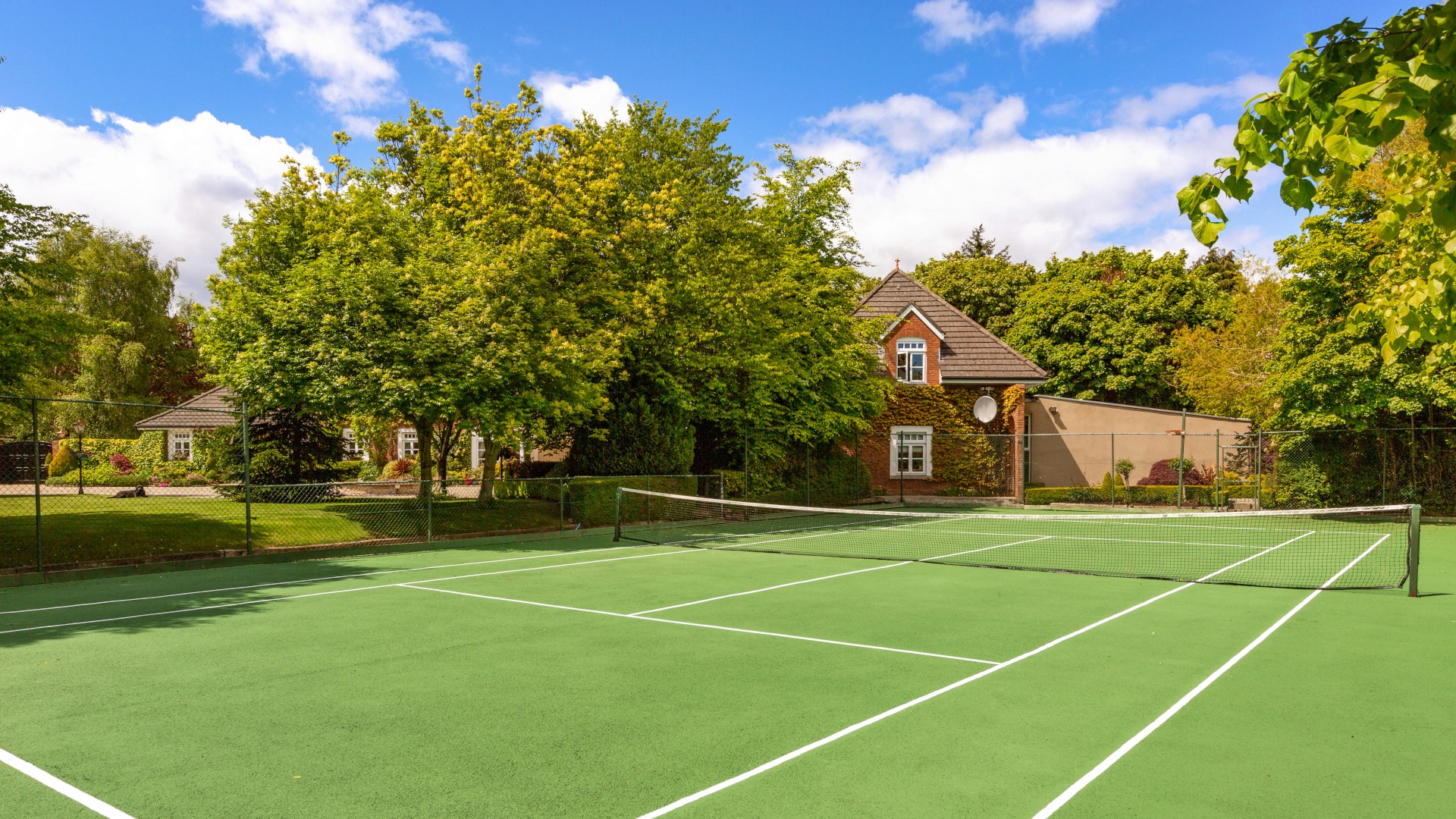
Dive into guides that show what really matters in a house, from construction and materials to design choices and practical usability. Learn what questions to ask, what to watch for, and how to spot hidden issues so every feature—from tennis courts and home gyms to outdoor spaces and custom rooms—delivers the value it promises. These guides give the knowledge to assess every detail like an insider and avoid costly surprises.

Key Insights


Key Insights






Recent


Recent




Victoria Estate Digest is your Go-to source for In-Depth Real Estate Insights, Market Trends, and Expert Analysis in British Columbia.
We cover everything from Housing Affordability and Foreign Investment to Luxury Properties and Emerging Market Opportunities.
Whether you're a Buyer, Seller, or Investor, we provide the Research and Knowledge you need to navigate BC’s ever-changing Real Estate Landscape.