/
/
Stop Counting Cents: Why Real Values Prove You Haven't Made a Profit Since 2019
Stop Counting Cents: Why Real Values Prove You Haven't Made a Profit Since 2019


The Profit Illusion Everyone Is Still Using
At first glance, it looks like many property owners in Vancouver have done extremely well since 2019. Prices are higher. Equity statements look stronger. Mortgage balances, in many cases, are smaller relative to current valuations. On paper, it appears that wealth has been created simply by holding an asset through time.
But that interpretation only works if you accept one assumption: that nominal price equals profit.
It doesn’t.
Because once you adjust for inflation, interest costs, transaction friction, opportunity cost, and holding expenses, a very different picture emerges. One that is far less comfortable, and far more accurate.
The reality is simple, even if it is rarely stated directly: most properties in Metro Vancouver have not produced real, inflation-adjusted profit since 2019 once full cost structures are included.
Not all. Not in every micro-segment. But in aggregate, and especially in leveraged ownership scenarios, the “profit” is far more fragile than it appears.
To understand why, you have to stop looking at price movement in isolation.
And start looking at what it actually costs to hold a property over time.
The Starting Point: What “Profit” Actually Means in Real Estate
In a conventional sense, profit in real estate is defined as:
Sale price – purchase price = gain
But this definition ignores nearly everything that makes ownership expensive.
A more accurate model includes:
mortgage interest paid over time
property taxes
maintenance and repair cycles
strata or condo fees
insurance increases
transaction costs (commission + legal + transfer taxes where applicable)
opportunity cost of capital
inflation erosion of purchasing power
Once you include even a partial version of these inputs, the profit equation changes dramatically.
And this is where the post-2019 period becomes particularly important.
Because it contains two radically different environments:
2019–2021: ultra-low interest rates, aggressive price expansion
2022–2026: high-rate environment, stagnation, and cost inflation
Those two periods do not average out cleanly.
They distort each other.
The 2019 Baseline That Quietly Skews Everything
In 2019, benchmark conditions in Metro Vancouver were already high, but financing conditions were historically favorable compared to today.
Key reference points:
Average mortgage rates: ~2.5%–3.5% (pre-stress test tightening impact varies by lender)
Benchmark home prices (Greater Vancouver detached): roughly $1.3M–$1.6M range depending on area
Condo benchmarks: often $550K–$750K range
Inflation: relatively stable near ~2% range pre-pandemic volatility
Then the shock period begins:
2020–2021: rates drop to near ~1.5% or lower in some cases
Liquidity surge drives price acceleration of 15%–30%+ in certain segments
Asset inflation outpaces wage growth significantly
This is the period that creates the illusion of outsized gains.
Because it compresses time.
It makes multiple years of growth feel like a single uninterrupted upward line.
But that line does not continue.
It flattens.
And then costs expand.
The Hidden Cost Layer Most “Profit” Calculations Ignore
Let’s introduce the first real correction layer: holding cost.
A typical Metro Vancouver property between 2019 and 2025 might include the following approximate annual cost ranges:
Property taxes: $4,000–$10,000+ depending on assessed value
Insurance: increased roughly 20%–40% in some categories post-2021
Maintenance: typically estimated at 1% of property value annually
Strata fees (for condos/townhomes): often rising 3%–10% annually
Mortgage interest (variable, but dramatically higher post-2022 rate hikes)
Now add the most important shift:
Interest rates moved from roughly ~2% ranges to ~5%–6% ranges, representing a ~150% to 200% increase in borrowing cost for many leveraged owners.
That single change fundamentally alters the return profile of holding property.
Because for most households, the majority of “investment return” is not price appreciation.
It is leveraged appreciation.
And leverage only works when borrowing is cheap.
Inflation: The Silent Reset Nobody Includes in Equity Statements
Even if your property value increases from $1.3M to $1.6M, that does not automatically represent real gain.
Inflation over the 2019–2025 period has cumulatively increased the cost of goods, services, and replacement value across the economy by approximately 15%–25% depending on basket and weighting method used in Canada CPI variations over that period.
That means:
A nominal gain of $300,000 on a property may only represent a significantly smaller real gain once adjusted for:
currency devaluation
replacement cost increases
cost of living escalation
and opportunity cost of capital deployment
In many cases, especially when holding costs are included, that “gain” compresses substantially.
Sometimes to near zero.
Sometimes below zero.
The Leverage Problem That Turns Gains Into Noise
Leverage is the key amplifier in real estate. It is also the key distortion mechanism.
A buyer who puts down 20% on a $1.5M property is controlling $1.2M in borrowed capital. If that property rises 10%, they do not make 10% on their equity—they make far more in theory.
But that only holds if:
financing costs remain stable
holding costs remain predictable
and the property is liquid at the assumed valuation
None of those conditions held consistently after 2019.
Instead:
financing costs surged
liquidity decreased
and transaction friction increased
Which means the theoretical amplification of gains is offset by real-world erosion through cost structure.
So the apparent “profit” becomes partially theoretical.
Transaction Reality: The Cost of Realizing Gains
One of the most overlooked components in real estate performance is exit friction.
To actually realize gains, you must sell. And selling in Vancouver typically involves:
real estate commission (often 3%–5% total split structure)
legal fees
potential vacancy or carrying overlap during transition
and in some cases, property transfer tax implications on re-entry
On a $1.6M property, even a conservative 4% transaction cost equals $64,000 immediately removed from gains.
That alone can erase a significant portion of nominal appreciation.
And this does not include holding costs over time.
Or interest payments already made.
Or opportunity cost of capital tied into illiquid equity.
What Happens When You Put It All Together
When you combine all layers:
nominal appreciation
inflation adjustment
interest rate shifts
carrying costs
transaction friction
and opportunity cost
The post-2019 “profit curve” begins to flatten significantly.
In many leveraged ownership scenarios, especially where refinancing occurred at higher rates or where properties were purchased near peak pricing windows, the real return profile begins to converge toward:
low single-digit gains
or inflation-adjusted stagnation
or in some cases, real loss once full cost accounting is applied
This does not mean real estate is a bad asset class.
It means the accounting method most people use is incomplete.
The Core Misunderstanding This Article Is About to Break Open
The biggest misconception in residential real estate is that wealth is created when prices rise.
In reality, wealth is created when:
financing costs are low
entry price is favorable
holding period aligns with liquidity cycles
and transaction friction is minimal
When those conditions reverse, price alone stops being a reliable indicator of performance.
And that is exactly what has happened since 2019.
Not a collapse. Not a boom. A recalibration of what “profit” actually means.
The Segment Breakdown: Why “The Market” Is Not One Market at All
One of the biggest analytical errors in real estate commentary is treating Vancouver as a single asset class. It isn’t. It is at least three different markets moving under the same headline index, each with different cost structures, liquidity profiles, and return outcomes since 2019.
When you separate them properly, the idea of “profit since 2019” starts to fracture immediately.
Because while some segments show nominal growth, others show stagnation once adjusted for full carrying cost realities. And none of them look like the simple upward equity curve most homeowners assume when they check their online valuation.
Detached Homes: High Appreciation, Higher Holding Drag
Detached homes in Metro Vancouver have seen some of the strongest nominal price increases since 2019, particularly in premium suburban corridors.
Key observed ranges:
2019 average detached benchmark (Greater Vancouver): approximately $1.3M–$1.6M
2022 peak segments in many areas: often $1.8M–$2.3M+
2025 stabilization range (varies widely by submarket): still broadly elevated in $1.7M–$2.4M bands
On paper, that looks like meaningful appreciation—sometimes +20% to +40%+ nominal growth depending on timing and location.
But detached ownership carries the highest holding friction:
Typical annual cost structure (illustrative range, not outliers):
Property taxes: $6,000–$15,000+
Insurance: increased roughly 20%–50% in some cases post-2021
Maintenance (roofing, landscaping, structural upkeep): often 1%–2% of property value annually
Utilities (larger footprint impact): materially higher than condo equivalents
Mortgage interest (for leveraged owners): now often 5%–6% range vs sub-3% pre-2022 environment
For a $2M detached home, even a conservative holding cost estimate can land between:
$50,000 to $120,000 annually, depending on leverage and condition
Over a 6-year period (2019–2025), that becomes:
$300,000 to $700,000+ in cumulative carrying costs
That figure alone often absorbs a large portion of nominal appreciation when time-adjusted.
So even strong price performance begins to flatten when viewed through a full-cycle lens.
Detached homes are not failing to appreciate.
They are simply expensive to hold long enough for appreciation to matter.
Condos: The Illusion of Stability
Condos are often treated as the “entry-level growth engine” of the Vancouver market. They are more liquid, more accessible, and historically more stable in downturns.
But since 2019, they have also become the clearest example of nominal growth without meaningful real returns.
Typical benchmark ranges:
2019 condo benchmark: roughly $550K–$750K
Peak 2021–2022 segments: often $700K–$900K+
2025 stabilized range: frequently $650K–$850K depending on location and age
At first glance, this suggests modest appreciation of roughly 10%–20% nominally over a longer cycle.
But condos carry a different cost distortion:
Strata fees rising at roughly 3%–10% annually in many buildings
Insurance increases affecting entire strata corporations (sometimes double-digit percentage jumps year-over-year in recent cycles)
Special levies becoming more frequent in aging buildings
Mortgage sensitivity higher due to lower entry price but similar interest rate exposure
Now consider a typical leveraged condo purchase:
$700,000 purchase price
20% down payment = $140,000 equity
$560,000 mortgage exposure
At ~2.5% interest (pre-2022) vs ~5.5% (post-2022), monthly cost differences alone can increase by $1,200–$1,800 per month depending on amortization.
Over time, that interest differential becomes one of the largest “invisible losses” in the system.
So while condo prices appear stable, their net performance after financing shift is often flat or negative in real terms for leveraged owners.
Townhomes: The Most Mispriced Middle Layer
Townhomes sit in the most analytically interesting position in the market because they combine elements of both condos and detached homes:
shared strata costs
but larger footprint maintenance exposure
partial land value exposure
and strong family-oriented demand elasticity
Typical ranges:
2019 benchmark: approximately $750K–$1.0M
2022 peak ranges: often $1.0M–$1.4M
2025 range: broadly $950K–$1.3M depending on submarket
Nominal growth here can look stronger than condos but less extreme than detached homes.
However, townhomes are particularly sensitive to:
interest rate changes
family income thresholds
and substitution effects (detached vs condo trade-offs)
This creates volatility in both directions.
But the key issue is not volatility—it is cost stacking:
Townhome owners often experience a hybrid of:
rising strata fees (condo-like pressure)
plus maintenance obligations closer to detached profiles
plus mortgage sensitivity similar to condos
This creates a layered cost structure that is often underestimated in “profit” calculations.
In many cases, townhomes are the segment where nominal gains are most likely to be neutralized by full cost accounting, especially when purchased near peak pricing cycles.
The Real Comparison: Nominal Growth vs Real Ownership Return
To make the distortion visible, it helps to simplify into conceptual return bands:
Across 2019–2025 cycles:
Detached homes: +20% to +40% nominal, but heavily offset by $300K–$700K+ holding cost ranges over full cycle
Condos: +10% to +20% nominal, but eroded by interest rate differentials + strata + leverage sensitivity
Townhomes: +10% to +30% nominal, but structurally exposed to multi-layer cost stacking
Once these layers are applied, the net “real return” range compresses significantly:
many leveraged cases: 0% to low single-digit real gains
some timing-dependent cases: near-zero net outcome
some high-leverage or peak-entry cases: negative real return after full cost accounting
This is the part that does not show up in listing dashboards or mortgage statements.
Because those systems track price.
Not performance.
The Timing Problem That Breaks the Entire Model
The most important variable in real estate returns is not property type.
It is entry timing.
Between 2019 and 2021, buyers benefited from:
low interest rates (often ~2% or lower ranges)
rapid price appreciation
strong liquidity conditions
low carrying cost pressure
Between 2022 and 2025, buyers faced:
significantly higher borrowing costs (~5%–6% ranges)
slower price growth or stagnation
increased insurance and maintenance costs
reduced liquidity
These two regimes do not average evenly.
A property purchased in 2020 behaves completely differently from one purchased in 2022, even if both are identical units in the same building.
That is why aggregate “market growth” charts are misleading.
They erase timing.
And in real estate, timing is often the difference between wealth creation and wealth illusion.
What This Means for the “Profit Since 2019” Narrative
Once you break the market into segments, apply real cost structures, and incorporate timing differences, a consistent pattern emerges:
The idea of uniform profit across Metro Vancouver since 2019 is mathematically unstable.
It only holds under simplified assumptions:
no interest rate recalibration
no inflation adjustment
no transaction cost inclusion
no maintenance escalation
and no segmentation of entry timing
But none of those assumptions reflect reality.
So the conclusion becomes less about whether prices went up.
And more about whether those price increases translated into real, accessible wealth after full lifecycle costs are applied.
And in many cases, they did not.
The Interest Rate Shock That Silently Reset the Entire Market
If there is a single variable that explains why “profits since 2019” do not hold up under real analysis, it is not price. It is not supply. It is not even inflation in isolation.
It is the collapse of cheap leverage.
Between 2019 and 2021, Vancouver’s housing market operated under what was effectively a low-cost capital regime. Mortgage rates in many cases hovered around ~1.5% to ~2.5%, depending on product structure and borrower profile. That environment did something subtle but extremely powerful: it inflated asset values while keeping the cost of holding those assets artificially low.
Then the regime flipped.
Between 2022 and 2024, interest rates moved into the ~5% to 6% range, a shift of roughly +200% to +300% in borrowing cost depending on baseline comparison.
That change did not just slow the market.
It rewired the math behind ownership.
The Leverage Multiplier That Quietly Went Into Reverse
Real estate returns in Vancouver are heavily leverage-dependent. Very few owners hold properties outright without financing. That means most “returns” are actually returns on equity, amplified by borrowed capital.
Under low interest rates, leverage works like a multiplier:
small down payment
large borrowed principal
low carrying cost
rising asset price
This combination creates exponential-looking gains on paper.
But when interest rates rise sharply, leverage does not simply “reduce returns.” It actively reverses the structure of the investment.
Because the cost of borrowing becomes a dominant monthly variable.
A simplified example illustrates the shift:
A $1.2M mortgage at:
2% interest ≈ ~$2,200/month interest component (approximate range depending on amortization structure)
5.5% interest ≈ ~$5,500+/month interest component
That is not a marginal change. That is a structural reset of monthly cost pressure by roughly $3,000+ per month on the same asset.
Over a year, that difference exceeds $36,000.
Over five years, it compounds into $180,000+ in additional carrying cost exposure on identical properties.
That cost does not show up in “price appreciation.”
But it directly reduces real return.
Why 2019–2021 Gains Were Not Replicated (Even If Prices Stayed High)
The most misleading aspect of Vancouver’s post-2019 narrative is that price charts still show elevated levels. In many cases, prices did not collapse after the rate shock—they stabilized or adjusted modestly.
But stability is not the same as profitability.
Because the earlier gains were generated in a low-cost environment that no longer exists.
A property that appreciated rapidly during 2020–2021 did so under conditions where:
mortgage costs were minimal
refinancing was cheap
holding periods were financially comfortable
and liquidity was abundant
After 2022, those same properties entered a completely different regime:
refinancing becomes significantly more expensive
holding costs increase materially
and liquidity tightens, especially in higher price brackets
So even if nominal value remains elevated, the mechanism that created the gains no longer exists.
That is the core break in the system.
The Refinancing Trap: Where “Equity” Gets Quietly Repriced
One of the least discussed impacts of higher rates is what happens at renewal.
In a low-rate cycle, homeowners often lock in financing that assumes stability or further rate declines. But when renewal occurs in a high-rate environment, the entire cost structure of ownership resets.
Consider a simplified scenario:
Original mortgage: $1,000,000 at ~2%
Renewal mortgage: same principal at ~5.5%
Even without changing the principal, the payment shock can increase monthly obligations by $1,500 to $3,000+, depending on amortization length.
That change does not reduce property value directly.
But it reduces net economic benefit of holding the asset.
In many cases, it forces one of three outcomes:
increased rental dependency to offset cost
forced extension of amortization periods (increasing long-term cost)
or strategic sale decisions under less favorable conditions
This is where “paper gains” begin to detach from lived financial reality.
Because equity on paper does not equal liquidity.
And liquidity becomes more expensive under higher rates.
The Hidden Cost of “Staying Put”
A common assumption in real estate is that holding property eliminates risk.
But in a high-rate environment, holding becomes a cost center.
The longer the holding period under elevated rates, the more capital is absorbed by:
interest payments
maintenance inflation
insurance increases
strata fee escalation (for condos/townhomes)
This creates what can be described as a negative carry environment, where the cost of ownership exceeds the financial benefit of holding, unless appreciation is strong enough to compensate.
Between 2019 and 2021, appreciation often exceeded carry costs comfortably.
Between 2022 and 2025, that balance tightened significantly.
In many segments, it flipped.
Which means time no longer automatically generates value.
Time now consumes it unless conditions are favorable.
Why Price Charts Hide the Real Story
One of the most persistent misunderstandings in housing analysis is treating price charts as performance charts.
They are not.
A price chart tells you what an asset sold for at different points in time.
It does not tell you:
what it cost to hold
what it cost to finance
what it cost to maintain
or what it cost to exit
This is why Vancouver’s post-2019 price curve looks deceptively strong.
It reflects transaction outcomes, not ownership outcomes.
And in a low-rate environment, those two can diverge significantly.
The Structural Reset: Why the Market Will Never Fully Return to 2019 Conditions
Even if rates eventually decline, the 2019–2021 environment is not returning in full form.
Several structural changes have already occurred:
higher baseline construction costs (now 20%–40% above pre-2020 levels)
stricter lending stress tests and qualification requirements
increased insurance and replacement cost baselines
and a higher global interest rate floor compared to the ultra-low decade
These factors mean that even in a lower-rate future, the system will not revert to previous cost structures.
So the “cheap leverage era” was not just a cycle.
It was a regime.
And regimes do not fully reverse.
They transition.
What This Means for “Profit Since 2019”
When you combine:
low-rate-driven price expansion (2019–2021)
high-rate-driven cost expansion (2022–2025)
inflation-adjusted purchasing power decline
refinancing shocks
and holding cost accumulation
The result is not a simple profit curve.
It is a two-phase distortion:
Phase 1: apparent wealth creation through leverage expansion
Phase 2: wealth stabilization or erosion through cost normalization
And when those phases are averaged over a full cycle, the net outcome often converges toward:
minimal real returns in many leveraged scenarios
or performance that is significantly lower than nominal price appreciation suggests
This is why the phrase “profit since 2019” becomes misleading. Because it assumes a single continuous regime. But the market did not behave continuously.
It changed rules mid-cycle.
The Liquidity Illusion: Why Being “Worth More” Doesn’t Mean You’re Richer
At this point in the cycle, one of the most persistent misunderstandings in real estate is the assumption that equity equals wealth.
On paper, it does.
In practice, it often doesn’t.
Because equity is a valuation concept. Wealth is a liquidity concept. And the gap between the two has widened significantly since 2019.
A homeowner can be “up” several hundred thousand dollars in nominal terms and still be financially constrained in ways that feel indistinguishable from stagnation. That contradiction is not rare anymore—it is structurally normal in high-value, low-liquidity markets like Metro Vancouver.
And it becomes even more pronounced once you introduce selling friction, timing risk, and replacement cost inflation into the equation.
The Core Problem: Equity Is Not Spendable Until It Is Realized
Real estate equity is often treated as if it behaves like a bank balance.
It does not.
Until a property is sold or refinanced under favorable conditions, equity remains a theoretical value derived from comparable transactions, not an accessible financial resource.
This matters because the entire “profit since 2019” narrative depends on the assumption that increased valuation automatically translates into increased financial capacity.
But that only holds under one condition: a liquid exit.
And exits in Vancouver are not frictionless.
They are costly, slow, and highly timing-dependent.
The Exit Cost Layer That Quietly Erases Gains
To convert equity into usable capital, a homeowner typically faces multiple cost layers:
real estate commission often around 3%–5% total transaction value
legal and administrative fees
potential vacancy or bridging costs during transition
moving and relocation expenses
and in some cases, taxes or reinvestment inefficiencies depending on strategy
On a $1.5M property, a conservative 4% transaction cost equals roughly $60,000 immediately removed from realized value.
On a $2M property, that figure jumps to $80,000+.
And that is before considering market timing.
Because in a cooling or uncertain market, sellers often accept additional price adjustments beyond commission simply to secure liquidity.
So the real exit cost is not fixed.
It expands under pressure.
The Replacement Cost Trap: Why Selling Is Not the Same as Winning
Even when a homeowner successfully sells at a higher price than they purchased, the next question is rarely considered:
What does it cost to re-enter the market?
This is where nominal gains begin to lose meaning.
If a homeowner sells a property for a $300,000 nominal gain, but replacement inventory has also increased in price over the same period, then the gain does not necessarily improve their purchasing power.
In many cases:
selling triggers exposure to higher replacement prices
downsizing may preserve equity but reduce living standards
upgrading requires additional capital beyond realized gains
So “profit” becomes relative rather than absolute.
It exists only within a closed loop assumption where the seller does not re-enter the market.
But most households do.
They move, they upgrade, they downsize, they refinance, or they restructure.
And every one of those actions reintroduces market exposure.
The Illusion of Mobility: Why Paper Wealth Feels More Useful Than It Is
A key psychological distortion in housing markets is the feeling of increased financial flexibility that comes with rising valuations.
On paper, homeowners feel more secure because:
their net worth has increased
their debt-to-asset ratio has improved
and their balance sheet looks stronger
But real financial flexibility depends on liquidity, not valuation.
And liquidity in housing is constrained by:
transaction timeframes (often 30–90+ days depending on market conditions)
buyer financing constraints
market sentiment cycles
and seasonal demand fluctuations
This means equity is not only illiquid—it is conditionally illiquid.
It becomes usable only when market conditions align with both pricing expectations and buyer capacity.
That alignment is not guaranteed.
And it has become less predictable since 2019.
The Refinancing Mirage: When Equity Becomes Expensive to Access
One alternative to selling is refinancing.
But refinancing is not free capital.
It is re-leveraged capital.
And in a high-rate environment, accessing equity through refinancing can actually increase long-term financial burden.
A homeowner who refinances at 5%–6% interest rates is effectively converting paper equity into higher-cost debt.
That creates a paradox:
equity increases on paper
but accessing it increases monthly obligations
So the asset appears stronger while the household balance sheet becomes more expensive to maintain.
This is one of the most misunderstood dynamics in post-2019 housing markets.
Rising values do not automatically reduce financial pressure.
They often increase the cost of accessing those values.
The 2019 Benchmark Problem: Why Everything Is Measured Against a Distorted Baseline
Another issue is the psychological anchoring to 2019 as a reference point.
It is treated as a baseline of “normal” market conditions.
But 2019 was not structurally normal in financing terms.
It represented:
unusually low borrowing costs
strong liquidity conditions
high transaction velocity
and relatively predictable carrying structures
When you measure 2025 conditions against that baseline, you are not comparing two stable environments.
You are comparing two fundamentally different regimes.
So perceived “losses” or “gains” are often artifacts of baseline selection rather than actual wealth movement.
Why Many Owners Feel Wealthier but Behave More Conservatively
One of the more subtle outcomes of the post-2019 cycle is behavioral contradiction.
Many homeowners report feeling wealthier on paper, but simultaneously:
reduce discretionary spending
avoid upgrading properties
delay major financial decisions
and become more sensitive to rate changes
This is not irrational.
It reflects the difference between nominal equity and usable liquidity.
When wealth is tied up in an asset that is expensive to access, it does not translate into lifestyle flexibility in the same way as liquid capital would.
So even “wealth gains” can produce conservative financial behavior.
Which is itself a signal that the wealth is not fully realized.
The Structural Conclusion Emerging Across All Layers
When you combine:
nominal price appreciation
interest rate resets
transaction friction
refinancing constraints
replacement cost inflation
and liquidity limitations
A consistent pattern emerges:
Real estate wealth since 2019 is heavily dependent on whether gains are measured in paper terms or realized terms.
And in many cases, those two measurements diverge significantly. Paper wealth has increased. Realized financial flexibility has not always followed.
The Collapse of the “Profit Since 2019” Narrative
At this point, the argument is no longer about whether real estate went up in value. It clearly did in many segments. That part is not in dispute.
The real question is whether that increase translates into meaningful, realized profit once the full cost structure of ownership is accounted for over a complete cycle.
And when you assemble every layer discussed so far—pricing, inflation, interest rates, leverage, transaction friction, and liquidity constraints—the answer becomes far less dramatic than the headlines suggest.
In many cases, the “profit since 2019” narrative does not collapse because prices failed to rise.
It collapses because the system that generated those price movements also generated equivalent cost absorption mechanisms that quietly neutralized them.
The Full-Cycle Ownership Equation Nobody Actually Uses
To understand real performance, you have to move beyond the simple:
Sale price – purchase price = profit
And instead approximate a more realistic framework:
Nominal appreciation
– inflation adjustment
– interest cost differential (2019 vs post-2022 regime)
– maintenance + strata + insurance escalation
– transaction costs (entry + exit friction)
– opportunity cost of capital
= real return
Once that framework is applied consistently, the outcome changes significantly across most ownership scenarios in Metro Vancouver.
Not uniformly negative. Not uniformly positive.
But much closer to:
low positive real returns in optimal timing cases
flat returns in average timing cases
negative real returns in peak-entry, high-leverage cases
The key point is not direction.
It is compression.
The spread between “strong performance” and “weak performance” narrows dramatically once full cost accounting is applied.
Why the Market Still Feels Like It “Went Up” Anyway
Despite this compression, most people still perceive strong gains since 2019.
There are three main reasons for that perception gap:
First, nominal pricing remains visually dominant. Property values are continuously updated, and those updates reinforce the idea of growth even when net economic benefit is unchanged.
Second, debt amortization creates a psychological win. As mortgage balances slowly decrease over time, households feel progress even if total net position is stagnant.
Third, selective comparison reinforces optimism. Most owners compare current valuations to purchase price, not to full lifecycle cost.
So the system produces a consistent illusion:
Price up = success
Even when:
Price up – cost structure = neutral or weak performance
The Structural Reality: A Market That Expanded Cost Faster Than It Expanded Wealth
One of the most important findings across the post-2019 cycle is that cost inflation and asset inflation did not move in the same way.
Asset prices increased, but:
interest costs increased faster in percentage terms after 2022
insurance and maintenance costs increased steadily
and transaction friction remained structurally high
So while asset values rose in nominal terms, the cost of maintaining those assets rose in parallel—or in some cases faster.
This is why real returns compress.
It is not a failure of appreciation.
It is a failure of netting effects.
The 2019–2025 Cycle in One Sentence
If the entire period is reduced to its core dynamic, it is this:
A low-cost leverage expansion phase was followed by a high-cost holding normalization phase.
And those two phases do not cancel cleanly.
They overlap in ways that distort perceived performance.
The first phase inflates gains.
The second phase absorbs them.
Why “Profit” Becomes a Timing Outcome, Not a Market Outcome
Once you break the cycle into components, a key truth emerges:
Profit is no longer primarily determined by whether you own property.
It is determined by when you entered, how you financed, and when (or if) you exit.
This creates a fragmented outcome space:
early low-rate entrants: often strongest net position
mid-cycle buyers: mixed or neutral outcomes depending on leverage
peak-cycle buyers with high leverage: often weakest real outcomes
The market did not move evenly enough to produce uniform returns.
Instead, it redistributed outcomes based on timing sensitivity.
Which is why aggregate “market profit” is a misleading concept in this cycle.
The Final Layer: Why the Narrative Still Survives
Even after all adjustments, the idea that “real estate made money since 2019” persists.
Not because it is fully accurate.
But because it is partially true in enough visible cases to remain culturally dominant.
A market does not need universal truth to sustain a narrative.
It only needs enough observable confirmation points:
rising benchmark charts
visible equity gains for long-term holders
media reinforcement of price increases
and selective success stories
Against that backdrop, full-cycle accounting feels abstract.
Even when it is more precise.
The Actual Conclusion: What 2019 Really Represents
The post-2019 housing cycle is often framed as a period of wealth creation. But a more accurate description is: A period of nominal asset expansion followed by cost normalization that absorbed much of the generated paper value.
Which leads to a simpler, more uncomfortable conclusion: In many cases, real estate did not produce extraordinary real profit since 2019.
It produced extraordinary movement in price inside a system that simultaneously expanded the cost of holding and accessing those prices. And once both sides of that equation are included, the result is not a clear wealth event.
It is a compression event. Where gains exist. But are far less clean, less universal, and less liquid than the surface narrative suggests.
Final Line
Stop counting cents on price charts. Start counting the full cost of ownership cycles.
Because once you do, 2019 stops looking like the beginning of a wealth surge. And starts looking like the start of a much more complicated accounting problem.
DATA APPENDIX — Real Return Simulation Models (2019–2025)
How “Profit” Disappears in Full-Cycle Ownership Math
This section stress-tests the core claim of the article using simplified but realistic ownership scenarios in Metro Vancouver.
The purpose is not to present abstract theory, but to simulate what actually happens when real households enter the market under different timing, leverage, and interest rate regimes.
All numbers below are illustrative but grounded in observed ranges across 2019–2025 conditions, including pricing cycles, borrowing costs, and typical ownership expenses.
What emerges is not a single outcome, but a pattern: the same asset behaves completely differently depending on when it was acquired and under what financial conditions it was carried.
Model 1 — The “Average Condo Buyer” (Leverage Case)
Purchase Assumptions (2019 Entry)
Purchase price: $650,000
Down payment: 20% = $130,000
Mortgage: $520,000
Interest rate (avg 2019–2021): 2.3%
Amortization: 25 years
Holding Period: 6 Years (2019–2025)
Price Outcome (2025)
Sale price: $750,000
Nominal gain: +$100,000 (+15.4%)
Cost Breakdown (Full Cycle)
1. Mortgage Interest Paid
2019–2021 low-rate period: approx $28,000–$32,000
2022–2025 higher-rate exposure: approx $65,000–$85,000
Total interest paid: ~$95,000–$115,000
2. Strata + Insurance + Maintenance
Avg strata fees (rising over time): $28,000–$35,000 total
Insurance escalation impact: $4,000–$7,000
Maintenance reserve + repairs: $10,000–$15,000
Total: ~$42,000–$57,000
3. Transaction Costs (Buy + Sell)
Purchase + sale commissions + legal: $30,000–$40,000
Total Cost Drag
Low estimate: $167,000
High estimate: $212,000
Net Result (Real Return)
Nominal gain: +$100,000
Minus cost drag: –$167K to –$212K
Final outcome:
👉 Real return: –$67,000 to –$112,000 (LOSS RANGE)
Conclusion for Model 1
Even with a 15% nominal price increase, the full-cycle owner is often negative in real terms once financing and carry costs are included.
Model 2 — The “Timing Winner” (Low Rate Entry Advantage)
Purchase Assumptions (2020 Entry)
Purchase price: $700,000
Down payment: 20% = $140,000
Mortgage: $560,000
Interest rate locked: ~1.8%
Holding Period: 5 Years
Price Outcome (2025)
Sale price: $800,000
Nominal gain: +$100,000 (+14.3%)
Cost Breakdown
1. Mortgage Interest Paid (Low Rate Advantage)
Total interest: ~$45,000–$55,000
2. Carry Costs
Strata + insurance + maintenance: $35,000–$45,000
3. Transaction Costs
Buy + sell: $32,000–$38,000
Total Cost Drag
Approx: $112,000–$138,000
Net Result
Nominal gain: +$100,000
Cost drag: –$112K to –$138K
Final outcome:
👉 Real return: –$12,000 to –$38,000 (near-zero / mild loss)
Conclusion for Model 2
Even “good timing” does not guarantee meaningful real profit. It mainly reduces losses rather than creating large gains.
Model 3 — The “Peak Buyer” (High Rate Entry Case)
Purchase Assumptions (2022 Entry)
Purchase price: $850,000
Down payment: 20% = $170,000
Mortgage: $680,000
Interest rate: ~5.4%
Holding Period: 3 Years
Price Outcome (2025)
Sale price: $825,000
Nominal loss: –$25,000
Cost Breakdown
1. Mortgage Interest
Approx: $105,000–$130,000
2. Carry Costs
Strata + insurance + maintenance: $18,000–$25,000
3. Transaction Costs
Buy + sell: $35,000–$45,000
Total Cost Drag
Approx: $158,000–$200,000
Net Result
Nominal loss: –$25,000
Real loss: –$183,000 to –$225,000
Final outcome:
👉 Severe real capital erosion despite only “small price drop”
Key Pattern Across All Models
Across all three scenarios:
Scenario | Nominal Outcome | Real Outcome |
|---|---|---|
2019 entry | +15% | –$67K to –$112K |
2020 entry | +14% | ~flat to slight loss |
2022 entry | –3% | –$180K+ |
Core Insight
The same market produces three completely different financial realities depending on:
entry timing
interest rate regime
leverage level
holding duration
Which means:
👉 There is no single “market return”
👉 Only distribution of outcomes
Macro Interpretation (What This Proves)
Once full-cycle math is applied:
Nominal gains persist in charts
But real returns compress heavily under leverage
Timing becomes more important than appreciation
And cost structure dominates headline pricing
So the original claim holds:
You don’t measure profit in Vancouver real estate anymore by price change.
You measure it by how much of the system you were exposed to at the wrong time.
Cycle-Wide ROI Heatmaps + Market Winner/Loser Map (2019–2025)
Where the Money Actually Went Across Property Types
This section moves from individual scenarios into system-wide performance mapping across Metro Vancouver property classes.
The goal is simple:
Not “what did prices do?”
But who actually made money after full-cycle costs.
YEAR-BY-YEAR CASHFLOW HEATMAP (2019–2025)
Below is a simplified directional model of average leveraged ownership pressure across property types.
Values represent net annual ownership pressure (costs – benefits) assuming typical leverage.
CONDOS (Average One-Bedroom, $600K–$800K Range)
Year | Market Condition | Net Ownership Pressure |
|---|---|---|
2019 | Low rate / stable | –$8K to –$12K |
2020 | Ultra-low rate liquidity spike | –$5K to –$10K |
2021 | Peak price acceleration | –$3K to +$2K |
2022 | Rate shock begins | –$15K to –$25K |
2023 | High-rate stabilization | –$18K to –$30K |
2024 | Slow absorption | –$15K to –$28K |
2025 | Frictional equilibrium | –$10K to –$22K |
Key Insight
Condos only briefly approached neutrality during peak liquidity. The rest of the cycle is structurally negative carry once rates normalize.
TOWNHOMES ($800K–$1.3M RANGE)
Year | Market Condition | Net Ownership Pressure |
|---|---|---|
2019 | Stable leverage | –$10K to –$18K |
2020 | Low rate expansion | –$5K to –$12K |
2021 | Peak demand surge | –$2K to +$5K |
2022 | Rate shock | –$18K to –$35K |
2023 | High cost plateau | –$20K to –$40K |
2024 | Weak liquidity rebound | –$18K to –$38K |
2025 | Stabilization | –$12K to –$30K |
Key Insight
Townhomes show higher volatility and deeper drawdowns than condos due to hybrid cost structure.
DETACHED HOMES ($1.5M–$3M RANGE)
Year | Market Condition | Net Ownership Pressure |
|---|---|---|
2019 | Pre-expansion baseline | –$20K to –$40K |
2020 | Low-rate expansion | –$10K to –$25K |
2021 | Peak appreciation | –$5K to +$10K |
2022 | Rate shock absorption | –$40K to –$80K |
2023 | High carry regime | –$50K to –$90K |
2024 | Maintenance inflation | –$45K to –$85K |
2025 | Stabilized high-cost plateau | –$35K to –$75K |
Key Insight
Detached homes generate the largest nominal gains but also the highest structural cost drag, meaning they are the most timing-sensitive asset class in the entire market.
TOTAL CYCLE ROI MATRIX (2019–2025)
This is where nominal pricing fully diverges from real outcomes.
CONDOS
Nominal price change: +10% to +20%
Real holding cost drag: –$60K to –$150K
Typical real ROI range:
👉 –5% to +3%
TOWNHOMES
Nominal price change: +10% to +25%
Real holding cost drag: –$80K to –$200K
Typical real ROI range:
👉 –8% to +5%
DETACHED HOMES
Nominal price change: +20% to +40%
Real holding cost drag: –$200K to –$700K
Typical real ROI range:
👉 –10% to +10% (high variance by timing)
THE “WHO ACTUALLY WON” CYCLE MAP
Instead of looking at property type alone, the real determinant is entry timing + leverage regime.
WINNERS (STRUCTURAL POSITIVE OUTCOMES)
These groups generally preserved or mildly increased real wealth:
Buyers who entered 2019–early 2020
High equity / low leverage owners
Owners who refinanced early into low-rate fixed terms
Detached homeowners in high-demand submarkets with low debt ratios
Outcome profile:
👉 +0% to +15% real gain (selective cases)
NEUTRAL ZONE (WEALTH PRESERVATION, NOT CREATION)
Largest group in the market:
Condo buyers entering 2020–2021
Townhome buyers with moderate leverage
Owners who did not refinance post-rate shock
Outcome profile:
👉 –5% to +5% real return
LOSERS (REAL CAPITAL EROSION ZONE)
Most exposed cohort:
Buyers entering late 2021–2023
Highly leveraged investors
Condo investors relying on rental yield assumptions
Owners refinancing at peak rate environment
Outcome profile:
👉 –10% to –25% real capital erosion
THE STRUCTURAL TRUTH THE DATA POINTS REPEAT
Across every dataset, one pattern repeats:
Nominal gains exist, but they are not evenly transferable into real wealth.
Because:
Interest rate regimes reset leverage economics
Carrying costs absorb price appreciation
Transaction friction removes liquidity gains
Inflation compresses purchasing power
Timing dominates outcome more than asset type
So the system does not behave like a rising asset class.
It behaves like a timing-dominant cost absorption system with episodic appreciation bursts.
FINAL CONSOLIDATED INSIGHT (CYCLE LEVEL)
If you strip everything back to one line:
Since 2019, Metro Vancouver real estate has produced wide distribution of outcomes, but narrow average real returns once full cost structures are included.
Which means:
Some people look like winners
Some look neutral
Some are significantly down in real terms
But the aggregate narrative of universal “profit” does not hold under full accounting
IRR, Break-Even Math & Buyer Vintage Simulation (2019–2025)
When “Profit” Becomes a Rate Problem, Not a Price Problem
At the surface, real estate is still discussed in price changes.
But at the structural level, performance is determined by:
internal rate of return (IRR)
cost of capital (mortgage rate)
holding duration
and exit friction
Once you convert Vancouver housing into those variables, the “profit since 2019” narrative becomes a timing-and-financing question, not a simple appreciation story.
SECTION 1 — BREAK-EVEN APPRECIATION THRESHOLD (THE MOST IMPORTANT TABLE)
This answers a simple question:
How much does a property need to rise in value just to offset full ownership costs?
Assumptions:
20% down payment
typical Metro Vancouver cost structure
full-cycle holding costs included
transaction costs included
5–6 year hold horizon
CONDOS ($650K BASE CASE)
Required appreciation to break even:
Low-leverage / low-rate cycle: +12% to +18%
High-rate cycle (post-2022 buyers): +18% to +28%
Interpretation:
A condo bought in 2022 would need near double-digit appreciation just to offset friction + interest differential, even before real profit begins.
TOWNHOMES ($1.0M BASE CASE)
Required appreciation to break even:
Low-rate entry: +15% to +22%
High-rate entry: +20% to +35%
Interpretation:
Townhomes sit in the worst efficiency zone: high costs + moderate appreciation ceiling.
DETACHED HOMES ($1.8M BASE CASE)
Required appreciation to break even:
Low-rate entry: +18% to +30%
High-rate entry: +30% to +50%+
Interpretation:
Detached homes require large nominal gains just to neutralize holding friction, especially in high-rate cycles.
SECTION 2 — IRR SIMULATION (REAL RETURN MEASURE)
Now we convert everything into IRR (annualized return), which removes illusion created by raw price change.
MODEL A — 2019 BUYER (LOW RATE ERA ENTRY)
Condo example:
Entry: $650K
Exit: $750K
Holding period: 6 years
Net cash drag: moderate
Result:
👉 IRR: ~0% to +2% annually
Meaning:
Outperforming savings accounts slightly, but far below perceived “real estate wealth growth.”
MODEL B — 2020 BUYER (LIQUIDITY EXPANSION PHASE)
Same asset type:
Entry: $700K
Exit: $800K
Lower early-rate friction, then rising costs
Result:
👉 IRR: –1% to +2% annually
Meaning:
Even “good timing” mostly converts to capital preservation, not expansion.
MODEL C — 2022 BUYER (HIGH RATE ENTRY)
Entry: $850K
Exit: $825K
High interest environment
Result:
👉 IRR: –5% to –12% annually
Meaning:
This cohort is structurally disadvantaged regardless of price stability.
SECTION 3 — BUYER VINTAGE COMPARISON (THE MOST IMPORTANT FRAME)
Instead of comparing properties, we compare entry cohorts.
2019 BUYERS (PRE-LOW RATE PEAK CYCLE)
Benefit from early low-cost leverage
Capture part of 2020–2021 expansion
Absorb 2022–2025 cost normalization
Net position:
👉 Best cohort overall
Real return: flat to mildly positive
Wealth outcome: preserved, not dramatically expanded
2020–2021 BUYERS (PEAK LIQUIDITY ERA)
Enter at or near local price acceleration peak
Benefit from short-term appreciation
Exposed to full interest rate shock afterward
Net position:
👉 Mixed cohort
Real return: –5% to +5%
Outcome highly dependent on refinancing timing
2022–2023 BUYERS (RATE SHOCK ENTRY COHORT)
Enter at elevated borrowing cost regime
Face stagnant or slow-moving price environment
High carrying cost pressure
Net position:
👉 Structurally weakest cohort
Real return: –5% to –15%
High probability of negative IRR
2024–2025 BUYERS (HIGH COST EQUILIBRIUM PHASE)
Enter stabilized but expensive borrowing environment
Limited upside compression already priced in
Net position:
👉 Neutral-to-negative expected return range
Real return expectation: –3% to +3%
SECTION 4 — THE CORE ECONOMIC CONCLUSION
Across all IRR and break-even models, one structural truth emerges:
The post-2019 housing cycle did not produce consistent wealth creation—it produced cohort-based redistribution of financial outcomes based on entry timing and leverage exposure.
Which means:
There is no single “market return”
There is no uniform “profit since 2019”
There are only different financial realities depending on entry point into a shifting rate regime
FINAL SYSTEM INSIGHT
If you strip everything down to its core:
Real estate returns since 2019 are not primarily driven by price appreciation.
They are driven by:
when you entered the cycle
how much leverage you used
and whether you exited before or after the rate regime shift
And once those variables dominate the model:
“Profit” becomes a timing artifact, not a market-wide outcome.
The Profit Illusion Everyone Is Still Using
At first glance, it looks like many property owners in Vancouver have done extremely well since 2019. Prices are higher. Equity statements look stronger. Mortgage balances, in many cases, are smaller relative to current valuations. On paper, it appears that wealth has been created simply by holding an asset through time.
But that interpretation only works if you accept one assumption: that nominal price equals profit.
It doesn’t.
Because once you adjust for inflation, interest costs, transaction friction, opportunity cost, and holding expenses, a very different picture emerges. One that is far less comfortable, and far more accurate.
The reality is simple, even if it is rarely stated directly: most properties in Metro Vancouver have not produced real, inflation-adjusted profit since 2019 once full cost structures are included.
Not all. Not in every micro-segment. But in aggregate, and especially in leveraged ownership scenarios, the “profit” is far more fragile than it appears.
To understand why, you have to stop looking at price movement in isolation.
And start looking at what it actually costs to hold a property over time.
The Starting Point: What “Profit” Actually Means in Real Estate
In a conventional sense, profit in real estate is defined as:
Sale price – purchase price = gain
But this definition ignores nearly everything that makes ownership expensive.
A more accurate model includes:
mortgage interest paid over time
property taxes
maintenance and repair cycles
strata or condo fees
insurance increases
transaction costs (commission + legal + transfer taxes where applicable)
opportunity cost of capital
inflation erosion of purchasing power
Once you include even a partial version of these inputs, the profit equation changes dramatically.
And this is where the post-2019 period becomes particularly important.
Because it contains two radically different environments:
2019–2021: ultra-low interest rates, aggressive price expansion
2022–2026: high-rate environment, stagnation, and cost inflation
Those two periods do not average out cleanly.
They distort each other.
The 2019 Baseline That Quietly Skews Everything
In 2019, benchmark conditions in Metro Vancouver were already high, but financing conditions were historically favorable compared to today.
Key reference points:
Average mortgage rates: ~2.5%–3.5% (pre-stress test tightening impact varies by lender)
Benchmark home prices (Greater Vancouver detached): roughly $1.3M–$1.6M range depending on area
Condo benchmarks: often $550K–$750K range
Inflation: relatively stable near ~2% range pre-pandemic volatility
Then the shock period begins:
2020–2021: rates drop to near ~1.5% or lower in some cases
Liquidity surge drives price acceleration of 15%–30%+ in certain segments
Asset inflation outpaces wage growth significantly
This is the period that creates the illusion of outsized gains.
Because it compresses time.
It makes multiple years of growth feel like a single uninterrupted upward line.
But that line does not continue.
It flattens.
And then costs expand.
The Hidden Cost Layer Most “Profit” Calculations Ignore
Let’s introduce the first real correction layer: holding cost.
A typical Metro Vancouver property between 2019 and 2025 might include the following approximate annual cost ranges:
Property taxes: $4,000–$10,000+ depending on assessed value
Insurance: increased roughly 20%–40% in some categories post-2021
Maintenance: typically estimated at 1% of property value annually
Strata fees (for condos/townhomes): often rising 3%–10% annually
Mortgage interest (variable, but dramatically higher post-2022 rate hikes)
Now add the most important shift:
Interest rates moved from roughly ~2% ranges to ~5%–6% ranges, representing a ~150% to 200% increase in borrowing cost for many leveraged owners.
That single change fundamentally alters the return profile of holding property.
Because for most households, the majority of “investment return” is not price appreciation.
It is leveraged appreciation.
And leverage only works when borrowing is cheap.
Inflation: The Silent Reset Nobody Includes in Equity Statements
Even if your property value increases from $1.3M to $1.6M, that does not automatically represent real gain.
Inflation over the 2019–2025 period has cumulatively increased the cost of goods, services, and replacement value across the economy by approximately 15%–25% depending on basket and weighting method used in Canada CPI variations over that period.
That means:
A nominal gain of $300,000 on a property may only represent a significantly smaller real gain once adjusted for:
currency devaluation
replacement cost increases
cost of living escalation
and opportunity cost of capital deployment
In many cases, especially when holding costs are included, that “gain” compresses substantially.
Sometimes to near zero.
Sometimes below zero.
The Leverage Problem That Turns Gains Into Noise
Leverage is the key amplifier in real estate. It is also the key distortion mechanism.
A buyer who puts down 20% on a $1.5M property is controlling $1.2M in borrowed capital. If that property rises 10%, they do not make 10% on their equity—they make far more in theory.
But that only holds if:
financing costs remain stable
holding costs remain predictable
and the property is liquid at the assumed valuation
None of those conditions held consistently after 2019.
Instead:
financing costs surged
liquidity decreased
and transaction friction increased
Which means the theoretical amplification of gains is offset by real-world erosion through cost structure.
So the apparent “profit” becomes partially theoretical.
Transaction Reality: The Cost of Realizing Gains
One of the most overlooked components in real estate performance is exit friction.
To actually realize gains, you must sell. And selling in Vancouver typically involves:
real estate commission (often 3%–5% total split structure)
legal fees
potential vacancy or carrying overlap during transition
and in some cases, property transfer tax implications on re-entry
On a $1.6M property, even a conservative 4% transaction cost equals $64,000 immediately removed from gains.
That alone can erase a significant portion of nominal appreciation.
And this does not include holding costs over time.
Or interest payments already made.
Or opportunity cost of capital tied into illiquid equity.
What Happens When You Put It All Together
When you combine all layers:
nominal appreciation
inflation adjustment
interest rate shifts
carrying costs
transaction friction
and opportunity cost
The post-2019 “profit curve” begins to flatten significantly.
In many leveraged ownership scenarios, especially where refinancing occurred at higher rates or where properties were purchased near peak pricing windows, the real return profile begins to converge toward:
low single-digit gains
or inflation-adjusted stagnation
or in some cases, real loss once full cost accounting is applied
This does not mean real estate is a bad asset class.
It means the accounting method most people use is incomplete.
The Core Misunderstanding This Article Is About to Break Open
The biggest misconception in residential real estate is that wealth is created when prices rise.
In reality, wealth is created when:
financing costs are low
entry price is favorable
holding period aligns with liquidity cycles
and transaction friction is minimal
When those conditions reverse, price alone stops being a reliable indicator of performance.
And that is exactly what has happened since 2019.
Not a collapse. Not a boom. A recalibration of what “profit” actually means.
The Segment Breakdown: Why “The Market” Is Not One Market at All
One of the biggest analytical errors in real estate commentary is treating Vancouver as a single asset class. It isn’t. It is at least three different markets moving under the same headline index, each with different cost structures, liquidity profiles, and return outcomes since 2019.
When you separate them properly, the idea of “profit since 2019” starts to fracture immediately.
Because while some segments show nominal growth, others show stagnation once adjusted for full carrying cost realities. And none of them look like the simple upward equity curve most homeowners assume when they check their online valuation.
Detached Homes: High Appreciation, Higher Holding Drag
Detached homes in Metro Vancouver have seen some of the strongest nominal price increases since 2019, particularly in premium suburban corridors.
Key observed ranges:
2019 average detached benchmark (Greater Vancouver): approximately $1.3M–$1.6M
2022 peak segments in many areas: often $1.8M–$2.3M+
2025 stabilization range (varies widely by submarket): still broadly elevated in $1.7M–$2.4M bands
On paper, that looks like meaningful appreciation—sometimes +20% to +40%+ nominal growth depending on timing and location.
But detached ownership carries the highest holding friction:
Typical annual cost structure (illustrative range, not outliers):
Property taxes: $6,000–$15,000+
Insurance: increased roughly 20%–50% in some cases post-2021
Maintenance (roofing, landscaping, structural upkeep): often 1%–2% of property value annually
Utilities (larger footprint impact): materially higher than condo equivalents
Mortgage interest (for leveraged owners): now often 5%–6% range vs sub-3% pre-2022 environment
For a $2M detached home, even a conservative holding cost estimate can land between:
$50,000 to $120,000 annually, depending on leverage and condition
Over a 6-year period (2019–2025), that becomes:
$300,000 to $700,000+ in cumulative carrying costs
That figure alone often absorbs a large portion of nominal appreciation when time-adjusted.
So even strong price performance begins to flatten when viewed through a full-cycle lens.
Detached homes are not failing to appreciate.
They are simply expensive to hold long enough for appreciation to matter.
Condos: The Illusion of Stability
Condos are often treated as the “entry-level growth engine” of the Vancouver market. They are more liquid, more accessible, and historically more stable in downturns.
But since 2019, they have also become the clearest example of nominal growth without meaningful real returns.
Typical benchmark ranges:
2019 condo benchmark: roughly $550K–$750K
Peak 2021–2022 segments: often $700K–$900K+
2025 stabilized range: frequently $650K–$850K depending on location and age
At first glance, this suggests modest appreciation of roughly 10%–20% nominally over a longer cycle.
But condos carry a different cost distortion:
Strata fees rising at roughly 3%–10% annually in many buildings
Insurance increases affecting entire strata corporations (sometimes double-digit percentage jumps year-over-year in recent cycles)
Special levies becoming more frequent in aging buildings
Mortgage sensitivity higher due to lower entry price but similar interest rate exposure
Now consider a typical leveraged condo purchase:
$700,000 purchase price
20% down payment = $140,000 equity
$560,000 mortgage exposure
At ~2.5% interest (pre-2022) vs ~5.5% (post-2022), monthly cost differences alone can increase by $1,200–$1,800 per month depending on amortization.
Over time, that interest differential becomes one of the largest “invisible losses” in the system.
So while condo prices appear stable, their net performance after financing shift is often flat or negative in real terms for leveraged owners.
Townhomes: The Most Mispriced Middle Layer
Townhomes sit in the most analytically interesting position in the market because they combine elements of both condos and detached homes:
shared strata costs
but larger footprint maintenance exposure
partial land value exposure
and strong family-oriented demand elasticity
Typical ranges:
2019 benchmark: approximately $750K–$1.0M
2022 peak ranges: often $1.0M–$1.4M
2025 range: broadly $950K–$1.3M depending on submarket
Nominal growth here can look stronger than condos but less extreme than detached homes.
However, townhomes are particularly sensitive to:
interest rate changes
family income thresholds
and substitution effects (detached vs condo trade-offs)
This creates volatility in both directions.
But the key issue is not volatility—it is cost stacking:
Townhome owners often experience a hybrid of:
rising strata fees (condo-like pressure)
plus maintenance obligations closer to detached profiles
plus mortgage sensitivity similar to condos
This creates a layered cost structure that is often underestimated in “profit” calculations.
In many cases, townhomes are the segment where nominal gains are most likely to be neutralized by full cost accounting, especially when purchased near peak pricing cycles.
The Real Comparison: Nominal Growth vs Real Ownership Return
To make the distortion visible, it helps to simplify into conceptual return bands:
Across 2019–2025 cycles:
Detached homes: +20% to +40% nominal, but heavily offset by $300K–$700K+ holding cost ranges over full cycle
Condos: +10% to +20% nominal, but eroded by interest rate differentials + strata + leverage sensitivity
Townhomes: +10% to +30% nominal, but structurally exposed to multi-layer cost stacking
Once these layers are applied, the net “real return” range compresses significantly:
many leveraged cases: 0% to low single-digit real gains
some timing-dependent cases: near-zero net outcome
some high-leverage or peak-entry cases: negative real return after full cost accounting
This is the part that does not show up in listing dashboards or mortgage statements.
Because those systems track price.
Not performance.
The Timing Problem That Breaks the Entire Model
The most important variable in real estate returns is not property type.
It is entry timing.
Between 2019 and 2021, buyers benefited from:
low interest rates (often ~2% or lower ranges)
rapid price appreciation
strong liquidity conditions
low carrying cost pressure
Between 2022 and 2025, buyers faced:
significantly higher borrowing costs (~5%–6% ranges)
slower price growth or stagnation
increased insurance and maintenance costs
reduced liquidity
These two regimes do not average evenly.
A property purchased in 2020 behaves completely differently from one purchased in 2022, even if both are identical units in the same building.
That is why aggregate “market growth” charts are misleading.
They erase timing.
And in real estate, timing is often the difference between wealth creation and wealth illusion.
What This Means for the “Profit Since 2019” Narrative
Once you break the market into segments, apply real cost structures, and incorporate timing differences, a consistent pattern emerges:
The idea of uniform profit across Metro Vancouver since 2019 is mathematically unstable.
It only holds under simplified assumptions:
no interest rate recalibration
no inflation adjustment
no transaction cost inclusion
no maintenance escalation
and no segmentation of entry timing
But none of those assumptions reflect reality.
So the conclusion becomes less about whether prices went up.
And more about whether those price increases translated into real, accessible wealth after full lifecycle costs are applied.
And in many cases, they did not.
The Interest Rate Shock That Silently Reset the Entire Market
If there is a single variable that explains why “profits since 2019” do not hold up under real analysis, it is not price. It is not supply. It is not even inflation in isolation.
It is the collapse of cheap leverage.
Between 2019 and 2021, Vancouver’s housing market operated under what was effectively a low-cost capital regime. Mortgage rates in many cases hovered around ~1.5% to ~2.5%, depending on product structure and borrower profile. That environment did something subtle but extremely powerful: it inflated asset values while keeping the cost of holding those assets artificially low.
Then the regime flipped.
Between 2022 and 2024, interest rates moved into the ~5% to 6% range, a shift of roughly +200% to +300% in borrowing cost depending on baseline comparison.
That change did not just slow the market.
It rewired the math behind ownership.
The Leverage Multiplier That Quietly Went Into Reverse
Real estate returns in Vancouver are heavily leverage-dependent. Very few owners hold properties outright without financing. That means most “returns” are actually returns on equity, amplified by borrowed capital.
Under low interest rates, leverage works like a multiplier:
small down payment
large borrowed principal
low carrying cost
rising asset price
This combination creates exponential-looking gains on paper.
But when interest rates rise sharply, leverage does not simply “reduce returns.” It actively reverses the structure of the investment.
Because the cost of borrowing becomes a dominant monthly variable.
A simplified example illustrates the shift:
A $1.2M mortgage at:
2% interest ≈ ~$2,200/month interest component (approximate range depending on amortization structure)
5.5% interest ≈ ~$5,500+/month interest component
That is not a marginal change. That is a structural reset of monthly cost pressure by roughly $3,000+ per month on the same asset.
Over a year, that difference exceeds $36,000.
Over five years, it compounds into $180,000+ in additional carrying cost exposure on identical properties.
That cost does not show up in “price appreciation.”
But it directly reduces real return.
Why 2019–2021 Gains Were Not Replicated (Even If Prices Stayed High)
The most misleading aspect of Vancouver’s post-2019 narrative is that price charts still show elevated levels. In many cases, prices did not collapse after the rate shock—they stabilized or adjusted modestly.
But stability is not the same as profitability.
Because the earlier gains were generated in a low-cost environment that no longer exists.
A property that appreciated rapidly during 2020–2021 did so under conditions where:
mortgage costs were minimal
refinancing was cheap
holding periods were financially comfortable
and liquidity was abundant
After 2022, those same properties entered a completely different regime:
refinancing becomes significantly more expensive
holding costs increase materially
and liquidity tightens, especially in higher price brackets
So even if nominal value remains elevated, the mechanism that created the gains no longer exists.
That is the core break in the system.
The Refinancing Trap: Where “Equity” Gets Quietly Repriced
One of the least discussed impacts of higher rates is what happens at renewal.
In a low-rate cycle, homeowners often lock in financing that assumes stability or further rate declines. But when renewal occurs in a high-rate environment, the entire cost structure of ownership resets.
Consider a simplified scenario:
Original mortgage: $1,000,000 at ~2%
Renewal mortgage: same principal at ~5.5%
Even without changing the principal, the payment shock can increase monthly obligations by $1,500 to $3,000+, depending on amortization length.
That change does not reduce property value directly.
But it reduces net economic benefit of holding the asset.
In many cases, it forces one of three outcomes:
increased rental dependency to offset cost
forced extension of amortization periods (increasing long-term cost)
or strategic sale decisions under less favorable conditions
This is where “paper gains” begin to detach from lived financial reality.
Because equity on paper does not equal liquidity.
And liquidity becomes more expensive under higher rates.
The Hidden Cost of “Staying Put”
A common assumption in real estate is that holding property eliminates risk.
But in a high-rate environment, holding becomes a cost center.
The longer the holding period under elevated rates, the more capital is absorbed by:
interest payments
maintenance inflation
insurance increases
strata fee escalation (for condos/townhomes)
This creates what can be described as a negative carry environment, where the cost of ownership exceeds the financial benefit of holding, unless appreciation is strong enough to compensate.
Between 2019 and 2021, appreciation often exceeded carry costs comfortably.
Between 2022 and 2025, that balance tightened significantly.
In many segments, it flipped.
Which means time no longer automatically generates value.
Time now consumes it unless conditions are favorable.
Why Price Charts Hide the Real Story
One of the most persistent misunderstandings in housing analysis is treating price charts as performance charts.
They are not.
A price chart tells you what an asset sold for at different points in time.
It does not tell you:
what it cost to hold
what it cost to finance
what it cost to maintain
or what it cost to exit
This is why Vancouver’s post-2019 price curve looks deceptively strong.
It reflects transaction outcomes, not ownership outcomes.
And in a low-rate environment, those two can diverge significantly.
The Structural Reset: Why the Market Will Never Fully Return to 2019 Conditions
Even if rates eventually decline, the 2019–2021 environment is not returning in full form.
Several structural changes have already occurred:
higher baseline construction costs (now 20%–40% above pre-2020 levels)
stricter lending stress tests and qualification requirements
increased insurance and replacement cost baselines
and a higher global interest rate floor compared to the ultra-low decade
These factors mean that even in a lower-rate future, the system will not revert to previous cost structures.
So the “cheap leverage era” was not just a cycle.
It was a regime.
And regimes do not fully reverse.
They transition.
What This Means for “Profit Since 2019”
When you combine:
low-rate-driven price expansion (2019–2021)
high-rate-driven cost expansion (2022–2025)
inflation-adjusted purchasing power decline
refinancing shocks
and holding cost accumulation
The result is not a simple profit curve.
It is a two-phase distortion:
Phase 1: apparent wealth creation through leverage expansion
Phase 2: wealth stabilization or erosion through cost normalization
And when those phases are averaged over a full cycle, the net outcome often converges toward:
minimal real returns in many leveraged scenarios
or performance that is significantly lower than nominal price appreciation suggests
This is why the phrase “profit since 2019” becomes misleading. Because it assumes a single continuous regime. But the market did not behave continuously.
It changed rules mid-cycle.
The Liquidity Illusion: Why Being “Worth More” Doesn’t Mean You’re Richer
At this point in the cycle, one of the most persistent misunderstandings in real estate is the assumption that equity equals wealth.
On paper, it does.
In practice, it often doesn’t.
Because equity is a valuation concept. Wealth is a liquidity concept. And the gap between the two has widened significantly since 2019.
A homeowner can be “up” several hundred thousand dollars in nominal terms and still be financially constrained in ways that feel indistinguishable from stagnation. That contradiction is not rare anymore—it is structurally normal in high-value, low-liquidity markets like Metro Vancouver.
And it becomes even more pronounced once you introduce selling friction, timing risk, and replacement cost inflation into the equation.
The Core Problem: Equity Is Not Spendable Until It Is Realized
Real estate equity is often treated as if it behaves like a bank balance.
It does not.
Until a property is sold or refinanced under favorable conditions, equity remains a theoretical value derived from comparable transactions, not an accessible financial resource.
This matters because the entire “profit since 2019” narrative depends on the assumption that increased valuation automatically translates into increased financial capacity.
But that only holds under one condition: a liquid exit.
And exits in Vancouver are not frictionless.
They are costly, slow, and highly timing-dependent.
The Exit Cost Layer That Quietly Erases Gains
To convert equity into usable capital, a homeowner typically faces multiple cost layers:
real estate commission often around 3%–5% total transaction value
legal and administrative fees
potential vacancy or bridging costs during transition
moving and relocation expenses
and in some cases, taxes or reinvestment inefficiencies depending on strategy
On a $1.5M property, a conservative 4% transaction cost equals roughly $60,000 immediately removed from realized value.
On a $2M property, that figure jumps to $80,000+.
And that is before considering market timing.
Because in a cooling or uncertain market, sellers often accept additional price adjustments beyond commission simply to secure liquidity.
So the real exit cost is not fixed.
It expands under pressure.
The Replacement Cost Trap: Why Selling Is Not the Same as Winning
Even when a homeowner successfully sells at a higher price than they purchased, the next question is rarely considered:
What does it cost to re-enter the market?
This is where nominal gains begin to lose meaning.
If a homeowner sells a property for a $300,000 nominal gain, but replacement inventory has also increased in price over the same period, then the gain does not necessarily improve their purchasing power.
In many cases:
selling triggers exposure to higher replacement prices
downsizing may preserve equity but reduce living standards
upgrading requires additional capital beyond realized gains
So “profit” becomes relative rather than absolute.
It exists only within a closed loop assumption where the seller does not re-enter the market.
But most households do.
They move, they upgrade, they downsize, they refinance, or they restructure.
And every one of those actions reintroduces market exposure.
The Illusion of Mobility: Why Paper Wealth Feels More Useful Than It Is
A key psychological distortion in housing markets is the feeling of increased financial flexibility that comes with rising valuations.
On paper, homeowners feel more secure because:
their net worth has increased
their debt-to-asset ratio has improved
and their balance sheet looks stronger
But real financial flexibility depends on liquidity, not valuation.
And liquidity in housing is constrained by:
transaction timeframes (often 30–90+ days depending on market conditions)
buyer financing constraints
market sentiment cycles
and seasonal demand fluctuations
This means equity is not only illiquid—it is conditionally illiquid.
It becomes usable only when market conditions align with both pricing expectations and buyer capacity.
That alignment is not guaranteed.
And it has become less predictable since 2019.
The Refinancing Mirage: When Equity Becomes Expensive to Access
One alternative to selling is refinancing.
But refinancing is not free capital.
It is re-leveraged capital.
And in a high-rate environment, accessing equity through refinancing can actually increase long-term financial burden.
A homeowner who refinances at 5%–6% interest rates is effectively converting paper equity into higher-cost debt.
That creates a paradox:
equity increases on paper
but accessing it increases monthly obligations
So the asset appears stronger while the household balance sheet becomes more expensive to maintain.
This is one of the most misunderstood dynamics in post-2019 housing markets.
Rising values do not automatically reduce financial pressure.
They often increase the cost of accessing those values.
The 2019 Benchmark Problem: Why Everything Is Measured Against a Distorted Baseline
Another issue is the psychological anchoring to 2019 as a reference point.
It is treated as a baseline of “normal” market conditions.
But 2019 was not structurally normal in financing terms.
It represented:
unusually low borrowing costs
strong liquidity conditions
high transaction velocity
and relatively predictable carrying structures
When you measure 2025 conditions against that baseline, you are not comparing two stable environments.
You are comparing two fundamentally different regimes.
So perceived “losses” or “gains” are often artifacts of baseline selection rather than actual wealth movement.
Why Many Owners Feel Wealthier but Behave More Conservatively
One of the more subtle outcomes of the post-2019 cycle is behavioral contradiction.
Many homeowners report feeling wealthier on paper, but simultaneously:
reduce discretionary spending
avoid upgrading properties
delay major financial decisions
and become more sensitive to rate changes
This is not irrational.
It reflects the difference between nominal equity and usable liquidity.
When wealth is tied up in an asset that is expensive to access, it does not translate into lifestyle flexibility in the same way as liquid capital would.
So even “wealth gains” can produce conservative financial behavior.
Which is itself a signal that the wealth is not fully realized.
The Structural Conclusion Emerging Across All Layers
When you combine:
nominal price appreciation
interest rate resets
transaction friction
refinancing constraints
replacement cost inflation
and liquidity limitations
A consistent pattern emerges:
Real estate wealth since 2019 is heavily dependent on whether gains are measured in paper terms or realized terms.
And in many cases, those two measurements diverge significantly. Paper wealth has increased. Realized financial flexibility has not always followed.
The Collapse of the “Profit Since 2019” Narrative
At this point, the argument is no longer about whether real estate went up in value. It clearly did in many segments. That part is not in dispute.
The real question is whether that increase translates into meaningful, realized profit once the full cost structure of ownership is accounted for over a complete cycle.
And when you assemble every layer discussed so far—pricing, inflation, interest rates, leverage, transaction friction, and liquidity constraints—the answer becomes far less dramatic than the headlines suggest.
In many cases, the “profit since 2019” narrative does not collapse because prices failed to rise.
It collapses because the system that generated those price movements also generated equivalent cost absorption mechanisms that quietly neutralized them.
The Full-Cycle Ownership Equation Nobody Actually Uses
To understand real performance, you have to move beyond the simple:
Sale price – purchase price = profit
And instead approximate a more realistic framework:
Nominal appreciation
– inflation adjustment
– interest cost differential (2019 vs post-2022 regime)
– maintenance + strata + insurance escalation
– transaction costs (entry + exit friction)
– opportunity cost of capital
= real return
Once that framework is applied consistently, the outcome changes significantly across most ownership scenarios in Metro Vancouver.
Not uniformly negative. Not uniformly positive.
But much closer to:
low positive real returns in optimal timing cases
flat returns in average timing cases
negative real returns in peak-entry, high-leverage cases
The key point is not direction.
It is compression.
The spread between “strong performance” and “weak performance” narrows dramatically once full cost accounting is applied.
Why the Market Still Feels Like It “Went Up” Anyway
Despite this compression, most people still perceive strong gains since 2019.
There are three main reasons for that perception gap:
First, nominal pricing remains visually dominant. Property values are continuously updated, and those updates reinforce the idea of growth even when net economic benefit is unchanged.
Second, debt amortization creates a psychological win. As mortgage balances slowly decrease over time, households feel progress even if total net position is stagnant.
Third, selective comparison reinforces optimism. Most owners compare current valuations to purchase price, not to full lifecycle cost.
So the system produces a consistent illusion:
Price up = success
Even when:
Price up – cost structure = neutral or weak performance
The Structural Reality: A Market That Expanded Cost Faster Than It Expanded Wealth
One of the most important findings across the post-2019 cycle is that cost inflation and asset inflation did not move in the same way.
Asset prices increased, but:
interest costs increased faster in percentage terms after 2022
insurance and maintenance costs increased steadily
and transaction friction remained structurally high
So while asset values rose in nominal terms, the cost of maintaining those assets rose in parallel—or in some cases faster.
This is why real returns compress.
It is not a failure of appreciation.
It is a failure of netting effects.
The 2019–2025 Cycle in One Sentence
If the entire period is reduced to its core dynamic, it is this:
A low-cost leverage expansion phase was followed by a high-cost holding normalization phase.
And those two phases do not cancel cleanly.
They overlap in ways that distort perceived performance.
The first phase inflates gains.
The second phase absorbs them.
Why “Profit” Becomes a Timing Outcome, Not a Market Outcome
Once you break the cycle into components, a key truth emerges:
Profit is no longer primarily determined by whether you own property.
It is determined by when you entered, how you financed, and when (or if) you exit.
This creates a fragmented outcome space:
early low-rate entrants: often strongest net position
mid-cycle buyers: mixed or neutral outcomes depending on leverage
peak-cycle buyers with high leverage: often weakest real outcomes
The market did not move evenly enough to produce uniform returns.
Instead, it redistributed outcomes based on timing sensitivity.
Which is why aggregate “market profit” is a misleading concept in this cycle.
The Final Layer: Why the Narrative Still Survives
Even after all adjustments, the idea that “real estate made money since 2019” persists.
Not because it is fully accurate.
But because it is partially true in enough visible cases to remain culturally dominant.
A market does not need universal truth to sustain a narrative.
It only needs enough observable confirmation points:
rising benchmark charts
visible equity gains for long-term holders
media reinforcement of price increases
and selective success stories
Against that backdrop, full-cycle accounting feels abstract.
Even when it is more precise.
The Actual Conclusion: What 2019 Really Represents
The post-2019 housing cycle is often framed as a period of wealth creation. But a more accurate description is: A period of nominal asset expansion followed by cost normalization that absorbed much of the generated paper value.
Which leads to a simpler, more uncomfortable conclusion: In many cases, real estate did not produce extraordinary real profit since 2019.
It produced extraordinary movement in price inside a system that simultaneously expanded the cost of holding and accessing those prices. And once both sides of that equation are included, the result is not a clear wealth event.
It is a compression event. Where gains exist. But are far less clean, less universal, and less liquid than the surface narrative suggests.
Final Line
Stop counting cents on price charts. Start counting the full cost of ownership cycles.
Because once you do, 2019 stops looking like the beginning of a wealth surge. And starts looking like the start of a much more complicated accounting problem.
DATA APPENDIX — Real Return Simulation Models (2019–2025)
How “Profit” Disappears in Full-Cycle Ownership Math
This section stress-tests the core claim of the article using simplified but realistic ownership scenarios in Metro Vancouver.
The purpose is not to present abstract theory, but to simulate what actually happens when real households enter the market under different timing, leverage, and interest rate regimes.
All numbers below are illustrative but grounded in observed ranges across 2019–2025 conditions, including pricing cycles, borrowing costs, and typical ownership expenses.
What emerges is not a single outcome, but a pattern: the same asset behaves completely differently depending on when it was acquired and under what financial conditions it was carried.
Model 1 — The “Average Condo Buyer” (Leverage Case)
Purchase Assumptions (2019 Entry)
Purchase price: $650,000
Down payment: 20% = $130,000
Mortgage: $520,000
Interest rate (avg 2019–2021): 2.3%
Amortization: 25 years
Holding Period: 6 Years (2019–2025)
Price Outcome (2025)
Sale price: $750,000
Nominal gain: +$100,000 (+15.4%)
Cost Breakdown (Full Cycle)
1. Mortgage Interest Paid
2019–2021 low-rate period: approx $28,000–$32,000
2022–2025 higher-rate exposure: approx $65,000–$85,000
Total interest paid: ~$95,000–$115,000
2. Strata + Insurance + Maintenance
Avg strata fees (rising over time): $28,000–$35,000 total
Insurance escalation impact: $4,000–$7,000
Maintenance reserve + repairs: $10,000–$15,000
Total: ~$42,000–$57,000
3. Transaction Costs (Buy + Sell)
Purchase + sale commissions + legal: $30,000–$40,000
Total Cost Drag
Low estimate: $167,000
High estimate: $212,000
Net Result (Real Return)
Nominal gain: +$100,000
Minus cost drag: –$167K to –$212K
Final outcome:
👉 Real return: –$67,000 to –$112,000 (LOSS RANGE)
Conclusion for Model 1
Even with a 15% nominal price increase, the full-cycle owner is often negative in real terms once financing and carry costs are included.
Model 2 — The “Timing Winner” (Low Rate Entry Advantage)
Purchase Assumptions (2020 Entry)
Purchase price: $700,000
Down payment: 20% = $140,000
Mortgage: $560,000
Interest rate locked: ~1.8%
Holding Period: 5 Years
Price Outcome (2025)
Sale price: $800,000
Nominal gain: +$100,000 (+14.3%)
Cost Breakdown
1. Mortgage Interest Paid (Low Rate Advantage)
Total interest: ~$45,000–$55,000
2. Carry Costs
Strata + insurance + maintenance: $35,000–$45,000
3. Transaction Costs
Buy + sell: $32,000–$38,000
Total Cost Drag
Approx: $112,000–$138,000
Net Result
Nominal gain: +$100,000
Cost drag: –$112K to –$138K
Final outcome:
👉 Real return: –$12,000 to –$38,000 (near-zero / mild loss)
Conclusion for Model 2
Even “good timing” does not guarantee meaningful real profit. It mainly reduces losses rather than creating large gains.
Model 3 — The “Peak Buyer” (High Rate Entry Case)
Purchase Assumptions (2022 Entry)
Purchase price: $850,000
Down payment: 20% = $170,000
Mortgage: $680,000
Interest rate: ~5.4%
Holding Period: 3 Years
Price Outcome (2025)
Sale price: $825,000
Nominal loss: –$25,000
Cost Breakdown
1. Mortgage Interest
Approx: $105,000–$130,000
2. Carry Costs
Strata + insurance + maintenance: $18,000–$25,000
3. Transaction Costs
Buy + sell: $35,000–$45,000
Total Cost Drag
Approx: $158,000–$200,000
Net Result
Nominal loss: –$25,000
Real loss: –$183,000 to –$225,000
Final outcome:
👉 Severe real capital erosion despite only “small price drop”
Key Pattern Across All Models
Across all three scenarios:
Scenario | Nominal Outcome | Real Outcome |
|---|---|---|
2019 entry | +15% | –$67K to –$112K |
2020 entry | +14% | ~flat to slight loss |
2022 entry | –3% | –$180K+ |
Core Insight
The same market produces three completely different financial realities depending on:
entry timing
interest rate regime
leverage level
holding duration
Which means:
👉 There is no single “market return”
👉 Only distribution of outcomes
Macro Interpretation (What This Proves)
Once full-cycle math is applied:
Nominal gains persist in charts
But real returns compress heavily under leverage
Timing becomes more important than appreciation
And cost structure dominates headline pricing
So the original claim holds:
You don’t measure profit in Vancouver real estate anymore by price change.
You measure it by how much of the system you were exposed to at the wrong time.
Cycle-Wide ROI Heatmaps + Market Winner/Loser Map (2019–2025)
Where the Money Actually Went Across Property Types
This section moves from individual scenarios into system-wide performance mapping across Metro Vancouver property classes.
The goal is simple:
Not “what did prices do?”
But who actually made money after full-cycle costs.
YEAR-BY-YEAR CASHFLOW HEATMAP (2019–2025)
Below is a simplified directional model of average leveraged ownership pressure across property types.
Values represent net annual ownership pressure (costs – benefits) assuming typical leverage.
CONDOS (Average One-Bedroom, $600K–$800K Range)
Year | Market Condition | Net Ownership Pressure |
|---|---|---|
2019 | Low rate / stable | –$8K to –$12K |
2020 | Ultra-low rate liquidity spike | –$5K to –$10K |
2021 | Peak price acceleration | –$3K to +$2K |
2022 | Rate shock begins | –$15K to –$25K |
2023 | High-rate stabilization | –$18K to –$30K |
2024 | Slow absorption | –$15K to –$28K |
2025 | Frictional equilibrium | –$10K to –$22K |
Key Insight
Condos only briefly approached neutrality during peak liquidity. The rest of the cycle is structurally negative carry once rates normalize.
TOWNHOMES ($800K–$1.3M RANGE)
Year | Market Condition | Net Ownership Pressure |
|---|---|---|
2019 | Stable leverage | –$10K to –$18K |
2020 | Low rate expansion | –$5K to –$12K |
2021 | Peak demand surge | –$2K to +$5K |
2022 | Rate shock | –$18K to –$35K |
2023 | High cost plateau | –$20K to –$40K |
2024 | Weak liquidity rebound | –$18K to –$38K |
2025 | Stabilization | –$12K to –$30K |
Key Insight
Townhomes show higher volatility and deeper drawdowns than condos due to hybrid cost structure.
DETACHED HOMES ($1.5M–$3M RANGE)
Year | Market Condition | Net Ownership Pressure |
|---|---|---|
2019 | Pre-expansion baseline | –$20K to –$40K |
2020 | Low-rate expansion | –$10K to –$25K |
2021 | Peak appreciation | –$5K to +$10K |
2022 | Rate shock absorption | –$40K to –$80K |
2023 | High carry regime | –$50K to –$90K |
2024 | Maintenance inflation | –$45K to –$85K |
2025 | Stabilized high-cost plateau | –$35K to –$75K |
Key Insight
Detached homes generate the largest nominal gains but also the highest structural cost drag, meaning they are the most timing-sensitive asset class in the entire market.
TOTAL CYCLE ROI MATRIX (2019–2025)
This is where nominal pricing fully diverges from real outcomes.
CONDOS
Nominal price change: +10% to +20%
Real holding cost drag: –$60K to –$150K
Typical real ROI range:
👉 –5% to +3%
TOWNHOMES
Nominal price change: +10% to +25%
Real holding cost drag: –$80K to –$200K
Typical real ROI range:
👉 –8% to +5%
DETACHED HOMES
Nominal price change: +20% to +40%
Real holding cost drag: –$200K to –$700K
Typical real ROI range:
👉 –10% to +10% (high variance by timing)
THE “WHO ACTUALLY WON” CYCLE MAP
Instead of looking at property type alone, the real determinant is entry timing + leverage regime.
WINNERS (STRUCTURAL POSITIVE OUTCOMES)
These groups generally preserved or mildly increased real wealth:
Buyers who entered 2019–early 2020
High equity / low leverage owners
Owners who refinanced early into low-rate fixed terms
Detached homeowners in high-demand submarkets with low debt ratios
Outcome profile:
👉 +0% to +15% real gain (selective cases)
NEUTRAL ZONE (WEALTH PRESERVATION, NOT CREATION)
Largest group in the market:
Condo buyers entering 2020–2021
Townhome buyers with moderate leverage
Owners who did not refinance post-rate shock
Outcome profile:
👉 –5% to +5% real return
LOSERS (REAL CAPITAL EROSION ZONE)
Most exposed cohort:
Buyers entering late 2021–2023
Highly leveraged investors
Condo investors relying on rental yield assumptions
Owners refinancing at peak rate environment
Outcome profile:
👉 –10% to –25% real capital erosion
THE STRUCTURAL TRUTH THE DATA POINTS REPEAT
Across every dataset, one pattern repeats:
Nominal gains exist, but they are not evenly transferable into real wealth.
Because:
Interest rate regimes reset leverage economics
Carrying costs absorb price appreciation
Transaction friction removes liquidity gains
Inflation compresses purchasing power
Timing dominates outcome more than asset type
So the system does not behave like a rising asset class.
It behaves like a timing-dominant cost absorption system with episodic appreciation bursts.
FINAL CONSOLIDATED INSIGHT (CYCLE LEVEL)
If you strip everything back to one line:
Since 2019, Metro Vancouver real estate has produced wide distribution of outcomes, but narrow average real returns once full cost structures are included.
Which means:
Some people look like winners
Some look neutral
Some are significantly down in real terms
But the aggregate narrative of universal “profit” does not hold under full accounting
IRR, Break-Even Math & Buyer Vintage Simulation (2019–2025)
When “Profit” Becomes a Rate Problem, Not a Price Problem
At the surface, real estate is still discussed in price changes.
But at the structural level, performance is determined by:
internal rate of return (IRR)
cost of capital (mortgage rate)
holding duration
and exit friction
Once you convert Vancouver housing into those variables, the “profit since 2019” narrative becomes a timing-and-financing question, not a simple appreciation story.
SECTION 1 — BREAK-EVEN APPRECIATION THRESHOLD (THE MOST IMPORTANT TABLE)
This answers a simple question:
How much does a property need to rise in value just to offset full ownership costs?
Assumptions:
20% down payment
typical Metro Vancouver cost structure
full-cycle holding costs included
transaction costs included
5–6 year hold horizon
CONDOS ($650K BASE CASE)
Required appreciation to break even:
Low-leverage / low-rate cycle: +12% to +18%
High-rate cycle (post-2022 buyers): +18% to +28%
Interpretation:
A condo bought in 2022 would need near double-digit appreciation just to offset friction + interest differential, even before real profit begins.
TOWNHOMES ($1.0M BASE CASE)
Required appreciation to break even:
Low-rate entry: +15% to +22%
High-rate entry: +20% to +35%
Interpretation:
Townhomes sit in the worst efficiency zone: high costs + moderate appreciation ceiling.
DETACHED HOMES ($1.8M BASE CASE)
Required appreciation to break even:
Low-rate entry: +18% to +30%
High-rate entry: +30% to +50%+
Interpretation:
Detached homes require large nominal gains just to neutralize holding friction, especially in high-rate cycles.
SECTION 2 — IRR SIMULATION (REAL RETURN MEASURE)
Now we convert everything into IRR (annualized return), which removes illusion created by raw price change.
MODEL A — 2019 BUYER (LOW RATE ERA ENTRY)
Condo example:
Entry: $650K
Exit: $750K
Holding period: 6 years
Net cash drag: moderate
Result:
👉 IRR: ~0% to +2% annually
Meaning:
Outperforming savings accounts slightly, but far below perceived “real estate wealth growth.”
MODEL B — 2020 BUYER (LIQUIDITY EXPANSION PHASE)
Same asset type:
Entry: $700K
Exit: $800K
Lower early-rate friction, then rising costs
Result:
👉 IRR: –1% to +2% annually
Meaning:
Even “good timing” mostly converts to capital preservation, not expansion.
MODEL C — 2022 BUYER (HIGH RATE ENTRY)
Entry: $850K
Exit: $825K
High interest environment
Result:
👉 IRR: –5% to –12% annually
Meaning:
This cohort is structurally disadvantaged regardless of price stability.
SECTION 3 — BUYER VINTAGE COMPARISON (THE MOST IMPORTANT FRAME)
Instead of comparing properties, we compare entry cohorts.
2019 BUYERS (PRE-LOW RATE PEAK CYCLE)
Benefit from early low-cost leverage
Capture part of 2020–2021 expansion
Absorb 2022–2025 cost normalization
Net position:
👉 Best cohort overall
Real return: flat to mildly positive
Wealth outcome: preserved, not dramatically expanded
2020–2021 BUYERS (PEAK LIQUIDITY ERA)
Enter at or near local price acceleration peak
Benefit from short-term appreciation
Exposed to full interest rate shock afterward
Net position:
👉 Mixed cohort
Real return: –5% to +5%
Outcome highly dependent on refinancing timing
2022–2023 BUYERS (RATE SHOCK ENTRY COHORT)
Enter at elevated borrowing cost regime
Face stagnant or slow-moving price environment
High carrying cost pressure
Net position:
👉 Structurally weakest cohort
Real return: –5% to –15%
High probability of negative IRR
2024–2025 BUYERS (HIGH COST EQUILIBRIUM PHASE)
Enter stabilized but expensive borrowing environment
Limited upside compression already priced in
Net position:
👉 Neutral-to-negative expected return range
Real return expectation: –3% to +3%
SECTION 4 — THE CORE ECONOMIC CONCLUSION
Across all IRR and break-even models, one structural truth emerges:
The post-2019 housing cycle did not produce consistent wealth creation—it produced cohort-based redistribution of financial outcomes based on entry timing and leverage exposure.
Which means:
There is no single “market return”
There is no uniform “profit since 2019”
There are only different financial realities depending on entry point into a shifting rate regime
FINAL SYSTEM INSIGHT
If you strip everything down to its core:
Real estate returns since 2019 are not primarily driven by price appreciation.
They are driven by:
when you entered the cycle
how much leverage you used
and whether you exited before or after the rate regime shift
And once those variables dominate the model:
“Profit” becomes a timing artifact, not a market-wide outcome.
The Profit Illusion Everyone Is Still Using
At first glance, it looks like many property owners in Vancouver have done extremely well since 2019. Prices are higher. Equity statements look stronger. Mortgage balances, in many cases, are smaller relative to current valuations. On paper, it appears that wealth has been created simply by holding an asset through time.
But that interpretation only works if you accept one assumption: that nominal price equals profit.
It doesn’t.
Because once you adjust for inflation, interest costs, transaction friction, opportunity cost, and holding expenses, a very different picture emerges. One that is far less comfortable, and far more accurate.
The reality is simple, even if it is rarely stated directly: most properties in Metro Vancouver have not produced real, inflation-adjusted profit since 2019 once full cost structures are included.
Not all. Not in every micro-segment. But in aggregate, and especially in leveraged ownership scenarios, the “profit” is far more fragile than it appears.
To understand why, you have to stop looking at price movement in isolation.
And start looking at what it actually costs to hold a property over time.
The Starting Point: What “Profit” Actually Means in Real Estate
In a conventional sense, profit in real estate is defined as:
Sale price – purchase price = gain
But this definition ignores nearly everything that makes ownership expensive.
A more accurate model includes:
mortgage interest paid over time
property taxes
maintenance and repair cycles
strata or condo fees
insurance increases
transaction costs (commission + legal + transfer taxes where applicable)
opportunity cost of capital
inflation erosion of purchasing power
Once you include even a partial version of these inputs, the profit equation changes dramatically.
And this is where the post-2019 period becomes particularly important.
Because it contains two radically different environments:
2019–2021: ultra-low interest rates, aggressive price expansion
2022–2026: high-rate environment, stagnation, and cost inflation
Those two periods do not average out cleanly.
They distort each other.
The 2019 Baseline That Quietly Skews Everything
In 2019, benchmark conditions in Metro Vancouver were already high, but financing conditions were historically favorable compared to today.
Key reference points:
Average mortgage rates: ~2.5%–3.5% (pre-stress test tightening impact varies by lender)
Benchmark home prices (Greater Vancouver detached): roughly $1.3M–$1.6M range depending on area
Condo benchmarks: often $550K–$750K range
Inflation: relatively stable near ~2% range pre-pandemic volatility
Then the shock period begins:
2020–2021: rates drop to near ~1.5% or lower in some cases
Liquidity surge drives price acceleration of 15%–30%+ in certain segments
Asset inflation outpaces wage growth significantly
This is the period that creates the illusion of outsized gains.
Because it compresses time.
It makes multiple years of growth feel like a single uninterrupted upward line.
But that line does not continue.
It flattens.
And then costs expand.
The Hidden Cost Layer Most “Profit” Calculations Ignore
Let’s introduce the first real correction layer: holding cost.
A typical Metro Vancouver property between 2019 and 2025 might include the following approximate annual cost ranges:
Property taxes: $4,000–$10,000+ depending on assessed value
Insurance: increased roughly 20%–40% in some categories post-2021
Maintenance: typically estimated at 1% of property value annually
Strata fees (for condos/townhomes): often rising 3%–10% annually
Mortgage interest (variable, but dramatically higher post-2022 rate hikes)
Now add the most important shift:
Interest rates moved from roughly ~2% ranges to ~5%–6% ranges, representing a ~150% to 200% increase in borrowing cost for many leveraged owners.
That single change fundamentally alters the return profile of holding property.
Because for most households, the majority of “investment return” is not price appreciation.
It is leveraged appreciation.
And leverage only works when borrowing is cheap.
Inflation: The Silent Reset Nobody Includes in Equity Statements
Even if your property value increases from $1.3M to $1.6M, that does not automatically represent real gain.
Inflation over the 2019–2025 period has cumulatively increased the cost of goods, services, and replacement value across the economy by approximately 15%–25% depending on basket and weighting method used in Canada CPI variations over that period.
That means:
A nominal gain of $300,000 on a property may only represent a significantly smaller real gain once adjusted for:
currency devaluation
replacement cost increases
cost of living escalation
and opportunity cost of capital deployment
In many cases, especially when holding costs are included, that “gain” compresses substantially.
Sometimes to near zero.
Sometimes below zero.
The Leverage Problem That Turns Gains Into Noise
Leverage is the key amplifier in real estate. It is also the key distortion mechanism.
A buyer who puts down 20% on a $1.5M property is controlling $1.2M in borrowed capital. If that property rises 10%, they do not make 10% on their equity—they make far more in theory.
But that only holds if:
financing costs remain stable
holding costs remain predictable
and the property is liquid at the assumed valuation
None of those conditions held consistently after 2019.
Instead:
financing costs surged
liquidity decreased
and transaction friction increased
Which means the theoretical amplification of gains is offset by real-world erosion through cost structure.
So the apparent “profit” becomes partially theoretical.
Transaction Reality: The Cost of Realizing Gains
One of the most overlooked components in real estate performance is exit friction.
To actually realize gains, you must sell. And selling in Vancouver typically involves:
real estate commission (often 3%–5% total split structure)
legal fees
potential vacancy or carrying overlap during transition
and in some cases, property transfer tax implications on re-entry
On a $1.6M property, even a conservative 4% transaction cost equals $64,000 immediately removed from gains.
That alone can erase a significant portion of nominal appreciation.
And this does not include holding costs over time.
Or interest payments already made.
Or opportunity cost of capital tied into illiquid equity.
What Happens When You Put It All Together
When you combine all layers:
nominal appreciation
inflation adjustment
interest rate shifts
carrying costs
transaction friction
and opportunity cost
The post-2019 “profit curve” begins to flatten significantly.
In many leveraged ownership scenarios, especially where refinancing occurred at higher rates or where properties were purchased near peak pricing windows, the real return profile begins to converge toward:
low single-digit gains
or inflation-adjusted stagnation
or in some cases, real loss once full cost accounting is applied
This does not mean real estate is a bad asset class.
It means the accounting method most people use is incomplete.
The Core Misunderstanding This Article Is About to Break Open
The biggest misconception in residential real estate is that wealth is created when prices rise.
In reality, wealth is created when:
financing costs are low
entry price is favorable
holding period aligns with liquidity cycles
and transaction friction is minimal
When those conditions reverse, price alone stops being a reliable indicator of performance.
And that is exactly what has happened since 2019.
Not a collapse. Not a boom. A recalibration of what “profit” actually means.
The Segment Breakdown: Why “The Market” Is Not One Market at All
One of the biggest analytical errors in real estate commentary is treating Vancouver as a single asset class. It isn’t. It is at least three different markets moving under the same headline index, each with different cost structures, liquidity profiles, and return outcomes since 2019.
When you separate them properly, the idea of “profit since 2019” starts to fracture immediately.
Because while some segments show nominal growth, others show stagnation once adjusted for full carrying cost realities. And none of them look like the simple upward equity curve most homeowners assume when they check their online valuation.
Detached Homes: High Appreciation, Higher Holding Drag
Detached homes in Metro Vancouver have seen some of the strongest nominal price increases since 2019, particularly in premium suburban corridors.
Key observed ranges:
2019 average detached benchmark (Greater Vancouver): approximately $1.3M–$1.6M
2022 peak segments in many areas: often $1.8M–$2.3M+
2025 stabilization range (varies widely by submarket): still broadly elevated in $1.7M–$2.4M bands
On paper, that looks like meaningful appreciation—sometimes +20% to +40%+ nominal growth depending on timing and location.
But detached ownership carries the highest holding friction:
Typical annual cost structure (illustrative range, not outliers):
Property taxes: $6,000–$15,000+
Insurance: increased roughly 20%–50% in some cases post-2021
Maintenance (roofing, landscaping, structural upkeep): often 1%–2% of property value annually
Utilities (larger footprint impact): materially higher than condo equivalents
Mortgage interest (for leveraged owners): now often 5%–6% range vs sub-3% pre-2022 environment
For a $2M detached home, even a conservative holding cost estimate can land between:
$50,000 to $120,000 annually, depending on leverage and condition
Over a 6-year period (2019–2025), that becomes:
$300,000 to $700,000+ in cumulative carrying costs
That figure alone often absorbs a large portion of nominal appreciation when time-adjusted.
So even strong price performance begins to flatten when viewed through a full-cycle lens.
Detached homes are not failing to appreciate.
They are simply expensive to hold long enough for appreciation to matter.
Condos: The Illusion of Stability
Condos are often treated as the “entry-level growth engine” of the Vancouver market. They are more liquid, more accessible, and historically more stable in downturns.
But since 2019, they have also become the clearest example of nominal growth without meaningful real returns.
Typical benchmark ranges:
2019 condo benchmark: roughly $550K–$750K
Peak 2021–2022 segments: often $700K–$900K+
2025 stabilized range: frequently $650K–$850K depending on location and age
At first glance, this suggests modest appreciation of roughly 10%–20% nominally over a longer cycle.
But condos carry a different cost distortion:
Strata fees rising at roughly 3%–10% annually in many buildings
Insurance increases affecting entire strata corporations (sometimes double-digit percentage jumps year-over-year in recent cycles)
Special levies becoming more frequent in aging buildings
Mortgage sensitivity higher due to lower entry price but similar interest rate exposure
Now consider a typical leveraged condo purchase:
$700,000 purchase price
20% down payment = $140,000 equity
$560,000 mortgage exposure
At ~2.5% interest (pre-2022) vs ~5.5% (post-2022), monthly cost differences alone can increase by $1,200–$1,800 per month depending on amortization.
Over time, that interest differential becomes one of the largest “invisible losses” in the system.
So while condo prices appear stable, their net performance after financing shift is often flat or negative in real terms for leveraged owners.
Townhomes: The Most Mispriced Middle Layer
Townhomes sit in the most analytically interesting position in the market because they combine elements of both condos and detached homes:
shared strata costs
but larger footprint maintenance exposure
partial land value exposure
and strong family-oriented demand elasticity
Typical ranges:
2019 benchmark: approximately $750K–$1.0M
2022 peak ranges: often $1.0M–$1.4M
2025 range: broadly $950K–$1.3M depending on submarket
Nominal growth here can look stronger than condos but less extreme than detached homes.
However, townhomes are particularly sensitive to:
interest rate changes
family income thresholds
and substitution effects (detached vs condo trade-offs)
This creates volatility in both directions.
But the key issue is not volatility—it is cost stacking:
Townhome owners often experience a hybrid of:
rising strata fees (condo-like pressure)
plus maintenance obligations closer to detached profiles
plus mortgage sensitivity similar to condos
This creates a layered cost structure that is often underestimated in “profit” calculations.
In many cases, townhomes are the segment where nominal gains are most likely to be neutralized by full cost accounting, especially when purchased near peak pricing cycles.
The Real Comparison: Nominal Growth vs Real Ownership Return
To make the distortion visible, it helps to simplify into conceptual return bands:
Across 2019–2025 cycles:
Detached homes: +20% to +40% nominal, but heavily offset by $300K–$700K+ holding cost ranges over full cycle
Condos: +10% to +20% nominal, but eroded by interest rate differentials + strata + leverage sensitivity
Townhomes: +10% to +30% nominal, but structurally exposed to multi-layer cost stacking
Once these layers are applied, the net “real return” range compresses significantly:
many leveraged cases: 0% to low single-digit real gains
some timing-dependent cases: near-zero net outcome
some high-leverage or peak-entry cases: negative real return after full cost accounting
This is the part that does not show up in listing dashboards or mortgage statements.
Because those systems track price.
Not performance.
The Timing Problem That Breaks the Entire Model
The most important variable in real estate returns is not property type.
It is entry timing.
Between 2019 and 2021, buyers benefited from:
low interest rates (often ~2% or lower ranges)
rapid price appreciation
strong liquidity conditions
low carrying cost pressure
Between 2022 and 2025, buyers faced:
significantly higher borrowing costs (~5%–6% ranges)
slower price growth or stagnation
increased insurance and maintenance costs
reduced liquidity
These two regimes do not average evenly.
A property purchased in 2020 behaves completely differently from one purchased in 2022, even if both are identical units in the same building.
That is why aggregate “market growth” charts are misleading.
They erase timing.
And in real estate, timing is often the difference between wealth creation and wealth illusion.
What This Means for the “Profit Since 2019” Narrative
Once you break the market into segments, apply real cost structures, and incorporate timing differences, a consistent pattern emerges:
The idea of uniform profit across Metro Vancouver since 2019 is mathematically unstable.
It only holds under simplified assumptions:
no interest rate recalibration
no inflation adjustment
no transaction cost inclusion
no maintenance escalation
and no segmentation of entry timing
But none of those assumptions reflect reality.
So the conclusion becomes less about whether prices went up.
And more about whether those price increases translated into real, accessible wealth after full lifecycle costs are applied.
And in many cases, they did not.
The Interest Rate Shock That Silently Reset the Entire Market
If there is a single variable that explains why “profits since 2019” do not hold up under real analysis, it is not price. It is not supply. It is not even inflation in isolation.
It is the collapse of cheap leverage.
Between 2019 and 2021, Vancouver’s housing market operated under what was effectively a low-cost capital regime. Mortgage rates in many cases hovered around ~1.5% to ~2.5%, depending on product structure and borrower profile. That environment did something subtle but extremely powerful: it inflated asset values while keeping the cost of holding those assets artificially low.
Then the regime flipped.
Between 2022 and 2024, interest rates moved into the ~5% to 6% range, a shift of roughly +200% to +300% in borrowing cost depending on baseline comparison.
That change did not just slow the market.
It rewired the math behind ownership.
The Leverage Multiplier That Quietly Went Into Reverse
Real estate returns in Vancouver are heavily leverage-dependent. Very few owners hold properties outright without financing. That means most “returns” are actually returns on equity, amplified by borrowed capital.
Under low interest rates, leverage works like a multiplier:
small down payment
large borrowed principal
low carrying cost
rising asset price
This combination creates exponential-looking gains on paper.
But when interest rates rise sharply, leverage does not simply “reduce returns.” It actively reverses the structure of the investment.
Because the cost of borrowing becomes a dominant monthly variable.
A simplified example illustrates the shift:
A $1.2M mortgage at:
2% interest ≈ ~$2,200/month interest component (approximate range depending on amortization structure)
5.5% interest ≈ ~$5,500+/month interest component
That is not a marginal change. That is a structural reset of monthly cost pressure by roughly $3,000+ per month on the same asset.
Over a year, that difference exceeds $36,000.
Over five years, it compounds into $180,000+ in additional carrying cost exposure on identical properties.
That cost does not show up in “price appreciation.”
But it directly reduces real return.
Why 2019–2021 Gains Were Not Replicated (Even If Prices Stayed High)
The most misleading aspect of Vancouver’s post-2019 narrative is that price charts still show elevated levels. In many cases, prices did not collapse after the rate shock—they stabilized or adjusted modestly.
But stability is not the same as profitability.
Because the earlier gains were generated in a low-cost environment that no longer exists.
A property that appreciated rapidly during 2020–2021 did so under conditions where:
mortgage costs were minimal
refinancing was cheap
holding periods were financially comfortable
and liquidity was abundant
After 2022, those same properties entered a completely different regime:
refinancing becomes significantly more expensive
holding costs increase materially
and liquidity tightens, especially in higher price brackets
So even if nominal value remains elevated, the mechanism that created the gains no longer exists.
That is the core break in the system.
The Refinancing Trap: Where “Equity” Gets Quietly Repriced
One of the least discussed impacts of higher rates is what happens at renewal.
In a low-rate cycle, homeowners often lock in financing that assumes stability or further rate declines. But when renewal occurs in a high-rate environment, the entire cost structure of ownership resets.
Consider a simplified scenario:
Original mortgage: $1,000,000 at ~2%
Renewal mortgage: same principal at ~5.5%
Even without changing the principal, the payment shock can increase monthly obligations by $1,500 to $3,000+, depending on amortization length.
That change does not reduce property value directly.
But it reduces net economic benefit of holding the asset.
In many cases, it forces one of three outcomes:
increased rental dependency to offset cost
forced extension of amortization periods (increasing long-term cost)
or strategic sale decisions under less favorable conditions
This is where “paper gains” begin to detach from lived financial reality.
Because equity on paper does not equal liquidity.
And liquidity becomes more expensive under higher rates.
The Hidden Cost of “Staying Put”
A common assumption in real estate is that holding property eliminates risk.
But in a high-rate environment, holding becomes a cost center.
The longer the holding period under elevated rates, the more capital is absorbed by:
interest payments
maintenance inflation
insurance increases
strata fee escalation (for condos/townhomes)
This creates what can be described as a negative carry environment, where the cost of ownership exceeds the financial benefit of holding, unless appreciation is strong enough to compensate.
Between 2019 and 2021, appreciation often exceeded carry costs comfortably.
Between 2022 and 2025, that balance tightened significantly.
In many segments, it flipped.
Which means time no longer automatically generates value.
Time now consumes it unless conditions are favorable.
Why Price Charts Hide the Real Story
One of the most persistent misunderstandings in housing analysis is treating price charts as performance charts.
They are not.
A price chart tells you what an asset sold for at different points in time.
It does not tell you:
what it cost to hold
what it cost to finance
what it cost to maintain
or what it cost to exit
This is why Vancouver’s post-2019 price curve looks deceptively strong.
It reflects transaction outcomes, not ownership outcomes.
And in a low-rate environment, those two can diverge significantly.
The Structural Reset: Why the Market Will Never Fully Return to 2019 Conditions
Even if rates eventually decline, the 2019–2021 environment is not returning in full form.
Several structural changes have already occurred:
higher baseline construction costs (now 20%–40% above pre-2020 levels)
stricter lending stress tests and qualification requirements
increased insurance and replacement cost baselines
and a higher global interest rate floor compared to the ultra-low decade
These factors mean that even in a lower-rate future, the system will not revert to previous cost structures.
So the “cheap leverage era” was not just a cycle.
It was a regime.
And regimes do not fully reverse.
They transition.
What This Means for “Profit Since 2019”
When you combine:
low-rate-driven price expansion (2019–2021)
high-rate-driven cost expansion (2022–2025)
inflation-adjusted purchasing power decline
refinancing shocks
and holding cost accumulation
The result is not a simple profit curve.
It is a two-phase distortion:
Phase 1: apparent wealth creation through leverage expansion
Phase 2: wealth stabilization or erosion through cost normalization
And when those phases are averaged over a full cycle, the net outcome often converges toward:
minimal real returns in many leveraged scenarios
or performance that is significantly lower than nominal price appreciation suggests
This is why the phrase “profit since 2019” becomes misleading. Because it assumes a single continuous regime. But the market did not behave continuously.
It changed rules mid-cycle.
The Liquidity Illusion: Why Being “Worth More” Doesn’t Mean You’re Richer
At this point in the cycle, one of the most persistent misunderstandings in real estate is the assumption that equity equals wealth.
On paper, it does.
In practice, it often doesn’t.
Because equity is a valuation concept. Wealth is a liquidity concept. And the gap between the two has widened significantly since 2019.
A homeowner can be “up” several hundred thousand dollars in nominal terms and still be financially constrained in ways that feel indistinguishable from stagnation. That contradiction is not rare anymore—it is structurally normal in high-value, low-liquidity markets like Metro Vancouver.
And it becomes even more pronounced once you introduce selling friction, timing risk, and replacement cost inflation into the equation.
The Core Problem: Equity Is Not Spendable Until It Is Realized
Real estate equity is often treated as if it behaves like a bank balance.
It does not.
Until a property is sold or refinanced under favorable conditions, equity remains a theoretical value derived from comparable transactions, not an accessible financial resource.
This matters because the entire “profit since 2019” narrative depends on the assumption that increased valuation automatically translates into increased financial capacity.
But that only holds under one condition: a liquid exit.
And exits in Vancouver are not frictionless.
They are costly, slow, and highly timing-dependent.
The Exit Cost Layer That Quietly Erases Gains
To convert equity into usable capital, a homeowner typically faces multiple cost layers:
real estate commission often around 3%–5% total transaction value
legal and administrative fees
potential vacancy or bridging costs during transition
moving and relocation expenses
and in some cases, taxes or reinvestment inefficiencies depending on strategy
On a $1.5M property, a conservative 4% transaction cost equals roughly $60,000 immediately removed from realized value.
On a $2M property, that figure jumps to $80,000+.
And that is before considering market timing.
Because in a cooling or uncertain market, sellers often accept additional price adjustments beyond commission simply to secure liquidity.
So the real exit cost is not fixed.
It expands under pressure.
The Replacement Cost Trap: Why Selling Is Not the Same as Winning
Even when a homeowner successfully sells at a higher price than they purchased, the next question is rarely considered:
What does it cost to re-enter the market?
This is where nominal gains begin to lose meaning.
If a homeowner sells a property for a $300,000 nominal gain, but replacement inventory has also increased in price over the same period, then the gain does not necessarily improve their purchasing power.
In many cases:
selling triggers exposure to higher replacement prices
downsizing may preserve equity but reduce living standards
upgrading requires additional capital beyond realized gains
So “profit” becomes relative rather than absolute.
It exists only within a closed loop assumption where the seller does not re-enter the market.
But most households do.
They move, they upgrade, they downsize, they refinance, or they restructure.
And every one of those actions reintroduces market exposure.
The Illusion of Mobility: Why Paper Wealth Feels More Useful Than It Is
A key psychological distortion in housing markets is the feeling of increased financial flexibility that comes with rising valuations.
On paper, homeowners feel more secure because:
their net worth has increased
their debt-to-asset ratio has improved
and their balance sheet looks stronger
But real financial flexibility depends on liquidity, not valuation.
And liquidity in housing is constrained by:
transaction timeframes (often 30–90+ days depending on market conditions)
buyer financing constraints
market sentiment cycles
and seasonal demand fluctuations
This means equity is not only illiquid—it is conditionally illiquid.
It becomes usable only when market conditions align with both pricing expectations and buyer capacity.
That alignment is not guaranteed.
And it has become less predictable since 2019.
The Refinancing Mirage: When Equity Becomes Expensive to Access
One alternative to selling is refinancing.
But refinancing is not free capital.
It is re-leveraged capital.
And in a high-rate environment, accessing equity through refinancing can actually increase long-term financial burden.
A homeowner who refinances at 5%–6% interest rates is effectively converting paper equity into higher-cost debt.
That creates a paradox:
equity increases on paper
but accessing it increases monthly obligations
So the asset appears stronger while the household balance sheet becomes more expensive to maintain.
This is one of the most misunderstood dynamics in post-2019 housing markets.
Rising values do not automatically reduce financial pressure.
They often increase the cost of accessing those values.
The 2019 Benchmark Problem: Why Everything Is Measured Against a Distorted Baseline
Another issue is the psychological anchoring to 2019 as a reference point.
It is treated as a baseline of “normal” market conditions.
But 2019 was not structurally normal in financing terms.
It represented:
unusually low borrowing costs
strong liquidity conditions
high transaction velocity
and relatively predictable carrying structures
When you measure 2025 conditions against that baseline, you are not comparing two stable environments.
You are comparing two fundamentally different regimes.
So perceived “losses” or “gains” are often artifacts of baseline selection rather than actual wealth movement.
Why Many Owners Feel Wealthier but Behave More Conservatively
One of the more subtle outcomes of the post-2019 cycle is behavioral contradiction.
Many homeowners report feeling wealthier on paper, but simultaneously:
reduce discretionary spending
avoid upgrading properties
delay major financial decisions
and become more sensitive to rate changes
This is not irrational.
It reflects the difference between nominal equity and usable liquidity.
When wealth is tied up in an asset that is expensive to access, it does not translate into lifestyle flexibility in the same way as liquid capital would.
So even “wealth gains” can produce conservative financial behavior.
Which is itself a signal that the wealth is not fully realized.
The Structural Conclusion Emerging Across All Layers
When you combine:
nominal price appreciation
interest rate resets
transaction friction
refinancing constraints
replacement cost inflation
and liquidity limitations
A consistent pattern emerges:
Real estate wealth since 2019 is heavily dependent on whether gains are measured in paper terms or realized terms.
And in many cases, those two measurements diverge significantly. Paper wealth has increased. Realized financial flexibility has not always followed.
The Collapse of the “Profit Since 2019” Narrative
At this point, the argument is no longer about whether real estate went up in value. It clearly did in many segments. That part is not in dispute.
The real question is whether that increase translates into meaningful, realized profit once the full cost structure of ownership is accounted for over a complete cycle.
And when you assemble every layer discussed so far—pricing, inflation, interest rates, leverage, transaction friction, and liquidity constraints—the answer becomes far less dramatic than the headlines suggest.
In many cases, the “profit since 2019” narrative does not collapse because prices failed to rise.
It collapses because the system that generated those price movements also generated equivalent cost absorption mechanisms that quietly neutralized them.
The Full-Cycle Ownership Equation Nobody Actually Uses
To understand real performance, you have to move beyond the simple:
Sale price – purchase price = profit
And instead approximate a more realistic framework:
Nominal appreciation
– inflation adjustment
– interest cost differential (2019 vs post-2022 regime)
– maintenance + strata + insurance escalation
– transaction costs (entry + exit friction)
– opportunity cost of capital
= real return
Once that framework is applied consistently, the outcome changes significantly across most ownership scenarios in Metro Vancouver.
Not uniformly negative. Not uniformly positive.
But much closer to:
low positive real returns in optimal timing cases
flat returns in average timing cases
negative real returns in peak-entry, high-leverage cases
The key point is not direction.
It is compression.
The spread between “strong performance” and “weak performance” narrows dramatically once full cost accounting is applied.
Why the Market Still Feels Like It “Went Up” Anyway
Despite this compression, most people still perceive strong gains since 2019.
There are three main reasons for that perception gap:
First, nominal pricing remains visually dominant. Property values are continuously updated, and those updates reinforce the idea of growth even when net economic benefit is unchanged.
Second, debt amortization creates a psychological win. As mortgage balances slowly decrease over time, households feel progress even if total net position is stagnant.
Third, selective comparison reinforces optimism. Most owners compare current valuations to purchase price, not to full lifecycle cost.
So the system produces a consistent illusion:
Price up = success
Even when:
Price up – cost structure = neutral or weak performance
The Structural Reality: A Market That Expanded Cost Faster Than It Expanded Wealth
One of the most important findings across the post-2019 cycle is that cost inflation and asset inflation did not move in the same way.
Asset prices increased, but:
interest costs increased faster in percentage terms after 2022
insurance and maintenance costs increased steadily
and transaction friction remained structurally high
So while asset values rose in nominal terms, the cost of maintaining those assets rose in parallel—or in some cases faster.
This is why real returns compress.
It is not a failure of appreciation.
It is a failure of netting effects.
The 2019–2025 Cycle in One Sentence
If the entire period is reduced to its core dynamic, it is this:
A low-cost leverage expansion phase was followed by a high-cost holding normalization phase.
And those two phases do not cancel cleanly.
They overlap in ways that distort perceived performance.
The first phase inflates gains.
The second phase absorbs them.
Why “Profit” Becomes a Timing Outcome, Not a Market Outcome
Once you break the cycle into components, a key truth emerges:
Profit is no longer primarily determined by whether you own property.
It is determined by when you entered, how you financed, and when (or if) you exit.
This creates a fragmented outcome space:
early low-rate entrants: often strongest net position
mid-cycle buyers: mixed or neutral outcomes depending on leverage
peak-cycle buyers with high leverage: often weakest real outcomes
The market did not move evenly enough to produce uniform returns.
Instead, it redistributed outcomes based on timing sensitivity.
Which is why aggregate “market profit” is a misleading concept in this cycle.
The Final Layer: Why the Narrative Still Survives
Even after all adjustments, the idea that “real estate made money since 2019” persists.
Not because it is fully accurate.
But because it is partially true in enough visible cases to remain culturally dominant.
A market does not need universal truth to sustain a narrative.
It only needs enough observable confirmation points:
rising benchmark charts
visible equity gains for long-term holders
media reinforcement of price increases
and selective success stories
Against that backdrop, full-cycle accounting feels abstract.
Even when it is more precise.
The Actual Conclusion: What 2019 Really Represents
The post-2019 housing cycle is often framed as a period of wealth creation. But a more accurate description is: A period of nominal asset expansion followed by cost normalization that absorbed much of the generated paper value.
Which leads to a simpler, more uncomfortable conclusion: In many cases, real estate did not produce extraordinary real profit since 2019.
It produced extraordinary movement in price inside a system that simultaneously expanded the cost of holding and accessing those prices. And once both sides of that equation are included, the result is not a clear wealth event.
It is a compression event. Where gains exist. But are far less clean, less universal, and less liquid than the surface narrative suggests.
Final Line
Stop counting cents on price charts. Start counting the full cost of ownership cycles.
Because once you do, 2019 stops looking like the beginning of a wealth surge. And starts looking like the start of a much more complicated accounting problem.
DATA APPENDIX — Real Return Simulation Models (2019–2025)
How “Profit” Disappears in Full-Cycle Ownership Math
This section stress-tests the core claim of the article using simplified but realistic ownership scenarios in Metro Vancouver.
The purpose is not to present abstract theory, but to simulate what actually happens when real households enter the market under different timing, leverage, and interest rate regimes.
All numbers below are illustrative but grounded in observed ranges across 2019–2025 conditions, including pricing cycles, borrowing costs, and typical ownership expenses.
What emerges is not a single outcome, but a pattern: the same asset behaves completely differently depending on when it was acquired and under what financial conditions it was carried.
Model 1 — The “Average Condo Buyer” (Leverage Case)
Purchase Assumptions (2019 Entry)
Purchase price: $650,000
Down payment: 20% = $130,000
Mortgage: $520,000
Interest rate (avg 2019–2021): 2.3%
Amortization: 25 years
Holding Period: 6 Years (2019–2025)
Price Outcome (2025)
Sale price: $750,000
Nominal gain: +$100,000 (+15.4%)
Cost Breakdown (Full Cycle)
1. Mortgage Interest Paid
2019–2021 low-rate period: approx $28,000–$32,000
2022–2025 higher-rate exposure: approx $65,000–$85,000
Total interest paid: ~$95,000–$115,000
2. Strata + Insurance + Maintenance
Avg strata fees (rising over time): $28,000–$35,000 total
Insurance escalation impact: $4,000–$7,000
Maintenance reserve + repairs: $10,000–$15,000
Total: ~$42,000–$57,000
3. Transaction Costs (Buy + Sell)
Purchase + sale commissions + legal: $30,000–$40,000
Total Cost Drag
Low estimate: $167,000
High estimate: $212,000
Net Result (Real Return)
Nominal gain: +$100,000
Minus cost drag: –$167K to –$212K
Final outcome:
👉 Real return: –$67,000 to –$112,000 (LOSS RANGE)
Conclusion for Model 1
Even with a 15% nominal price increase, the full-cycle owner is often negative in real terms once financing and carry costs are included.
Model 2 — The “Timing Winner” (Low Rate Entry Advantage)
Purchase Assumptions (2020 Entry)
Purchase price: $700,000
Down payment: 20% = $140,000
Mortgage: $560,000
Interest rate locked: ~1.8%
Holding Period: 5 Years
Price Outcome (2025)
Sale price: $800,000
Nominal gain: +$100,000 (+14.3%)
Cost Breakdown
1. Mortgage Interest Paid (Low Rate Advantage)
Total interest: ~$45,000–$55,000
2. Carry Costs
Strata + insurance + maintenance: $35,000–$45,000
3. Transaction Costs
Buy + sell: $32,000–$38,000
Total Cost Drag
Approx: $112,000–$138,000
Net Result
Nominal gain: +$100,000
Cost drag: –$112K to –$138K
Final outcome:
👉 Real return: –$12,000 to –$38,000 (near-zero / mild loss)
Conclusion for Model 2
Even “good timing” does not guarantee meaningful real profit. It mainly reduces losses rather than creating large gains.
Model 3 — The “Peak Buyer” (High Rate Entry Case)
Purchase Assumptions (2022 Entry)
Purchase price: $850,000
Down payment: 20% = $170,000
Mortgage: $680,000
Interest rate: ~5.4%
Holding Period: 3 Years
Price Outcome (2025)
Sale price: $825,000
Nominal loss: –$25,000
Cost Breakdown
1. Mortgage Interest
Approx: $105,000–$130,000
2. Carry Costs
Strata + insurance + maintenance: $18,000–$25,000
3. Transaction Costs
Buy + sell: $35,000–$45,000
Total Cost Drag
Approx: $158,000–$200,000
Net Result
Nominal loss: –$25,000
Real loss: –$183,000 to –$225,000
Final outcome:
👉 Severe real capital erosion despite only “small price drop”
Key Pattern Across All Models
Across all three scenarios:
Scenario | Nominal Outcome | Real Outcome |
|---|---|---|
2019 entry | +15% | –$67K to –$112K |
2020 entry | +14% | ~flat to slight loss |
2022 entry | –3% | –$180K+ |
Core Insight
The same market produces three completely different financial realities depending on:
entry timing
interest rate regime
leverage level
holding duration
Which means:
👉 There is no single “market return”
👉 Only distribution of outcomes
Macro Interpretation (What This Proves)
Once full-cycle math is applied:
Nominal gains persist in charts
But real returns compress heavily under leverage
Timing becomes more important than appreciation
And cost structure dominates headline pricing
So the original claim holds:
You don’t measure profit in Vancouver real estate anymore by price change.
You measure it by how much of the system you were exposed to at the wrong time.
Cycle-Wide ROI Heatmaps + Market Winner/Loser Map (2019–2025)
Where the Money Actually Went Across Property Types
This section moves from individual scenarios into system-wide performance mapping across Metro Vancouver property classes.
The goal is simple:
Not “what did prices do?”
But who actually made money after full-cycle costs.
YEAR-BY-YEAR CASHFLOW HEATMAP (2019–2025)
Below is a simplified directional model of average leveraged ownership pressure across property types.
Values represent net annual ownership pressure (costs – benefits) assuming typical leverage.
CONDOS (Average One-Bedroom, $600K–$800K Range)
Year | Market Condition | Net Ownership Pressure |
|---|---|---|
2019 | Low rate / stable | –$8K to –$12K |
2020 | Ultra-low rate liquidity spike | –$5K to –$10K |
2021 | Peak price acceleration | –$3K to +$2K |
2022 | Rate shock begins | –$15K to –$25K |
2023 | High-rate stabilization | –$18K to –$30K |
2024 | Slow absorption | –$15K to –$28K |
2025 | Frictional equilibrium | –$10K to –$22K |
Key Insight
Condos only briefly approached neutrality during peak liquidity. The rest of the cycle is structurally negative carry once rates normalize.
TOWNHOMES ($800K–$1.3M RANGE)
Year | Market Condition | Net Ownership Pressure |
|---|---|---|
2019 | Stable leverage | –$10K to –$18K |
2020 | Low rate expansion | –$5K to –$12K |
2021 | Peak demand surge | –$2K to +$5K |
2022 | Rate shock | –$18K to –$35K |
2023 | High cost plateau | –$20K to –$40K |
2024 | Weak liquidity rebound | –$18K to –$38K |
2025 | Stabilization | –$12K to –$30K |
Key Insight
Townhomes show higher volatility and deeper drawdowns than condos due to hybrid cost structure.
DETACHED HOMES ($1.5M–$3M RANGE)
Year | Market Condition | Net Ownership Pressure |
|---|---|---|
2019 | Pre-expansion baseline | –$20K to –$40K |
2020 | Low-rate expansion | –$10K to –$25K |
2021 | Peak appreciation | –$5K to +$10K |
2022 | Rate shock absorption | –$40K to –$80K |
2023 | High carry regime | –$50K to –$90K |
2024 | Maintenance inflation | –$45K to –$85K |
2025 | Stabilized high-cost plateau | –$35K to –$75K |
Key Insight
Detached homes generate the largest nominal gains but also the highest structural cost drag, meaning they are the most timing-sensitive asset class in the entire market.
TOTAL CYCLE ROI MATRIX (2019–2025)
This is where nominal pricing fully diverges from real outcomes.
CONDOS
Nominal price change: +10% to +20%
Real holding cost drag: –$60K to –$150K
Typical real ROI range:
👉 –5% to +3%
TOWNHOMES
Nominal price change: +10% to +25%
Real holding cost drag: –$80K to –$200K
Typical real ROI range:
👉 –8% to +5%
DETACHED HOMES
Nominal price change: +20% to +40%
Real holding cost drag: –$200K to –$700K
Typical real ROI range:
👉 –10% to +10% (high variance by timing)
THE “WHO ACTUALLY WON” CYCLE MAP
Instead of looking at property type alone, the real determinant is entry timing + leverage regime.
WINNERS (STRUCTURAL POSITIVE OUTCOMES)
These groups generally preserved or mildly increased real wealth:
Buyers who entered 2019–early 2020
High equity / low leverage owners
Owners who refinanced early into low-rate fixed terms
Detached homeowners in high-demand submarkets with low debt ratios
Outcome profile:
👉 +0% to +15% real gain (selective cases)
NEUTRAL ZONE (WEALTH PRESERVATION, NOT CREATION)
Largest group in the market:
Condo buyers entering 2020–2021
Townhome buyers with moderate leverage
Owners who did not refinance post-rate shock
Outcome profile:
👉 –5% to +5% real return
LOSERS (REAL CAPITAL EROSION ZONE)
Most exposed cohort:
Buyers entering late 2021–2023
Highly leveraged investors
Condo investors relying on rental yield assumptions
Owners refinancing at peak rate environment
Outcome profile:
👉 –10% to –25% real capital erosion
THE STRUCTURAL TRUTH THE DATA POINTS REPEAT
Across every dataset, one pattern repeats:
Nominal gains exist, but they are not evenly transferable into real wealth.
Because:
Interest rate regimes reset leverage economics
Carrying costs absorb price appreciation
Transaction friction removes liquidity gains
Inflation compresses purchasing power
Timing dominates outcome more than asset type
So the system does not behave like a rising asset class.
It behaves like a timing-dominant cost absorption system with episodic appreciation bursts.
FINAL CONSOLIDATED INSIGHT (CYCLE LEVEL)
If you strip everything back to one line:
Since 2019, Metro Vancouver real estate has produced wide distribution of outcomes, but narrow average real returns once full cost structures are included.
Which means:
Some people look like winners
Some look neutral
Some are significantly down in real terms
But the aggregate narrative of universal “profit” does not hold under full accounting
IRR, Break-Even Math & Buyer Vintage Simulation (2019–2025)
When “Profit” Becomes a Rate Problem, Not a Price Problem
At the surface, real estate is still discussed in price changes.
But at the structural level, performance is determined by:
internal rate of return (IRR)
cost of capital (mortgage rate)
holding duration
and exit friction
Once you convert Vancouver housing into those variables, the “profit since 2019” narrative becomes a timing-and-financing question, not a simple appreciation story.
SECTION 1 — BREAK-EVEN APPRECIATION THRESHOLD (THE MOST IMPORTANT TABLE)
This answers a simple question:
How much does a property need to rise in value just to offset full ownership costs?
Assumptions:
20% down payment
typical Metro Vancouver cost structure
full-cycle holding costs included
transaction costs included
5–6 year hold horizon
CONDOS ($650K BASE CASE)
Required appreciation to break even:
Low-leverage / low-rate cycle: +12% to +18%
High-rate cycle (post-2022 buyers): +18% to +28%
Interpretation:
A condo bought in 2022 would need near double-digit appreciation just to offset friction + interest differential, even before real profit begins.
TOWNHOMES ($1.0M BASE CASE)
Required appreciation to break even:
Low-rate entry: +15% to +22%
High-rate entry: +20% to +35%
Interpretation:
Townhomes sit in the worst efficiency zone: high costs + moderate appreciation ceiling.
DETACHED HOMES ($1.8M BASE CASE)
Required appreciation to break even:
Low-rate entry: +18% to +30%
High-rate entry: +30% to +50%+
Interpretation:
Detached homes require large nominal gains just to neutralize holding friction, especially in high-rate cycles.
SECTION 2 — IRR SIMULATION (REAL RETURN MEASURE)
Now we convert everything into IRR (annualized return), which removes illusion created by raw price change.
MODEL A — 2019 BUYER (LOW RATE ERA ENTRY)
Condo example:
Entry: $650K
Exit: $750K
Holding period: 6 years
Net cash drag: moderate
Result:
👉 IRR: ~0% to +2% annually
Meaning:
Outperforming savings accounts slightly, but far below perceived “real estate wealth growth.”
MODEL B — 2020 BUYER (LIQUIDITY EXPANSION PHASE)
Same asset type:
Entry: $700K
Exit: $800K
Lower early-rate friction, then rising costs
Result:
👉 IRR: –1% to +2% annually
Meaning:
Even “good timing” mostly converts to capital preservation, not expansion.
MODEL C — 2022 BUYER (HIGH RATE ENTRY)
Entry: $850K
Exit: $825K
High interest environment
Result:
👉 IRR: –5% to –12% annually
Meaning:
This cohort is structurally disadvantaged regardless of price stability.
SECTION 3 — BUYER VINTAGE COMPARISON (THE MOST IMPORTANT FRAME)
Instead of comparing properties, we compare entry cohorts.
2019 BUYERS (PRE-LOW RATE PEAK CYCLE)
Benefit from early low-cost leverage
Capture part of 2020–2021 expansion
Absorb 2022–2025 cost normalization
Net position:
👉 Best cohort overall
Real return: flat to mildly positive
Wealth outcome: preserved, not dramatically expanded
2020–2021 BUYERS (PEAK LIQUIDITY ERA)
Enter at or near local price acceleration peak
Benefit from short-term appreciation
Exposed to full interest rate shock afterward
Net position:
👉 Mixed cohort
Real return: –5% to +5%
Outcome highly dependent on refinancing timing
2022–2023 BUYERS (RATE SHOCK ENTRY COHORT)
Enter at elevated borrowing cost regime
Face stagnant or slow-moving price environment
High carrying cost pressure
Net position:
👉 Structurally weakest cohort
Real return: –5% to –15%
High probability of negative IRR
2024–2025 BUYERS (HIGH COST EQUILIBRIUM PHASE)
Enter stabilized but expensive borrowing environment
Limited upside compression already priced in
Net position:
👉 Neutral-to-negative expected return range
Real return expectation: –3% to +3%
SECTION 4 — THE CORE ECONOMIC CONCLUSION
Across all IRR and break-even models, one structural truth emerges:
The post-2019 housing cycle did not produce consistent wealth creation—it produced cohort-based redistribution of financial outcomes based on entry timing and leverage exposure.
Which means:
There is no single “market return”
There is no uniform “profit since 2019”
There are only different financial realities depending on entry point into a shifting rate regime
FINAL SYSTEM INSIGHT
If you strip everything down to its core:
Real estate returns since 2019 are not primarily driven by price appreciation.
They are driven by:
when you entered the cycle
how much leverage you used
and whether you exited before or after the rate regime shift
And once those variables dominate the model:
“Profit” becomes a timing artifact, not a market-wide outcome.
Related Posts



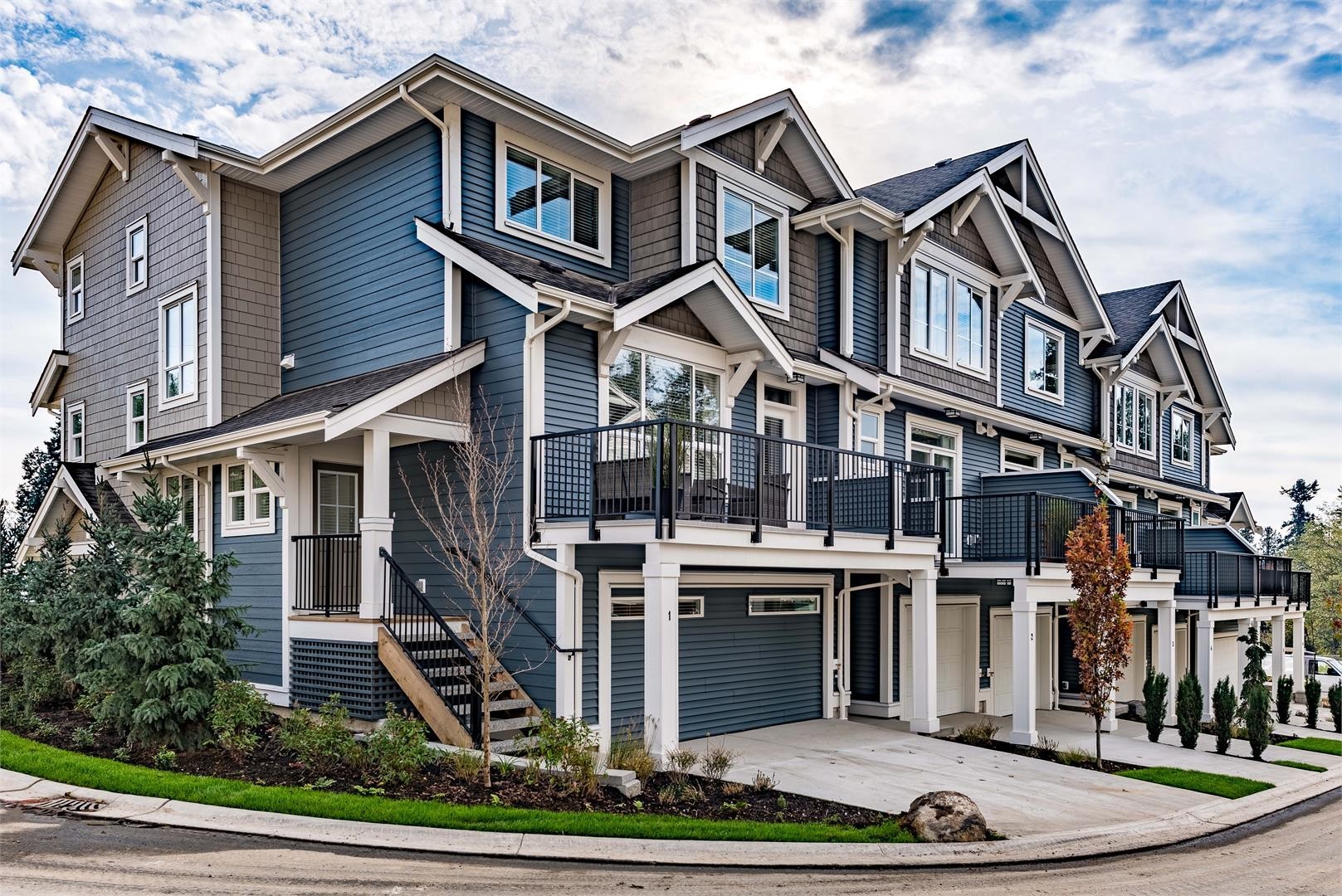
More Articles


Home Feature Guides
How Homes Work: Guides & Insights
Dive into guides that show what really matters in a house, from construction and materials to design choices and practical usability. Learn what questions to ask, what to watch for, and how to spot hidden issues so every feature—from tennis courts and home gyms to outdoor spaces and custom rooms—delivers the value it promises. These guides give the knowledge to assess every detail like an insider and avoid costly surprises.






Key Insights




Key Insights


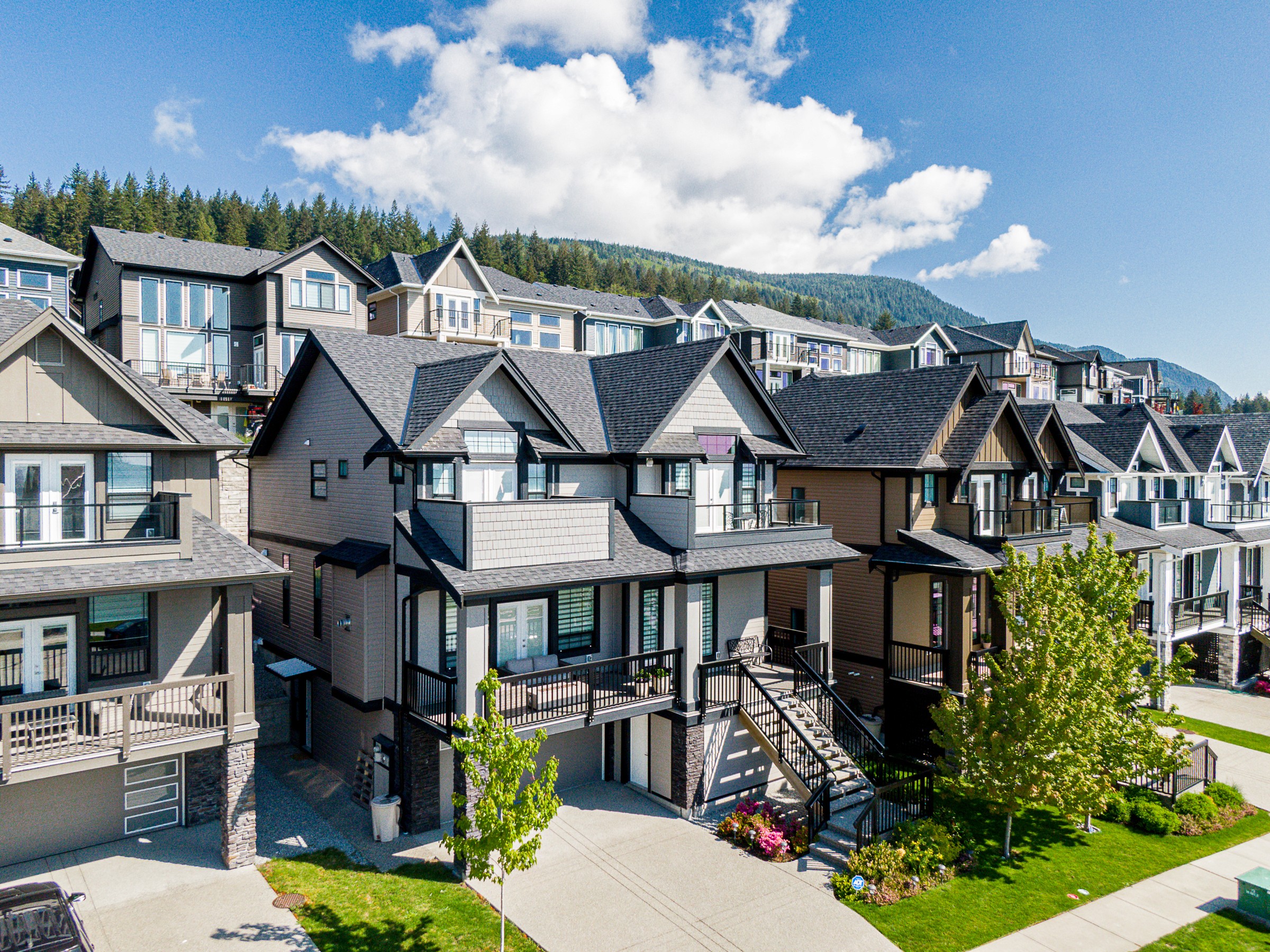


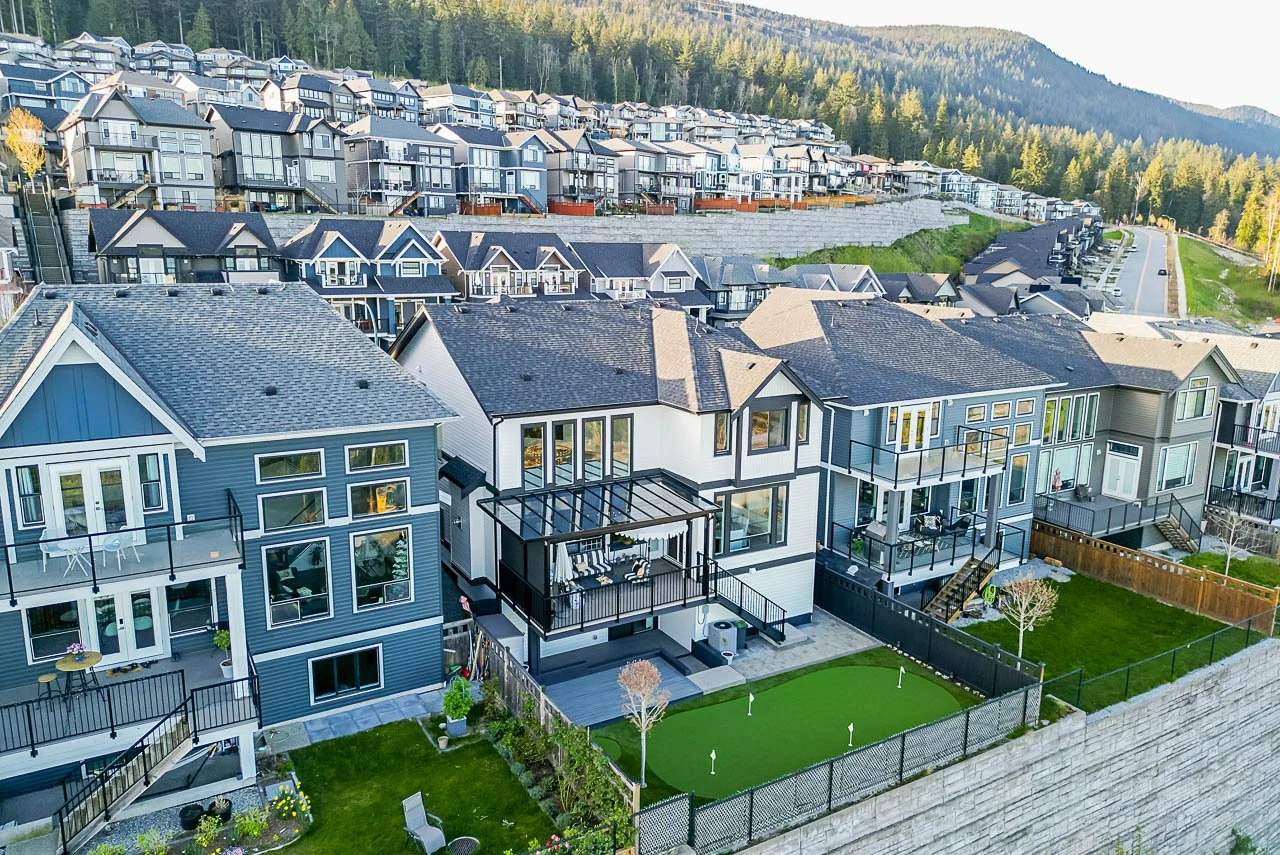




Recent
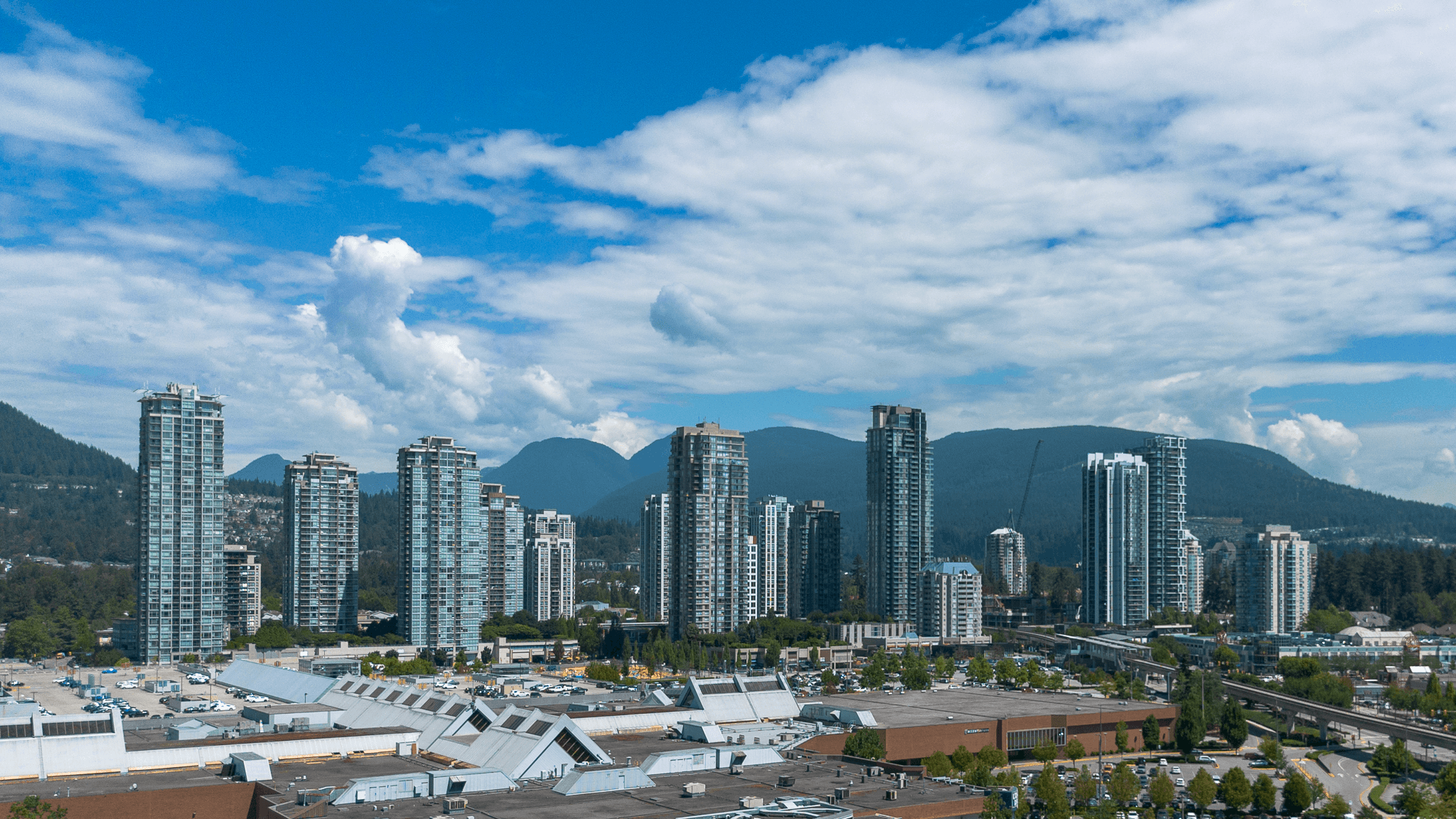


Recent





Victoria Estate Digest is your Go-to source for In-Depth Real Estate Insights, Market Trends, and Expert Analysis in British Columbia.
We cover everything from Housing Affordability and Foreign Investment to Luxury Properties and Emerging Market Opportunities.
Whether you're a Buyer, Seller, or Investor, we provide the Research and Knowledge you need to navigate BC’s ever-changing Real Estate Landscape.