/
/
The $21M Floating Distraction: Why North Vancouver is Building a Swimming Platform While Housing Markets Submerge
The $21M Floating Distraction: Why North Vancouver is Building a Swimming Platform While Housing Markets Submerge

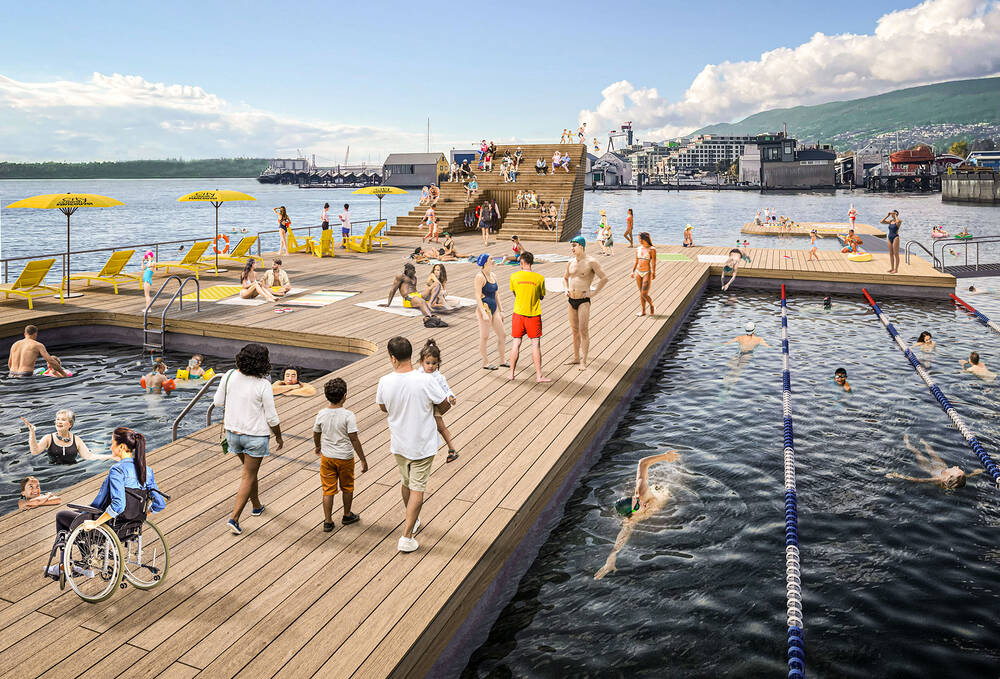
North Vancouver is building a floating swimming platform in its harbour, a public waterfront structure with an estimated price tag of roughly $21 million, partially funded through a private donation of around $16 million, with the remaining $5 million covered by the city. The project is designed as a free public amenity, complete with swimming lanes, jump platforms, and lounging areas, and is expected to accommodate several hundred people at a time during peak use.
On the surface, it is exactly what it looks like: a modern civic recreation project meant to enhance waterfront life in one of Canada’s most desirable urban regions. It is being framed as a long-term investment in public space, a way to reconnect residents with the water, and another step in shaping North Vancouver’s identity around outdoor living and natural access.
But the timing is what makes it interesting.
Because this project is arriving at a moment when the North Vancouver housing market is no longer behaving like it did just a few years ago. The rapid price growth that defined the pandemic era has slowed into something more restrained and uneven. Sales volumes have dropped significantly from peak levels, inventory is building gradually across segments, and buyers are no longer competing with the same urgency that once defined the market.
In other words, while the city is building a place to swim, the housing market that surrounds it has already entered a different phase—one defined less by momentum and more by hesitation.
And that contrast is where the real story begins.
The Cost Is Small—Until You Put It Next to What Isn’t Being Built
Five million dollars in public spending is not a large number in the context of a city budget. That’s roughly the cost of:
10 to 15 subsidized housing units depending on land and construction costs
Or a meaningful contribution to mid-scale rental development
Or upgrades to existing community infrastructure that operates year-round
North Vancouver, like most municipalities in the region, faces construction costs that regularly exceed $400 to $600 per square foot for new residential builds. That means even a modest 1,000 sq ft unit can cost $400,000 to $600,000 to deliver, before land.
Put differently, the public portion of the swimming platform could have meaningfully contributed to housing supply—even if it wouldn’t solve the problem outright.
But housing doesn’t scale politically the way amenities do.
A housing project invites scrutiny: who it’s for, how dense it is, how it affects traffic, who benefits. A floating pool invites none of that. It’s universally accessible in theory, visually appealing in practice, and completely detached from the tensions that define the housing conversation.
So the comparison isn’t really about dollars.
It’s about difficulty.
Seasonal Infrastructure in a Year-Round Crisis
There’s also the question of utility, which rarely gets asked directly.
The swimming platform, for all its appeal, is inherently seasonal. Even with heated sections or extended use design, the practical window of comfortable outdoor swimming in Vancouver sits somewhere between May and September, roughly 120 to 150 days per year.
That means:
For more than 200 days annually, usage drops significantly
Peak demand is concentrated into weekends and summer months
Capacity, even at 300–400 մարդիկ, serves a fraction of the city’s population
Contrast that with the housing issue, which operates under a very different timeline. Demand exists 365 days a year, across every income bracket, with thousands of households competing for limited supply.
Again, this isn’t about whether the platform is useful.
It’s about what kind of usefulness gets prioritized.
Why Projects Like This Keep Getting Built
Cities don’t accidentally choose projects like this. They choose them because they work—politically, socially, and economically in very specific ways.
A project like the harbour deck delivers immediate, visible returns:
It creates a new landmark
It generates media coverage
It reinforces the city’s lifestyle brand
It provides a shared public experience
And importantly, it does all of this without introducing conflict.
Compare that to housing.
Even relatively small residential projects can take 3 to 7 years to move from proposal to completion, navigating zoning approvals, community opposition, financing challenges, and construction delays. Larger developments stretch even longer. The process is slow, expensive, and uncertain.
A waterfront platform, by comparison, is straightforward.
It doesn’t compete with existing neighborhoods. It doesn’t require height debates. It doesn’t trigger the same regulatory complexity. It can move from concept to construction on a much cleaner timeline.
Efficiency, in this case, favors visibility over necessity.
The Platform as Branding—Not Infrastructure
North Vancouver has spent years refining a very specific identity.
Not dense urban core. Not suburban sprawl. Something in between—a place where you can have proximity to downtown Vancouver while maintaining access to nature, space, and a certain kind of lifestyle that feels distinctly West Coast.
That identity carries real economic value. It supports pricing. It attracts buyers. It differentiates the market from other parts of the region.
The swimming platform fits perfectly into that positioning.
It’s not just a place to swim. It’s a visual shorthand for everything the city wants to represent:
Water access
Outdoor living
Community-oriented design
A slightly European sensibility layered onto a Canadian setting
These are not accidental associations. They are curated.
And in a market where benchmark prices for detached homes still hover between $1.8 million and $2.5 million, and condos routinely trade between $700,000 and $1 million, maintaining that brand matters.
Because at those price levels, people are not just buying property.
They are buying into a narrative.
A Distraction Doesn’t Mean It’s Useless
Calling the project a distraction doesn’t mean it has no value.
It will be used. It will be photographed. It will become part of the city’s identity in the same way seawalls and waterfront parks have in the past. It will likely be, in isolation, a success.
But it can be successful and still function as a distraction.
Those two things are not mutually exclusive.
Because while attention is directed toward what’s being built on the water, far less attention is paid to what isn’t being built on land—or how slowly it’s happening.
And that imbalance is where the real story sits.
What This Actually Signals
A $21 million swimming platform does not tell you that a city is ignoring housing.
But it does tell you how a city chooses to navigate it.
It tells you that:
Visible, low-conflict projects are easier to deliver than structural solutions
Public narrative is managed alongside public policy
Lifestyle investment continues even when affordability deteriorates
And perhaps most importantly, it tells you that the gap between what’s easy to build and what’s necessary to build is still very wide.
Who Actually Benefits From a Project Like This
Publicly, the answer is simple: everyone.
It’s free, it’s accessible, it’s on the waterfront. On paper, a swimming platform is one of the most egalitarian pieces of infrastructure you can build. No tickets, no membership, no obvious barrier to entry. It’s the kind of project that lets a city say, with a straight face, that it’s investing in shared space.
But benefits in real estate cities are rarely that evenly distributed.
The most immediate uplift goes to proximity. Properties within walking distance of a new waterfront amenity—especially something visually distinctive—tend to capture a measurable premium. Not overnight, and not always dramatically, but consistently enough to matter. In comparable waterfront markets, proximity to new recreational infrastructure has been associated with price uplifts in the range of 3% to 8% over time, particularly in condo-heavy areas where lifestyle is a primary selling point.
In North Vancouver, where condo benchmarks already sit roughly between $700,000 and $1 million, a 5% perception-driven premium translates into $35,000 to $50,000 in added value per unit. Multiply that across even a few hundred nearby units, and the localized gain quickly moves into the tens of millions.
That value doesn’t get distributed equally across the city.
It concentrates.
Nearby property owners benefit first. Developers marketing future projects benefit next. Realtors get a new feature to highlight. The city strengthens its brand, which indirectly supports pricing across the broader market. Meanwhile, the average resident gets access to the platform—but not necessarily access to the housing around it.
That distinction matters.
Because while the project is framed as public infrastructure, its economic impact behaves much more like targeted enhancement.
Follow the Money, Not the Messaging
The funding structure tells its own story.
Roughly $16 million of the $21 million total cost is coming from private donation, leaving about $5 million in public spending. On the surface, that makes the project feel like a low-risk decision. Leveraging private capital for public use is politically attractive. It reduces taxpayer burden and accelerates delivery.
But private funding is never neutral.
It comes with direction.
Philanthropic capital tends to flow toward projects that are:
Visible
Legacy-driven
Public-facing
Easy to complete within a defined timeline
A floating swimming platform checks every box. It’s tangible, it photographs well, it can be named, and it delivers a clear, immediate outcome. It’s the kind of project donors are comfortable attaching themselves to.
Housing, by contrast, is far less appealing from a philanthropic standpoint.
Affordable housing projects are complex, slow, and often invisible once completed. They don’t carry the same symbolic weight. They involve long-term operational considerations, regulatory constraints, and, in many cases, political friction. Even when privately funded, they require coordination with public agencies that can stretch timelines into 5 to 10 year horizons.
So when private money enters the picture, it doesn’t just accelerate projects.
It filters them.
Cities don’t simply ask, “What do we need most?” They also ask, “What can we actually get funded and built?” And increasingly, those are not the same question.
Why These Projects Move Fast While Housing Doesn’t
Speed is not accidental. It’s structural.
A project like the harbour platform operates within a relatively clean approval environment. It doesn’t require rezoning of residential land. It doesn’t trigger the same density debates that housing does. It avoids most of the opposition that typically comes from neighborhood groups concerned about traffic, height, or character.
In practical terms, that means:
Fewer public hearings
Shorter approval timelines
Lower legal risk
More predictable costs
Compare that to housing.
Even mid-sized residential developments in Metro Vancouver can take 3 to 7 years to move from proposal to completion. Larger projects can stretch beyond 10 years when factoring in approvals, financing, and construction delays. During that time, developers face:
Rising material costs (which have increased 20% to 40% over recent years)
Interest rate exposure
Policy changes mid-process
Community opposition that can alter or stall projects entirely
And all of that happens before a single unit is delivered.
So when cities appear to “choose” amenities over housing, it’s not always a direct trade-off.
It’s often a function of what’s feasible within existing systems.
A swimming platform is buildable.
Housing, increasingly, is negotiable.
The Politics of Visibility
There’s also a political dimension that’s hard to ignore.
Visible projects create visible wins.
A waterfront platform can be announced, rendered, approved, and eventually opened with a ribbon-cutting moment that’s easy to communicate. It gives elected officials something concrete to point to—a finished product that represents progress within a single election cycle or just beyond it.
Housing doesn’t behave that way.
Even when policies are introduced to support supply, the results take years to materialize. By the time units are completed, the political context has often shifted. The people who approved the project may not even be in office anymore.
So from a political standpoint, the incentive structure is clear:
Prioritize projects that can be delivered and showcased
Defer or diffuse projects that require long-term commitment without immediate payoff
This doesn’t mean housing is ignored.
It means it’s structurally disadvantaged.
What Gets Built Reflects What’s Easy to Agree On
There’s a deeper pattern here, one that extends beyond any single project.
Cities tend to build what consensus allows.
A swimming platform is easy to agree on. It doesn’t threaten existing homeowners. It doesn’t change neighborhood density. It doesn’t introduce new social dynamics that might trigger resistance. It adds, rather than alters.
Housing, especially at scale, does the opposite.
It changes density. It shifts demographics. It affects infrastructure. It challenges the status quo in ways that provoke debate, and often, opposition. Even in cities that acknowledge the need for more housing, the process of delivering it is fragmented by competing interests.
So progress becomes uneven.
Highly visible, low-conflict projects move forward quickly.
Complex, high-impact solutions move slowly.
The End Result: A City That Looks Like It’s Moving Faster Than It Is
From the outside, everything appears active.
New projects. New amenities. Continued investment. The visual signals all point in one direction: forward.
And in a sense, that’s true.
But when you look specifically at housing—the one area where demand consistently outpaces supply—the pace tells a different story. Completions lag behind need. Approvals take years. Costs continue to rise. And the gap between what’s required and what’s delivered remains substantial.
In Metro Vancouver, housing demand is often estimated in the range of tens of thousands of units needed over the coming decade, while annual completions fall short of that pace. North Vancouver, constrained by geography and zoning, faces even tighter limitations.
Against that backdrop, a $21 million swimming platform doesn’t look like a misstep.
It looks like a reflection.
A reflection of what cities are able to build efficiently, what gets funded willingly, and what can move forward without friction.
Not an Accident—A Pattern
None of this is accidental.
Projects like this move forward because they sit at the intersection of:
Political feasibility
Financial viability
Public approval
Private funding alignment
Housing, despite being more urgent, rarely satisfies all four at once.
And until it does, the pattern will continue.
Visible projects will keep getting built.
Structural problems will keep moving slower.
And cities will continue to look more responsive than they actually are.
What This Project Actually Says About North Vancouver
By the time you step back from the details, the swimming platform stops being about design, funding, or even public space. It becomes something more revealing: a mirror of priorities that are rarely stated out loud but are constantly acted upon.
Because North Vancouver is not short on ambition. It is short on friction tolerance.
A $21 million floating structure works because it sits inside a narrow band of political and financial comfort. It is visible enough to justify itself, small enough not to destabilize budgets, and attractive enough to avoid meaningful opposition. It delivers a clear narrative outcome—waterfront access, community amenity, lifestyle enhancement—without forcing the city to confront the more difficult question sitting underneath everything else: why housing, the most basic requirement of the same community, remains structurally constrained.
The answer is not that housing is ignored. It is that housing is harder to execute in a way that satisfies all competing pressures at once. It requires density decisions, zoning changes, infrastructure upgrades, and long-term political alignment that outlives election cycles. The swimming platform requires none of that. It is clean. Finite. Contained.
And in modern municipal governance, that distinction matters more than most people admit.
A Market That Can Afford Beauty, But Struggles With Basics
There is a quiet contradiction embedded in projects like this.
North Vancouver is, by almost any measure, a high-cost housing market. Detached homes frequently sit in the $1.8 million to $2.5 million range, while condos regularly trade between $700,000 and $1 million, depending on location and condition. At those levels, the city is not competing on affordability. It is competing on desirability.
That means amenities matter.
Views matter. Access matters. Lifestyle signals matter.
A floating swimming platform fits perfectly into that framework. It enhances the intangible value proposition of living in the area. It gives marketing teams something new to point to. It reinforces the idea that high prices are not just about scarcity, but about experience.
But this is where the tension emerges.
Because while the city continues to invest in visible enhancements, the underlying affordability gap remains wide. In many cases, household incomes in the $90,000 to $110,000 range are still being asked to stretch toward properties that require incomes well above $200,000 to qualify under current lending conditions.
So the city becomes more livable in theory at the exact moment it becomes less accessible in practice.
That divergence is the real story.
Where the Market Actually Goes From Here
The most important thing about the current housing environment is not whether prices rise or fall sharply. It is that movement has become more conditional.
Volume is down roughly 25% to 40% from peak activity levels, depending on segment. Days on market have expanded into the 30 to 60 day range for many listings, and longer for higher-end properties. Inventory is slowly building, with increases of roughly 15% to 35% year-over-year in some categories, particularly condos.
None of this points to collapse.
But it does point to a market that is no longer self-reinforcing.
In previous cycles, momentum was its own justification. Rising prices attracted buyers who feared being left behind, which in turn accelerated price growth. That feedback loop has weakened significantly under current borrowing conditions, where rates near 5% to 6% have increased monthly carrying costs by as much as 40% compared to the ultra-low rate era.
What replaces momentum is selectivity.
And selectivity changes everything.
It slows transactions. It increases negotiation. It introduces hesitation into decisions that used to be made quickly. It turns a competitive market into a comparative one.
In that kind of environment, narrative matters more than usual.
Which is exactly where visible projects become disproportionately influential.
The Narrative Layer That Keeps Markets Stable Longer Than They Should Be
Real estate does not move purely on fundamentals. It moves on confidence.
And confidence is often maintained through what people can see, not what they can calculate.
A waterfront platform is not an economic instrument. It does not add housing supply, reduce borrowing costs, or solve affordability constraints. But it does something more subtle: it reinforces continuity. It signals that the city is still investing, still improving, still moving forward in ways that feel tangible.
That signal matters most when underlying conditions are uncertain.
Because in uncertain markets, people look for anchors. Something visible. Something simple. Something that confirms the broader story hasn’t broken, even if parts of it are under strain.
This is why projects like this tend to move forward even in periods where housing delivery slows. They operate in different decision environments. One is complex, contentious, and long-term. The other is visible, consensual, and immediate.
And in practice, immediate tends to win.
The Real Trade-Off Isn’t Money—It’s Attention
It is tempting to frame this as a question of resource allocation. Why fund a swimming platform instead of more housing support? Why prioritize amenities over affordability?
But that framing misses the deeper reality.
The real constraint is not just money. It is attention and coordination capacity.
Housing requires sustained, multi-layered coordination between public policy, private development, financing systems, and community acceptance. It is slow because it has to reconcile competing objectives that do not naturally align.
A waterfront platform requires none of that complexity. It can be executed within a relatively narrow institutional lane. It does not require consensus across deeply divided issues.
So cities do what systems reward them for doing.
They build what is buildable.
And what is buildable is not always what is most needed.
What This Project Ultimately Reveals
The $21 million floating platform is not a mistake. It is not a distraction in the simplistic sense of something frivolous masking failure.
It is something more accurate—and more uncomfortable.
It is a highly optimized outcome of the system it exists within.
It reflects a city that is:
financially capable of investing in lifestyle infrastructure
politically incentivized to prioritize visible wins
structurally constrained in delivering housing at scale
and increasingly reliant on narrative to bridge the gap between perception and pressure
That combination does not produce dramatic outcomes overnight.
It produces drift.
Slow, steady, barely visible drift between what the city is becoming and what it still claims to be.
The Quiet Ending
In the end, the swimming platform will likely do what it was designed to do. It will open, it will be used, it will appear in photographs that circulate far beyond North Vancouver. It will become part of the city’s identity in the same way other waterfront amenities have over time.
But it will also remain exactly what it is structurally: a highly visible improvement in a system where the most important challenges are the least visible ones.
And that is the real tension.
A city building something beautiful on the surface while the deeper structure adjusts more slowly, more quietly, and with far less attention.
Not collapse.
Not boom.
Just drift.
North Vancouver is building a floating swimming platform in its harbour, a public waterfront structure with an estimated price tag of roughly $21 million, partially funded through a private donation of around $16 million, with the remaining $5 million covered by the city. The project is designed as a free public amenity, complete with swimming lanes, jump platforms, and lounging areas, and is expected to accommodate several hundred people at a time during peak use.
On the surface, it is exactly what it looks like: a modern civic recreation project meant to enhance waterfront life in one of Canada’s most desirable urban regions. It is being framed as a long-term investment in public space, a way to reconnect residents with the water, and another step in shaping North Vancouver’s identity around outdoor living and natural access.
But the timing is what makes it interesting.
Because this project is arriving at a moment when the North Vancouver housing market is no longer behaving like it did just a few years ago. The rapid price growth that defined the pandemic era has slowed into something more restrained and uneven. Sales volumes have dropped significantly from peak levels, inventory is building gradually across segments, and buyers are no longer competing with the same urgency that once defined the market.
In other words, while the city is building a place to swim, the housing market that surrounds it has already entered a different phase—one defined less by momentum and more by hesitation.
And that contrast is where the real story begins.
The Cost Is Small—Until You Put It Next to What Isn’t Being Built
Five million dollars in public spending is not a large number in the context of a city budget. That’s roughly the cost of:
10 to 15 subsidized housing units depending on land and construction costs
Or a meaningful contribution to mid-scale rental development
Or upgrades to existing community infrastructure that operates year-round
North Vancouver, like most municipalities in the region, faces construction costs that regularly exceed $400 to $600 per square foot for new residential builds. That means even a modest 1,000 sq ft unit can cost $400,000 to $600,000 to deliver, before land.
Put differently, the public portion of the swimming platform could have meaningfully contributed to housing supply—even if it wouldn’t solve the problem outright.
But housing doesn’t scale politically the way amenities do.
A housing project invites scrutiny: who it’s for, how dense it is, how it affects traffic, who benefits. A floating pool invites none of that. It’s universally accessible in theory, visually appealing in practice, and completely detached from the tensions that define the housing conversation.
So the comparison isn’t really about dollars.
It’s about difficulty.
Seasonal Infrastructure in a Year-Round Crisis
There’s also the question of utility, which rarely gets asked directly.
The swimming platform, for all its appeal, is inherently seasonal. Even with heated sections or extended use design, the practical window of comfortable outdoor swimming in Vancouver sits somewhere between May and September, roughly 120 to 150 days per year.
That means:
For more than 200 days annually, usage drops significantly
Peak demand is concentrated into weekends and summer months
Capacity, even at 300–400 մարդիկ, serves a fraction of the city’s population
Contrast that with the housing issue, which operates under a very different timeline. Demand exists 365 days a year, across every income bracket, with thousands of households competing for limited supply.
Again, this isn’t about whether the platform is useful.
It’s about what kind of usefulness gets prioritized.
Why Projects Like This Keep Getting Built
Cities don’t accidentally choose projects like this. They choose them because they work—politically, socially, and economically in very specific ways.
A project like the harbour deck delivers immediate, visible returns:
It creates a new landmark
It generates media coverage
It reinforces the city’s lifestyle brand
It provides a shared public experience
And importantly, it does all of this without introducing conflict.
Compare that to housing.
Even relatively small residential projects can take 3 to 7 years to move from proposal to completion, navigating zoning approvals, community opposition, financing challenges, and construction delays. Larger developments stretch even longer. The process is slow, expensive, and uncertain.
A waterfront platform, by comparison, is straightforward.
It doesn’t compete with existing neighborhoods. It doesn’t require height debates. It doesn’t trigger the same regulatory complexity. It can move from concept to construction on a much cleaner timeline.
Efficiency, in this case, favors visibility over necessity.
The Platform as Branding—Not Infrastructure
North Vancouver has spent years refining a very specific identity.
Not dense urban core. Not suburban sprawl. Something in between—a place where you can have proximity to downtown Vancouver while maintaining access to nature, space, and a certain kind of lifestyle that feels distinctly West Coast.
That identity carries real economic value. It supports pricing. It attracts buyers. It differentiates the market from other parts of the region.
The swimming platform fits perfectly into that positioning.
It’s not just a place to swim. It’s a visual shorthand for everything the city wants to represent:
Water access
Outdoor living
Community-oriented design
A slightly European sensibility layered onto a Canadian setting
These are not accidental associations. They are curated.
And in a market where benchmark prices for detached homes still hover between $1.8 million and $2.5 million, and condos routinely trade between $700,000 and $1 million, maintaining that brand matters.
Because at those price levels, people are not just buying property.
They are buying into a narrative.
A Distraction Doesn’t Mean It’s Useless
Calling the project a distraction doesn’t mean it has no value.
It will be used. It will be photographed. It will become part of the city’s identity in the same way seawalls and waterfront parks have in the past. It will likely be, in isolation, a success.
But it can be successful and still function as a distraction.
Those two things are not mutually exclusive.
Because while attention is directed toward what’s being built on the water, far less attention is paid to what isn’t being built on land—or how slowly it’s happening.
And that imbalance is where the real story sits.
What This Actually Signals
A $21 million swimming platform does not tell you that a city is ignoring housing.
But it does tell you how a city chooses to navigate it.
It tells you that:
Visible, low-conflict projects are easier to deliver than structural solutions
Public narrative is managed alongside public policy
Lifestyle investment continues even when affordability deteriorates
And perhaps most importantly, it tells you that the gap between what’s easy to build and what’s necessary to build is still very wide.
Who Actually Benefits From a Project Like This
Publicly, the answer is simple: everyone.
It’s free, it’s accessible, it’s on the waterfront. On paper, a swimming platform is one of the most egalitarian pieces of infrastructure you can build. No tickets, no membership, no obvious barrier to entry. It’s the kind of project that lets a city say, with a straight face, that it’s investing in shared space.
But benefits in real estate cities are rarely that evenly distributed.
The most immediate uplift goes to proximity. Properties within walking distance of a new waterfront amenity—especially something visually distinctive—tend to capture a measurable premium. Not overnight, and not always dramatically, but consistently enough to matter. In comparable waterfront markets, proximity to new recreational infrastructure has been associated with price uplifts in the range of 3% to 8% over time, particularly in condo-heavy areas where lifestyle is a primary selling point.
In North Vancouver, where condo benchmarks already sit roughly between $700,000 and $1 million, a 5% perception-driven premium translates into $35,000 to $50,000 in added value per unit. Multiply that across even a few hundred nearby units, and the localized gain quickly moves into the tens of millions.
That value doesn’t get distributed equally across the city.
It concentrates.
Nearby property owners benefit first. Developers marketing future projects benefit next. Realtors get a new feature to highlight. The city strengthens its brand, which indirectly supports pricing across the broader market. Meanwhile, the average resident gets access to the platform—but not necessarily access to the housing around it.
That distinction matters.
Because while the project is framed as public infrastructure, its economic impact behaves much more like targeted enhancement.
Follow the Money, Not the Messaging
The funding structure tells its own story.
Roughly $16 million of the $21 million total cost is coming from private donation, leaving about $5 million in public spending. On the surface, that makes the project feel like a low-risk decision. Leveraging private capital for public use is politically attractive. It reduces taxpayer burden and accelerates delivery.
But private funding is never neutral.
It comes with direction.
Philanthropic capital tends to flow toward projects that are:
Visible
Legacy-driven
Public-facing
Easy to complete within a defined timeline
A floating swimming platform checks every box. It’s tangible, it photographs well, it can be named, and it delivers a clear, immediate outcome. It’s the kind of project donors are comfortable attaching themselves to.
Housing, by contrast, is far less appealing from a philanthropic standpoint.
Affordable housing projects are complex, slow, and often invisible once completed. They don’t carry the same symbolic weight. They involve long-term operational considerations, regulatory constraints, and, in many cases, political friction. Even when privately funded, they require coordination with public agencies that can stretch timelines into 5 to 10 year horizons.
So when private money enters the picture, it doesn’t just accelerate projects.
It filters them.
Cities don’t simply ask, “What do we need most?” They also ask, “What can we actually get funded and built?” And increasingly, those are not the same question.
Why These Projects Move Fast While Housing Doesn’t
Speed is not accidental. It’s structural.
A project like the harbour platform operates within a relatively clean approval environment. It doesn’t require rezoning of residential land. It doesn’t trigger the same density debates that housing does. It avoids most of the opposition that typically comes from neighborhood groups concerned about traffic, height, or character.
In practical terms, that means:
Fewer public hearings
Shorter approval timelines
Lower legal risk
More predictable costs
Compare that to housing.
Even mid-sized residential developments in Metro Vancouver can take 3 to 7 years to move from proposal to completion. Larger projects can stretch beyond 10 years when factoring in approvals, financing, and construction delays. During that time, developers face:
Rising material costs (which have increased 20% to 40% over recent years)
Interest rate exposure
Policy changes mid-process
Community opposition that can alter or stall projects entirely
And all of that happens before a single unit is delivered.
So when cities appear to “choose” amenities over housing, it’s not always a direct trade-off.
It’s often a function of what’s feasible within existing systems.
A swimming platform is buildable.
Housing, increasingly, is negotiable.
The Politics of Visibility
There’s also a political dimension that’s hard to ignore.
Visible projects create visible wins.
A waterfront platform can be announced, rendered, approved, and eventually opened with a ribbon-cutting moment that’s easy to communicate. It gives elected officials something concrete to point to—a finished product that represents progress within a single election cycle or just beyond it.
Housing doesn’t behave that way.
Even when policies are introduced to support supply, the results take years to materialize. By the time units are completed, the political context has often shifted. The people who approved the project may not even be in office anymore.
So from a political standpoint, the incentive structure is clear:
Prioritize projects that can be delivered and showcased
Defer or diffuse projects that require long-term commitment without immediate payoff
This doesn’t mean housing is ignored.
It means it’s structurally disadvantaged.
What Gets Built Reflects What’s Easy to Agree On
There’s a deeper pattern here, one that extends beyond any single project.
Cities tend to build what consensus allows.
A swimming platform is easy to agree on. It doesn’t threaten existing homeowners. It doesn’t change neighborhood density. It doesn’t introduce new social dynamics that might trigger resistance. It adds, rather than alters.
Housing, especially at scale, does the opposite.
It changes density. It shifts demographics. It affects infrastructure. It challenges the status quo in ways that provoke debate, and often, opposition. Even in cities that acknowledge the need for more housing, the process of delivering it is fragmented by competing interests.
So progress becomes uneven.
Highly visible, low-conflict projects move forward quickly.
Complex, high-impact solutions move slowly.
The End Result: A City That Looks Like It’s Moving Faster Than It Is
From the outside, everything appears active.
New projects. New amenities. Continued investment. The visual signals all point in one direction: forward.
And in a sense, that’s true.
But when you look specifically at housing—the one area where demand consistently outpaces supply—the pace tells a different story. Completions lag behind need. Approvals take years. Costs continue to rise. And the gap between what’s required and what’s delivered remains substantial.
In Metro Vancouver, housing demand is often estimated in the range of tens of thousands of units needed over the coming decade, while annual completions fall short of that pace. North Vancouver, constrained by geography and zoning, faces even tighter limitations.
Against that backdrop, a $21 million swimming platform doesn’t look like a misstep.
It looks like a reflection.
A reflection of what cities are able to build efficiently, what gets funded willingly, and what can move forward without friction.
Not an Accident—A Pattern
None of this is accidental.
Projects like this move forward because they sit at the intersection of:
Political feasibility
Financial viability
Public approval
Private funding alignment
Housing, despite being more urgent, rarely satisfies all four at once.
And until it does, the pattern will continue.
Visible projects will keep getting built.
Structural problems will keep moving slower.
And cities will continue to look more responsive than they actually are.
What This Project Actually Says About North Vancouver
By the time you step back from the details, the swimming platform stops being about design, funding, or even public space. It becomes something more revealing: a mirror of priorities that are rarely stated out loud but are constantly acted upon.
Because North Vancouver is not short on ambition. It is short on friction tolerance.
A $21 million floating structure works because it sits inside a narrow band of political and financial comfort. It is visible enough to justify itself, small enough not to destabilize budgets, and attractive enough to avoid meaningful opposition. It delivers a clear narrative outcome—waterfront access, community amenity, lifestyle enhancement—without forcing the city to confront the more difficult question sitting underneath everything else: why housing, the most basic requirement of the same community, remains structurally constrained.
The answer is not that housing is ignored. It is that housing is harder to execute in a way that satisfies all competing pressures at once. It requires density decisions, zoning changes, infrastructure upgrades, and long-term political alignment that outlives election cycles. The swimming platform requires none of that. It is clean. Finite. Contained.
And in modern municipal governance, that distinction matters more than most people admit.
A Market That Can Afford Beauty, But Struggles With Basics
There is a quiet contradiction embedded in projects like this.
North Vancouver is, by almost any measure, a high-cost housing market. Detached homes frequently sit in the $1.8 million to $2.5 million range, while condos regularly trade between $700,000 and $1 million, depending on location and condition. At those levels, the city is not competing on affordability. It is competing on desirability.
That means amenities matter.
Views matter. Access matters. Lifestyle signals matter.
A floating swimming platform fits perfectly into that framework. It enhances the intangible value proposition of living in the area. It gives marketing teams something new to point to. It reinforces the idea that high prices are not just about scarcity, but about experience.
But this is where the tension emerges.
Because while the city continues to invest in visible enhancements, the underlying affordability gap remains wide. In many cases, household incomes in the $90,000 to $110,000 range are still being asked to stretch toward properties that require incomes well above $200,000 to qualify under current lending conditions.
So the city becomes more livable in theory at the exact moment it becomes less accessible in practice.
That divergence is the real story.
Where the Market Actually Goes From Here
The most important thing about the current housing environment is not whether prices rise or fall sharply. It is that movement has become more conditional.
Volume is down roughly 25% to 40% from peak activity levels, depending on segment. Days on market have expanded into the 30 to 60 day range for many listings, and longer for higher-end properties. Inventory is slowly building, with increases of roughly 15% to 35% year-over-year in some categories, particularly condos.
None of this points to collapse.
But it does point to a market that is no longer self-reinforcing.
In previous cycles, momentum was its own justification. Rising prices attracted buyers who feared being left behind, which in turn accelerated price growth. That feedback loop has weakened significantly under current borrowing conditions, where rates near 5% to 6% have increased monthly carrying costs by as much as 40% compared to the ultra-low rate era.
What replaces momentum is selectivity.
And selectivity changes everything.
It slows transactions. It increases negotiation. It introduces hesitation into decisions that used to be made quickly. It turns a competitive market into a comparative one.
In that kind of environment, narrative matters more than usual.
Which is exactly where visible projects become disproportionately influential.
The Narrative Layer That Keeps Markets Stable Longer Than They Should Be
Real estate does not move purely on fundamentals. It moves on confidence.
And confidence is often maintained through what people can see, not what they can calculate.
A waterfront platform is not an economic instrument. It does not add housing supply, reduce borrowing costs, or solve affordability constraints. But it does something more subtle: it reinforces continuity. It signals that the city is still investing, still improving, still moving forward in ways that feel tangible.
That signal matters most when underlying conditions are uncertain.
Because in uncertain markets, people look for anchors. Something visible. Something simple. Something that confirms the broader story hasn’t broken, even if parts of it are under strain.
This is why projects like this tend to move forward even in periods where housing delivery slows. They operate in different decision environments. One is complex, contentious, and long-term. The other is visible, consensual, and immediate.
And in practice, immediate tends to win.
The Real Trade-Off Isn’t Money—It’s Attention
It is tempting to frame this as a question of resource allocation. Why fund a swimming platform instead of more housing support? Why prioritize amenities over affordability?
But that framing misses the deeper reality.
The real constraint is not just money. It is attention and coordination capacity.
Housing requires sustained, multi-layered coordination between public policy, private development, financing systems, and community acceptance. It is slow because it has to reconcile competing objectives that do not naturally align.
A waterfront platform requires none of that complexity. It can be executed within a relatively narrow institutional lane. It does not require consensus across deeply divided issues.
So cities do what systems reward them for doing.
They build what is buildable.
And what is buildable is not always what is most needed.
What This Project Ultimately Reveals
The $21 million floating platform is not a mistake. It is not a distraction in the simplistic sense of something frivolous masking failure.
It is something more accurate—and more uncomfortable.
It is a highly optimized outcome of the system it exists within.
It reflects a city that is:
financially capable of investing in lifestyle infrastructure
politically incentivized to prioritize visible wins
structurally constrained in delivering housing at scale
and increasingly reliant on narrative to bridge the gap between perception and pressure
That combination does not produce dramatic outcomes overnight.
It produces drift.
Slow, steady, barely visible drift between what the city is becoming and what it still claims to be.
The Quiet Ending
In the end, the swimming platform will likely do what it was designed to do. It will open, it will be used, it will appear in photographs that circulate far beyond North Vancouver. It will become part of the city’s identity in the same way other waterfront amenities have over time.
But it will also remain exactly what it is structurally: a highly visible improvement in a system where the most important challenges are the least visible ones.
And that is the real tension.
A city building something beautiful on the surface while the deeper structure adjusts more slowly, more quietly, and with far less attention.
Not collapse.
Not boom.
Just drift.
Related Posts


More Articles


Home Feature Guides
How Homes Work: Guides & Insights
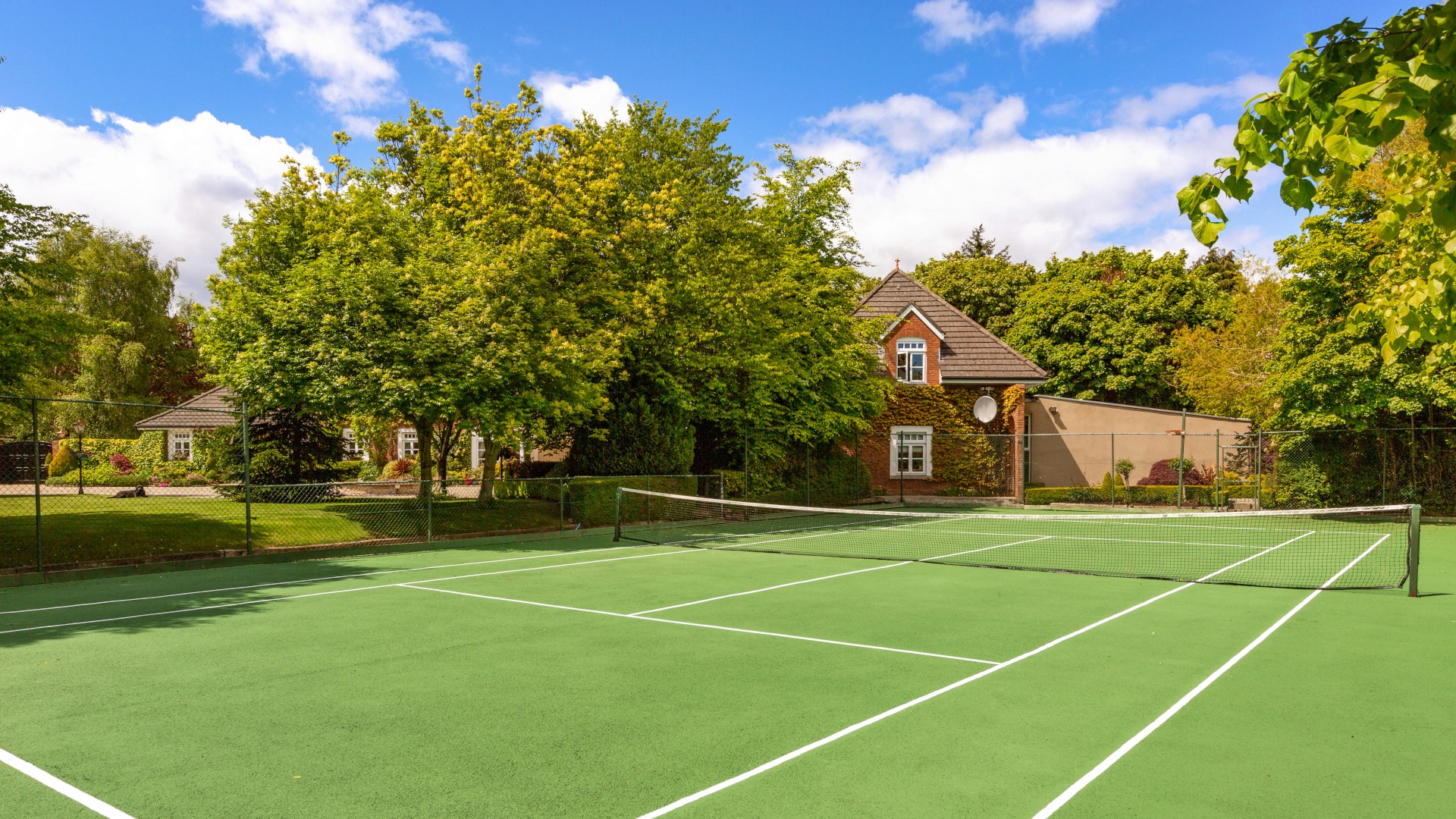
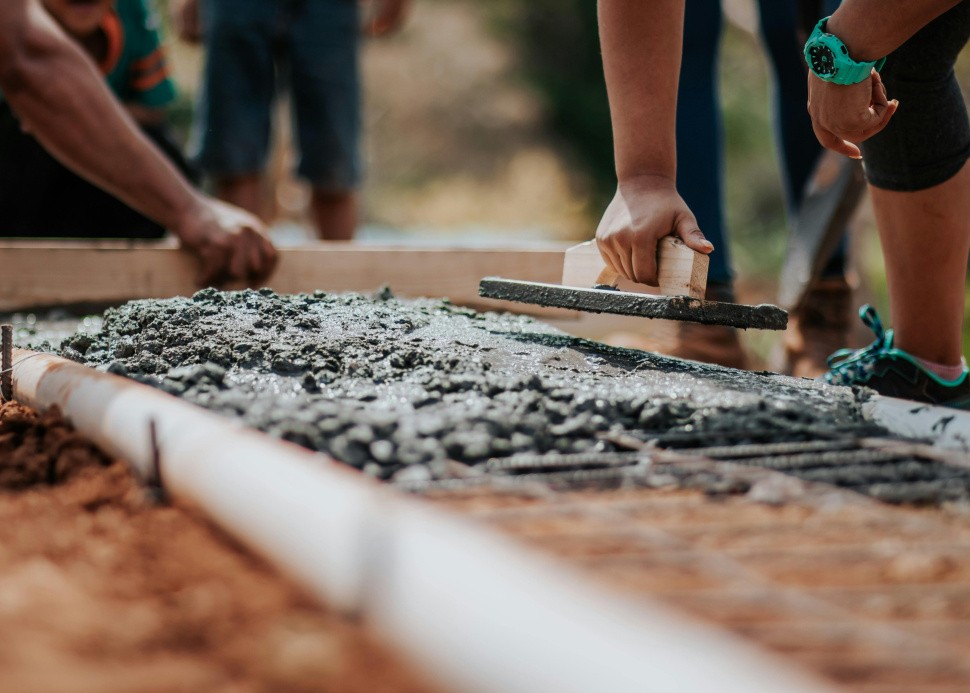
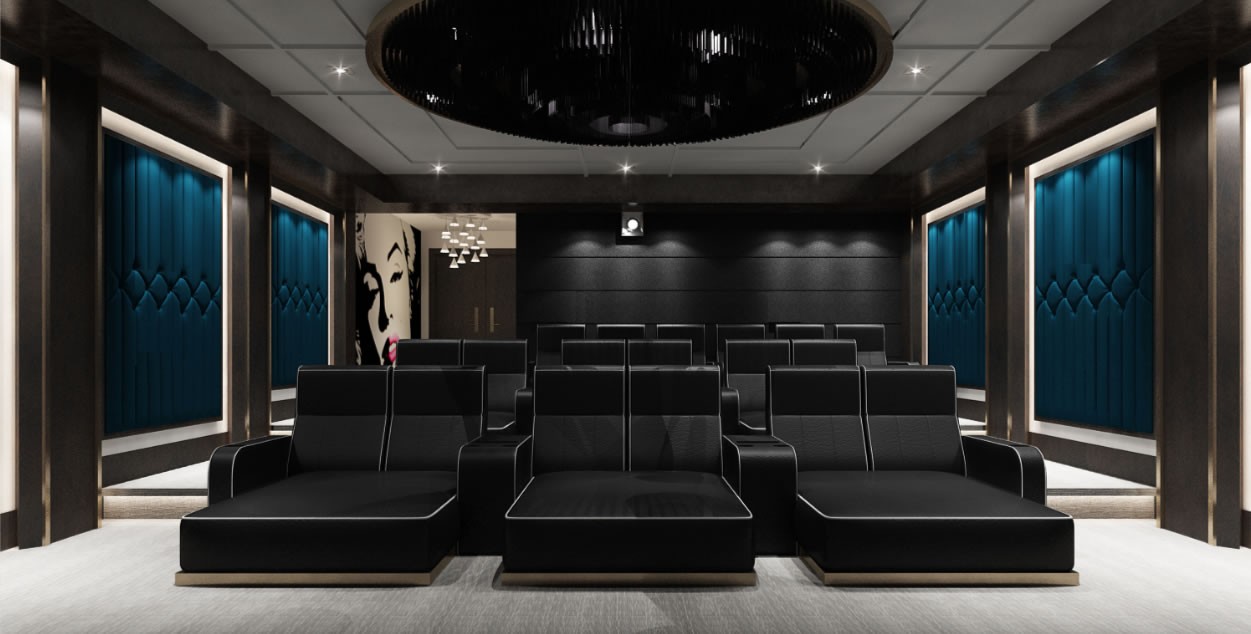
Dive into guides that show what really matters in a house, from construction and materials to design choices and practical usability. Learn what questions to ask, what to watch for, and how to spot hidden issues so every feature—from tennis courts and home gyms to outdoor spaces and custom rooms—delivers the value it promises. These guides give the knowledge to assess every detail like an insider and avoid costly surprises.



Key Insights

Key Insights



Recent


Recent





Victoria Estate Digest is your Go-to source for In-Depth Real Estate Insights, Market Trends, and Expert Analysis in British Columbia.
We cover everything from Housing Affordability and Foreign Investment to Luxury Properties and Emerging Market Opportunities.
Whether you're a Buyer, Seller, or Investor, we provide the Research and Knowledge you need to navigate BC’s ever-changing Real Estate Landscape.