/
/
The Province Wants Receipts: Vancouver’s $200,000 Empty Home Tax and the End of Casual Family Occupancy
The Province Wants Receipts: Vancouver’s $200,000 Empty Home Tax and the End of Casual Family Occupancy


There was a time when owning an empty house in Metro Vancouver was treated like a weird rich-person hobby.
Some people collected watches. Some collected wine. Some collected $4 million houses in West Vancouver with the lights off, the blinds down, and one lonely fern slowly losing the will to live.
That era is getting much more expensive.
B.C.’s Speculation and Vacancy Tax, usually called the SVT, is moving into a harsher phase. For the 2027 tax year and later, the top SVT rate for foreign owners, untaxed worldwide earners, and other owners already in the highest-rate category is scheduled to rise from 3% to 4%. The province says this applies to the use of residential properties during the 2027 calendar year and onward, not to 2026 or earlier declarations.
That sounds like a tiny number until you put it beside an actual Vancouver property.
A 4% annual tax on a $5 million property is $200,000 per year.
That is not a typo. That is a new Mercedes every year. That is private-school tuition for several kids. That is a full-time salary, paid to the government, because the property is not being used in a way the province likes.
And here is the spicy part: the 4% SVT is not the only bill.
For some owners, it stacks with Vancouver’s Empty Homes Tax, B.C.’s additional school tax, regular municipal property tax, mortgage payments, strata fees, insurance, repairs, property transfer tax, the 20% foreign-buyer transfer tax, and possibly B.C.’s home flipping tax if the owner panics and sells too quickly.
In other words, the house is no longer just sitting there.
It is eating.
And in 2027, it may develop the appetite of a small casino.
What this tax actually is, in plain English
The Speculation and Vacancy Tax is a provincial B.C. tax aimed at homes in housing-stressed areas that are empty, under-used, foreign-owned, or connected to owners whose main income is outside Canada but not properly taxed here.
That is the polite government version.
The normal-person version is this:
If you own a home in a taxable area and you are not using it as a real home or a proper long-term rental, the province may charge you for letting it sit there.
The tax applies in designated B.C. areas. For Metro Vancouver, the taxable list includes Vancouver, Burnaby, Richmond, Surrey, Coquitlam, North Vancouver, West Vancouver, Delta, Langley, Maple Ridge, New Westminster, Port Moody, Port Coquitlam, Pitt Meadows, White Rock, UBC lands, the University Endowment Lands, Anmore and Belcarra. The province also lists Lions Bay separately as a taxable area.
The SVT is not the same as regular property tax. It is not the same as the City of Vancouver Empty Homes Tax. It is not the home owner grant. It is not the federal Underused Housing Tax. The province specifically tells owners that Vancouver’s Empty Homes Tax, the federal Underused Housing Tax and the home owner grant are separate from the SVT.
This matters because owners love saying things like, “But I already paid my property tax.”
Wonderful. So did everyone else.
The SVT is another animal entirely.
Regular property tax says: “You own property, please pay your share.”
The SVT says: “What exactly are you doing with that property, and why does it look like nobody lives there?”
What is different now: the 4% rate changes the whole game
For years, some owners treated the SVT like an annoying parking ticket for rich people.
At 2%, a foreign-owned or satellite-family home worth $5 million owed $100,000 per year if no exemption applied. That is painful, but for some ultra-wealthy owners, it was still treated as the cost of keeping a Metro Vancouver trophy asset.
Then the rate moved higher.
For 2026 and later, B.C.’s published SVT rate is 3% for foreign owners and untaxed worldwide earners, and 1% for Canadian citizens and permanent residents who are not untaxed worldwide earners. For 2019 to 2025, the rate was 2% for foreign owners and untaxed worldwide earners, and 0.5% for Canadian citizens or permanent residents who were not untaxed worldwide earners.
Now Budget 2026 adds the next punch: for 2027 and later taxation years, the highest SVT rate rises from 3% to 4% for foreign owners, untaxed worldwide earners and others currently taxed at the highest rate.
Here is the simple table.
Tax year | Ordinary Canadian citizen / PR, not an untaxed worldwide earner | Foreign owner / untaxed worldwide earner / highest-rate owner | Annual SVT on $5M property at top rate |
|---|---|---|---|
2019–2025 | 0.5% | 2% | $100,000 |
2026 | 1% | 3% | $150,000 |
2027 onward | 1%, unless changed | 4% | $200,000 |
So no, the 4% does not hit every homeowner.
Your average Canadian citizen living in their Burnaby townhouse with kids, laundry, a Costco membership and a mortgage that causes night sweats is not suddenly paying 4% SVT.
But for the highest-rate category, the jump is brutal.
A $2 million vacant condo in Coal Harbour?
4% = $80,000 per year.
A $4 million house in Richmond with no real tenant?
4% = $160,000 per year.
A $6 million West Vancouver property owned by a foreign owner with no exemption?
4% = $240,000 per year.
That is not a tax bill. That is a hostage note written in government font.
The tax clock: January 1 is not when you write the cheque, but it is when the game starts
The 4% rule is easy to misunderstand.
The province is not saying every affected owner writes a 4% cheque on January 1, 2027.
The province says the SVT year is the calendar year, the tax applies based on ownership as of December 31, and tax for a calendar year is due the following July.
So for the 2027 tax year, the question is basically:
Who owned the property on December 31, 2027, and how was the property used during 2027?
Then the declaration and payment process happens afterward.
This is where owners get into trouble. They think, “I will deal with it later.”
But “later” is how a $160,000 problem becomes a $176,000 problem with penalties, interest, lawyers, accountants and a spouse asking why the family investment strategy now looks like a raccoon got into the paperwork.
Residential property owners in designated taxable areas must declare every year by March 31, even if nothing changed. If there is more than one owner on title, each owner must make a separate declaration.
Starting with 2027 and later tax years, B.C. says owners who do not declare by the March 31 deadline will face a $250 non-refundable late declaration penalty.
That $250 is not the scary part. The scary part is what happens if you owe the tax and do not pay. B.C. says a 10% late payment penalty plus interest applies after the due date, and collection action can include CRA set-asides, liens, employer deductions, bank demands and seizure of personal belongings.
So the SVT is not a “maybe I will ignore the letter” situation.
This is the government saying: “We have your address. It is literally the thing we are taxing.”
The real problem: this tax stacks with other taxes
The 4% SVT is not walking into the room alone.
It brings friends.
Mean friends.
Expensive friends.
For a Metro Vancouver property, the possible stack can include:
B.C. Speculation and Vacancy Tax
A provincial annual tax on certain residential properties in taxable areas if no exemption applies.
City of Vancouver Empty Homes Tax
Only for properties inside the City of Vancouver, not Burnaby, Richmond, Surrey or West Vancouver. Vancouver says properties declared, deemed or determined empty for the 2025 reference year are subject to a tax of 3% of assessed taxable value, and the city specifically says the provincial SVT is in addition to the City’s Empty Homes Tax, so some Vancouver owners may have to pay both.
Additional school tax
A provincial high-value property tax. Effective January 1, 2027, B.C. increases the additional school tax to 0.3% on the residential portion assessed between $3 million and $4 million, and 0.6% on the residential portion over $4 million. It only applies to the portion over $3 million, not the first $3 million.
Regular municipal property tax
Still there. Still hungry.
Mortgage payments
Still there. Much hungrier if the owner renews from a low rate into a higher rate.
Insurance, strata fees, repairs and maintenance
Also still there. Roofs do not care about your cash flow.
Property transfer tax when buying
B.C.’s general property transfer tax uses 1%, 2% and 3% brackets, plus a further 2% on residential value above $3 million.
Additional 20% property transfer tax for foreign buyers
If a foreign national, foreign corporation or taxable trustee buys residential property in Metro Vancouver and no exemption applies, B.C.’s additional property transfer tax is 20% of the buyer’s proportionate share.
B.C. home flipping tax if selling too soon
B.C.’s home flipping tax applies to net taxable income from disposing of taxable property owned for less than 730 days, with a 20% rate for sales within 365 days and a declining rate after that until it disappears at 730 days.
This is why the 4% SVT is not just a tax issue.
It is a carrying-cost issue.
It is a cash-flow issue.
It is a seller-motivation issue.
It is a “maybe we should stop treating Vancouver houses like offshore bank accounts with granite countertops” issue.
The easiest way to understand it: the property is now a mouth
Think of a non-exempt Metro Vancouver property like a mouth.
Every month, it opens.
Mortgage payment? Chomp.
Property tax? Chomp.
Insurance? Chomp.
Strata fee? Chomp.
Repairs? Chomp.
Additional school tax? Chomp.
Vancouver Empty Homes Tax, if it is inside the City of Vancouver and vacant? Chomp.
Speculation and Vacancy Tax at 4% for a highest-rate owner? Not chomp.
That one is a bite mark.
Here is a simple example.
A highest-rate owner has a $5 million empty house in the City of Vancouver. No exemption. No long-term tenant. Not a principal residence.
At 4% SVT:
$5,000,000 × 4% = $200,000
At 3% Vancouver Empty Homes Tax:
$5,000,000 × 3% = $150,000
Additional school tax in 2027:
$3M to $4M portion: $1,000,000 × 0.3% = $3,000
Over $4M portion: $1,000,000 × 0.6% = $6,000
Total additional school tax: $9,000
Total before regular property tax, mortgage, insurance, repairs, utilities or legal/accounting fees:
$359,000 per year
That is almost $30,000 per month.
For an empty house.
At that point, the house is not an investment. It is a very large beige ATM running in reverse.
Who is actually at risk?
This article is not saying every Metro Vancouver owner is doomed. Most normal people are not the target.
The highest-risk owners are:
Foreign owners with no exemption
Untaxed worldwide earners
Satellite-family structures
Vacant or lightly used homes
Second homes that are not rented properly
Homes held through corporations, trusts or partnerships where one relevant person triggers the highest rate
Family-occupied homes where the family arrangement does not meet the exemption rules
Owners who miss declarations or rely on “my cousin said it’s fine” tax planning
B.C. says the SVT rate varies by owner tax residency, citizenship/permanent residence status, and whether the person is an untaxed worldwide earner, which is the technical category that includes many so-called satellite-family situations.
The phrase “satellite family” sounds like something from a space documentary, but in Vancouver real estate it usually means something very specific: one spouse or family member lives in Canada with low reported Canadian income, while another spouse or household income source is outside Canada.
The province defines a satellite family as a term sometimes used for untaxed worldwide earners, where one spouse lives in Canada with little income and another spouse lives overseas where they make most of their income.
The key phrase is untaxed worldwide earner.
B.C. defines an untaxed worldwide earner as an individual whose unreported income in Canada is greater than their reported total income in Canada. The individual’s income is combined with their spouse’s income for this calculation.
Normal-person translation:
If your Canadian tax return says “small income,” but the household’s real worldwide income says “big money,” the SVT rules may not treat you like a regular local taxpayer.
And if you fall into that highest-rate category and your Metro Vancouver property is not exempt, 4% becomes the problem.
Renting can save you, but fake renting can roast you
The SVT is not designed to punish every property that is not owner-occupied. Long-term rental housing can often qualify for an exemption.
But there are rules.
B.C. says tenants must occupy the residence for at least six months of the year, and rental periods generally need to be in at least one-month increments. The owner can combine months with different tenants, but each tenancy still has to meet the applicable requirements.
So if a foreign owner has a Richmond condo and rents it to a real arm’s-length tenant for seven months under a proper tenancy, that may solve the SVT issue.
But if the “tenant” is your cousin who visits on weekends, keeps one jacket in the closet and pays rent in vibes, the government may not be impressed.
B.C. distinguishes between arm’s-length and non-arm’s-length tenants. Family members such as parents, adult children or siblings can never be arm’s length, and an owner’s spouse or minor child living with a parent or guardian can never be considered a tenant for SVT purposes.
The family-tenant rules are especially strict for foreign owners and untaxed worldwide earners. If the tenant is non-arm’s-length and the owner is foreign or an untaxed worldwide earner, at least one tenant per residence must be a Canadian citizen or permanent resident, be a B.C. tax resident at year-end, not be an untaxed worldwide earner, and have B.C. income equal to or greater than three times the annual fair market rent for the whole residential property. The tenant cannot combine income with someone else for this test.
Normal-person translation:
If you are in the highest-risk category, you cannot casually “rent” your $4 million Vancouver house to your adult child with low local income and expect the tax to disappear.
The province’s own example involves a condo near UBC owned by an untaxed worldwide earner, where the owner’s son and nephews rent rooms but cannot combine their income; because none of them individually meets the income test, the owner does not get the exemption.
That example is basically the government saying: “Nice try.”
Metro Vancouver example #1: the $2 million Coal Harbour condo
Let’s start with something simple.
A foreign owner owns a $2 million condo in Coal Harbour.
It is not rented for six months. It is not anyone’s principal residence. It is used for occasional trips, maybe a few weeks a year. No exemption applies.
For 2026, the top SVT rate is 3%:
$2,000,000 × 3% = $60,000
For 2027, the top SVT rate rises to 4%:
$2,000,000 × 4% = $80,000
That is an extra $20,000 per year just from the rate increase.
Now add strata fees, insurance, repairs and regular property tax.
If the condo is inside the City of Vancouver and also caught by the Empty Homes Tax, Vancouver’s 3% tax can add another:
$2,000,000 × 3% = $60,000
So the potential SVT plus Vancouver Empty Homes Tax exposure could be:
$80,000 + $60,000 = $140,000 per year
Before the boring bills.
And the boring bills are never boring when you are the one paying them.
Metro Vancouver example #2: the $4 million West Vancouver house
Now let’s move up the mountain.
A highest-rate owner has a $4 million house in West Vancouver.
It is not rented. It is not exempt. It is not in the City of Vancouver, so Vancouver’s municipal Empty Homes Tax does not apply.
But the provincial SVT does.
At 4%:
$4,000,000 × 4% = $160,000
Additional school tax in 2027:
Only the portion above $3 million is taxed.
$3M to $4M portion:
$1,000,000 × 0.3% = $3,000
So before regular property tax, insurance, mortgage interest, repairs, landscaping, security, utilities and everything else:
$163,000 per year
That is the annual cost of keeping the asset non-exempt.
A seller in this position has to ask a very adult question:
Do I really love this empty house $163,000-a-year worth?
Because love is beautiful.
But $163,000 is also $163,000.
Metro Vancouver example #3: the $5 million empty Vancouver house
This is where the stacking gets ugly.
A highest-rate owner has a $5 million detached house in the City of Vancouver.
No exemption.
No long-term rental.
Not a principal residence.
Because it is inside the City of Vancouver, it may face both the provincial SVT and the municipal Empty Homes Tax. Vancouver says the province’s SVT is in addition to the City’s Empty Homes Tax, meaning residential property owners in Vancouver may have to pay both.
SVT at 4%:
$5,000,000 × 4% = $200,000
Vancouver Empty Homes Tax at 3%:
$5,000,000 × 3% = $150,000
Additional school tax:
$3M to $4M: $1,000,000 × 0.3% = $3,000
Over $4M: $1,000,000 × 0.6% = $6,000
Total additional school tax:
$9,000
Total tax stack before normal property tax:
$200,000 + $150,000 + $9,000 = $359,000
That is the number that should make vacant luxury owners sit up straight.
And possibly list on MLS before breakfast.
Metro Vancouver example #4: the satellite-family Richmond house
A family owns a $3.2 million house in Richmond.
The Canadian tax return shows modest local income. Another spouse earns significant income outside Canada that is not reported in Canada. The home is not rented. The family assumes they are “local enough” because someone lives in B.C.
This is exactly where people need proper advice.
B.C.’s untaxed-worldwide-earner definition combines the individual’s income with spouse income and compares unreported income in Canada with reported total income in Canada. B.C. also says total household income is the combined income earned anywhere in the world by the person and their spouse.
If the owner is treated as an untaxed worldwide earner and no exemption applies, the 2027 SVT is:
$3,200,000 × 4% = $128,000
Additional school tax:
Only the amount above $3 million is subject to additional school tax.
$200,000 × 0.3% = $600
Total before regular property tax and other costs:
$128,600
The ugly part is not just the number.
The ugly part is that the SVT bill can be larger than the income reported in Canada.
That is when the house stops looking like a family home and starts looking like a math problem wearing stucco.
The mortgage squeeze: when the tax is only one blade of the scissors
A lot of owners are focused on the tax.
They should also look at the mortgage.
Suppose an owner has a $2 million mortgage on a Metro Vancouver property.
On a 25-year amortization, a mortgage at 3% is roughly $9,484 per month.
At 5.5%, the same mortgage is roughly $12,282 per month.
That is an increase of about:
$2,798 per month
or about:
$33,576 per year
Now stack that with the SVT.
If the property is worth $3 million and the owner is in the 4% highest-rate group with no exemption:
SVT = $120,000 per year
Mortgage payment increase in this example:
about $33,576 per year
Combined increase / tax pressure:
about $153,576 per year
And we still have not added regular property tax, additional school tax, insurance, maintenance, utilities, vacancy costs, legal advice, accounting fees or the emotional cost of explaining to your spouse that the “safe asset” now has the personality of a slot machine.
This is why the 4% SVT matters even to owners who technically have equity.
Equity does not pay the bill unless you sell, refinance or find cash.
And refinancing is not magic. It is just borrowing from future-you, who may already be upset.
Buyers should understand the seller’s pain
The 4% SVT is not only a tax story.
It is a negotiation story.
If a highest-rate owner has a non-exempt Metro Vancouver property worth $4 million, the 2027 SVT exposure is:
$4,000,000 × 4% = $160,000
That is about:
$13,333 per month
A buyer does not need to be rude.
The buyer just needs a calculator.
If the seller is vacant, non-exempt, carrying debt, and approaching year-end, the buyer can quietly ask:
How many more months can this seller afford to be stubborn?
That does not mean every seller will fold. Some owners have deep pockets. Some properties are unique. Some owners qualify for exemptions. Some sellers would rather lose money slowly than admit they were wrong quickly.
Real estate is emotional. Especially when the house used to be worth more at dinner parties.
But tax pressure changes the room.
A seller facing a $160,000 or $200,000 annual SVT bill is not the same seller as someone casually testing the market.
This is why buyers should look at:
Days on market.
Vacancy signs.
Rental history.
Ownership type.
Assessed value.
Whether the property is inside the City of Vancouver.
Whether the property looks staged, empty or lightly used.
Whether the seller is likely facing a December 31 ownership problem.
You may not know the whole story.
But sometimes the tax bill is the quiet co-listing agent.
Sellers should not wait until December to discover math
For sellers in the highest-risk category, timing matters.
B.C. says the SVT applies based on ownership as of December 31 each year.
That means an owner planning to sell should not treat December 31 like a decorative calendar date.
If you own the property at year-end, the SVT analysis may still matter for that year.
The practical message is simple:
If the property is non-exempt and the 4% tax would hurt, talk to your lawyer and accountant early. Not December 28. Early.
Because real estate does not close instantly.
Buyers need financing.
Lawyers need documents.
Banks need time.
Stratas need forms.
Someone will be on vacation.
Someone will miss an email.
And suddenly your “quick sale” is now a “congratulations, you owned it on December 31” situation.
That is not tax planning.
That is tax slapstick.
What happens if you try to dodge the paperwork?
Bad things.
With the SVT, all exemption claims are subject to audit and compliance review by the ministry. B.C. also says assessments may arise from the owner’s declaration or from an audit.
With Vancouver’s Empty Homes Tax, the city says all property status declarations may be audited. If selected, the owner must provide evidence supporting the declaration. Failure to respond to an audit notice can result in a non-compliant audit determination and the Empty Homes Tax being levied.
And Vancouver’s penalties have teeth.
If an owner fails to make a Vancouver Empty Homes Tax declaration by the due date, the City says the owner faces a $250 by-law ticket and the property is deemed vacant and subject to a 3% tax. A late declaration after the late declaration due date can bring a 5% penalty on the Vacancy Tax levy. Late and unpaid Empty Homes Taxes can face a 5% late payment penalty, daily interest on arrears and the tax sale process. False declarations can lead to fines of up to $10,000 per day of the continuing offence, plus the tax.
This is where the witty article stops smiling for one paragraph.
Do not lie on vacancy declarations.
Do not invent tenants.
Do not backdate documents.
Do not tell your adult nephew to “just say you live there.”
Do not treat a government tax form like a group project from high school where everyone signs the cover page and hopes nobody reads it.
The penalties can be worse than the original problem.
Property transfer tax: the buyer gets punched at the front door
The SVT is an annual ownership tax. Property Transfer Tax is a purchase tax.
In B.C., general property transfer tax applies at:
1% on the first $200,000
2% on the amount over $200,000 up to $2 million
3% on the amount over $2 million
plus a further 2% on residential value over $3 million.
Example: a buyer purchases a $3.5 million detached house in North Vancouver.
General PTT:
1% on first $200,000 = $2,000
2% on next $1.8 million = $36,000
3% on next $1.5 million = $45,000
Further 2% on the amount above $3 million:
$500,000 × 2% = $10,000
Total PTT:
$93,000
That is before legal fees, inspection, insurance, appraisal, moving costs, mortgage setup, adjustments and the emergency furniture purchase because apparently the old sofa “doesn’t work in the new space.”
This is why buyers should not shop at the edge of their budget.
The edge has cliffs.
Foreign buyers: 20% additional transfer tax, if they can buy at all
Foreign buyers have an even bigger issue.
B.C. says foreign nationals, foreign corporations and taxable trustees must pay additional property transfer tax on their proportionate share of residential property value in specified areas, including the Metro Vancouver Regional District. The rate is 20%.
Example: a foreign buyer purchases a $2.5 million condo in Vancouver, assuming the buyer is legally allowed to purchase and no exemption applies.
General PTT:
1% on first $200,000 = $2,000
2% on next $1.8 million = $36,000
3% on next $500,000 = $15,000
General PTT total:
$53,000
Additional foreign-buyer PTT:
$2,500,000 × 20% = $500,000
Total transfer tax:
$553,000
That is just to get in the door.
Then, if the property is not exempt in later years, the owner may also face annual SVT.
The federal foreign-buyer ban also matters. CMHC says the Prohibition on the Purchase of Residential Property by Non-Canadians Act took effect January 1, 2023, prevents non-Canadians from buying residential property in Canada for two years, and the government announced a two-year extension to January 1, 2027. CMHC also notes certain exceptions and says a violation can lead to a fine of up to $10,000 and a possible court-ordered sale.
So the foreign-buyer checklist is not:
“Do I like the view?”
It is:
Can I legally buy?
Do I owe 20% additional transfer tax?
Can I claim any exemption?
Will the property trigger annual SVT?
Is it inside the City of Vancouver and exposed to Empty Homes Tax?
Can I rent it properly?
What happens if I need to sell?
That is less romantic than a sunset photo, but significantly more useful.
The B.C. home flipping tax: selling fast can create another problem
Here is the cruel little twist.
An owner may look at the 4% SVT and say:
“Fine. I will sell.”
That may be smart.
But if the owner sells too quickly after buying, B.C.’s home flipping tax may appear.
B.C. says the home flipping tax applies to net taxable income from disposing of taxable property owned for less than 730 days. The rate is 20% for properties disposed of within 365 days, then gradually decreases over the next 365 days until it disappears at 730 days.
The formula for the declining rate after 365 days is:
20% × [1 − (days held − 365) / 365]
Example: an owner buys a Burnaby condo for $1,000,000 and sells it 300 days later for $1,100,000.
Ignoring selling costs, improvement costs and exemptions for simplicity:
Profit = $100,000
Because the property was held fewer than 366 days, the rate is 20%.
Tax:
$100,000 × 20% = $20,000
Now imagine the owner was selling because they realized the property would not be exempt from SVT.
This is the trap:
Holding can be expensive. Selling quickly can also be expensive.
Welcome to B.C. real estate, where the exits have cover charges.
Presales can also be caught. B.C. says the home flipping tax applies to profit from disposing of a presale contract if the disposition occurs less than 730 days after entering into the contract, and presale contracts are not eligible for the primary residence deduction.
So the presale assignment crowd should also put down the champagne and open a spreadsheet.
The federal Underused Housing Tax: mostly off the table after 2025, but do not confuse it with B.C.’s tax
The federal Underused Housing Tax caused years of confusion because it sounded like the same thing as B.C.’s SVT.
It was not.
And now the federal situation has changed.
Budget 2025 materials say no Underused Housing Tax is payable for residential property for 2025 and later calendar years, and no UHT return is required for 2025 and later years.
Bill C-15, the Budget Implementation Act, 2025, No. 1, received Royal Assent on March 26, 2026.
But this does not cancel B.C.’s SVT.
It does not cancel Vancouver’s Empty Homes Tax.
It does not cancel property transfer tax.
It does not cancel additional school tax.
It does not cancel old UHT problems for earlier years if someone had obligations.
This is where owners get themselves confused.
They hear “federal underused housing tax ended” and think “great, my vacant Vancouver property is safe.”
No.
That is like cancelling Netflix and assuming your mortgage is gone.
Different bill. Different beast.
Why the 4% rate can destroy the rental yield
A normal rental property is supposed to produce income.
The 4% SVT can flip that upside down.
Example: a highest-rate owner owns a $2.2 million condo in downtown Vancouver.
Market rent might be $5,000 per month.
Annual gross rent:
$60,000
SVT at 4%, if no exemption applies:
$2,200,000 × 4% = $88,000
The tax alone is larger than the gross rent.
And gross rent is not profit. From rent, the owner still pays strata, property tax, insurance, repairs, vacancy, management and possibly mortgage interest.
This is why the SVT is such a strong policy tool.
It does not need to ban vacancy.
It makes vacancy financially stupid.
At 4%, a highest-rate owner usually has three realistic choices:
Rent properly.
Use the property in a way that qualifies for an exemption.
Sell.
The fourth choice is “pay the tax and complain,” which remains popular but expensive.
City of Vancouver owners have the nastiest stack
Metro Vancouver is broad, but the City of Vancouver is special because of the municipal Empty Homes Tax.
A vacant home in Burnaby may face SVT if no exemption applies.
A vacant home in Vancouver may face SVT and Empty Homes Tax.
Vancouver says residential properties used as a principal residence by the owner, a family member, friend or other permitted occupier for at least six months of the vacancy reference year, or rented for residential purposes for at least six months in periods of 30 or more consecutive days, are generally not subject to the Empty Homes Tax. It also says properties declared, deemed or determined empty for the 2025 reference year are subject to a 3% tax.
This is similar in spirit to the SVT, but it is not the same tax.
That means owners must manage two sets of rules.
Two declarations.
Two deadlines.
Two audit risks.
Two opportunities to make a very expensive paperwork mistake.
If the property is in Vancouver and vacant, the question is not:
“Do I owe vacancy tax?”
The question is:
“Which vacancy tax, how much, and did I accidentally owe both?”
The “but it’s my vacation home” problem
Some owners think the property is safe because it is used occasionally.
A few weeks in the summer.
A long weekend in October.
Family visits over Christmas.
Nice.
But occasional use does not automatically equal a principal residence, and it does not automatically equal qualifying occupancy.
For SVT purposes, B.C. defines a principal residence as the place where an individual lives for a longer period in the calendar year than any other place. Spouses generally cannot claim separate principal residences and must designate only one between them, except in defined circumstances.
Normal-person translation:
Your principal residence is not the place with the nicest kitchen. It is the place you actually live most of the year.
If your real life is in Hong Kong, Los Angeles, Toronto or Dubai, and the Vancouver condo is used for a few weeks, the condo may not be your principal residence for SVT purposes.
It may be a lovely place.
It may have a great view.
It may even have tasteful lighting.
But tasteful lighting is not an exemption.
The corporation and trust trap
Some owners do not hold property personally.
They use a corporation, trust, partnership or other structure.
That does not automatically solve the SVT.
B.C. says the tax rate for a corporation, trustee or business partner will be the highest rate applicable to any of the relevant corporate interest holders, beneficial owners or business partners if they held the residential property individually.
Translation:
One highest-rate person in the structure can contaminate the rate for the whole structure.
The government’s own example involves a corporation owning a Vancouver vacation property where one corporate interest holder is an American citizen reporting all income in the United States; B.C. says all three corporate interest holders are subject to the highest applicable rate because one owner is an untaxed worldwide earner.
So the old “put it in a company” move is not a magic invisibility cloak.
It is paperwork.
And the tax system also has paperwork.
Guess who has more staff?
What owners should actually do now
For owners in Metro Vancouver, the first step is not panic.
The first step is classification.
Ask these questions:
Is the property in a taxable SVT area?
Is it inside the City of Vancouver?
Who owns it on title?
Is there a corporation, trust, partnership, bare trust or beneficial owner?
Is the owner a Canadian citizen, permanent resident, foreign owner or possible untaxed worldwide earner?
Where is the owner’s income reported?
Where is the spouse’s income reported?
Is there unreported worldwide income?
Is the property a true principal residence?
Was it rented for at least six months?
Was the tenant arm’s length?
If the tenant was family, do the non-arm’s-length rules work?
Is there a written lease?
Is there proof of actual occupancy?
Did every owner file their declaration?
Can the owner prove the exemption if audited?
If selling, will the sale complete before December 31?
If selling quickly, could the home flipping tax apply?
That sounds like a lot.
It is.
But it is cheaper than discovering the answers after the government has already mailed the bill.
What buyers should do now
Buyers should use the 4% SVT as a lens.
Not every seller is under pressure.
But some are.
A buyer looking at Metro Vancouver listings should ask:
Is the property empty?
Is it staged?
Has it been sitting?
Is the seller overseas?
Is it owned by a company?
Is it in Vancouver and possibly exposed to Empty Homes Tax?
Is it over $3 million and exposed to additional school tax?
Is the seller approaching year-end with no tenant?
Would the annual SVT be painful enough to change the seller’s mood?
A $3 million property in the highest-rate group has a possible 4% SVT exposure of:
$120,000 per year
That is $10,000 per month.
If you are a buyer negotiating with a motivated seller, that number matters.
The seller may not say it out loud.
But the spreadsheet is screaming.
What sellers should do now
Sellers should stop pretending buyers cannot calculate.
If your property is vacant, non-exempt and in the highest-rate category, buyers may smell blood.
Not because buyers are mean.
Because math is mean.
If the annual tax exposure is $120,000, $160,000 or $200,000, that affects pricing. It affects timing. It affects whether holding out for “my number” makes sense.
Sellers should prepare the file before listing:
Proof of exemption if exempt.
Lease documents if rented.
Occupancy records if needed.
Tax advice if UWE status is unclear.
Corporate/trust ownership review if applicable.
A realistic timeline if trying to close before year-end.
A pricing strategy that reflects carrying costs.
The worst seller is the one who starts high, ignores feedback, waits three months, gets stale, then realizes the tax clock has been chewing on the listing the entire time.
That is not strategy.
That is slow-motion arithmetic.
The bottom line: Vancouver real estate is no longer just about price
For years, Metro Vancouver real estate was marketed like gravity did not apply.
Buy. Hold. Wait. Get rich. Complain about taxes. Repeat.
The 4% SVT challenges that lazy script.
For ordinary homeowners living in their homes, this may not change much.
For foreign owners, untaxed worldwide earners, satellite-family structures, vacant luxury homes, and paper-tenancy arrangements, it changes everything.
At 4%, a non-exempt highest-rate property is no longer a quiet asset.
It is a meter running in the driveway.
A $2 million property can mean an $80,000 SVT bill.
A $4 million property can mean $160,000.
A $5 million Vancouver property, when stacked with Vancouver’s Empty Homes Tax and additional school tax, can push toward $359,000 before regular property tax and normal carrying costs.
That is the new message from the province:
Live in it. Rent it properly. Prove your exemption. Or pay.
And for some owners, “pay” is about to become the least attractive word in the English language.
Quick reader-friendly summary
The new 4% SVT does not hit every homeowner. It targets the highest-rate category: foreign owners, untaxed worldwide earners and certain other owners already in that top group.
The 4% rate applies for the 2027 tax year and later, based on the use of the property during 2027 and onward.
Metro Vancouver is heavily inside the SVT zone.
City of Vancouver homes can face both B.C.’s SVT and Vancouver’s Empty Homes Tax.
High-value homes can also face B.C.’s additional school tax.
Foreign buyers may face a 20% additional property transfer tax if they are legally able to buy and no exemption applies.
Selling quickly can trigger B.C.’s home flipping tax.
Missing declarations, making false declarations or failing audits can create penalties, interest and collection problems.
The practical takeaway is simple:
Metro Vancouver homes now need a real use case. “It just sits there” is becoming a very expensive business plan.
There was a time when owning an empty house in Metro Vancouver was treated like a weird rich-person hobby.
Some people collected watches. Some collected wine. Some collected $4 million houses in West Vancouver with the lights off, the blinds down, and one lonely fern slowly losing the will to live.
That era is getting much more expensive.
B.C.’s Speculation and Vacancy Tax, usually called the SVT, is moving into a harsher phase. For the 2027 tax year and later, the top SVT rate for foreign owners, untaxed worldwide earners, and other owners already in the highest-rate category is scheduled to rise from 3% to 4%. The province says this applies to the use of residential properties during the 2027 calendar year and onward, not to 2026 or earlier declarations.
That sounds like a tiny number until you put it beside an actual Vancouver property.
A 4% annual tax on a $5 million property is $200,000 per year.
That is not a typo. That is a new Mercedes every year. That is private-school tuition for several kids. That is a full-time salary, paid to the government, because the property is not being used in a way the province likes.
And here is the spicy part: the 4% SVT is not the only bill.
For some owners, it stacks with Vancouver’s Empty Homes Tax, B.C.’s additional school tax, regular municipal property tax, mortgage payments, strata fees, insurance, repairs, property transfer tax, the 20% foreign-buyer transfer tax, and possibly B.C.’s home flipping tax if the owner panics and sells too quickly.
In other words, the house is no longer just sitting there.
It is eating.
And in 2027, it may develop the appetite of a small casino.
What this tax actually is, in plain English
The Speculation and Vacancy Tax is a provincial B.C. tax aimed at homes in housing-stressed areas that are empty, under-used, foreign-owned, or connected to owners whose main income is outside Canada but not properly taxed here.
That is the polite government version.
The normal-person version is this:
If you own a home in a taxable area and you are not using it as a real home or a proper long-term rental, the province may charge you for letting it sit there.
The tax applies in designated B.C. areas. For Metro Vancouver, the taxable list includes Vancouver, Burnaby, Richmond, Surrey, Coquitlam, North Vancouver, West Vancouver, Delta, Langley, Maple Ridge, New Westminster, Port Moody, Port Coquitlam, Pitt Meadows, White Rock, UBC lands, the University Endowment Lands, Anmore and Belcarra. The province also lists Lions Bay separately as a taxable area.
The SVT is not the same as regular property tax. It is not the same as the City of Vancouver Empty Homes Tax. It is not the home owner grant. It is not the federal Underused Housing Tax. The province specifically tells owners that Vancouver’s Empty Homes Tax, the federal Underused Housing Tax and the home owner grant are separate from the SVT.
This matters because owners love saying things like, “But I already paid my property tax.”
Wonderful. So did everyone else.
The SVT is another animal entirely.
Regular property tax says: “You own property, please pay your share.”
The SVT says: “What exactly are you doing with that property, and why does it look like nobody lives there?”
What is different now: the 4% rate changes the whole game
For years, some owners treated the SVT like an annoying parking ticket for rich people.
At 2%, a foreign-owned or satellite-family home worth $5 million owed $100,000 per year if no exemption applied. That is painful, but for some ultra-wealthy owners, it was still treated as the cost of keeping a Metro Vancouver trophy asset.
Then the rate moved higher.
For 2026 and later, B.C.’s published SVT rate is 3% for foreign owners and untaxed worldwide earners, and 1% for Canadian citizens and permanent residents who are not untaxed worldwide earners. For 2019 to 2025, the rate was 2% for foreign owners and untaxed worldwide earners, and 0.5% for Canadian citizens or permanent residents who were not untaxed worldwide earners.
Now Budget 2026 adds the next punch: for 2027 and later taxation years, the highest SVT rate rises from 3% to 4% for foreign owners, untaxed worldwide earners and others currently taxed at the highest rate.
Here is the simple table.
Tax year | Ordinary Canadian citizen / PR, not an untaxed worldwide earner | Foreign owner / untaxed worldwide earner / highest-rate owner | Annual SVT on $5M property at top rate |
|---|---|---|---|
2019–2025 | 0.5% | 2% | $100,000 |
2026 | 1% | 3% | $150,000 |
2027 onward | 1%, unless changed | 4% | $200,000 |
So no, the 4% does not hit every homeowner.
Your average Canadian citizen living in their Burnaby townhouse with kids, laundry, a Costco membership and a mortgage that causes night sweats is not suddenly paying 4% SVT.
But for the highest-rate category, the jump is brutal.
A $2 million vacant condo in Coal Harbour?
4% = $80,000 per year.
A $4 million house in Richmond with no real tenant?
4% = $160,000 per year.
A $6 million West Vancouver property owned by a foreign owner with no exemption?
4% = $240,000 per year.
That is not a tax bill. That is a hostage note written in government font.
The tax clock: January 1 is not when you write the cheque, but it is when the game starts
The 4% rule is easy to misunderstand.
The province is not saying every affected owner writes a 4% cheque on January 1, 2027.
The province says the SVT year is the calendar year, the tax applies based on ownership as of December 31, and tax for a calendar year is due the following July.
So for the 2027 tax year, the question is basically:
Who owned the property on December 31, 2027, and how was the property used during 2027?
Then the declaration and payment process happens afterward.
This is where owners get into trouble. They think, “I will deal with it later.”
But “later” is how a $160,000 problem becomes a $176,000 problem with penalties, interest, lawyers, accountants and a spouse asking why the family investment strategy now looks like a raccoon got into the paperwork.
Residential property owners in designated taxable areas must declare every year by March 31, even if nothing changed. If there is more than one owner on title, each owner must make a separate declaration.
Starting with 2027 and later tax years, B.C. says owners who do not declare by the March 31 deadline will face a $250 non-refundable late declaration penalty.
That $250 is not the scary part. The scary part is what happens if you owe the tax and do not pay. B.C. says a 10% late payment penalty plus interest applies after the due date, and collection action can include CRA set-asides, liens, employer deductions, bank demands and seizure of personal belongings.
So the SVT is not a “maybe I will ignore the letter” situation.
This is the government saying: “We have your address. It is literally the thing we are taxing.”
The real problem: this tax stacks with other taxes
The 4% SVT is not walking into the room alone.
It brings friends.
Mean friends.
Expensive friends.
For a Metro Vancouver property, the possible stack can include:
B.C. Speculation and Vacancy Tax
A provincial annual tax on certain residential properties in taxable areas if no exemption applies.
City of Vancouver Empty Homes Tax
Only for properties inside the City of Vancouver, not Burnaby, Richmond, Surrey or West Vancouver. Vancouver says properties declared, deemed or determined empty for the 2025 reference year are subject to a tax of 3% of assessed taxable value, and the city specifically says the provincial SVT is in addition to the City’s Empty Homes Tax, so some Vancouver owners may have to pay both.
Additional school tax
A provincial high-value property tax. Effective January 1, 2027, B.C. increases the additional school tax to 0.3% on the residential portion assessed between $3 million and $4 million, and 0.6% on the residential portion over $4 million. It only applies to the portion over $3 million, not the first $3 million.
Regular municipal property tax
Still there. Still hungry.
Mortgage payments
Still there. Much hungrier if the owner renews from a low rate into a higher rate.
Insurance, strata fees, repairs and maintenance
Also still there. Roofs do not care about your cash flow.
Property transfer tax when buying
B.C.’s general property transfer tax uses 1%, 2% and 3% brackets, plus a further 2% on residential value above $3 million.
Additional 20% property transfer tax for foreign buyers
If a foreign national, foreign corporation or taxable trustee buys residential property in Metro Vancouver and no exemption applies, B.C.’s additional property transfer tax is 20% of the buyer’s proportionate share.
B.C. home flipping tax if selling too soon
B.C.’s home flipping tax applies to net taxable income from disposing of taxable property owned for less than 730 days, with a 20% rate for sales within 365 days and a declining rate after that until it disappears at 730 days.
This is why the 4% SVT is not just a tax issue.
It is a carrying-cost issue.
It is a cash-flow issue.
It is a seller-motivation issue.
It is a “maybe we should stop treating Vancouver houses like offshore bank accounts with granite countertops” issue.
The easiest way to understand it: the property is now a mouth
Think of a non-exempt Metro Vancouver property like a mouth.
Every month, it opens.
Mortgage payment? Chomp.
Property tax? Chomp.
Insurance? Chomp.
Strata fee? Chomp.
Repairs? Chomp.
Additional school tax? Chomp.
Vancouver Empty Homes Tax, if it is inside the City of Vancouver and vacant? Chomp.
Speculation and Vacancy Tax at 4% for a highest-rate owner? Not chomp.
That one is a bite mark.
Here is a simple example.
A highest-rate owner has a $5 million empty house in the City of Vancouver. No exemption. No long-term tenant. Not a principal residence.
At 4% SVT:
$5,000,000 × 4% = $200,000
At 3% Vancouver Empty Homes Tax:
$5,000,000 × 3% = $150,000
Additional school tax in 2027:
$3M to $4M portion: $1,000,000 × 0.3% = $3,000
Over $4M portion: $1,000,000 × 0.6% = $6,000
Total additional school tax: $9,000
Total before regular property tax, mortgage, insurance, repairs, utilities or legal/accounting fees:
$359,000 per year
That is almost $30,000 per month.
For an empty house.
At that point, the house is not an investment. It is a very large beige ATM running in reverse.
Who is actually at risk?
This article is not saying every Metro Vancouver owner is doomed. Most normal people are not the target.
The highest-risk owners are:
Foreign owners with no exemption
Untaxed worldwide earners
Satellite-family structures
Vacant or lightly used homes
Second homes that are not rented properly
Homes held through corporations, trusts or partnerships where one relevant person triggers the highest rate
Family-occupied homes where the family arrangement does not meet the exemption rules
Owners who miss declarations or rely on “my cousin said it’s fine” tax planning
B.C. says the SVT rate varies by owner tax residency, citizenship/permanent residence status, and whether the person is an untaxed worldwide earner, which is the technical category that includes many so-called satellite-family situations.
The phrase “satellite family” sounds like something from a space documentary, but in Vancouver real estate it usually means something very specific: one spouse or family member lives in Canada with low reported Canadian income, while another spouse or household income source is outside Canada.
The province defines a satellite family as a term sometimes used for untaxed worldwide earners, where one spouse lives in Canada with little income and another spouse lives overseas where they make most of their income.
The key phrase is untaxed worldwide earner.
B.C. defines an untaxed worldwide earner as an individual whose unreported income in Canada is greater than their reported total income in Canada. The individual’s income is combined with their spouse’s income for this calculation.
Normal-person translation:
If your Canadian tax return says “small income,” but the household’s real worldwide income says “big money,” the SVT rules may not treat you like a regular local taxpayer.
And if you fall into that highest-rate category and your Metro Vancouver property is not exempt, 4% becomes the problem.
Renting can save you, but fake renting can roast you
The SVT is not designed to punish every property that is not owner-occupied. Long-term rental housing can often qualify for an exemption.
But there are rules.
B.C. says tenants must occupy the residence for at least six months of the year, and rental periods generally need to be in at least one-month increments. The owner can combine months with different tenants, but each tenancy still has to meet the applicable requirements.
So if a foreign owner has a Richmond condo and rents it to a real arm’s-length tenant for seven months under a proper tenancy, that may solve the SVT issue.
But if the “tenant” is your cousin who visits on weekends, keeps one jacket in the closet and pays rent in vibes, the government may not be impressed.
B.C. distinguishes between arm’s-length and non-arm’s-length tenants. Family members such as parents, adult children or siblings can never be arm’s length, and an owner’s spouse or minor child living with a parent or guardian can never be considered a tenant for SVT purposes.
The family-tenant rules are especially strict for foreign owners and untaxed worldwide earners. If the tenant is non-arm’s-length and the owner is foreign or an untaxed worldwide earner, at least one tenant per residence must be a Canadian citizen or permanent resident, be a B.C. tax resident at year-end, not be an untaxed worldwide earner, and have B.C. income equal to or greater than three times the annual fair market rent for the whole residential property. The tenant cannot combine income with someone else for this test.
Normal-person translation:
If you are in the highest-risk category, you cannot casually “rent” your $4 million Vancouver house to your adult child with low local income and expect the tax to disappear.
The province’s own example involves a condo near UBC owned by an untaxed worldwide earner, where the owner’s son and nephews rent rooms but cannot combine their income; because none of them individually meets the income test, the owner does not get the exemption.
That example is basically the government saying: “Nice try.”
Metro Vancouver example #1: the $2 million Coal Harbour condo
Let’s start with something simple.
A foreign owner owns a $2 million condo in Coal Harbour.
It is not rented for six months. It is not anyone’s principal residence. It is used for occasional trips, maybe a few weeks a year. No exemption applies.
For 2026, the top SVT rate is 3%:
$2,000,000 × 3% = $60,000
For 2027, the top SVT rate rises to 4%:
$2,000,000 × 4% = $80,000
That is an extra $20,000 per year just from the rate increase.
Now add strata fees, insurance, repairs and regular property tax.
If the condo is inside the City of Vancouver and also caught by the Empty Homes Tax, Vancouver’s 3% tax can add another:
$2,000,000 × 3% = $60,000
So the potential SVT plus Vancouver Empty Homes Tax exposure could be:
$80,000 + $60,000 = $140,000 per year
Before the boring bills.
And the boring bills are never boring when you are the one paying them.
Metro Vancouver example #2: the $4 million West Vancouver house
Now let’s move up the mountain.
A highest-rate owner has a $4 million house in West Vancouver.
It is not rented. It is not exempt. It is not in the City of Vancouver, so Vancouver’s municipal Empty Homes Tax does not apply.
But the provincial SVT does.
At 4%:
$4,000,000 × 4% = $160,000
Additional school tax in 2027:
Only the portion above $3 million is taxed.
$3M to $4M portion:
$1,000,000 × 0.3% = $3,000
So before regular property tax, insurance, mortgage interest, repairs, landscaping, security, utilities and everything else:
$163,000 per year
That is the annual cost of keeping the asset non-exempt.
A seller in this position has to ask a very adult question:
Do I really love this empty house $163,000-a-year worth?
Because love is beautiful.
But $163,000 is also $163,000.
Metro Vancouver example #3: the $5 million empty Vancouver house
This is where the stacking gets ugly.
A highest-rate owner has a $5 million detached house in the City of Vancouver.
No exemption.
No long-term rental.
Not a principal residence.
Because it is inside the City of Vancouver, it may face both the provincial SVT and the municipal Empty Homes Tax. Vancouver says the province’s SVT is in addition to the City’s Empty Homes Tax, meaning residential property owners in Vancouver may have to pay both.
SVT at 4%:
$5,000,000 × 4% = $200,000
Vancouver Empty Homes Tax at 3%:
$5,000,000 × 3% = $150,000
Additional school tax:
$3M to $4M: $1,000,000 × 0.3% = $3,000
Over $4M: $1,000,000 × 0.6% = $6,000
Total additional school tax:
$9,000
Total tax stack before normal property tax:
$200,000 + $150,000 + $9,000 = $359,000
That is the number that should make vacant luxury owners sit up straight.
And possibly list on MLS before breakfast.
Metro Vancouver example #4: the satellite-family Richmond house
A family owns a $3.2 million house in Richmond.
The Canadian tax return shows modest local income. Another spouse earns significant income outside Canada that is not reported in Canada. The home is not rented. The family assumes they are “local enough” because someone lives in B.C.
This is exactly where people need proper advice.
B.C.’s untaxed-worldwide-earner definition combines the individual’s income with spouse income and compares unreported income in Canada with reported total income in Canada. B.C. also says total household income is the combined income earned anywhere in the world by the person and their spouse.
If the owner is treated as an untaxed worldwide earner and no exemption applies, the 2027 SVT is:
$3,200,000 × 4% = $128,000
Additional school tax:
Only the amount above $3 million is subject to additional school tax.
$200,000 × 0.3% = $600
Total before regular property tax and other costs:
$128,600
The ugly part is not just the number.
The ugly part is that the SVT bill can be larger than the income reported in Canada.
That is when the house stops looking like a family home and starts looking like a math problem wearing stucco.
The mortgage squeeze: when the tax is only one blade of the scissors
A lot of owners are focused on the tax.
They should also look at the mortgage.
Suppose an owner has a $2 million mortgage on a Metro Vancouver property.
On a 25-year amortization, a mortgage at 3% is roughly $9,484 per month.
At 5.5%, the same mortgage is roughly $12,282 per month.
That is an increase of about:
$2,798 per month
or about:
$33,576 per year
Now stack that with the SVT.
If the property is worth $3 million and the owner is in the 4% highest-rate group with no exemption:
SVT = $120,000 per year
Mortgage payment increase in this example:
about $33,576 per year
Combined increase / tax pressure:
about $153,576 per year
And we still have not added regular property tax, additional school tax, insurance, maintenance, utilities, vacancy costs, legal advice, accounting fees or the emotional cost of explaining to your spouse that the “safe asset” now has the personality of a slot machine.
This is why the 4% SVT matters even to owners who technically have equity.
Equity does not pay the bill unless you sell, refinance or find cash.
And refinancing is not magic. It is just borrowing from future-you, who may already be upset.
Buyers should understand the seller’s pain
The 4% SVT is not only a tax story.
It is a negotiation story.
If a highest-rate owner has a non-exempt Metro Vancouver property worth $4 million, the 2027 SVT exposure is:
$4,000,000 × 4% = $160,000
That is about:
$13,333 per month
A buyer does not need to be rude.
The buyer just needs a calculator.
If the seller is vacant, non-exempt, carrying debt, and approaching year-end, the buyer can quietly ask:
How many more months can this seller afford to be stubborn?
That does not mean every seller will fold. Some owners have deep pockets. Some properties are unique. Some owners qualify for exemptions. Some sellers would rather lose money slowly than admit they were wrong quickly.
Real estate is emotional. Especially when the house used to be worth more at dinner parties.
But tax pressure changes the room.
A seller facing a $160,000 or $200,000 annual SVT bill is not the same seller as someone casually testing the market.
This is why buyers should look at:
Days on market.
Vacancy signs.
Rental history.
Ownership type.
Assessed value.
Whether the property is inside the City of Vancouver.
Whether the property looks staged, empty or lightly used.
Whether the seller is likely facing a December 31 ownership problem.
You may not know the whole story.
But sometimes the tax bill is the quiet co-listing agent.
Sellers should not wait until December to discover math
For sellers in the highest-risk category, timing matters.
B.C. says the SVT applies based on ownership as of December 31 each year.
That means an owner planning to sell should not treat December 31 like a decorative calendar date.
If you own the property at year-end, the SVT analysis may still matter for that year.
The practical message is simple:
If the property is non-exempt and the 4% tax would hurt, talk to your lawyer and accountant early. Not December 28. Early.
Because real estate does not close instantly.
Buyers need financing.
Lawyers need documents.
Banks need time.
Stratas need forms.
Someone will be on vacation.
Someone will miss an email.
And suddenly your “quick sale” is now a “congratulations, you owned it on December 31” situation.
That is not tax planning.
That is tax slapstick.
What happens if you try to dodge the paperwork?
Bad things.
With the SVT, all exemption claims are subject to audit and compliance review by the ministry. B.C. also says assessments may arise from the owner’s declaration or from an audit.
With Vancouver’s Empty Homes Tax, the city says all property status declarations may be audited. If selected, the owner must provide evidence supporting the declaration. Failure to respond to an audit notice can result in a non-compliant audit determination and the Empty Homes Tax being levied.
And Vancouver’s penalties have teeth.
If an owner fails to make a Vancouver Empty Homes Tax declaration by the due date, the City says the owner faces a $250 by-law ticket and the property is deemed vacant and subject to a 3% tax. A late declaration after the late declaration due date can bring a 5% penalty on the Vacancy Tax levy. Late and unpaid Empty Homes Taxes can face a 5% late payment penalty, daily interest on arrears and the tax sale process. False declarations can lead to fines of up to $10,000 per day of the continuing offence, plus the tax.
This is where the witty article stops smiling for one paragraph.
Do not lie on vacancy declarations.
Do not invent tenants.
Do not backdate documents.
Do not tell your adult nephew to “just say you live there.”
Do not treat a government tax form like a group project from high school where everyone signs the cover page and hopes nobody reads it.
The penalties can be worse than the original problem.
Property transfer tax: the buyer gets punched at the front door
The SVT is an annual ownership tax. Property Transfer Tax is a purchase tax.
In B.C., general property transfer tax applies at:
1% on the first $200,000
2% on the amount over $200,000 up to $2 million
3% on the amount over $2 million
plus a further 2% on residential value over $3 million.
Example: a buyer purchases a $3.5 million detached house in North Vancouver.
General PTT:
1% on first $200,000 = $2,000
2% on next $1.8 million = $36,000
3% on next $1.5 million = $45,000
Further 2% on the amount above $3 million:
$500,000 × 2% = $10,000
Total PTT:
$93,000
That is before legal fees, inspection, insurance, appraisal, moving costs, mortgage setup, adjustments and the emergency furniture purchase because apparently the old sofa “doesn’t work in the new space.”
This is why buyers should not shop at the edge of their budget.
The edge has cliffs.
Foreign buyers: 20% additional transfer tax, if they can buy at all
Foreign buyers have an even bigger issue.
B.C. says foreign nationals, foreign corporations and taxable trustees must pay additional property transfer tax on their proportionate share of residential property value in specified areas, including the Metro Vancouver Regional District. The rate is 20%.
Example: a foreign buyer purchases a $2.5 million condo in Vancouver, assuming the buyer is legally allowed to purchase and no exemption applies.
General PTT:
1% on first $200,000 = $2,000
2% on next $1.8 million = $36,000
3% on next $500,000 = $15,000
General PTT total:
$53,000
Additional foreign-buyer PTT:
$2,500,000 × 20% = $500,000
Total transfer tax:
$553,000
That is just to get in the door.
Then, if the property is not exempt in later years, the owner may also face annual SVT.
The federal foreign-buyer ban also matters. CMHC says the Prohibition on the Purchase of Residential Property by Non-Canadians Act took effect January 1, 2023, prevents non-Canadians from buying residential property in Canada for two years, and the government announced a two-year extension to January 1, 2027. CMHC also notes certain exceptions and says a violation can lead to a fine of up to $10,000 and a possible court-ordered sale.
So the foreign-buyer checklist is not:
“Do I like the view?”
It is:
Can I legally buy?
Do I owe 20% additional transfer tax?
Can I claim any exemption?
Will the property trigger annual SVT?
Is it inside the City of Vancouver and exposed to Empty Homes Tax?
Can I rent it properly?
What happens if I need to sell?
That is less romantic than a sunset photo, but significantly more useful.
The B.C. home flipping tax: selling fast can create another problem
Here is the cruel little twist.
An owner may look at the 4% SVT and say:
“Fine. I will sell.”
That may be smart.
But if the owner sells too quickly after buying, B.C.’s home flipping tax may appear.
B.C. says the home flipping tax applies to net taxable income from disposing of taxable property owned for less than 730 days. The rate is 20% for properties disposed of within 365 days, then gradually decreases over the next 365 days until it disappears at 730 days.
The formula for the declining rate after 365 days is:
20% × [1 − (days held − 365) / 365]
Example: an owner buys a Burnaby condo for $1,000,000 and sells it 300 days later for $1,100,000.
Ignoring selling costs, improvement costs and exemptions for simplicity:
Profit = $100,000
Because the property was held fewer than 366 days, the rate is 20%.
Tax:
$100,000 × 20% = $20,000
Now imagine the owner was selling because they realized the property would not be exempt from SVT.
This is the trap:
Holding can be expensive. Selling quickly can also be expensive.
Welcome to B.C. real estate, where the exits have cover charges.
Presales can also be caught. B.C. says the home flipping tax applies to profit from disposing of a presale contract if the disposition occurs less than 730 days after entering into the contract, and presale contracts are not eligible for the primary residence deduction.
So the presale assignment crowd should also put down the champagne and open a spreadsheet.
The federal Underused Housing Tax: mostly off the table after 2025, but do not confuse it with B.C.’s tax
The federal Underused Housing Tax caused years of confusion because it sounded like the same thing as B.C.’s SVT.
It was not.
And now the federal situation has changed.
Budget 2025 materials say no Underused Housing Tax is payable for residential property for 2025 and later calendar years, and no UHT return is required for 2025 and later years.
Bill C-15, the Budget Implementation Act, 2025, No. 1, received Royal Assent on March 26, 2026.
But this does not cancel B.C.’s SVT.
It does not cancel Vancouver’s Empty Homes Tax.
It does not cancel property transfer tax.
It does not cancel additional school tax.
It does not cancel old UHT problems for earlier years if someone had obligations.
This is where owners get themselves confused.
They hear “federal underused housing tax ended” and think “great, my vacant Vancouver property is safe.”
No.
That is like cancelling Netflix and assuming your mortgage is gone.
Different bill. Different beast.
Why the 4% rate can destroy the rental yield
A normal rental property is supposed to produce income.
The 4% SVT can flip that upside down.
Example: a highest-rate owner owns a $2.2 million condo in downtown Vancouver.
Market rent might be $5,000 per month.
Annual gross rent:
$60,000
SVT at 4%, if no exemption applies:
$2,200,000 × 4% = $88,000
The tax alone is larger than the gross rent.
And gross rent is not profit. From rent, the owner still pays strata, property tax, insurance, repairs, vacancy, management and possibly mortgage interest.
This is why the SVT is such a strong policy tool.
It does not need to ban vacancy.
It makes vacancy financially stupid.
At 4%, a highest-rate owner usually has three realistic choices:
Rent properly.
Use the property in a way that qualifies for an exemption.
Sell.
The fourth choice is “pay the tax and complain,” which remains popular but expensive.
City of Vancouver owners have the nastiest stack
Metro Vancouver is broad, but the City of Vancouver is special because of the municipal Empty Homes Tax.
A vacant home in Burnaby may face SVT if no exemption applies.
A vacant home in Vancouver may face SVT and Empty Homes Tax.
Vancouver says residential properties used as a principal residence by the owner, a family member, friend or other permitted occupier for at least six months of the vacancy reference year, or rented for residential purposes for at least six months in periods of 30 or more consecutive days, are generally not subject to the Empty Homes Tax. It also says properties declared, deemed or determined empty for the 2025 reference year are subject to a 3% tax.
This is similar in spirit to the SVT, but it is not the same tax.
That means owners must manage two sets of rules.
Two declarations.
Two deadlines.
Two audit risks.
Two opportunities to make a very expensive paperwork mistake.
If the property is in Vancouver and vacant, the question is not:
“Do I owe vacancy tax?”
The question is:
“Which vacancy tax, how much, and did I accidentally owe both?”
The “but it’s my vacation home” problem
Some owners think the property is safe because it is used occasionally.
A few weeks in the summer.
A long weekend in October.
Family visits over Christmas.
Nice.
But occasional use does not automatically equal a principal residence, and it does not automatically equal qualifying occupancy.
For SVT purposes, B.C. defines a principal residence as the place where an individual lives for a longer period in the calendar year than any other place. Spouses generally cannot claim separate principal residences and must designate only one between them, except in defined circumstances.
Normal-person translation:
Your principal residence is not the place with the nicest kitchen. It is the place you actually live most of the year.
If your real life is in Hong Kong, Los Angeles, Toronto or Dubai, and the Vancouver condo is used for a few weeks, the condo may not be your principal residence for SVT purposes.
It may be a lovely place.
It may have a great view.
It may even have tasteful lighting.
But tasteful lighting is not an exemption.
The corporation and trust trap
Some owners do not hold property personally.
They use a corporation, trust, partnership or other structure.
That does not automatically solve the SVT.
B.C. says the tax rate for a corporation, trustee or business partner will be the highest rate applicable to any of the relevant corporate interest holders, beneficial owners or business partners if they held the residential property individually.
Translation:
One highest-rate person in the structure can contaminate the rate for the whole structure.
The government’s own example involves a corporation owning a Vancouver vacation property where one corporate interest holder is an American citizen reporting all income in the United States; B.C. says all three corporate interest holders are subject to the highest applicable rate because one owner is an untaxed worldwide earner.
So the old “put it in a company” move is not a magic invisibility cloak.
It is paperwork.
And the tax system also has paperwork.
Guess who has more staff?
What owners should actually do now
For owners in Metro Vancouver, the first step is not panic.
The first step is classification.
Ask these questions:
Is the property in a taxable SVT area?
Is it inside the City of Vancouver?
Who owns it on title?
Is there a corporation, trust, partnership, bare trust or beneficial owner?
Is the owner a Canadian citizen, permanent resident, foreign owner or possible untaxed worldwide earner?
Where is the owner’s income reported?
Where is the spouse’s income reported?
Is there unreported worldwide income?
Is the property a true principal residence?
Was it rented for at least six months?
Was the tenant arm’s length?
If the tenant was family, do the non-arm’s-length rules work?
Is there a written lease?
Is there proof of actual occupancy?
Did every owner file their declaration?
Can the owner prove the exemption if audited?
If selling, will the sale complete before December 31?
If selling quickly, could the home flipping tax apply?
That sounds like a lot.
It is.
But it is cheaper than discovering the answers after the government has already mailed the bill.
What buyers should do now
Buyers should use the 4% SVT as a lens.
Not every seller is under pressure.
But some are.
A buyer looking at Metro Vancouver listings should ask:
Is the property empty?
Is it staged?
Has it been sitting?
Is the seller overseas?
Is it owned by a company?
Is it in Vancouver and possibly exposed to Empty Homes Tax?
Is it over $3 million and exposed to additional school tax?
Is the seller approaching year-end with no tenant?
Would the annual SVT be painful enough to change the seller’s mood?
A $3 million property in the highest-rate group has a possible 4% SVT exposure of:
$120,000 per year
That is $10,000 per month.
If you are a buyer negotiating with a motivated seller, that number matters.
The seller may not say it out loud.
But the spreadsheet is screaming.
What sellers should do now
Sellers should stop pretending buyers cannot calculate.
If your property is vacant, non-exempt and in the highest-rate category, buyers may smell blood.
Not because buyers are mean.
Because math is mean.
If the annual tax exposure is $120,000, $160,000 or $200,000, that affects pricing. It affects timing. It affects whether holding out for “my number” makes sense.
Sellers should prepare the file before listing:
Proof of exemption if exempt.
Lease documents if rented.
Occupancy records if needed.
Tax advice if UWE status is unclear.
Corporate/trust ownership review if applicable.
A realistic timeline if trying to close before year-end.
A pricing strategy that reflects carrying costs.
The worst seller is the one who starts high, ignores feedback, waits three months, gets stale, then realizes the tax clock has been chewing on the listing the entire time.
That is not strategy.
That is slow-motion arithmetic.
The bottom line: Vancouver real estate is no longer just about price
For years, Metro Vancouver real estate was marketed like gravity did not apply.
Buy. Hold. Wait. Get rich. Complain about taxes. Repeat.
The 4% SVT challenges that lazy script.
For ordinary homeowners living in their homes, this may not change much.
For foreign owners, untaxed worldwide earners, satellite-family structures, vacant luxury homes, and paper-tenancy arrangements, it changes everything.
At 4%, a non-exempt highest-rate property is no longer a quiet asset.
It is a meter running in the driveway.
A $2 million property can mean an $80,000 SVT bill.
A $4 million property can mean $160,000.
A $5 million Vancouver property, when stacked with Vancouver’s Empty Homes Tax and additional school tax, can push toward $359,000 before regular property tax and normal carrying costs.
That is the new message from the province:
Live in it. Rent it properly. Prove your exemption. Or pay.
And for some owners, “pay” is about to become the least attractive word in the English language.
Quick reader-friendly summary
The new 4% SVT does not hit every homeowner. It targets the highest-rate category: foreign owners, untaxed worldwide earners and certain other owners already in that top group.
The 4% rate applies for the 2027 tax year and later, based on the use of the property during 2027 and onward.
Metro Vancouver is heavily inside the SVT zone.
City of Vancouver homes can face both B.C.’s SVT and Vancouver’s Empty Homes Tax.
High-value homes can also face B.C.’s additional school tax.
Foreign buyers may face a 20% additional property transfer tax if they are legally able to buy and no exemption applies.
Selling quickly can trigger B.C.’s home flipping tax.
Missing declarations, making false declarations or failing audits can create penalties, interest and collection problems.
The practical takeaway is simple:
Metro Vancouver homes now need a real use case. “It just sits there” is becoming a very expensive business plan.
There was a time when owning an empty house in Metro Vancouver was treated like a weird rich-person hobby.
Some people collected watches. Some collected wine. Some collected $4 million houses in West Vancouver with the lights off, the blinds down, and one lonely fern slowly losing the will to live.
That era is getting much more expensive.
B.C.’s Speculation and Vacancy Tax, usually called the SVT, is moving into a harsher phase. For the 2027 tax year and later, the top SVT rate for foreign owners, untaxed worldwide earners, and other owners already in the highest-rate category is scheduled to rise from 3% to 4%. The province says this applies to the use of residential properties during the 2027 calendar year and onward, not to 2026 or earlier declarations.
That sounds like a tiny number until you put it beside an actual Vancouver property.
A 4% annual tax on a $5 million property is $200,000 per year.
That is not a typo. That is a new Mercedes every year. That is private-school tuition for several kids. That is a full-time salary, paid to the government, because the property is not being used in a way the province likes.
And here is the spicy part: the 4% SVT is not the only bill.
For some owners, it stacks with Vancouver’s Empty Homes Tax, B.C.’s additional school tax, regular municipal property tax, mortgage payments, strata fees, insurance, repairs, property transfer tax, the 20% foreign-buyer transfer tax, and possibly B.C.’s home flipping tax if the owner panics and sells too quickly.
In other words, the house is no longer just sitting there.
It is eating.
And in 2027, it may develop the appetite of a small casino.
What this tax actually is, in plain English
The Speculation and Vacancy Tax is a provincial B.C. tax aimed at homes in housing-stressed areas that are empty, under-used, foreign-owned, or connected to owners whose main income is outside Canada but not properly taxed here.
That is the polite government version.
The normal-person version is this:
If you own a home in a taxable area and you are not using it as a real home or a proper long-term rental, the province may charge you for letting it sit there.
The tax applies in designated B.C. areas. For Metro Vancouver, the taxable list includes Vancouver, Burnaby, Richmond, Surrey, Coquitlam, North Vancouver, West Vancouver, Delta, Langley, Maple Ridge, New Westminster, Port Moody, Port Coquitlam, Pitt Meadows, White Rock, UBC lands, the University Endowment Lands, Anmore and Belcarra. The province also lists Lions Bay separately as a taxable area.
The SVT is not the same as regular property tax. It is not the same as the City of Vancouver Empty Homes Tax. It is not the home owner grant. It is not the federal Underused Housing Tax. The province specifically tells owners that Vancouver’s Empty Homes Tax, the federal Underused Housing Tax and the home owner grant are separate from the SVT.
This matters because owners love saying things like, “But I already paid my property tax.”
Wonderful. So did everyone else.
The SVT is another animal entirely.
Regular property tax says: “You own property, please pay your share.”
The SVT says: “What exactly are you doing with that property, and why does it look like nobody lives there?”
What is different now: the 4% rate changes the whole game
For years, some owners treated the SVT like an annoying parking ticket for rich people.
At 2%, a foreign-owned or satellite-family home worth $5 million owed $100,000 per year if no exemption applied. That is painful, but for some ultra-wealthy owners, it was still treated as the cost of keeping a Metro Vancouver trophy asset.
Then the rate moved higher.
For 2026 and later, B.C.’s published SVT rate is 3% for foreign owners and untaxed worldwide earners, and 1% for Canadian citizens and permanent residents who are not untaxed worldwide earners. For 2019 to 2025, the rate was 2% for foreign owners and untaxed worldwide earners, and 0.5% for Canadian citizens or permanent residents who were not untaxed worldwide earners.
Now Budget 2026 adds the next punch: for 2027 and later taxation years, the highest SVT rate rises from 3% to 4% for foreign owners, untaxed worldwide earners and others currently taxed at the highest rate.
Here is the simple table.
Tax year | Ordinary Canadian citizen / PR, not an untaxed worldwide earner | Foreign owner / untaxed worldwide earner / highest-rate owner | Annual SVT on $5M property at top rate |
|---|---|---|---|
2019–2025 | 0.5% | 2% | $100,000 |
2026 | 1% | 3% | $150,000 |
2027 onward | 1%, unless changed | 4% | $200,000 |
So no, the 4% does not hit every homeowner.
Your average Canadian citizen living in their Burnaby townhouse with kids, laundry, a Costco membership and a mortgage that causes night sweats is not suddenly paying 4% SVT.
But for the highest-rate category, the jump is brutal.
A $2 million vacant condo in Coal Harbour?
4% = $80,000 per year.
A $4 million house in Richmond with no real tenant?
4% = $160,000 per year.
A $6 million West Vancouver property owned by a foreign owner with no exemption?
4% = $240,000 per year.
That is not a tax bill. That is a hostage note written in government font.
The tax clock: January 1 is not when you write the cheque, but it is when the game starts
The 4% rule is easy to misunderstand.
The province is not saying every affected owner writes a 4% cheque on January 1, 2027.
The province says the SVT year is the calendar year, the tax applies based on ownership as of December 31, and tax for a calendar year is due the following July.
So for the 2027 tax year, the question is basically:
Who owned the property on December 31, 2027, and how was the property used during 2027?
Then the declaration and payment process happens afterward.
This is where owners get into trouble. They think, “I will deal with it later.”
But “later” is how a $160,000 problem becomes a $176,000 problem with penalties, interest, lawyers, accountants and a spouse asking why the family investment strategy now looks like a raccoon got into the paperwork.
Residential property owners in designated taxable areas must declare every year by March 31, even if nothing changed. If there is more than one owner on title, each owner must make a separate declaration.
Starting with 2027 and later tax years, B.C. says owners who do not declare by the March 31 deadline will face a $250 non-refundable late declaration penalty.
That $250 is not the scary part. The scary part is what happens if you owe the tax and do not pay. B.C. says a 10% late payment penalty plus interest applies after the due date, and collection action can include CRA set-asides, liens, employer deductions, bank demands and seizure of personal belongings.
So the SVT is not a “maybe I will ignore the letter” situation.
This is the government saying: “We have your address. It is literally the thing we are taxing.”
The real problem: this tax stacks with other taxes
The 4% SVT is not walking into the room alone.
It brings friends.
Mean friends.
Expensive friends.
For a Metro Vancouver property, the possible stack can include:
B.C. Speculation and Vacancy Tax
A provincial annual tax on certain residential properties in taxable areas if no exemption applies.
City of Vancouver Empty Homes Tax
Only for properties inside the City of Vancouver, not Burnaby, Richmond, Surrey or West Vancouver. Vancouver says properties declared, deemed or determined empty for the 2025 reference year are subject to a tax of 3% of assessed taxable value, and the city specifically says the provincial SVT is in addition to the City’s Empty Homes Tax, so some Vancouver owners may have to pay both.
Additional school tax
A provincial high-value property tax. Effective January 1, 2027, B.C. increases the additional school tax to 0.3% on the residential portion assessed between $3 million and $4 million, and 0.6% on the residential portion over $4 million. It only applies to the portion over $3 million, not the first $3 million.
Regular municipal property tax
Still there. Still hungry.
Mortgage payments
Still there. Much hungrier if the owner renews from a low rate into a higher rate.
Insurance, strata fees, repairs and maintenance
Also still there. Roofs do not care about your cash flow.
Property transfer tax when buying
B.C.’s general property transfer tax uses 1%, 2% and 3% brackets, plus a further 2% on residential value above $3 million.
Additional 20% property transfer tax for foreign buyers
If a foreign national, foreign corporation or taxable trustee buys residential property in Metro Vancouver and no exemption applies, B.C.’s additional property transfer tax is 20% of the buyer’s proportionate share.
B.C. home flipping tax if selling too soon
B.C.’s home flipping tax applies to net taxable income from disposing of taxable property owned for less than 730 days, with a 20% rate for sales within 365 days and a declining rate after that until it disappears at 730 days.
This is why the 4% SVT is not just a tax issue.
It is a carrying-cost issue.
It is a cash-flow issue.
It is a seller-motivation issue.
It is a “maybe we should stop treating Vancouver houses like offshore bank accounts with granite countertops” issue.
The easiest way to understand it: the property is now a mouth
Think of a non-exempt Metro Vancouver property like a mouth.
Every month, it opens.
Mortgage payment? Chomp.
Property tax? Chomp.
Insurance? Chomp.
Strata fee? Chomp.
Repairs? Chomp.
Additional school tax? Chomp.
Vancouver Empty Homes Tax, if it is inside the City of Vancouver and vacant? Chomp.
Speculation and Vacancy Tax at 4% for a highest-rate owner? Not chomp.
That one is a bite mark.
Here is a simple example.
A highest-rate owner has a $5 million empty house in the City of Vancouver. No exemption. No long-term tenant. Not a principal residence.
At 4% SVT:
$5,000,000 × 4% = $200,000
At 3% Vancouver Empty Homes Tax:
$5,000,000 × 3% = $150,000
Additional school tax in 2027:
$3M to $4M portion: $1,000,000 × 0.3% = $3,000
Over $4M portion: $1,000,000 × 0.6% = $6,000
Total additional school tax: $9,000
Total before regular property tax, mortgage, insurance, repairs, utilities or legal/accounting fees:
$359,000 per year
That is almost $30,000 per month.
For an empty house.
At that point, the house is not an investment. It is a very large beige ATM running in reverse.
Who is actually at risk?
This article is not saying every Metro Vancouver owner is doomed. Most normal people are not the target.
The highest-risk owners are:
Foreign owners with no exemption
Untaxed worldwide earners
Satellite-family structures
Vacant or lightly used homes
Second homes that are not rented properly
Homes held through corporations, trusts or partnerships where one relevant person triggers the highest rate
Family-occupied homes where the family arrangement does not meet the exemption rules
Owners who miss declarations or rely on “my cousin said it’s fine” tax planning
B.C. says the SVT rate varies by owner tax residency, citizenship/permanent residence status, and whether the person is an untaxed worldwide earner, which is the technical category that includes many so-called satellite-family situations.
The phrase “satellite family” sounds like something from a space documentary, but in Vancouver real estate it usually means something very specific: one spouse or family member lives in Canada with low reported Canadian income, while another spouse or household income source is outside Canada.
The province defines a satellite family as a term sometimes used for untaxed worldwide earners, where one spouse lives in Canada with little income and another spouse lives overseas where they make most of their income.
The key phrase is untaxed worldwide earner.
B.C. defines an untaxed worldwide earner as an individual whose unreported income in Canada is greater than their reported total income in Canada. The individual’s income is combined with their spouse’s income for this calculation.
Normal-person translation:
If your Canadian tax return says “small income,” but the household’s real worldwide income says “big money,” the SVT rules may not treat you like a regular local taxpayer.
And if you fall into that highest-rate category and your Metro Vancouver property is not exempt, 4% becomes the problem.
Renting can save you, but fake renting can roast you
The SVT is not designed to punish every property that is not owner-occupied. Long-term rental housing can often qualify for an exemption.
But there are rules.
B.C. says tenants must occupy the residence for at least six months of the year, and rental periods generally need to be in at least one-month increments. The owner can combine months with different tenants, but each tenancy still has to meet the applicable requirements.
So if a foreign owner has a Richmond condo and rents it to a real arm’s-length tenant for seven months under a proper tenancy, that may solve the SVT issue.
But if the “tenant” is your cousin who visits on weekends, keeps one jacket in the closet and pays rent in vibes, the government may not be impressed.
B.C. distinguishes between arm’s-length and non-arm’s-length tenants. Family members such as parents, adult children or siblings can never be arm’s length, and an owner’s spouse or minor child living with a parent or guardian can never be considered a tenant for SVT purposes.
The family-tenant rules are especially strict for foreign owners and untaxed worldwide earners. If the tenant is non-arm’s-length and the owner is foreign or an untaxed worldwide earner, at least one tenant per residence must be a Canadian citizen or permanent resident, be a B.C. tax resident at year-end, not be an untaxed worldwide earner, and have B.C. income equal to or greater than three times the annual fair market rent for the whole residential property. The tenant cannot combine income with someone else for this test.
Normal-person translation:
If you are in the highest-risk category, you cannot casually “rent” your $4 million Vancouver house to your adult child with low local income and expect the tax to disappear.
The province’s own example involves a condo near UBC owned by an untaxed worldwide earner, where the owner’s son and nephews rent rooms but cannot combine their income; because none of them individually meets the income test, the owner does not get the exemption.
That example is basically the government saying: “Nice try.”
Metro Vancouver example #1: the $2 million Coal Harbour condo
Let’s start with something simple.
A foreign owner owns a $2 million condo in Coal Harbour.
It is not rented for six months. It is not anyone’s principal residence. It is used for occasional trips, maybe a few weeks a year. No exemption applies.
For 2026, the top SVT rate is 3%:
$2,000,000 × 3% = $60,000
For 2027, the top SVT rate rises to 4%:
$2,000,000 × 4% = $80,000
That is an extra $20,000 per year just from the rate increase.
Now add strata fees, insurance, repairs and regular property tax.
If the condo is inside the City of Vancouver and also caught by the Empty Homes Tax, Vancouver’s 3% tax can add another:
$2,000,000 × 3% = $60,000
So the potential SVT plus Vancouver Empty Homes Tax exposure could be:
$80,000 + $60,000 = $140,000 per year
Before the boring bills.
And the boring bills are never boring when you are the one paying them.
Metro Vancouver example #2: the $4 million West Vancouver house
Now let’s move up the mountain.
A highest-rate owner has a $4 million house in West Vancouver.
It is not rented. It is not exempt. It is not in the City of Vancouver, so Vancouver’s municipal Empty Homes Tax does not apply.
But the provincial SVT does.
At 4%:
$4,000,000 × 4% = $160,000
Additional school tax in 2027:
Only the portion above $3 million is taxed.
$3M to $4M portion:
$1,000,000 × 0.3% = $3,000
So before regular property tax, insurance, mortgage interest, repairs, landscaping, security, utilities and everything else:
$163,000 per year
That is the annual cost of keeping the asset non-exempt.
A seller in this position has to ask a very adult question:
Do I really love this empty house $163,000-a-year worth?
Because love is beautiful.
But $163,000 is also $163,000.
Metro Vancouver example #3: the $5 million empty Vancouver house
This is where the stacking gets ugly.
A highest-rate owner has a $5 million detached house in the City of Vancouver.
No exemption.
No long-term rental.
Not a principal residence.
Because it is inside the City of Vancouver, it may face both the provincial SVT and the municipal Empty Homes Tax. Vancouver says the province’s SVT is in addition to the City’s Empty Homes Tax, meaning residential property owners in Vancouver may have to pay both.
SVT at 4%:
$5,000,000 × 4% = $200,000
Vancouver Empty Homes Tax at 3%:
$5,000,000 × 3% = $150,000
Additional school tax:
$3M to $4M: $1,000,000 × 0.3% = $3,000
Over $4M: $1,000,000 × 0.6% = $6,000
Total additional school tax:
$9,000
Total tax stack before normal property tax:
$200,000 + $150,000 + $9,000 = $359,000
That is the number that should make vacant luxury owners sit up straight.
And possibly list on MLS before breakfast.
Metro Vancouver example #4: the satellite-family Richmond house
A family owns a $3.2 million house in Richmond.
The Canadian tax return shows modest local income. Another spouse earns significant income outside Canada that is not reported in Canada. The home is not rented. The family assumes they are “local enough” because someone lives in B.C.
This is exactly where people need proper advice.
B.C.’s untaxed-worldwide-earner definition combines the individual’s income with spouse income and compares unreported income in Canada with reported total income in Canada. B.C. also says total household income is the combined income earned anywhere in the world by the person and their spouse.
If the owner is treated as an untaxed worldwide earner and no exemption applies, the 2027 SVT is:
$3,200,000 × 4% = $128,000
Additional school tax:
Only the amount above $3 million is subject to additional school tax.
$200,000 × 0.3% = $600
Total before regular property tax and other costs:
$128,600
The ugly part is not just the number.
The ugly part is that the SVT bill can be larger than the income reported in Canada.
That is when the house stops looking like a family home and starts looking like a math problem wearing stucco.
The mortgage squeeze: when the tax is only one blade of the scissors
A lot of owners are focused on the tax.
They should also look at the mortgage.
Suppose an owner has a $2 million mortgage on a Metro Vancouver property.
On a 25-year amortization, a mortgage at 3% is roughly $9,484 per month.
At 5.5%, the same mortgage is roughly $12,282 per month.
That is an increase of about:
$2,798 per month
or about:
$33,576 per year
Now stack that with the SVT.
If the property is worth $3 million and the owner is in the 4% highest-rate group with no exemption:
SVT = $120,000 per year
Mortgage payment increase in this example:
about $33,576 per year
Combined increase / tax pressure:
about $153,576 per year
And we still have not added regular property tax, additional school tax, insurance, maintenance, utilities, vacancy costs, legal advice, accounting fees or the emotional cost of explaining to your spouse that the “safe asset” now has the personality of a slot machine.
This is why the 4% SVT matters even to owners who technically have equity.
Equity does not pay the bill unless you sell, refinance or find cash.
And refinancing is not magic. It is just borrowing from future-you, who may already be upset.
Buyers should understand the seller’s pain
The 4% SVT is not only a tax story.
It is a negotiation story.
If a highest-rate owner has a non-exempt Metro Vancouver property worth $4 million, the 2027 SVT exposure is:
$4,000,000 × 4% = $160,000
That is about:
$13,333 per month
A buyer does not need to be rude.
The buyer just needs a calculator.
If the seller is vacant, non-exempt, carrying debt, and approaching year-end, the buyer can quietly ask:
How many more months can this seller afford to be stubborn?
That does not mean every seller will fold. Some owners have deep pockets. Some properties are unique. Some owners qualify for exemptions. Some sellers would rather lose money slowly than admit they were wrong quickly.
Real estate is emotional. Especially when the house used to be worth more at dinner parties.
But tax pressure changes the room.
A seller facing a $160,000 or $200,000 annual SVT bill is not the same seller as someone casually testing the market.
This is why buyers should look at:
Days on market.
Vacancy signs.
Rental history.
Ownership type.
Assessed value.
Whether the property is inside the City of Vancouver.
Whether the property looks staged, empty or lightly used.
Whether the seller is likely facing a December 31 ownership problem.
You may not know the whole story.
But sometimes the tax bill is the quiet co-listing agent.
Sellers should not wait until December to discover math
For sellers in the highest-risk category, timing matters.
B.C. says the SVT applies based on ownership as of December 31 each year.
That means an owner planning to sell should not treat December 31 like a decorative calendar date.
If you own the property at year-end, the SVT analysis may still matter for that year.
The practical message is simple:
If the property is non-exempt and the 4% tax would hurt, talk to your lawyer and accountant early. Not December 28. Early.
Because real estate does not close instantly.
Buyers need financing.
Lawyers need documents.
Banks need time.
Stratas need forms.
Someone will be on vacation.
Someone will miss an email.
And suddenly your “quick sale” is now a “congratulations, you owned it on December 31” situation.
That is not tax planning.
That is tax slapstick.
What happens if you try to dodge the paperwork?
Bad things.
With the SVT, all exemption claims are subject to audit and compliance review by the ministry. B.C. also says assessments may arise from the owner’s declaration or from an audit.
With Vancouver’s Empty Homes Tax, the city says all property status declarations may be audited. If selected, the owner must provide evidence supporting the declaration. Failure to respond to an audit notice can result in a non-compliant audit determination and the Empty Homes Tax being levied.
And Vancouver’s penalties have teeth.
If an owner fails to make a Vancouver Empty Homes Tax declaration by the due date, the City says the owner faces a $250 by-law ticket and the property is deemed vacant and subject to a 3% tax. A late declaration after the late declaration due date can bring a 5% penalty on the Vacancy Tax levy. Late and unpaid Empty Homes Taxes can face a 5% late payment penalty, daily interest on arrears and the tax sale process. False declarations can lead to fines of up to $10,000 per day of the continuing offence, plus the tax.
This is where the witty article stops smiling for one paragraph.
Do not lie on vacancy declarations.
Do not invent tenants.
Do not backdate documents.
Do not tell your adult nephew to “just say you live there.”
Do not treat a government tax form like a group project from high school where everyone signs the cover page and hopes nobody reads it.
The penalties can be worse than the original problem.
Property transfer tax: the buyer gets punched at the front door
The SVT is an annual ownership tax. Property Transfer Tax is a purchase tax.
In B.C., general property transfer tax applies at:
1% on the first $200,000
2% on the amount over $200,000 up to $2 million
3% on the amount over $2 million
plus a further 2% on residential value over $3 million.
Example: a buyer purchases a $3.5 million detached house in North Vancouver.
General PTT:
1% on first $200,000 = $2,000
2% on next $1.8 million = $36,000
3% on next $1.5 million = $45,000
Further 2% on the amount above $3 million:
$500,000 × 2% = $10,000
Total PTT:
$93,000
That is before legal fees, inspection, insurance, appraisal, moving costs, mortgage setup, adjustments and the emergency furniture purchase because apparently the old sofa “doesn’t work in the new space.”
This is why buyers should not shop at the edge of their budget.
The edge has cliffs.
Foreign buyers: 20% additional transfer tax, if they can buy at all
Foreign buyers have an even bigger issue.
B.C. says foreign nationals, foreign corporations and taxable trustees must pay additional property transfer tax on their proportionate share of residential property value in specified areas, including the Metro Vancouver Regional District. The rate is 20%.
Example: a foreign buyer purchases a $2.5 million condo in Vancouver, assuming the buyer is legally allowed to purchase and no exemption applies.
General PTT:
1% on first $200,000 = $2,000
2% on next $1.8 million = $36,000
3% on next $500,000 = $15,000
General PTT total:
$53,000
Additional foreign-buyer PTT:
$2,500,000 × 20% = $500,000
Total transfer tax:
$553,000
That is just to get in the door.
Then, if the property is not exempt in later years, the owner may also face annual SVT.
The federal foreign-buyer ban also matters. CMHC says the Prohibition on the Purchase of Residential Property by Non-Canadians Act took effect January 1, 2023, prevents non-Canadians from buying residential property in Canada for two years, and the government announced a two-year extension to January 1, 2027. CMHC also notes certain exceptions and says a violation can lead to a fine of up to $10,000 and a possible court-ordered sale.
So the foreign-buyer checklist is not:
“Do I like the view?”
It is:
Can I legally buy?
Do I owe 20% additional transfer tax?
Can I claim any exemption?
Will the property trigger annual SVT?
Is it inside the City of Vancouver and exposed to Empty Homes Tax?
Can I rent it properly?
What happens if I need to sell?
That is less romantic than a sunset photo, but significantly more useful.
The B.C. home flipping tax: selling fast can create another problem
Here is the cruel little twist.
An owner may look at the 4% SVT and say:
“Fine. I will sell.”
That may be smart.
But if the owner sells too quickly after buying, B.C.’s home flipping tax may appear.
B.C. says the home flipping tax applies to net taxable income from disposing of taxable property owned for less than 730 days. The rate is 20% for properties disposed of within 365 days, then gradually decreases over the next 365 days until it disappears at 730 days.
The formula for the declining rate after 365 days is:
20% × [1 − (days held − 365) / 365]
Example: an owner buys a Burnaby condo for $1,000,000 and sells it 300 days later for $1,100,000.
Ignoring selling costs, improvement costs and exemptions for simplicity:
Profit = $100,000
Because the property was held fewer than 366 days, the rate is 20%.
Tax:
$100,000 × 20% = $20,000
Now imagine the owner was selling because they realized the property would not be exempt from SVT.
This is the trap:
Holding can be expensive. Selling quickly can also be expensive.
Welcome to B.C. real estate, where the exits have cover charges.
Presales can also be caught. B.C. says the home flipping tax applies to profit from disposing of a presale contract if the disposition occurs less than 730 days after entering into the contract, and presale contracts are not eligible for the primary residence deduction.
So the presale assignment crowd should also put down the champagne and open a spreadsheet.
The federal Underused Housing Tax: mostly off the table after 2025, but do not confuse it with B.C.’s tax
The federal Underused Housing Tax caused years of confusion because it sounded like the same thing as B.C.’s SVT.
It was not.
And now the federal situation has changed.
Budget 2025 materials say no Underused Housing Tax is payable for residential property for 2025 and later calendar years, and no UHT return is required for 2025 and later years.
Bill C-15, the Budget Implementation Act, 2025, No. 1, received Royal Assent on March 26, 2026.
But this does not cancel B.C.’s SVT.
It does not cancel Vancouver’s Empty Homes Tax.
It does not cancel property transfer tax.
It does not cancel additional school tax.
It does not cancel old UHT problems for earlier years if someone had obligations.
This is where owners get themselves confused.
They hear “federal underused housing tax ended” and think “great, my vacant Vancouver property is safe.”
No.
That is like cancelling Netflix and assuming your mortgage is gone.
Different bill. Different beast.
Why the 4% rate can destroy the rental yield
A normal rental property is supposed to produce income.
The 4% SVT can flip that upside down.
Example: a highest-rate owner owns a $2.2 million condo in downtown Vancouver.
Market rent might be $5,000 per month.
Annual gross rent:
$60,000
SVT at 4%, if no exemption applies:
$2,200,000 × 4% = $88,000
The tax alone is larger than the gross rent.
And gross rent is not profit. From rent, the owner still pays strata, property tax, insurance, repairs, vacancy, management and possibly mortgage interest.
This is why the SVT is such a strong policy tool.
It does not need to ban vacancy.
It makes vacancy financially stupid.
At 4%, a highest-rate owner usually has three realistic choices:
Rent properly.
Use the property in a way that qualifies for an exemption.
Sell.
The fourth choice is “pay the tax and complain,” which remains popular but expensive.
City of Vancouver owners have the nastiest stack
Metro Vancouver is broad, but the City of Vancouver is special because of the municipal Empty Homes Tax.
A vacant home in Burnaby may face SVT if no exemption applies.
A vacant home in Vancouver may face SVT and Empty Homes Tax.
Vancouver says residential properties used as a principal residence by the owner, a family member, friend or other permitted occupier for at least six months of the vacancy reference year, or rented for residential purposes for at least six months in periods of 30 or more consecutive days, are generally not subject to the Empty Homes Tax. It also says properties declared, deemed or determined empty for the 2025 reference year are subject to a 3% tax.
This is similar in spirit to the SVT, but it is not the same tax.
That means owners must manage two sets of rules.
Two declarations.
Two deadlines.
Two audit risks.
Two opportunities to make a very expensive paperwork mistake.
If the property is in Vancouver and vacant, the question is not:
“Do I owe vacancy tax?”
The question is:
“Which vacancy tax, how much, and did I accidentally owe both?”
The “but it’s my vacation home” problem
Some owners think the property is safe because it is used occasionally.
A few weeks in the summer.
A long weekend in October.
Family visits over Christmas.
Nice.
But occasional use does not automatically equal a principal residence, and it does not automatically equal qualifying occupancy.
For SVT purposes, B.C. defines a principal residence as the place where an individual lives for a longer period in the calendar year than any other place. Spouses generally cannot claim separate principal residences and must designate only one between them, except in defined circumstances.
Normal-person translation:
Your principal residence is not the place with the nicest kitchen. It is the place you actually live most of the year.
If your real life is in Hong Kong, Los Angeles, Toronto or Dubai, and the Vancouver condo is used for a few weeks, the condo may not be your principal residence for SVT purposes.
It may be a lovely place.
It may have a great view.
It may even have tasteful lighting.
But tasteful lighting is not an exemption.
The corporation and trust trap
Some owners do not hold property personally.
They use a corporation, trust, partnership or other structure.
That does not automatically solve the SVT.
B.C. says the tax rate for a corporation, trustee or business partner will be the highest rate applicable to any of the relevant corporate interest holders, beneficial owners or business partners if they held the residential property individually.
Translation:
One highest-rate person in the structure can contaminate the rate for the whole structure.
The government’s own example involves a corporation owning a Vancouver vacation property where one corporate interest holder is an American citizen reporting all income in the United States; B.C. says all three corporate interest holders are subject to the highest applicable rate because one owner is an untaxed worldwide earner.
So the old “put it in a company” move is not a magic invisibility cloak.
It is paperwork.
And the tax system also has paperwork.
Guess who has more staff?
What owners should actually do now
For owners in Metro Vancouver, the first step is not panic.
The first step is classification.
Ask these questions:
Is the property in a taxable SVT area?
Is it inside the City of Vancouver?
Who owns it on title?
Is there a corporation, trust, partnership, bare trust or beneficial owner?
Is the owner a Canadian citizen, permanent resident, foreign owner or possible untaxed worldwide earner?
Where is the owner’s income reported?
Where is the spouse’s income reported?
Is there unreported worldwide income?
Is the property a true principal residence?
Was it rented for at least six months?
Was the tenant arm’s length?
If the tenant was family, do the non-arm’s-length rules work?
Is there a written lease?
Is there proof of actual occupancy?
Did every owner file their declaration?
Can the owner prove the exemption if audited?
If selling, will the sale complete before December 31?
If selling quickly, could the home flipping tax apply?
That sounds like a lot.
It is.
But it is cheaper than discovering the answers after the government has already mailed the bill.
What buyers should do now
Buyers should use the 4% SVT as a lens.
Not every seller is under pressure.
But some are.
A buyer looking at Metro Vancouver listings should ask:
Is the property empty?
Is it staged?
Has it been sitting?
Is the seller overseas?
Is it owned by a company?
Is it in Vancouver and possibly exposed to Empty Homes Tax?
Is it over $3 million and exposed to additional school tax?
Is the seller approaching year-end with no tenant?
Would the annual SVT be painful enough to change the seller’s mood?
A $3 million property in the highest-rate group has a possible 4% SVT exposure of:
$120,000 per year
That is $10,000 per month.
If you are a buyer negotiating with a motivated seller, that number matters.
The seller may not say it out loud.
But the spreadsheet is screaming.
What sellers should do now
Sellers should stop pretending buyers cannot calculate.
If your property is vacant, non-exempt and in the highest-rate category, buyers may smell blood.
Not because buyers are mean.
Because math is mean.
If the annual tax exposure is $120,000, $160,000 or $200,000, that affects pricing. It affects timing. It affects whether holding out for “my number” makes sense.
Sellers should prepare the file before listing:
Proof of exemption if exempt.
Lease documents if rented.
Occupancy records if needed.
Tax advice if UWE status is unclear.
Corporate/trust ownership review if applicable.
A realistic timeline if trying to close before year-end.
A pricing strategy that reflects carrying costs.
The worst seller is the one who starts high, ignores feedback, waits three months, gets stale, then realizes the tax clock has been chewing on the listing the entire time.
That is not strategy.
That is slow-motion arithmetic.
The bottom line: Vancouver real estate is no longer just about price
For years, Metro Vancouver real estate was marketed like gravity did not apply.
Buy. Hold. Wait. Get rich. Complain about taxes. Repeat.
The 4% SVT challenges that lazy script.
For ordinary homeowners living in their homes, this may not change much.
For foreign owners, untaxed worldwide earners, satellite-family structures, vacant luxury homes, and paper-tenancy arrangements, it changes everything.
At 4%, a non-exempt highest-rate property is no longer a quiet asset.
It is a meter running in the driveway.
A $2 million property can mean an $80,000 SVT bill.
A $4 million property can mean $160,000.
A $5 million Vancouver property, when stacked with Vancouver’s Empty Homes Tax and additional school tax, can push toward $359,000 before regular property tax and normal carrying costs.
That is the new message from the province:
Live in it. Rent it properly. Prove your exemption. Or pay.
And for some owners, “pay” is about to become the least attractive word in the English language.
Quick reader-friendly summary
The new 4% SVT does not hit every homeowner. It targets the highest-rate category: foreign owners, untaxed worldwide earners and certain other owners already in that top group.
The 4% rate applies for the 2027 tax year and later, based on the use of the property during 2027 and onward.
Metro Vancouver is heavily inside the SVT zone.
City of Vancouver homes can face both B.C.’s SVT and Vancouver’s Empty Homes Tax.
High-value homes can also face B.C.’s additional school tax.
Foreign buyers may face a 20% additional property transfer tax if they are legally able to buy and no exemption applies.
Selling quickly can trigger B.C.’s home flipping tax.
Missing declarations, making false declarations or failing audits can create penalties, interest and collection problems.
The practical takeaway is simple:
Metro Vancouver homes now need a real use case. “It just sits there” is becoming a very expensive business plan.
Related Posts


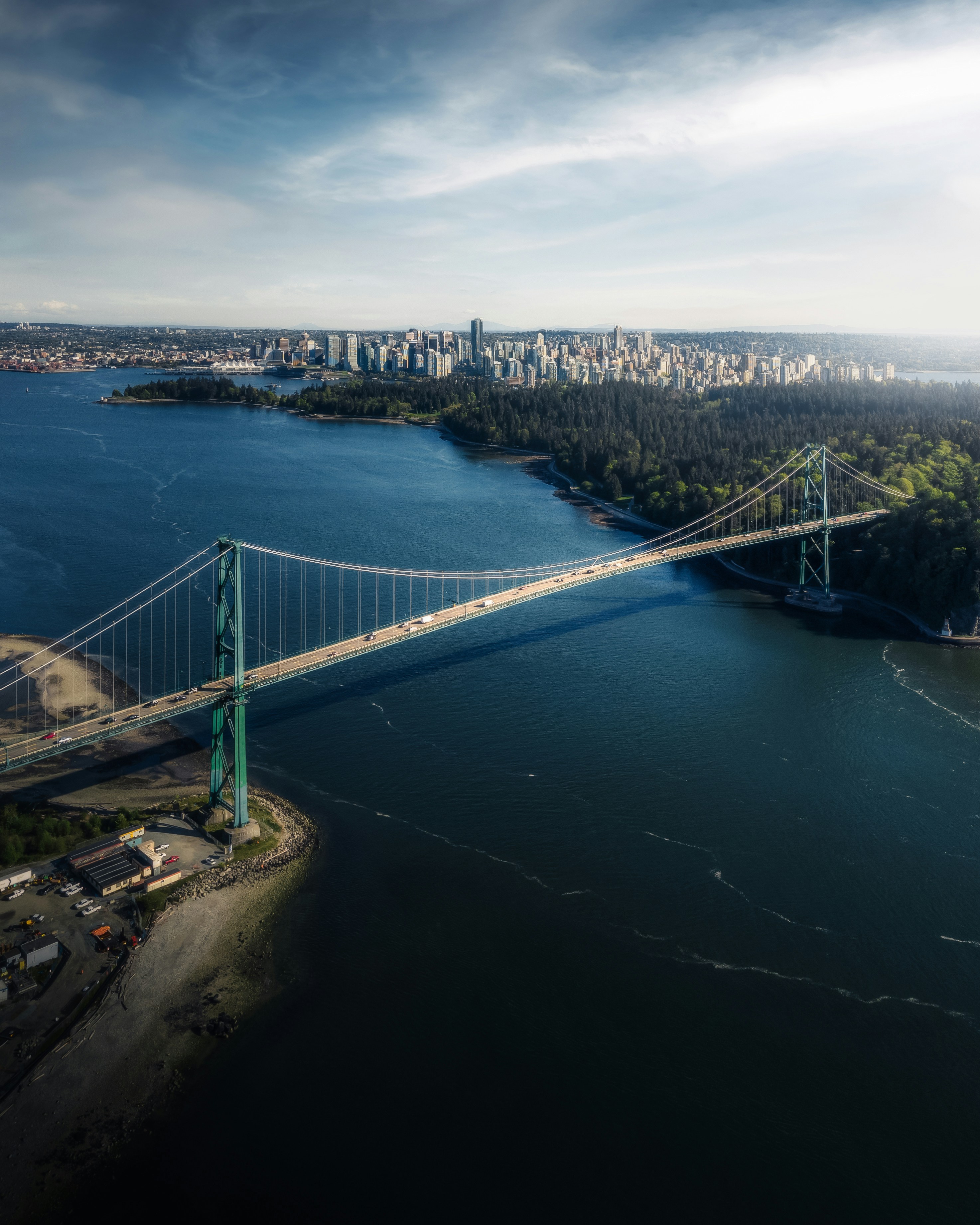


More Articles



Home Feature Guides
How Homes Work: Guides & Insights
Dive into guides that show what really matters in a house, from construction and materials to design choices and practical usability. Learn what questions to ask, what to watch for, and how to spot hidden issues so every feature—from tennis courts and home gyms to outdoor spaces and custom rooms—delivers the value it promises. These guides give the knowledge to assess every detail like an insider and avoid costly surprises.





Key Insights

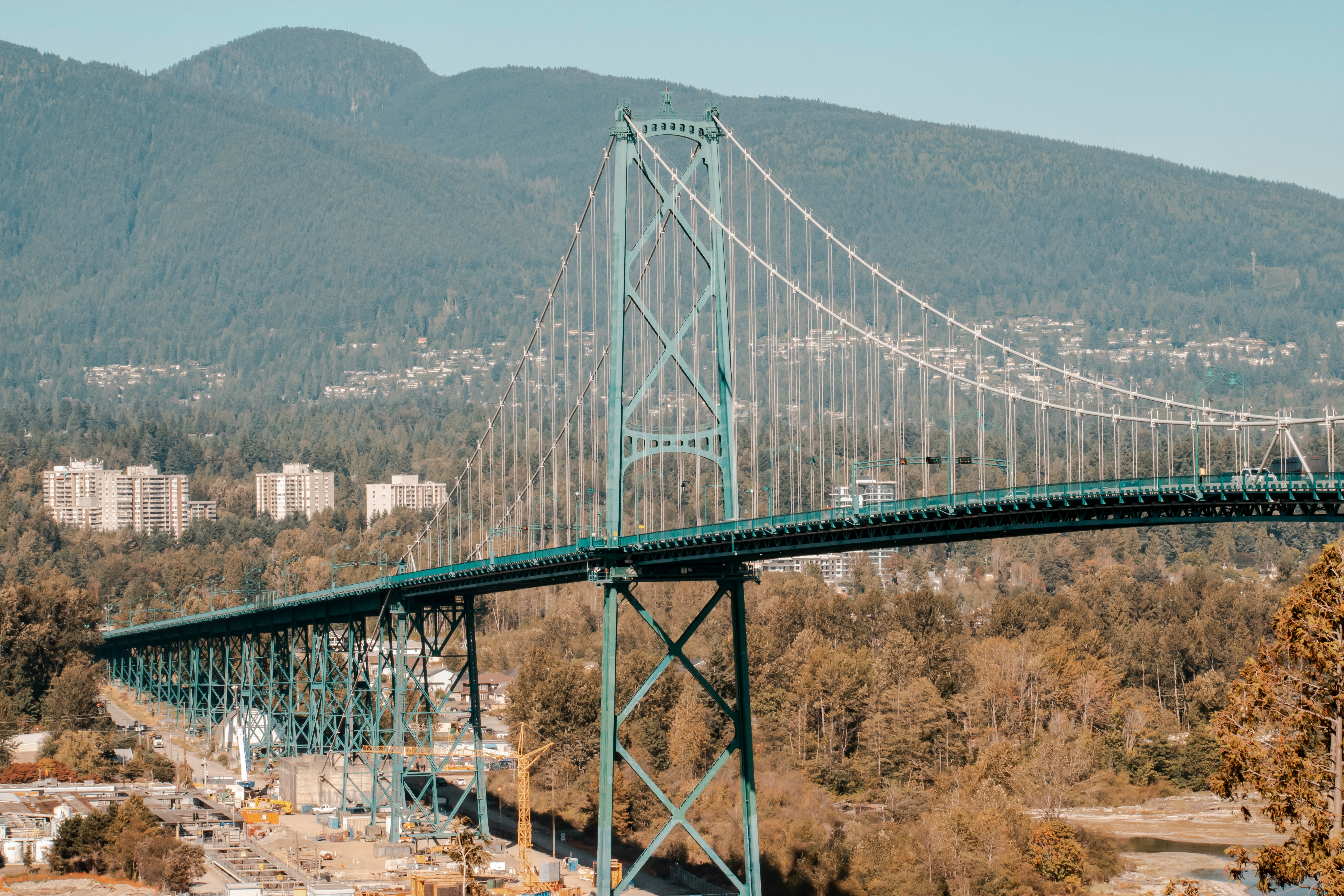
Key Insights


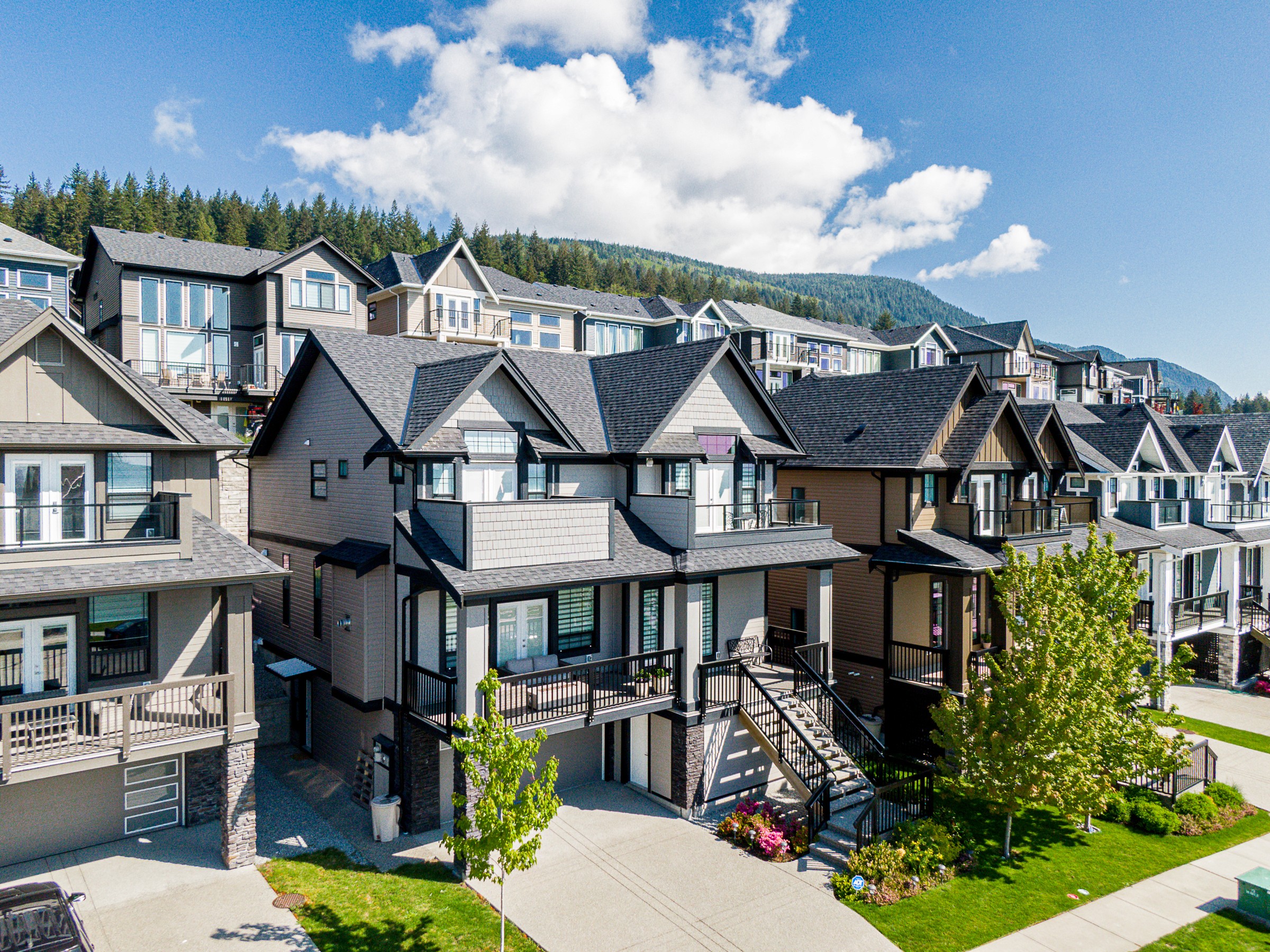


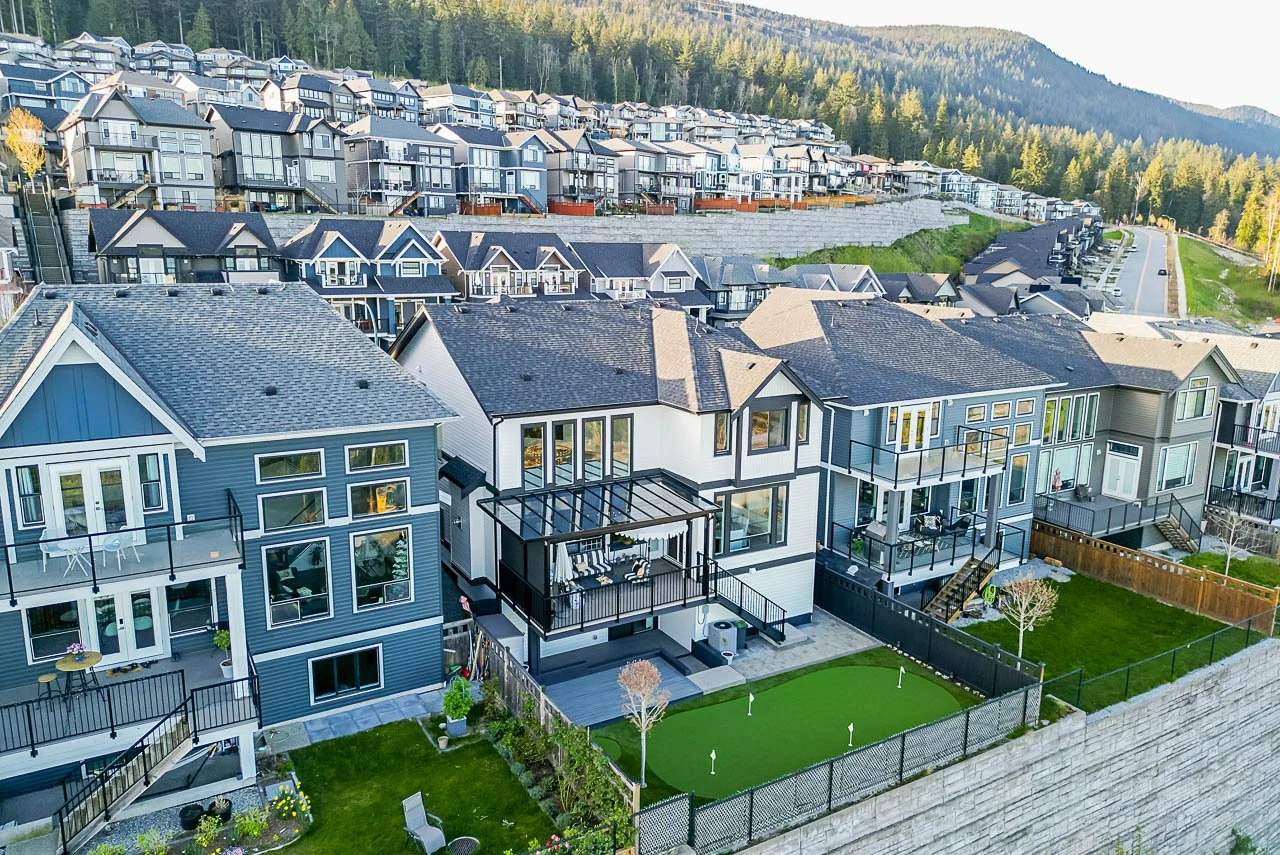



Recent
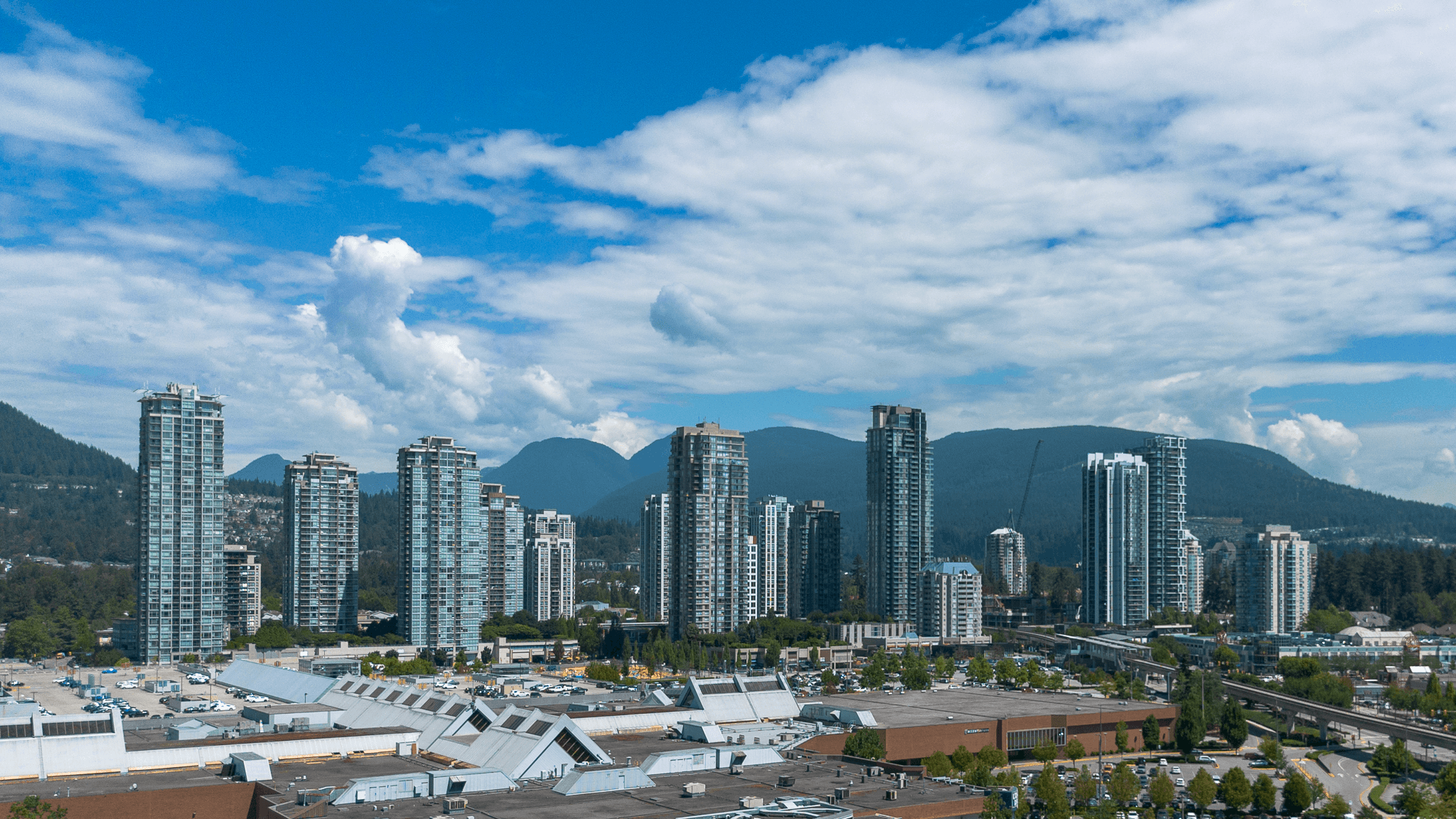


Recent





Victoria Estate Digest is your Go-to source for In-Depth Real Estate Insights, Market Trends, and Expert Analysis in British Columbia.
We cover everything from Housing Affordability and Foreign Investment to Luxury Properties and Emerging Market Opportunities.
Whether you're a Buyer, Seller, or Investor, we provide the Research and Knowledge you need to navigate BC’s ever-changing Real Estate Landscape.