How Foreign Buyers Still Own Vancouver—Ban or No Ban
How Foreign Buyers Still Own Vancouver—Ban or No Ban

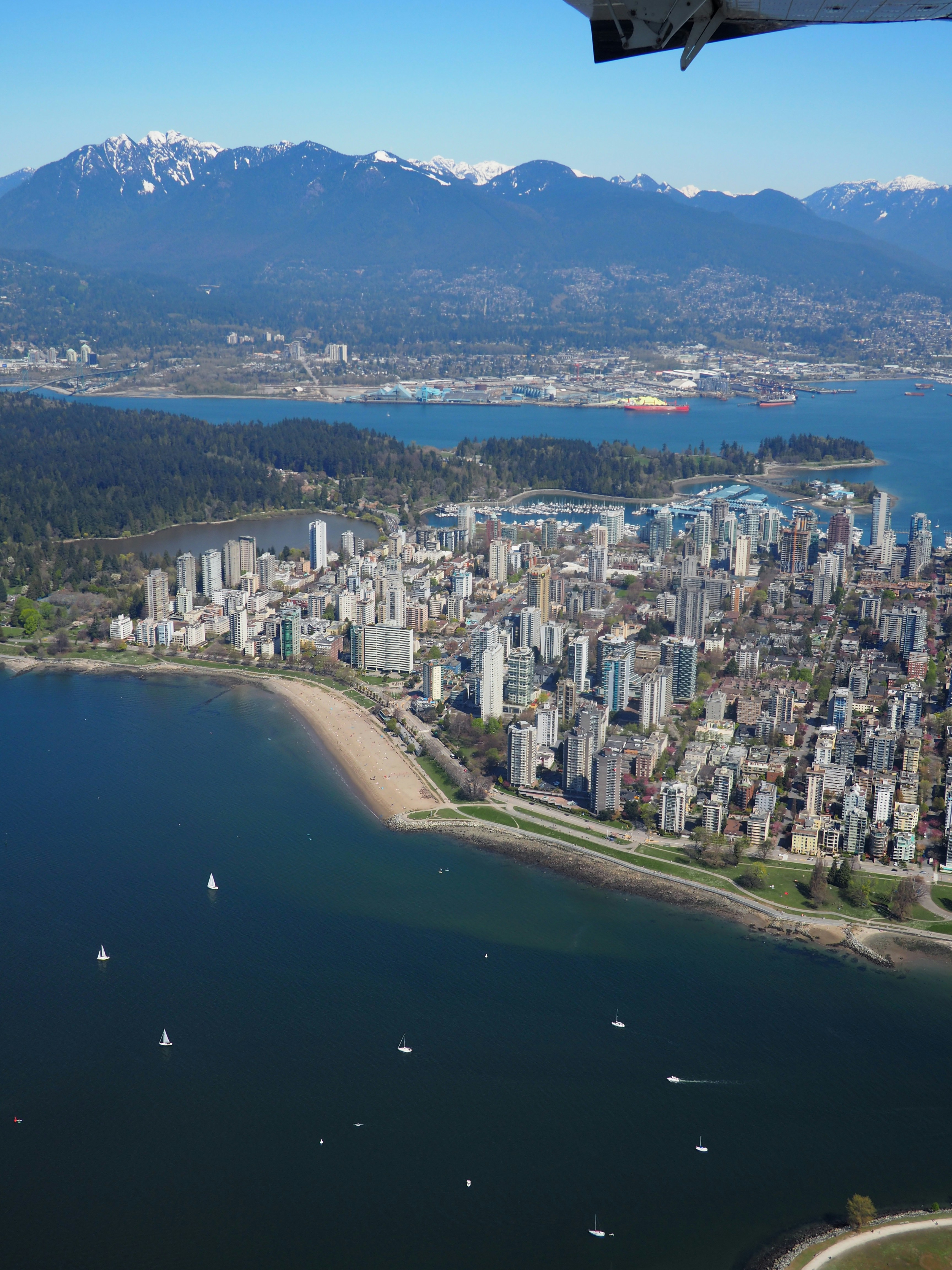
Canada banned foreign buyers.
So why do foreign owners still have houses in West Vancouver, condos downtown, investment properties in Richmond, and residential real estate portfolios across the Lower Mainland?
Because banning new purchases is not the same thing as banning existing ownership.
That distinction has been lost in an extraordinary amount of Vancouver real estate commentary.
The federal government announced a foreign-buyer prohibition. Headlines celebrated or condemned it. Politicians debated it. Realtors explained it. Investors worried about it. Homebuyers wondered whether it would finally make Vancouver affordable.
Meanwhile, foreign-owned properties did not disappear.
The condos did not vanish. The owners did not receive compulsory sale notices. Existing mortgages did not become illegal. Previously signed presale contracts did not automatically evaporate. Commercial property did not suddenly become Canadian-owned. Foreign capital did not stop participating in development, lending, or publicly traded real estate investments.
And certain non-Canadian buyers remained legally eligible to purchase residential property.
This is where the headline and the machinery are very different.
Canada has a prohibition on specified purchases by non-Canadians, not a universal prohibition on foreign ownership or investment. The law has exceptions. It has geographic boundaries. It distinguishes property types. It has rules for temporary residents, spouses, developers, vacant land, larger rental buildings, and existing contracts. It also interacts with British Columbia's separate 20% foreign buyer tax.
As of October 16, 2026, the federal prohibition is scheduled to expire on January 1, 2027. Whether it will be extended is still uncertain, with federal officials publicly considering their options.
So yes, foreign owners still own Vancouver real estate.
Some bought before the ban. Some acquired property under legitimate exceptions. Some own assets the ban does not cover. Some hold financial exposure rather than direct title. And some people routinely described as "foreign buyers" are actually Canadian citizens or permanent residents, whom the federal law does not prohibit from buying.
None of that automatically means anyone is breaking the rules.
Understanding Vancouver's foreign ownership market requires separating legal ownership, immigration status, capital source, beneficial control, property type, and tax treatment.
That is a lot less exciting than shouting "foreign buyer loophole."
It is also considerably more useful.
The first misconception: a ban on buying is not a ban on owning
Canada's Prohibition on the Purchase of Residential Property by Non-Canadians Act came into force on January 1, 2023. The legislation restricts direct and indirect purchases of covered residential property by non-Canadians, subject to exceptions. The federal government subsequently extended the prohibition to January 1, 2027.
The critical word is purchase.
Not ownership.
Not continued possession.
Not rental operation.
Not mortgage renewal.
Not the right to sell a property already legally owned.
A foreign national who legally acquired a Vancouver condominium in 2017 did not lose ownership on January 1, 2023. The law did not retroactively invalidate that transaction. The owner generally remains entitled to hold the property, maintain it, rent it subject to applicable rules, renew the mortgage, or sell it.
CMHC's official foreign-buyer-ban FAQ specifically confirms that non-Canadians who purchased residential property before January 1, 2023 can continue granting or renewing mortgages against that property.
That is the first reason foreign owners remain in Vancouver.
They were already here.
You cannot make an existing ownership stock disappear by restricting the flow of new purchasers.
If Vancouver had tens of thousands of properties with some form of non-resident ownership before the prohibition, the ban did not automatically put those properties onto the market.
It changed who could buy certain properties next.
That is a fundamentally different policy instrument.
The government closed part of the entrance.
It did not empty the building.
The second misconception: foreign ownership and foreign purchasing are different statistics
This sounds like accounting trivia. It is actually central to the debate.
Foreign ownership measures the stock of properties owned by a defined group at a particular time.
Foreign purchasing measures the flow of properties being bought by that group during a defined period.
If non-residents own 5% of a city's housing stock, that does not mean non-residents are buying 5% of homes this year.
If foreign buyers purchase almost nothing during a year because of legal restrictions, that does not mean the existing foreign-owned housing stock has fallen to almost nothing.
These are different measurements.
Imagine a city with 100,000 residential properties. Suppose 5,000 were already owned by non-residents before a new purchase ban.
The ban arrives.
New purchases by prohibited buyers fall dramatically.
But unless the existing owners sell, transfer ownership, change residency status, or otherwise leave that ownership category, the previously owned properties remain.
The ban can reduce new foreign purchasing while foreign ownership persists for years.
This is not necessarily a loophole.
It is how stocks and flows work.
And it explains why the announcement of a foreign-buyer ban never meant that every foreign-owned property in Vancouver would suddenly become available to a Canadian buyer.
What the historical data actually shows
Foreign ownership was measurable in Vancouver well before the federal prohibition.
Statistics Canada's Canadian Housing Statistics Program reported that, in its 2017 reference data, non-residents owned approximately 4.8% of residential properties in the Vancouver census metropolitan area.
The ownership rate was higher among condominium apartments: 7.9%.
Within individual municipalities, the historical figures were higher in some locations, including 7.6% in the City of Vancouver, 7.5% in Richmond, and 6.2% in West Vancouver.
Statistics Canada's original Vancouver and Toronto non-resident ownership study provides the figures and explains the differences among municipalities and property types.
Those figures are useful as a historical baseline.
They are not 2026 ownership estimates.
Statistics Canada released updated Canadian Housing Statistics Program data covering 2022 through 2024 in August 2026, including its residential properties by characteristics and residency status table. It also cautioned that methodological improvements, including better matching of owners with tax records, complicate year-over-year comparisons of non-resident ownership.
That distinction matters enormously.
We should not take an old foreign ownership percentage, label it current, and then build a theory about what the ban did or did not accomplish.
But the historical numbers establish something important.
Foreign ownership existed before the federal ban.
The federal ban did not automatically liquidate it.
That alone explains a substantial part of the apparent contradiction.
A foreign owner can keep the Vancouver property bought before 2023
Picture a hypothetical owner who purchased a West Vancouver house in 2016.
At the time, the buyer was legally eligible. They completed the purchase, registered title, paid the taxes required at that time, and maintained ownership.
In 2023, the federal foreign-buyer prohibition arrived.
The owner did not automatically become an unlawful property owner.
Their title remained.
They could continue dealing with the property under applicable law.
If the house was rented, the tenancy could continue. If it was owner-occupied, the occupancy could continue. If the mortgage matured, the owner could seek renewal. If the property was vacant, provincial or municipal vacancy-tax exposure might apply.
The federal purchase restriction was not a compulsory divestiture scheme.
This is why a foreign-owned house can still appear in Vancouver's property records in 2026 without proving anything suspicious about its acquisition.
The owner may simply have bought before the rules changed.
A property does not become illegally acquired because the government later restricts a different person's ability to purchase another property.
That would be a very different law.
Presale contracts signed before the ban could still complete afterward
Here is another reason foreign ownership did not stop neatly on January 1, 2023.
Presales.
Vancouver developers sell condominium units years before completion. A buyer might sign a binding contract in 2021 for a unit scheduled to complete in 2025 or 2026.
The federal legislation included protection for binding purchase agreements entered into before January 1, 2023.
CMHC specifically confirms that a non-Canadian who became liable under a purchase-and-sale agreement before the law came into effect is not prohibited merely because the transaction completes during the ban.
That means a property can legally transfer to a non-Canadian after January 1, 2023 under a qualifying pre-ban agreement.
The completion date is later.
The legally relevant binding contractual commitment was earlier.
This is a real distinction in a market where presale completion periods can stretch across years.
It also explains why looking at the date a property transferred does not necessarily tell you whether the transaction violated the federal prohibition.
A 2026 completion could originate from a lawful 2022 contract.
And B.C.'s Property Transfer Tax regime still has to be considered separately.
The ban did not turn every old presale contract into a pumpkin at midnight.
Being born overseas does not make someone a foreign buyer
This is one of the most important corrections in the entire conversation.
Foreign ownership is not ethnicity.
It is not a surname.
It is not language.
It is not whether someone grew up in Hong Kong, Shanghai, Singapore, New Delhi, London, or Tehran.
For the federal prohibition, Canadian citizenship and permanent residence are fundamental legal distinctions.
A Canadian citizen living abroad can generally purchase residential property without being prohibited as a non-Canadian under this law.
A Canadian permanent resident can generally purchase residential property under this law, even if their personal circumstances create separate tax-residency considerations.
A person born outside Canada who immigrated, became a Canadian citizen, established a business, earned money overseas, and bought a home in Vancouver is not automatically a foreign buyer because their money has an international history.
That may be an international capital story.
It is not necessarily a foreign-buyer-ban story.
This distinction matters in Vancouver because people frequently mistake nationality, ethnicity, immigration status, tax residence, and capital source for the same thing.
They are not.
A Canadian citizen with wealth earned abroad is not prohibited merely because the money originated elsewhere.
A Singapore citizen with no Canadian status buying a normal Vancouver condominium may be prohibited.
Same city.
Different legal status.
Different result.
And no useful analysis begins by guessing citizenship from the owner's name.
Foreign money and foreign ownership are not interchangeable
This is where Vancouver's property debate becomes more sophisticated.
Consider a Canadian citizen who spent twenty years working overseas and returns to Vancouver with $5 million in savings.
The capital was accumulated outside Canada.
The purchaser is Canadian.
The purchase may be perfectly legal.
Now consider a Canadian permanent resident whose parents overseas provide an unconditional and genuine gift toward a down payment.
The money originated internationally.
But that does not, by itself, mean the foreign parents own the property.
The legal and beneficial ownership arrangement determines much of the analysis.
If the Canadian resident genuinely owns the home, and the parents simply provide a properly documented gift with no hidden ownership interest, foreign-source funding does not automatically convert the transaction into a prohibited foreign purchase.
But if the parents are the real beneficial purchasers and the person on title is merely holding the property for them, the analysis changes dramatically.
That could raise federal prohibition, provincial tax, transparency, trust, lender disclosure, and other legal issues.
The distinction is between a genuine financial gift and concealed beneficial ownership.
One may be ordinary family assistance.
The other can be a serious compliance problem.
The location of the money is not the entire story.
Who actually owns and controls the asset matters.
Work permit holders can legally buy under certain conditions
The federal prohibition does not exclude every non-Canadian who lacks permanent residence.
After regulatory amendments in March 2023, certain temporary residents authorized to work in Canada became eligible to purchase residential property.
CMHC explains that eligible work permit holders or people authorized to work in Canada must generally have at least 183 days of validity remaining on their permit or authorization at the time of purchase and satisfy the rule relating to prior purchases during the prohibition.
That creates a legitimate path for a qualifying non-Canadian worker.
For example, a professional working in Vancouver under a valid work permit may qualify for a federal exception even without permanent residence.
That is not necessarily a loophole.
It is an exception written into the regulatory framework.
But there is an expensive second question.
Does British Columbia still consider that buyer a foreign national for Property Transfer Tax purposes?
If yes, B.C.'s additional 20% tax may still apply unless a provincial exemption applies.
That means a buyer can be legally permitted to purchase under federal law while facing extraordinary closing costs under provincial law.
Canada opens the door.
B.C. presents the invoice.
The work permit example: legal to buy does not mean cheap to buy
Suppose a qualifying foreign national working in Vancouver is legally eligible under the federal work-permit exception.
They purchase a $2 million residential property in Metro Vancouver.
Assume the B.C. additional foreign buyer tax applies and no exemption is available.
Ordinary B.C. Property Transfer Tax on $2 million:
$38,000
Additional foreign buyer tax:
$2,000,000 × 20% = $400,000
Total Property Transfer Tax:
$438,000
That is before the down payment, legal fees, insurance, GST if applicable, and other closing costs.
The provincial additional tax is calculated on the foreign buyer's proportionate share of the residential property's fair market value in specified areas. The B.C. government explains the 20% tax and applicable exemptions.
That example illustrates an important point.
The federal law answers whether certain people can buy.
The provincial tax system helps determine whether the transaction is financially sensible.
Those are different questions.
A buyer might pass the first test and fail the second test economically.
B.C. Provincial Nominees can be treated differently
British Columbia provides a specific additional Property Transfer Tax exemption for qualifying confirmed B.C. Provincial Nominees.
The province says a qualifying foreign national must be a confirmed Provincial Nominee when the transfer is registered, the property must be used as their principal residence, and other conditions apply.
This can make a major difference for someone immigrating through the B.C. Provincial Nominee Program.
But being a work permit holder is not automatically the same as being a confirmed Provincial Nominee.
Having applied for immigration is not automatically the same as receiving nomination.
And the exemption does not automatically extend to a foreign spouse who is also purchasing a registered share.
This is why immigration status, legal eligibility, and provincial tax treatment have to be checked independently.
A buyer cannot safely rely on the sentence, "My immigration is in process."
The tax office is likely to want something more specific.
Preferably a document.
Spouses and common-law partners are another lawful exception
A non-Canadian may also be eligible to purchase residential property with a qualifying spouse or common-law partner.
The federal Act provides an exception where the non-Canadian purchases with a spouse or common-law partner who is a Canadian citizen, permanent resident, person registered under the Indian Act, or another qualifying person under the legislation.
Again, this is not an imaginary workaround.
It is part of the law.
A Canadian–foreign couple may have a legally permissible way to buy their home together.
But provincial tax treatment still matters.
If the foreign spouse acquires an interest on title, the B.C. additional Property Transfer Tax may apply to that foreign spouse's proportional interest unless relief is available.
A couple can therefore qualify federally and still face additional provincial tax.
Marriage may help establish federal purchase eligibility.
It does not automatically erase every provincial tax consequence.
The wedding ring is not a tax exemption certificate.
Student buyers face a much narrower path
The federal law also contains a temporary-student exception, but it is highly restricted.
CMHC describes requirements including five years of Canadian income tax filings, substantial physical presence in Canada during each of the preceding five years, no previous purchase under the prohibition, and a purchase price not exceeding $500,000.
That is technically a route.
In Vancouver, it is hardly a broad investment strategy.
A $500,000 ceiling eliminates most larger, family-sized, and premium Vancouver properties from consideration.
It also prevents parents from casually assuming their child attending university can buy any condo the family wants.
The student exception is not a general foreign-family property program.
It is a narrow exception with conditions.
And a student who qualifies federally may still have to analyze provincial foreign-buyer tax rules.
Vancouver real estate loves a second exam.
Inheritance, gifts, and certain family-law transfers are different from ordinary purchases
Not every acquisition of a property interest is treated the same way under the federal prohibition.
CMHC's guidance identifies circumstances where acquiring an interest through death, gift, divorce, or separation is excluded from the relevant definition of purchase.
That matters because foreign nationals can have legitimate family or estate interests in Canadian property.
A person may inherit an interest in a Vancouver property.
A person may receive an interest through a qualifying gift.
A property transfer may result from marital separation or divorce.
These are not automatically equivalent to an ordinary open-market purchase by a prohibited non-Canadian.
But the specific transaction still needs legal review, particularly for trusts, joint ownership, beneficial interests, taxes, and land-title registration.
A legal exception is not an instruction to disguise a sale as a gift.
The law recognizes different kinds of transactions.
It does not invite creative labelling.
The corporate ownership question is much more complicated than the headlines suggest
One of the most common assumptions is that wealthy foreign buyers can simply set up a Canadian corporation and buy whatever they want.
That is not how the federal rules work.
The prohibition extends to certain corporations and other entities controlled by non-Canadians, even where the entity is formed under Canadian law.
Under the federal regulations, control includes direct or indirect ownership representing 10% or more of equity value or voting rights, or control in fact through ownership, agreement, or otherwise.
That is a significant threshold.
A private Canadian company does not become exempt simply because it has a Canadian incorporation number.
If it meets the non-Canadian control definition, it may be covered by the prohibition when purchasing covered residential property.
The federal legislation and regulations make the distinction clear.
A numbered company is not a citizenship ceremony.
Putting "Canada" in the corporation's name does not make the underlying purchase compliant.
Trusts and nominee arrangements do not automatically solve the problem
Trusts are legitimate legal tools.
They are used for estate planning, family wealth management, business ownership, fiduciary relationships, and other lawful purposes.
But a trust is not a magical cloak that makes beneficial ownership disappear.
Suppose a foreign investor funds a property purchase but places legal title in the name of a Canadian resident who agrees to hold it for the investor's benefit.
If the foreign investor is the true beneficial purchaser, the arrangement may still fall within rules addressing direct or indirect acquisition.
It can also trigger separate provincial rules for taxable trustees, reporting bodies, and beneficial ownership disclosure.
That is why B.C.'s Land Owner Transparency Registry matters.
The Province of British Columbia describes the registry as a publicly searchable system for identifying people who indirectly own or control land through corporations, partnerships, and trusts.
This does not mean every trust is problematic.
It means legal title and beneficial control are both relevant.
A Canadian person appearing on title does not necessarily settle the issue if someone else secretly owns the economic interest.
And a family arrangement does not automatically become innocent because everyone involved is related.
Family dinner is not a substitute for legal disclosure.
Vancouver has a beneficial ownership registry for a reason
B.C.'s Land Owner Transparency Registry was introduced to improve visibility into indirect ownership of land.
Under the Land Owner Transparency Act, relevant corporations, trustees, and partners may be required to file information about beneficial ownership and control.
The public can search the registry free of charge through the Land Title and Survey Authority's public access system.
That is a meaningful transparency tool.
But it is not a perfect database containing every possible foreign financial relationship connected to every parcel.
Some reporting bodies are excluded. Some information is protected. Certain personal information is not public. There are protections for minors and others, as well as a delay before some information becomes publicly accessible.
The registry also has its own definitions of reporting bodies, interest holders, and beneficial ownership.
So when someone says, "The owner is a Canadian company," that is not necessarily the end of the investigation.
But when someone says, "Every Canadian company is secretly foreign-owned," that is not evidence either.
A serious analysis looks at registered title, reporting obligations, disclosed beneficial interests, corporate control, and the transaction itself.
Not rumours.
Not surnames.
Not theories built from looking at real estate listings.
Foreign investors can own entire rental buildings that the ban does not prohibit
This is one of the least understood parts of the legislation.
The federal purchase prohibition applies to particular residential property types.
It generally covers buildings with three dwelling units or fewer, along with separately owned parts of buildings such as condominium units.
CMHC confirms that the Act does not prohibit the purchase of larger multi-unit buildings containing four or more dwelling units.
That means a non-Canadian investor may be able to purchase a qualifying apartment building with four or more dwelling units even while being prohibited from buying an individual condominium in the same neighbourhood.
That seems strange until you understand the policy distinction.
The federal ban is aimed principally at certain residential ownership purchases, not the entire apartment-building investment market.
A four-unit or larger building is not necessarily treated like an individual condominium unit.
But do not misunderstand this as permission to buy four separate condos and call it an apartment building. Individually owned condominium units are separately addressed under the law.
The property structure matters.
And provincial tax, property classification, tenancy, financing, corporate ownership, and other legal requirements still need to be analyzed.
The federal ban does not prohibit every foreign investment in rental housing.
It draws a boundary around specific transactions.
Development property is another legitimate channel
Foreign capital can also participate in residential development under circumstances recognized by the federal regulations.
In March 2023, Canada amended the rules to permit purchases of covered residential property for genuine development purposes.
CMHC explains that qualifying development can involve evaluating, planning, and undertaking significant alterations or improvements, including redevelopment. It also clarifies that ordinary repairs, cosmetic renovations, remodelling, or simply acquiring a property to rent out do not automatically qualify.
That is an important distinction.
A legitimate foreign-backed developer purchasing a site for redevelopment may be operating within a recognized exception.
A foreign investor buying a detached house for personal use and announcing that they might someday replace the countertops is not necessarily doing development.
The government's guidance looks at genuine purpose and supporting evidence.
Planning work.
Architectural analysis.
Engineering.
Land-use approvals.
Municipal correspondence.
Redevelopment activity.
The law makes room for development.
It does not treat every speculative renovation idea as development.
Still, this is a real route through which international capital can continue participating in Vancouver real estate.
And it is conceptually different from foreign ownership of an ordinary family home.
Vacant land is not covered in the same way as a completed house
The federal government also changed its treatment of vacant land in March 2023.
CMHC confirms that the prohibition no longer applies to vacant land as a category under the amended rules.
That means a non-Canadian may be able to purchase qualifying vacant land even where buying a completed residential property would be prohibited.
But there are obvious complications.
Is the land genuinely vacant under the applicable law?
What is the zoning?
What are the intended uses?
Is it subject to other restrictions?
Does B.C. additional Property Transfer Tax apply to any residential portion?
Are there agricultural land restrictions?
What are the development costs?
Are there environmental, servicing, or municipal limitations?
Vacant land is not automatically simple land.
In Metro Vancouver, it can be one of the most complicated assets imaginable.
The federal purchase prohibition is only one layer.
The development pro forma is another.
And the land itself can be surprisingly talented at consuming money before producing anything.
Commercial real estate was never the same thing as buying a Vancouver condo
Foreign participation in office buildings, industrial property, retail buildings, logistics assets, and other commercial real estate is not the same as foreign purchasing of ordinary residential property.
The federal prohibition is defined around covered residential property.
It does not generally prohibit purchases of purely commercial real estate.
That means international investors can continue participating in parts of Vancouver's real estate market that sit outside the residential purchase prohibition.
Commercial ownership has its own taxes, financing rules, GST treatment, due diligence, environmental risk, corporate structures, and regulatory obligations.
But a foreign investor owning an income-producing office tower does not demonstrate that the investor illegally purchased a detached family home.
It demonstrates that different types of real estate are governed by different rules.
Vancouver is not one property market.
It is a collection of markets connected by land, capital, and exceptionally complicated paperwork.
The foreign-buyer ban affects some of them much more directly than others.
Foreign capital can participate through publicly traded real estate investments
Direct title is not the only way to obtain financial exposure to real estate.
A non-Canadian investor can potentially invest in publicly traded Canadian real estate companies or real estate investment trusts, subject to applicable securities, entity, sanctions, and other laws.
That is different from personally buying an individual Vancouver condo.
CMHC's official guidance distinguishes among publicly traded Canadian REITs, certain privately held entities, foreign entities, and purchases made for development purposes.
Public capital markets allow economic interests to be held in companies that own real estate, even where the individual investor does not personally own title to a specific residential property.
This is a key part of the broader story.
A government can restrict direct purchases of certain homes without shutting down every pathway for international money to finance, own shares in, or invest in companies operating within Canadian real estate.
That does not mean all REITs or structures are exempt.
Their legal status, place of formation, control, and activities matter.
But it demonstrates why "foreign buyer ban" and "no foreign capital in Vancouver housing" are not equivalent statements.
The first is a law.
The second is an assumption.
Foreign lenders can still be involved in Canadian property
There is another distinction many people miss.
Owning a house and holding a mortgage secured against a house are not the same thing.
CMHC confirms that the federal prohibition does not generally prohibit non-Canadian lenders from taking mortgages or other security interests over residential property.
It also confirms that an existing foreign owner can renew a mortgage.
That does not mean financing a prohibited new purchase becomes acceptable. A lender knowingly helping to execute an illegal purchase can create separate legal problems.
But financing and direct purchase are different legal activities.
Foreign capital can therefore be exposed to Canadian real estate through lawful lending arrangements without the lender becoming the owner of the underlying home.
This matters in a financial system where capital moves through institutions, debt markets, funds, and private financing structures.
A foreign lender is not necessarily a foreign homeowner.
A foreign investor in a publicly traded property company is not necessarily the registered owner of a house.
A foreign-funded Canadian buyer is not necessarily a prohibited non-Canadian purchaser.
And a foreign owner who bought before 2023 is not automatically violating the law simply by holding.
These distinctions may be less exciting than the headlines.
They are essential.
B.C.'s 20% foreign buyer tax is a separate policy
Even where a non-Canadian is legally able to purchase under the federal exceptions, British Columbia may impose additional Property Transfer Tax.
B.C.'s additional foreign buyer tax is generally 20% of the foreign buyer's proportional interest in the fair market value of qualifying residential property in specified regions, including Metro Vancouver.
It is imposed in addition to the ordinary Property Transfer Tax.
That creates very different outcomes depending on the purchaser.
Consider a $2 million Vancouver property.
A qualifying Canadian citizen or permanent resident buyer generally faces the ordinary $38,000 PTT, before considering any exemptions.
A legally eligible foreign national acquiring 100% of the property and subject to the provincial additional tax could face $438,000 in total PTT.
That is a $400,000 difference.
Both transactions might be federally permitted.
But the provincial tax changes the economics dramatically.
The provincial tax may also apply only to the registered foreign purchaser's proportional ownership share, although trusts and other structures require careful analysis.
A foreign purchaser acquiring 50% of the qualifying property can face a different calculation than someone acquiring 100%.
The registered share matters.
So does the identity and status of the buyer.
So does whether a particular exemption applies.
The federal prohibition is not the whole story.
It is the first gate.
Foreign owners can become Canadian permanent residents
An international family may buy property legally under one status, later become permanent residents or citizens, and remain owners throughout.
The person's legal classification changes.
The property may not change hands.
That means foreign ownership statistics, tax-residency classifications, and legal purchase categories can change without a sale.
B.C. also has a specific refund mechanism for certain foreign nationals who paid the additional Property Transfer Tax and subsequently became Canadian citizens or permanent residents within one year of registration, subject to strict principal-residence and application conditions.
The province's refund guidance explains the requirements, including moving in within 92 days, occupying the property as a principal residence for the required period, and applying within the prescribed deadline.
This is not guaranteed relief for everyone expecting immigration approval.
But it shows that the system recognizes changes in status.
That is another reason why a simplistic category like "foreign-owned Vancouver housing" can become analytically messy.
People immigrate.
They become permanent residents.
They become citizens.
They move abroad.
They change tax residency.
Ownership remains, but the classification can change.
A static ownership percentage cannot explain all of that by itself.
The annual tax regime is now a major part of the story
Foreign buyers who already own Vancouver residential property may be legally entitled to keep it.
But keeping it can be expensive.
B.C.'s Speculation and Vacancy Tax is one of the most important continuing costs.
For the 2026 tax year, the highest rate is 3% of assessed value for foreign owners, untaxed worldwide earners, and other highest-rate categories.
For 2027 and later, B.C. Budget 2026 increases that highest rate to 4%.
The rate for Canadian citizens and permanent residents who are not untaxed worldwide earners is 1% for 2026 and 2027, where no exemption or applicable credit eliminates the liability.
The tax applies in designated areas, and whether an owner actually owes it depends on ownership status, residential use, exemptions, and other statutory conditions.
The province's 2026 budget tax changes confirm the scheduled 2027 increase.
This is a substantial change to the economics of foreign-held or otherwise tax-exposed housing.
The federal government may prohibit certain new acquisitions.
The provincial government can simultaneously make some existing holdings more expensive to retain.
Those are two different policy pressures.
The $3 million foreign-owned home example
Suppose a foreign owner legally purchased a Vancouver home in 2018.
The property remains legally owned in 2026.
Assume it is assessed at $3 million, is in a taxable area, and the owner does not qualify for an SVT exemption or credit.
At the 2026 highest SVT rate:
$3,000,000 × 3% = $90,000
At the 2027 highest SVT rate:
$3,000,000 × 4% = $120,000
That is a hypothetical $30,000 annual increase, assuming the assessed value and taxable circumstances remain the same.
And that is not ordinary municipal property tax.
It is a separate tax.
This is the part of Vancouver's foreign ownership story that matters more than an argument over whether the federal ban magically removed existing owners.
It did not.
But annual holding taxes can alter their behaviour.
Some may occupy their property differently.
Some may rent it.
Some may seek exemptions.
Some may sell.
Some may choose to pay the tax.
A ban affects entry.
An annual tax affects the economics of staying.
That distinction is worth understanding.
Renting the property can matter, but family occupancy is not automatically enough
A foreign owner who rents a home under qualifying arrangements may be eligible for an SVT tenancy exemption.
That is important because the tax is not simply an automatic annual charge on every foreign-owned property.
But the type of tenancy matters.
B.C.'s rules distinguish between arm's-length tenants and non-arm's-length occupants, including family members.
An arm's-length tenant generally must occupy the property under a qualifying residential tenancy arrangement.
When foreign owners or untaxed worldwide earners rent to non-arm's-length occupants, extra requirements may apply.
Under the province's tenancy exemption guidance, a qualifying non-arm's-length tenant for such an owner must satisfy specific Canadian citizenship or permanent residence, B.C. tax residency, income, and other conditions. The tenant's B.C. income may need to be at least three times the annual fair market rent.
That can create a very different outcome for a genuine arm's-length tenant than for a family member living in a multimillion-dollar house under informal arrangements.
A foreign owner cannot safely assume:
"My child lives there, therefore no SVT."
Maybe an exemption applies.
Maybe not.
The exact facts matter.
And the difference can be six figures.
Vancouver's Empty Homes Tax adds another layer
Inside the City of Vancouver, the municipal Empty Homes Tax operates separately from the provincial SVT.
The City says properties deemed, declared, or determined empty in the 2025 reference year are subject to a tax of 3% of the property's 2025 assessed taxable value, unless an exemption applies.
The City also requires annual property status declarations.
The City of Vancouver's Empty Homes Tax guidance confirms that framework.
This is important because the two vacancy-related taxes can apply separately.
A high-value vacant property may be exposed to both, depending on the owner, location, occupancy, and exemptions.
Using the same hypothetical $3 million property, municipal Empty Homes Tax at 3% would be $90,000 for an applicable reference year using that assessed taxable value.
A non-exempt highest-rate owner exposed to 2027 SVT at 4% could face another $120,000.
Together, that would be a hypothetical $210,000 before ordinary property tax and other holding costs.
That does not mean every foreign owner pays this.
It means the cost of non-exempt vacancy can be substantial.
The federal prohibition never needed to seize existing houses to create pressure on some existing owners.
The annual tax system can make keeping certain properties expensive enough on its own.
The federal Underused Housing Tax is no longer part of the current-year stack
One important correction to older foreign-owner tax articles is that Canada's federal Underused Housing Tax has changed.
The Canada Revenue Agency confirms that, following legislation receiving Royal Assent on March 26, 2026, affected owners do not need to file or pay the federal Underused Housing Tax for 2025 and subsequent calendar years.
Obligations can still remain for 2022, 2023, and 2024.
See the CRA's current Underused Housing Tax page.
That matters because some older commentary still adds the federal 1% UHT to current-year tax calculations.
For 2026, that would be outdated.
But the elimination of current federal UHT obligations does not cancel B.C.'s SVT or Vancouver's municipal Empty Homes Tax.
Different governments.
Different statutes.
Different bills.
The federal layer changed.
The provincial and municipal layers remain.
Foreign owners may still face Canadian rental and sale taxes
A foreign owner who rents Canadian real estate may also have federal non-resident rental-income obligations.
A non-resident landlord can face withholding and reporting requirements on Canadian rental income, with separate treatment and elections potentially available depending on circumstances.
When a non-resident later sells taxable Canadian property, Section 116 procedures can become relevant. These may involve notifying the CRA, obtaining a certificate of compliance, and dealing with purchaser withholding obligations.
That is an entirely different issue from the federal foreign-buyer ban.
The ban addresses certain purchases.
Income tax addresses the income and gains.
Provincial taxes address transfer and ownership circumstances.
Municipal taxes address local obligations.
A foreign owner does not escape the rest of Canadian tax law because their original purchase was legal.
And a Canadian buyer purchasing from a foreign owner needs to understand the seller's tax-residency and clearance requirements before completion.
The ownership story continues all the way to the exit.
How much of Vancouver is still foreign-owned?
This is the question everyone wants answered with one dramatic percentage.
The problem is that there is no single useful statistic that captures all the different meanings people attach to "foreign-owned Vancouver."
You could measure:
Properties legally owned by non-resident individuals.
Properties beneficially owned by non-residents.
Properties owned by Canadian corporations with foreign shareholders.
Properties partly owned by non-residents.
Properties owned by Canadian citizens living abroad.
Properties owned by permanent residents who earn income internationally.
Properties owned by foreign entities.
Properties financed with foreign capital.
Properties purchased by non-resident investors during a particular year.
These categories overlap, but they are not identical.
The historical Statistics Canada finding of 4.8% non-resident ownership in the Vancouver CMA in 2017 is legitimate for its particular definition and reference period.
It is not proof of the current foreign-owned share in 2026.
Nor does it measure every foreign financial interest in Canadian real estate.
Newer Statistics Canada data exist, but changes in methodology and definitions require care before making trend claims.
That is not as satisfying as claiming that foreign buyers control 20%, 30%, or 40% of Vancouver.
But evidence is more important than a dramatic headline.
A percentage without a definition is just a rumour that learned decimals.
Foreign investment is not the only reason Vancouver is expensive
It is also important not to confuse the existence of foreign ownership with a complete explanation of Vancouver's housing prices.
International demand has been one source of demand, and governments have expressly cited housing affordability concerns when introducing foreign-purchase restrictions.
But Vancouver housing prices also depend on domestic income, household wealth, mortgage credit, interest rates, land constraints, construction costs, zoning, infrastructure, taxation, investor demand, population changes, and housing supply.
The market's recent weakness makes that clear.
In September 2026, Greater Vancouver REALTORS reported 1,717 residential sales, down 8.4% from September 2025 and 25% below the 10-year seasonal average.
Active listings reached 16,394, or 24.3% above the 10-year seasonal average.
The composite benchmark price was $1,075,900, down 5.5% year over year.
Apartment sales were down 18.6% year over year, while detached and townhouse sales were slightly higher than the corresponding month in 2025.
GVR's September 2026 market report specifically attributed much of the overall weakness to the apartment segment and described investor-driven demand as waiting for more favourable conditions.
That is not a market being explained by one variable.
The federal ban is still in force.
Yet prices have softened.
Investor appetite has weakened.
Inventory remains elevated.
Affordability is still difficult.
This does not prove that the ban succeeded or failed by itself.
It proves that Vancouver housing is affected by far more than the legal status of foreign buyers.
The market is an equation with many variables.
Foreign ownership is one of them.
Not the entire equation.
The ban's scheduled 2027 expiry is now a live question
Here is where the next chapter becomes particularly interesting.
As of October 16, 2026, the federal foreign-buyer prohibition is scheduled to expire on January 1, 2027.
That does not mean the ban will necessarily expire without extension.
On October 7, 2026, Global News reported that federal Finance Minister François-Philippe Champagne said the government was considering its options regarding the approaching expiry. The minister did not commit to whether the prohibition would be extended.
See Global News' October 7 report on the pending expiry.
That leaves several possible legislative outcomes.
The prohibition might expire as scheduled.
It might be extended again.
It might be amended.
A future regime might change the scope of the restriction or the exceptions.
The important point is that none of those outcomes should be treated as guaranteed before the government acts.
And even if the federal prohibition expires, B.C.'s additional 20% Property Transfer Tax does not automatically disappear.
Nor does SVT.
Nor does Vancouver Empty Homes Tax.
Nor do non-resident tax rules.
Nor do lender requirements.
The federal ban is only one part of the financial and legal environment.
Removing it would not turn Vancouver into a frictionless market for foreign capital.
Would ending the ban automatically bring foreign buyers flooding back?
Not necessarily.
Additional eligible buyers could increase demand, all else equal. But how many actually purchase, where they purchase, and at what prices would depend on market conditions and the remaining legal and tax costs.
A foreign buyer looking at a $3 million Vancouver house may still face an additional $600,000 in B.C. foreign buyer tax if the purchase is legally permitted and the tax applies.
A non-exempt foreign owner might face significant annual SVT costs.
A buyer looking at a vacant property inside the City of Vancouver must consider municipal vacancy rules.
A rental investor must consider current rents, financing, taxes, property management, and resale liquidity.
And Vancouver is not currently experiencing the broad speculative demand conditions of the peak market.
So the end of the federal prohibition could change legal eligibility without recreating 2021.
That is an important distinction.
Permission to buy is not the same as willingness to buy.
Foreign investors can be highly sensitive to returns, taxes, currency, liquidity, and opportunity cost.
If Vancouver investment yields are weak, foreign investors may prefer other asset classes or markets.
If the numbers improve, interest may return.
The passport does not override the spreadsheet.
The legitimate channels are not necessarily loopholes
The word "loophole" gets thrown around too easily.
A loophole suggests someone has discovered an unintended way around a rule.
But many of the categories discussed here are expressly recognized by legislation or regulations.
Pre-existing owners.
Binding pre-2023 purchase contracts.
Canadian citizens and permanent residents.
Qualifying work permit holders.
Qualifying spouses.
Certain other protected or eligible people.
Inheritance and specified family-law circumstances.
Buildings with four or more dwelling units.
Vacant land.
Genuine development.
Commercial real estate.
Certain corporate and publicly traded investment structures.
Lawful financing arrangements.
Those are not all equivalent. Some are exclusions, some are exceptions, some are separate property markets, and some are simply existing legal rights.
Calling every one of them a loophole creates more heat than understanding.
At the same time, their existence means the public should not imagine the federal prohibition created a complete firewall around Canadian real estate.
It did not.
The law drew boundaries.
Foreign capital still has legitimate roles outside or within those boundaries.
That is the actual story.
What is not a legitimate workaround
There is a line between a lawful transaction and an attempt to conceal a prohibited purchase.
A foreign investor who secretly acquires beneficial ownership while a Canadian person falsely appears to be the genuine purchaser may create serious legal problems.
A private corporation controlled by prohibited non-Canadians does not automatically become eligible simply because it was incorporated in B.C.
A fake gift arrangement does not become a real gift because a family member signs a letter.
A property purchased for personal use does not automatically qualify for a development exception because the buyer announces vague renovation plans.
A transaction prohibited by the federal Act does not become legal simply because the buyer is prepared to pay the B.C. 20% additional Property Transfer Tax.
The province's tax and the federal prohibition are not alternatives.
You cannot purchase permission from British Columbia to violate a federal law.
And the federal legislation provides consequences for unlawful purchases and those who knowingly assist them, including potential fines and court-ordered sale.
CMHC's guidance states that fines can reach $10,000 and that a court may order disposition of a property acquired in violation of the prohibition.
That is not a fine print problem.
That is a lawyer problem.
How to investigate who actually owns Vancouver property
There are legitimate public-record tools for researching ownership.
A current land-title search can identify the registered owner and registered interests in a property.
The Land Owner Transparency Registry can provide public information about certain beneficial interests involving reporting corporations, trusts, and partnerships.
Corporate records may provide additional information about a registered corporate owner.
Property assessment records can provide assessment and property information, although they are not a complete beneficial-ownership investigation.
Historical title records may help establish when a registered ownership interest changed.
But each dataset answers different questions.
Registered title is not automatically the same as ultimate beneficial ownership.
A corporation may be an owner without the public corporate record providing a full economic history of every shareholder.
A person's country of birth does not establish current citizenship.
A company's foreign shareholders do not necessarily mean it made a prohibited purchase.
A foreign mortgage lender is not necessarily an owner.
A transfer after January 1, 2023 may be based on a binding agreement signed before the prohibition.
If the goal is to understand ownership, use records.
If the goal is to determine legality, use legal analysis.
If the goal is to estimate foreign influence on the market, use properly defined statistical data.
Do not confuse those three projects.
They produce different answers.
A realistic example: the pre-ban overseas investor
A non-Canadian investor bought a Vancouver condominium in 2018 and still owns it in 2026.
The federal prohibition did not retroactively cancel the acquisition.
The investor may continue holding or renting the property subject to applicable laws.
If it is in an SVT-designated area and is not exempt, annual tax may apply at the appropriate rate.
If it is in the City of Vancouver and is deemed empty, municipal Empty Homes Tax may apply.
If the owner receives rental income while non-resident for Canadian tax purposes, Canadian non-resident tax rules may apply.
When selling, the owner must consider Canadian tax compliance and any applicable Section 116 procedures.
Nothing about this scenario necessarily involves breaking the foreign-buyer ban.
The investor simply bought before it.
And the relevant question today may be whether the property still makes financial sense to hold.
A realistic example: the foreign worker buying a Vancouver home
A non-Canadian professional works in Vancouver with qualifying work authorization and enough validity remaining.
The professional meets the applicable federal exception.
They are legally eligible to buy the covered residential property.
But they are not yet a Canadian permanent resident or citizen.
The provincial foreign buyer tax may still apply.
If they are a confirmed B.C. Provincial Nominee and meet the provincial exemption requirements, the tax outcome may differ.
The professional may also qualify for other tax treatment depending on their exact circumstances.
This is a buyer who may be legally eligible under federal law without being treated identically to a Canadian citizen under provincial tax law.
That is not a contradiction.
It is federalism.
Canada has layers.
Vancouver has more layers than most buildings.
A realistic example: the overseas apartment-building investor
An international investment group considers purchasing a qualifying eight-unit rental building in Metro Vancouver.
The federal prohibition on specified residential purchases does not generally cover a larger building with four or more dwelling units in the same manner as a typical detached house or individual condominium.
That may make the acquisition federally permissible.
But the group still needs to examine:
Ownership structure.
Corporate control.
B.C. Property Transfer Tax.
Possible additional property transfer tax on residential components.
Financing.
Rental tenancies.
Property condition.
Insurance.
Tax residency.
Canadian income tax.
Development potential.
Beneficial ownership disclosure.
The transaction is not automatically simple.
It is simply not the same kind of transaction as a foreign individual buying a Vancouver condo.
This is an important policy distinction because an international investor buying rental housing can be participating in housing supply and rental operations rather than removing an individual property from potential owner-occupation.
Whether a particular investment improves housing availability or affordability depends on what the investor does with the asset, not merely where the capital originated.
A realistic example: the Canadian child and overseas parents
A Canadian citizen wants to buy a Vancouver home.
The parents live overseas.
They provide some or all of the down payment.
That fact alone does not prove foreign ownership.
If the money is a genuine gift and the Canadian child is the real purchaser and owner, the legal analysis is different from an arrangement where the parents secretly retain beneficial ownership.
If the child is merely a nominee, with the foreign parents effectively directing the property and holding the economic interest, the analysis changes.
That arrangement can raise federal purchase restrictions, provincial foreign-buyer tax, beneficial ownership disclosure, tax reporting, trust law, and lender misrepresentation issues.
The distinction is not whether the family is Chinese, Singaporean, Indian, Iranian, European, or anything else.
The distinction is who owns the property in law and substance.
The country where the parents live is a relevant fact.
It is not the entire legal conclusion.
The question Vancouver should actually be asking
Instead of asking only, "Are foreign buyers banned?", the more useful questions are:
How much of Vancouver's existing residential stock is owned by non-residents under consistent statistical definitions?
How much of that stock is rented, occupied, or vacant?
How have new purchases changed since the federal prohibition?
How much international capital participates through rental buildings, developers, lenders, and publicly traded real estate companies?
How much does the 20% provincial transfer tax affect actual purchase decisions?
How have annual vacancy taxes changed ownership behaviour?
How much of Vancouver's pricing is being driven by domestic investors, domestic household wealth, credit conditions, and constrained supply?
What happens if the federal prohibition expires but provincial taxes remain?
Those questions are measurable, at least in principle.
They also lead to more useful conclusions than pretending foreign buyers are either the sole reason Vancouver is expensive or completely irrelevant to its housing market.
Both extremes are weak analysis.
Vancouver's housing market is bigger than either slogan.
The bottom line
Foreign buyers still own Vancouver real estate because Canada restricted certain new purchases; it did not outlaw all foreign ownership.
Properties lawfully purchased before January 1, 2023 generally remain legally owned. Binding pre-ban contracts could complete afterward. Certain non-Canadian workers, spouses, students, and other qualifying individuals can purchase under specified exceptions. Larger multi-unit buildings, commercial real estate, vacant land, and genuine development can fall outside the ordinary residential purchase prohibition. Foreign capital can also participate through lawful financing and investment structures that are not equivalent to directly buying a home.
At the same time, Canada has rules that address indirect purchases and non-Canadian control of private entities. British Columbia has a beneficial ownership transparency system. Provincial additional Property Transfer Tax can be 20%. Provincial SVT for highest-rate owners reaches 4% in 2027, where no exemption or credit applies. Vancouver's municipal Empty Homes Tax adds another possible annual cost for properties inside the city.
None of that is simple.
But it is not mysterious either.
The more immediate uncertainty is January 1, 2027. As of October 16, 2026, the federal prohibition is scheduled to expire on that date, while Ottawa has publicly said it is considering its options.
If the prohibition is extended, some of the current restrictions continue.
If it expires, the legal picture may change, but the rest of the tax and regulatory system does not automatically disappear.
And if Vancouver's investment fundamentals remain weak, removing a legal restriction would not guarantee a rush of new demand.
The old story was that foreign money could buy Vancouver real estate, wait, and watch the numbers rise.
The new story is more complicated.
Existing foreign owners can often keep what they legally acquired. Certain new transactions remain permissible. Other purchases remain prohibited. Corporate and beneficial ownership rules matter. Tax costs can be enormous. The rental market no longer rescues every investor. And buyers, domestic or international, increasingly have to justify the transaction with current numbers.
A ban can restrict entry without erasing ownership.
A tax can discourage ownership without prohibiting it.
A foreign investor can participate in real estate without personally owning a condo.
And a Canadian citizen can bring internationally earned wealth into Vancouver without becoming a prohibited foreign purchaser.
Those are not contradictions.
They are the structure of the system.
So when someone asks, "How are foreign buyers still owning Vancouver if Canada banned them?", the answer is surprisingly straightforward:
Because the law never said foreign ownership had to disappear.
It said certain non-Canadians could no longer make certain purchases.
That is a much narrower statement.
And understanding the difference is the beginning of understanding Vancouver real estate—ban or no ban.
Canada banned foreign buyers.
So why do foreign owners still have houses in West Vancouver, condos downtown, investment properties in Richmond, and residential real estate portfolios across the Lower Mainland?
Because banning new purchases is not the same thing as banning existing ownership.
That distinction has been lost in an extraordinary amount of Vancouver real estate commentary.
The federal government announced a foreign-buyer prohibition. Headlines celebrated or condemned it. Politicians debated it. Realtors explained it. Investors worried about it. Homebuyers wondered whether it would finally make Vancouver affordable.
Meanwhile, foreign-owned properties did not disappear.
The condos did not vanish. The owners did not receive compulsory sale notices. Existing mortgages did not become illegal. Previously signed presale contracts did not automatically evaporate. Commercial property did not suddenly become Canadian-owned. Foreign capital did not stop participating in development, lending, or publicly traded real estate investments.
And certain non-Canadian buyers remained legally eligible to purchase residential property.
This is where the headline and the machinery are very different.
Canada has a prohibition on specified purchases by non-Canadians, not a universal prohibition on foreign ownership or investment. The law has exceptions. It has geographic boundaries. It distinguishes property types. It has rules for temporary residents, spouses, developers, vacant land, larger rental buildings, and existing contracts. It also interacts with British Columbia's separate 20% foreign buyer tax.
As of October 16, 2026, the federal prohibition is scheduled to expire on January 1, 2027. Whether it will be extended is still uncertain, with federal officials publicly considering their options.
So yes, foreign owners still own Vancouver real estate.
Some bought before the ban. Some acquired property under legitimate exceptions. Some own assets the ban does not cover. Some hold financial exposure rather than direct title. And some people routinely described as "foreign buyers" are actually Canadian citizens or permanent residents, whom the federal law does not prohibit from buying.
None of that automatically means anyone is breaking the rules.
Understanding Vancouver's foreign ownership market requires separating legal ownership, immigration status, capital source, beneficial control, property type, and tax treatment.
That is a lot less exciting than shouting "foreign buyer loophole."
It is also considerably more useful.
The first misconception: a ban on buying is not a ban on owning
Canada's Prohibition on the Purchase of Residential Property by Non-Canadians Act came into force on January 1, 2023. The legislation restricts direct and indirect purchases of covered residential property by non-Canadians, subject to exceptions. The federal government subsequently extended the prohibition to January 1, 2027.
The critical word is purchase.
Not ownership.
Not continued possession.
Not rental operation.
Not mortgage renewal.
Not the right to sell a property already legally owned.
A foreign national who legally acquired a Vancouver condominium in 2017 did not lose ownership on January 1, 2023. The law did not retroactively invalidate that transaction. The owner generally remains entitled to hold the property, maintain it, rent it subject to applicable rules, renew the mortgage, or sell it.
CMHC's official foreign-buyer-ban FAQ specifically confirms that non-Canadians who purchased residential property before January 1, 2023 can continue granting or renewing mortgages against that property.
That is the first reason foreign owners remain in Vancouver.
They were already here.
You cannot make an existing ownership stock disappear by restricting the flow of new purchasers.
If Vancouver had tens of thousands of properties with some form of non-resident ownership before the prohibition, the ban did not automatically put those properties onto the market.
It changed who could buy certain properties next.
That is a fundamentally different policy instrument.
The government closed part of the entrance.
It did not empty the building.
The second misconception: foreign ownership and foreign purchasing are different statistics
This sounds like accounting trivia. It is actually central to the debate.
Foreign ownership measures the stock of properties owned by a defined group at a particular time.
Foreign purchasing measures the flow of properties being bought by that group during a defined period.
If non-residents own 5% of a city's housing stock, that does not mean non-residents are buying 5% of homes this year.
If foreign buyers purchase almost nothing during a year because of legal restrictions, that does not mean the existing foreign-owned housing stock has fallen to almost nothing.
These are different measurements.
Imagine a city with 100,000 residential properties. Suppose 5,000 were already owned by non-residents before a new purchase ban.
The ban arrives.
New purchases by prohibited buyers fall dramatically.
But unless the existing owners sell, transfer ownership, change residency status, or otherwise leave that ownership category, the previously owned properties remain.
The ban can reduce new foreign purchasing while foreign ownership persists for years.
This is not necessarily a loophole.
It is how stocks and flows work.
And it explains why the announcement of a foreign-buyer ban never meant that every foreign-owned property in Vancouver would suddenly become available to a Canadian buyer.
What the historical data actually shows
Foreign ownership was measurable in Vancouver well before the federal prohibition.
Statistics Canada's Canadian Housing Statistics Program reported that, in its 2017 reference data, non-residents owned approximately 4.8% of residential properties in the Vancouver census metropolitan area.
The ownership rate was higher among condominium apartments: 7.9%.
Within individual municipalities, the historical figures were higher in some locations, including 7.6% in the City of Vancouver, 7.5% in Richmond, and 6.2% in West Vancouver.
Statistics Canada's original Vancouver and Toronto non-resident ownership study provides the figures and explains the differences among municipalities and property types.
Those figures are useful as a historical baseline.
They are not 2026 ownership estimates.
Statistics Canada released updated Canadian Housing Statistics Program data covering 2022 through 2024 in August 2026, including its residential properties by characteristics and residency status table. It also cautioned that methodological improvements, including better matching of owners with tax records, complicate year-over-year comparisons of non-resident ownership.
That distinction matters enormously.
We should not take an old foreign ownership percentage, label it current, and then build a theory about what the ban did or did not accomplish.
But the historical numbers establish something important.
Foreign ownership existed before the federal ban.
The federal ban did not automatically liquidate it.
That alone explains a substantial part of the apparent contradiction.
A foreign owner can keep the Vancouver property bought before 2023
Picture a hypothetical owner who purchased a West Vancouver house in 2016.
At the time, the buyer was legally eligible. They completed the purchase, registered title, paid the taxes required at that time, and maintained ownership.
In 2023, the federal foreign-buyer prohibition arrived.
The owner did not automatically become an unlawful property owner.
Their title remained.
They could continue dealing with the property under applicable law.
If the house was rented, the tenancy could continue. If it was owner-occupied, the occupancy could continue. If the mortgage matured, the owner could seek renewal. If the property was vacant, provincial or municipal vacancy-tax exposure might apply.
The federal purchase restriction was not a compulsory divestiture scheme.
This is why a foreign-owned house can still appear in Vancouver's property records in 2026 without proving anything suspicious about its acquisition.
The owner may simply have bought before the rules changed.
A property does not become illegally acquired because the government later restricts a different person's ability to purchase another property.
That would be a very different law.
Presale contracts signed before the ban could still complete afterward
Here is another reason foreign ownership did not stop neatly on January 1, 2023.
Presales.
Vancouver developers sell condominium units years before completion. A buyer might sign a binding contract in 2021 for a unit scheduled to complete in 2025 or 2026.
The federal legislation included protection for binding purchase agreements entered into before January 1, 2023.
CMHC specifically confirms that a non-Canadian who became liable under a purchase-and-sale agreement before the law came into effect is not prohibited merely because the transaction completes during the ban.
That means a property can legally transfer to a non-Canadian after January 1, 2023 under a qualifying pre-ban agreement.
The completion date is later.
The legally relevant binding contractual commitment was earlier.
This is a real distinction in a market where presale completion periods can stretch across years.
It also explains why looking at the date a property transferred does not necessarily tell you whether the transaction violated the federal prohibition.
A 2026 completion could originate from a lawful 2022 contract.
And B.C.'s Property Transfer Tax regime still has to be considered separately.
The ban did not turn every old presale contract into a pumpkin at midnight.
Being born overseas does not make someone a foreign buyer
This is one of the most important corrections in the entire conversation.
Foreign ownership is not ethnicity.
It is not a surname.
It is not language.
It is not whether someone grew up in Hong Kong, Shanghai, Singapore, New Delhi, London, or Tehran.
For the federal prohibition, Canadian citizenship and permanent residence are fundamental legal distinctions.
A Canadian citizen living abroad can generally purchase residential property without being prohibited as a non-Canadian under this law.
A Canadian permanent resident can generally purchase residential property under this law, even if their personal circumstances create separate tax-residency considerations.
A person born outside Canada who immigrated, became a Canadian citizen, established a business, earned money overseas, and bought a home in Vancouver is not automatically a foreign buyer because their money has an international history.
That may be an international capital story.
It is not necessarily a foreign-buyer-ban story.
This distinction matters in Vancouver because people frequently mistake nationality, ethnicity, immigration status, tax residence, and capital source for the same thing.
They are not.
A Canadian citizen with wealth earned abroad is not prohibited merely because the money originated elsewhere.
A Singapore citizen with no Canadian status buying a normal Vancouver condominium may be prohibited.
Same city.
Different legal status.
Different result.
And no useful analysis begins by guessing citizenship from the owner's name.
Foreign money and foreign ownership are not interchangeable
This is where Vancouver's property debate becomes more sophisticated.
Consider a Canadian citizen who spent twenty years working overseas and returns to Vancouver with $5 million in savings.
The capital was accumulated outside Canada.
The purchaser is Canadian.
The purchase may be perfectly legal.
Now consider a Canadian permanent resident whose parents overseas provide an unconditional and genuine gift toward a down payment.
The money originated internationally.
But that does not, by itself, mean the foreign parents own the property.
The legal and beneficial ownership arrangement determines much of the analysis.
If the Canadian resident genuinely owns the home, and the parents simply provide a properly documented gift with no hidden ownership interest, foreign-source funding does not automatically convert the transaction into a prohibited foreign purchase.
But if the parents are the real beneficial purchasers and the person on title is merely holding the property for them, the analysis changes dramatically.
That could raise federal prohibition, provincial tax, transparency, trust, lender disclosure, and other legal issues.
The distinction is between a genuine financial gift and concealed beneficial ownership.
One may be ordinary family assistance.
The other can be a serious compliance problem.
The location of the money is not the entire story.
Who actually owns and controls the asset matters.
Work permit holders can legally buy under certain conditions
The federal prohibition does not exclude every non-Canadian who lacks permanent residence.
After regulatory amendments in March 2023, certain temporary residents authorized to work in Canada became eligible to purchase residential property.
CMHC explains that eligible work permit holders or people authorized to work in Canada must generally have at least 183 days of validity remaining on their permit or authorization at the time of purchase and satisfy the rule relating to prior purchases during the prohibition.
That creates a legitimate path for a qualifying non-Canadian worker.
For example, a professional working in Vancouver under a valid work permit may qualify for a federal exception even without permanent residence.
That is not necessarily a loophole.
It is an exception written into the regulatory framework.
But there is an expensive second question.
Does British Columbia still consider that buyer a foreign national for Property Transfer Tax purposes?
If yes, B.C.'s additional 20% tax may still apply unless a provincial exemption applies.
That means a buyer can be legally permitted to purchase under federal law while facing extraordinary closing costs under provincial law.
Canada opens the door.
B.C. presents the invoice.
The work permit example: legal to buy does not mean cheap to buy
Suppose a qualifying foreign national working in Vancouver is legally eligible under the federal work-permit exception.
They purchase a $2 million residential property in Metro Vancouver.
Assume the B.C. additional foreign buyer tax applies and no exemption is available.
Ordinary B.C. Property Transfer Tax on $2 million:
$38,000
Additional foreign buyer tax:
$2,000,000 × 20% = $400,000
Total Property Transfer Tax:
$438,000
That is before the down payment, legal fees, insurance, GST if applicable, and other closing costs.
The provincial additional tax is calculated on the foreign buyer's proportionate share of the residential property's fair market value in specified areas. The B.C. government explains the 20% tax and applicable exemptions.
That example illustrates an important point.
The federal law answers whether certain people can buy.
The provincial tax system helps determine whether the transaction is financially sensible.
Those are different questions.
A buyer might pass the first test and fail the second test economically.
B.C. Provincial Nominees can be treated differently
British Columbia provides a specific additional Property Transfer Tax exemption for qualifying confirmed B.C. Provincial Nominees.
The province says a qualifying foreign national must be a confirmed Provincial Nominee when the transfer is registered, the property must be used as their principal residence, and other conditions apply.
This can make a major difference for someone immigrating through the B.C. Provincial Nominee Program.
But being a work permit holder is not automatically the same as being a confirmed Provincial Nominee.
Having applied for immigration is not automatically the same as receiving nomination.
And the exemption does not automatically extend to a foreign spouse who is also purchasing a registered share.
This is why immigration status, legal eligibility, and provincial tax treatment have to be checked independently.
A buyer cannot safely rely on the sentence, "My immigration is in process."
The tax office is likely to want something more specific.
Preferably a document.
Spouses and common-law partners are another lawful exception
A non-Canadian may also be eligible to purchase residential property with a qualifying spouse or common-law partner.
The federal Act provides an exception where the non-Canadian purchases with a spouse or common-law partner who is a Canadian citizen, permanent resident, person registered under the Indian Act, or another qualifying person under the legislation.
Again, this is not an imaginary workaround.
It is part of the law.
A Canadian–foreign couple may have a legally permissible way to buy their home together.
But provincial tax treatment still matters.
If the foreign spouse acquires an interest on title, the B.C. additional Property Transfer Tax may apply to that foreign spouse's proportional interest unless relief is available.
A couple can therefore qualify federally and still face additional provincial tax.
Marriage may help establish federal purchase eligibility.
It does not automatically erase every provincial tax consequence.
The wedding ring is not a tax exemption certificate.
Student buyers face a much narrower path
The federal law also contains a temporary-student exception, but it is highly restricted.
CMHC describes requirements including five years of Canadian income tax filings, substantial physical presence in Canada during each of the preceding five years, no previous purchase under the prohibition, and a purchase price not exceeding $500,000.
That is technically a route.
In Vancouver, it is hardly a broad investment strategy.
A $500,000 ceiling eliminates most larger, family-sized, and premium Vancouver properties from consideration.
It also prevents parents from casually assuming their child attending university can buy any condo the family wants.
The student exception is not a general foreign-family property program.
It is a narrow exception with conditions.
And a student who qualifies federally may still have to analyze provincial foreign-buyer tax rules.
Vancouver real estate loves a second exam.
Inheritance, gifts, and certain family-law transfers are different from ordinary purchases
Not every acquisition of a property interest is treated the same way under the federal prohibition.
CMHC's guidance identifies circumstances where acquiring an interest through death, gift, divorce, or separation is excluded from the relevant definition of purchase.
That matters because foreign nationals can have legitimate family or estate interests in Canadian property.
A person may inherit an interest in a Vancouver property.
A person may receive an interest through a qualifying gift.
A property transfer may result from marital separation or divorce.
These are not automatically equivalent to an ordinary open-market purchase by a prohibited non-Canadian.
But the specific transaction still needs legal review, particularly for trusts, joint ownership, beneficial interests, taxes, and land-title registration.
A legal exception is not an instruction to disguise a sale as a gift.
The law recognizes different kinds of transactions.
It does not invite creative labelling.
The corporate ownership question is much more complicated than the headlines suggest
One of the most common assumptions is that wealthy foreign buyers can simply set up a Canadian corporation and buy whatever they want.
That is not how the federal rules work.
The prohibition extends to certain corporations and other entities controlled by non-Canadians, even where the entity is formed under Canadian law.
Under the federal regulations, control includes direct or indirect ownership representing 10% or more of equity value or voting rights, or control in fact through ownership, agreement, or otherwise.
That is a significant threshold.
A private Canadian company does not become exempt simply because it has a Canadian incorporation number.
If it meets the non-Canadian control definition, it may be covered by the prohibition when purchasing covered residential property.
The federal legislation and regulations make the distinction clear.
A numbered company is not a citizenship ceremony.
Putting "Canada" in the corporation's name does not make the underlying purchase compliant.
Trusts and nominee arrangements do not automatically solve the problem
Trusts are legitimate legal tools.
They are used for estate planning, family wealth management, business ownership, fiduciary relationships, and other lawful purposes.
But a trust is not a magical cloak that makes beneficial ownership disappear.
Suppose a foreign investor funds a property purchase but places legal title in the name of a Canadian resident who agrees to hold it for the investor's benefit.
If the foreign investor is the true beneficial purchaser, the arrangement may still fall within rules addressing direct or indirect acquisition.
It can also trigger separate provincial rules for taxable trustees, reporting bodies, and beneficial ownership disclosure.
That is why B.C.'s Land Owner Transparency Registry matters.
The Province of British Columbia describes the registry as a publicly searchable system for identifying people who indirectly own or control land through corporations, partnerships, and trusts.
This does not mean every trust is problematic.
It means legal title and beneficial control are both relevant.
A Canadian person appearing on title does not necessarily settle the issue if someone else secretly owns the economic interest.
And a family arrangement does not automatically become innocent because everyone involved is related.
Family dinner is not a substitute for legal disclosure.
Vancouver has a beneficial ownership registry for a reason
B.C.'s Land Owner Transparency Registry was introduced to improve visibility into indirect ownership of land.
Under the Land Owner Transparency Act, relevant corporations, trustees, and partners may be required to file information about beneficial ownership and control.
The public can search the registry free of charge through the Land Title and Survey Authority's public access system.
That is a meaningful transparency tool.
But it is not a perfect database containing every possible foreign financial relationship connected to every parcel.
Some reporting bodies are excluded. Some information is protected. Certain personal information is not public. There are protections for minors and others, as well as a delay before some information becomes publicly accessible.
The registry also has its own definitions of reporting bodies, interest holders, and beneficial ownership.
So when someone says, "The owner is a Canadian company," that is not necessarily the end of the investigation.
But when someone says, "Every Canadian company is secretly foreign-owned," that is not evidence either.
A serious analysis looks at registered title, reporting obligations, disclosed beneficial interests, corporate control, and the transaction itself.
Not rumours.
Not surnames.
Not theories built from looking at real estate listings.
Foreign investors can own entire rental buildings that the ban does not prohibit
This is one of the least understood parts of the legislation.
The federal purchase prohibition applies to particular residential property types.
It generally covers buildings with three dwelling units or fewer, along with separately owned parts of buildings such as condominium units.
CMHC confirms that the Act does not prohibit the purchase of larger multi-unit buildings containing four or more dwelling units.
That means a non-Canadian investor may be able to purchase a qualifying apartment building with four or more dwelling units even while being prohibited from buying an individual condominium in the same neighbourhood.
That seems strange until you understand the policy distinction.
The federal ban is aimed principally at certain residential ownership purchases, not the entire apartment-building investment market.
A four-unit or larger building is not necessarily treated like an individual condominium unit.
But do not misunderstand this as permission to buy four separate condos and call it an apartment building. Individually owned condominium units are separately addressed under the law.
The property structure matters.
And provincial tax, property classification, tenancy, financing, corporate ownership, and other legal requirements still need to be analyzed.
The federal ban does not prohibit every foreign investment in rental housing.
It draws a boundary around specific transactions.
Development property is another legitimate channel
Foreign capital can also participate in residential development under circumstances recognized by the federal regulations.
In March 2023, Canada amended the rules to permit purchases of covered residential property for genuine development purposes.
CMHC explains that qualifying development can involve evaluating, planning, and undertaking significant alterations or improvements, including redevelopment. It also clarifies that ordinary repairs, cosmetic renovations, remodelling, or simply acquiring a property to rent out do not automatically qualify.
That is an important distinction.
A legitimate foreign-backed developer purchasing a site for redevelopment may be operating within a recognized exception.
A foreign investor buying a detached house for personal use and announcing that they might someday replace the countertops is not necessarily doing development.
The government's guidance looks at genuine purpose and supporting evidence.
Planning work.
Architectural analysis.
Engineering.
Land-use approvals.
Municipal correspondence.
Redevelopment activity.
The law makes room for development.
It does not treat every speculative renovation idea as development.
Still, this is a real route through which international capital can continue participating in Vancouver real estate.
And it is conceptually different from foreign ownership of an ordinary family home.
Vacant land is not covered in the same way as a completed house
The federal government also changed its treatment of vacant land in March 2023.
CMHC confirms that the prohibition no longer applies to vacant land as a category under the amended rules.
That means a non-Canadian may be able to purchase qualifying vacant land even where buying a completed residential property would be prohibited.
But there are obvious complications.
Is the land genuinely vacant under the applicable law?
What is the zoning?
What are the intended uses?
Is it subject to other restrictions?
Does B.C. additional Property Transfer Tax apply to any residential portion?
Are there agricultural land restrictions?
What are the development costs?
Are there environmental, servicing, or municipal limitations?
Vacant land is not automatically simple land.
In Metro Vancouver, it can be one of the most complicated assets imaginable.
The federal purchase prohibition is only one layer.
The development pro forma is another.
And the land itself can be surprisingly talented at consuming money before producing anything.
Commercial real estate was never the same thing as buying a Vancouver condo
Foreign participation in office buildings, industrial property, retail buildings, logistics assets, and other commercial real estate is not the same as foreign purchasing of ordinary residential property.
The federal prohibition is defined around covered residential property.
It does not generally prohibit purchases of purely commercial real estate.
That means international investors can continue participating in parts of Vancouver's real estate market that sit outside the residential purchase prohibition.
Commercial ownership has its own taxes, financing rules, GST treatment, due diligence, environmental risk, corporate structures, and regulatory obligations.
But a foreign investor owning an income-producing office tower does not demonstrate that the investor illegally purchased a detached family home.
It demonstrates that different types of real estate are governed by different rules.
Vancouver is not one property market.
It is a collection of markets connected by land, capital, and exceptionally complicated paperwork.
The foreign-buyer ban affects some of them much more directly than others.
Foreign capital can participate through publicly traded real estate investments
Direct title is not the only way to obtain financial exposure to real estate.
A non-Canadian investor can potentially invest in publicly traded Canadian real estate companies or real estate investment trusts, subject to applicable securities, entity, sanctions, and other laws.
That is different from personally buying an individual Vancouver condo.
CMHC's official guidance distinguishes among publicly traded Canadian REITs, certain privately held entities, foreign entities, and purchases made for development purposes.
Public capital markets allow economic interests to be held in companies that own real estate, even where the individual investor does not personally own title to a specific residential property.
This is a key part of the broader story.
A government can restrict direct purchases of certain homes without shutting down every pathway for international money to finance, own shares in, or invest in companies operating within Canadian real estate.
That does not mean all REITs or structures are exempt.
Their legal status, place of formation, control, and activities matter.
But it demonstrates why "foreign buyer ban" and "no foreign capital in Vancouver housing" are not equivalent statements.
The first is a law.
The second is an assumption.
Foreign lenders can still be involved in Canadian property
There is another distinction many people miss.
Owning a house and holding a mortgage secured against a house are not the same thing.
CMHC confirms that the federal prohibition does not generally prohibit non-Canadian lenders from taking mortgages or other security interests over residential property.
It also confirms that an existing foreign owner can renew a mortgage.
That does not mean financing a prohibited new purchase becomes acceptable. A lender knowingly helping to execute an illegal purchase can create separate legal problems.
But financing and direct purchase are different legal activities.
Foreign capital can therefore be exposed to Canadian real estate through lawful lending arrangements without the lender becoming the owner of the underlying home.
This matters in a financial system where capital moves through institutions, debt markets, funds, and private financing structures.
A foreign lender is not necessarily a foreign homeowner.
A foreign investor in a publicly traded property company is not necessarily the registered owner of a house.
A foreign-funded Canadian buyer is not necessarily a prohibited non-Canadian purchaser.
And a foreign owner who bought before 2023 is not automatically violating the law simply by holding.
These distinctions may be less exciting than the headlines.
They are essential.
B.C.'s 20% foreign buyer tax is a separate policy
Even where a non-Canadian is legally able to purchase under the federal exceptions, British Columbia may impose additional Property Transfer Tax.
B.C.'s additional foreign buyer tax is generally 20% of the foreign buyer's proportional interest in the fair market value of qualifying residential property in specified regions, including Metro Vancouver.
It is imposed in addition to the ordinary Property Transfer Tax.
That creates very different outcomes depending on the purchaser.
Consider a $2 million Vancouver property.
A qualifying Canadian citizen or permanent resident buyer generally faces the ordinary $38,000 PTT, before considering any exemptions.
A legally eligible foreign national acquiring 100% of the property and subject to the provincial additional tax could face $438,000 in total PTT.
That is a $400,000 difference.
Both transactions might be federally permitted.
But the provincial tax changes the economics dramatically.
The provincial tax may also apply only to the registered foreign purchaser's proportional ownership share, although trusts and other structures require careful analysis.
A foreign purchaser acquiring 50% of the qualifying property can face a different calculation than someone acquiring 100%.
The registered share matters.
So does the identity and status of the buyer.
So does whether a particular exemption applies.
The federal prohibition is not the whole story.
It is the first gate.
Foreign owners can become Canadian permanent residents
An international family may buy property legally under one status, later become permanent residents or citizens, and remain owners throughout.
The person's legal classification changes.
The property may not change hands.
That means foreign ownership statistics, tax-residency classifications, and legal purchase categories can change without a sale.
B.C. also has a specific refund mechanism for certain foreign nationals who paid the additional Property Transfer Tax and subsequently became Canadian citizens or permanent residents within one year of registration, subject to strict principal-residence and application conditions.
The province's refund guidance explains the requirements, including moving in within 92 days, occupying the property as a principal residence for the required period, and applying within the prescribed deadline.
This is not guaranteed relief for everyone expecting immigration approval.
But it shows that the system recognizes changes in status.
That is another reason why a simplistic category like "foreign-owned Vancouver housing" can become analytically messy.
People immigrate.
They become permanent residents.
They become citizens.
They move abroad.
They change tax residency.
Ownership remains, but the classification can change.
A static ownership percentage cannot explain all of that by itself.
The annual tax regime is now a major part of the story
Foreign buyers who already own Vancouver residential property may be legally entitled to keep it.
But keeping it can be expensive.
B.C.'s Speculation and Vacancy Tax is one of the most important continuing costs.
For the 2026 tax year, the highest rate is 3% of assessed value for foreign owners, untaxed worldwide earners, and other highest-rate categories.
For 2027 and later, B.C. Budget 2026 increases that highest rate to 4%.
The rate for Canadian citizens and permanent residents who are not untaxed worldwide earners is 1% for 2026 and 2027, where no exemption or applicable credit eliminates the liability.
The tax applies in designated areas, and whether an owner actually owes it depends on ownership status, residential use, exemptions, and other statutory conditions.
The province's 2026 budget tax changes confirm the scheduled 2027 increase.
This is a substantial change to the economics of foreign-held or otherwise tax-exposed housing.
The federal government may prohibit certain new acquisitions.
The provincial government can simultaneously make some existing holdings more expensive to retain.
Those are two different policy pressures.
The $3 million foreign-owned home example
Suppose a foreign owner legally purchased a Vancouver home in 2018.
The property remains legally owned in 2026.
Assume it is assessed at $3 million, is in a taxable area, and the owner does not qualify for an SVT exemption or credit.
At the 2026 highest SVT rate:
$3,000,000 × 3% = $90,000
At the 2027 highest SVT rate:
$3,000,000 × 4% = $120,000
That is a hypothetical $30,000 annual increase, assuming the assessed value and taxable circumstances remain the same.
And that is not ordinary municipal property tax.
It is a separate tax.
This is the part of Vancouver's foreign ownership story that matters more than an argument over whether the federal ban magically removed existing owners.
It did not.
But annual holding taxes can alter their behaviour.
Some may occupy their property differently.
Some may rent it.
Some may seek exemptions.
Some may sell.
Some may choose to pay the tax.
A ban affects entry.
An annual tax affects the economics of staying.
That distinction is worth understanding.
Renting the property can matter, but family occupancy is not automatically enough
A foreign owner who rents a home under qualifying arrangements may be eligible for an SVT tenancy exemption.
That is important because the tax is not simply an automatic annual charge on every foreign-owned property.
But the type of tenancy matters.
B.C.'s rules distinguish between arm's-length tenants and non-arm's-length occupants, including family members.
An arm's-length tenant generally must occupy the property under a qualifying residential tenancy arrangement.
When foreign owners or untaxed worldwide earners rent to non-arm's-length occupants, extra requirements may apply.
Under the province's tenancy exemption guidance, a qualifying non-arm's-length tenant for such an owner must satisfy specific Canadian citizenship or permanent residence, B.C. tax residency, income, and other conditions. The tenant's B.C. income may need to be at least three times the annual fair market rent.
That can create a very different outcome for a genuine arm's-length tenant than for a family member living in a multimillion-dollar house under informal arrangements.
A foreign owner cannot safely assume:
"My child lives there, therefore no SVT."
Maybe an exemption applies.
Maybe not.
The exact facts matter.
And the difference can be six figures.
Vancouver's Empty Homes Tax adds another layer
Inside the City of Vancouver, the municipal Empty Homes Tax operates separately from the provincial SVT.
The City says properties deemed, declared, or determined empty in the 2025 reference year are subject to a tax of 3% of the property's 2025 assessed taxable value, unless an exemption applies.
The City also requires annual property status declarations.
The City of Vancouver's Empty Homes Tax guidance confirms that framework.
This is important because the two vacancy-related taxes can apply separately.
A high-value vacant property may be exposed to both, depending on the owner, location, occupancy, and exemptions.
Using the same hypothetical $3 million property, municipal Empty Homes Tax at 3% would be $90,000 for an applicable reference year using that assessed taxable value.
A non-exempt highest-rate owner exposed to 2027 SVT at 4% could face another $120,000.
Together, that would be a hypothetical $210,000 before ordinary property tax and other holding costs.
That does not mean every foreign owner pays this.
It means the cost of non-exempt vacancy can be substantial.
The federal prohibition never needed to seize existing houses to create pressure on some existing owners.
The annual tax system can make keeping certain properties expensive enough on its own.
The federal Underused Housing Tax is no longer part of the current-year stack
One important correction to older foreign-owner tax articles is that Canada's federal Underused Housing Tax has changed.
The Canada Revenue Agency confirms that, following legislation receiving Royal Assent on March 26, 2026, affected owners do not need to file or pay the federal Underused Housing Tax for 2025 and subsequent calendar years.
Obligations can still remain for 2022, 2023, and 2024.
See the CRA's current Underused Housing Tax page.
That matters because some older commentary still adds the federal 1% UHT to current-year tax calculations.
For 2026, that would be outdated.
But the elimination of current federal UHT obligations does not cancel B.C.'s SVT or Vancouver's municipal Empty Homes Tax.
Different governments.
Different statutes.
Different bills.
The federal layer changed.
The provincial and municipal layers remain.
Foreign owners may still face Canadian rental and sale taxes
A foreign owner who rents Canadian real estate may also have federal non-resident rental-income obligations.
A non-resident landlord can face withholding and reporting requirements on Canadian rental income, with separate treatment and elections potentially available depending on circumstances.
When a non-resident later sells taxable Canadian property, Section 116 procedures can become relevant. These may involve notifying the CRA, obtaining a certificate of compliance, and dealing with purchaser withholding obligations.
That is an entirely different issue from the federal foreign-buyer ban.
The ban addresses certain purchases.
Income tax addresses the income and gains.
Provincial taxes address transfer and ownership circumstances.
Municipal taxes address local obligations.
A foreign owner does not escape the rest of Canadian tax law because their original purchase was legal.
And a Canadian buyer purchasing from a foreign owner needs to understand the seller's tax-residency and clearance requirements before completion.
The ownership story continues all the way to the exit.
How much of Vancouver is still foreign-owned?
This is the question everyone wants answered with one dramatic percentage.
The problem is that there is no single useful statistic that captures all the different meanings people attach to "foreign-owned Vancouver."
You could measure:
Properties legally owned by non-resident individuals.
Properties beneficially owned by non-residents.
Properties owned by Canadian corporations with foreign shareholders.
Properties partly owned by non-residents.
Properties owned by Canadian citizens living abroad.
Properties owned by permanent residents who earn income internationally.
Properties owned by foreign entities.
Properties financed with foreign capital.
Properties purchased by non-resident investors during a particular year.
These categories overlap, but they are not identical.
The historical Statistics Canada finding of 4.8% non-resident ownership in the Vancouver CMA in 2017 is legitimate for its particular definition and reference period.
It is not proof of the current foreign-owned share in 2026.
Nor does it measure every foreign financial interest in Canadian real estate.
Newer Statistics Canada data exist, but changes in methodology and definitions require care before making trend claims.
That is not as satisfying as claiming that foreign buyers control 20%, 30%, or 40% of Vancouver.
But evidence is more important than a dramatic headline.
A percentage without a definition is just a rumour that learned decimals.
Foreign investment is not the only reason Vancouver is expensive
It is also important not to confuse the existence of foreign ownership with a complete explanation of Vancouver's housing prices.
International demand has been one source of demand, and governments have expressly cited housing affordability concerns when introducing foreign-purchase restrictions.
But Vancouver housing prices also depend on domestic income, household wealth, mortgage credit, interest rates, land constraints, construction costs, zoning, infrastructure, taxation, investor demand, population changes, and housing supply.
The market's recent weakness makes that clear.
In September 2026, Greater Vancouver REALTORS reported 1,717 residential sales, down 8.4% from September 2025 and 25% below the 10-year seasonal average.
Active listings reached 16,394, or 24.3% above the 10-year seasonal average.
The composite benchmark price was $1,075,900, down 5.5% year over year.
Apartment sales were down 18.6% year over year, while detached and townhouse sales were slightly higher than the corresponding month in 2025.
GVR's September 2026 market report specifically attributed much of the overall weakness to the apartment segment and described investor-driven demand as waiting for more favourable conditions.
That is not a market being explained by one variable.
The federal ban is still in force.
Yet prices have softened.
Investor appetite has weakened.
Inventory remains elevated.
Affordability is still difficult.
This does not prove that the ban succeeded or failed by itself.
It proves that Vancouver housing is affected by far more than the legal status of foreign buyers.
The market is an equation with many variables.
Foreign ownership is one of them.
Not the entire equation.
The ban's scheduled 2027 expiry is now a live question
Here is where the next chapter becomes particularly interesting.
As of October 16, 2026, the federal foreign-buyer prohibition is scheduled to expire on January 1, 2027.
That does not mean the ban will necessarily expire without extension.
On October 7, 2026, Global News reported that federal Finance Minister François-Philippe Champagne said the government was considering its options regarding the approaching expiry. The minister did not commit to whether the prohibition would be extended.
See Global News' October 7 report on the pending expiry.
That leaves several possible legislative outcomes.
The prohibition might expire as scheduled.
It might be extended again.
It might be amended.
A future regime might change the scope of the restriction or the exceptions.
The important point is that none of those outcomes should be treated as guaranteed before the government acts.
And even if the federal prohibition expires, B.C.'s additional 20% Property Transfer Tax does not automatically disappear.
Nor does SVT.
Nor does Vancouver Empty Homes Tax.
Nor do non-resident tax rules.
Nor do lender requirements.
The federal ban is only one part of the financial and legal environment.
Removing it would not turn Vancouver into a frictionless market for foreign capital.
Would ending the ban automatically bring foreign buyers flooding back?
Not necessarily.
Additional eligible buyers could increase demand, all else equal. But how many actually purchase, where they purchase, and at what prices would depend on market conditions and the remaining legal and tax costs.
A foreign buyer looking at a $3 million Vancouver house may still face an additional $600,000 in B.C. foreign buyer tax if the purchase is legally permitted and the tax applies.
A non-exempt foreign owner might face significant annual SVT costs.
A buyer looking at a vacant property inside the City of Vancouver must consider municipal vacancy rules.
A rental investor must consider current rents, financing, taxes, property management, and resale liquidity.
And Vancouver is not currently experiencing the broad speculative demand conditions of the peak market.
So the end of the federal prohibition could change legal eligibility without recreating 2021.
That is an important distinction.
Permission to buy is not the same as willingness to buy.
Foreign investors can be highly sensitive to returns, taxes, currency, liquidity, and opportunity cost.
If Vancouver investment yields are weak, foreign investors may prefer other asset classes or markets.
If the numbers improve, interest may return.
The passport does not override the spreadsheet.
The legitimate channels are not necessarily loopholes
The word "loophole" gets thrown around too easily.
A loophole suggests someone has discovered an unintended way around a rule.
But many of the categories discussed here are expressly recognized by legislation or regulations.
Pre-existing owners.
Binding pre-2023 purchase contracts.
Canadian citizens and permanent residents.
Qualifying work permit holders.
Qualifying spouses.
Certain other protected or eligible people.
Inheritance and specified family-law circumstances.
Buildings with four or more dwelling units.
Vacant land.
Genuine development.
Commercial real estate.
Certain corporate and publicly traded investment structures.
Lawful financing arrangements.
Those are not all equivalent. Some are exclusions, some are exceptions, some are separate property markets, and some are simply existing legal rights.
Calling every one of them a loophole creates more heat than understanding.
At the same time, their existence means the public should not imagine the federal prohibition created a complete firewall around Canadian real estate.
It did not.
The law drew boundaries.
Foreign capital still has legitimate roles outside or within those boundaries.
That is the actual story.
What is not a legitimate workaround
There is a line between a lawful transaction and an attempt to conceal a prohibited purchase.
A foreign investor who secretly acquires beneficial ownership while a Canadian person falsely appears to be the genuine purchaser may create serious legal problems.
A private corporation controlled by prohibited non-Canadians does not automatically become eligible simply because it was incorporated in B.C.
A fake gift arrangement does not become a real gift because a family member signs a letter.
A property purchased for personal use does not automatically qualify for a development exception because the buyer announces vague renovation plans.
A transaction prohibited by the federal Act does not become legal simply because the buyer is prepared to pay the B.C. 20% additional Property Transfer Tax.
The province's tax and the federal prohibition are not alternatives.
You cannot purchase permission from British Columbia to violate a federal law.
And the federal legislation provides consequences for unlawful purchases and those who knowingly assist them, including potential fines and court-ordered sale.
CMHC's guidance states that fines can reach $10,000 and that a court may order disposition of a property acquired in violation of the prohibition.
That is not a fine print problem.
That is a lawyer problem.
How to investigate who actually owns Vancouver property
There are legitimate public-record tools for researching ownership.
A current land-title search can identify the registered owner and registered interests in a property.
The Land Owner Transparency Registry can provide public information about certain beneficial interests involving reporting corporations, trusts, and partnerships.
Corporate records may provide additional information about a registered corporate owner.
Property assessment records can provide assessment and property information, although they are not a complete beneficial-ownership investigation.
Historical title records may help establish when a registered ownership interest changed.
But each dataset answers different questions.
Registered title is not automatically the same as ultimate beneficial ownership.
A corporation may be an owner without the public corporate record providing a full economic history of every shareholder.
A person's country of birth does not establish current citizenship.
A company's foreign shareholders do not necessarily mean it made a prohibited purchase.
A foreign mortgage lender is not necessarily an owner.
A transfer after January 1, 2023 may be based on a binding agreement signed before the prohibition.
If the goal is to understand ownership, use records.
If the goal is to determine legality, use legal analysis.
If the goal is to estimate foreign influence on the market, use properly defined statistical data.
Do not confuse those three projects.
They produce different answers.
A realistic example: the pre-ban overseas investor
A non-Canadian investor bought a Vancouver condominium in 2018 and still owns it in 2026.
The federal prohibition did not retroactively cancel the acquisition.
The investor may continue holding or renting the property subject to applicable laws.
If it is in an SVT-designated area and is not exempt, annual tax may apply at the appropriate rate.
If it is in the City of Vancouver and is deemed empty, municipal Empty Homes Tax may apply.
If the owner receives rental income while non-resident for Canadian tax purposes, Canadian non-resident tax rules may apply.
When selling, the owner must consider Canadian tax compliance and any applicable Section 116 procedures.
Nothing about this scenario necessarily involves breaking the foreign-buyer ban.
The investor simply bought before it.
And the relevant question today may be whether the property still makes financial sense to hold.
A realistic example: the foreign worker buying a Vancouver home
A non-Canadian professional works in Vancouver with qualifying work authorization and enough validity remaining.
The professional meets the applicable federal exception.
They are legally eligible to buy the covered residential property.
But they are not yet a Canadian permanent resident or citizen.
The provincial foreign buyer tax may still apply.
If they are a confirmed B.C. Provincial Nominee and meet the provincial exemption requirements, the tax outcome may differ.
The professional may also qualify for other tax treatment depending on their exact circumstances.
This is a buyer who may be legally eligible under federal law without being treated identically to a Canadian citizen under provincial tax law.
That is not a contradiction.
It is federalism.
Canada has layers.
Vancouver has more layers than most buildings.
A realistic example: the overseas apartment-building investor
An international investment group considers purchasing a qualifying eight-unit rental building in Metro Vancouver.
The federal prohibition on specified residential purchases does not generally cover a larger building with four or more dwelling units in the same manner as a typical detached house or individual condominium.
That may make the acquisition federally permissible.
But the group still needs to examine:
Ownership structure.
Corporate control.
B.C. Property Transfer Tax.
Possible additional property transfer tax on residential components.
Financing.
Rental tenancies.
Property condition.
Insurance.
Tax residency.
Canadian income tax.
Development potential.
Beneficial ownership disclosure.
The transaction is not automatically simple.
It is simply not the same kind of transaction as a foreign individual buying a Vancouver condo.
This is an important policy distinction because an international investor buying rental housing can be participating in housing supply and rental operations rather than removing an individual property from potential owner-occupation.
Whether a particular investment improves housing availability or affordability depends on what the investor does with the asset, not merely where the capital originated.
A realistic example: the Canadian child and overseas parents
A Canadian citizen wants to buy a Vancouver home.
The parents live overseas.
They provide some or all of the down payment.
That fact alone does not prove foreign ownership.
If the money is a genuine gift and the Canadian child is the real purchaser and owner, the legal analysis is different from an arrangement where the parents secretly retain beneficial ownership.
If the child is merely a nominee, with the foreign parents effectively directing the property and holding the economic interest, the analysis changes.
That arrangement can raise federal purchase restrictions, provincial foreign-buyer tax, beneficial ownership disclosure, tax reporting, trust law, and lender misrepresentation issues.
The distinction is not whether the family is Chinese, Singaporean, Indian, Iranian, European, or anything else.
The distinction is who owns the property in law and substance.
The country where the parents live is a relevant fact.
It is not the entire legal conclusion.
The question Vancouver should actually be asking
Instead of asking only, "Are foreign buyers banned?", the more useful questions are:
How much of Vancouver's existing residential stock is owned by non-residents under consistent statistical definitions?
How much of that stock is rented, occupied, or vacant?
How have new purchases changed since the federal prohibition?
How much international capital participates through rental buildings, developers, lenders, and publicly traded real estate companies?
How much does the 20% provincial transfer tax affect actual purchase decisions?
How have annual vacancy taxes changed ownership behaviour?
How much of Vancouver's pricing is being driven by domestic investors, domestic household wealth, credit conditions, and constrained supply?
What happens if the federal prohibition expires but provincial taxes remain?
Those questions are measurable, at least in principle.
They also lead to more useful conclusions than pretending foreign buyers are either the sole reason Vancouver is expensive or completely irrelevant to its housing market.
Both extremes are weak analysis.
Vancouver's housing market is bigger than either slogan.
The bottom line
Foreign buyers still own Vancouver real estate because Canada restricted certain new purchases; it did not outlaw all foreign ownership.
Properties lawfully purchased before January 1, 2023 generally remain legally owned. Binding pre-ban contracts could complete afterward. Certain non-Canadian workers, spouses, students, and other qualifying individuals can purchase under specified exceptions. Larger multi-unit buildings, commercial real estate, vacant land, and genuine development can fall outside the ordinary residential purchase prohibition. Foreign capital can also participate through lawful financing and investment structures that are not equivalent to directly buying a home.
At the same time, Canada has rules that address indirect purchases and non-Canadian control of private entities. British Columbia has a beneficial ownership transparency system. Provincial additional Property Transfer Tax can be 20%. Provincial SVT for highest-rate owners reaches 4% in 2027, where no exemption or credit applies. Vancouver's municipal Empty Homes Tax adds another possible annual cost for properties inside the city.
None of that is simple.
But it is not mysterious either.
The more immediate uncertainty is January 1, 2027. As of October 16, 2026, the federal prohibition is scheduled to expire on that date, while Ottawa has publicly said it is considering its options.
If the prohibition is extended, some of the current restrictions continue.
If it expires, the legal picture may change, but the rest of the tax and regulatory system does not automatically disappear.
And if Vancouver's investment fundamentals remain weak, removing a legal restriction would not guarantee a rush of new demand.
The old story was that foreign money could buy Vancouver real estate, wait, and watch the numbers rise.
The new story is more complicated.
Existing foreign owners can often keep what they legally acquired. Certain new transactions remain permissible. Other purchases remain prohibited. Corporate and beneficial ownership rules matter. Tax costs can be enormous. The rental market no longer rescues every investor. And buyers, domestic or international, increasingly have to justify the transaction with current numbers.
A ban can restrict entry without erasing ownership.
A tax can discourage ownership without prohibiting it.
A foreign investor can participate in real estate without personally owning a condo.
And a Canadian citizen can bring internationally earned wealth into Vancouver without becoming a prohibited foreign purchaser.
Those are not contradictions.
They are the structure of the system.
So when someone asks, "How are foreign buyers still owning Vancouver if Canada banned them?", the answer is surprisingly straightforward:
Because the law never said foreign ownership had to disappear.
It said certain non-Canadians could no longer make certain purchases.
That is a much narrower statement.
And understanding the difference is the beginning of understanding Vancouver real estate—ban or no ban.
Related Posts



More Articles




Home Feature Guides
How Homes Work: Guides & Insights
Dive into guides that show what really matters in a house, from construction and materials to design choices and practical usability. Learn what questions to ask, what to watch for, and how to spot hidden issues so every feature—from tennis courts and home gyms to outdoor spaces and custom rooms—delivers the value it promises. These guides give the knowledge to assess every detail like an insider and avoid costly surprises.






Key Insights

Key Insights




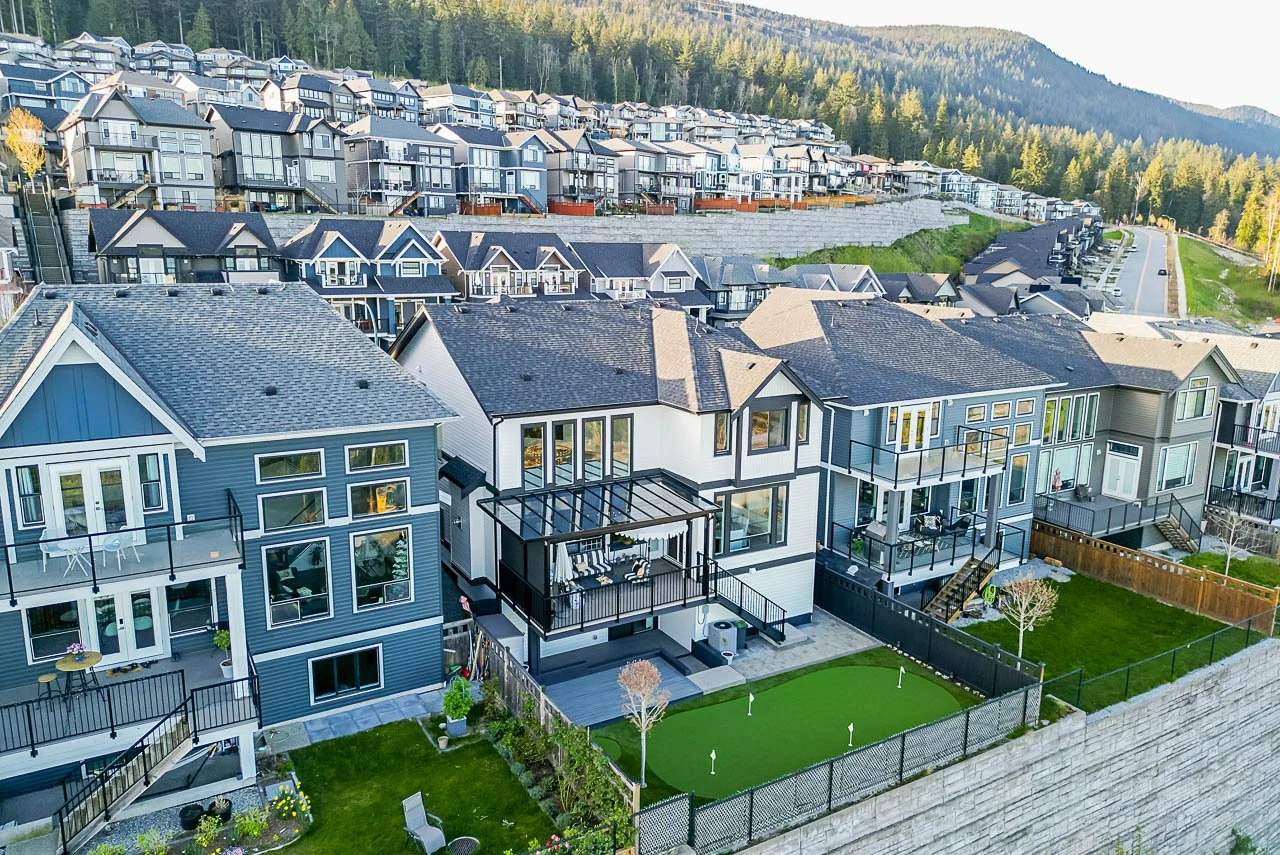



Recent


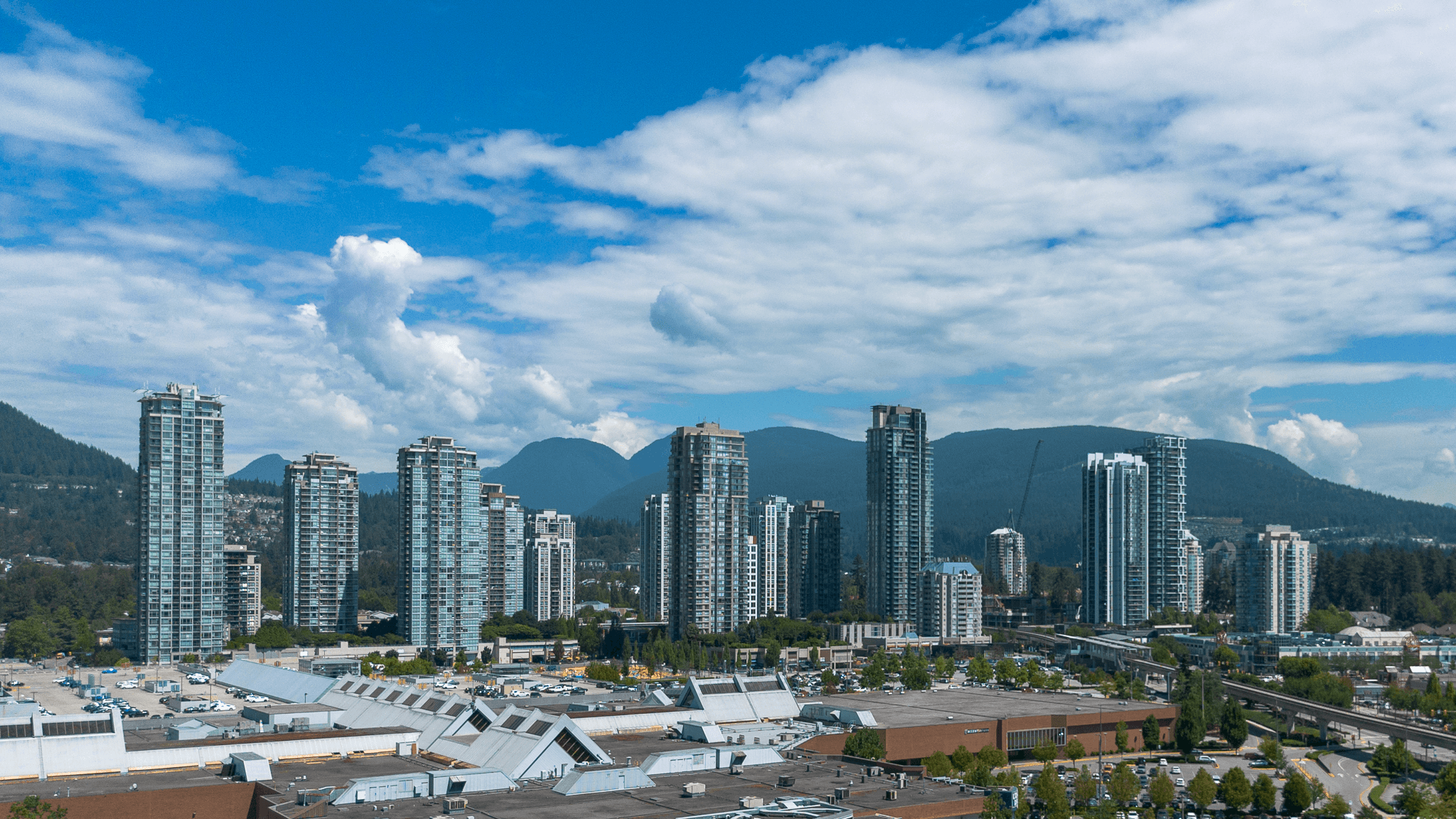
Recent





Victoria Estate Digest is your Go-to source for In-Depth Real Estate Insights, Market Trends, and Expert Analysis in British Columbia.
We cover everything from Housing Affordability and Foreign Investment to Luxury Properties and Emerging Market Opportunities.
Whether you're a Buyer, Seller, or Investor, we provide the Research and Knowledge you need to navigate BC’s ever-changing Real Estate Landscape.