The Rent Dip You Missed: Is Canada's Rental Bubble Quietly Deflating?
The Rent Dip You Missed: Is Canada's Rental Bubble Quietly Deflating?


Canada's rents have been falling for two years. Vancouver vacancies are at levels not seen in decades. Toronto landlords are offering free months. So why does renting still feel impossibly expensive—and what happens when the income supporting billions of dollars in residential real estate starts shrinking?
For years, Canada's rental market operated under one apparently unbreakable rule.
Rent goes up.
The apartment gets older. The appliances get worse. The carpet becomes an archaeological record of previous tenants. The landlord discovers another reason the building needs money. The government announces another housing plan. The tenant gets another rent increase.
And rent goes up.
That was the Canadian experience for so long that many people stopped treating it as a market outcome and started treating it as a law of nature.
Then something changed.
Quietly.
Without much celebration.
Without anyone cutting a ribbon.
Without a government announcement declaring victory over housing costs.
Asking rents started falling.
And they kept falling.
According to the October 2026 National Rent Report from Rentals.ca and Urbanation, the average advertised rent across Canada was $2,034 in September 2026, down 4.2% from a year earlier.
That marked the 24th consecutive month of year-over-year asking-rent declines.
Two full years.
The national average is now approximately 7.3% below September 2024.
In Vancouver, advertised apartment and condo rents have fallen substantially from levels seen several years ago. Toronto has experienced a similar retreat. Condo rentals are particularly weak. Developers are offering free rent. Vacancy rates have risen.
And the numbers have begun doing something Canadian landlords once considered practically impossible.
They are moving in the tenant's direction.
So why isn't everybody celebrating?
Because a falling asking rent does not mean every renter is paying less.
Because some of the newest rental buildings are losing tenants while the cheapest apartments remain desperately scarce.
Because rental affordability is still terrible in much of the country.
Because the same decline that helps a new tenant can damage the financial viability of a new apartment development.
And because Canada's rental correction contains the seeds of its own possible reversal.
That is the larger story.
Canada's rental market is deflating in important segments. But that is not the same as saying Canada's housing shortage has been solved.
The market is changing.
The mythology is changing more slowly.
And some investors have not noticed either.
The number that should have made bigger headlines
Let's start with the national rental market.
The latest available report, published October 7, 2026, provides a remarkably clear picture.
Canadian asking-rent measure | September 2026 | Year-over-year change |
|---|---|---|
All rental property types | $2,034 | −4.2% |
Purpose-built rental apartments | $2,036 | −2.7% |
Condominium rentals | $2,052 | −7.8% |
Other secondary rentals, including houses and townhouses | $2,016 | −7.4% |
Source: Rentals.ca and Urbanation, October 2026 National Rent Report.
The overall average was $2,193 in September 2024.
It is now $2,034.
That is a reduction of $159 per month in the national advertised-rent average over two years.
And the declines have not been limited to one terrible month.
The national series has posted negative annual comparisons every month since October 2024.
But there is a detail worth understanding.
Twenty-four consecutive months of annual declines does not mean rents fell every single month.
Rents actually increased modestly during parts of spring and summer 2026.
The September average was only one dollar below August.
That tells us the correction has been significant, but its pace is changing.
The rental market is not necessarily accelerating downward.
Some segments are beginning to stabilize.
Nevertheless, the broader two-year shift is real.
For an industry that spent years telling Canadians there would never be enough rentals to satisfy demand, two years of weaker asking rents is not a minor footnote.
It is evidence that supply, demand, and pricing power have changed.
The landlord has not disappeared.
But in some markets, the landlord has lost the ability to name any price and expect a lineup.
That is progress.
And for certain investors, it is a problem.
The biggest distinction: asking rent is not the rent everyone pays
This is the mistake that turns rental-market analysis into nonsense.
Canada effectively has several rental markets operating simultaneously.
There is the market for apartments currently being advertised.
There is the market for tenants already living in their homes.
There is the market for newly completed rental buildings.
There is the market for individually owned investment condos.
And there is the market for older, lower-cost rental housing where tenants may have little incentive or ability to move.
Those markets influence one another.
They do not always move together.
Rentals.ca primarily measures advertised asking rents from rental listings.
It does not measure every rent cheque being paid by every Canadian household.
CMHC measures a different set of conditions through its Rental Market Survey, including occupied rents and vacancy rates in purpose-built rental apartments.
Those differences are enormous.
In December 2025, CMHC reported that Canada's national purpose-built rental vacancy rate had increased to 3.1%, from 2.2% in 2024.
Yet CMHC also reported that the average rent paid by tenants for two-bedroom apartments had increased 5.1%, influenced partly by higher rents at tenant turnover.
So both statements were true:
Advertised rents were weakening.
The average rents actually paid across occupied apartments were still increasing.
CMHC's 2026 Mid-Year Rental Market Update confirms that this divergence continued into early 2026.
The market for a new lease can improve before the market for existing tenants does.
That is why a renter who signed a lease five years ago may hear about declining rents and reasonably respond:
"Wonderful. My landlord just raised mine."
The rent correction is real.
Its benefits are uneven.
Very Canadian.
The market is deflating from the top down
One of the most important details is where vacancy is rising.
It is not evenly distributed across the rental stock.
CMHC's mid-year analysis found that increased vacancy was concentrated heavily in newer, more expensive rental housing.
High-end apartments have been taking longer to lease.
Developers are using more incentives.
New condominium units are competing with purpose-built rentals.
But inexpensive units remain much harder to find.
In Vancouver, CMHC estimated that a balanced rental market generally corresponds to a vacancy rate around 2% to 3%.
The actual purpose-built vacancy rate in 2025 was 3.7%.
That was above CMHC's estimated balanced range.
At the same time, vacancy and turnover remained particularly constrained in the lowest-priced rental quartile.
This creates a market that can look soft from the perspective of a developer leasing a new $3,500 apartment but remain painfully tight for a household trying to find a decent $1,700 apartment.
The luxury end has more breathing room.
The affordable end is still being squeezed.
That is why calling this a universal collapse would be wrong.
The rental market is not deflating like a balloon with one hole.
It is deflating unevenly, in different places and at different speeds.
And the largest price reductions are often appearing in the segments that experienced the most aggressive rent growth.
Vancouver: the city that was supposedly impossible to oversupply
Vancouver is the most fascinating example.
For years, its rental shortage was treated as permanent.
A 1% vacancy rate was normal.
A lineup of prospective tenants was expected.
Landlords could receive dozens of inquiries.
Renters were advised to have their documents ready, bring references, and move quickly.
The landlord had the keys.
The tenant had the anxiety.
Now consider what happened to vacancy.
According to CMHC:
Vancouver CMA purpose-built rental market | Vacancy rate |
|---|---|
2023 | 0.9% |
2024 | 1.6% |
2025 | 3.7% |
Source: CMHC 2025 Rental Market Report.
Vacancy more than doubled between 2024 and 2025.
The 2025 vacancy rate was Vancouver's highest in over 30 years.
That is extraordinary for a city where rental scarcity has been a central part of the housing conversation for decades.
It does not mean 3.7% of every conceivable type of housing was vacant. It is a defined purpose-built apartment vacancy measure.
Nor does it mean every neighbourhood or price category suddenly became easy for renters.
But the trend is real.
Vancouver's rental market became substantially more balanced.
And it happened while the broader property market was also experiencing weaker sales, higher listings, and softer prices.
Those two markets are connected.
Vancouver rents are still expensive—just less absurd
According to Rentals.ca and Urbanation, Vancouver's average asking rent for purpose-built and condominium apartments was approximately $2,741 in September 2026.
That was 1.3% below September 2025.
For one-bedroom apartments, the average was approximately $2,380, down 4.8% year over year.
Two-bedroom apartments averaged approximately $3,331, down 2.8%.
Three-bedroom apartments averaged approximately $3,993, down 1.8%.
And over three years, the report's Vancouver apartment-and-condo advertised-rent series was down approximately 17.9%.
That is a meaningful correction.
But do not mistake a correction for affordability.
A $2,380 one-bedroom apartment is still extremely expensive for someone earning $55,000 or $65,000 annually.
A $3,331 two-bedroom apartment still requires serious household income.
A $4,000 three-bedroom apartment is beyond the comfortable budget of many families.
The rental market can be much cheaper than its own peak and still be expensive.
Those are not contradictory observations.
They are the reality of a city that became extraordinarily unaffordable before prices started retreating.
A luxury restaurant reducing a $100 entrée to $85 has lowered its price.
That does not mean everyone can afford dinner.
Vancouver's rental correction has a similar problem.
And Vancouver rents actually rose in September
Here is why this story needs nuance.
The latest monthly figures do not show Vancouver rents endlessly falling in a straight line.
In September, apartment and condo asking rents in Vancouver rose 1.4% from August, the strongest monthly gain among Canada's six largest rental markets.
The annual change was still negative.
But the monthly increase suggests demand has been absorbing some of the available inventory.
It also illustrates normal seasonality and changes in the mix of listed units.
An asking-rent series can show annual weakness and short-term recovery at the same time.
That is important.
The correct story is not that Vancouver landlords have permanently lost control.
It is that their pricing power has weakened substantially from peak conditions, while the market may now be searching for a new balance.
For renters, that means negotiating opportunities exist.
For investors, it means assuming another 10% decline is not automatically justified.
For developers, it means the future remains uncertain.
The market is becoming more normal.
Nobody in Vancouver is entirely comfortable with that.
The Lower Mainland is not moving as one market
Metro Vancouver contains multiple rental markets.
And they are not interchangeable.
A North Vancouver apartment is not the same product as a Surrey City Centre apartment.
A downtown Vancouver studio is not the same as a Langley two-bedroom.
A new Brentwood rental tower is not the same as an older apartment building in East Vancouver.
In September 2026, Rentals.ca reported approximate one-bedroom asking rents across several municipalities:
Municipality | One-bedroom asking rent |
|---|---|
North Vancouver | $2,466 |
Vancouver | $2,373 |
Burnaby | $2,111 |
Coquitlam | $2,053 |
New Westminster | $1,881 |
Langley | $1,868 |
Surrey | $1,807 |
These municipality-wide listing averages have a different coverage and property mix from the separate apartment-and-condo comparison used earlier. They are useful for broad orientation, not proof of what an identical unit would rent for in each municipality.
Still, the differences matter.
A renter able to relocate from Vancouver to Surrey may find lower advertised rents.
But that decision comes with transportation, commuting, lifestyle, employment, and family considerations.
The cheapest rent is not always the cheapest life.
A lower-cost unit two hours from work is not necessarily a bargain.
And one regional rent statistic cannot capture those trade-offs.
Why the rental shortage suddenly loosened
The short explanation is that supply grew while demand growth slowed.
The long explanation is more interesting.
Canada spent years responding to extraordinarily tight rental conditions.
Governments encouraged apartment construction.
Developers secured financing.
Municipalities approved projects.
Condo investors purchased units that would later become rentals.
Population growth surged.
Rents rose.
Rental development became more attractive.
And projects began moving through the construction pipeline.
But buildings do not appear immediately.
They take years.
Projects started under strong rental-market assumptions in 2022, 2023, and 2024 have been completing into a very different market.
At the same time, immigration and temporary-resident policy changed.
Population growth moderated.
Student-related rental demand weakened in some markets.
Some young adults delayed forming independent households.
Employment uncertainty affected housing decisions.
And investors who could not sell newly completed condos began listing them for rent.
The result is a classic supply-and-demand timing problem.
The supply was planned during the shortage.
It arrived after demand growth weakened.
That is not necessarily a permanent oversupply.
It is a mismatch between the timing of construction and the timing of household demand.
And it is enough to move prices.
The condo market is supplying rentals whether investors like it or not
This is a critical part of the story.
Canada's condo market and rental market are deeply connected.
A condo is legally an ownership product.
But a large number of condos are purchased by investors and rented to tenants.
When condo sales are strong and prices are rising, investors may hold units, sell for appreciation, or buy additional properties.
When sales weaken, some investors delay selling.
A recently completed unit that cannot be sold at the desired price may become a rental.
A presale buyer who expected an assignment profit may instead close and rent.
A seller who refuses to accept a lower resale price may list the unit for rent while waiting for the market to recover.
That adds to rental supply.
Especially in the newer, more expensive apartment segment.
CMHC specifically identified additional rental competition from recently completed investor-owned condos in Toronto and Vancouver as a reason asking rents were falling.
This creates a strange market dynamic.
Weak condo sales can increase rental supply.
Increased rental supply can reduce achievable rents.
Lower rents can make condo ownership less financially attractive.
Reduced investor profitability can further weaken demand for new condos.
And weaker presales can reduce future condo construction.
It is a feedback loop.
In the short run, tenants benefit from increased rental choice.
In the longer run, reduced construction can limit future supply.
The condo investor's failed exit plan can temporarily become a renter's improved bargaining position.
Real estate is full of unintended consequences.
This is a particularly useful one.
Condos are seeing much sharper rent declines than traditional rental apartments
Look again at the national figures.
Purpose-built apartment asking rents:
Down 2.7% year over year.
Condo asking rents:
Down 7.8%.
Other secondary rentals:
Down 7.4%.
That divergence is meaningful.
Purpose-built rental operators manage portfolios.
They may have older buildings with established tenants, diverse unit types, and financing structures based on long-term rental operations.
A condo investor often owns one or a handful of units.
They face mortgage costs, strata fees, property tax, insurance, maintenance, and potentially special levies.
Their rental price must compete with other units.
And new condo supply can be concentrated in locations where multiple investors are trying to lease similar floor plans simultaneously.
Imagine a tower where twenty owners all want to rent their one-bedroom units.
One asks $2,850.
Another asks $2,800.
Another asks $2,750.
Then somebody offers a parking stall.
Somebody else accepts $2,650.
And another investor realizes that another month of vacancy is worse than reducing the rent.
That is how rental repricing happens.
Not because the government orders a discount.
Not because a report says rent should fall.
Because available units compete.
The landlord who once had fifty applicants may now have three.
And one of those three wants to negotiate.
Toronto is discovering the power of the free month
Toronto provides some of the clearest evidence of how much landlord negotiating power has changed.
In its July 2026 report on second-quarter rental conditions, Urbanation found that 64% of newer purpose-built rental projects in the Greater Toronto and Hamilton Area were offering leasing incentives.
Common offers included one or two months of free rent.
The average advertised face rent for available units in the newer purpose-built rental stock was approximately $2,864 per month.
But after adjusting for the monetary value of incentives, the average effective rent was approximately 13% lower.
The difference was about $377 per month for the average unit.
Source: Urbanation, GTHA Rental Market Shows Improvement in Q2, July 27, 2026.
That is not a tiny promotional discount.
That is a material reduction in economic rent.
And it reveals something important.
The listed price is not always the price the landlord is effectively collecting.
Some landlords prefer to offer concessions rather than permanently advertise a lower monthly rent.
Why?
Because the face rent may affect future renewals, market positioning, financing assumptions, and comparisons with other units.
The landlord can keep the headline number higher while giving the tenant a financial incentive to sign.
The rent has been reduced economically.
It just has better public relations.
The mathematics of two months free
Suppose a new apartment building advertises rent of $2,850 per month.
It offers two months free during a twelve-month lease term.
The tenant pays for ten months.
Total first-year rent:
$2,850 × 10 = $28,500
Effective average monthly rent:
$28,500 ÷ 12 = $2,375
The advertised rent is $2,850.
The economic rent for that first year is $2,375.
That is a 16.7% discount.
Now compare the offer with an older apartment advertised at $2,550 per month without incentives.
The new building looks more expensive.
But during the first year, the effective cost is actually lower.
This is why sophisticated renters should compare offers using effective annual cost.
Not just the number printed in the listing.
There is a catch, though.
If the two free months are a one-time concession and the next year is charged at the full face rent, the renter may experience a significant increase in effective annual housing cost, even if the nominal monthly rent follows applicable rules.
The precise outcome depends on the lease, how the concession is documented, and provincial tenancy law.
A free month is useful.
But tenants should understand whether they are receiving a permanent lower rent or a temporary discount.
The difference matters in month thirteen.
Landlords are quite aware of that.
Renters should be too.
The market now has something Canada forgot about: competition
For years, housing policy discussions treated more rental construction as necessary but often questioned whether it would actually lower rents.
Some critics argued new apartments were too expensive.
Some argued that building more rental housing would simply create more luxury units.
Some argued that developers would never voluntarily reduce prices.
The present market provides an important lesson.
New supply can create competition.
Even when the new units are expensive.
A new building does not have to be directly affordable to every household to affect the rental market.
It can attract renters who might otherwise occupy older units.
It can compete with investor-owned condos.
It can force nearby buildings to offer incentives.
It can increase the number of alternatives available to renters.
That can reduce landlords' pricing power.
But the effect is not uniform.
CMHC's 2026 analysis found that new supply was producing the clearest benefits in higher-priced segments, while the least expensive units remained tight.
That is the important limitation.
More supply is working.
But it is not automatically reaching every renter equally.
A $3,000 apartment with two months free does not solve the housing needs of someone who can afford only $1,400.
Still, the notion that added rental supply cannot affect prices is looking increasingly difficult to defend.
Competition has arrived.
And some landlords are behaving exactly as markets suggest they would.
They are negotiating.
Vancouver's new rental buildings are arriving in substantial numbers
The City of Vancouver reported that approximately 2,300 purpose-built market rental units were completed in 2025, the highest annual total in more than forty years.
That is a city-specific figure, not the entire Metro Vancouver region.
The City's April 2026 housing-delivery announcement also noted more than 12,500 homes approved during 2025.
Approved units are not completed units.
But the delivery figure helps explain why the rental market is becoming more competitive.
Canada's rental construction pipeline is also unusually large.
CMHC's Fall 2026 Housing Supply Report found that in the Greater Toronto Area, purpose-built rental apartment starts increased 82% year over year in the first half of 2026.
It was the first time since 1994 that Toronto-area rental apartment starts exceeded condominium apartment starts.
Developers have been changing the kind of housing they build.
When condo presales fail to support a new project, purpose-built rental can become the alternative.
Sometimes public financing, tax treatment, or municipal incentives improve the economics.
But these projects still take time.
That is why the market can experience substantial rental deliveries even after developers begin worrying that too much rental supply has arrived.
The pipeline has momentum.
Concrete does not stop pouring because an asking-rent report turns negative.
At least not immediately.
Canada's immigration slowdown matters—but the population story needs updating
Slower population growth is one of the major reasons rental demand has weakened.
Canada reduced targets for several immigration and temporary-resident streams after an unusually rapid period of population expansion.
That affected the expected growth in renter households.
International students and temporary workers are particularly important to rental demand in some markets because they are more likely to rent upon arrival.
Changes in those populations can quickly affect rental competition.
But there is an important update.
Statistics Canada's revised population estimates released in September 2026 showed that Canada's population was approximately 41.8 million on July 1, 2026, up 0.2% from the previous quarter.
The country's non-permanent-resident population was approximately 2.78 million.
That was lower than a year earlier but did not indicate that every temporary resident had suddenly left the country.
Statistics Canada has also revised its methodology for estimating non-permanent residents, which changed some previously reported population trends.
See Statistics Canada's September 23, 2026 population estimates.
The distinction matters.
Rental demand growth has slowed.
Some categories of residents have declined.
But Canada's population has not simply collapsed.
And housing demand is driven by household formation, not population alone.
A city can experience weak population growth while rental demand increases if young adults move out from their parents' homes, roommates separate into different households, or more people choose to rent rather than buy.
That possibility matters as rents become more affordable.
Lower rents can create new demand.
Another feedback loop.
The delayed household is an invisible source of demand
Consider a 27-year-old living with parents because a one-bedroom apartment costs $2,800.
They would prefer to move.
They have a job.
They have savings.
But the rent would consume too much of their income.
They stay home.
Now rents fall to $2,300.
Perhaps the move becomes possible.
A new renter household appears.
Or consider two roommates sharing a two-bedroom apartment.
If individual one-bedroom rents become substantially cheaper, one roommate may decide to move into their own unit.
One household becomes two.
The population has not increased.
But housing demand has.
That is why falling rents can eventually help absorb surplus rental supply.
The lower price brings people back into the market.
CMHC's mid-year report specifically identified previously suppressed household formation as a potential source of continuing rental demand.
This is why a rental downturn can stabilize without requiring another enormous wave of immigration.
Demand can recover partly because prices become less punishing.
The market creates some of its own customers.
An unusual concept for Vancouver real estate, where the traditional strategy was to raise the price until the customer gave up.
The lowest-priced rentals remain painfully scarce
Here is the strongest argument against declaring that Canada's rental problem has been solved.
CMHC found that vacancy and turnover remained particularly constrained in the cheapest rental segments.
In Vancouver, the turnover rate for the lowest rent quartile was approximately 11.1%, compared with 16.3% in the highest quartile in the 2025 data.
That difference matters.
A tenant with a long-standing $1,450 apartment may be reluctant to move even if new asking rents decline to $2,300.
Moving would still make housing more expensive.
A renter in a new $3,500 apartment, however, may be able to move into another building offering $2,900 plus incentives.
That tenant has options.
The lower-income tenant may not.
This creates two different kinds of rental market experience.
One renter is negotiating free parking and a month of free rent.
Another renter cannot find a habitable unit within their budget.
Both live in a market where advertised rents have fallen.
This is why affordability analysis has to go beyond the national average.
A reduction from very expensive to merely expensive is useful.
But it is not the same as broad affordability.
And it is not a reason to ignore the shortage of lower-cost housing.
Rent control can make the two rental markets move in opposite directions
British Columbia provides a clear example of how this works.
For most covered residential tenancies, the maximum allowable annual rent increase is 2.3% in 2026.
The province has set the 2027 limit at 2.2%.
Landlords generally may increase rent only once every twelve months and must follow the required notice rules.
Source: B.C. government's August 27, 2026 announcement.
But those annual limits do not mean asking rents for vacant units must follow the same path.
A landlord advertising an available apartment is operating in a market where prospective tenants can compare alternatives.
If other landlords reduce asking rents or offer incentives, the owner may have to respond.
An existing tenant, meanwhile, may receive a lawful annual rent increase even while the market price of comparable vacant apartments is falling.
This creates a situation in which moving tenants may have new bargaining power while staying tenants experience higher payments.
Rent control protects tenants against unrestricted increases within covered continuing tenancies.
It does not guarantee that the rent someone already pays will automatically fall when the market softens.
And a landlord does not automatically owe an existing tenant a reduction merely because another building is offering a cheaper unit.
For tenants, the negotiation has to be practical.
What are comparable available units actually renting for?
What would it cost to move?
How valuable is the current apartment?
What is the landlord's cost of losing a reliable tenant?
Those are the questions that matter.
The condo investor is the hidden loser in a falling rental market
When rents fall, the immediate public conversation tends to focus on affordability.
Understandably.
But rental income also determines the finances of investment properties.
And investor-owned condos are especially sensitive to even modest rent reductions.
Consider a hypothetical Vancouver-area condo.
Purchase price: $850,000
Down payment: $170,000
Mortgage: $680,000
Interest rate: 5%
Amortization: 25 years
Approximate monthly mortgage payment: $3,975
Now add monthly costs:
Strata fees: $550
Property tax: $250
Insurance: $100
Maintenance and vacancy allowance: $200
Total monthly cash outflow:
$5,075
Suppose the unit originally rented for $3,300.
Monthly cash shortfall:
$1,775
Now the market weakens.
Comparable units rent for $3,000.
The investor accepts the lower number to avoid vacancy.
New monthly cash shortfall:
$2,075
The difference is only $300 in rent.
But that is $3,600 more cash required per year.
And remember, the investment was already deeply cash-flow negative.
Some of the mortgage payment builds equity through principal repayment, so the cash shortfall is not identical to the economic loss.
But the owner still has to fund it.
That is the pressure.
A condo investor can endure weak cash flow while property appreciation is strong.
When both rent and resale value weaken, the investment's vulnerabilities become much harder to ignore.
The tenant does not owe the landlord a profitable investment.
The rental market will not charge more simply because the owner's mortgage is expensive.
That is a painful lesson.
And one Vancouver condo investors are increasingly learning.
Rent declines can produce surprisingly large changes in property value
The effect becomes especially important for apartment buildings valued primarily as income-producing assets.
Suppose a rental building contains 100 units.
Average monthly rent is $2,500.
Annual gross rent, before vacancy and other adjustments:
100 × $2,500 × 12 = $3 million
Now suppose market rents weaken and the building's sustainable average economic rent falls by $150 per unit per month.
Annual gross revenue reduction:
100 × $150 × 12 = $180,000
If that decline flows through to stabilized net operating income, the income-based valuation impact could be substantial.
At a hypothetical 5% capitalization rate:
$180,000 ÷ 0.05 = $3.6 million
That would be a $3.6 million decline in value attributable to the reduced annual net income, assuming the income loss persists and the capitalization rate remains unchanged.
That is an illustrative valuation sensitivity, not a prediction of a particular building's market value.
But it shows why institutional investors care about rent growth.
A $150 monthly change may feel modest to a tenant.
Across one hundred apartments, capitalized into value, it can represent millions of dollars.
If capitalization rates also increase, the value pressure can be greater.
That is how a rental dip can become a real estate valuation problem.
The monthly rent looks small.
The balance-sheet effect does not.
Free rent can hide an even larger effective price decline
Consider a new 150-unit purpose-built rental building.
Advertised average monthly rent:
$2,850
At full occupancy with no concessions, annual gross potential rent would be:
150 × $2,850 × 12 = $5.13 million
Now suppose every tenant receives one month free on their initial twelve-month term.
Actual first-year rent under that simplified scenario:
150 × $2,850 × 11 = $4,702,500
Difference:
$427,500
That is a substantial leasing concession.
If similar concessions had to be repeated indefinitely to maintain occupancy, the reduction in sustainable economic income could have a major effect on property value.
If the concession is purely a one-time lease-up cost and the building later operates at full rents, it should not be capitalized as a permanent loss.
That distinction is important.
But either way, the cash flow is affected today.
The financing projections may have assumed faster lease-up and fewer discounts.
A developer expecting $5.13 million in potential annual gross rent has to account for $427,500 less cash in that first-year illustration.
Meanwhile, property tax, debt service, insurance, management, and maintenance still exist.
The building is full of valuable housing.
The developer's spreadsheet is less enthusiastic.
The rental bubble question depends on what was inflated
Was Canada in a rental bubble?
That depends on the definition.
A classic asset bubble occurs when prices move far above levels supported by underlying fundamentals, often because buyers expect future appreciation.
Rental prices are different.
Rent is a recurring payment for housing services.
It is influenced by income, supply, population, location, credit conditions, and the alternatives available to households.
Rents can rise to painful levels without necessarily being speculative in the same way an asset price can be.
If hundreds of households compete for very few available apartments, rents can rise sharply through ordinary scarcity.
That is not automatically a financial bubble.
But rental expectations can become inflated.
Developers may project unusually high rents continuing indefinitely.
Investors may purchase buildings at values that require rapid future rental growth.
Condo investors may assume rents will always rise enough to offset mortgage costs.
Lenders may underwrite aggressive lease-up assumptions.
Landlords may begin treating peak asking rents as permanent market value.
That is where the bubble-like behaviour appears.
Not necessarily in the existence of high rent.
But in the belief that rent growth can continue without regard to income, competing supply, and household affordability.
Canada's rental market is now challenging that belief.
The financial assumptions are deflating.
And the properties purchased under those assumptions are being tested.
A softer rental market is not the same as a housing crash
Another important distinction.
Rental-market weakness and home-price weakness are related but not identical.
A property has multiple sources of value.
An owner-occupied condo may be valued partly because someone wants to live there.
A rental apartment building may be valued mainly because of its income.
A development site may be valued based on future construction potential.
A detached house may derive much of its value from land and personal utility.
Falling rents can undermine investor valuations, but the effect depends on the asset.
An individual condo may remain attractive to an owner-occupier even if its rental yield is poor.
An apartment building may face much more direct pressure if sustainable net operating income declines.
A presale condominium may become difficult to finance if comparable sales weaken.
A development project may become financially unviable if projected rents no longer support construction cost and debt.
The same rental correction can therefore produce different outcomes across property categories.
Some renters win.
Some landlords absorb lower returns.
Some investors sell.
Some developers delay new projects.
Some lenders become more cautious.
Markets do not distribute adjustment pain equally.
They rarely do.
The problem for developers: today's rent supports tomorrow's construction
This is perhaps the most important long-term consequence.
If rents decline, new rental development can become less financially viable.
The developer faces construction costs today.
Land costs today.
Financing costs today.
Development charges today.
Municipal approvals today.
But the project's value depends heavily on future rental income.
If the expected rent declines, the project may no longer produce an acceptable return.
Consider a developer who originally expected average rents of $3,100.
The market now supports $2,850.
That is an 8.1% reduction in expected rent.
Depending on construction costs, financing, vacancy, and cap rates, the project's return may fall below what investors or lenders require.
The developer can try to reduce land cost.
Reduce construction cost.
Change the unit mix.
Seek financing assistance.
Negotiate development charges.
Delay construction.
Or cancel the project.
This is the irony of rental-market relief.
When tenants finally begin benefiting from lower rents, developers may respond by building less.
That can create another shortage later.
The rental correction contains a self-correcting mechanism.
But the correction can be slow because construction takes years.
And the supply response can overshoot.
The construction pipeline is changing faster than the completed inventory
CMHC's 2026 Housing Market Outlook anticipates that new residential construction will weaken through 2028, with condominium starts especially vulnerable.
Purpose-built rental projects already under construction will continue delivering new units.
But developers are becoming more cautious about starting additional projects.
For Metro Vancouver, CMHC expects elevated vacancy to persist during the forecast period as projects launched during stronger conditions continue completing.
That is a forecast, not an observed 2027 outcome.
The future could change if economic growth strengthens, population growth accelerates, construction slows more sharply, or household formation increases.
But the mechanism is clear.
Today's supply growth can weaken rents.
Weaker rents can reduce tomorrow's construction.
Reduced construction can tighten the rental market later.
This is not a reason to oppose new housing.
It is a reason to recognize that housing markets operate with long delays.
By the time everybody agrees there is too much rental supply, the next shortage may already be forming in the construction pipeline.
The market is excellent at reacting to yesterday.
Tomorrow is more difficult.
Toronto already shows signs of stabilization
The downturn has not been accelerating indefinitely.
Urbanation's Q2 2026 data revealed some meaningful stabilization in the Greater Toronto and Hamilton Area.
Condo lease transactions reached a record 18,923 units during the second quarter, up 5% from a year earlier.
Across the first half of 2026, approximately 34,150 condo leases were signed, up 11%.
Active condo rental listings declined approximately 13% year over year.
Average condo rents rose 2.5% from the first quarter, although they remained 1.3% below a year earlier.
Purpose-built rental absorption also improved.
Within the newer purpose-built rental stock, the vacancy rate for stabilized buildings declined from 7.9% in Q1 to 6.8% in Q2.
That is still elevated.
But it is moving in the right direction for operators.
Urbanation also found that rental incentives remained widespread, although their use was no longer accelerating.
This combination matters.
The market has been correcting.
Tenants responded to better affordability.
More leases were signed.
Inventory began tightening in some categories.
That is what stabilization can look like.
Not an immediate return to high rent growth.
But less downward pressure.
The idea that rents must continue falling simply because they have fallen for two years is not supported by the data.
Markets eventually respond to price.
Even Toronto.
Canada is not one rental bubble
Regional differences matter.
According to the September 2026 Rentals.ca apartment-and-condo series:
Major city | Average asking rent | Annual change |
|---|---|---|
Vancouver | $2,741 | −1.3% |
Toronto | $2,554 | −1.4% |
Ottawa | $2,164 | −1.2% |
Montréal | $1,959 | −1.1% |
Calgary | $1,823 | −3.9% |
Edmonton | $1,522 | −3.2% |
The broad weakness extends across many markets.
But the details differ.
Montreal's one-bedroom asking rents actually increased year over year.
Some smaller Canadian markets have experienced rising rents.
Some expensive suburban markets have seen sharp declines.
And purpose-built occupied rents may behave differently from current listings within the same city.
Saskatchewan, for example, has experienced stronger multi-year rent growth than B.C. or Ontario in some measures.
B.C. and Ontario, meanwhile, saw substantial three-year declines in advertised apartment rents.
The national rental average is useful.
But it hides the experiences of people living in very different local markets.
A renter in Regina does not have the same housing choices as a renter in North Vancouver.
A landlord in Calgary does not face the same regulatory and supply conditions as a landlord in Toronto.
And a developer building in Montreal may face very different income and construction economics from a developer building in Surrey.
The Canadian rental bubble is not one balloon.
It is a collection of local markets with different pressures.
Calgary offers another warning about supply cycles
Calgary is particularly interesting because its rental market was extremely strong during the period of rapid interprovincial migration and population growth.
Rents rose.
Developers responded.
New supply increased.
But rental conditions later became more balanced.
CMHC's 2025 Rental Market Report placed Calgary's purpose-built vacancy rate at approximately 5%, even as new supply expanded rapidly.
In September 2026, Calgary apartment-and-condo asking rents were down 3.9% year over year.
That is a meaningful reversal from the previous growth narrative.
But Calgary's more elastic land and construction conditions differ from Vancouver's.
Supply can respond differently.
Vacancy levels consistent with market balance are also different.
CMHC estimates Calgary's balanced vacancy range at roughly 3% to 5.5%, compared with 2% to 3% for Vancouver.
So a 5% vacancy rate does not mean the same thing in every city.
The lesson is not that Calgary is collapsing.
It is that rapid population growth and rapid rental construction can create an adjustment when the two stop moving together.
And that adjustment can happen surprisingly quickly.
Investors who assume peak rental growth is permanent are often the last to notice.
The tenant has more leverage, but needs to use it intelligently
For renters, the changing market creates practical opportunities.
But the strongest negotiation strategy is not walking into the property manager's office and announcing that Canada's rental bubble has burst.
That is theatre.
The better approach is evidence.
Find comparable available units.
Same neighbourhood.
Similar size.
Similar age.
Similar condition.
Similar amenities.
Similar parking and storage.
Ask about move-in incentives.
Ask whether parking is included.
Ask whether the landlord has other vacancies.
Compare the actual annual cost.
Consider the total cost of moving.
And understand how any temporary concessions affect future payments.
A tenant who currently pays $2,800 may discover comparable units offered at $2,550.
That is a potentially useful difference.
But perhaps moving costs $4,000.
The rent saving is $250 per month.
Annual saving:
$3,000
Ignoring other differences, the moving cost would be recovered after approximately sixteen months.
That may still make sense.
But the calculation is more useful than simply celebrating the lower asking rent.
A renter can also approach the existing landlord.
A reliable tenant has economic value.
Vacancy costs money.
Repainting costs money.
Marketing costs money.
Property management costs money.
Turnover creates uncertainty.
If the landlord would have to accept less rent from a replacement tenant, retaining the existing tenant at a modestly reduced rent may be rational.
Not every landlord will negotiate.
But some will.
Especially where comparable units are sitting vacant.
Landlords should stop treating peak rent as a permanent entitlement
For landlords, the adjustment is less pleasant.
A property owner may remember renting a unit for $3,100.
That becomes the mental reference point.
Then comparable units start leasing for $2,850.
The landlord refuses to reduce because the unit is "worth $3,100."
The unit stays empty.
Another month passes.
The mortgage does not.
Here is the math.
Advertised rent: $3,100
Vacant for two months:
Lost potential revenue: $6,200
Now suppose the landlord could have rented immediately at $2,850.
The annual difference between those rents is:
$250 × 12 = $3,000
So two months of vacancy at the original asking rent costs more than an entire year's price concession from $3,100 to $2,850.
That does not automatically prove the owner should always accept a lower tenant offer.
Tenant quality, lease duration, long-term rent regulation, market outlook, and other factors matter.
But it demonstrates why holding out for peak rent can be costly.
The market does not reimburse landlords for pride.
A vacancy has no sympathy.
It simply produces zero revenue.
Why cheaper rents may eventually increase rental demand
There is another reason the correction could stabilize.
Lower rents make renting more attractive relative to staying with family, sharing accommodation, or purchasing property.
Some young adults may establish independent households.
Some people may relocate closer to work.
Some families may move into larger units.
Some renters may return to cities they previously considered unaffordable.
Some potential homebuyers may decide to continue renting while purchase prices and financing conditions remain uncertain.
Lower rental prices can increase the number of households willing and able to rent.
That means demand is not fixed.
It responds to cost.
Canada has a substantial population of people whose housing choices were constrained by unusually high prices.
As costs ease, some of those suppressed choices may reappear.
This is one reason CMHC expects renter household formation to continue even with slower population growth.
And it is another reason a large, permanent nationwide rental collapse should not simply be assumed.
The market can become more balanced because prices adjust.
Not because housing demand vanishes.
Real affordability is about income, not just rent
There is a difference between nominal rent declines and affordability improvement.
Suppose rent falls 5%.
That helps.
But what happens if the renter loses employment?
What happens if groceries, transportation, and other necessities remain expensive?
What happens if their income has not risen for several years?
A household's ability to afford rent depends on much more than the rent itself.
The national asking-rent series shows that September 2026 rents remained about 16% above September 2021.
So even after the correction, asking rents were materially higher than five years earlier.
Average weekly earnings have also increased over that period, according to Statistics Canada figures cited by Rentals.ca.
But average wage growth does not mean every household experienced the same income gains.
Younger workers, students, newcomers, lower-income renters, and workers in weak industries can have very different experiences.
That is why the same national rent decline can feel generous to one household and irrelevant to another.
A renter who was already paying too much may simply be paying slightly less too much.
That is relief.
Not affordability.
The distinction matters.
The rental dip is revealing which investments were built on optimistic assumptions
This is the larger investment thesis.
During periods of strong rental growth, investors can tolerate weak current returns by assuming future rent increases will improve the economics.
A condo investor may accept negative cash flow because rent is expected to rise.
An apartment investor may accept a low capitalization rate because net operating income is expected to grow.
A developer may accept high land and construction costs because future completed rents are expected to be higher.
A lender may accept aggressive projections because the local rental market appears chronically undersupplied.
Then rents stop rising.
Vacancy increases.
Incentives appear.
New buildings lease more slowly.
The assumptions have to be revisited.
Not necessarily because the properties are bad.
But because the price paid for those properties may have depended on conditions that are no longer present.
That is when a rental correction becomes a valuation correction.
The cash flow fails to grow into the purchase price.
And the owner has to decide whether the investment still makes sense without the original growth narrative.
This is where good investments separate from hopeful ones.
The most dangerous combination is falling rent and expensive debt
A rental property can endure lower rent more easily if it has little debt.
A highly leveraged property has less flexibility.
Debt service does not automatically fall when market rent falls.
A landlord collecting $3,000 rather than $3,300 still has to pay the mortgage.
If refinancing becomes difficult, the owner may face greater pressure.
If the property appraises below expectations, borrowing capacity can shrink.
If a building's net operating income falls, commercial financing terms may become more restrictive.
If cash reserves are limited, special levies or repairs can create serious liquidity stress.
This is why the rental dip matters beyond tenants and landlords.
It affects lenders.
Developers.
Investors.
Construction financing.
Refinancing decisions.
And future housing supply.
A 5% rent decline may sound modest.
At high leverage, it can make the difference between a viable project and one that cannot refinance comfortably.
The rent is a monthly number.
The financing consequences can be much larger.
What would a genuine rental crash look like?
A genuine national rental collapse would require more than two years of softer asking rents.
It would involve persistent, broad-based oversupply relative to household demand.
Vacancy would likely rise across multiple rent categories.
Concessions would become more widespread and enduring.
Effective rents would decline across many markets and property types.
Occupancy problems would spread beyond newly completed luxury buildings.
Landlords would struggle to maintain income.
Rental valuations and development activity could weaken substantially.
Some owners might face financial distress.
That is not the full picture Canada is currently showing.
The market has loosened significantly.
Some segments have been hit hard.
But demand for low-cost rental housing remains strong.
Existing occupied rents have continued increasing in many markets.
Some major cities are showing stabilization.
And lower rents are helping release previously suppressed demand.
This looks more like an important correction and transition toward balance than a demonstrated nationwide rental-market collapse.
The word bubble is useful for asking whether expectations became inflated.
It is less useful if it leads people to assume every landlord is about to experience a 30% rent decline.
The evidence does not establish that.
The biggest risk to renters may be that the relief does not last
Here is the paradox.
If rents fall far enough to damage new construction economics, developers build fewer apartments.
Meanwhile, Canada's underlying need for rental housing does not disappear.
People continue forming households.
Young adults move out.
Families grow.
Workers relocate.
Immigrants arrive.
Renters choose not to buy.
And existing buildings age.
If new rental construction drops significantly while household demand continues growing, the market could eventually tighten again.
There is no guarantee of when that happens.
Some current forecasts expect elevated vacancy to persist in Vancouver for several years.
Other market indicators show tightening in certain segments already.
The correct conclusion is uncertainty, not inevitability.
A sustained construction slowdown would be a warning sign for future supply.
But one month of rent growth would not prove the correction is over.
Renters and investors should monitor the pipeline rather than relying on slogans.
Because the rental market of 2028 will be influenced by the construction decisions being made today.
And those decisions are increasingly being made under weaker rent assumptions.
What renters should watch through 2027
If you are renting, the most useful indicators are local, not national.
Watch what comparable units actually lease for.
Watch how long rental listings remain available.
Watch whether incentives are expanding or disappearing.
Watch vacancy in the type of building you want.
Watch whether new rental towers are completing nearby.
Watch whether the neighbourhood is absorbing those units.
Watch whether one-bedroom and family-sized apartments are moving differently.
Watch whether local employers are hiring.
And compare the full cost of staying with the full cost of moving.
A renter who negotiates based on real comparables has a much stronger position than one who simply announces that rents are down nationally.
The best information is often the most specific.
Same building.
Same floor plan.
Same neighbourhood.
Recent leasing evidence.
That is where the negotiating power lives.
What condo investors should watch
For investor-owned condos, the warning signs are different.
Track actual achievable rent, not only advertised asking rent.
Track same-building competition.
Track listings with repeated price reductions.
Track days vacant.
Track strata fees and special levy exposure.
Track interest costs and refinancing risk.
Track property valuation relative to mortgage debt.
Track whether the unit can remain a viable long-term rental without appreciation.
If the property requires the investor to contribute $1,500 or $2,000 each month, that may be manageable for a financially strong owner with a long horizon.
But the cost should be understood explicitly.
The investment should not be described as self-funding merely because the tenant covers part of the mortgage.
And the owner should calculate what happens if the tenant leaves and the new market rent is lower.
That is the scenario that often exposes the actual business model.
The landlord thought the unit produced income.
The unit may instead require income.
From the landlord.
What apartment-building investors should watch
Institutional and larger private rental investors should focus on economic rent rather than headline rent.
That means examining:
Actual collected rental income.
Face rent versus incentive-adjusted effective rent.
Vacancy and lease-up duration.
Tenant turnover.
Concessions offered.
Rent arrears and collection.
Operating cost growth.
Capital expenditures.
Market-rent changes.
Debt service coverage.
Refinancing assumptions.
The age and quality of the building.
And competing supply nearby.
A developer or investor who values a building on optimistic rents without accounting for concessions may overstate its sustainable income.
An owner who assumes a vacant unit can automatically lease at last year's rate may do the same.
That is why the rental market is now producing more difficult valuations.
Not because rental housing has stopped being useful.
Because the income is no longer behaving like a one-way escalator.
The signs that the downturn is ending
There are several indicators worth watching together.
A sustained increase in signed effective rents rather than only advertised rents.
A decline in vacancy across newly built as well as established properties.
Fewer free-rent incentives.
Stronger tenant absorption.
Shorter marketing periods.
More households entering the rental market.
Reduced rental competition from newly completed condos.
Improving employment.
And a moderation in incoming rental supply.
One number by itself is not enough.
For example, asking rents may rise because more expensive units are being advertised.
Vacancy may decline because some landlords withdrew units from the rental market.
Rental listings may fall because fewer buildings are completing.
Absorption can increase when incentives become more attractive.
The strongest evidence of a durable recovery would be an improvement in occupancy, effective rental income, and demand across multiple segments.
That would indicate the market is genuinely tightening.
Rather than simply producing another optimistic monthly headline.
Vancouver real estate has enough of those already.
The signs that more deflation is coming
Conversely, more downward pressure would be supported by a continued influx of rental completions outpacing tenant demand.
Rising vacancy.
Longer lease-up periods.
More incentives.
Lower effective rents.
Weak employment.
Slower household formation.
Continued competition from unsold condos entering the rental pool.
And financing pressure that encourages some owners to rent units they previously intended to sell.
These factors are especially relevant in newly completed apartment markets.
But they need to be monitored by region and rent category.
More high-end vacancy does not automatically mean inexpensive family housing will become plentiful.
The rental market can have too many units at one price and too few at another.
That is not a contradiction.
It is a supply mismatch.
And it explains why Canada's housing affordability problem can persist even while rental asking prices decline.
The larger economic lesson: high rents are not permanent simply because housing is essential
This is perhaps the most important takeaway.
Housing is essential.
Demand for shelter is durable.
Land is limited.
Construction is expensive.
And Canada has long-standing housing supply challenges.
But none of those facts means rental prices can rise without limit.
Rental demand is constrained by household income.
Rental supply responds to investment incentives, though often with long delays.
Tenants can share accommodation.
Households can delay moving.
New units can compete with existing units.
Developers can offer discounts.
Investors can change strategies.
Population growth can slow.
And landlords can lose pricing power.
Canada's rental correction demonstrates that even an essential service is subject to market forces.
The housing shortage was real.
The price pressure was real.
The subsequent rent decline is also real.
An investor who cannot hold those three ideas simultaneously probably should not be underwriting a rental building.
Markets are allowed to change.
That is what makes them markets.
So, is Canada's rental bubble quietly deflating?
Yes, in the sense that peak asking rents and some of the investment expectations built around them have been deflating.
The evidence is substantial.
Twenty-four consecutive months of negative annual asking-rent comparisons.
A national average down 4.2% year over year in September 2026.
Condo advertised rents down 7.8%.
Vancouver apartment asking rents materially below earlier peaks.
Vancouver purpose-built vacancy at a decades-high 3.7% in 2025.
Toronto-area purpose-built buildings offering extensive leasing incentives.
And developers facing more difficult rental project economics.
That is not imaginary.
But calling it the bursting of the entire Canadian rental market goes too far.
The lower-priced rental segment remains constrained.
Occupied rents are still rising in many places.
The national population continues growing, albeit much more slowly.
Some rental markets are stabilizing.
And housing construction may weaken enough to create tighter conditions later.
What is deflating most clearly is the belief that Canadian rents will rise continuously, regardless of income, competition, or supply.
That belief is being replaced by something more grounded.
Actual market conditions.
Which brings us back to Vancouver.
The bottom line
Canada's rental market has changed more than the average person may realize.
The national advertised-rent average has fallen for two consecutive years on a year-over-year basis.
Vancouver has experienced its highest purpose-built rental vacancy in more than thirty years.
Condo rental asking prices have fallen faster than purpose-built apartment rents.
Developers in Toronto are offering free rent and other concessions to attract tenants.
And some landlords are discovering something they had almost forgotten.
Tenants can say no.
They can negotiate.
They can compare alternatives.
They can move.
They can wait.
For renters, that creates opportunities not seen during the tightest years of the housing shortage.
For condo investors, it creates new financial pressure.
For purpose-built rental developers, it makes financing and project feasibility more difficult.
For policymakers, it demonstrates that increased housing supply and moderated demand growth can influence rents, while also highlighting how affordability problems remain concentrated in the least expensive housing segments.
And for Vancouver's real estate market, the consequences go well beyond the monthly rent cheque.
Rental income supports investment property values.
Investment property values support lending.
Lending supports construction.
Construction creates future housing supply.
And changes to rent affect the entire chain.
That is why the rental dip matters.
Not because apartments have suddenly become cheap.
They have not.
Not because the housing shortage is over.
It is not.
And not because every landlord is headed for financial trouble.
Most are not.
It matters because an assumption that supported years of Canadian real estate investment is being challenged.
The assumption that rental income would always rise.
That scarcity would always overpower affordability.
That more residents would always arrive faster than new apartments could be built.
That investors could accept weak cash flow today because tomorrow's rents would rescue the calculation.
That story worked until market conditions changed.
Now asking rents are down, vacancies are higher, and tenants in some segments have options.
The rental correction may eventually stabilize.
Some markets already show signs of doing so.
But the lesson is not going away.
Housing can be essential without being an investment that guarantees rising rent.
And a landlord can own a valuable property without having unlimited pricing power.
Canada's rental bubble, to the extent it was built on those assumptions, is quietly deflating.
Not with a crash.
Not with boarded-up buildings.
Not with landlords handing out keys for free.
But through vacant apartments, price reductions, leasing incentives, weak condo cash flow, and developers revising their spreadsheets.
A few hundred dollars at a time.
That may sound unremarkable.
But after years of Canadian renters being told that higher rents were simply inevitable, it represents something rather significant.
The landlord is finally having to compete for the tenant again.
And in Vancouver, that might be the biggest real estate news nobody thought would happen.
Data and analysis current to October 16, 2026. Principal sources: Rentals.ca and Urbanation October 2026 National Rent Report; CMHC 2025 Rental Market Report; CMHC 2026 Mid-Year Rental Market Update; Urbanation GTHA Q2 2026 Rental Market Report; Statistics Canada September 2026 Population Estimates; and CMHC's 2026 Housing Market Outlook. Asking rents, occupied rents, vacancy measures, and illustrative financial calculations are distinguished throughout.
Canada's rents have been falling for two years. Vancouver vacancies are at levels not seen in decades. Toronto landlords are offering free months. So why does renting still feel impossibly expensive—and what happens when the income supporting billions of dollars in residential real estate starts shrinking?
For years, Canada's rental market operated under one apparently unbreakable rule.
Rent goes up.
The apartment gets older. The appliances get worse. The carpet becomes an archaeological record of previous tenants. The landlord discovers another reason the building needs money. The government announces another housing plan. The tenant gets another rent increase.
And rent goes up.
That was the Canadian experience for so long that many people stopped treating it as a market outcome and started treating it as a law of nature.
Then something changed.
Quietly.
Without much celebration.
Without anyone cutting a ribbon.
Without a government announcement declaring victory over housing costs.
Asking rents started falling.
And they kept falling.
According to the October 2026 National Rent Report from Rentals.ca and Urbanation, the average advertised rent across Canada was $2,034 in September 2026, down 4.2% from a year earlier.
That marked the 24th consecutive month of year-over-year asking-rent declines.
Two full years.
The national average is now approximately 7.3% below September 2024.
In Vancouver, advertised apartment and condo rents have fallen substantially from levels seen several years ago. Toronto has experienced a similar retreat. Condo rentals are particularly weak. Developers are offering free rent. Vacancy rates have risen.
And the numbers have begun doing something Canadian landlords once considered practically impossible.
They are moving in the tenant's direction.
So why isn't everybody celebrating?
Because a falling asking rent does not mean every renter is paying less.
Because some of the newest rental buildings are losing tenants while the cheapest apartments remain desperately scarce.
Because rental affordability is still terrible in much of the country.
Because the same decline that helps a new tenant can damage the financial viability of a new apartment development.
And because Canada's rental correction contains the seeds of its own possible reversal.
That is the larger story.
Canada's rental market is deflating in important segments. But that is not the same as saying Canada's housing shortage has been solved.
The market is changing.
The mythology is changing more slowly.
And some investors have not noticed either.
The number that should have made bigger headlines
Let's start with the national rental market.
The latest available report, published October 7, 2026, provides a remarkably clear picture.
Canadian asking-rent measure | September 2026 | Year-over-year change |
|---|---|---|
All rental property types | $2,034 | −4.2% |
Purpose-built rental apartments | $2,036 | −2.7% |
Condominium rentals | $2,052 | −7.8% |
Other secondary rentals, including houses and townhouses | $2,016 | −7.4% |
Source: Rentals.ca and Urbanation, October 2026 National Rent Report.
The overall average was $2,193 in September 2024.
It is now $2,034.
That is a reduction of $159 per month in the national advertised-rent average over two years.
And the declines have not been limited to one terrible month.
The national series has posted negative annual comparisons every month since October 2024.
But there is a detail worth understanding.
Twenty-four consecutive months of annual declines does not mean rents fell every single month.
Rents actually increased modestly during parts of spring and summer 2026.
The September average was only one dollar below August.
That tells us the correction has been significant, but its pace is changing.
The rental market is not necessarily accelerating downward.
Some segments are beginning to stabilize.
Nevertheless, the broader two-year shift is real.
For an industry that spent years telling Canadians there would never be enough rentals to satisfy demand, two years of weaker asking rents is not a minor footnote.
It is evidence that supply, demand, and pricing power have changed.
The landlord has not disappeared.
But in some markets, the landlord has lost the ability to name any price and expect a lineup.
That is progress.
And for certain investors, it is a problem.
The biggest distinction: asking rent is not the rent everyone pays
This is the mistake that turns rental-market analysis into nonsense.
Canada effectively has several rental markets operating simultaneously.
There is the market for apartments currently being advertised.
There is the market for tenants already living in their homes.
There is the market for newly completed rental buildings.
There is the market for individually owned investment condos.
And there is the market for older, lower-cost rental housing where tenants may have little incentive or ability to move.
Those markets influence one another.
They do not always move together.
Rentals.ca primarily measures advertised asking rents from rental listings.
It does not measure every rent cheque being paid by every Canadian household.
CMHC measures a different set of conditions through its Rental Market Survey, including occupied rents and vacancy rates in purpose-built rental apartments.
Those differences are enormous.
In December 2025, CMHC reported that Canada's national purpose-built rental vacancy rate had increased to 3.1%, from 2.2% in 2024.
Yet CMHC also reported that the average rent paid by tenants for two-bedroom apartments had increased 5.1%, influenced partly by higher rents at tenant turnover.
So both statements were true:
Advertised rents were weakening.
The average rents actually paid across occupied apartments were still increasing.
CMHC's 2026 Mid-Year Rental Market Update confirms that this divergence continued into early 2026.
The market for a new lease can improve before the market for existing tenants does.
That is why a renter who signed a lease five years ago may hear about declining rents and reasonably respond:
"Wonderful. My landlord just raised mine."
The rent correction is real.
Its benefits are uneven.
Very Canadian.
The market is deflating from the top down
One of the most important details is where vacancy is rising.
It is not evenly distributed across the rental stock.
CMHC's mid-year analysis found that increased vacancy was concentrated heavily in newer, more expensive rental housing.
High-end apartments have been taking longer to lease.
Developers are using more incentives.
New condominium units are competing with purpose-built rentals.
But inexpensive units remain much harder to find.
In Vancouver, CMHC estimated that a balanced rental market generally corresponds to a vacancy rate around 2% to 3%.
The actual purpose-built vacancy rate in 2025 was 3.7%.
That was above CMHC's estimated balanced range.
At the same time, vacancy and turnover remained particularly constrained in the lowest-priced rental quartile.
This creates a market that can look soft from the perspective of a developer leasing a new $3,500 apartment but remain painfully tight for a household trying to find a decent $1,700 apartment.
The luxury end has more breathing room.
The affordable end is still being squeezed.
That is why calling this a universal collapse would be wrong.
The rental market is not deflating like a balloon with one hole.
It is deflating unevenly, in different places and at different speeds.
And the largest price reductions are often appearing in the segments that experienced the most aggressive rent growth.
Vancouver: the city that was supposedly impossible to oversupply
Vancouver is the most fascinating example.
For years, its rental shortage was treated as permanent.
A 1% vacancy rate was normal.
A lineup of prospective tenants was expected.
Landlords could receive dozens of inquiries.
Renters were advised to have their documents ready, bring references, and move quickly.
The landlord had the keys.
The tenant had the anxiety.
Now consider what happened to vacancy.
According to CMHC:
Vancouver CMA purpose-built rental market | Vacancy rate |
|---|---|
2023 | 0.9% |
2024 | 1.6% |
2025 | 3.7% |
Source: CMHC 2025 Rental Market Report.
Vacancy more than doubled between 2024 and 2025.
The 2025 vacancy rate was Vancouver's highest in over 30 years.
That is extraordinary for a city where rental scarcity has been a central part of the housing conversation for decades.
It does not mean 3.7% of every conceivable type of housing was vacant. It is a defined purpose-built apartment vacancy measure.
Nor does it mean every neighbourhood or price category suddenly became easy for renters.
But the trend is real.
Vancouver's rental market became substantially more balanced.
And it happened while the broader property market was also experiencing weaker sales, higher listings, and softer prices.
Those two markets are connected.
Vancouver rents are still expensive—just less absurd
According to Rentals.ca and Urbanation, Vancouver's average asking rent for purpose-built and condominium apartments was approximately $2,741 in September 2026.
That was 1.3% below September 2025.
For one-bedroom apartments, the average was approximately $2,380, down 4.8% year over year.
Two-bedroom apartments averaged approximately $3,331, down 2.8%.
Three-bedroom apartments averaged approximately $3,993, down 1.8%.
And over three years, the report's Vancouver apartment-and-condo advertised-rent series was down approximately 17.9%.
That is a meaningful correction.
But do not mistake a correction for affordability.
A $2,380 one-bedroom apartment is still extremely expensive for someone earning $55,000 or $65,000 annually.
A $3,331 two-bedroom apartment still requires serious household income.
A $4,000 three-bedroom apartment is beyond the comfortable budget of many families.
The rental market can be much cheaper than its own peak and still be expensive.
Those are not contradictory observations.
They are the reality of a city that became extraordinarily unaffordable before prices started retreating.
A luxury restaurant reducing a $100 entrée to $85 has lowered its price.
That does not mean everyone can afford dinner.
Vancouver's rental correction has a similar problem.
And Vancouver rents actually rose in September
Here is why this story needs nuance.
The latest monthly figures do not show Vancouver rents endlessly falling in a straight line.
In September, apartment and condo asking rents in Vancouver rose 1.4% from August, the strongest monthly gain among Canada's six largest rental markets.
The annual change was still negative.
But the monthly increase suggests demand has been absorbing some of the available inventory.
It also illustrates normal seasonality and changes in the mix of listed units.
An asking-rent series can show annual weakness and short-term recovery at the same time.
That is important.
The correct story is not that Vancouver landlords have permanently lost control.
It is that their pricing power has weakened substantially from peak conditions, while the market may now be searching for a new balance.
For renters, that means negotiating opportunities exist.
For investors, it means assuming another 10% decline is not automatically justified.
For developers, it means the future remains uncertain.
The market is becoming more normal.
Nobody in Vancouver is entirely comfortable with that.
The Lower Mainland is not moving as one market
Metro Vancouver contains multiple rental markets.
And they are not interchangeable.
A North Vancouver apartment is not the same product as a Surrey City Centre apartment.
A downtown Vancouver studio is not the same as a Langley two-bedroom.
A new Brentwood rental tower is not the same as an older apartment building in East Vancouver.
In September 2026, Rentals.ca reported approximate one-bedroom asking rents across several municipalities:
Municipality | One-bedroom asking rent |
|---|---|
North Vancouver | $2,466 |
Vancouver | $2,373 |
Burnaby | $2,111 |
Coquitlam | $2,053 |
New Westminster | $1,881 |
Langley | $1,868 |
Surrey | $1,807 |
These municipality-wide listing averages have a different coverage and property mix from the separate apartment-and-condo comparison used earlier. They are useful for broad orientation, not proof of what an identical unit would rent for in each municipality.
Still, the differences matter.
A renter able to relocate from Vancouver to Surrey may find lower advertised rents.
But that decision comes with transportation, commuting, lifestyle, employment, and family considerations.
The cheapest rent is not always the cheapest life.
A lower-cost unit two hours from work is not necessarily a bargain.
And one regional rent statistic cannot capture those trade-offs.
Why the rental shortage suddenly loosened
The short explanation is that supply grew while demand growth slowed.
The long explanation is more interesting.
Canada spent years responding to extraordinarily tight rental conditions.
Governments encouraged apartment construction.
Developers secured financing.
Municipalities approved projects.
Condo investors purchased units that would later become rentals.
Population growth surged.
Rents rose.
Rental development became more attractive.
And projects began moving through the construction pipeline.
But buildings do not appear immediately.
They take years.
Projects started under strong rental-market assumptions in 2022, 2023, and 2024 have been completing into a very different market.
At the same time, immigration and temporary-resident policy changed.
Population growth moderated.
Student-related rental demand weakened in some markets.
Some young adults delayed forming independent households.
Employment uncertainty affected housing decisions.
And investors who could not sell newly completed condos began listing them for rent.
The result is a classic supply-and-demand timing problem.
The supply was planned during the shortage.
It arrived after demand growth weakened.
That is not necessarily a permanent oversupply.
It is a mismatch between the timing of construction and the timing of household demand.
And it is enough to move prices.
The condo market is supplying rentals whether investors like it or not
This is a critical part of the story.
Canada's condo market and rental market are deeply connected.
A condo is legally an ownership product.
But a large number of condos are purchased by investors and rented to tenants.
When condo sales are strong and prices are rising, investors may hold units, sell for appreciation, or buy additional properties.
When sales weaken, some investors delay selling.
A recently completed unit that cannot be sold at the desired price may become a rental.
A presale buyer who expected an assignment profit may instead close and rent.
A seller who refuses to accept a lower resale price may list the unit for rent while waiting for the market to recover.
That adds to rental supply.
Especially in the newer, more expensive apartment segment.
CMHC specifically identified additional rental competition from recently completed investor-owned condos in Toronto and Vancouver as a reason asking rents were falling.
This creates a strange market dynamic.
Weak condo sales can increase rental supply.
Increased rental supply can reduce achievable rents.
Lower rents can make condo ownership less financially attractive.
Reduced investor profitability can further weaken demand for new condos.
And weaker presales can reduce future condo construction.
It is a feedback loop.
In the short run, tenants benefit from increased rental choice.
In the longer run, reduced construction can limit future supply.
The condo investor's failed exit plan can temporarily become a renter's improved bargaining position.
Real estate is full of unintended consequences.
This is a particularly useful one.
Condos are seeing much sharper rent declines than traditional rental apartments
Look again at the national figures.
Purpose-built apartment asking rents:
Down 2.7% year over year.
Condo asking rents:
Down 7.8%.
Other secondary rentals:
Down 7.4%.
That divergence is meaningful.
Purpose-built rental operators manage portfolios.
They may have older buildings with established tenants, diverse unit types, and financing structures based on long-term rental operations.
A condo investor often owns one or a handful of units.
They face mortgage costs, strata fees, property tax, insurance, maintenance, and potentially special levies.
Their rental price must compete with other units.
And new condo supply can be concentrated in locations where multiple investors are trying to lease similar floor plans simultaneously.
Imagine a tower where twenty owners all want to rent their one-bedroom units.
One asks $2,850.
Another asks $2,800.
Another asks $2,750.
Then somebody offers a parking stall.
Somebody else accepts $2,650.
And another investor realizes that another month of vacancy is worse than reducing the rent.
That is how rental repricing happens.
Not because the government orders a discount.
Not because a report says rent should fall.
Because available units compete.
The landlord who once had fifty applicants may now have three.
And one of those three wants to negotiate.
Toronto is discovering the power of the free month
Toronto provides some of the clearest evidence of how much landlord negotiating power has changed.
In its July 2026 report on second-quarter rental conditions, Urbanation found that 64% of newer purpose-built rental projects in the Greater Toronto and Hamilton Area were offering leasing incentives.
Common offers included one or two months of free rent.
The average advertised face rent for available units in the newer purpose-built rental stock was approximately $2,864 per month.
But after adjusting for the monetary value of incentives, the average effective rent was approximately 13% lower.
The difference was about $377 per month for the average unit.
Source: Urbanation, GTHA Rental Market Shows Improvement in Q2, July 27, 2026.
That is not a tiny promotional discount.
That is a material reduction in economic rent.
And it reveals something important.
The listed price is not always the price the landlord is effectively collecting.
Some landlords prefer to offer concessions rather than permanently advertise a lower monthly rent.
Why?
Because the face rent may affect future renewals, market positioning, financing assumptions, and comparisons with other units.
The landlord can keep the headline number higher while giving the tenant a financial incentive to sign.
The rent has been reduced economically.
It just has better public relations.
The mathematics of two months free
Suppose a new apartment building advertises rent of $2,850 per month.
It offers two months free during a twelve-month lease term.
The tenant pays for ten months.
Total first-year rent:
$2,850 × 10 = $28,500
Effective average monthly rent:
$28,500 ÷ 12 = $2,375
The advertised rent is $2,850.
The economic rent for that first year is $2,375.
That is a 16.7% discount.
Now compare the offer with an older apartment advertised at $2,550 per month without incentives.
The new building looks more expensive.
But during the first year, the effective cost is actually lower.
This is why sophisticated renters should compare offers using effective annual cost.
Not just the number printed in the listing.
There is a catch, though.
If the two free months are a one-time concession and the next year is charged at the full face rent, the renter may experience a significant increase in effective annual housing cost, even if the nominal monthly rent follows applicable rules.
The precise outcome depends on the lease, how the concession is documented, and provincial tenancy law.
A free month is useful.
But tenants should understand whether they are receiving a permanent lower rent or a temporary discount.
The difference matters in month thirteen.
Landlords are quite aware of that.
Renters should be too.
The market now has something Canada forgot about: competition
For years, housing policy discussions treated more rental construction as necessary but often questioned whether it would actually lower rents.
Some critics argued new apartments were too expensive.
Some argued that building more rental housing would simply create more luxury units.
Some argued that developers would never voluntarily reduce prices.
The present market provides an important lesson.
New supply can create competition.
Even when the new units are expensive.
A new building does not have to be directly affordable to every household to affect the rental market.
It can attract renters who might otherwise occupy older units.
It can compete with investor-owned condos.
It can force nearby buildings to offer incentives.
It can increase the number of alternatives available to renters.
That can reduce landlords' pricing power.
But the effect is not uniform.
CMHC's 2026 analysis found that new supply was producing the clearest benefits in higher-priced segments, while the least expensive units remained tight.
That is the important limitation.
More supply is working.
But it is not automatically reaching every renter equally.
A $3,000 apartment with two months free does not solve the housing needs of someone who can afford only $1,400.
Still, the notion that added rental supply cannot affect prices is looking increasingly difficult to defend.
Competition has arrived.
And some landlords are behaving exactly as markets suggest they would.
They are negotiating.
Vancouver's new rental buildings are arriving in substantial numbers
The City of Vancouver reported that approximately 2,300 purpose-built market rental units were completed in 2025, the highest annual total in more than forty years.
That is a city-specific figure, not the entire Metro Vancouver region.
The City's April 2026 housing-delivery announcement also noted more than 12,500 homes approved during 2025.
Approved units are not completed units.
But the delivery figure helps explain why the rental market is becoming more competitive.
Canada's rental construction pipeline is also unusually large.
CMHC's Fall 2026 Housing Supply Report found that in the Greater Toronto Area, purpose-built rental apartment starts increased 82% year over year in the first half of 2026.
It was the first time since 1994 that Toronto-area rental apartment starts exceeded condominium apartment starts.
Developers have been changing the kind of housing they build.
When condo presales fail to support a new project, purpose-built rental can become the alternative.
Sometimes public financing, tax treatment, or municipal incentives improve the economics.
But these projects still take time.
That is why the market can experience substantial rental deliveries even after developers begin worrying that too much rental supply has arrived.
The pipeline has momentum.
Concrete does not stop pouring because an asking-rent report turns negative.
At least not immediately.
Canada's immigration slowdown matters—but the population story needs updating
Slower population growth is one of the major reasons rental demand has weakened.
Canada reduced targets for several immigration and temporary-resident streams after an unusually rapid period of population expansion.
That affected the expected growth in renter households.
International students and temporary workers are particularly important to rental demand in some markets because they are more likely to rent upon arrival.
Changes in those populations can quickly affect rental competition.
But there is an important update.
Statistics Canada's revised population estimates released in September 2026 showed that Canada's population was approximately 41.8 million on July 1, 2026, up 0.2% from the previous quarter.
The country's non-permanent-resident population was approximately 2.78 million.
That was lower than a year earlier but did not indicate that every temporary resident had suddenly left the country.
Statistics Canada has also revised its methodology for estimating non-permanent residents, which changed some previously reported population trends.
See Statistics Canada's September 23, 2026 population estimates.
The distinction matters.
Rental demand growth has slowed.
Some categories of residents have declined.
But Canada's population has not simply collapsed.
And housing demand is driven by household formation, not population alone.
A city can experience weak population growth while rental demand increases if young adults move out from their parents' homes, roommates separate into different households, or more people choose to rent rather than buy.
That possibility matters as rents become more affordable.
Lower rents can create new demand.
Another feedback loop.
The delayed household is an invisible source of demand
Consider a 27-year-old living with parents because a one-bedroom apartment costs $2,800.
They would prefer to move.
They have a job.
They have savings.
But the rent would consume too much of their income.
They stay home.
Now rents fall to $2,300.
Perhaps the move becomes possible.
A new renter household appears.
Or consider two roommates sharing a two-bedroom apartment.
If individual one-bedroom rents become substantially cheaper, one roommate may decide to move into their own unit.
One household becomes two.
The population has not increased.
But housing demand has.
That is why falling rents can eventually help absorb surplus rental supply.
The lower price brings people back into the market.
CMHC's mid-year report specifically identified previously suppressed household formation as a potential source of continuing rental demand.
This is why a rental downturn can stabilize without requiring another enormous wave of immigration.
Demand can recover partly because prices become less punishing.
The market creates some of its own customers.
An unusual concept for Vancouver real estate, where the traditional strategy was to raise the price until the customer gave up.
The lowest-priced rentals remain painfully scarce
Here is the strongest argument against declaring that Canada's rental problem has been solved.
CMHC found that vacancy and turnover remained particularly constrained in the cheapest rental segments.
In Vancouver, the turnover rate for the lowest rent quartile was approximately 11.1%, compared with 16.3% in the highest quartile in the 2025 data.
That difference matters.
A tenant with a long-standing $1,450 apartment may be reluctant to move even if new asking rents decline to $2,300.
Moving would still make housing more expensive.
A renter in a new $3,500 apartment, however, may be able to move into another building offering $2,900 plus incentives.
That tenant has options.
The lower-income tenant may not.
This creates two different kinds of rental market experience.
One renter is negotiating free parking and a month of free rent.
Another renter cannot find a habitable unit within their budget.
Both live in a market where advertised rents have fallen.
This is why affordability analysis has to go beyond the national average.
A reduction from very expensive to merely expensive is useful.
But it is not the same as broad affordability.
And it is not a reason to ignore the shortage of lower-cost housing.
Rent control can make the two rental markets move in opposite directions
British Columbia provides a clear example of how this works.
For most covered residential tenancies, the maximum allowable annual rent increase is 2.3% in 2026.
The province has set the 2027 limit at 2.2%.
Landlords generally may increase rent only once every twelve months and must follow the required notice rules.
Source: B.C. government's August 27, 2026 announcement.
But those annual limits do not mean asking rents for vacant units must follow the same path.
A landlord advertising an available apartment is operating in a market where prospective tenants can compare alternatives.
If other landlords reduce asking rents or offer incentives, the owner may have to respond.
An existing tenant, meanwhile, may receive a lawful annual rent increase even while the market price of comparable vacant apartments is falling.
This creates a situation in which moving tenants may have new bargaining power while staying tenants experience higher payments.
Rent control protects tenants against unrestricted increases within covered continuing tenancies.
It does not guarantee that the rent someone already pays will automatically fall when the market softens.
And a landlord does not automatically owe an existing tenant a reduction merely because another building is offering a cheaper unit.
For tenants, the negotiation has to be practical.
What are comparable available units actually renting for?
What would it cost to move?
How valuable is the current apartment?
What is the landlord's cost of losing a reliable tenant?
Those are the questions that matter.
The condo investor is the hidden loser in a falling rental market
When rents fall, the immediate public conversation tends to focus on affordability.
Understandably.
But rental income also determines the finances of investment properties.
And investor-owned condos are especially sensitive to even modest rent reductions.
Consider a hypothetical Vancouver-area condo.
Purchase price: $850,000
Down payment: $170,000
Mortgage: $680,000
Interest rate: 5%
Amortization: 25 years
Approximate monthly mortgage payment: $3,975
Now add monthly costs:
Strata fees: $550
Property tax: $250
Insurance: $100
Maintenance and vacancy allowance: $200
Total monthly cash outflow:
$5,075
Suppose the unit originally rented for $3,300.
Monthly cash shortfall:
$1,775
Now the market weakens.
Comparable units rent for $3,000.
The investor accepts the lower number to avoid vacancy.
New monthly cash shortfall:
$2,075
The difference is only $300 in rent.
But that is $3,600 more cash required per year.
And remember, the investment was already deeply cash-flow negative.
Some of the mortgage payment builds equity through principal repayment, so the cash shortfall is not identical to the economic loss.
But the owner still has to fund it.
That is the pressure.
A condo investor can endure weak cash flow while property appreciation is strong.
When both rent and resale value weaken, the investment's vulnerabilities become much harder to ignore.
The tenant does not owe the landlord a profitable investment.
The rental market will not charge more simply because the owner's mortgage is expensive.
That is a painful lesson.
And one Vancouver condo investors are increasingly learning.
Rent declines can produce surprisingly large changes in property value
The effect becomes especially important for apartment buildings valued primarily as income-producing assets.
Suppose a rental building contains 100 units.
Average monthly rent is $2,500.
Annual gross rent, before vacancy and other adjustments:
100 × $2,500 × 12 = $3 million
Now suppose market rents weaken and the building's sustainable average economic rent falls by $150 per unit per month.
Annual gross revenue reduction:
100 × $150 × 12 = $180,000
If that decline flows through to stabilized net operating income, the income-based valuation impact could be substantial.
At a hypothetical 5% capitalization rate:
$180,000 ÷ 0.05 = $3.6 million
That would be a $3.6 million decline in value attributable to the reduced annual net income, assuming the income loss persists and the capitalization rate remains unchanged.
That is an illustrative valuation sensitivity, not a prediction of a particular building's market value.
But it shows why institutional investors care about rent growth.
A $150 monthly change may feel modest to a tenant.
Across one hundred apartments, capitalized into value, it can represent millions of dollars.
If capitalization rates also increase, the value pressure can be greater.
That is how a rental dip can become a real estate valuation problem.
The monthly rent looks small.
The balance-sheet effect does not.
Free rent can hide an even larger effective price decline
Consider a new 150-unit purpose-built rental building.
Advertised average monthly rent:
$2,850
At full occupancy with no concessions, annual gross potential rent would be:
150 × $2,850 × 12 = $5.13 million
Now suppose every tenant receives one month free on their initial twelve-month term.
Actual first-year rent under that simplified scenario:
150 × $2,850 × 11 = $4,702,500
Difference:
$427,500
That is a substantial leasing concession.
If similar concessions had to be repeated indefinitely to maintain occupancy, the reduction in sustainable economic income could have a major effect on property value.
If the concession is purely a one-time lease-up cost and the building later operates at full rents, it should not be capitalized as a permanent loss.
That distinction is important.
But either way, the cash flow is affected today.
The financing projections may have assumed faster lease-up and fewer discounts.
A developer expecting $5.13 million in potential annual gross rent has to account for $427,500 less cash in that first-year illustration.
Meanwhile, property tax, debt service, insurance, management, and maintenance still exist.
The building is full of valuable housing.
The developer's spreadsheet is less enthusiastic.
The rental bubble question depends on what was inflated
Was Canada in a rental bubble?
That depends on the definition.
A classic asset bubble occurs when prices move far above levels supported by underlying fundamentals, often because buyers expect future appreciation.
Rental prices are different.
Rent is a recurring payment for housing services.
It is influenced by income, supply, population, location, credit conditions, and the alternatives available to households.
Rents can rise to painful levels without necessarily being speculative in the same way an asset price can be.
If hundreds of households compete for very few available apartments, rents can rise sharply through ordinary scarcity.
That is not automatically a financial bubble.
But rental expectations can become inflated.
Developers may project unusually high rents continuing indefinitely.
Investors may purchase buildings at values that require rapid future rental growth.
Condo investors may assume rents will always rise enough to offset mortgage costs.
Lenders may underwrite aggressive lease-up assumptions.
Landlords may begin treating peak asking rents as permanent market value.
That is where the bubble-like behaviour appears.
Not necessarily in the existence of high rent.
But in the belief that rent growth can continue without regard to income, competing supply, and household affordability.
Canada's rental market is now challenging that belief.
The financial assumptions are deflating.
And the properties purchased under those assumptions are being tested.
A softer rental market is not the same as a housing crash
Another important distinction.
Rental-market weakness and home-price weakness are related but not identical.
A property has multiple sources of value.
An owner-occupied condo may be valued partly because someone wants to live there.
A rental apartment building may be valued mainly because of its income.
A development site may be valued based on future construction potential.
A detached house may derive much of its value from land and personal utility.
Falling rents can undermine investor valuations, but the effect depends on the asset.
An individual condo may remain attractive to an owner-occupier even if its rental yield is poor.
An apartment building may face much more direct pressure if sustainable net operating income declines.
A presale condominium may become difficult to finance if comparable sales weaken.
A development project may become financially unviable if projected rents no longer support construction cost and debt.
The same rental correction can therefore produce different outcomes across property categories.
Some renters win.
Some landlords absorb lower returns.
Some investors sell.
Some developers delay new projects.
Some lenders become more cautious.
Markets do not distribute adjustment pain equally.
They rarely do.
The problem for developers: today's rent supports tomorrow's construction
This is perhaps the most important long-term consequence.
If rents decline, new rental development can become less financially viable.
The developer faces construction costs today.
Land costs today.
Financing costs today.
Development charges today.
Municipal approvals today.
But the project's value depends heavily on future rental income.
If the expected rent declines, the project may no longer produce an acceptable return.
Consider a developer who originally expected average rents of $3,100.
The market now supports $2,850.
That is an 8.1% reduction in expected rent.
Depending on construction costs, financing, vacancy, and cap rates, the project's return may fall below what investors or lenders require.
The developer can try to reduce land cost.
Reduce construction cost.
Change the unit mix.
Seek financing assistance.
Negotiate development charges.
Delay construction.
Or cancel the project.
This is the irony of rental-market relief.
When tenants finally begin benefiting from lower rents, developers may respond by building less.
That can create another shortage later.
The rental correction contains a self-correcting mechanism.
But the correction can be slow because construction takes years.
And the supply response can overshoot.
The construction pipeline is changing faster than the completed inventory
CMHC's 2026 Housing Market Outlook anticipates that new residential construction will weaken through 2028, with condominium starts especially vulnerable.
Purpose-built rental projects already under construction will continue delivering new units.
But developers are becoming more cautious about starting additional projects.
For Metro Vancouver, CMHC expects elevated vacancy to persist during the forecast period as projects launched during stronger conditions continue completing.
That is a forecast, not an observed 2027 outcome.
The future could change if economic growth strengthens, population growth accelerates, construction slows more sharply, or household formation increases.
But the mechanism is clear.
Today's supply growth can weaken rents.
Weaker rents can reduce tomorrow's construction.
Reduced construction can tighten the rental market later.
This is not a reason to oppose new housing.
It is a reason to recognize that housing markets operate with long delays.
By the time everybody agrees there is too much rental supply, the next shortage may already be forming in the construction pipeline.
The market is excellent at reacting to yesterday.
Tomorrow is more difficult.
Toronto already shows signs of stabilization
The downturn has not been accelerating indefinitely.
Urbanation's Q2 2026 data revealed some meaningful stabilization in the Greater Toronto and Hamilton Area.
Condo lease transactions reached a record 18,923 units during the second quarter, up 5% from a year earlier.
Across the first half of 2026, approximately 34,150 condo leases were signed, up 11%.
Active condo rental listings declined approximately 13% year over year.
Average condo rents rose 2.5% from the first quarter, although they remained 1.3% below a year earlier.
Purpose-built rental absorption also improved.
Within the newer purpose-built rental stock, the vacancy rate for stabilized buildings declined from 7.9% in Q1 to 6.8% in Q2.
That is still elevated.
But it is moving in the right direction for operators.
Urbanation also found that rental incentives remained widespread, although their use was no longer accelerating.
This combination matters.
The market has been correcting.
Tenants responded to better affordability.
More leases were signed.
Inventory began tightening in some categories.
That is what stabilization can look like.
Not an immediate return to high rent growth.
But less downward pressure.
The idea that rents must continue falling simply because they have fallen for two years is not supported by the data.
Markets eventually respond to price.
Even Toronto.
Canada is not one rental bubble
Regional differences matter.
According to the September 2026 Rentals.ca apartment-and-condo series:
Major city | Average asking rent | Annual change |
|---|---|---|
Vancouver | $2,741 | −1.3% |
Toronto | $2,554 | −1.4% |
Ottawa | $2,164 | −1.2% |
Montréal | $1,959 | −1.1% |
Calgary | $1,823 | −3.9% |
Edmonton | $1,522 | −3.2% |
The broad weakness extends across many markets.
But the details differ.
Montreal's one-bedroom asking rents actually increased year over year.
Some smaller Canadian markets have experienced rising rents.
Some expensive suburban markets have seen sharp declines.
And purpose-built occupied rents may behave differently from current listings within the same city.
Saskatchewan, for example, has experienced stronger multi-year rent growth than B.C. or Ontario in some measures.
B.C. and Ontario, meanwhile, saw substantial three-year declines in advertised apartment rents.
The national rental average is useful.
But it hides the experiences of people living in very different local markets.
A renter in Regina does not have the same housing choices as a renter in North Vancouver.
A landlord in Calgary does not face the same regulatory and supply conditions as a landlord in Toronto.
And a developer building in Montreal may face very different income and construction economics from a developer building in Surrey.
The Canadian rental bubble is not one balloon.
It is a collection of local markets with different pressures.
Calgary offers another warning about supply cycles
Calgary is particularly interesting because its rental market was extremely strong during the period of rapid interprovincial migration and population growth.
Rents rose.
Developers responded.
New supply increased.
But rental conditions later became more balanced.
CMHC's 2025 Rental Market Report placed Calgary's purpose-built vacancy rate at approximately 5%, even as new supply expanded rapidly.
In September 2026, Calgary apartment-and-condo asking rents were down 3.9% year over year.
That is a meaningful reversal from the previous growth narrative.
But Calgary's more elastic land and construction conditions differ from Vancouver's.
Supply can respond differently.
Vacancy levels consistent with market balance are also different.
CMHC estimates Calgary's balanced vacancy range at roughly 3% to 5.5%, compared with 2% to 3% for Vancouver.
So a 5% vacancy rate does not mean the same thing in every city.
The lesson is not that Calgary is collapsing.
It is that rapid population growth and rapid rental construction can create an adjustment when the two stop moving together.
And that adjustment can happen surprisingly quickly.
Investors who assume peak rental growth is permanent are often the last to notice.
The tenant has more leverage, but needs to use it intelligently
For renters, the changing market creates practical opportunities.
But the strongest negotiation strategy is not walking into the property manager's office and announcing that Canada's rental bubble has burst.
That is theatre.
The better approach is evidence.
Find comparable available units.
Same neighbourhood.
Similar size.
Similar age.
Similar condition.
Similar amenities.
Similar parking and storage.
Ask about move-in incentives.
Ask whether parking is included.
Ask whether the landlord has other vacancies.
Compare the actual annual cost.
Consider the total cost of moving.
And understand how any temporary concessions affect future payments.
A tenant who currently pays $2,800 may discover comparable units offered at $2,550.
That is a potentially useful difference.
But perhaps moving costs $4,000.
The rent saving is $250 per month.
Annual saving:
$3,000
Ignoring other differences, the moving cost would be recovered after approximately sixteen months.
That may still make sense.
But the calculation is more useful than simply celebrating the lower asking rent.
A renter can also approach the existing landlord.
A reliable tenant has economic value.
Vacancy costs money.
Repainting costs money.
Marketing costs money.
Property management costs money.
Turnover creates uncertainty.
If the landlord would have to accept less rent from a replacement tenant, retaining the existing tenant at a modestly reduced rent may be rational.
Not every landlord will negotiate.
But some will.
Especially where comparable units are sitting vacant.
Landlords should stop treating peak rent as a permanent entitlement
For landlords, the adjustment is less pleasant.
A property owner may remember renting a unit for $3,100.
That becomes the mental reference point.
Then comparable units start leasing for $2,850.
The landlord refuses to reduce because the unit is "worth $3,100."
The unit stays empty.
Another month passes.
The mortgage does not.
Here is the math.
Advertised rent: $3,100
Vacant for two months:
Lost potential revenue: $6,200
Now suppose the landlord could have rented immediately at $2,850.
The annual difference between those rents is:
$250 × 12 = $3,000
So two months of vacancy at the original asking rent costs more than an entire year's price concession from $3,100 to $2,850.
That does not automatically prove the owner should always accept a lower tenant offer.
Tenant quality, lease duration, long-term rent regulation, market outlook, and other factors matter.
But it demonstrates why holding out for peak rent can be costly.
The market does not reimburse landlords for pride.
A vacancy has no sympathy.
It simply produces zero revenue.
Why cheaper rents may eventually increase rental demand
There is another reason the correction could stabilize.
Lower rents make renting more attractive relative to staying with family, sharing accommodation, or purchasing property.
Some young adults may establish independent households.
Some people may relocate closer to work.
Some families may move into larger units.
Some renters may return to cities they previously considered unaffordable.
Some potential homebuyers may decide to continue renting while purchase prices and financing conditions remain uncertain.
Lower rental prices can increase the number of households willing and able to rent.
That means demand is not fixed.
It responds to cost.
Canada has a substantial population of people whose housing choices were constrained by unusually high prices.
As costs ease, some of those suppressed choices may reappear.
This is one reason CMHC expects renter household formation to continue even with slower population growth.
And it is another reason a large, permanent nationwide rental collapse should not simply be assumed.
The market can become more balanced because prices adjust.
Not because housing demand vanishes.
Real affordability is about income, not just rent
There is a difference between nominal rent declines and affordability improvement.
Suppose rent falls 5%.
That helps.
But what happens if the renter loses employment?
What happens if groceries, transportation, and other necessities remain expensive?
What happens if their income has not risen for several years?
A household's ability to afford rent depends on much more than the rent itself.
The national asking-rent series shows that September 2026 rents remained about 16% above September 2021.
So even after the correction, asking rents were materially higher than five years earlier.
Average weekly earnings have also increased over that period, according to Statistics Canada figures cited by Rentals.ca.
But average wage growth does not mean every household experienced the same income gains.
Younger workers, students, newcomers, lower-income renters, and workers in weak industries can have very different experiences.
That is why the same national rent decline can feel generous to one household and irrelevant to another.
A renter who was already paying too much may simply be paying slightly less too much.
That is relief.
Not affordability.
The distinction matters.
The rental dip is revealing which investments were built on optimistic assumptions
This is the larger investment thesis.
During periods of strong rental growth, investors can tolerate weak current returns by assuming future rent increases will improve the economics.
A condo investor may accept negative cash flow because rent is expected to rise.
An apartment investor may accept a low capitalization rate because net operating income is expected to grow.
A developer may accept high land and construction costs because future completed rents are expected to be higher.
A lender may accept aggressive projections because the local rental market appears chronically undersupplied.
Then rents stop rising.
Vacancy increases.
Incentives appear.
New buildings lease more slowly.
The assumptions have to be revisited.
Not necessarily because the properties are bad.
But because the price paid for those properties may have depended on conditions that are no longer present.
That is when a rental correction becomes a valuation correction.
The cash flow fails to grow into the purchase price.
And the owner has to decide whether the investment still makes sense without the original growth narrative.
This is where good investments separate from hopeful ones.
The most dangerous combination is falling rent and expensive debt
A rental property can endure lower rent more easily if it has little debt.
A highly leveraged property has less flexibility.
Debt service does not automatically fall when market rent falls.
A landlord collecting $3,000 rather than $3,300 still has to pay the mortgage.
If refinancing becomes difficult, the owner may face greater pressure.
If the property appraises below expectations, borrowing capacity can shrink.
If a building's net operating income falls, commercial financing terms may become more restrictive.
If cash reserves are limited, special levies or repairs can create serious liquidity stress.
This is why the rental dip matters beyond tenants and landlords.
It affects lenders.
Developers.
Investors.
Construction financing.
Refinancing decisions.
And future housing supply.
A 5% rent decline may sound modest.
At high leverage, it can make the difference between a viable project and one that cannot refinance comfortably.
The rent is a monthly number.
The financing consequences can be much larger.
What would a genuine rental crash look like?
A genuine national rental collapse would require more than two years of softer asking rents.
It would involve persistent, broad-based oversupply relative to household demand.
Vacancy would likely rise across multiple rent categories.
Concessions would become more widespread and enduring.
Effective rents would decline across many markets and property types.
Occupancy problems would spread beyond newly completed luxury buildings.
Landlords would struggle to maintain income.
Rental valuations and development activity could weaken substantially.
Some owners might face financial distress.
That is not the full picture Canada is currently showing.
The market has loosened significantly.
Some segments have been hit hard.
But demand for low-cost rental housing remains strong.
Existing occupied rents have continued increasing in many markets.
Some major cities are showing stabilization.
And lower rents are helping release previously suppressed demand.
This looks more like an important correction and transition toward balance than a demonstrated nationwide rental-market collapse.
The word bubble is useful for asking whether expectations became inflated.
It is less useful if it leads people to assume every landlord is about to experience a 30% rent decline.
The evidence does not establish that.
The biggest risk to renters may be that the relief does not last
Here is the paradox.
If rents fall far enough to damage new construction economics, developers build fewer apartments.
Meanwhile, Canada's underlying need for rental housing does not disappear.
People continue forming households.
Young adults move out.
Families grow.
Workers relocate.
Immigrants arrive.
Renters choose not to buy.
And existing buildings age.
If new rental construction drops significantly while household demand continues growing, the market could eventually tighten again.
There is no guarantee of when that happens.
Some current forecasts expect elevated vacancy to persist in Vancouver for several years.
Other market indicators show tightening in certain segments already.
The correct conclusion is uncertainty, not inevitability.
A sustained construction slowdown would be a warning sign for future supply.
But one month of rent growth would not prove the correction is over.
Renters and investors should monitor the pipeline rather than relying on slogans.
Because the rental market of 2028 will be influenced by the construction decisions being made today.
And those decisions are increasingly being made under weaker rent assumptions.
What renters should watch through 2027
If you are renting, the most useful indicators are local, not national.
Watch what comparable units actually lease for.
Watch how long rental listings remain available.
Watch whether incentives are expanding or disappearing.
Watch vacancy in the type of building you want.
Watch whether new rental towers are completing nearby.
Watch whether the neighbourhood is absorbing those units.
Watch whether one-bedroom and family-sized apartments are moving differently.
Watch whether local employers are hiring.
And compare the full cost of staying with the full cost of moving.
A renter who negotiates based on real comparables has a much stronger position than one who simply announces that rents are down nationally.
The best information is often the most specific.
Same building.
Same floor plan.
Same neighbourhood.
Recent leasing evidence.
That is where the negotiating power lives.
What condo investors should watch
For investor-owned condos, the warning signs are different.
Track actual achievable rent, not only advertised asking rent.
Track same-building competition.
Track listings with repeated price reductions.
Track days vacant.
Track strata fees and special levy exposure.
Track interest costs and refinancing risk.
Track property valuation relative to mortgage debt.
Track whether the unit can remain a viable long-term rental without appreciation.
If the property requires the investor to contribute $1,500 or $2,000 each month, that may be manageable for a financially strong owner with a long horizon.
But the cost should be understood explicitly.
The investment should not be described as self-funding merely because the tenant covers part of the mortgage.
And the owner should calculate what happens if the tenant leaves and the new market rent is lower.
That is the scenario that often exposes the actual business model.
The landlord thought the unit produced income.
The unit may instead require income.
From the landlord.
What apartment-building investors should watch
Institutional and larger private rental investors should focus on economic rent rather than headline rent.
That means examining:
Actual collected rental income.
Face rent versus incentive-adjusted effective rent.
Vacancy and lease-up duration.
Tenant turnover.
Concessions offered.
Rent arrears and collection.
Operating cost growth.
Capital expenditures.
Market-rent changes.
Debt service coverage.
Refinancing assumptions.
The age and quality of the building.
And competing supply nearby.
A developer or investor who values a building on optimistic rents without accounting for concessions may overstate its sustainable income.
An owner who assumes a vacant unit can automatically lease at last year's rate may do the same.
That is why the rental market is now producing more difficult valuations.
Not because rental housing has stopped being useful.
Because the income is no longer behaving like a one-way escalator.
The signs that the downturn is ending
There are several indicators worth watching together.
A sustained increase in signed effective rents rather than only advertised rents.
A decline in vacancy across newly built as well as established properties.
Fewer free-rent incentives.
Stronger tenant absorption.
Shorter marketing periods.
More households entering the rental market.
Reduced rental competition from newly completed condos.
Improving employment.
And a moderation in incoming rental supply.
One number by itself is not enough.
For example, asking rents may rise because more expensive units are being advertised.
Vacancy may decline because some landlords withdrew units from the rental market.
Rental listings may fall because fewer buildings are completing.
Absorption can increase when incentives become more attractive.
The strongest evidence of a durable recovery would be an improvement in occupancy, effective rental income, and demand across multiple segments.
That would indicate the market is genuinely tightening.
Rather than simply producing another optimistic monthly headline.
Vancouver real estate has enough of those already.
The signs that more deflation is coming
Conversely, more downward pressure would be supported by a continued influx of rental completions outpacing tenant demand.
Rising vacancy.
Longer lease-up periods.
More incentives.
Lower effective rents.
Weak employment.
Slower household formation.
Continued competition from unsold condos entering the rental pool.
And financing pressure that encourages some owners to rent units they previously intended to sell.
These factors are especially relevant in newly completed apartment markets.
But they need to be monitored by region and rent category.
More high-end vacancy does not automatically mean inexpensive family housing will become plentiful.
The rental market can have too many units at one price and too few at another.
That is not a contradiction.
It is a supply mismatch.
And it explains why Canada's housing affordability problem can persist even while rental asking prices decline.
The larger economic lesson: high rents are not permanent simply because housing is essential
This is perhaps the most important takeaway.
Housing is essential.
Demand for shelter is durable.
Land is limited.
Construction is expensive.
And Canada has long-standing housing supply challenges.
But none of those facts means rental prices can rise without limit.
Rental demand is constrained by household income.
Rental supply responds to investment incentives, though often with long delays.
Tenants can share accommodation.
Households can delay moving.
New units can compete with existing units.
Developers can offer discounts.
Investors can change strategies.
Population growth can slow.
And landlords can lose pricing power.
Canada's rental correction demonstrates that even an essential service is subject to market forces.
The housing shortage was real.
The price pressure was real.
The subsequent rent decline is also real.
An investor who cannot hold those three ideas simultaneously probably should not be underwriting a rental building.
Markets are allowed to change.
That is what makes them markets.
So, is Canada's rental bubble quietly deflating?
Yes, in the sense that peak asking rents and some of the investment expectations built around them have been deflating.
The evidence is substantial.
Twenty-four consecutive months of negative annual asking-rent comparisons.
A national average down 4.2% year over year in September 2026.
Condo advertised rents down 7.8%.
Vancouver apartment asking rents materially below earlier peaks.
Vancouver purpose-built vacancy at a decades-high 3.7% in 2025.
Toronto-area purpose-built buildings offering extensive leasing incentives.
And developers facing more difficult rental project economics.
That is not imaginary.
But calling it the bursting of the entire Canadian rental market goes too far.
The lower-priced rental segment remains constrained.
Occupied rents are still rising in many places.
The national population continues growing, albeit much more slowly.
Some rental markets are stabilizing.
And housing construction may weaken enough to create tighter conditions later.
What is deflating most clearly is the belief that Canadian rents will rise continuously, regardless of income, competition, or supply.
That belief is being replaced by something more grounded.
Actual market conditions.
Which brings us back to Vancouver.
The bottom line
Canada's rental market has changed more than the average person may realize.
The national advertised-rent average has fallen for two consecutive years on a year-over-year basis.
Vancouver has experienced its highest purpose-built rental vacancy in more than thirty years.
Condo rental asking prices have fallen faster than purpose-built apartment rents.
Developers in Toronto are offering free rent and other concessions to attract tenants.
And some landlords are discovering something they had almost forgotten.
Tenants can say no.
They can negotiate.
They can compare alternatives.
They can move.
They can wait.
For renters, that creates opportunities not seen during the tightest years of the housing shortage.
For condo investors, it creates new financial pressure.
For purpose-built rental developers, it makes financing and project feasibility more difficult.
For policymakers, it demonstrates that increased housing supply and moderated demand growth can influence rents, while also highlighting how affordability problems remain concentrated in the least expensive housing segments.
And for Vancouver's real estate market, the consequences go well beyond the monthly rent cheque.
Rental income supports investment property values.
Investment property values support lending.
Lending supports construction.
Construction creates future housing supply.
And changes to rent affect the entire chain.
That is why the rental dip matters.
Not because apartments have suddenly become cheap.
They have not.
Not because the housing shortage is over.
It is not.
And not because every landlord is headed for financial trouble.
Most are not.
It matters because an assumption that supported years of Canadian real estate investment is being challenged.
The assumption that rental income would always rise.
That scarcity would always overpower affordability.
That more residents would always arrive faster than new apartments could be built.
That investors could accept weak cash flow today because tomorrow's rents would rescue the calculation.
That story worked until market conditions changed.
Now asking rents are down, vacancies are higher, and tenants in some segments have options.
The rental correction may eventually stabilize.
Some markets already show signs of doing so.
But the lesson is not going away.
Housing can be essential without being an investment that guarantees rising rent.
And a landlord can own a valuable property without having unlimited pricing power.
Canada's rental bubble, to the extent it was built on those assumptions, is quietly deflating.
Not with a crash.
Not with boarded-up buildings.
Not with landlords handing out keys for free.
But through vacant apartments, price reductions, leasing incentives, weak condo cash flow, and developers revising their spreadsheets.
A few hundred dollars at a time.
That may sound unremarkable.
But after years of Canadian renters being told that higher rents were simply inevitable, it represents something rather significant.
The landlord is finally having to compete for the tenant again.
And in Vancouver, that might be the biggest real estate news nobody thought would happen.
Data and analysis current to October 16, 2026. Principal sources: Rentals.ca and Urbanation October 2026 National Rent Report; CMHC 2025 Rental Market Report; CMHC 2026 Mid-Year Rental Market Update; Urbanation GTHA Q2 2026 Rental Market Report; Statistics Canada September 2026 Population Estimates; and CMHC's 2026 Housing Market Outlook. Asking rents, occupied rents, vacancy measures, and illustrative financial calculations are distinguished throughout.
Related Posts
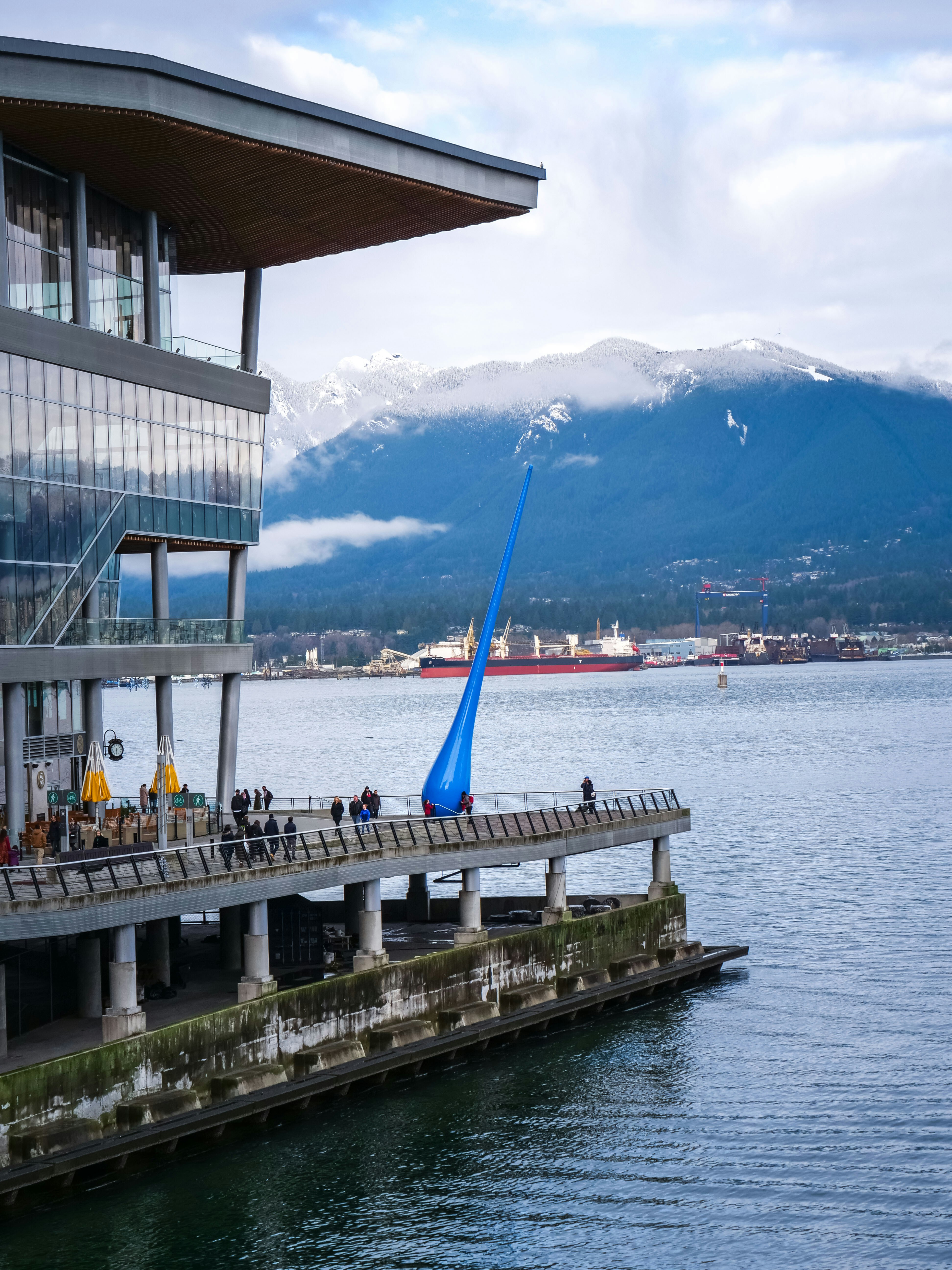



More Articles





Home Feature Guides
How Homes Work: Guides & Insights
Dive into guides that show what really matters in a house, from construction and materials to design choices and practical usability. Learn what questions to ask, what to watch for, and how to spot hidden issues so every feature—from tennis courts and home gyms to outdoor spaces and custom rooms—delivers the value it promises. These guides give the knowledge to assess every detail like an insider and avoid costly surprises.






Key Insights



Key Insights


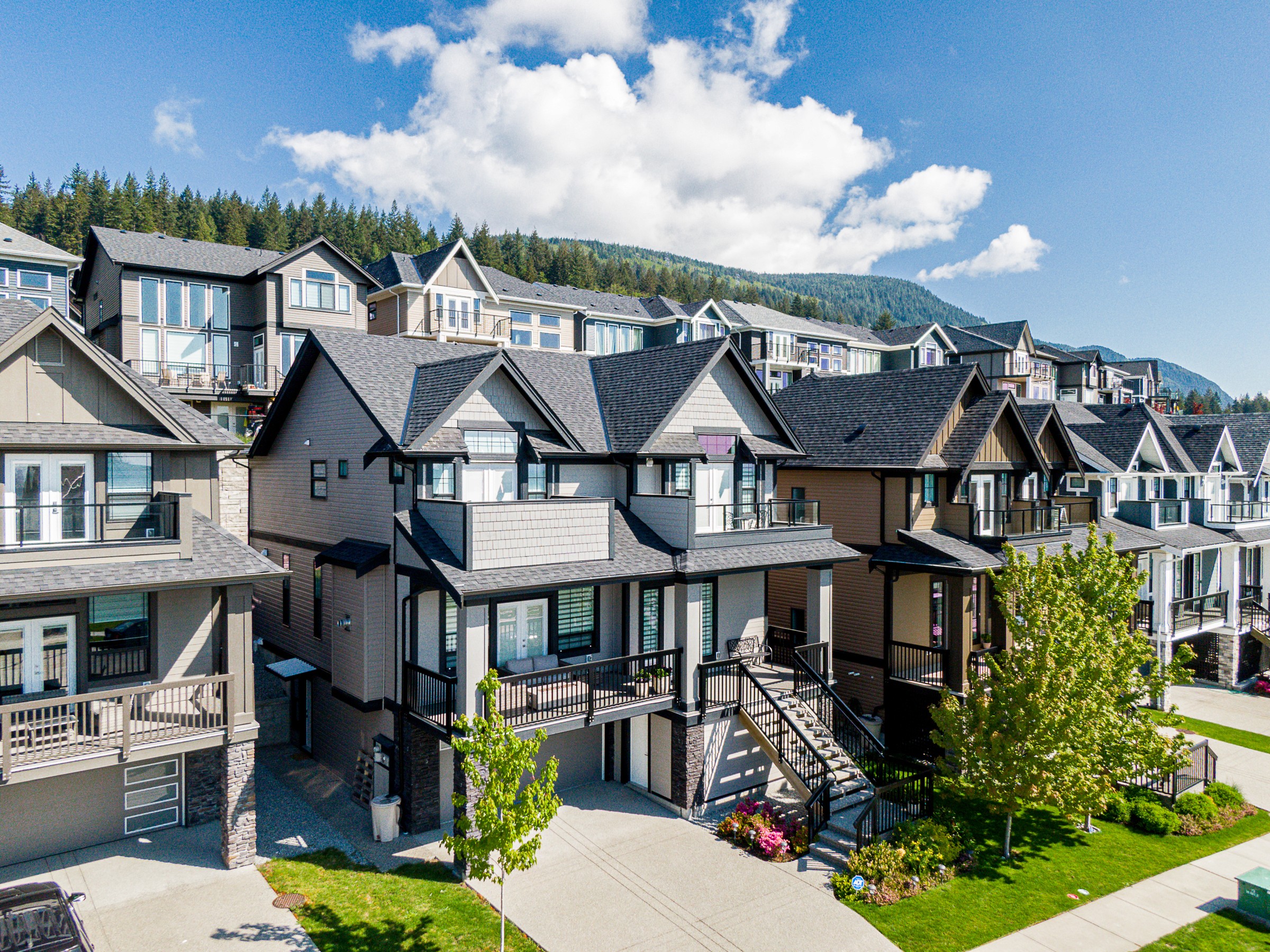


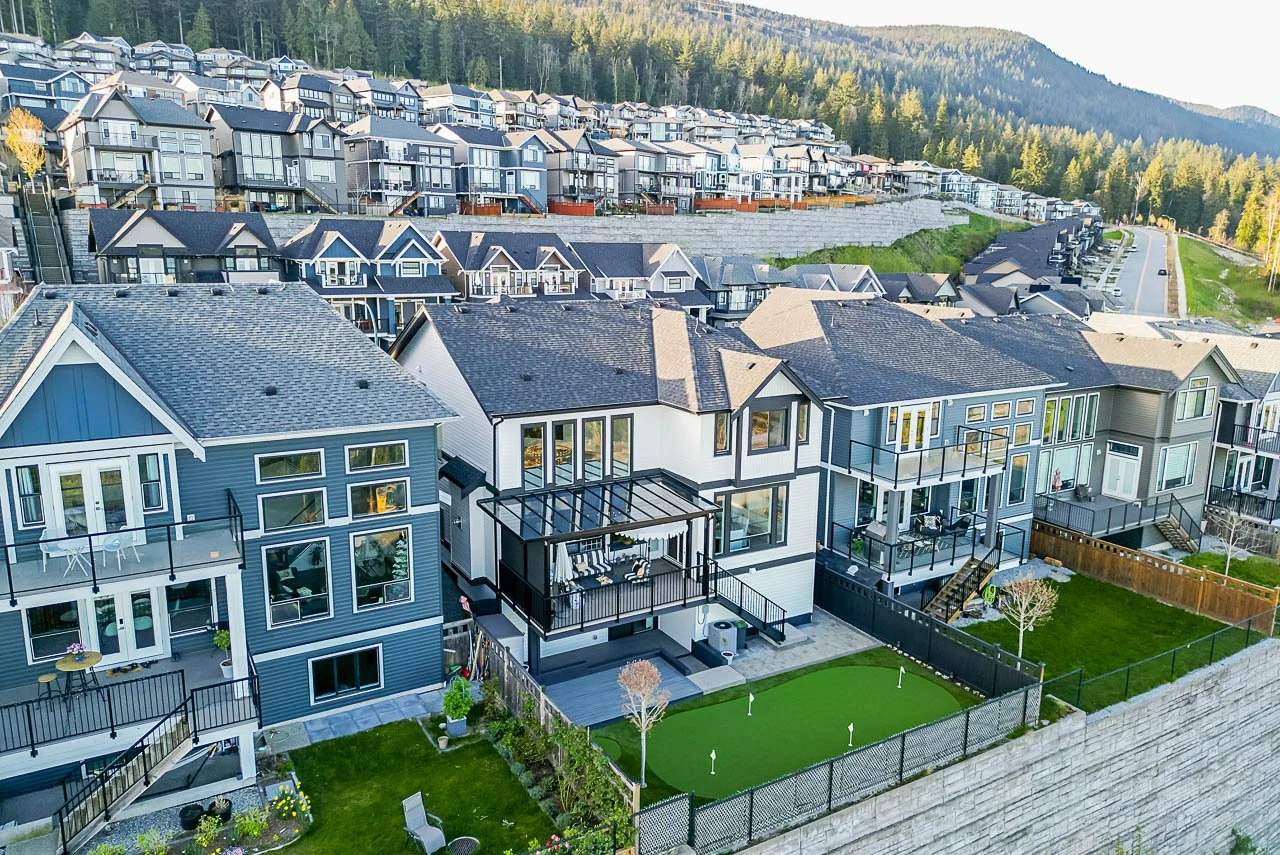




Recent

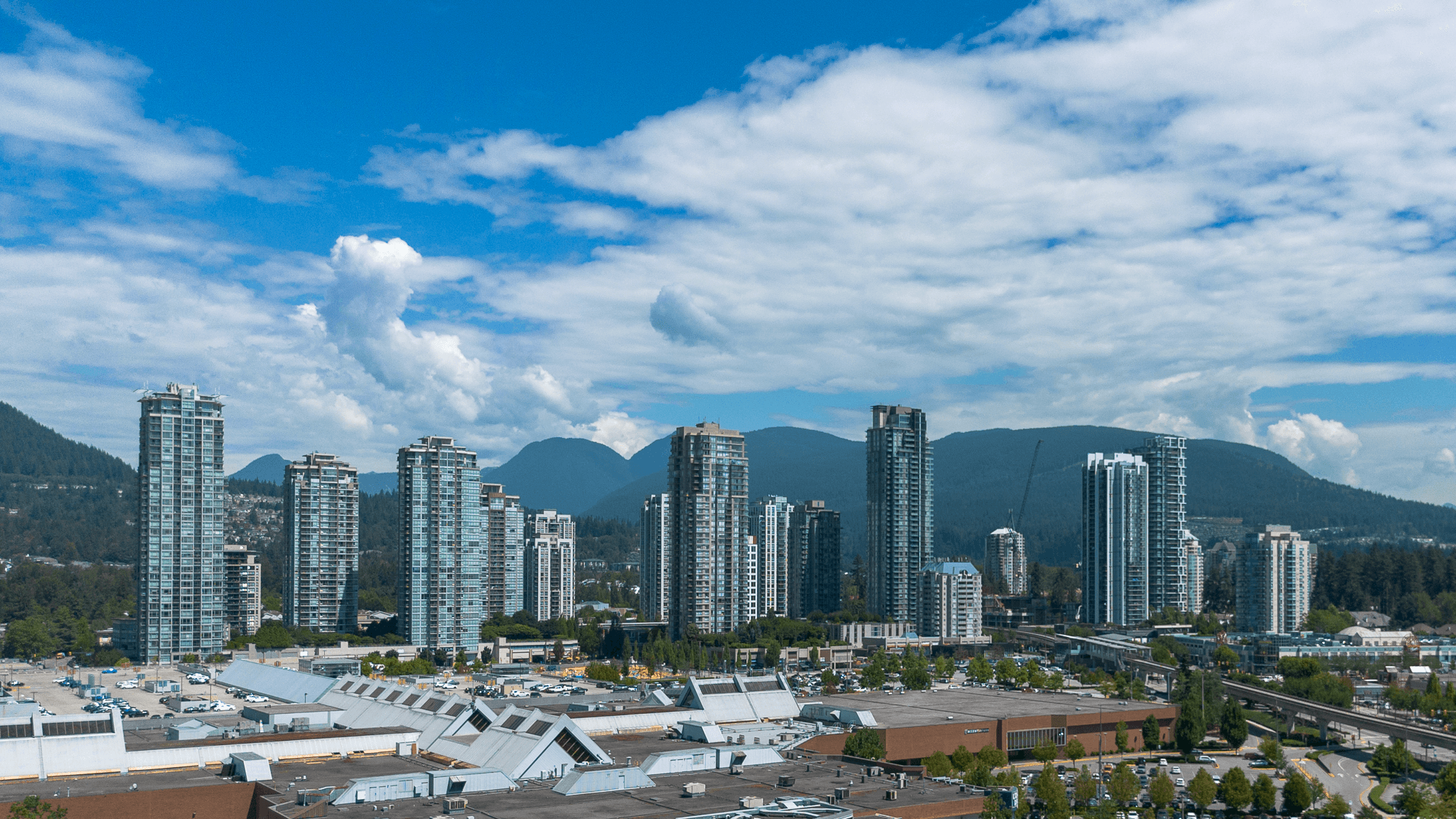
Recent





Victoria Estate Digest is your Go-to source for In-Depth Real Estate Insights, Market Trends, and Expert Analysis in British Columbia.
We cover everything from Housing Affordability and Foreign Investment to Luxury Properties and Emerging Market Opportunities.
Whether you're a Buyer, Seller, or Investor, we provide the Research and Knowledge you need to navigate BC’s ever-changing Real Estate Landscape.