/
/
How the Rise of Data Centres Is Reshaping Canadian Real Estate Investment
How the Rise of Data Centres Is Reshaping Canadian Real Estate Investment


Why AI is turning electricity, industrial land, and digital infrastructure into a new institutional asset class—and why the next real estate boom may be measured in megawatts instead of square feet.
For most of modern real estate history, investors have wanted buildings that people could live in, work in, shop in, manufacture in, or store things in.
Apartments.
Offices.
Shopping centres.
Warehouses.
Factories.
Then a new kind of tenant arrived.
It does not need windows. It does not care about mountain views. It does not need parking for hundreds of employees. It has little interest in restaurants, schools, transit, or whether the neighbourhood has a good coffee shop.
It wants electricity.
An extraordinary amount of electricity.
It wants fibre connections, cooling systems, transformers, backup generators, physical security, and a building that can operate almost continuously without interruption.
And it may be willing to spend billions of dollars to secure those things.
Welcome to the data-centre real estate boom.
Artificial intelligence, cloud computing, financial systems, streaming services, government networks, enterprise software, and digital communications all depend on physical infrastructure. Behind the software are buildings containing servers, networking equipment, and increasingly power-hungry AI computing systems.
And those buildings are becoming a serious investment category.
Canadian pension funds, institutional investors, developers, utilities, telecommunications companies, infrastructure funds, and governments are all paying attention.
But the story is more interesting than another technological gold rush.
Because data centres are changing what makes a piece of land valuable.
A conventional industrial investor asks how many square feet a building contains, what rent it can generate, and whether trucks can access it.
A data-centre developer may ask a more important question:
How many megawatts can this property reliably receive, and when?
The answer can determine whether an otherwise ordinary industrial parcel becomes the foundation of a billion-dollar development or remains a perfectly respectable place to store pallets.
In Canada, this shift is already visible.
Alberta is attracting enormous proposed investments. Saskatchewan has a major Bell AI infrastructure project under construction. Ontario and Quebec remain established data-centre markets. British Columbia is introducing a competitive process to allocate scarce electricity to new AI and data-centre developments.
And institutional investors are beginning to treat access to electricity as something that can be as important as the land itself.
The old real estate mantra was:
Location. Location. Location.
The new one may be:
Power. Power. Power.
Unfortunately, that does not fit as nicely on a realtor's business card.
Canada now has a data-centre pipeline several times larger than its operating base
The scale of the proposed expansion is striking.
In October 2026, Colliers published its Canadian Data Center Market Intelligence report.
It estimated that Canada has approximately 1,415 megawatts of commissioned data-centre capacity, with Ontario and Quebec accounting for much of the established market.
The report also identified at least 5.5 gigawatts of named planned and under-construction capacity nationally, with Alberta representing much of the visible development pipeline.
<text-placeholder/>
Those figures reveal why real estate investors are interested.
Canada's announced pipeline represents almost four times its existing commissioned capacity.
That is a potentially enormous expansion of a specialized real estate category.
But there is a critical qualification.
Planned capacity is not operating capacity.
A developer can announce a 500-megawatt project.
That does not mean it has 500 megawatts of electricity.
It may not have completed utility studies. It may not have financing. It may not have construction permits. It may not have an anchor customer. It may not have completed its electrical infrastructure.
The project may ultimately be built in stages, reduced, delayed, or cancelled.
This distinction matters because real estate investors have seen speculative development pipelines before.
Vancouver presales were once filled with projects that looked highly profitable on paper.
An artist's rendering is not a completed condominium.
Likewise, a proposed data-centre campus is not an energized facility.
And a megawatt requested from a utility is not a megawatt delivered.
That difference is going to separate successful investments from some very expensive vacant land.
What exactly is a data centre?
At its simplest, a data centre is a building designed to house and operate computing equipment.
But not all data centres are the same.
An ordinary enterprise data centre may serve the internal systems of a bank, telecommunications company, corporation, or government.
A colocation facility provides space, electrical capacity, cooling, connectivity, and infrastructure to multiple customers who install their own equipment.
A hyperscale data centre supports enormous cloud-computing operations such as those used by major technology companies.
An AI-focused data centre may be designed around high-density computing equipment that requires much greater electrical capacity and specialized cooling.
Those distinctions matter.
A conventional enterprise facility might operate successfully in a relatively modest building.
A large AI campus can require hundreds of megawatts, extensive electrical infrastructure, multiple buildings, dedicated cooling systems, and large capital commitments.
A colocation provider may collect recurring revenue from many customers.
A hyperscale facility may be leased predominantly to one enormous customer.
An AI cloud operator may own the computing equipment and sell processing capacity directly.
These are different businesses.
They may all involve data-centre buildings, but the revenue streams and investment risks vary substantially.
It is a little like saying a corner convenience store, a regional shopping mall, and an Amazon distribution centre are all retail-related real estate.
Technically true.
Financially unhelpful.
Data centres are turning real estate into infrastructure
A normal warehouse is primarily a building with useful physical characteristics.
Floor area.
Ceiling height.
Loading docks.
Truck access.
Zoning.
Location.
A data centre is closer to a hybrid between real estate and utility infrastructure.
The building matters.
But so do the electrical systems, connectivity, cooling, generators, security, and reliability.
In some large facilities, the building shell represents only a portion of the overall project investment.
Electrical infrastructure and mechanical systems may require enormous expenditure.
And the servers, networking equipment, and AI accelerators inside the building can represent another massive investment, often made by a different party.
This is why data centres attract investors beyond traditional commercial real estate.
They sit at the intersection of several institutional investment categories.
Real estate.
Infrastructure.
Energy.
Telecommunications.
Technology.
Long-term private credit.
A pension fund can invest through a specialist data-centre operator rather than owning an individual building directly.
An infrastructure fund can invest in power generation supporting a data-centre campus.
A developer can build a powered facility and lease it to a technology company.
A lender can finance the construction of a contracted hyperscale facility.
A telecommunications company can build and operate an AI computing campus.
The investment opportunity is much broader than collecting rent on square footage.
But so is the complexity.
Canadian pension capital is already participating
This is not simply a story about speculative developers buying industrial parcels.
Canadian institutional capital is participating directly in digital infrastructure.
In July 2026, CPP Investments announced a US$1.75 billion investment, equivalent to approximately C$2.4 billion at the time, alongside EQT to support global AI infrastructure development through EdgeConneX.
The investment was described as a way to increase exposure to digital infrastructure supported by long-term demand for cloud computing and artificial intelligence.
The transaction is global in scope, not a claim that CPP Investments is building all that capacity in Canada.
That distinction matters.
But it demonstrates that Canada's largest institutional investors increasingly see digital infrastructure as a serious investment category.
In the same year, CPP Investments and Brookfield announced the Maple Fund, a framework for up to C$50 billion of equity investment in Canadian critical infrastructure and strategic industries over an initial five-year period.
That framework should not be confused with a dedicated data-centre fund or money already committed to individual projects.
Still, it illustrates the scale of institutional capital interested in large infrastructure opportunities.
Data centres fit naturally into this broader investment conversation.
They often require enormous upfront capital.
Their construction periods can be lengthy.
They need sophisticated financing.
And a successful operating facility may generate long-term contracted revenue.
That combination is potentially attractive to pension funds and infrastructure investors.
But these institutions do not automatically make money just because a building is full of servers.
They still need to purchase or develop the asset at the right price.
AI has not repealed mathematics.
Global data-centre demand is growing extraordinarily quickly
The investment interest is not arising from nowhere.
The International Energy Agency estimated that global data centres consumed approximately 415 terawatt-hours of electricity in 2024.
In its Energy and AI report, the IEA projected that consumption could reach approximately 945 terawatt-hours by 2030 under its base case.
That is more than double the 2024 level.
AI is an important contributor, but it is not the only source of demand.
Cloud computing continues to expand.
Businesses are moving more systems into digital infrastructure.
Video and communications traffic continue to grow.
Financial institutions require enormous processing and storage capacity.
Governments need secure computing systems.
Industrial applications increasingly use real-time analytics.
And AI model development and deployment add another large category of demand.
In August 2026, CBRE reported that major North American data-centre markets had reached a combined 10,903 megawatts of operating inventory, up 33.7% year over year.
Despite that rapid expansion, vacancy across those primary markets fell to 1.4%.
More remarkably, approximately 80.4% of capacity under construction was already preleased.
CBRE's H1 2026 North America Data Center Trends report provides the figures.
Those numbers are not Canadian-only. They cover the North American primary markets in CBRE's report.
But they explain why capital is searching for development opportunities.
Demand has been absorbing new capacity at an extraordinary pace.
For investors, the attraction is obvious.
The challenge is determining whether that demand remains strong enough to justify the enormous development pipeline now being proposed.
The most valuable asset may be the electrical connection
This is where the real estate story changes.
Imagine two industrial parcels.
Both contain ten acres.
Both have suitable industrial zoning.
Both are accessible by truck.
Both have reasonable fibre connectivity.
Both are in the same general area.
Parcel A can realistically obtain 50 megawatts of firm electrical capacity within a defined timeframe, with the necessary studies, infrastructure, approvals, and commercial arrangements substantially advanced.
Parcel B has an electrical substation nearby but no demonstrated ability to obtain sufficient capacity.
Which property is worth more to a data-centre developer?
Potentially Parcel A.
By a considerable margin.
That does not mean every 50-megawatt site deserves an enormous premium. The value depends on the connection cost, timing, commercial rights, other approvals, and realistic tenant demand.
But it illustrates why electricity is changing land valuation.
The important asset is not merely proximity to a substation.
It is deliverable power.
A substation visible from the property line may already be fully committed.
The transmission network may require upgrades.
Transformers may have long procurement lead times.
The utility may need new infrastructure.
Connection studies may reveal expensive requirements.
Approvals may take years.
And a project's proposed power allocation may be contingent on milestones or later decisions.
This is why the phrase "data-centre-ready land" should make investors ask difficult questions.
Ready in what sense?
Zoning-ready?
Fibre-ready?
Servicing-ready?
Or actually capable of obtaining the required electricity?
Those are not interchangeable.
A parcel with a good marketing package and no available power is not necessarily a data-centre site.
It may just be industrial land that has learned the letters AI.
The rise of powered land
Institutional real estate investors are increasingly discussing an emerging category known as powered land.
The idea is straightforward.
Land becomes more valuable when it comes with credible access to electrical capacity, interconnection progress, and the infrastructure needed to support an energy-intensive development.
CBRE Investment Management and other industry participants have identified speed to power as a significant driver of data-centre real estate valuation.
The emerging investment strategy involves finding sites where an investor can secure land and power infrastructure before a data-centre tenant or operator needs it.
In theory, this can create substantial value.
In practice, it introduces several risks.
Power availability may change.
Connection costs may increase.
The tenant may not materialize.
A utility may allocate power to another use.
The regulatory environment may change.
The property may face permitting or community opposition.
The development may need specialized infrastructure that costs far more than originally estimated.
And the investor can end up holding land whose value was based on a connection that never arrived.
That is the fundamental powered-land risk.
Power that might be available is not the same asset as power that is contractually and technically deliverable.
This is going to be one of the most important distinctions in Canadian industrial land investing over the next several years.
The megawatt is becoming more important than the square foot
Traditional commercial real estate uses familiar metrics.
Price per square foot.
Rent per square foot.
Net operating income.
Capitalization rate.
Data centres add another layer.
Power capacity.
Often measured in kilowatts or megawatts.
A site capable of supporting a large data centre may be evaluated partly on its cost per usable megawatt of capacity.
Colocation revenue may also be priced according to contracted electrical capacity or computing infrastructure services, rather than simply floor area.
This creates an important difference from traditional warehousing.
A 100,000-square-foot warehouse may be ideal for storing furniture.
But if it cannot obtain the required electricity, it may have little value for a 40-megawatt AI computing project.
Conversely, a relatively plain industrial site with strong fibre connectivity, appropriate zoning, and credible near-term access to electrical capacity can become highly attractive.
The building's dimensions still matter.
But the energy available to operate its equipment may matter more.
That is a fundamental change in how certain industrial parcels are being evaluated.
What does 100 megawatts actually mean?
Data-centre project announcements can sound abstract because megawatts are not a familiar real estate metric.
A megawatt is a measure of power.
A facility drawing one megawatt continuously for one hour consumes one megawatt-hour of electricity.
Over a full year:
1 MW × 8,760 hours = 8,760 MWh
That equals 8.76 gigawatt-hours of electricity.
Now consider a 100-megawatt facility drawing that amount continuously.
Annual consumption would be:
100 MW × 8,760 hours = 876,000 MWh
Or:
876 gigawatt-hours per year.
At an illustrative all-in electricity cost of 10 cents per kilowatt-hour, that would equal:
876,000,000 kWh × $0.10 = $87.6 million annually
That is just electricity.
The actual bill depends on utilization, the distinction between IT and total facility load, demand charges, tariffs, contracts, cooling efficiency, and other factors.
But the scale is clear.
A large data centre can consume tens of millions of dollars of electricity annually.
A gigawatt-scale campus at full continuous facility draw represents an entirely different level of energy demand.
This is why the electrical utility, rather than the local commercial realtor, can become one of the most important participants in a real estate development.
The land might be available.
The power might not.
PUE: the efficiency metric that changes the economics
Data-centre operators also care about Power Usage Effectiveness, commonly abbreviated PUE.
PUE compares total facility energy consumption with the energy consumed by the IT equipment itself.
For example, a facility with 100 megawatts of IT equipment load and a PUE of 1.20 would require approximately 120 megawatts of total facility power at that operating point.
The additional 20 megawatts supports cooling, power distribution losses, and other infrastructure.
If the facility operated continuously at those levels, annual electricity consumption would be approximately:
120 MW × 8,760 hours = 1,051,200 MWh
Or about 1.05 terawatt-hours per year.
At an illustrative 10 cents per kilowatt-hour, that would be approximately $105 million per year.
Again, actual consumption and tariffs vary.
But this shows why cooling and electrical efficiency have financial significance.
A small efficiency improvement at enormous scale can save millions.
This also explains why a cold climate can be attractive.
Less energy may be needed for some cooling operations.
But Canada's climate does not eliminate the cost of cooling, nor does it make every location equally suitable.
A modern AI facility is a complicated thermal and electrical system.
Not just a refrigerator with a mortgage.
British Columbia has made electricity allocation a real estate gatekeeper
British Columbia offers a particularly revealing example.
The province has abundant hydroelectric generation relative to many jurisdictions and a relatively low-carbon electricity system.
That sounds attractive for data centres.
But B.C. also has competing demand for electricity.
Housing electrification.
Electric vehicles.
Manufacturing.
Mining.
Natural-resource projects.
Ports and transportation.
Industrial decarbonization.
And other uses.
In January 2026, the province introduced a competitive framework for allocating electricity to new AI and data-centre projects.
Under the initial two-year allocation, BC Hydro made available up to 300 megawatts for AI data-centre projects and 100 megawatts for conventional data-centre projects.
The framework generally applies to new qualifying projects seeking 10 megawatts or more.
Those projects must compete for access to electricity rather than assuming a conventional first-come, first-served connection process will automatically provide it.
The province's Industrial Electricity Allocation Framework explains the rules.
BC Hydro's 2026 call attracted 15 applications requesting close to 800 megawatts.
The available allocation under the initial framework is much smaller than that requested amount.
And selection does not, by itself, make a data centre immediately operational. Selected applicants still have to move through the applicable interconnection, development, and commercial processes.
That has enormous implications for industrial land valuation.
A parcel in Surrey, Langley, Richmond, Burnaby, or elsewhere in B.C. does not become a high-value AI data-centre site simply because someone announces a proposed campus.
The power allocation question must be answered.
In B.C., available electricity is no longer just a utility service.
For some projects, it is a competitive economic-development resource.
B.C. is choosing between data centres and other electricity users
The policy reasoning matters.
Data centres can attract investment, but they may consume very large amounts of electricity relative to permanent employment or other local economic benefits.
Manufacturing projects can also be electricity-intensive.
But a manufacturing facility may employ substantial numbers of workers, purchase local inputs, generate exports, support suppliers, and produce physical goods.
A data centre may generate a large construction boom and substantial tax revenues but have fewer permanent operating jobs than an industrial factory of comparable electrical demand.
The province's allocation framework expressly considers economic, community, data-sovereignty, and environmental benefits.
That creates an important real estate distinction.
The value of a powered industrial site may depend partly on which uses the government and utility are willing to support.
A manufacturing facility and a data centre may be competing for the same scarce electrical capacity.
An industrial property investor cannot assume the use paying the highest rent will automatically receive power.
Regulatory allocation matters.
And so does the broader public interest.
There are reasonable arguments for supporting sovereign AI infrastructure and for preserving affordable electricity for existing industries and households.
Both priorities consume real resources.
The land market will have to operate within those constraints.
Vancouver may be a better market for specialized facilities than enormous AI campuses
Metro Vancouver has several strengths.
An established technology sector.
Fibre connectivity.
Access to skilled workers.
Enterprise customers.
A relatively clean electricity grid.
A climate that can help some cooling strategies.
And existing telecommunications and data infrastructure.
But it also has constraints.
High land costs.
Limited industrial supply.
Congestion.
Competing industrial uses.
Power-allocation limits.
Complex approval processes.
And the cost of developing large campuses within an already expensive urban region.
Those factors may favour certain kinds of data centres more than others.
A smaller or medium-sized facility serving enterprise customers, network infrastructure, colocation demand, or latency-sensitive applications may have a strong reason to locate near Vancouver.
A massive AI training campus requiring hundreds of megawatts may have more flexibility to locate in another province where suitable land and new power generation can be assembled at greater scale.
That does not make B.C. irrelevant.
It means the province may attract a different mix of projects.
In May 2026, the federal government announced that it was advancing work with TELUS on a proposed large-scale sovereign AI data-centre project in British Columbia.
The federal announcement was explicit that the collaboration was exploratory and that no funding had yet been committed or distributed under that initiative.
That is precisely the distinction investors should preserve.
Interest is real.
Policy support is real.
But a proposal is not an operating asset.
Alberta is turning data centres into an energy-development strategy
Alberta has emerged as one of Canada's most closely watched data-centre development markets.
Its attraction is different from B.C.'s.
Alberta has industrial land, existing energy infrastructure, a large natural-gas sector, electricity-market expertise, and the possibility of developing new generation alongside large computing projects.
The provincial strategy increasingly emphasizes projects that bring their own electricity supply.
That can allow very large data-centre developments to proceed without relying entirely on existing grid capacity.
But the scale of interest is extraordinary.
According to Alberta government information based on the Alberta Electric System Operator's connection list as of July 30, 2026, proposed data-centre projects were requesting approximately 19,565 megawatts of new connection capacity.
Alberta's record peak provincial electricity load was approximately 12,785 megawatts.
The AESO's initial large-load connection allocation was only 1,200 megawatts, and that capacity had already been allocated.
The province's data-centre grid information presents the comparison.
Now, the obvious reaction is:
How can data centres be asking for more power than the entire province has ever used?
The answer is that requests are not completed projects.
Some proposals may overlap.
Some may be speculative.
Some may be staged.
Some may never obtain financing.
Some may bring their own generation.
And a submitted request is not the same thing as an approved, fully operating electrical load.
The queue is a measure of interest.
It is not a reliable count of future buildings.
But the scale of interest is remarkable.
And Alberta has decided to treat large-scale computing infrastructure as an economic-development opportunity connected to energy investment.
Meta's Alberta project shows how the economics are changing
In July 2026, Meta announced plans for a major AI-optimized data centre in Sturgeon County, near Edmonton.
The planned campus is approximately one gigawatt in scale.
Meta described the project as an investment of more than C$13 billion, with approximately 3,000 construction workers at peak construction and more than 300 operational jobs.
The company also announced approximately C$60 million in local infrastructure improvements.
Meta's official project announcement provides those figures.
The project is connected to a much broader energy-development strategy, including substantial dedicated electricity infrastructure and new natural-gas generation.
This is important.
The investment is not simply a technology company buying a warehouse.
It is a large industrial infrastructure project.
Land.
Power generation.
Transmission.
Construction.
Cooling.
Computing.
Communications.
Security.
Roads.
Long-term operations.
The real estate is one component of a much larger capital system.
And that changes who invests.
A traditional warehouse developer may not have the capital, expertise, or risk appetite to manage something like this alone.
A data-centre project of this scale can require institutional investors, specialized developers, infrastructure capital, utilities, construction partners, and long-term commercial commitments.
That is why data centres are becoming an important asset class.
Not because the buildings are pretty.
Because the entire investment ecosystem surrounding them is enormous.
Saskatchewan's Bell AI Fabric project is even more revealing
Saskatchewan is another major example.
In March 2026, Bell announced an initial 300-megawatt AI data-centre campus in the Rural Municipality of Sherwood, near Regina.
By October 1, the provincial government reported that all four building shells in the initial phase were taking shape, with more than 500 people working on site.
The first data hall was expected to come online in the first half of 2027.
That is actual construction progress, not merely a conceptual master plan.
Then came the expansion announcement.
In September 2026, Bell and the Government of Saskatchewan announced a non-binding memorandum of understanding creating a path toward an additional 900 megawatts, for a potential 1.2-gigawatt Saskatchewan AI infrastructure hub.
The full concept was associated with potential total capital investment of up to C$52.5 billion.
The province's October 1 construction update distinguished the first 300-megawatt phase under construction from the much larger possible future buildout.
That distinction matters.
The $52.5 billion is not the market value of one completed piece of real estate.
It reflects a possible phased investment encompassing data-centre infrastructure, computing hardware, and power-related capital.
The announced future phases are not equivalent to money already spent.
Still, even the initial project illustrates how Canada's geography of digital infrastructure is changing.
A province not traditionally viewed as a major hyperscale data-centre hub is becoming a serious candidate for large AI infrastructure investment.
Because land and electricity are central to the new location equation.
The internet may be global.
The power supply is very local.
Ontario still matters because customers and network connections matter
It would be a mistake to assume that every large data centre will migrate to the Prairies.
Ontario remains one of Canada's established markets.
The Greater Toronto Area has major enterprise customers, financial institutions, telecommunications networks, cloud infrastructure, and demand for reliable low-latency connectivity.
Some workloads benefit from proximity to customers and network interconnection points.
Others can operate farther away.
That distinction is important.
A large AI training workload may be able to operate in a location selected largely for power availability and economics.
Some financial, enterprise, content-delivery, or network services have more stringent connectivity and latency requirements.
This creates a layered geography.
Large energy-intensive compute campuses may develop where substantial power can be assembled.
Interconnection and enterprise facilities may remain concentrated around major urban technology and business markets.
Ontario is also planning for a significant increase in electricity demand.
The Independent Electricity System Operator's 2026 Annual Planning Outlook estimates that data centres could account for approximately 8.6% of Ontario electricity demand by 2050 in its reference scenario.
That is a projection, not capacity already installed.
It shows how electricity system planners are now treating data centres as a major source of future load.
For real estate investors, the significance is straightforward.
The location of future digital infrastructure will depend partly on where electricity can be supplied reliably, affordably, and at scale.
And Ontario's existing technology and enterprise ecosystem remains an important demand driver.
Quebec's low-cost electricity advantage is being repriced
Quebec has historically attracted data-centre interest partly because of hydroelectricity, climate, and relatively competitive electricity costs.
Montreal is one of Canada's established data-centre markets.
But the provincial utility has increasingly recognized that electricity for large computing operations has substantial economic value.
In February 2026, Hydro-Québec proposed a new electricity rate for large data centres requiring more than five megawatts.
The proposed average rate was approximately 13 cents per kilowatt-hour, roughly double the rate then paid by large-power customers.
At the time of the announcement, the proposal remained subject to regulatory approval.
Hydro-Québec's February 2026 announcement also projected that data-centre demand could increase to around 1,000 megawatts by 2035.
That matters enormously.
A region may attract data centres because electricity is cheap.
Then the government and utility may decide that allocating scarce electricity to those businesses should produce greater public revenue or better reflect infrastructure costs.
The economic model changes.
At a hypothetical continuous 100-megawatt facility load, an average energy price of 13 cents per kilowatt-hour would imply approximately $113.9 million per year in energy charges, before other billing complexities.
That is not a minor operating-cost adjustment.
For a large facility, a few cents per kilowatt-hour can materially change the economics.
Investors should therefore be careful when valuing data-centre land based on today's electricity prices.
The tariff may change.
The connection charge may change.
The project may be required to fund additional infrastructure.
Low-cost electricity is valuable.
But it is not necessarily a permanent entitlement.
Data sovereignty adds a new reason to build in Canada
Artificial intelligence has introduced another source of data-centre demand: sovereign computing infrastructure.
Governments and Canadian organizations increasingly want access to computing capacity operated under Canadian legal and commercial arrangements.
That may matter for sensitive data, regulated industries, intellectual property, security, public-sector procurement, and strategic technology development.
Canada's federal government has committed more than $2 billion through its Canadian Sovereign AI Compute Strategy and related programs to support domestic AI computing capacity and access.
In 2026, the federal government launched additional initiatives aimed at developing Canadian-controlled, large-scale computing infrastructure.
This creates a source of demand that is different from ordinary commercial cloud growth.
Some customers may pay for control, compliance, jurisdictional arrangements, security, and operational independence.
But investors should be precise about the term sovereignty.
A data centre being physically located in Canada does not automatically establish that every relevant piece of software, ownership, encryption, management access, or contractual control is Canadian.
Legal jurisdiction and operational control can be more complicated.
Sovereignty is a collection of legal, technical, and operational characteristics.
Not simply a maple leaf on the server room door.
For investors, the opportunity is real where there are customers willing to contract for compliant, secure, Canadian-controlled services.
The risk is treating the word sovereignty as proof that every proposed facility will be profitable.
That would be a very Canadian form of speculative optimism.
Data centres may change which industrial parcels command a premium
The most direct real estate effect will likely be selective.
Not every industrial property becomes more valuable because AI exists.
In fact, some industrial properties may be completely unsuitable.
Data-centre developers often require reliable power, substantial electrical capacity, fibre redundancy, appropriate zoning, security, cooling infrastructure, physical access, and development approvals.
For certain large campuses, land availability and expansion potential are essential.
The investor who owns a small industrial strata unit cannot assume it will command a major premium because it happens to be within a few kilometres of a substation.
Similarly, an old warehouse does not automatically become a valuable data centre just because it contains a concrete floor.
Some parcels may experience significant appreciation if they secure credible data-centre utility and approvals.
Others may not.
This creates a potential two-tier market.
Sites with truly deliverable power and commercial viability.
Sites that merely look suitable on a map.
Investors need to distinguish between them.
A high-voltage line running past the property is not a licence to print money.
Turning an office building into a data centre is harder than it sounds
With conventional office demand changing, some investors have wondered whether vacant office buildings can be converted into data centres.
Sometimes they can.
But the idea is far less straightforward than replacing desks with server racks.
Data centres can require significantly different electrical infrastructure, cooling systems, floor loading, redundancy, security, mechanical space, and vertical distribution.
An office tower may have insufficient electrical capacity.
Its floor layout may be poorly suited to equipment.
Its cooling system may be inappropriate for dense computing loads.
Its location may be too expensive for certain uses.
Its fibre connections may not offer the required redundancy.
Backup generators may be difficult to install.
The building's structural and operational configuration may make conversion uneconomic.
A suburban low-rise building with appropriate infrastructure can sometimes be more suitable than a prestigious downtown office tower.
This is another example of the difference between real estate appearance and operational value.
An empty office building is not automatically a future data centre.
Sometimes it is simply an empty office building looking for a new story.
Vancouver has experience with that.
Data centres can increase demand for electrical infrastructure real estate
There is another emerging investment category beneath the data centres themselves.
Electrical infrastructure.
Substation sites.
Transmission corridors.
Energy storage.
On-site generation.
Backup power facilities.
Utility easements.
Cooling infrastructure.
Related industrial land.
A gigawatt-scale development may require substantial new energy infrastructure.
That infrastructure takes land.
It requires approvals.
It can have long procurement schedules.
And some of it may be financed by infrastructure investors rather than the owner of the data-centre building.
This expands the potential real estate impact beyond the campus boundary.
It also expands the potential risks.
Power projects require environmental review, engineering, commercial arrangements, and regulatory approvals.
An investor who owns land near a proposed power project may not benefit automatically.
The infrastructure may never be built.
Its route may change.
Its capacity may already be allocated.
A proposed project does not create a guaranteed development premium for everything nearby.
Speculation tends to turn "near a planned data centre" into a selling point very quickly.
Evidence takes longer.
The cooling question is more complicated than Canada's climate
Canada's cooler climate can be an advantage.
But the phrase "Canada is cold, so data centres are cheap to cool" is an oversimplification.
Cooling requirements depend on equipment density, outdoor conditions, system design, humidity, water availability, electrical efficiency, and uptime requirements.
Modern AI hardware can generate very high heat density.
Some facilities use air cooling.
Others use liquid cooling.
Some use evaporative systems.
Others use dry cooling or closed-loop designs.
Each has different capital and operating costs.
Some cooling strategies consume substantial water.
Others dramatically reduce operational water use but may require additional equipment or electricity under some conditions.
Meta's proposed Alberta facility, for example, has been described by the company as using a closed-loop liquid-cooling system with dry cooling to minimize water consumption.
That is a project-specific design claim, not evidence that every data centre uses little water.
For investors, the question is not simply whether the climate is cool.
It is whether the chosen cooling architecture is efficient, reliable, technically appropriate, and supportable over the operating life of the facility.
Water access, water restrictions, energy use, and environmental requirements can affect valuation.
A data centre needs to keep the servers cool.
A real estate investor needs to keep the assumptions cooler.
The employment paradox: enormous investment does not necessarily mean enormous permanent employment
One of the most important public-policy questions concerns economic benefit.
Data centres can generate substantial construction employment.
Large projects require electricians, civil contractors, steel, concrete, mechanical systems, security, equipment installation, telecommunications work, and supporting infrastructure.
That is real economic activity.
But a fully operating data centre can be highly automated.
It may require relatively few employees compared with the capital invested and electricity consumed.
Meta's Alberta project, for example, anticipates approximately 3,000 construction workers at peak construction but more than 300 operational jobs.
Bell's much larger potential Saskatchewan buildout has been associated with hundreds of permanent operational roles, in addition to management positions and broader economic activity.
Those jobs can be valuable and well paid.
But they are not the same thing as employing several thousand manufacturing workers permanently.
This is why governments are looking at more than announced investment figures.
They want to understand tax revenue.
Employment.
Local procurement.
Energy costs.
Infrastructure funding.
Environmental effects.
Community benefit.
And economic spillovers.
A data centre can be an important strategic asset without being a major employer relative to its electricity consumption.
Investors should understand that distinction because policy support may depend on it.
Who pays for the electricity infrastructure?
This may become one of the most contested issues in data-centre development.
Large facilities need grid infrastructure.
Transformers.
Substations.
Transmission upgrades.
New generation.
System planning.
Backup arrangements.
Sometimes extensive utility investment.
The cost has to be allocated somewhere.
If a project requires major grid expansion, utilities and regulators must decide which costs the developer pays and which enter broader rate structures.
Technology companies and governments may argue that new data centres can fund or support infrastructure investment, increase economic activity, and create long-term electricity demand.
Critics may question whether ordinary ratepayers should bear any costs associated with highly profitable private technology companies.
Both concerns matter.
A well-structured project can require the developer to make substantial financial commitments for connection and infrastructure.
But outcomes depend on tariffs, utility rules, project agreements, and the broader electricity system.
The important real estate consequence is that connection cost cannot be treated as a footnote.
A parcel may have attractive land pricing but require hundreds of millions of dollars of utility-related investment before it becomes commercially usable at scale.
The inexpensive land may be the least expensive part of the project.
That is a difficult sentence for a land speculator to hear.
The difference between bare land, powered shells, and completed facilities
Data-centre investment has several distinct levels.
Bare land may provide development potential but no operating income and no confirmed power.
Powered land may include secured or advanced access to electricity, although the actual level of certainty must be verified.
Powered shells generally provide the building structure and critical base infrastructure needed for a tenant to install specialized computing systems.
Completed turnkey data centres include much of the mechanical and electrical infrastructure necessary to begin operations.
Fully operating colocation businesses may own the facility and sell services to multiple customers.
AI compute operators may also own the servers and sell actual processing capacity.
These are not financially interchangeable assets.
Each step adds capital requirements.
Each step can add value.
Each step introduces additional execution and operating risks.
A land investor should not value a vacant parcel as though it already contains a commissioned data centre.
A powered-shell developer should not assume its investment has the same economics as the customer's GPU fleet.
A data-centre landlord should not confuse a tenant's AI service revenue with its own contracted rental income.
The distinctions matter because some of the largest announced AI investments include technology hardware with a much shorter replacement cycle than the buildings.
A new AI computing campus can contain billions of dollars of equipment.
The real estate owner may not own that equipment.
And its value may depreciate differently from the underlying property.
Data-centre revenue can look like rent, but the underlying business may be very different
A conventional warehouse landlord typically collects rent based on square footage under a commercial lease.
A data-centre owner may collect rent from a hyperscale tenant under a long-term lease.
That can look relatively familiar.
But a colocation operator may charge for committed power capacity, equipment space, connectivity, services, and operational reliability.
An AI cloud provider may charge for computing resources consumed by customers.
Those revenue models have very different risk profiles.
A hyperscale lease backed by a financially strong technology company may provide relatively stable income.
A colocation operation with multiple customers can provide diversification but requires more operational management.
A GPU cloud business may have potentially attractive revenue but faces hardware depreciation, utilization risk, financing costs, software competition, and rapid technological change.
Investors need to know which business they are actually buying.
Real estate?
Infrastructure?
Colocation?
Computing services?
A combination?
A data-centre investment presentation may contain spectacular revenue projections.
But the owner of the building may only be entitled to a small, contractually defined part of the broader economic activity.
That is not a problem if the asset is priced accordingly.
It is a problem if the investor pays for the customer's future AI profits without owning them.
Why long-term hyperscale leases attract institutional capital
A purpose-built facility leased to a large technology company under a long-term agreement can resemble infrastructure investing.
The investor commits substantial capital.
The tenant agrees to use the facility.
The contract defines rent and responsibilities.
The investor expects a stream of payments over time.
If the lease is strong and the tenant creditworthy, institutions may find that attractive.
But data-centre leases are not all identical.
Some include minimum payment commitments.
Some separate electricity costs.
Some allocate capital improvements differently.
Some address equipment replacement or expansion.
Some include detailed service-level requirements.
Some contain termination rights or unusual remedies.
A contract may look long-term while still exposing the owner to substantial capital or operational obligations.
And the customer may require a specialized configuration that is difficult to reuse.
That is why institutional due diligence goes far beyond the headline lease term.
A 15-year agreement can be valuable.
But a 15-year agreement with a customer who cannot pay is not the same thing.
The contract is only as durable as its economics and enforceability.
The capitalization-rate problem has not disappeared
Investors should be cautious about paying extraordinary prices for data-centre assets simply because the sector is growing.
A data centre generating stable net operating income can be valued using income-based methods, including capitalization rates and discounted cash flow.
But its value remains sensitive to required investor returns.
Suppose a completed facility generates $12 million of annual stabilized net operating income.
At a 6% capitalization rate:
$12 million ÷ 0.06 = $200 million
At a 7.5% capitalization rate:
$12 million ÷ 0.075 = $160 million
That is a $40 million difference without changing the income.
Now suppose the property loses a tenant, requires major improvements, or experiences higher operating costs.
The valuation could fall further.
That is why a growing sector does not automatically guarantee high investment returns.
Investors can overpay for good assets.
They can overpay for scarce assets.
They can overpay for contracted assets.
And they can overpay for facilities whose customers are among the world's largest technology companies.
The word hyperscale does not provide immunity from valuation risk.
Capitalization rates still exist.
Debt still costs money.
And cash flow still has to justify the acquisition.
The AI hardware cycle creates unusual obsolescence risk
Data-centre real estate has one complication that conventional industrial property does not face to the same degree.
Computing equipment changes very quickly.
A warehouse may remain functional for decades with appropriate maintenance and upgrades.
The computing equipment inside an AI data centre can face far shorter technology cycles.
New chips may deliver more computing performance per unit of energy.
Cooling requirements may change.
Power density may rise.
Networking architectures may evolve.
The economics of training and inference may shift.
The facility itself can remain useful if it was designed flexibly.
But the owner or operator of specialized equipment may face rapid depreciation and significant reinvestment requirements.
This is why real estate investors must understand which capital expenditures belong to which party.
If the landlord provides only the shell and base electrical infrastructure, the tenant may bear much of the computing-hardware risk.
If the investment vehicle also owns the equipment, the risk profile is considerably different.
A data-centre operator can have enormous revenue and still face financial stress if hardware financing, depreciation, utilization, or reinvestment costs become unfavorable.
That is not a normal warehouse problem.
And it should not be valued like one.
The danger of announced megawatts
The data-centre boom is creating a new version of real estate speculation.
Instead of announcing acres of future residential density, promoters announce megawatts.
One hundred megawatts.
Five hundred megawatts.
A gigawatt.
Two gigawatts.
The numbers sound impressive.
But an application for electrical service is not the same as secured capacity.
An interconnection study is not an operating agreement.
A memorandum of understanding is not a fully financed project.
A technology company expressing interest is not a signed long-term lease.
An artist's rendering of server buildings is not evidence that the servers will be installed.
And a proposed $20 billion campus is not a $20 billion investment already made.
Recent reporting on North American utility queues has highlighted the problem of speculative or duplicate data-centre requests, sometimes described as phantom projects.
This is particularly relevant in Alberta, where proposed requests amount to many times the initial grid allocation.
For a land investor, the danger is obvious.
A property can be repriced based on anticipated demand that never translates into construction.
The developer may tie up the land under an option.
Years pass.
The power does not arrive.
The project is cancelled.
The owner is left with industrial land that never became the promised AI campus.
It is Vancouver presale optimism with a much larger electrical bill.
AI infrastructure ultimately needs customers outside the AI investment cycle
This is the larger economic question.
Data-centre demand is currently being driven by enormous technology investment.
Technology companies are spending heavily on computing capacity.
Cloud providers are building facilities.
AI companies are buying processing services.
Chip manufacturers are supplying equipment.
Infrastructure funds are financing development.
Developers are building campuses.
Utilities are planning for new loads.
That creates substantial economic activity.
But the ultimate financial success of the infrastructure depends on something deeper.
Will the computing capacity generate enough enduring value for the broader economy to support the investment?
AI companies buying services from other AI companies can generate revenue throughout the sector.
But long-term returns ultimately depend on businesses, governments, and consumers paying enough for useful services.
AI must improve productivity, reduce costs, create valuable products, generate income, or deliver other outcomes for customers.
If the adoption of AI services grows rapidly and creates substantial economic value, computing demand may remain strong.
If development outpaces profitable end-user demand, some capacity may become underutilized.
If future hardware becomes more efficient, the economics of existing installations may change.
If competition drives down computing prices, some operators may struggle even as computing consumption grows.
This is a subtle but important distinction.
Growing demand for computing does not guarantee that every investor financing computing infrastructure earns an attractive return.
The internet grew enormously after the dot-com boom.
That did not mean every company or network investment made during the boom survived.
AI may be transformative.
Data-centre overinvestment may still occur.
Those possibilities are not mutually exclusive.
The environmental issue is also a real estate issue
Data centres are physical infrastructure with physical impacts.
They consume electricity.
They generate heat.
Some cooling systems require substantial water.
They require construction materials, backup power arrangements, and mechanical infrastructure.
They can create noise from cooling equipment and generators.
They may require transmission upgrades.
Large campuses can occupy significant land.
Those issues can affect development approval and community acceptance.
The details vary greatly by project design.
Some modern facilities use cooling systems with relatively low operational water consumption.
Some recover waste heat for other uses.
Some source electricity through low-carbon systems.
Others rely partly on natural-gas generation or other sources.
The actual environmental profile depends on how the facility is built and operated.
For investors, the significance is practical.
Environmental requirements can change capital costs.
Water restrictions can change system design.
Community opposition can delay or stop approval.
Energy rules can affect location.
Climate commitments can influence tenant demand.
An investor who ignores those issues may discover that a technically excellent site is politically or environmentally difficult to develop.
The building may be ready for servers.
The community may not be ready for the building.
That risk is real.
Data centres can create construction booms without solving local housing problems
Large projects can generate substantial temporary labour demand.
Electricians.
Pipefitters.
Construction managers.
Civil crews.
Mechanical contractors.
Concrete suppliers.
Security.
Transportation.
Equipment installers.
Specialized engineering.
In smaller markets, a major campus can increase demand for temporary accommodation, rentals, hotels, and support services during construction.
That can create local real estate spillovers.
But those effects should be separated from permanent operating employment.
Meta's Alberta project anticipates thousands of workers at peak construction but hundreds of permanent operating jobs.
Bell's Saskatchewan development similarly anticipates a substantial construction workforce, with a smaller continuing operations base.
That means the construction phase may create a temporary increase in local housing demand.
Once the facility is operating, the employment footprint may be much smaller.
It would be unwise for a residential investor to buy several houses near a proposed data centre solely because a promotional announcement mentions thousands of jobs.
Ask which jobs are temporary.
Which are permanent?
Where workers will live?
Whether the project has secured financing?
What infrastructure is actually being built?
And whether the local rental market can absorb the resulting demand.
A construction workforce is not the same thing as permanent household growth.
The distinction matters for residential investors just as much as it does for data-centre developers.
Will data centres push up industrial land prices in Vancouver?
Potentially, for particular sites.
But not automatically across the entire market.
If a developer needs a properly zoned industrial parcel with high-capacity electricity, redundant fibre connectivity, adequate infrastructure, and acceptable development costs, suitable land may command a premium.
If power access is scarce, locations with credible near-term availability may become more valuable.
If those sites are already constrained, competition can emerge between data-centre developers and traditional industrial users.
That could influence land values for certain properties.
But B.C.'s electricity allocation rules put a very large condition on the thesis.
Not every project will obtain the electrical capacity it requests.
And because Metro Vancouver industrial land is already expensive, developers may find better economics in other provinces for large energy-intensive AI workloads.
That means Vancouver may see more selective investment rather than a broad speculative land boom.
A suitable powered site could become highly valuable.
A neighbouring parcel without power could remain ordinary industrial land.
Investors should not confuse the two.
Does this threaten traditional warehouses and manufacturers?
There is a potential land-use tension.
Data centres need sites.
Manufacturers need sites.
Distributors need sites.
Warehouse operators need sites.
Cities need industrial land for employment and production.
In a land-constrained region, a high-paying data-centre developer could compete with other industrial users for particular parcels.
But electricity requirements may prevent a data centre from occupying many otherwise attractive industrial sites.
And government policy may prioritize manufacturing and other industries when allocating scarce electrical capacity.
In B.C., that distinction is explicit.
The province has chosen to subject certain emerging high-load industries to a competitive selection framework rather than treat their electricity demand as automatically equivalent to traditional industrial demand.
That makes the allocation of land and power a public-policy question, not merely a private rent comparison.
One business may generate more employment per acre.
Another may generate more property-tax revenue.
Another may support essential telecommunications or sovereign computing.
Another may produce exports or valuable manufactured goods.
There is no single metric that resolves every trade-off.
For real estate investors, the takeaway is that regulatory policy can materially influence which property uses are viable.
Highest bidder does not always mean highest permitted use.
The real estate winners may be more specialized than people expect
It is tempting to imagine that every industrial landlord will benefit from the data-centre boom.
A more plausible set of beneficiaries is narrower.
Owners of sites with confirmed and usable electrical capacity.
Developers experienced in critical infrastructure.
Operators with long-term customer contracts.
Utilities and infrastructure firms building generation and connections.
Owners of facilities with appropriate cooling, security, and fibre infrastructure.
Investors able to finance and manage specialized assets through long development timelines.
Possibly landowners able to assemble suitable campuses in jurisdictions with supportive energy policy.
The losers could include investors who purchase speculative land based on unrealistic power assumptions.
Developers who overestimate future demand.
Operators who cannot finance hardware replacement.
Owners of functionally obsolete facilities.
Investors paying premium valuations without strong tenant commitments.
And anyone who mistakes a government announcement for a completed investment.
This sector may create substantial wealth.
It may also create spectacular losses.
Often in the same development cycle.
A hypothetical powered-land investment
Imagine an investor considering two parcels.
Parcel A costs $20 million.
Parcel B costs $30 million.
Both are physically similar.
Parcel A has no confirmed access to the electrical capacity needed for a proposed data centre.
Parcel B has substantially advanced utility arrangements, an approved development concept, and a realistic path to power delivery.
The investor might rationally prefer Parcel B despite the higher land price.
Why?
Because the project could proceed sooner.
The required electrical infrastructure may be better understood.
Development risk may be lower.
A tenant may be more willing to sign.
Financing may be easier to obtain.
And the investor may avoid years of uncertainty.
But the investor still needs to calculate the present value of the difference.
If Parcel B requires another $50 million in connection costs, the apparent premium may be misleading.
If power delivery slips by three years, the economics may deteriorate.
If the potential customer walks away, the site may lose much of its expected development premium.
The investment should be based on documented milestones and realistic costs.
Not the idea that a utility connection automatically makes land valuable.
Power is important.
But so is the price paid to obtain it.
A hypothetical stabilized data-centre valuation
Now imagine a completed data-centre property with a strong tenant and predictable lease terms.
Assume stabilized annual net operating income of $15 million.
At a capitalization rate of 6%:
$15 million ÷ 0.06 = $250 million
At a cap rate of 7%:
$15 million ÷ 0.07 = approximately $214.3 million
At 8%:
$15 million ÷ 0.08 = $187.5 million
That represents a substantial valuation range.
If the investor paid $250 million and the market later required an 8% cap rate on unchanged income, the implied valuation would fall by 25%.
Now imagine that the tenant fails or the facility requires major reinvestment.
The downside could be much larger.
This is why institutions care about tenant credit, lease duration, power costs, maintenance obligations, and the adaptability of the facility.
A completed data centre can be an excellent income-producing asset.
But a long lease and advanced infrastructure do not eliminate capital-market risk.
The underlying real estate is still subject to valuation.
It is not magically converted into a government bond because it contains expensive computers.
The due-diligence questions that actually matter
For an investor evaluating land or a completed data-centre property, the useful questions are much more specific than whether AI is growing.
Power: How much capacity is available, what is its legal and technical status, when can it be delivered, and what does it cost to connect and operate?
The site: Are zoning, land use, servicing, access, environmental conditions, and development approvals suitable for the intended facility?
Connectivity: Does the location have sufficient fibre capacity, route diversity, network reliability, and connectivity to required customers or interconnection points?
The building: Does the infrastructure support the intended electrical density, cooling system, security requirements, and future technology upgrades?
The customer: Is there a signed lease or service contract? What is the tenant's credit quality? What are the termination provisions, payment obligations, and renewal terms?
The capital structure: Who owns the land, building, electrical systems, computing equipment, and associated energy infrastructure? Who must fund upgrades and replacements?
The downside: What happens if power is delayed, utilization is lower than expected, computing prices fall, a major tenant leaves, or required investor yields increase?
Those questions are the core of data-centre underwriting.
The rest is marketing.
An investment presentation can contain dozens of slides about artificial intelligence.
It still needs answers to those seven subjects.
What private Canadian real estate investors should do
Most private investors should not interpret the data-centre boom as a reason to begin buying random industrial lots near electrical infrastructure.
The capital requirements are enormous.
The technical knowledge required is specialized.
Utility approvals are complicated.
Project timelines can be long.
And the downside risk of land purchased for an unrealized development can be severe.
For many investors, exposure through diversified listed or professionally managed digital-infrastructure investments may be more accessible than direct development.
Even those investments require careful analysis of valuation, debt, operating risk, and the underlying assets.
Business owners may have a different opportunity.
A company that operates a suitable industrial property or owns land in an appropriate location could explore whether additional electrical capacity or digital infrastructure demand affects long-term use.
But that is a property-specific engineering and commercial investigation.
Not a reason to reprice every industrial parcel as an AI campus.
The right question is not:
"Can I make this property sound like a data centre?"
The right question is:
"Does this property have a credible, financially viable role in digital infrastructure?"
Those are very different questions.
One creates advertising copy.
The other may create value.
The AI boom could produce another speculative real estate cycle
This is the uncomfortable part of the story.
Real estate markets are very good at attaching themselves to whatever investors currently believe will change the world.
Railways.
Automobiles.
Oil.
Shopping malls.
Suburban office parks.
E-commerce warehouses.
Condominiums.
Now artificial intelligence.
Many of these technologies genuinely changed economic geography.
But the existence of a transformative technology does not guarantee good returns to every investor who buys land in anticipation.
Railways changed economies.
Some railway investments still failed.
The internet changed everything.
Some internet infrastructure investments still lost enormous amounts of money.
E-commerce transformed logistics.
Some warehouses built at peak expectations still became overpriced.
AI may change the world's economy.
Some AI data-centre developments may still be financial disasters.
That is not an argument against the sector.
It is an argument against paying for tomorrow's success before the commercial evidence exists.
The greatest danger may not be that data centres have no future.
It may be that investors pay too much for a future that is real but less profitable than expected.
What changes in Canadian real estate over the next five years?
Several shifts are already plausible, though their scale remains uncertain.
Electricity access may become a more important part of industrial land valuation.
Some large computing campuses may be built outside Canada's traditional technology centres, particularly where energy infrastructure can support them.
Ontario and Quebec are likely to remain important for established enterprise and cloud connectivity.
British Columbia's allocation framework may favour more selective development rather than unrestricted growth.
Alberta and Saskatchewan may continue attracting large power-intensive proposals, though many announcements will still have to clear financing, utility, and execution hurdles.
Institutional investors may increase exposure to specialized digital infrastructure while also continuing to own apartments, warehouses, offices, and other commercial assets.
Data-centre development may create opportunities in electrical infrastructure, energy systems, construction, cooling technology, and related industrial property.
Some properties may command significant premiums.
Others may experience no change whatsoever.
And the distinction between announced capacity and operating capacity will become increasingly important.
In this industry, the future can look enormous on paper.
The investors who make money will be those who understand what actually gets built.
The bottom line
Artificial intelligence is changing Canadian real estate investment because it is creating enormous demand for a specialized kind of infrastructure.
Not conventional office space.
Not ordinary warehouses.
Not another category of luxury condominium.
But buildings and campuses designed to support immense computing requirements.
Canada already has approximately 1,415 megawatts of commissioned data-centre capacity, according to Colliers' October 2026 research, with at least 5.5 gigawatts of named planned and under-construction projects.
That is an extraordinary potential expansion.
CPP Investments is allocating billions to global digital infrastructure. Bell is building a major Saskatchewan AI facility, with a much larger possible expansion. Meta has announced a multibillion-dollar, gigawatt-scale Alberta campus. Ontario is forecasting substantial data-centre electricity demand. Quebec is reconsidering how much its electricity should cost large data centres.
And B.C. is making developers compete for access to scarce clean electricity.
These developments are beginning to change the relationship between land and infrastructure.
In conventional real estate, land value is heavily influenced by location, zoning, accessibility, and potential use.
In data-centre real estate, another variable can dominate:
Can the site obtain enough electricity to operate, on a commercially useful timeline?
That makes some industrial land unusually valuable.
It makes other apparently suitable parcels almost useless for the proposed purpose.
It brings utilities into real estate underwriting.
It attracts infrastructure funds alongside traditional property investors.
It changes how buildings are leased and financed.
And it creates opportunities that are not measured primarily in rent per square foot.
But the boom also carries familiar risks.
Too many announced projects.
Too much optimistic capital.
Expensive development.
Uncertain power connections.
Changing technology.
Tenant concentration.
Regulatory intervention.
Rising energy costs.
And the possibility that actual profitable demand may grow more slowly than infrastructure investment.
So the lesson for Canadian real estate investors is not to buy everything associated with data centres.
It is to understand what makes the sector different.
A data-centre building can be valuable.
But a site with deliverable power is more valuable than one with only a promising map.
A completed facility with strong tenants can be more valuable than a proposal with impressive renderings.
A contracted income stream can be more valuable than speculative future demand.
And an asset that produces returns today may be more attractive than one that requires the AI revolution to become even more spectacular tomorrow.
Canada's real estate market has spent decades valuing land according to what people might build on it.
Data centres are introducing a new question.
What can the infrastructure actually power?
The next generation of institutional real estate may be defined partly by the answer.
Because in an increasingly digital economy, the most valuable building on a property may not be the one with the best architecture, largest lobby, or most impressive view.
It may be the plain industrial building behind a security fence, connected to enough electrical infrastructure to operate a small technological city.
The old real estate investor wanted the building with the best address.
The new digital-infrastructure investor wants the building with the best power connection.
And in Canada, the difference between those two investments may be measured in billions.
Research basis: Colliers Canadian Data Center Market Intelligence (October 2, 2026); CBRE North America Data Center Trends H1 2026; British Columbia's Industrial Electricity Allocation Framework; Alberta's large-load connection information; Bell and Saskatchewan project announcements through October 1, 2026; Meta's July 2026 Alberta project announcement; Hydro-Québec's 2026 proposed data-centre tariff; and the International Energy Agency's Energy and AI analysis. Project values, announced capacities, and projected benefits are distinguished from operating assets and completed capital investment. Financial illustrations are hypothetical.
Why AI is turning electricity, industrial land, and digital infrastructure into a new institutional asset class—and why the next real estate boom may be measured in megawatts instead of square feet.
For most of modern real estate history, investors have wanted buildings that people could live in, work in, shop in, manufacture in, or store things in.
Apartments.
Offices.
Shopping centres.
Warehouses.
Factories.
Then a new kind of tenant arrived.
It does not need windows. It does not care about mountain views. It does not need parking for hundreds of employees. It has little interest in restaurants, schools, transit, or whether the neighbourhood has a good coffee shop.
It wants electricity.
An extraordinary amount of electricity.
It wants fibre connections, cooling systems, transformers, backup generators, physical security, and a building that can operate almost continuously without interruption.
And it may be willing to spend billions of dollars to secure those things.
Welcome to the data-centre real estate boom.
Artificial intelligence, cloud computing, financial systems, streaming services, government networks, enterprise software, and digital communications all depend on physical infrastructure. Behind the software are buildings containing servers, networking equipment, and increasingly power-hungry AI computing systems.
And those buildings are becoming a serious investment category.
Canadian pension funds, institutional investors, developers, utilities, telecommunications companies, infrastructure funds, and governments are all paying attention.
But the story is more interesting than another technological gold rush.
Because data centres are changing what makes a piece of land valuable.
A conventional industrial investor asks how many square feet a building contains, what rent it can generate, and whether trucks can access it.
A data-centre developer may ask a more important question:
How many megawatts can this property reliably receive, and when?
The answer can determine whether an otherwise ordinary industrial parcel becomes the foundation of a billion-dollar development or remains a perfectly respectable place to store pallets.
In Canada, this shift is already visible.
Alberta is attracting enormous proposed investments. Saskatchewan has a major Bell AI infrastructure project under construction. Ontario and Quebec remain established data-centre markets. British Columbia is introducing a competitive process to allocate scarce electricity to new AI and data-centre developments.
And institutional investors are beginning to treat access to electricity as something that can be as important as the land itself.
The old real estate mantra was:
Location. Location. Location.
The new one may be:
Power. Power. Power.
Unfortunately, that does not fit as nicely on a realtor's business card.
Canada now has a data-centre pipeline several times larger than its operating base
The scale of the proposed expansion is striking.
In October 2026, Colliers published its Canadian Data Center Market Intelligence report.
It estimated that Canada has approximately 1,415 megawatts of commissioned data-centre capacity, with Ontario and Quebec accounting for much of the established market.
The report also identified at least 5.5 gigawatts of named planned and under-construction capacity nationally, with Alberta representing much of the visible development pipeline.
<text-placeholder/>
Those figures reveal why real estate investors are interested.
Canada's announced pipeline represents almost four times its existing commissioned capacity.
That is a potentially enormous expansion of a specialized real estate category.
But there is a critical qualification.
Planned capacity is not operating capacity.
A developer can announce a 500-megawatt project.
That does not mean it has 500 megawatts of electricity.
It may not have completed utility studies. It may not have financing. It may not have construction permits. It may not have an anchor customer. It may not have completed its electrical infrastructure.
The project may ultimately be built in stages, reduced, delayed, or cancelled.
This distinction matters because real estate investors have seen speculative development pipelines before.
Vancouver presales were once filled with projects that looked highly profitable on paper.
An artist's rendering is not a completed condominium.
Likewise, a proposed data-centre campus is not an energized facility.
And a megawatt requested from a utility is not a megawatt delivered.
That difference is going to separate successful investments from some very expensive vacant land.
What exactly is a data centre?
At its simplest, a data centre is a building designed to house and operate computing equipment.
But not all data centres are the same.
An ordinary enterprise data centre may serve the internal systems of a bank, telecommunications company, corporation, or government.
A colocation facility provides space, electrical capacity, cooling, connectivity, and infrastructure to multiple customers who install their own equipment.
A hyperscale data centre supports enormous cloud-computing operations such as those used by major technology companies.
An AI-focused data centre may be designed around high-density computing equipment that requires much greater electrical capacity and specialized cooling.
Those distinctions matter.
A conventional enterprise facility might operate successfully in a relatively modest building.
A large AI campus can require hundreds of megawatts, extensive electrical infrastructure, multiple buildings, dedicated cooling systems, and large capital commitments.
A colocation provider may collect recurring revenue from many customers.
A hyperscale facility may be leased predominantly to one enormous customer.
An AI cloud operator may own the computing equipment and sell processing capacity directly.
These are different businesses.
They may all involve data-centre buildings, but the revenue streams and investment risks vary substantially.
It is a little like saying a corner convenience store, a regional shopping mall, and an Amazon distribution centre are all retail-related real estate.
Technically true.
Financially unhelpful.
Data centres are turning real estate into infrastructure
A normal warehouse is primarily a building with useful physical characteristics.
Floor area.
Ceiling height.
Loading docks.
Truck access.
Zoning.
Location.
A data centre is closer to a hybrid between real estate and utility infrastructure.
The building matters.
But so do the electrical systems, connectivity, cooling, generators, security, and reliability.
In some large facilities, the building shell represents only a portion of the overall project investment.
Electrical infrastructure and mechanical systems may require enormous expenditure.
And the servers, networking equipment, and AI accelerators inside the building can represent another massive investment, often made by a different party.
This is why data centres attract investors beyond traditional commercial real estate.
They sit at the intersection of several institutional investment categories.
Real estate.
Infrastructure.
Energy.
Telecommunications.
Technology.
Long-term private credit.
A pension fund can invest through a specialist data-centre operator rather than owning an individual building directly.
An infrastructure fund can invest in power generation supporting a data-centre campus.
A developer can build a powered facility and lease it to a technology company.
A lender can finance the construction of a contracted hyperscale facility.
A telecommunications company can build and operate an AI computing campus.
The investment opportunity is much broader than collecting rent on square footage.
But so is the complexity.
Canadian pension capital is already participating
This is not simply a story about speculative developers buying industrial parcels.
Canadian institutional capital is participating directly in digital infrastructure.
In July 2026, CPP Investments announced a US$1.75 billion investment, equivalent to approximately C$2.4 billion at the time, alongside EQT to support global AI infrastructure development through EdgeConneX.
The investment was described as a way to increase exposure to digital infrastructure supported by long-term demand for cloud computing and artificial intelligence.
The transaction is global in scope, not a claim that CPP Investments is building all that capacity in Canada.
That distinction matters.
But it demonstrates that Canada's largest institutional investors increasingly see digital infrastructure as a serious investment category.
In the same year, CPP Investments and Brookfield announced the Maple Fund, a framework for up to C$50 billion of equity investment in Canadian critical infrastructure and strategic industries over an initial five-year period.
That framework should not be confused with a dedicated data-centre fund or money already committed to individual projects.
Still, it illustrates the scale of institutional capital interested in large infrastructure opportunities.
Data centres fit naturally into this broader investment conversation.
They often require enormous upfront capital.
Their construction periods can be lengthy.
They need sophisticated financing.
And a successful operating facility may generate long-term contracted revenue.
That combination is potentially attractive to pension funds and infrastructure investors.
But these institutions do not automatically make money just because a building is full of servers.
They still need to purchase or develop the asset at the right price.
AI has not repealed mathematics.
Global data-centre demand is growing extraordinarily quickly
The investment interest is not arising from nowhere.
The International Energy Agency estimated that global data centres consumed approximately 415 terawatt-hours of electricity in 2024.
In its Energy and AI report, the IEA projected that consumption could reach approximately 945 terawatt-hours by 2030 under its base case.
That is more than double the 2024 level.
AI is an important contributor, but it is not the only source of demand.
Cloud computing continues to expand.
Businesses are moving more systems into digital infrastructure.
Video and communications traffic continue to grow.
Financial institutions require enormous processing and storage capacity.
Governments need secure computing systems.
Industrial applications increasingly use real-time analytics.
And AI model development and deployment add another large category of demand.
In August 2026, CBRE reported that major North American data-centre markets had reached a combined 10,903 megawatts of operating inventory, up 33.7% year over year.
Despite that rapid expansion, vacancy across those primary markets fell to 1.4%.
More remarkably, approximately 80.4% of capacity under construction was already preleased.
CBRE's H1 2026 North America Data Center Trends report provides the figures.
Those numbers are not Canadian-only. They cover the North American primary markets in CBRE's report.
But they explain why capital is searching for development opportunities.
Demand has been absorbing new capacity at an extraordinary pace.
For investors, the attraction is obvious.
The challenge is determining whether that demand remains strong enough to justify the enormous development pipeline now being proposed.
The most valuable asset may be the electrical connection
This is where the real estate story changes.
Imagine two industrial parcels.
Both contain ten acres.
Both have suitable industrial zoning.
Both are accessible by truck.
Both have reasonable fibre connectivity.
Both are in the same general area.
Parcel A can realistically obtain 50 megawatts of firm electrical capacity within a defined timeframe, with the necessary studies, infrastructure, approvals, and commercial arrangements substantially advanced.
Parcel B has an electrical substation nearby but no demonstrated ability to obtain sufficient capacity.
Which property is worth more to a data-centre developer?
Potentially Parcel A.
By a considerable margin.
That does not mean every 50-megawatt site deserves an enormous premium. The value depends on the connection cost, timing, commercial rights, other approvals, and realistic tenant demand.
But it illustrates why electricity is changing land valuation.
The important asset is not merely proximity to a substation.
It is deliverable power.
A substation visible from the property line may already be fully committed.
The transmission network may require upgrades.
Transformers may have long procurement lead times.
The utility may need new infrastructure.
Connection studies may reveal expensive requirements.
Approvals may take years.
And a project's proposed power allocation may be contingent on milestones or later decisions.
This is why the phrase "data-centre-ready land" should make investors ask difficult questions.
Ready in what sense?
Zoning-ready?
Fibre-ready?
Servicing-ready?
Or actually capable of obtaining the required electricity?
Those are not interchangeable.
A parcel with a good marketing package and no available power is not necessarily a data-centre site.
It may just be industrial land that has learned the letters AI.
The rise of powered land
Institutional real estate investors are increasingly discussing an emerging category known as powered land.
The idea is straightforward.
Land becomes more valuable when it comes with credible access to electrical capacity, interconnection progress, and the infrastructure needed to support an energy-intensive development.
CBRE Investment Management and other industry participants have identified speed to power as a significant driver of data-centre real estate valuation.
The emerging investment strategy involves finding sites where an investor can secure land and power infrastructure before a data-centre tenant or operator needs it.
In theory, this can create substantial value.
In practice, it introduces several risks.
Power availability may change.
Connection costs may increase.
The tenant may not materialize.
A utility may allocate power to another use.
The regulatory environment may change.
The property may face permitting or community opposition.
The development may need specialized infrastructure that costs far more than originally estimated.
And the investor can end up holding land whose value was based on a connection that never arrived.
That is the fundamental powered-land risk.
Power that might be available is not the same asset as power that is contractually and technically deliverable.
This is going to be one of the most important distinctions in Canadian industrial land investing over the next several years.
The megawatt is becoming more important than the square foot
Traditional commercial real estate uses familiar metrics.
Price per square foot.
Rent per square foot.
Net operating income.
Capitalization rate.
Data centres add another layer.
Power capacity.
Often measured in kilowatts or megawatts.
A site capable of supporting a large data centre may be evaluated partly on its cost per usable megawatt of capacity.
Colocation revenue may also be priced according to contracted electrical capacity or computing infrastructure services, rather than simply floor area.
This creates an important difference from traditional warehousing.
A 100,000-square-foot warehouse may be ideal for storing furniture.
But if it cannot obtain the required electricity, it may have little value for a 40-megawatt AI computing project.
Conversely, a relatively plain industrial site with strong fibre connectivity, appropriate zoning, and credible near-term access to electrical capacity can become highly attractive.
The building's dimensions still matter.
But the energy available to operate its equipment may matter more.
That is a fundamental change in how certain industrial parcels are being evaluated.
What does 100 megawatts actually mean?
Data-centre project announcements can sound abstract because megawatts are not a familiar real estate metric.
A megawatt is a measure of power.
A facility drawing one megawatt continuously for one hour consumes one megawatt-hour of electricity.
Over a full year:
1 MW × 8,760 hours = 8,760 MWh
That equals 8.76 gigawatt-hours of electricity.
Now consider a 100-megawatt facility drawing that amount continuously.
Annual consumption would be:
100 MW × 8,760 hours = 876,000 MWh
Or:
876 gigawatt-hours per year.
At an illustrative all-in electricity cost of 10 cents per kilowatt-hour, that would equal:
876,000,000 kWh × $0.10 = $87.6 million annually
That is just electricity.
The actual bill depends on utilization, the distinction between IT and total facility load, demand charges, tariffs, contracts, cooling efficiency, and other factors.
But the scale is clear.
A large data centre can consume tens of millions of dollars of electricity annually.
A gigawatt-scale campus at full continuous facility draw represents an entirely different level of energy demand.
This is why the electrical utility, rather than the local commercial realtor, can become one of the most important participants in a real estate development.
The land might be available.
The power might not.
PUE: the efficiency metric that changes the economics
Data-centre operators also care about Power Usage Effectiveness, commonly abbreviated PUE.
PUE compares total facility energy consumption with the energy consumed by the IT equipment itself.
For example, a facility with 100 megawatts of IT equipment load and a PUE of 1.20 would require approximately 120 megawatts of total facility power at that operating point.
The additional 20 megawatts supports cooling, power distribution losses, and other infrastructure.
If the facility operated continuously at those levels, annual electricity consumption would be approximately:
120 MW × 8,760 hours = 1,051,200 MWh
Or about 1.05 terawatt-hours per year.
At an illustrative 10 cents per kilowatt-hour, that would be approximately $105 million per year.
Again, actual consumption and tariffs vary.
But this shows why cooling and electrical efficiency have financial significance.
A small efficiency improvement at enormous scale can save millions.
This also explains why a cold climate can be attractive.
Less energy may be needed for some cooling operations.
But Canada's climate does not eliminate the cost of cooling, nor does it make every location equally suitable.
A modern AI facility is a complicated thermal and electrical system.
Not just a refrigerator with a mortgage.
British Columbia has made electricity allocation a real estate gatekeeper
British Columbia offers a particularly revealing example.
The province has abundant hydroelectric generation relative to many jurisdictions and a relatively low-carbon electricity system.
That sounds attractive for data centres.
But B.C. also has competing demand for electricity.
Housing electrification.
Electric vehicles.
Manufacturing.
Mining.
Natural-resource projects.
Ports and transportation.
Industrial decarbonization.
And other uses.
In January 2026, the province introduced a competitive framework for allocating electricity to new AI and data-centre projects.
Under the initial two-year allocation, BC Hydro made available up to 300 megawatts for AI data-centre projects and 100 megawatts for conventional data-centre projects.
The framework generally applies to new qualifying projects seeking 10 megawatts or more.
Those projects must compete for access to electricity rather than assuming a conventional first-come, first-served connection process will automatically provide it.
The province's Industrial Electricity Allocation Framework explains the rules.
BC Hydro's 2026 call attracted 15 applications requesting close to 800 megawatts.
The available allocation under the initial framework is much smaller than that requested amount.
And selection does not, by itself, make a data centre immediately operational. Selected applicants still have to move through the applicable interconnection, development, and commercial processes.
That has enormous implications for industrial land valuation.
A parcel in Surrey, Langley, Richmond, Burnaby, or elsewhere in B.C. does not become a high-value AI data-centre site simply because someone announces a proposed campus.
The power allocation question must be answered.
In B.C., available electricity is no longer just a utility service.
For some projects, it is a competitive economic-development resource.
B.C. is choosing between data centres and other electricity users
The policy reasoning matters.
Data centres can attract investment, but they may consume very large amounts of electricity relative to permanent employment or other local economic benefits.
Manufacturing projects can also be electricity-intensive.
But a manufacturing facility may employ substantial numbers of workers, purchase local inputs, generate exports, support suppliers, and produce physical goods.
A data centre may generate a large construction boom and substantial tax revenues but have fewer permanent operating jobs than an industrial factory of comparable electrical demand.
The province's allocation framework expressly considers economic, community, data-sovereignty, and environmental benefits.
That creates an important real estate distinction.
The value of a powered industrial site may depend partly on which uses the government and utility are willing to support.
A manufacturing facility and a data centre may be competing for the same scarce electrical capacity.
An industrial property investor cannot assume the use paying the highest rent will automatically receive power.
Regulatory allocation matters.
And so does the broader public interest.
There are reasonable arguments for supporting sovereign AI infrastructure and for preserving affordable electricity for existing industries and households.
Both priorities consume real resources.
The land market will have to operate within those constraints.
Vancouver may be a better market for specialized facilities than enormous AI campuses
Metro Vancouver has several strengths.
An established technology sector.
Fibre connectivity.
Access to skilled workers.
Enterprise customers.
A relatively clean electricity grid.
A climate that can help some cooling strategies.
And existing telecommunications and data infrastructure.
But it also has constraints.
High land costs.
Limited industrial supply.
Congestion.
Competing industrial uses.
Power-allocation limits.
Complex approval processes.
And the cost of developing large campuses within an already expensive urban region.
Those factors may favour certain kinds of data centres more than others.
A smaller or medium-sized facility serving enterprise customers, network infrastructure, colocation demand, or latency-sensitive applications may have a strong reason to locate near Vancouver.
A massive AI training campus requiring hundreds of megawatts may have more flexibility to locate in another province where suitable land and new power generation can be assembled at greater scale.
That does not make B.C. irrelevant.
It means the province may attract a different mix of projects.
In May 2026, the federal government announced that it was advancing work with TELUS on a proposed large-scale sovereign AI data-centre project in British Columbia.
The federal announcement was explicit that the collaboration was exploratory and that no funding had yet been committed or distributed under that initiative.
That is precisely the distinction investors should preserve.
Interest is real.
Policy support is real.
But a proposal is not an operating asset.
Alberta is turning data centres into an energy-development strategy
Alberta has emerged as one of Canada's most closely watched data-centre development markets.
Its attraction is different from B.C.'s.
Alberta has industrial land, existing energy infrastructure, a large natural-gas sector, electricity-market expertise, and the possibility of developing new generation alongside large computing projects.
The provincial strategy increasingly emphasizes projects that bring their own electricity supply.
That can allow very large data-centre developments to proceed without relying entirely on existing grid capacity.
But the scale of interest is extraordinary.
According to Alberta government information based on the Alberta Electric System Operator's connection list as of July 30, 2026, proposed data-centre projects were requesting approximately 19,565 megawatts of new connection capacity.
Alberta's record peak provincial electricity load was approximately 12,785 megawatts.
The AESO's initial large-load connection allocation was only 1,200 megawatts, and that capacity had already been allocated.
The province's data-centre grid information presents the comparison.
Now, the obvious reaction is:
How can data centres be asking for more power than the entire province has ever used?
The answer is that requests are not completed projects.
Some proposals may overlap.
Some may be speculative.
Some may be staged.
Some may never obtain financing.
Some may bring their own generation.
And a submitted request is not the same thing as an approved, fully operating electrical load.
The queue is a measure of interest.
It is not a reliable count of future buildings.
But the scale of interest is remarkable.
And Alberta has decided to treat large-scale computing infrastructure as an economic-development opportunity connected to energy investment.
Meta's Alberta project shows how the economics are changing
In July 2026, Meta announced plans for a major AI-optimized data centre in Sturgeon County, near Edmonton.
The planned campus is approximately one gigawatt in scale.
Meta described the project as an investment of more than C$13 billion, with approximately 3,000 construction workers at peak construction and more than 300 operational jobs.
The company also announced approximately C$60 million in local infrastructure improvements.
Meta's official project announcement provides those figures.
The project is connected to a much broader energy-development strategy, including substantial dedicated electricity infrastructure and new natural-gas generation.
This is important.
The investment is not simply a technology company buying a warehouse.
It is a large industrial infrastructure project.
Land.
Power generation.
Transmission.
Construction.
Cooling.
Computing.
Communications.
Security.
Roads.
Long-term operations.
The real estate is one component of a much larger capital system.
And that changes who invests.
A traditional warehouse developer may not have the capital, expertise, or risk appetite to manage something like this alone.
A data-centre project of this scale can require institutional investors, specialized developers, infrastructure capital, utilities, construction partners, and long-term commercial commitments.
That is why data centres are becoming an important asset class.
Not because the buildings are pretty.
Because the entire investment ecosystem surrounding them is enormous.
Saskatchewan's Bell AI Fabric project is even more revealing
Saskatchewan is another major example.
In March 2026, Bell announced an initial 300-megawatt AI data-centre campus in the Rural Municipality of Sherwood, near Regina.
By October 1, the provincial government reported that all four building shells in the initial phase were taking shape, with more than 500 people working on site.
The first data hall was expected to come online in the first half of 2027.
That is actual construction progress, not merely a conceptual master plan.
Then came the expansion announcement.
In September 2026, Bell and the Government of Saskatchewan announced a non-binding memorandum of understanding creating a path toward an additional 900 megawatts, for a potential 1.2-gigawatt Saskatchewan AI infrastructure hub.
The full concept was associated with potential total capital investment of up to C$52.5 billion.
The province's October 1 construction update distinguished the first 300-megawatt phase under construction from the much larger possible future buildout.
That distinction matters.
The $52.5 billion is not the market value of one completed piece of real estate.
It reflects a possible phased investment encompassing data-centre infrastructure, computing hardware, and power-related capital.
The announced future phases are not equivalent to money already spent.
Still, even the initial project illustrates how Canada's geography of digital infrastructure is changing.
A province not traditionally viewed as a major hyperscale data-centre hub is becoming a serious candidate for large AI infrastructure investment.
Because land and electricity are central to the new location equation.
The internet may be global.
The power supply is very local.
Ontario still matters because customers and network connections matter
It would be a mistake to assume that every large data centre will migrate to the Prairies.
Ontario remains one of Canada's established markets.
The Greater Toronto Area has major enterprise customers, financial institutions, telecommunications networks, cloud infrastructure, and demand for reliable low-latency connectivity.
Some workloads benefit from proximity to customers and network interconnection points.
Others can operate farther away.
That distinction is important.
A large AI training workload may be able to operate in a location selected largely for power availability and economics.
Some financial, enterprise, content-delivery, or network services have more stringent connectivity and latency requirements.
This creates a layered geography.
Large energy-intensive compute campuses may develop where substantial power can be assembled.
Interconnection and enterprise facilities may remain concentrated around major urban technology and business markets.
Ontario is also planning for a significant increase in electricity demand.
The Independent Electricity System Operator's 2026 Annual Planning Outlook estimates that data centres could account for approximately 8.6% of Ontario electricity demand by 2050 in its reference scenario.
That is a projection, not capacity already installed.
It shows how electricity system planners are now treating data centres as a major source of future load.
For real estate investors, the significance is straightforward.
The location of future digital infrastructure will depend partly on where electricity can be supplied reliably, affordably, and at scale.
And Ontario's existing technology and enterprise ecosystem remains an important demand driver.
Quebec's low-cost electricity advantage is being repriced
Quebec has historically attracted data-centre interest partly because of hydroelectricity, climate, and relatively competitive electricity costs.
Montreal is one of Canada's established data-centre markets.
But the provincial utility has increasingly recognized that electricity for large computing operations has substantial economic value.
In February 2026, Hydro-Québec proposed a new electricity rate for large data centres requiring more than five megawatts.
The proposed average rate was approximately 13 cents per kilowatt-hour, roughly double the rate then paid by large-power customers.
At the time of the announcement, the proposal remained subject to regulatory approval.
Hydro-Québec's February 2026 announcement also projected that data-centre demand could increase to around 1,000 megawatts by 2035.
That matters enormously.
A region may attract data centres because electricity is cheap.
Then the government and utility may decide that allocating scarce electricity to those businesses should produce greater public revenue or better reflect infrastructure costs.
The economic model changes.
At a hypothetical continuous 100-megawatt facility load, an average energy price of 13 cents per kilowatt-hour would imply approximately $113.9 million per year in energy charges, before other billing complexities.
That is not a minor operating-cost adjustment.
For a large facility, a few cents per kilowatt-hour can materially change the economics.
Investors should therefore be careful when valuing data-centre land based on today's electricity prices.
The tariff may change.
The connection charge may change.
The project may be required to fund additional infrastructure.
Low-cost electricity is valuable.
But it is not necessarily a permanent entitlement.
Data sovereignty adds a new reason to build in Canada
Artificial intelligence has introduced another source of data-centre demand: sovereign computing infrastructure.
Governments and Canadian organizations increasingly want access to computing capacity operated under Canadian legal and commercial arrangements.
That may matter for sensitive data, regulated industries, intellectual property, security, public-sector procurement, and strategic technology development.
Canada's federal government has committed more than $2 billion through its Canadian Sovereign AI Compute Strategy and related programs to support domestic AI computing capacity and access.
In 2026, the federal government launched additional initiatives aimed at developing Canadian-controlled, large-scale computing infrastructure.
This creates a source of demand that is different from ordinary commercial cloud growth.
Some customers may pay for control, compliance, jurisdictional arrangements, security, and operational independence.
But investors should be precise about the term sovereignty.
A data centre being physically located in Canada does not automatically establish that every relevant piece of software, ownership, encryption, management access, or contractual control is Canadian.
Legal jurisdiction and operational control can be more complicated.
Sovereignty is a collection of legal, technical, and operational characteristics.
Not simply a maple leaf on the server room door.
For investors, the opportunity is real where there are customers willing to contract for compliant, secure, Canadian-controlled services.
The risk is treating the word sovereignty as proof that every proposed facility will be profitable.
That would be a very Canadian form of speculative optimism.
Data centres may change which industrial parcels command a premium
The most direct real estate effect will likely be selective.
Not every industrial property becomes more valuable because AI exists.
In fact, some industrial properties may be completely unsuitable.
Data-centre developers often require reliable power, substantial electrical capacity, fibre redundancy, appropriate zoning, security, cooling infrastructure, physical access, and development approvals.
For certain large campuses, land availability and expansion potential are essential.
The investor who owns a small industrial strata unit cannot assume it will command a major premium because it happens to be within a few kilometres of a substation.
Similarly, an old warehouse does not automatically become a valuable data centre just because it contains a concrete floor.
Some parcels may experience significant appreciation if they secure credible data-centre utility and approvals.
Others may not.
This creates a potential two-tier market.
Sites with truly deliverable power and commercial viability.
Sites that merely look suitable on a map.
Investors need to distinguish between them.
A high-voltage line running past the property is not a licence to print money.
Turning an office building into a data centre is harder than it sounds
With conventional office demand changing, some investors have wondered whether vacant office buildings can be converted into data centres.
Sometimes they can.
But the idea is far less straightforward than replacing desks with server racks.
Data centres can require significantly different electrical infrastructure, cooling systems, floor loading, redundancy, security, mechanical space, and vertical distribution.
An office tower may have insufficient electrical capacity.
Its floor layout may be poorly suited to equipment.
Its cooling system may be inappropriate for dense computing loads.
Its location may be too expensive for certain uses.
Its fibre connections may not offer the required redundancy.
Backup generators may be difficult to install.
The building's structural and operational configuration may make conversion uneconomic.
A suburban low-rise building with appropriate infrastructure can sometimes be more suitable than a prestigious downtown office tower.
This is another example of the difference between real estate appearance and operational value.
An empty office building is not automatically a future data centre.
Sometimes it is simply an empty office building looking for a new story.
Vancouver has experience with that.
Data centres can increase demand for electrical infrastructure real estate
There is another emerging investment category beneath the data centres themselves.
Electrical infrastructure.
Substation sites.
Transmission corridors.
Energy storage.
On-site generation.
Backup power facilities.
Utility easements.
Cooling infrastructure.
Related industrial land.
A gigawatt-scale development may require substantial new energy infrastructure.
That infrastructure takes land.
It requires approvals.
It can have long procurement schedules.
And some of it may be financed by infrastructure investors rather than the owner of the data-centre building.
This expands the potential real estate impact beyond the campus boundary.
It also expands the potential risks.
Power projects require environmental review, engineering, commercial arrangements, and regulatory approvals.
An investor who owns land near a proposed power project may not benefit automatically.
The infrastructure may never be built.
Its route may change.
Its capacity may already be allocated.
A proposed project does not create a guaranteed development premium for everything nearby.
Speculation tends to turn "near a planned data centre" into a selling point very quickly.
Evidence takes longer.
The cooling question is more complicated than Canada's climate
Canada's cooler climate can be an advantage.
But the phrase "Canada is cold, so data centres are cheap to cool" is an oversimplification.
Cooling requirements depend on equipment density, outdoor conditions, system design, humidity, water availability, electrical efficiency, and uptime requirements.
Modern AI hardware can generate very high heat density.
Some facilities use air cooling.
Others use liquid cooling.
Some use evaporative systems.
Others use dry cooling or closed-loop designs.
Each has different capital and operating costs.
Some cooling strategies consume substantial water.
Others dramatically reduce operational water use but may require additional equipment or electricity under some conditions.
Meta's proposed Alberta facility, for example, has been described by the company as using a closed-loop liquid-cooling system with dry cooling to minimize water consumption.
That is a project-specific design claim, not evidence that every data centre uses little water.
For investors, the question is not simply whether the climate is cool.
It is whether the chosen cooling architecture is efficient, reliable, technically appropriate, and supportable over the operating life of the facility.
Water access, water restrictions, energy use, and environmental requirements can affect valuation.
A data centre needs to keep the servers cool.
A real estate investor needs to keep the assumptions cooler.
The employment paradox: enormous investment does not necessarily mean enormous permanent employment
One of the most important public-policy questions concerns economic benefit.
Data centres can generate substantial construction employment.
Large projects require electricians, civil contractors, steel, concrete, mechanical systems, security, equipment installation, telecommunications work, and supporting infrastructure.
That is real economic activity.
But a fully operating data centre can be highly automated.
It may require relatively few employees compared with the capital invested and electricity consumed.
Meta's Alberta project, for example, anticipates approximately 3,000 construction workers at peak construction but more than 300 operational jobs.
Bell's much larger potential Saskatchewan buildout has been associated with hundreds of permanent operational roles, in addition to management positions and broader economic activity.
Those jobs can be valuable and well paid.
But they are not the same thing as employing several thousand manufacturing workers permanently.
This is why governments are looking at more than announced investment figures.
They want to understand tax revenue.
Employment.
Local procurement.
Energy costs.
Infrastructure funding.
Environmental effects.
Community benefit.
And economic spillovers.
A data centre can be an important strategic asset without being a major employer relative to its electricity consumption.
Investors should understand that distinction because policy support may depend on it.
Who pays for the electricity infrastructure?
This may become one of the most contested issues in data-centre development.
Large facilities need grid infrastructure.
Transformers.
Substations.
Transmission upgrades.
New generation.
System planning.
Backup arrangements.
Sometimes extensive utility investment.
The cost has to be allocated somewhere.
If a project requires major grid expansion, utilities and regulators must decide which costs the developer pays and which enter broader rate structures.
Technology companies and governments may argue that new data centres can fund or support infrastructure investment, increase economic activity, and create long-term electricity demand.
Critics may question whether ordinary ratepayers should bear any costs associated with highly profitable private technology companies.
Both concerns matter.
A well-structured project can require the developer to make substantial financial commitments for connection and infrastructure.
But outcomes depend on tariffs, utility rules, project agreements, and the broader electricity system.
The important real estate consequence is that connection cost cannot be treated as a footnote.
A parcel may have attractive land pricing but require hundreds of millions of dollars of utility-related investment before it becomes commercially usable at scale.
The inexpensive land may be the least expensive part of the project.
That is a difficult sentence for a land speculator to hear.
The difference between bare land, powered shells, and completed facilities
Data-centre investment has several distinct levels.
Bare land may provide development potential but no operating income and no confirmed power.
Powered land may include secured or advanced access to electricity, although the actual level of certainty must be verified.
Powered shells generally provide the building structure and critical base infrastructure needed for a tenant to install specialized computing systems.
Completed turnkey data centres include much of the mechanical and electrical infrastructure necessary to begin operations.
Fully operating colocation businesses may own the facility and sell services to multiple customers.
AI compute operators may also own the servers and sell actual processing capacity.
These are not financially interchangeable assets.
Each step adds capital requirements.
Each step can add value.
Each step introduces additional execution and operating risks.
A land investor should not value a vacant parcel as though it already contains a commissioned data centre.
A powered-shell developer should not assume its investment has the same economics as the customer's GPU fleet.
A data-centre landlord should not confuse a tenant's AI service revenue with its own contracted rental income.
The distinctions matter because some of the largest announced AI investments include technology hardware with a much shorter replacement cycle than the buildings.
A new AI computing campus can contain billions of dollars of equipment.
The real estate owner may not own that equipment.
And its value may depreciate differently from the underlying property.
Data-centre revenue can look like rent, but the underlying business may be very different
A conventional warehouse landlord typically collects rent based on square footage under a commercial lease.
A data-centre owner may collect rent from a hyperscale tenant under a long-term lease.
That can look relatively familiar.
But a colocation operator may charge for committed power capacity, equipment space, connectivity, services, and operational reliability.
An AI cloud provider may charge for computing resources consumed by customers.
Those revenue models have very different risk profiles.
A hyperscale lease backed by a financially strong technology company may provide relatively stable income.
A colocation operation with multiple customers can provide diversification but requires more operational management.
A GPU cloud business may have potentially attractive revenue but faces hardware depreciation, utilization risk, financing costs, software competition, and rapid technological change.
Investors need to know which business they are actually buying.
Real estate?
Infrastructure?
Colocation?
Computing services?
A combination?
A data-centre investment presentation may contain spectacular revenue projections.
But the owner of the building may only be entitled to a small, contractually defined part of the broader economic activity.
That is not a problem if the asset is priced accordingly.
It is a problem if the investor pays for the customer's future AI profits without owning them.
Why long-term hyperscale leases attract institutional capital
A purpose-built facility leased to a large technology company under a long-term agreement can resemble infrastructure investing.
The investor commits substantial capital.
The tenant agrees to use the facility.
The contract defines rent and responsibilities.
The investor expects a stream of payments over time.
If the lease is strong and the tenant creditworthy, institutions may find that attractive.
But data-centre leases are not all identical.
Some include minimum payment commitments.
Some separate electricity costs.
Some allocate capital improvements differently.
Some address equipment replacement or expansion.
Some include detailed service-level requirements.
Some contain termination rights or unusual remedies.
A contract may look long-term while still exposing the owner to substantial capital or operational obligations.
And the customer may require a specialized configuration that is difficult to reuse.
That is why institutional due diligence goes far beyond the headline lease term.
A 15-year agreement can be valuable.
But a 15-year agreement with a customer who cannot pay is not the same thing.
The contract is only as durable as its economics and enforceability.
The capitalization-rate problem has not disappeared
Investors should be cautious about paying extraordinary prices for data-centre assets simply because the sector is growing.
A data centre generating stable net operating income can be valued using income-based methods, including capitalization rates and discounted cash flow.
But its value remains sensitive to required investor returns.
Suppose a completed facility generates $12 million of annual stabilized net operating income.
At a 6% capitalization rate:
$12 million ÷ 0.06 = $200 million
At a 7.5% capitalization rate:
$12 million ÷ 0.075 = $160 million
That is a $40 million difference without changing the income.
Now suppose the property loses a tenant, requires major improvements, or experiences higher operating costs.
The valuation could fall further.
That is why a growing sector does not automatically guarantee high investment returns.
Investors can overpay for good assets.
They can overpay for scarce assets.
They can overpay for contracted assets.
And they can overpay for facilities whose customers are among the world's largest technology companies.
The word hyperscale does not provide immunity from valuation risk.
Capitalization rates still exist.
Debt still costs money.
And cash flow still has to justify the acquisition.
The AI hardware cycle creates unusual obsolescence risk
Data-centre real estate has one complication that conventional industrial property does not face to the same degree.
Computing equipment changes very quickly.
A warehouse may remain functional for decades with appropriate maintenance and upgrades.
The computing equipment inside an AI data centre can face far shorter technology cycles.
New chips may deliver more computing performance per unit of energy.
Cooling requirements may change.
Power density may rise.
Networking architectures may evolve.
The economics of training and inference may shift.
The facility itself can remain useful if it was designed flexibly.
But the owner or operator of specialized equipment may face rapid depreciation and significant reinvestment requirements.
This is why real estate investors must understand which capital expenditures belong to which party.
If the landlord provides only the shell and base electrical infrastructure, the tenant may bear much of the computing-hardware risk.
If the investment vehicle also owns the equipment, the risk profile is considerably different.
A data-centre operator can have enormous revenue and still face financial stress if hardware financing, depreciation, utilization, or reinvestment costs become unfavorable.
That is not a normal warehouse problem.
And it should not be valued like one.
The danger of announced megawatts
The data-centre boom is creating a new version of real estate speculation.
Instead of announcing acres of future residential density, promoters announce megawatts.
One hundred megawatts.
Five hundred megawatts.
A gigawatt.
Two gigawatts.
The numbers sound impressive.
But an application for electrical service is not the same as secured capacity.
An interconnection study is not an operating agreement.
A memorandum of understanding is not a fully financed project.
A technology company expressing interest is not a signed long-term lease.
An artist's rendering of server buildings is not evidence that the servers will be installed.
And a proposed $20 billion campus is not a $20 billion investment already made.
Recent reporting on North American utility queues has highlighted the problem of speculative or duplicate data-centre requests, sometimes described as phantom projects.
This is particularly relevant in Alberta, where proposed requests amount to many times the initial grid allocation.
For a land investor, the danger is obvious.
A property can be repriced based on anticipated demand that never translates into construction.
The developer may tie up the land under an option.
Years pass.
The power does not arrive.
The project is cancelled.
The owner is left with industrial land that never became the promised AI campus.
It is Vancouver presale optimism with a much larger electrical bill.
AI infrastructure ultimately needs customers outside the AI investment cycle
This is the larger economic question.
Data-centre demand is currently being driven by enormous technology investment.
Technology companies are spending heavily on computing capacity.
Cloud providers are building facilities.
AI companies are buying processing services.
Chip manufacturers are supplying equipment.
Infrastructure funds are financing development.
Developers are building campuses.
Utilities are planning for new loads.
That creates substantial economic activity.
But the ultimate financial success of the infrastructure depends on something deeper.
Will the computing capacity generate enough enduring value for the broader economy to support the investment?
AI companies buying services from other AI companies can generate revenue throughout the sector.
But long-term returns ultimately depend on businesses, governments, and consumers paying enough for useful services.
AI must improve productivity, reduce costs, create valuable products, generate income, or deliver other outcomes for customers.
If the adoption of AI services grows rapidly and creates substantial economic value, computing demand may remain strong.
If development outpaces profitable end-user demand, some capacity may become underutilized.
If future hardware becomes more efficient, the economics of existing installations may change.
If competition drives down computing prices, some operators may struggle even as computing consumption grows.
This is a subtle but important distinction.
Growing demand for computing does not guarantee that every investor financing computing infrastructure earns an attractive return.
The internet grew enormously after the dot-com boom.
That did not mean every company or network investment made during the boom survived.
AI may be transformative.
Data-centre overinvestment may still occur.
Those possibilities are not mutually exclusive.
The environmental issue is also a real estate issue
Data centres are physical infrastructure with physical impacts.
They consume electricity.
They generate heat.
Some cooling systems require substantial water.
They require construction materials, backup power arrangements, and mechanical infrastructure.
They can create noise from cooling equipment and generators.
They may require transmission upgrades.
Large campuses can occupy significant land.
Those issues can affect development approval and community acceptance.
The details vary greatly by project design.
Some modern facilities use cooling systems with relatively low operational water consumption.
Some recover waste heat for other uses.
Some source electricity through low-carbon systems.
Others rely partly on natural-gas generation or other sources.
The actual environmental profile depends on how the facility is built and operated.
For investors, the significance is practical.
Environmental requirements can change capital costs.
Water restrictions can change system design.
Community opposition can delay or stop approval.
Energy rules can affect location.
Climate commitments can influence tenant demand.
An investor who ignores those issues may discover that a technically excellent site is politically or environmentally difficult to develop.
The building may be ready for servers.
The community may not be ready for the building.
That risk is real.
Data centres can create construction booms without solving local housing problems
Large projects can generate substantial temporary labour demand.
Electricians.
Pipefitters.
Construction managers.
Civil crews.
Mechanical contractors.
Concrete suppliers.
Security.
Transportation.
Equipment installers.
Specialized engineering.
In smaller markets, a major campus can increase demand for temporary accommodation, rentals, hotels, and support services during construction.
That can create local real estate spillovers.
But those effects should be separated from permanent operating employment.
Meta's Alberta project anticipates thousands of workers at peak construction but hundreds of permanent operating jobs.
Bell's Saskatchewan development similarly anticipates a substantial construction workforce, with a smaller continuing operations base.
That means the construction phase may create a temporary increase in local housing demand.
Once the facility is operating, the employment footprint may be much smaller.
It would be unwise for a residential investor to buy several houses near a proposed data centre solely because a promotional announcement mentions thousands of jobs.
Ask which jobs are temporary.
Which are permanent?
Where workers will live?
Whether the project has secured financing?
What infrastructure is actually being built?
And whether the local rental market can absorb the resulting demand.
A construction workforce is not the same thing as permanent household growth.
The distinction matters for residential investors just as much as it does for data-centre developers.
Will data centres push up industrial land prices in Vancouver?
Potentially, for particular sites.
But not automatically across the entire market.
If a developer needs a properly zoned industrial parcel with high-capacity electricity, redundant fibre connectivity, adequate infrastructure, and acceptable development costs, suitable land may command a premium.
If power access is scarce, locations with credible near-term availability may become more valuable.
If those sites are already constrained, competition can emerge between data-centre developers and traditional industrial users.
That could influence land values for certain properties.
But B.C.'s electricity allocation rules put a very large condition on the thesis.
Not every project will obtain the electrical capacity it requests.
And because Metro Vancouver industrial land is already expensive, developers may find better economics in other provinces for large energy-intensive AI workloads.
That means Vancouver may see more selective investment rather than a broad speculative land boom.
A suitable powered site could become highly valuable.
A neighbouring parcel without power could remain ordinary industrial land.
Investors should not confuse the two.
Does this threaten traditional warehouses and manufacturers?
There is a potential land-use tension.
Data centres need sites.
Manufacturers need sites.
Distributors need sites.
Warehouse operators need sites.
Cities need industrial land for employment and production.
In a land-constrained region, a high-paying data-centre developer could compete with other industrial users for particular parcels.
But electricity requirements may prevent a data centre from occupying many otherwise attractive industrial sites.
And government policy may prioritize manufacturing and other industries when allocating scarce electrical capacity.
In B.C., that distinction is explicit.
The province has chosen to subject certain emerging high-load industries to a competitive selection framework rather than treat their electricity demand as automatically equivalent to traditional industrial demand.
That makes the allocation of land and power a public-policy question, not merely a private rent comparison.
One business may generate more employment per acre.
Another may generate more property-tax revenue.
Another may support essential telecommunications or sovereign computing.
Another may produce exports or valuable manufactured goods.
There is no single metric that resolves every trade-off.
For real estate investors, the takeaway is that regulatory policy can materially influence which property uses are viable.
Highest bidder does not always mean highest permitted use.
The real estate winners may be more specialized than people expect
It is tempting to imagine that every industrial landlord will benefit from the data-centre boom.
A more plausible set of beneficiaries is narrower.
Owners of sites with confirmed and usable electrical capacity.
Developers experienced in critical infrastructure.
Operators with long-term customer contracts.
Utilities and infrastructure firms building generation and connections.
Owners of facilities with appropriate cooling, security, and fibre infrastructure.
Investors able to finance and manage specialized assets through long development timelines.
Possibly landowners able to assemble suitable campuses in jurisdictions with supportive energy policy.
The losers could include investors who purchase speculative land based on unrealistic power assumptions.
Developers who overestimate future demand.
Operators who cannot finance hardware replacement.
Owners of functionally obsolete facilities.
Investors paying premium valuations without strong tenant commitments.
And anyone who mistakes a government announcement for a completed investment.
This sector may create substantial wealth.
It may also create spectacular losses.
Often in the same development cycle.
A hypothetical powered-land investment
Imagine an investor considering two parcels.
Parcel A costs $20 million.
Parcel B costs $30 million.
Both are physically similar.
Parcel A has no confirmed access to the electrical capacity needed for a proposed data centre.
Parcel B has substantially advanced utility arrangements, an approved development concept, and a realistic path to power delivery.
The investor might rationally prefer Parcel B despite the higher land price.
Why?
Because the project could proceed sooner.
The required electrical infrastructure may be better understood.
Development risk may be lower.
A tenant may be more willing to sign.
Financing may be easier to obtain.
And the investor may avoid years of uncertainty.
But the investor still needs to calculate the present value of the difference.
If Parcel B requires another $50 million in connection costs, the apparent premium may be misleading.
If power delivery slips by three years, the economics may deteriorate.
If the potential customer walks away, the site may lose much of its expected development premium.
The investment should be based on documented milestones and realistic costs.
Not the idea that a utility connection automatically makes land valuable.
Power is important.
But so is the price paid to obtain it.
A hypothetical stabilized data-centre valuation
Now imagine a completed data-centre property with a strong tenant and predictable lease terms.
Assume stabilized annual net operating income of $15 million.
At a capitalization rate of 6%:
$15 million ÷ 0.06 = $250 million
At a cap rate of 7%:
$15 million ÷ 0.07 = approximately $214.3 million
At 8%:
$15 million ÷ 0.08 = $187.5 million
That represents a substantial valuation range.
If the investor paid $250 million and the market later required an 8% cap rate on unchanged income, the implied valuation would fall by 25%.
Now imagine that the tenant fails or the facility requires major reinvestment.
The downside could be much larger.
This is why institutions care about tenant credit, lease duration, power costs, maintenance obligations, and the adaptability of the facility.
A completed data centre can be an excellent income-producing asset.
But a long lease and advanced infrastructure do not eliminate capital-market risk.
The underlying real estate is still subject to valuation.
It is not magically converted into a government bond because it contains expensive computers.
The due-diligence questions that actually matter
For an investor evaluating land or a completed data-centre property, the useful questions are much more specific than whether AI is growing.
Power: How much capacity is available, what is its legal and technical status, when can it be delivered, and what does it cost to connect and operate?
The site: Are zoning, land use, servicing, access, environmental conditions, and development approvals suitable for the intended facility?
Connectivity: Does the location have sufficient fibre capacity, route diversity, network reliability, and connectivity to required customers or interconnection points?
The building: Does the infrastructure support the intended electrical density, cooling system, security requirements, and future technology upgrades?
The customer: Is there a signed lease or service contract? What is the tenant's credit quality? What are the termination provisions, payment obligations, and renewal terms?
The capital structure: Who owns the land, building, electrical systems, computing equipment, and associated energy infrastructure? Who must fund upgrades and replacements?
The downside: What happens if power is delayed, utilization is lower than expected, computing prices fall, a major tenant leaves, or required investor yields increase?
Those questions are the core of data-centre underwriting.
The rest is marketing.
An investment presentation can contain dozens of slides about artificial intelligence.
It still needs answers to those seven subjects.
What private Canadian real estate investors should do
Most private investors should not interpret the data-centre boom as a reason to begin buying random industrial lots near electrical infrastructure.
The capital requirements are enormous.
The technical knowledge required is specialized.
Utility approvals are complicated.
Project timelines can be long.
And the downside risk of land purchased for an unrealized development can be severe.
For many investors, exposure through diversified listed or professionally managed digital-infrastructure investments may be more accessible than direct development.
Even those investments require careful analysis of valuation, debt, operating risk, and the underlying assets.
Business owners may have a different opportunity.
A company that operates a suitable industrial property or owns land in an appropriate location could explore whether additional electrical capacity or digital infrastructure demand affects long-term use.
But that is a property-specific engineering and commercial investigation.
Not a reason to reprice every industrial parcel as an AI campus.
The right question is not:
"Can I make this property sound like a data centre?"
The right question is:
"Does this property have a credible, financially viable role in digital infrastructure?"
Those are very different questions.
One creates advertising copy.
The other may create value.
The AI boom could produce another speculative real estate cycle
This is the uncomfortable part of the story.
Real estate markets are very good at attaching themselves to whatever investors currently believe will change the world.
Railways.
Automobiles.
Oil.
Shopping malls.
Suburban office parks.
E-commerce warehouses.
Condominiums.
Now artificial intelligence.
Many of these technologies genuinely changed economic geography.
But the existence of a transformative technology does not guarantee good returns to every investor who buys land in anticipation.
Railways changed economies.
Some railway investments still failed.
The internet changed everything.
Some internet infrastructure investments still lost enormous amounts of money.
E-commerce transformed logistics.
Some warehouses built at peak expectations still became overpriced.
AI may change the world's economy.
Some AI data-centre developments may still be financial disasters.
That is not an argument against the sector.
It is an argument against paying for tomorrow's success before the commercial evidence exists.
The greatest danger may not be that data centres have no future.
It may be that investors pay too much for a future that is real but less profitable than expected.
What changes in Canadian real estate over the next five years?
Several shifts are already plausible, though their scale remains uncertain.
Electricity access may become a more important part of industrial land valuation.
Some large computing campuses may be built outside Canada's traditional technology centres, particularly where energy infrastructure can support them.
Ontario and Quebec are likely to remain important for established enterprise and cloud connectivity.
British Columbia's allocation framework may favour more selective development rather than unrestricted growth.
Alberta and Saskatchewan may continue attracting large power-intensive proposals, though many announcements will still have to clear financing, utility, and execution hurdles.
Institutional investors may increase exposure to specialized digital infrastructure while also continuing to own apartments, warehouses, offices, and other commercial assets.
Data-centre development may create opportunities in electrical infrastructure, energy systems, construction, cooling technology, and related industrial property.
Some properties may command significant premiums.
Others may experience no change whatsoever.
And the distinction between announced capacity and operating capacity will become increasingly important.
In this industry, the future can look enormous on paper.
The investors who make money will be those who understand what actually gets built.
The bottom line
Artificial intelligence is changing Canadian real estate investment because it is creating enormous demand for a specialized kind of infrastructure.
Not conventional office space.
Not ordinary warehouses.
Not another category of luxury condominium.
But buildings and campuses designed to support immense computing requirements.
Canada already has approximately 1,415 megawatts of commissioned data-centre capacity, according to Colliers' October 2026 research, with at least 5.5 gigawatts of named planned and under-construction projects.
That is an extraordinary potential expansion.
CPP Investments is allocating billions to global digital infrastructure. Bell is building a major Saskatchewan AI facility, with a much larger possible expansion. Meta has announced a multibillion-dollar, gigawatt-scale Alberta campus. Ontario is forecasting substantial data-centre electricity demand. Quebec is reconsidering how much its electricity should cost large data centres.
And B.C. is making developers compete for access to scarce clean electricity.
These developments are beginning to change the relationship between land and infrastructure.
In conventional real estate, land value is heavily influenced by location, zoning, accessibility, and potential use.
In data-centre real estate, another variable can dominate:
Can the site obtain enough electricity to operate, on a commercially useful timeline?
That makes some industrial land unusually valuable.
It makes other apparently suitable parcels almost useless for the proposed purpose.
It brings utilities into real estate underwriting.
It attracts infrastructure funds alongside traditional property investors.
It changes how buildings are leased and financed.
And it creates opportunities that are not measured primarily in rent per square foot.
But the boom also carries familiar risks.
Too many announced projects.
Too much optimistic capital.
Expensive development.
Uncertain power connections.
Changing technology.
Tenant concentration.
Regulatory intervention.
Rising energy costs.
And the possibility that actual profitable demand may grow more slowly than infrastructure investment.
So the lesson for Canadian real estate investors is not to buy everything associated with data centres.
It is to understand what makes the sector different.
A data-centre building can be valuable.
But a site with deliverable power is more valuable than one with only a promising map.
A completed facility with strong tenants can be more valuable than a proposal with impressive renderings.
A contracted income stream can be more valuable than speculative future demand.
And an asset that produces returns today may be more attractive than one that requires the AI revolution to become even more spectacular tomorrow.
Canada's real estate market has spent decades valuing land according to what people might build on it.
Data centres are introducing a new question.
What can the infrastructure actually power?
The next generation of institutional real estate may be defined partly by the answer.
Because in an increasingly digital economy, the most valuable building on a property may not be the one with the best architecture, largest lobby, or most impressive view.
It may be the plain industrial building behind a security fence, connected to enough electrical infrastructure to operate a small technological city.
The old real estate investor wanted the building with the best address.
The new digital-infrastructure investor wants the building with the best power connection.
And in Canada, the difference between those two investments may be measured in billions.
Research basis: Colliers Canadian Data Center Market Intelligence (October 2, 2026); CBRE North America Data Center Trends H1 2026; British Columbia's Industrial Electricity Allocation Framework; Alberta's large-load connection information; Bell and Saskatchewan project announcements through October 1, 2026; Meta's July 2026 Alberta project announcement; Hydro-Québec's 2026 proposed data-centre tariff; and the International Energy Agency's Energy and AI analysis. Project values, announced capacities, and projected benefits are distinguished from operating assets and completed capital investment. Financial illustrations are hypothetical.
Related Posts




More Articles
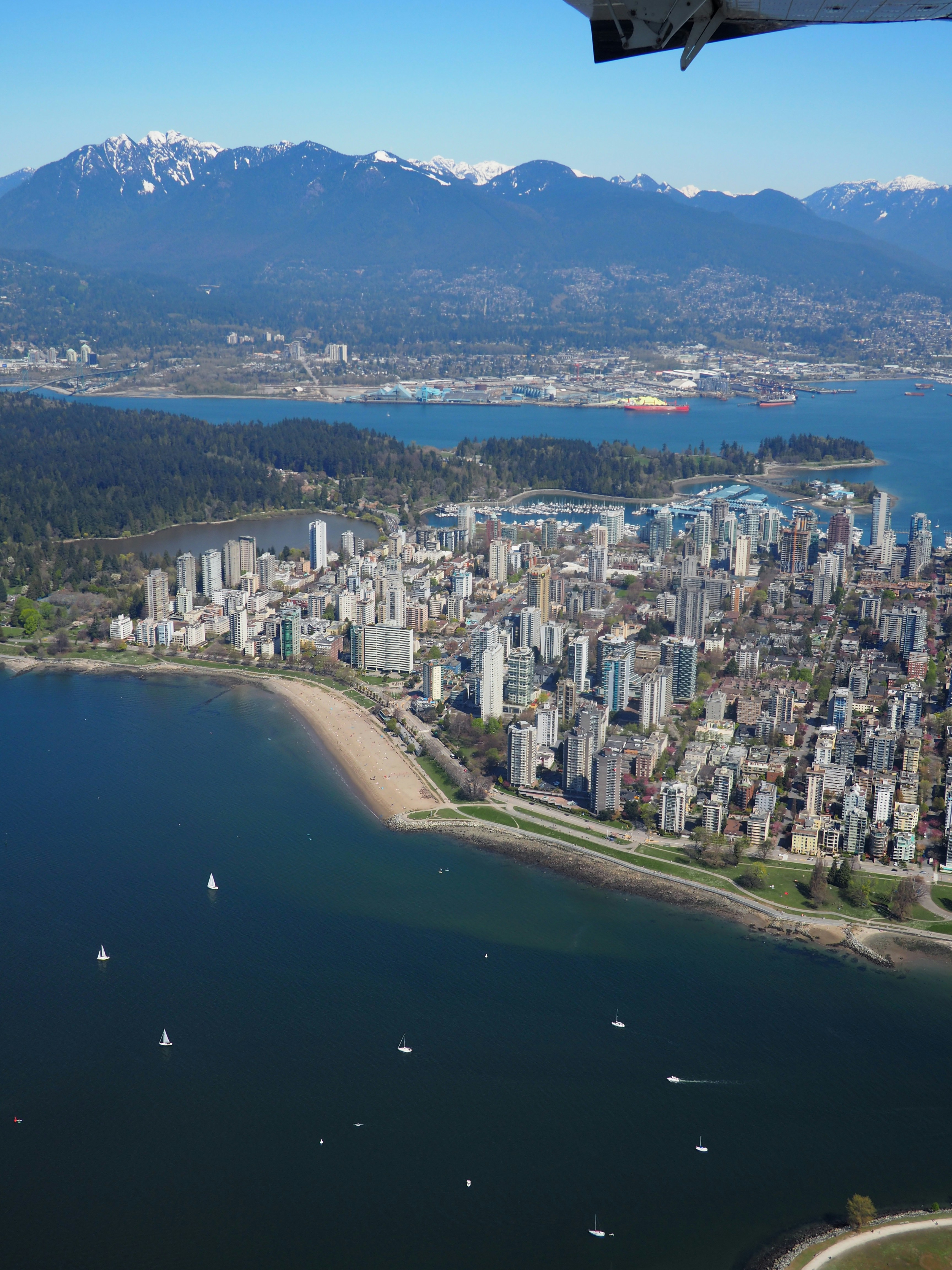



Home Feature Guides
How Homes Work: Guides & Insights
Dive into guides that show what really matters in a house, from construction and materials to design choices and practical usability. Learn what questions to ask, what to watch for, and how to spot hidden issues so every feature—from tennis courts and home gyms to outdoor spaces and custom rooms—delivers the value it promises. These guides give the knowledge to assess every detail like an insider and avoid costly surprises.

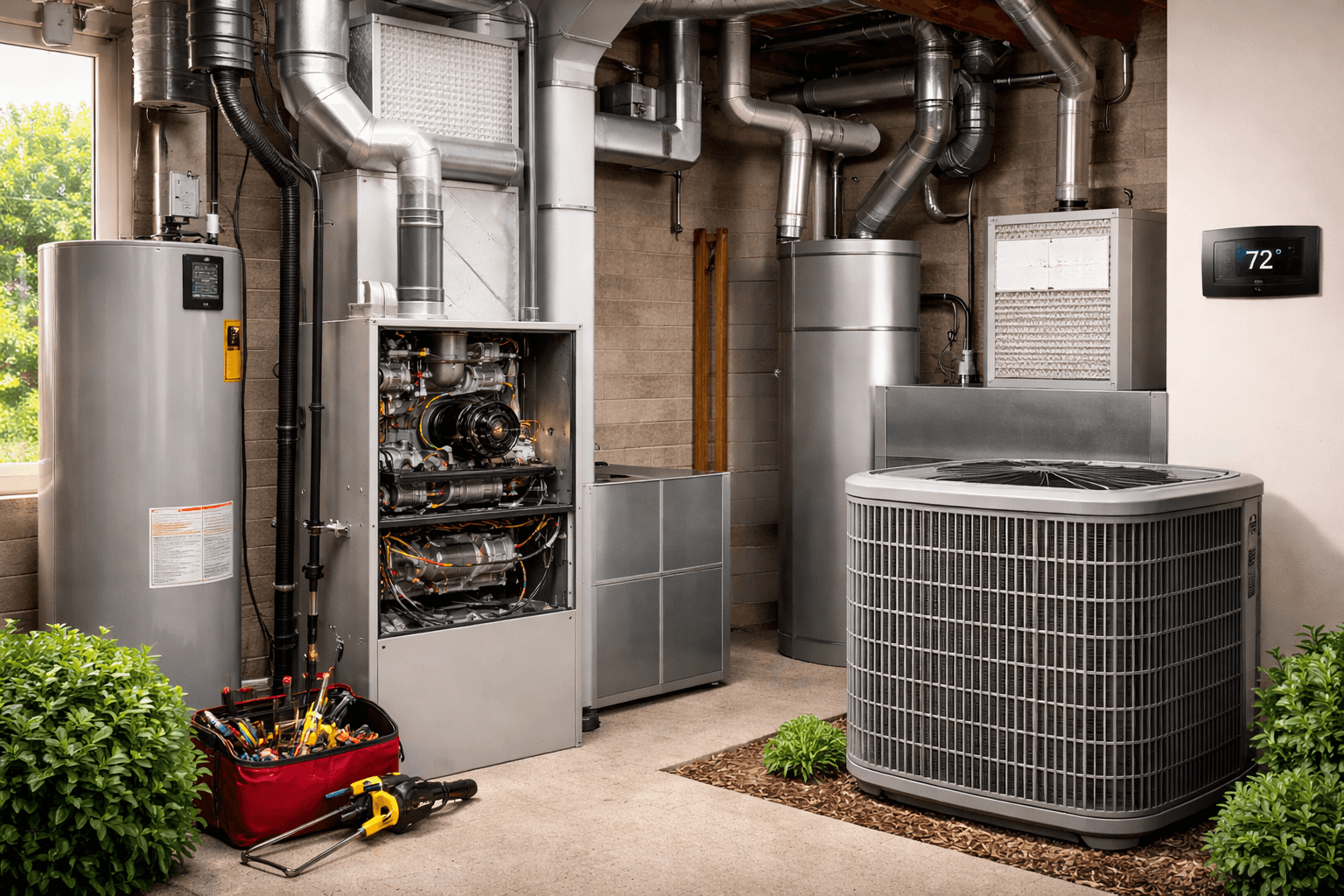




Key Insights


Key Insights








Recent


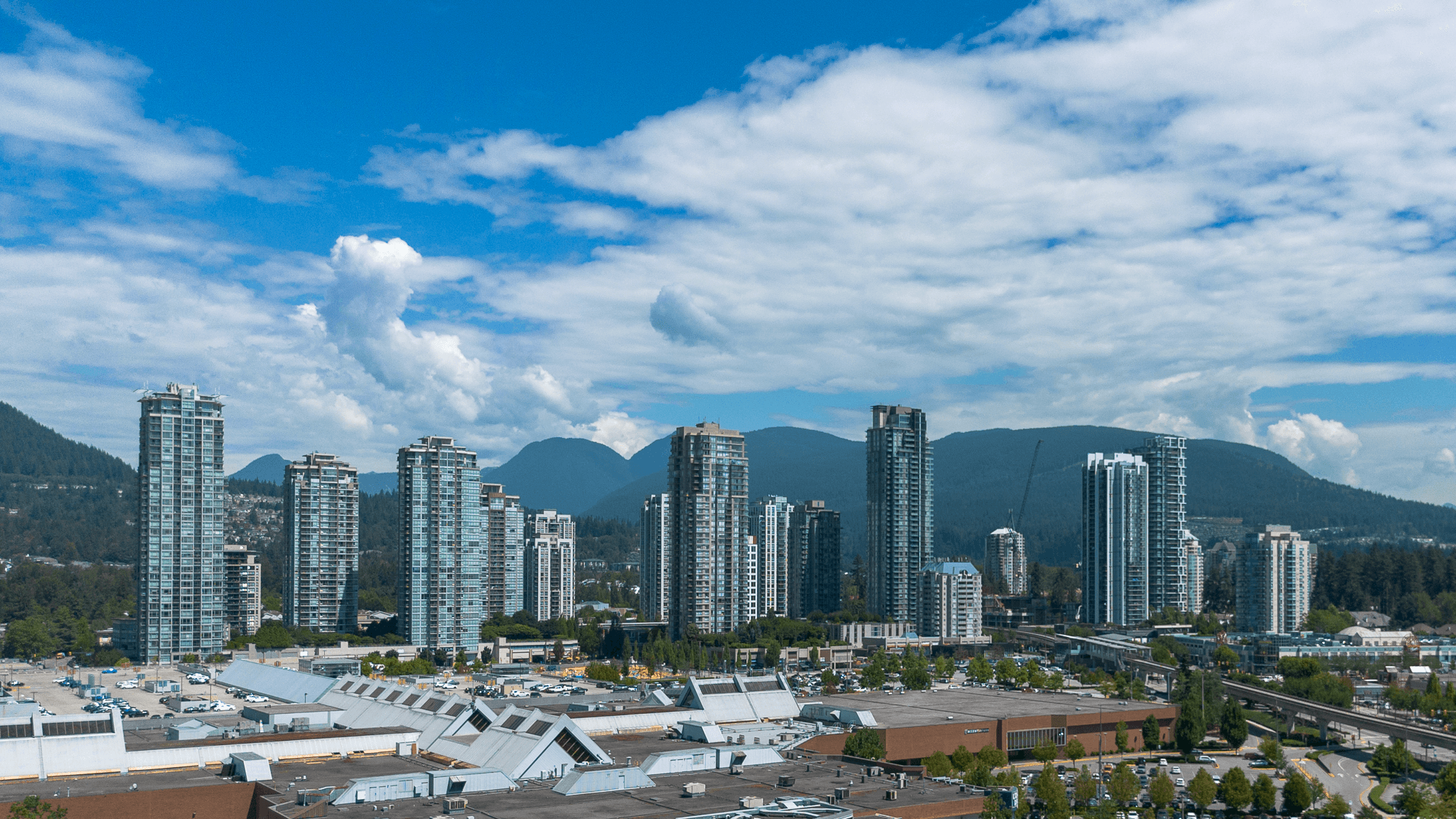
Recent





Victoria Estate Digest is your Go-to source for In-Depth Real Estate Insights, Market Trends, and Expert Analysis in British Columbia.
We cover everything from Housing Affordability and Foreign Investment to Luxury Properties and Emerging Market Opportunities.
Whether you're a Buyer, Seller, or Investor, we provide the Research and Knowledge you need to navigate BC’s ever-changing Real Estate Landscape.