/
/
The Additional School Tax Guide: Why Luxury Homes Are Getting More Expensive to Hold
The Additional School Tax Guide: Why Luxury Homes Are Getting More Expensive to Hold

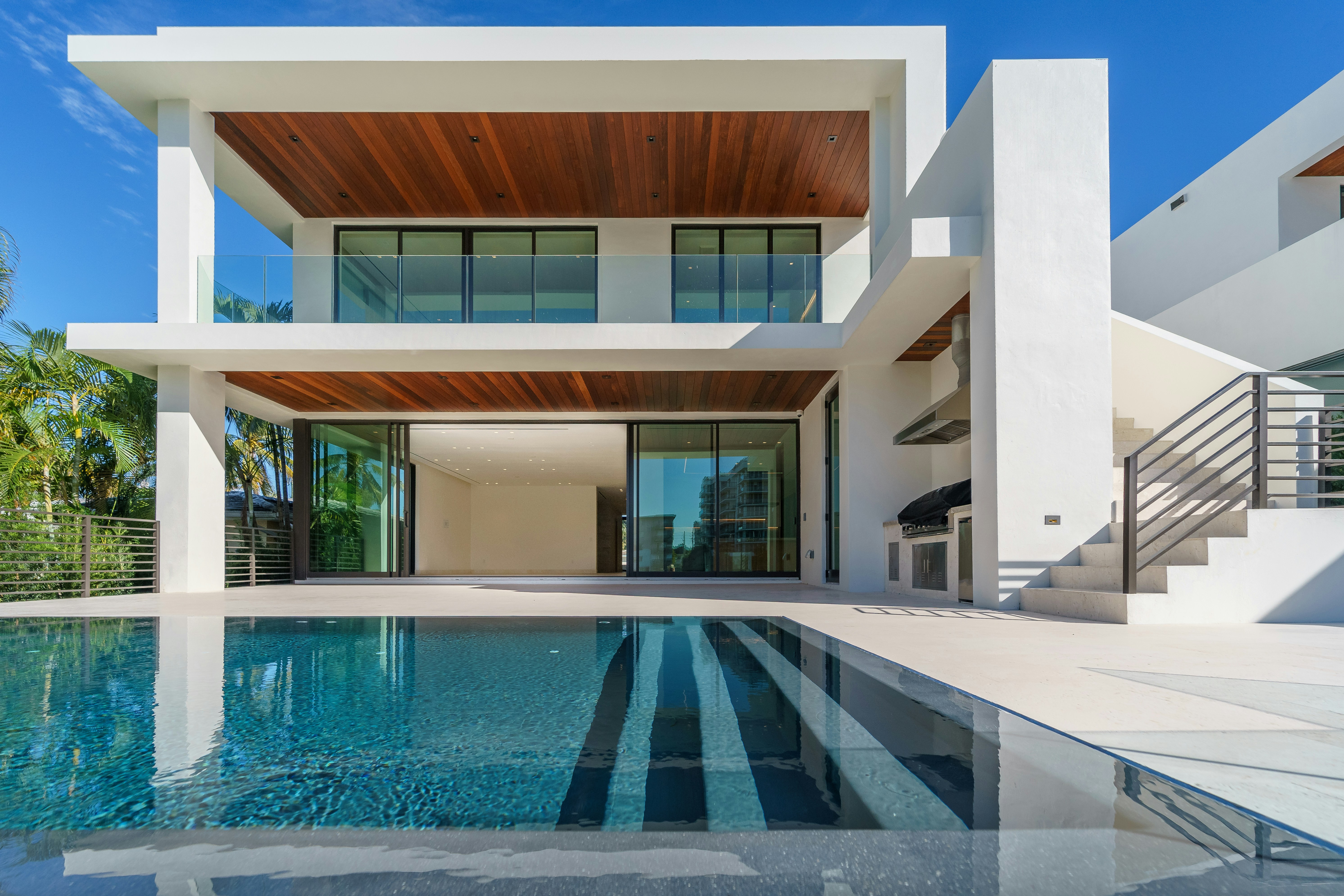
Luxury homes used to be expensive because they were expensive to buy.
That was the obvious part. The mansion cost millions. The land cost millions. The view cost millions. The buyer paid the Property Transfer Tax, survived the notary appointment, moved in, and then got to tell themselves the hard part was over.
That version of Vancouver is dead.
Now the hard part is not only buying the property. It is holding it.
The purchase price is just the cover charge. The carrying cost is where owners get eaten alive.
That is where B.C.’s Additional School Tax matters. It is not the biggest tax in the system. It is not as dramatic as the 4% Speculation and Vacancy Tax for highest-rate owners. It does not have the same media panic as the foreign buyer tax. It does not sound scary because the name includes the word “school,” which makes it feel like a bake sale with enforcement powers.
But it is another annual tax layered onto high-value residential property. It is based on assessed value. It applies every year. And starting in 2027, it gets more expensive.
For luxury homeowners, this is the point: the tax stack is no longer just about what happens when you buy or sell. It is about what happens while you sit there, own the property, and pretend that paper wealth is the same thing as cash flow.
The short version
The Additional School Tax is a provincial property tax layer on high-value residential property in B.C.
It applies only to the portion of residential assessed value above $3 million. It is not charged on the first $3 million. For 2026, the structure is 0.2% on the portion between $3 million and $4 million, and 0.4% on the portion above $4 million. B.C. Budget 2026 increases those rates starting in the 2027 tax year to 0.3% between $3 million and $4 million, and 0.6% above $4 million.
So a $5 million residential property currently faces an Additional School Tax of about $6,000 under the 2026 rate structure. In 2027, using the new rates and the same assessed value, that becomes $9,000.
That is not enough to bankrupt a wealthy owner by itself.
But that is the wrong way to look at it.
The Additional School Tax is not alone. It sits beside ordinary municipal property tax, general provincial school tax, utilities, insurance, maintenance, mortgage interest, possible vacancy taxes, possible Speculation and Vacancy Tax, possible Empty Homes Tax, and the loss of the Home Owner Grant for high-value properties.
It is one more annual carrying-cost layer.
Luxury homes are becoming less like trophies and more like subscription services.
Very expensive subscription services with drainage issues.
It is not charged on the entire value
This is the most important detail.
The Additional School Tax is marginal. It applies only to the value above the threshold.
A $3 million residential property does not pay Additional School Tax simply because it is expensive. The tax starts above $3 million.
A $3.5 million property pays tax on the $500,000 above $3 million.
A $4 million property pays tax on the $1 million between $3 million and $4 million.
A $5 million property pays tax on $1 million between $3 million and $4 million, plus $1 million above $4 million.
The province’s own estimator notes that the Additional School Tax applies only to the portion of value above $3 million.
This matters because people often misunderstand marginal taxes. They hear “tax on homes over $3 million” and think the whole property is taxed at the higher rate. It is not. Only the portion above the threshold is hit.
Normal-person version:
The first $3 million gets left alone by this specific tax.
The next $1 million gets one rate.
Everything above $4 million gets the higher rate.
That is the tax design.
The emotional design is different: it tells luxury owners, “Congratulations, your assessed value is now an annual billing event.”
The 2026 rates versus the 2027 rates
Here is the clean math.
Assessed residential value | 2026 Additional School Tax | 2027 Additional School Tax | Annual increase |
|---|---|---|---|
$3,000,000 | $0 | $0 | $0 |
$3,500,000 | $1,000 | $1,500 | $500 |
$4,000,000 | $2,000 | $3,000 | $1,000 |
$5,000,000 | $6,000 | $9,000 | $3,000 |
$7,500,000 | $16,000 | $24,000 | $8,000 |
$10,000,000 | $26,000 | $39,000 | $13,000 |
$20,000,000 | $66,000 | $99,000 | $33,000 |
The math is simple.
For 2026:
0.2% on $3M–$4M
0.4% above $4M
For 2027 onward:
0.3% on $3M–$4M
0.6% above $4M
B.C. Budget 2026 says the higher 2027 rates apply to residential properties valued over $3 million, including detached homes, stratified condominiums, townhouse units, and most vacant land. For mixed-use property, only the residential portion of taxable assessed value above $3 million is subject to the tax. The budget also estimated that about 2.3% of residential folios are subject to the Additional School Tax.
So no, this is not a tax on every homeowner.
It is a tax on the upper slice of the residential assessment roll.
But in Vancouver, “upper slice” includes a lot of ordinary-looking homes whose owners are not necessarily living ordinary-looking cash-flow lives.
A $5 million home: the example that explains the problem
Take a $5 million residential property.
Under the 2026 rate structure:
$3M to $4M portion:
$1,000,000 × 0.2% = $2,000
Over $4M portion:
$1,000,000 × 0.4% = $4,000
Total 2026 Additional School Tax:
$6,000
Under the 2027 rate structure:
$3M to $4M portion:
$1,000,000 × 0.3% = $3,000
Over $4M portion:
$1,000,000 × 0.6% = $6,000
Total 2027 Additional School Tax:
$9,000
So the increase is $3,000 per year on a $5 million property, assuming the assessment stays the same.
A lot of luxury owners will shrug at $3,000.
That is fine. Shrugging is still legal.
But the issue is not whether $3,000 alone destroys someone. The issue is that the tax stack keeps growing around the property. The $9,000 Additional School Tax is on top of normal property tax, general school tax, city levies, utilities, insurance, maintenance, possible mortgage interest, and any other ownership-specific tax exposure.
A luxury house is not a one-time expense.
It is an annual relationship with invoices.
This is about assessed value, not what you think the house is worth today
The Additional School Tax is tied to assessed value.
That matters because BC Assessment values are not live sale offers. BC Assessment announced that 2026 Lower Mainland assessments reflected market value as of July 1, 2025, and that property owners received notices based on that roll.
This creates an awkward situation in a falling or softening market.
Your property may feel worth less today than the assessed value says.
Buyers may be offering less.
The bank may be appraising lower.
Your realtor may be quietly avoiding eye contact.
But your property tax notice may still use the assessed value that applies for the tax year.
That means a luxury homeowner can be squeezed from two sides:
The market may not pay the old number.
The tax system may still bill based on the assessed number.
That is the special Vancouver magic trick: your house can be worth less when you sell and still expensive when you own.
It applies before Vancouver’s land assessment averaging
This matters for Vancouver owners.
The City of Vancouver says residential properties valued above $3 million before land averaging is applied may be subject to the Additional School Tax.
That means a property owner should not assume local averaging relief removes the Additional School Tax issue.
Land assessment averaging may help phase in certain tax increases in Vancouver, but it is not a magic cloak that hides a high-value property from the provincial Additional School Tax test.
If your residential assessed value is above $3 million, the Additional School Tax question needs to be asked directly.
Not emotionally.
Not hopefully.
Directly.
The tax is annual, not a one-time closing cost
This is the part owners need to feel.
Property Transfer Tax is painful, but it happens when you buy. The Additional School Tax happens while you own.
Every year the property remains above the threshold, the tax can be part of the annual property tax bill.
A one-time tax is a punch.
An annual tax is a subscription.
Luxury homeowners often focus too heavily on purchase costs and not enough on ownership costs. They calculate down payment, mortgage, Property Transfer Tax, legal fees, and moving. Then they move in and discover that the house keeps sending invoices like it has a side business.
The Additional School Tax is one of those invoices.
And starting in 2027, the invoice gets larger.
It stacks on top of regular property taxes
The Additional School Tax is not a replacement for regular property taxes.
It is additional.
In Vancouver, the 2026 residential property tax rate table shows the total residential levy at $3.36394 per $1,000 of taxable value, including the City general levy, provincial school tax, TransLink, BC Assessment Authority, Metro Vancouver, and Municipal Finance Authority levies.
Using that 2026 Vancouver rate only as a rough illustration, a $5 million residential property would have ordinary property taxes of:
$5,000,000 ÷ 1,000 × $3.36394 = $16,819.70
Then, under the 2027 Additional School Tax structure, the same $5 million assessed residential value would create an Additional School Tax of $9,000, before considering future changes to ordinary tax rates, utilities, grants, or other property-specific charges.
Again, this is illustrative. Actual property tax notices depend on the municipality, taxing authorities, assessed value, classification, local rates, utilities, exemptions, and other adjustments.
But the logic is clear:
Regular property tax does not disappear because the Additional School Tax exists.
The Additional School Tax climbs on top.
That is why luxury holding costs are becoming more uncomfortable.
Not because of one line item.
Because of the stack.
The Home Owner Grant does not help luxury owners
For ordinary principal residences, the B.C. Home Owner Grant can provide some property tax relief.
For luxury homes, it usually does nothing.
The province says the 2026 Home Owner Grant threshold is $2,075,000. The grant is reduced by $5 for each $1,000 of assessed value over that threshold, and the regular grant amount becomes zero in Metro Vancouver, the Fraser Valley Regional District, and the Capital Regional District once the residential or partitioned value is over $2,189,000.
So a $3 million-plus property is already far beyond the regular grant phase-out in Metro Vancouver.
That means the owner does not get to soften the blow with the basic Home Owner Grant. In 2026, the basic grant could be as much as $570 in Metro Vancouver, the Fraser Valley Regional District, and the Capital Regional District, but homes above the phase-out threshold lose it.
This is small money compared with luxury property values, but it matters symbolically.
Below the threshold, the province gives modest relief.
Above the threshold, the province says: you are the relief.
A $3.2 million house is not “mansion math” anymore
One of the reasons this tax is politically sensitive is that $3 million does not always look like luxury in Metro Vancouver.
It should. In normal cities, it would. In Vancouver, $3 million can be a nice detached house, a tired detached house on valuable land, a West Side teardown, a North Shore property with a view, a big East Side lot, or a home that a long-time owner bought decades ago for a number that now sounds like a typo.
This is where the politics gets awkward.
The tax is marketed as targeting luxury property. But assessed value does not always equal income. Some owners are cash-rich. Some are not. Some bought recently. Some bought in 1987. Some have huge mortgages. Some have no mortgage. Some are investors. Some are widows in old houses with million-dollar land and normal monthly income.
The tax does not ask whether the house feels luxurious.
It asks what the assessment says.
And in Vancouver, the assessment can make ordinary-looking owners look wealthy on paper.
Paper wealth is still very taxable.
Cash flow is less impressed.
West Vancouver is the warning label
BC Assessment’s 2026 Lower Mainland examples show the typical single-family assessed value in the District of West Vancouver moved from $3,054,000 to $2,910,000, a 5% decline.
That is a revealing number.
The “typical” West Vancouver single-family example fell below $3 million, which means many homes may not hit the Additional School Tax threshold. But West Vancouver also has a huge number of properties well above $3 million, and those homes remain directly exposed.
The same is true across Vancouver’s West Side, Point Grey, Shaughnessy, Kitsilano, Dunbar, Kerrisdale, UBC lands, parts of North Vancouver, Anmore, Belcarra, Whistler, and high-value waterfront or view locations.
The $3 million threshold is not a rarefied billionaire line in Metro Vancouver.
It is a line that many established detached neighbourhoods can touch, cross, fall below, or cross again depending on assessment cycles.
This is why owners need to pay attention. A few percentage points of assessment change can move a property into or out of the tax zone.
The tax is not about whether the owner feels rich.
The roll decides.
The tax is based on the residential portion for mixed-use property
For mixed-use properties, the Additional School Tax applies to the residential portion above the threshold, not necessarily the whole property.
B.C. Budget 2026 states that in the case of a mixed-use property, only the residential portion of the property’s taxable assessed value above $3 million is subject to the tax.
This matters for properties with residential and commercial components, farm/residential combinations, and other mixed classifications.
A property owner should not assume the entire assessed value is taxed if the property includes non-residential classification. But they also should not assume the residential portion is small enough to avoid the tax.
The correct answer is on the assessment and tax notice.
Not in the owner’s optimism.
Vacant land can be caught too
The Additional School Tax is not only about finished mansions.
B.C. Budget 2026 says it applies to most properties in the residential class assessed over $3 million, including detached homes, stratified condominiums or townhouse units, and most vacant land.
That matters in Vancouver because land is often the asset.
A tired structure on valuable dirt can still produce a high assessment. A vacant residential lot can still carry a high assessment. A redevelopment parcel can still be taxed while the owner waits for permits, assembly, financing, zoning clarity, or a buyer willing to pay the fantasy number.
This is another reason carrying costs matter.
Land speculation is not free.
Vacant land does not call the plumber, but it still calls the tax office.
The tax makes assessment appeals more important, but not magical
If your property is assessed over $3 million and you believe the assessment is wrong, the assessment matters more because it can trigger or increase Additional School Tax.
But there is a limit.
You cannot appeal the tax rate just because you dislike it. You challenge the assessment if the assessed value or classification is wrong as of the relevant valuation date. BC Assessment’s 2026 release tells owners who believe their notice does not reflect market value as of July 1, 2025, or who see incorrect information, to contact BC Assessment as soon as possible in January.
So the assessment appeal question is not:
“This tax is unfair, can I complain?”
The stronger question is:
“Was my residential assessed value wrong as of the valuation date?”
If yes, gather evidence.
Comparable sales.
Incorrect square footage.
Wrong classification.
Condition issues.
Development assumptions.
Comparable assessments.
Physical errors.
If no, the tax may be annoying but legally expected.
The tax office is not a feelings department.
Falling assessments can reduce the tax, but rate increases can offset the relief
A falling assessment can reduce Additional School Tax exposure.
If a home assessed at $4.2 million falls to $3.9 million, the amount above $4 million disappears, and the tax drops meaningfully. If a home falls below $3 million, the tax can disappear entirely.
That is the good news.
The bad news is that the 2027 rate increase means a property can face higher rates on the same taxable slice.
A $5 million assessed value produces:
2026: $6,000
2027: $9,000
A 50% increase in the Additional School Tax amount, assuming the same assessed value.
So if the assessment falls, the rate increase may soften the reduction. If the assessment rises, the owner gets hit from both sides: larger taxable value and higher rates.
This is why luxury owners need to stop thinking of taxes as static.
The tax system is moving.
The assessment is moving.
The market is moving.
Your cash flow is supposed to keep up.
Good luck.
The tax hits ownership psychology
The Additional School Tax is not large enough by itself to force most luxury owners to sell.
But it changes the psychology of ownership.
A $9,000 annual additional tax on a $5 million property may not seem dramatic. But add:
Regular property taxes.
Utilities.
Insurance.
Maintenance.
Security.
Landscaping.
Mortgage interest.
Possible vacancy taxes.
Possible Speculation and Vacancy Tax.
Possible Empty Homes Tax.
Lost Home Owner Grant.
Higher deferment interest if deferring.
Suddenly the property feels less like a passive wealth vault and more like a high-maintenance dependent.
The problem is not only the size of one tax.
The problem is that the government is steadily making high-value, under-used, or luxury residential property more expensive to sit on.
This is the same broader pattern as B.C.’s Speculation and Vacancy Tax, which your tax-series notes correctly distinguish from ordinary property tax as an annual tax based on residential use and ownership in B.C.’s major urban centres.
Different tax.
Same message.
Use the housing, occupy the housing, rent the housing, or pay more to hold the housing.
The Additional School Tax versus the Speculation and Vacancy Tax
These two taxes are often mentally lumped together, but they are different.
The Additional School Tax is based on high residential assessed value above $3 million. It can apply to an owner-occupied principal residence if the property is valuable enough.
The Speculation and Vacancy Tax is based on ownership/use status and owner category in designated areas. It is not simply a luxury-value tax. It can be much more expensive for foreign owners, untaxed worldwide earners, and others in the highest-rate category. Budget 2026 increased the highest SVT rate from 3% to 4% for 2027 and later years.
The difference is crucial.
A local owner-occupier in a $5 million principal residence may face Additional School Tax but not SVT if they meet the principal residence exemption and other conditions.
A foreign or untaxed-worldwide-earner owner of a non-exempt $5 million property could face Additional School Tax and SVT.
Using 2027 rates, that could look like:
Additional School Tax:
$9,000
SVT at 4% if no exemption applies:
$5,000,000 × 4% = $200,000
Total before regular property tax and other costs:
$209,000
That is why owners must understand which tax applies and why.
One tax is annoying.
The other can be existential.
The stack is where the danger lives.
The Additional School Tax versus Vancouver Empty Homes Tax
Inside the City of Vancouver, the Empty Homes Tax is another separate layer.
The Additional School Tax applies based on high residential assessed value.
The Empty Homes Tax applies based on property status under Vancouver’s vacancy rules.
A high-value Vancouver principal residence may owe Additional School Tax but not Empty Homes Tax.
A high-value vacant Vancouver property may owe both, depending on facts and exemptions.
The City of Vancouver’s 2026 property tax deadline page shows the Empty Homes Tax declaration and payment calendar separately from ordinary property tax deadlines, and its property tax page notes that residential properties valued above $3 million may be subject to Additional School Tax.
This is the practical owner takeaway:
Do not ask, “Which tax applies?”
Ask, “Which taxes apply together?”
That is the expensive question.
The Additional School Tax versus Property Transfer Tax
Property Transfer Tax is paid when property changes hands. The Additional School Tax is annual.
Both punish high-value residential property, but at different moments.
When buying, B.C. charges the general Property Transfer Tax and then a further 2% on the residential property value over $3 million. The province says if a property has residential property worth over $3 million, a further 2% tax applies to the residential value above $3 million; for mixed class property, it applies only to the residential portion.
So a buyer of a $5 million residential property faces an extra PTT layer on the way in:
$2,000,000 above $3M × 2% = $40,000
Then, as an owner, that same assessed-value zone can create annual Additional School Tax.
Buying luxury is taxed.
Holding luxury is taxed.
Selling luxury may trigger other tax issues depending on facts.
Vancouver luxury real estate is no longer just about having enough money to enter.
It is about having enough cash flow to stay.
The property tax deferment option is less cuddly than before
Some owners, especially older long-term owners, may look at high property taxes and think: defer them.
That can still be an option for eligible owners, but the program became less friendly for newly deferred taxes starting in 2026.
B.C. says taxes deferred for 2026 and subsequent years under the regular and families-with-children programs accrue interest at prime plus 2%, with compound interest. The province’s interest page also says the interest is calculated daily and compounded monthly for 2026 and later deferred taxes.
Eligibility also matters. For the regular program, owners must generally be 55 or older, a surviving spouse, or a person with disabilities, and they must meet property and equity requirements. The property must be the principal residence, and rental homes or second residences are not eligible.
So deferment may help some asset-rich, cash-poor owners.
But it is not free money.
It is a loan against the property.
And starting with 2026 taxes, the interest terms are more commercial and compound monthly.
A luxury homeowner can still defer in some cases.
They just should not pretend the government is doing charity because the house has nice landscaping.
“But my income is not high” does not stop the tax
This tax is based on property value, not income.
That is the political controversy.
An owner can have a high-value home and moderate income. A retired person can own a $4 million house bought decades ago. A widow can live in a valuable property with modest pension income. A family can be house-rich and cash-stretched. The Additional School Tax does not ask whether the owner’s income feels luxury-level.
It asks whether the assessed residential value crosses the threshold.
That does not mean the tax is unfair or fair. It means it is value-based.
The policy logic is that high-value residential property can carry a larger share of the tax burden.
The homeowner logic is often:
“I cannot pay my taxes with assessed value.”
Both can be true.
Unfortunately, the tax notice only needs one of them.
“But my house is down in value” does not automatically solve it
If your assessment falls below $3 million, yes, the Additional School Tax can disappear.
But if your property is still above $3 million, the tax remains.
A property can fall from $5.5 million to $5 million and still owe substantial Additional School Tax. A property can fall from $4.2 million to $3.8 million and still owe tax on the $800,000 above $3 million. A property can feel much poorer on paper and still remain inside the tax zone.
This is another falling-market frustration.
The owner says:
“My property is worth less.”
The tax system says:
“Still over $3 million.”
The owner says:
“But the market is weak.”
The tax system says:
“Still over $3 million.”
The owner says:
“But buyers are lowballing me.”
The tax system says:
“Still over $3 million.”
At some point, the owner begins to understand that tax law is not a conversation.
The tax makes luxury ownership less passive
For years, Vancouver luxury ownership was marketed as almost frictionless wealth preservation.
Buy land.
Wait.
Let scarcity work.
Enjoy the view.
Use the house lightly.
Leave it vacant.
Let the children maybe live there.
Sell later.
This model is under pressure.
The Additional School Tax is one pressure. SVT is another. Vancouver Empty Homes Tax is another. Higher insurance is another. Mortgage renewal pressure is another. Maintenance costs are another. A softer resale market is another. Higher scrutiny of vacancy and occupancy is another.
The luxury owner’s old question was:
“How much is the property worth?”
The new question is:
“How much does it cost to keep?”
That is the shift.
Wealth that does not generate income becomes less comfortable when annual ownership costs rise.
A luxury house does not have to crash in value to become a worse financial asset.
It just has to cost more to hold while the market stops bailing you out.
The tax is small compared with maintenance, but more annoying because it is unavoidable
A $10 million house can easily require tens of thousands per year in maintenance.
Landscaping.
Roof.
Windows.
Drainage.
HVAC.
Security.
Insurance.
Renovations.
Tree work.
Retaining walls.
Pool systems.
Elevators.
Driveways.
Exterior envelope.
The Additional School Tax may be smaller than those costs.
But maintenance at least feels connected to the property. You can see the roof. You can see the landscaping. You can see the new boiler.
Taxes feel different.
Taxes feel like the government noticed you have a valuable asset and sent a bill.
Owners often tolerate maintenance better than taxes because maintenance feels like ownership and taxes feel like punishment.
The tax system does not care.
It sends the notice anyway.
The buyer pool cares about carrying costs now
Luxury buyers are not just looking at purchase price anymore.
They are looking at annual cost.
A buyer considering a $5 million property should ask:
What are the ordinary property taxes?
What is the Additional School Tax?
Will rates rise in 2027?
Is there SVT exposure?
Is there Empty Homes Tax exposure?
Is the property a principal residence?
Is it vacant?
Is it foreign-owned?
Is it held in a corporation or trust?
What is the insurance cost?
What is the maintenance reserve?
Is there a mortgage?
What is the after-tax carrying cost?
What happens if the property sits on resale?
This matters because carrying cost affects buyer demand. A house that costs $50,000 to $100,000 per year to hold before mortgage interest has a different buyer pool from a house that costs $15,000.
In a hot market, buyers ignore carrying costs because appreciation feels like a refund.
In a soft market, buyers read the bill.
That is healthier.
Also less fun for sellers.
The seller pool cares too
The Additional School Tax also affects seller psychology.
A luxury seller who owns a high-value property may not be forced to sell because of a $9,000 or $24,000 additional tax. But if the property is vacant, underused, highly assessed, and sitting in a weak resale market, each annual cost becomes part of the sell-or-hold calculation.
The seller asks:
Do I keep waiting for a better market?
Do I rent it?
Do I occupy it?
Do I sell below my old number?
Do I appeal the assessment?
Do I defer taxes if eligible?
Do I transfer ownership?
Do I redevelop?
Do I absorb the annual cost?
This is where the Additional School Tax becomes one pressure among many.
It may not be the final straw.
But it adds weight to the straw pile.
And Vancouver has a very expensive straw pile.
The luxury listing problem: buyers price the tax stack, sellers price the dream
This is where negotiation gets interesting.
The seller prices the home based on:
Assessment.
Old comparable sales.
View.
Land value.
Renovation cost.
Neighbourhood prestige.
Emotional attachment.
What they need to buy next.
The buyer prices the home based on:
Recent sales.
Financing.
Inspection.
Carrying costs.
Taxes.
Maintenance.
Insurance.
Opportunity cost.
Alternative listings.
The Additional School Tax belongs in the buyer’s calculation.
A buyer looking at a $7.5 million property in 2027 knows the annual Additional School Tax alone is roughly $24,000, assuming that assessed value. Add regular property tax, insurance, maintenance, utilities, mortgage interest, possible vacancy costs, and liquidity risk. The property needs to justify all of that.
If the market is soft, buyers may discount high-holding-cost homes more aggressively.
A seller may think the buyer is lowballing.
The buyer may simply be capitalizing the annual pain.
Different language.
Same result.
The tax increases the cost of holding out
A luxury seller who refuses to reduce price is making a holding-cost bet.
Every month of waiting has costs.
Mortgage interest.
Property tax.
Additional School Tax.
Insurance.
Utilities.
Security.
Landscaping.
Maintenance.
Opportunity cost.
Maybe vacancy tax.
Maybe SVT.
If the property is listed too high, those costs continue while the market watches.
The Additional School Tax is not monthly in the same way a mortgage payment is monthly, but it belongs in the annual cost of delay. A seller who says “we are not in a rush” should calculate what not being in a rush costs.
Sometimes patience is wise.
Sometimes patience is just denial with a gardener.
The tax makes “asset rich, cash poor” more uncomfortable
B.C. has many homeowners with valuable homes and modest income.
The Additional School Tax is uncomfortable for them because it turns illiquid value into cash obligation.
A $4 million house may not feel like a luxury if the owner bought decades ago, has no intention of selling, and lives on a fixed income. But the assessed value still creates the tax.
At $4 million:
2026 Additional School Tax:
$2,000
2027 Additional School Tax:
$3,000
That may not sound huge, but it is on top of all other property taxes and costs. For a fixed-income owner, every additional dollar matters.
At $5 million:
2027 Additional School Tax:
$9,000
At $7.5 million:
2027 Additional School Tax:
$24,000
Now the numbers begin to matter more.
This is where policy meets human reality. A tax aimed at high-value property can catch long-term owners who are wealthy on paper but not necessarily liquid.
The tax system may respond: sell, defer if eligible, or pay.
The homeowner may respond: I do not want to leave.
That tension is political dynamite.
The tax is politically easy because the target is small
B.C. Budget 2026 estimated that about 2.3% of residential folios are subject to the Additional School Tax.
That is a politically useful number.
A tax affecting a small share of high-value properties is easier to sell than a broad-based tax increase. Most voters do not own $3 million-plus homes. Many renters and younger buyers may actively support taxing high-value property more. Even many ordinary homeowners below the threshold may not feel personally exposed.
This is why luxury-property taxes are tempting.
They raise revenue from a politically smaller target.
They sound progressive.
They hit visible wealth.
They do not require the government to say, “Everyone is paying more.”
But politically easy does not mean economically neutral. These taxes change owner behaviour, buyer math, seller psychology, and holding costs. They also create pressure on long-time owners in expensive neighbourhoods.
That is the tradeoff.
The government gets revenue.
Luxury ownership gets less comfortable.
The tax can influence redevelopment decisions
A high-value property owner may ask whether redevelopment, stratification, rental conversion, or sale makes more sense.
The Additional School Tax is based on assessed residential value above $3 million. If a property is redeveloped into multiple strata units, the tax exposure may shift depending on assessed values and ownership. If a property is sold to a developer, the owner exits the annual tax burden. If a large house is converted or redeveloped, the land may support more homes, but the economics must pencil.
Do not oversimplify this.
Zoning reform does not automatically eliminate the tax burden. Redevelopment introduces construction costs, financing, permits, GST, development charges, risk, and time. But higher annual holding costs can make passive landholding less attractive.
A high-value under-used property becomes more expensive to sit on.
That is part of the policy message.
The province is not just taxing luxury.
It is making idle luxury more annoying.
The tax does not care whether the house is mortgaged
Another misconception: owners with large mortgages think the tax should somehow recognize that their equity is lower.
It does not.
The Additional School Tax is based on assessed residential value, not net equity.
A $5 million home with no mortgage and a $5 million home with a $3.5 million mortgage can face the same Additional School Tax if the assessed residential value is the same and the property classification is the same.
That is painful for leveraged luxury buyers.
The tax system sees value.
The bank sees debt.
The owner sees cash flow.
Those three do not always cooperate.
A high mortgage does not reduce the assessment.
A high assessment does not pay the mortgage.
A tax bill does not care about either.
This is why leveraged luxury ownership is much riskier than it looked during the free-money era.
The tax does not care whether the property is easy to sell
A property can be highly assessed and illiquid.
That is one of the great contradictions of luxury real estate.
A $10 million home may have enormous assessed value and a tiny buyer pool. It may be expensive to maintain, expensive to insure, expensive to heat, and difficult to sell quickly without a discount. The Additional School Tax still applies based on assessed residential value.
At $10 million, the 2027 Additional School Tax is approximately:
$3M to $4M:
$1,000,000 × 0.3% = $3,000
Over $4M:
$6,000,000 × 0.6% = $36,000
Total:
$39,000
That is annual.
If the property sits unsold for two years, that is $78,000 in Additional School Tax alone, assuming the same assessed value and rate.
Add regular property tax, insurance, maintenance, utilities, and mortgage interest.
A luxury owner can wait for the “right buyer.”
The tax office will not wait with them for free.
The tax makes high-end stale listings more expensive
A stale listing is already costly.
For luxury listings, the cost is bigger.
If a $7.5 million property sits for a year because the seller is anchored to an old number, the 2027 Additional School Tax alone is about $24,000. Add ordinary taxes, insurance, maintenance, utilities, security, possible mortgage interest, and opportunity cost. The annual cost of waiting may easily reach six figures depending on the property.
Now imagine the seller refuses a serious offer $300,000 below ask.
That refusal might still be rational if the seller has strong market evidence. But if the property then sits another year and the carrying cost is $100,000-plus, the seller’s “discipline” starts to look less impressive.
The market does not only punish overpricing through lower offers.
It punishes overpricing through time.
The Additional School Tax is part of that time cost.
The tax changes luxury rent-versus-sell decisions
Some high-value owners may try to rent rather than sell.
That can make sense if the rent covers costs or if the owner wants to wait out the market. But the rental income must be compared with the full carrying-cost stack.
For a $5 million property:
Additional School Tax in 2027: $9,000
Regular property taxes: potentially tens of thousands, depending on municipality and rates.
Insurance: higher for luxury homes.
Maintenance: significant.
Utilities: significant.
Mortgage interest: potentially enormous.
Vacancy risk: real.
Tenant risk: real.
Rental income may offset some costs, but it may not turn the property into a good investment. Especially if the owner is renting because they cannot sell at the fantasy price.
Renting can be a strategy.
It can also be denial with a lease agreement.
The tax matters to Chinese and Singapore-linked owners too
For international or globally mobile families, the Additional School Tax is one part of the ownership-cost picture.
A Chinese-speaking or Singapore-based owner looking at Vancouver property may focus on foreign buyer rules, Additional Property Transfer Tax, SVT, Empty Homes Tax, rental rules, and federal restrictions. But high-value owner-occupied or non-exempt property may also face Additional School Tax if assessed over $3 million.
For foreign buyers, the bigger issue may be legal eligibility and additional transfer tax at acquisition. For non-resident or globally structured ownership, SVT and vacancy rules may become much more important. But the Additional School Tax is still part of the annual cost of owning luxury residential property in B.C.
The key message for international owners is simple:
Do not compare Vancouver only by purchase price.
Compare the holding regime.
Singapore has ABSD.
B.C. has its own tax stack.
Different systems. Same lesson.
Governments have discovered that expensive housing is an easy place to look for money.
The tax should be in every luxury buyer’s budget
A buyer considering a $3 million-plus residential property should create an annual ownership budget before writing an offer.
Include:
Mortgage payment.
Property tax.
Additional School Tax.
Utilities.
Insurance.
Maintenance.
Repairs.
Landscaping.
Security.
Strata fees if applicable.
Special levies if applicable.
Vacancy tax exposure.
SVT exposure.
Accounting/legal costs if ownership is complex.
Opportunity cost of capital.
This sounds obvious.
It is not.
Many luxury buyers focus on whether they can buy the home, not whether the home is a sensible annual expense.
The Additional School Tax is not the biggest line item, but it forces the right conversation.
What does this property cost to own every year?
Not in theory.
In cash.
The tax should be in every seller’s net analysis too
A luxury seller should calculate the cost of waiting.
If the property is listed today, what does one more year cost?
Regular property tax.
Additional School Tax.
Insurance.
Utilities.
Maintenance.
Mortgage interest.
Vacancy cost.
Security.
Landscaping.
Price-decline risk.
Opportunity cost.
If the annual cost of waiting is $120,000 and the seller refuses to reduce by $100,000, that may be rational only if the seller expects a better outcome soon. If not, the seller may be paying more to hold than they would lose by accepting a realistic offer.
Sellers love focusing on gross sale price.
The smarter calculation is:
Net proceeds after time.
Time is not free.
Especially above $3 million.
The Additional School Tax is small enough to ignore and large enough to matter
That is why it is dangerous.
At $3.5 million, the 2027 tax is $1,500. Many owners will ignore it.
At $5 million, it is $9,000. Noticeable, but not catastrophic.
At $10 million, it is $39,000. Now we are no longer pretending.
At $20 million, it is $99,000. That is a salary. Or a luxury car. Or the annual cost of discovering the government has a very specific opinion about residential assessed value.
The tax grows with value. At the very high end, it becomes a serious annual line item.
For ultra-luxury properties, this is not background noise.
It is part of the ownership thesis.
The tax is a signal about where B.C. policy is going
The Additional School Tax increase is not happening in isolation.
Budget 2026 also changed residential school property tax rate-setting so that, starting in 2026, residential class school property taxes increase based on the three-year average annual change in provincial nominal GDP before the Home Owner Grant, replacing the long-standing policy tied to the previous year’s inflation.
That is a broader property-tax-base decision.
The province is looking at property as a revenue base, especially high-value residential property. It is also increasing SVT for highest-rate owners in 2027. The direction is not subtle.
High-value property is being asked to carry more.
Owners can like this or hate this. But they should not ignore it.
The policy trend is toward higher carrying costs for expensive, under-used, or high-value residential property.
The old model of owning expensive Vancouver property passively and expecting the tax system to be gentle is fading.
The most common mistakes owners make
The first mistake is thinking the tax applies to the whole property value. It does not. It applies only above $3 million.
The second mistake is thinking it applies only to mansions. In Metro Vancouver, many homes that do not feel like mansions can cross the threshold.
The third mistake is forgetting that the 2027 rates are higher.
The fourth mistake is assuming a falling market makes the tax disappear. It only disappears if the residential assessed value falls below the threshold.
The fifth mistake is forgetting the Home Owner Grant is phased out far below $3 million.
The sixth mistake is thinking land averaging solves it.
The seventh mistake is ignoring the tax when calculating seller net proceeds or buyer carrying cost.
The eighth mistake is confusing Additional School Tax with SVT, Empty Homes Tax, or Property Transfer Tax.
The ninth mistake is not checking the residential portion for mixed-use property.
The tenth mistake is treating assessed value as theoretical when the tax bill treats it as very real.
The theme is simple:
Luxury owners keep thinking in asset value.
The tax system thinks in assessed value.
The bank thinks in collateral.
The buyer thinks in net cost.
These numbers are not the same.
The buyer checklist
Before buying a property near or above $3 million, ask:
What is the current assessed residential value?
Is the property above $3 million?
How much Additional School Tax applies under 2026 rates?
How much would apply under 2027 rates?
Is the property mixed-use?
What portion is residential?
Does land assessment averaging affect this?
Does the Home Owner Grant apply? It likely does not at this value.
What are ordinary property taxes?
What are utilities?
Is there SVT exposure?
Is there Empty Homes Tax exposure?
Is the property a principal residence?
Will it be rented?
Is ownership through a company, trust, non-resident, foreign owner, or other structure?
What happens if the assessment rises?
What happens if the property sits vacant?
What is the annual cost of ownership before mortgage?
If you cannot answer these questions, you do not know what the house costs.
You only know the purchase price.
That is not enough.
The seller checklist
Before selling a luxury property, ask:
What is the assessed value?
What Additional School Tax do I pay now?
What will I pay under 2027 rates if I hold?
What is my annual total carrying cost?
Is the property vacant?
Is there SVT or Empty Homes Tax risk?
Does the property qualify for any exemptions?
Would a lower offer today net better than waiting another year?
Can a buyer use tax exposure as negotiation pressure?
Can I reduce assessment through a valid appeal?
Is my asking price based on current market value or old tax value?
Am I treating a tax bill as proof of market value?
How much does one more year of waiting cost?
That last question is the killer.
A luxury seller who does not know the cost of waiting is not negotiating.
They are guessing with a very expensive asset.
The bottom line
The Additional School Tax is not the biggest tax in B.C. real estate.
But it is one of the clearest signs that luxury residential property is getting more expensive to hold.
It applies annually to the residential assessed value above $3 million. In 2027, the rate rises to 0.3% on the portion between $3 million and $4 million and 0.6% above $4 million. It applies to most residential-class properties above the threshold, including detached homes, stratified condos or townhouses, and most vacant land, with mixed-use properties taxed only on the residential portion above $3 million.
The first $3 million is not taxed by this specific tax.
Everything above it is where the meter starts running.
For a $5 million home, the 2027 Additional School Tax is about $9,000. For a $10 million home, about $39,000. For a $20 million home, about $99,000.
That is before ordinary property tax, insurance, maintenance, utilities, mortgage interest, vacancy taxes, SVT, or Vancouver’s Empty Homes Tax.
So the lesson is not that every luxury owner is doomed.
The lesson is that luxury ownership has become a carrying-cost business.
If the property is occupied, affordable to the owner, and held for long-term personal use, maybe the tax is just another line item. Annoying, but manageable.
If the property is vacant, under-used, leveraged, stale, speculative, or owned by someone relying on old Vancouver appreciation mythology, the line item matters more.
Because high-value homes are no longer expensive only when you buy them.
They are expensive every year they allow you to keep them.
And the tax office is very aware of the privilege.
Luxury homes used to be expensive because they were expensive to buy.
That was the obvious part. The mansion cost millions. The land cost millions. The view cost millions. The buyer paid the Property Transfer Tax, survived the notary appointment, moved in, and then got to tell themselves the hard part was over.
That version of Vancouver is dead.
Now the hard part is not only buying the property. It is holding it.
The purchase price is just the cover charge. The carrying cost is where owners get eaten alive.
That is where B.C.’s Additional School Tax matters. It is not the biggest tax in the system. It is not as dramatic as the 4% Speculation and Vacancy Tax for highest-rate owners. It does not have the same media panic as the foreign buyer tax. It does not sound scary because the name includes the word “school,” which makes it feel like a bake sale with enforcement powers.
But it is another annual tax layered onto high-value residential property. It is based on assessed value. It applies every year. And starting in 2027, it gets more expensive.
For luxury homeowners, this is the point: the tax stack is no longer just about what happens when you buy or sell. It is about what happens while you sit there, own the property, and pretend that paper wealth is the same thing as cash flow.
The short version
The Additional School Tax is a provincial property tax layer on high-value residential property in B.C.
It applies only to the portion of residential assessed value above $3 million. It is not charged on the first $3 million. For 2026, the structure is 0.2% on the portion between $3 million and $4 million, and 0.4% on the portion above $4 million. B.C. Budget 2026 increases those rates starting in the 2027 tax year to 0.3% between $3 million and $4 million, and 0.6% above $4 million.
So a $5 million residential property currently faces an Additional School Tax of about $6,000 under the 2026 rate structure. In 2027, using the new rates and the same assessed value, that becomes $9,000.
That is not enough to bankrupt a wealthy owner by itself.
But that is the wrong way to look at it.
The Additional School Tax is not alone. It sits beside ordinary municipal property tax, general provincial school tax, utilities, insurance, maintenance, mortgage interest, possible vacancy taxes, possible Speculation and Vacancy Tax, possible Empty Homes Tax, and the loss of the Home Owner Grant for high-value properties.
It is one more annual carrying-cost layer.
Luxury homes are becoming less like trophies and more like subscription services.
Very expensive subscription services with drainage issues.
It is not charged on the entire value
This is the most important detail.
The Additional School Tax is marginal. It applies only to the value above the threshold.
A $3 million residential property does not pay Additional School Tax simply because it is expensive. The tax starts above $3 million.
A $3.5 million property pays tax on the $500,000 above $3 million.
A $4 million property pays tax on the $1 million between $3 million and $4 million.
A $5 million property pays tax on $1 million between $3 million and $4 million, plus $1 million above $4 million.
The province’s own estimator notes that the Additional School Tax applies only to the portion of value above $3 million.
This matters because people often misunderstand marginal taxes. They hear “tax on homes over $3 million” and think the whole property is taxed at the higher rate. It is not. Only the portion above the threshold is hit.
Normal-person version:
The first $3 million gets left alone by this specific tax.
The next $1 million gets one rate.
Everything above $4 million gets the higher rate.
That is the tax design.
The emotional design is different: it tells luxury owners, “Congratulations, your assessed value is now an annual billing event.”
The 2026 rates versus the 2027 rates
Here is the clean math.
Assessed residential value | 2026 Additional School Tax | 2027 Additional School Tax | Annual increase |
|---|---|---|---|
$3,000,000 | $0 | $0 | $0 |
$3,500,000 | $1,000 | $1,500 | $500 |
$4,000,000 | $2,000 | $3,000 | $1,000 |
$5,000,000 | $6,000 | $9,000 | $3,000 |
$7,500,000 | $16,000 | $24,000 | $8,000 |
$10,000,000 | $26,000 | $39,000 | $13,000 |
$20,000,000 | $66,000 | $99,000 | $33,000 |
The math is simple.
For 2026:
0.2% on $3M–$4M
0.4% above $4M
For 2027 onward:
0.3% on $3M–$4M
0.6% above $4M
B.C. Budget 2026 says the higher 2027 rates apply to residential properties valued over $3 million, including detached homes, stratified condominiums, townhouse units, and most vacant land. For mixed-use property, only the residential portion of taxable assessed value above $3 million is subject to the tax. The budget also estimated that about 2.3% of residential folios are subject to the Additional School Tax.
So no, this is not a tax on every homeowner.
It is a tax on the upper slice of the residential assessment roll.
But in Vancouver, “upper slice” includes a lot of ordinary-looking homes whose owners are not necessarily living ordinary-looking cash-flow lives.
A $5 million home: the example that explains the problem
Take a $5 million residential property.
Under the 2026 rate structure:
$3M to $4M portion:
$1,000,000 × 0.2% = $2,000
Over $4M portion:
$1,000,000 × 0.4% = $4,000
Total 2026 Additional School Tax:
$6,000
Under the 2027 rate structure:
$3M to $4M portion:
$1,000,000 × 0.3% = $3,000
Over $4M portion:
$1,000,000 × 0.6% = $6,000
Total 2027 Additional School Tax:
$9,000
So the increase is $3,000 per year on a $5 million property, assuming the assessment stays the same.
A lot of luxury owners will shrug at $3,000.
That is fine. Shrugging is still legal.
But the issue is not whether $3,000 alone destroys someone. The issue is that the tax stack keeps growing around the property. The $9,000 Additional School Tax is on top of normal property tax, general school tax, city levies, utilities, insurance, maintenance, possible mortgage interest, and any other ownership-specific tax exposure.
A luxury house is not a one-time expense.
It is an annual relationship with invoices.
This is about assessed value, not what you think the house is worth today
The Additional School Tax is tied to assessed value.
That matters because BC Assessment values are not live sale offers. BC Assessment announced that 2026 Lower Mainland assessments reflected market value as of July 1, 2025, and that property owners received notices based on that roll.
This creates an awkward situation in a falling or softening market.
Your property may feel worth less today than the assessed value says.
Buyers may be offering less.
The bank may be appraising lower.
Your realtor may be quietly avoiding eye contact.
But your property tax notice may still use the assessed value that applies for the tax year.
That means a luxury homeowner can be squeezed from two sides:
The market may not pay the old number.
The tax system may still bill based on the assessed number.
That is the special Vancouver magic trick: your house can be worth less when you sell and still expensive when you own.
It applies before Vancouver’s land assessment averaging
This matters for Vancouver owners.
The City of Vancouver says residential properties valued above $3 million before land averaging is applied may be subject to the Additional School Tax.
That means a property owner should not assume local averaging relief removes the Additional School Tax issue.
Land assessment averaging may help phase in certain tax increases in Vancouver, but it is not a magic cloak that hides a high-value property from the provincial Additional School Tax test.
If your residential assessed value is above $3 million, the Additional School Tax question needs to be asked directly.
Not emotionally.
Not hopefully.
Directly.
The tax is annual, not a one-time closing cost
This is the part owners need to feel.
Property Transfer Tax is painful, but it happens when you buy. The Additional School Tax happens while you own.
Every year the property remains above the threshold, the tax can be part of the annual property tax bill.
A one-time tax is a punch.
An annual tax is a subscription.
Luxury homeowners often focus too heavily on purchase costs and not enough on ownership costs. They calculate down payment, mortgage, Property Transfer Tax, legal fees, and moving. Then they move in and discover that the house keeps sending invoices like it has a side business.
The Additional School Tax is one of those invoices.
And starting in 2027, the invoice gets larger.
It stacks on top of regular property taxes
The Additional School Tax is not a replacement for regular property taxes.
It is additional.
In Vancouver, the 2026 residential property tax rate table shows the total residential levy at $3.36394 per $1,000 of taxable value, including the City general levy, provincial school tax, TransLink, BC Assessment Authority, Metro Vancouver, and Municipal Finance Authority levies.
Using that 2026 Vancouver rate only as a rough illustration, a $5 million residential property would have ordinary property taxes of:
$5,000,000 ÷ 1,000 × $3.36394 = $16,819.70
Then, under the 2027 Additional School Tax structure, the same $5 million assessed residential value would create an Additional School Tax of $9,000, before considering future changes to ordinary tax rates, utilities, grants, or other property-specific charges.
Again, this is illustrative. Actual property tax notices depend on the municipality, taxing authorities, assessed value, classification, local rates, utilities, exemptions, and other adjustments.
But the logic is clear:
Regular property tax does not disappear because the Additional School Tax exists.
The Additional School Tax climbs on top.
That is why luxury holding costs are becoming more uncomfortable.
Not because of one line item.
Because of the stack.
The Home Owner Grant does not help luxury owners
For ordinary principal residences, the B.C. Home Owner Grant can provide some property tax relief.
For luxury homes, it usually does nothing.
The province says the 2026 Home Owner Grant threshold is $2,075,000. The grant is reduced by $5 for each $1,000 of assessed value over that threshold, and the regular grant amount becomes zero in Metro Vancouver, the Fraser Valley Regional District, and the Capital Regional District once the residential or partitioned value is over $2,189,000.
So a $3 million-plus property is already far beyond the regular grant phase-out in Metro Vancouver.
That means the owner does not get to soften the blow with the basic Home Owner Grant. In 2026, the basic grant could be as much as $570 in Metro Vancouver, the Fraser Valley Regional District, and the Capital Regional District, but homes above the phase-out threshold lose it.
This is small money compared with luxury property values, but it matters symbolically.
Below the threshold, the province gives modest relief.
Above the threshold, the province says: you are the relief.
A $3.2 million house is not “mansion math” anymore
One of the reasons this tax is politically sensitive is that $3 million does not always look like luxury in Metro Vancouver.
It should. In normal cities, it would. In Vancouver, $3 million can be a nice detached house, a tired detached house on valuable land, a West Side teardown, a North Shore property with a view, a big East Side lot, or a home that a long-time owner bought decades ago for a number that now sounds like a typo.
This is where the politics gets awkward.
The tax is marketed as targeting luxury property. But assessed value does not always equal income. Some owners are cash-rich. Some are not. Some bought recently. Some bought in 1987. Some have huge mortgages. Some have no mortgage. Some are investors. Some are widows in old houses with million-dollar land and normal monthly income.
The tax does not ask whether the house feels luxurious.
It asks what the assessment says.
And in Vancouver, the assessment can make ordinary-looking owners look wealthy on paper.
Paper wealth is still very taxable.
Cash flow is less impressed.
West Vancouver is the warning label
BC Assessment’s 2026 Lower Mainland examples show the typical single-family assessed value in the District of West Vancouver moved from $3,054,000 to $2,910,000, a 5% decline.
That is a revealing number.
The “typical” West Vancouver single-family example fell below $3 million, which means many homes may not hit the Additional School Tax threshold. But West Vancouver also has a huge number of properties well above $3 million, and those homes remain directly exposed.
The same is true across Vancouver’s West Side, Point Grey, Shaughnessy, Kitsilano, Dunbar, Kerrisdale, UBC lands, parts of North Vancouver, Anmore, Belcarra, Whistler, and high-value waterfront or view locations.
The $3 million threshold is not a rarefied billionaire line in Metro Vancouver.
It is a line that many established detached neighbourhoods can touch, cross, fall below, or cross again depending on assessment cycles.
This is why owners need to pay attention. A few percentage points of assessment change can move a property into or out of the tax zone.
The tax is not about whether the owner feels rich.
The roll decides.
The tax is based on the residential portion for mixed-use property
For mixed-use properties, the Additional School Tax applies to the residential portion above the threshold, not necessarily the whole property.
B.C. Budget 2026 states that in the case of a mixed-use property, only the residential portion of the property’s taxable assessed value above $3 million is subject to the tax.
This matters for properties with residential and commercial components, farm/residential combinations, and other mixed classifications.
A property owner should not assume the entire assessed value is taxed if the property includes non-residential classification. But they also should not assume the residential portion is small enough to avoid the tax.
The correct answer is on the assessment and tax notice.
Not in the owner’s optimism.
Vacant land can be caught too
The Additional School Tax is not only about finished mansions.
B.C. Budget 2026 says it applies to most properties in the residential class assessed over $3 million, including detached homes, stratified condominiums or townhouse units, and most vacant land.
That matters in Vancouver because land is often the asset.
A tired structure on valuable dirt can still produce a high assessment. A vacant residential lot can still carry a high assessment. A redevelopment parcel can still be taxed while the owner waits for permits, assembly, financing, zoning clarity, or a buyer willing to pay the fantasy number.
This is another reason carrying costs matter.
Land speculation is not free.
Vacant land does not call the plumber, but it still calls the tax office.
The tax makes assessment appeals more important, but not magical
If your property is assessed over $3 million and you believe the assessment is wrong, the assessment matters more because it can trigger or increase Additional School Tax.
But there is a limit.
You cannot appeal the tax rate just because you dislike it. You challenge the assessment if the assessed value or classification is wrong as of the relevant valuation date. BC Assessment’s 2026 release tells owners who believe their notice does not reflect market value as of July 1, 2025, or who see incorrect information, to contact BC Assessment as soon as possible in January.
So the assessment appeal question is not:
“This tax is unfair, can I complain?”
The stronger question is:
“Was my residential assessed value wrong as of the valuation date?”
If yes, gather evidence.
Comparable sales.
Incorrect square footage.
Wrong classification.
Condition issues.
Development assumptions.
Comparable assessments.
Physical errors.
If no, the tax may be annoying but legally expected.
The tax office is not a feelings department.
Falling assessments can reduce the tax, but rate increases can offset the relief
A falling assessment can reduce Additional School Tax exposure.
If a home assessed at $4.2 million falls to $3.9 million, the amount above $4 million disappears, and the tax drops meaningfully. If a home falls below $3 million, the tax can disappear entirely.
That is the good news.
The bad news is that the 2027 rate increase means a property can face higher rates on the same taxable slice.
A $5 million assessed value produces:
2026: $6,000
2027: $9,000
A 50% increase in the Additional School Tax amount, assuming the same assessed value.
So if the assessment falls, the rate increase may soften the reduction. If the assessment rises, the owner gets hit from both sides: larger taxable value and higher rates.
This is why luxury owners need to stop thinking of taxes as static.
The tax system is moving.
The assessment is moving.
The market is moving.
Your cash flow is supposed to keep up.
Good luck.
The tax hits ownership psychology
The Additional School Tax is not large enough by itself to force most luxury owners to sell.
But it changes the psychology of ownership.
A $9,000 annual additional tax on a $5 million property may not seem dramatic. But add:
Regular property taxes.
Utilities.
Insurance.
Maintenance.
Security.
Landscaping.
Mortgage interest.
Possible vacancy taxes.
Possible Speculation and Vacancy Tax.
Possible Empty Homes Tax.
Lost Home Owner Grant.
Higher deferment interest if deferring.
Suddenly the property feels less like a passive wealth vault and more like a high-maintenance dependent.
The problem is not only the size of one tax.
The problem is that the government is steadily making high-value, under-used, or luxury residential property more expensive to sit on.
This is the same broader pattern as B.C.’s Speculation and Vacancy Tax, which your tax-series notes correctly distinguish from ordinary property tax as an annual tax based on residential use and ownership in B.C.’s major urban centres.
Different tax.
Same message.
Use the housing, occupy the housing, rent the housing, or pay more to hold the housing.
The Additional School Tax versus the Speculation and Vacancy Tax
These two taxes are often mentally lumped together, but they are different.
The Additional School Tax is based on high residential assessed value above $3 million. It can apply to an owner-occupied principal residence if the property is valuable enough.
The Speculation and Vacancy Tax is based on ownership/use status and owner category in designated areas. It is not simply a luxury-value tax. It can be much more expensive for foreign owners, untaxed worldwide earners, and others in the highest-rate category. Budget 2026 increased the highest SVT rate from 3% to 4% for 2027 and later years.
The difference is crucial.
A local owner-occupier in a $5 million principal residence may face Additional School Tax but not SVT if they meet the principal residence exemption and other conditions.
A foreign or untaxed-worldwide-earner owner of a non-exempt $5 million property could face Additional School Tax and SVT.
Using 2027 rates, that could look like:
Additional School Tax:
$9,000
SVT at 4% if no exemption applies:
$5,000,000 × 4% = $200,000
Total before regular property tax and other costs:
$209,000
That is why owners must understand which tax applies and why.
One tax is annoying.
The other can be existential.
The stack is where the danger lives.
The Additional School Tax versus Vancouver Empty Homes Tax
Inside the City of Vancouver, the Empty Homes Tax is another separate layer.
The Additional School Tax applies based on high residential assessed value.
The Empty Homes Tax applies based on property status under Vancouver’s vacancy rules.
A high-value Vancouver principal residence may owe Additional School Tax but not Empty Homes Tax.
A high-value vacant Vancouver property may owe both, depending on facts and exemptions.
The City of Vancouver’s 2026 property tax deadline page shows the Empty Homes Tax declaration and payment calendar separately from ordinary property tax deadlines, and its property tax page notes that residential properties valued above $3 million may be subject to Additional School Tax.
This is the practical owner takeaway:
Do not ask, “Which tax applies?”
Ask, “Which taxes apply together?”
That is the expensive question.
The Additional School Tax versus Property Transfer Tax
Property Transfer Tax is paid when property changes hands. The Additional School Tax is annual.
Both punish high-value residential property, but at different moments.
When buying, B.C. charges the general Property Transfer Tax and then a further 2% on the residential property value over $3 million. The province says if a property has residential property worth over $3 million, a further 2% tax applies to the residential value above $3 million; for mixed class property, it applies only to the residential portion.
So a buyer of a $5 million residential property faces an extra PTT layer on the way in:
$2,000,000 above $3M × 2% = $40,000
Then, as an owner, that same assessed-value zone can create annual Additional School Tax.
Buying luxury is taxed.
Holding luxury is taxed.
Selling luxury may trigger other tax issues depending on facts.
Vancouver luxury real estate is no longer just about having enough money to enter.
It is about having enough cash flow to stay.
The property tax deferment option is less cuddly than before
Some owners, especially older long-term owners, may look at high property taxes and think: defer them.
That can still be an option for eligible owners, but the program became less friendly for newly deferred taxes starting in 2026.
B.C. says taxes deferred for 2026 and subsequent years under the regular and families-with-children programs accrue interest at prime plus 2%, with compound interest. The province’s interest page also says the interest is calculated daily and compounded monthly for 2026 and later deferred taxes.
Eligibility also matters. For the regular program, owners must generally be 55 or older, a surviving spouse, or a person with disabilities, and they must meet property and equity requirements. The property must be the principal residence, and rental homes or second residences are not eligible.
So deferment may help some asset-rich, cash-poor owners.
But it is not free money.
It is a loan against the property.
And starting with 2026 taxes, the interest terms are more commercial and compound monthly.
A luxury homeowner can still defer in some cases.
They just should not pretend the government is doing charity because the house has nice landscaping.
“But my income is not high” does not stop the tax
This tax is based on property value, not income.
That is the political controversy.
An owner can have a high-value home and moderate income. A retired person can own a $4 million house bought decades ago. A widow can live in a valuable property with modest pension income. A family can be house-rich and cash-stretched. The Additional School Tax does not ask whether the owner’s income feels luxury-level.
It asks whether the assessed residential value crosses the threshold.
That does not mean the tax is unfair or fair. It means it is value-based.
The policy logic is that high-value residential property can carry a larger share of the tax burden.
The homeowner logic is often:
“I cannot pay my taxes with assessed value.”
Both can be true.
Unfortunately, the tax notice only needs one of them.
“But my house is down in value” does not automatically solve it
If your assessment falls below $3 million, yes, the Additional School Tax can disappear.
But if your property is still above $3 million, the tax remains.
A property can fall from $5.5 million to $5 million and still owe substantial Additional School Tax. A property can fall from $4.2 million to $3.8 million and still owe tax on the $800,000 above $3 million. A property can feel much poorer on paper and still remain inside the tax zone.
This is another falling-market frustration.
The owner says:
“My property is worth less.”
The tax system says:
“Still over $3 million.”
The owner says:
“But the market is weak.”
The tax system says:
“Still over $3 million.”
The owner says:
“But buyers are lowballing me.”
The tax system says:
“Still over $3 million.”
At some point, the owner begins to understand that tax law is not a conversation.
The tax makes luxury ownership less passive
For years, Vancouver luxury ownership was marketed as almost frictionless wealth preservation.
Buy land.
Wait.
Let scarcity work.
Enjoy the view.
Use the house lightly.
Leave it vacant.
Let the children maybe live there.
Sell later.
This model is under pressure.
The Additional School Tax is one pressure. SVT is another. Vancouver Empty Homes Tax is another. Higher insurance is another. Mortgage renewal pressure is another. Maintenance costs are another. A softer resale market is another. Higher scrutiny of vacancy and occupancy is another.
The luxury owner’s old question was:
“How much is the property worth?”
The new question is:
“How much does it cost to keep?”
That is the shift.
Wealth that does not generate income becomes less comfortable when annual ownership costs rise.
A luxury house does not have to crash in value to become a worse financial asset.
It just has to cost more to hold while the market stops bailing you out.
The tax is small compared with maintenance, but more annoying because it is unavoidable
A $10 million house can easily require tens of thousands per year in maintenance.
Landscaping.
Roof.
Windows.
Drainage.
HVAC.
Security.
Insurance.
Renovations.
Tree work.
Retaining walls.
Pool systems.
Elevators.
Driveways.
Exterior envelope.
The Additional School Tax may be smaller than those costs.
But maintenance at least feels connected to the property. You can see the roof. You can see the landscaping. You can see the new boiler.
Taxes feel different.
Taxes feel like the government noticed you have a valuable asset and sent a bill.
Owners often tolerate maintenance better than taxes because maintenance feels like ownership and taxes feel like punishment.
The tax system does not care.
It sends the notice anyway.
The buyer pool cares about carrying costs now
Luxury buyers are not just looking at purchase price anymore.
They are looking at annual cost.
A buyer considering a $5 million property should ask:
What are the ordinary property taxes?
What is the Additional School Tax?
Will rates rise in 2027?
Is there SVT exposure?
Is there Empty Homes Tax exposure?
Is the property a principal residence?
Is it vacant?
Is it foreign-owned?
Is it held in a corporation or trust?
What is the insurance cost?
What is the maintenance reserve?
Is there a mortgage?
What is the after-tax carrying cost?
What happens if the property sits on resale?
This matters because carrying cost affects buyer demand. A house that costs $50,000 to $100,000 per year to hold before mortgage interest has a different buyer pool from a house that costs $15,000.
In a hot market, buyers ignore carrying costs because appreciation feels like a refund.
In a soft market, buyers read the bill.
That is healthier.
Also less fun for sellers.
The seller pool cares too
The Additional School Tax also affects seller psychology.
A luxury seller who owns a high-value property may not be forced to sell because of a $9,000 or $24,000 additional tax. But if the property is vacant, underused, highly assessed, and sitting in a weak resale market, each annual cost becomes part of the sell-or-hold calculation.
The seller asks:
Do I keep waiting for a better market?
Do I rent it?
Do I occupy it?
Do I sell below my old number?
Do I appeal the assessment?
Do I defer taxes if eligible?
Do I transfer ownership?
Do I redevelop?
Do I absorb the annual cost?
This is where the Additional School Tax becomes one pressure among many.
It may not be the final straw.
But it adds weight to the straw pile.
And Vancouver has a very expensive straw pile.
The luxury listing problem: buyers price the tax stack, sellers price the dream
This is where negotiation gets interesting.
The seller prices the home based on:
Assessment.
Old comparable sales.
View.
Land value.
Renovation cost.
Neighbourhood prestige.
Emotional attachment.
What they need to buy next.
The buyer prices the home based on:
Recent sales.
Financing.
Inspection.
Carrying costs.
Taxes.
Maintenance.
Insurance.
Opportunity cost.
Alternative listings.
The Additional School Tax belongs in the buyer’s calculation.
A buyer looking at a $7.5 million property in 2027 knows the annual Additional School Tax alone is roughly $24,000, assuming that assessed value. Add regular property tax, insurance, maintenance, utilities, mortgage interest, possible vacancy costs, and liquidity risk. The property needs to justify all of that.
If the market is soft, buyers may discount high-holding-cost homes more aggressively.
A seller may think the buyer is lowballing.
The buyer may simply be capitalizing the annual pain.
Different language.
Same result.
The tax increases the cost of holding out
A luxury seller who refuses to reduce price is making a holding-cost bet.
Every month of waiting has costs.
Mortgage interest.
Property tax.
Additional School Tax.
Insurance.
Utilities.
Security.
Landscaping.
Maintenance.
Opportunity cost.
Maybe vacancy tax.
Maybe SVT.
If the property is listed too high, those costs continue while the market watches.
The Additional School Tax is not monthly in the same way a mortgage payment is monthly, but it belongs in the annual cost of delay. A seller who says “we are not in a rush” should calculate what not being in a rush costs.
Sometimes patience is wise.
Sometimes patience is just denial with a gardener.
The tax makes “asset rich, cash poor” more uncomfortable
B.C. has many homeowners with valuable homes and modest income.
The Additional School Tax is uncomfortable for them because it turns illiquid value into cash obligation.
A $4 million house may not feel like a luxury if the owner bought decades ago, has no intention of selling, and lives on a fixed income. But the assessed value still creates the tax.
At $4 million:
2026 Additional School Tax:
$2,000
2027 Additional School Tax:
$3,000
That may not sound huge, but it is on top of all other property taxes and costs. For a fixed-income owner, every additional dollar matters.
At $5 million:
2027 Additional School Tax:
$9,000
At $7.5 million:
2027 Additional School Tax:
$24,000
Now the numbers begin to matter more.
This is where policy meets human reality. A tax aimed at high-value property can catch long-term owners who are wealthy on paper but not necessarily liquid.
The tax system may respond: sell, defer if eligible, or pay.
The homeowner may respond: I do not want to leave.
That tension is political dynamite.
The tax is politically easy because the target is small
B.C. Budget 2026 estimated that about 2.3% of residential folios are subject to the Additional School Tax.
That is a politically useful number.
A tax affecting a small share of high-value properties is easier to sell than a broad-based tax increase. Most voters do not own $3 million-plus homes. Many renters and younger buyers may actively support taxing high-value property more. Even many ordinary homeowners below the threshold may not feel personally exposed.
This is why luxury-property taxes are tempting.
They raise revenue from a politically smaller target.
They sound progressive.
They hit visible wealth.
They do not require the government to say, “Everyone is paying more.”
But politically easy does not mean economically neutral. These taxes change owner behaviour, buyer math, seller psychology, and holding costs. They also create pressure on long-time owners in expensive neighbourhoods.
That is the tradeoff.
The government gets revenue.
Luxury ownership gets less comfortable.
The tax can influence redevelopment decisions
A high-value property owner may ask whether redevelopment, stratification, rental conversion, or sale makes more sense.
The Additional School Tax is based on assessed residential value above $3 million. If a property is redeveloped into multiple strata units, the tax exposure may shift depending on assessed values and ownership. If a property is sold to a developer, the owner exits the annual tax burden. If a large house is converted or redeveloped, the land may support more homes, but the economics must pencil.
Do not oversimplify this.
Zoning reform does not automatically eliminate the tax burden. Redevelopment introduces construction costs, financing, permits, GST, development charges, risk, and time. But higher annual holding costs can make passive landholding less attractive.
A high-value under-used property becomes more expensive to sit on.
That is part of the policy message.
The province is not just taxing luxury.
It is making idle luxury more annoying.
The tax does not care whether the house is mortgaged
Another misconception: owners with large mortgages think the tax should somehow recognize that their equity is lower.
It does not.
The Additional School Tax is based on assessed residential value, not net equity.
A $5 million home with no mortgage and a $5 million home with a $3.5 million mortgage can face the same Additional School Tax if the assessed residential value is the same and the property classification is the same.
That is painful for leveraged luxury buyers.
The tax system sees value.
The bank sees debt.
The owner sees cash flow.
Those three do not always cooperate.
A high mortgage does not reduce the assessment.
A high assessment does not pay the mortgage.
A tax bill does not care about either.
This is why leveraged luxury ownership is much riskier than it looked during the free-money era.
The tax does not care whether the property is easy to sell
A property can be highly assessed and illiquid.
That is one of the great contradictions of luxury real estate.
A $10 million home may have enormous assessed value and a tiny buyer pool. It may be expensive to maintain, expensive to insure, expensive to heat, and difficult to sell quickly without a discount. The Additional School Tax still applies based on assessed residential value.
At $10 million, the 2027 Additional School Tax is approximately:
$3M to $4M:
$1,000,000 × 0.3% = $3,000
Over $4M:
$6,000,000 × 0.6% = $36,000
Total:
$39,000
That is annual.
If the property sits unsold for two years, that is $78,000 in Additional School Tax alone, assuming the same assessed value and rate.
Add regular property tax, insurance, maintenance, utilities, and mortgage interest.
A luxury owner can wait for the “right buyer.”
The tax office will not wait with them for free.
The tax makes high-end stale listings more expensive
A stale listing is already costly.
For luxury listings, the cost is bigger.
If a $7.5 million property sits for a year because the seller is anchored to an old number, the 2027 Additional School Tax alone is about $24,000. Add ordinary taxes, insurance, maintenance, utilities, security, possible mortgage interest, and opportunity cost. The annual cost of waiting may easily reach six figures depending on the property.
Now imagine the seller refuses a serious offer $300,000 below ask.
That refusal might still be rational if the seller has strong market evidence. But if the property then sits another year and the carrying cost is $100,000-plus, the seller’s “discipline” starts to look less impressive.
The market does not only punish overpricing through lower offers.
It punishes overpricing through time.
The Additional School Tax is part of that time cost.
The tax changes luxury rent-versus-sell decisions
Some high-value owners may try to rent rather than sell.
That can make sense if the rent covers costs or if the owner wants to wait out the market. But the rental income must be compared with the full carrying-cost stack.
For a $5 million property:
Additional School Tax in 2027: $9,000
Regular property taxes: potentially tens of thousands, depending on municipality and rates.
Insurance: higher for luxury homes.
Maintenance: significant.
Utilities: significant.
Mortgage interest: potentially enormous.
Vacancy risk: real.
Tenant risk: real.
Rental income may offset some costs, but it may not turn the property into a good investment. Especially if the owner is renting because they cannot sell at the fantasy price.
Renting can be a strategy.
It can also be denial with a lease agreement.
The tax matters to Chinese and Singapore-linked owners too
For international or globally mobile families, the Additional School Tax is one part of the ownership-cost picture.
A Chinese-speaking or Singapore-based owner looking at Vancouver property may focus on foreign buyer rules, Additional Property Transfer Tax, SVT, Empty Homes Tax, rental rules, and federal restrictions. But high-value owner-occupied or non-exempt property may also face Additional School Tax if assessed over $3 million.
For foreign buyers, the bigger issue may be legal eligibility and additional transfer tax at acquisition. For non-resident or globally structured ownership, SVT and vacancy rules may become much more important. But the Additional School Tax is still part of the annual cost of owning luxury residential property in B.C.
The key message for international owners is simple:
Do not compare Vancouver only by purchase price.
Compare the holding regime.
Singapore has ABSD.
B.C. has its own tax stack.
Different systems. Same lesson.
Governments have discovered that expensive housing is an easy place to look for money.
The tax should be in every luxury buyer’s budget
A buyer considering a $3 million-plus residential property should create an annual ownership budget before writing an offer.
Include:
Mortgage payment.
Property tax.
Additional School Tax.
Utilities.
Insurance.
Maintenance.
Repairs.
Landscaping.
Security.
Strata fees if applicable.
Special levies if applicable.
Vacancy tax exposure.
SVT exposure.
Accounting/legal costs if ownership is complex.
Opportunity cost of capital.
This sounds obvious.
It is not.
Many luxury buyers focus on whether they can buy the home, not whether the home is a sensible annual expense.
The Additional School Tax is not the biggest line item, but it forces the right conversation.
What does this property cost to own every year?
Not in theory.
In cash.
The tax should be in every seller’s net analysis too
A luxury seller should calculate the cost of waiting.
If the property is listed today, what does one more year cost?
Regular property tax.
Additional School Tax.
Insurance.
Utilities.
Maintenance.
Mortgage interest.
Vacancy cost.
Security.
Landscaping.
Price-decline risk.
Opportunity cost.
If the annual cost of waiting is $120,000 and the seller refuses to reduce by $100,000, that may be rational only if the seller expects a better outcome soon. If not, the seller may be paying more to hold than they would lose by accepting a realistic offer.
Sellers love focusing on gross sale price.
The smarter calculation is:
Net proceeds after time.
Time is not free.
Especially above $3 million.
The Additional School Tax is small enough to ignore and large enough to matter
That is why it is dangerous.
At $3.5 million, the 2027 tax is $1,500. Many owners will ignore it.
At $5 million, it is $9,000. Noticeable, but not catastrophic.
At $10 million, it is $39,000. Now we are no longer pretending.
At $20 million, it is $99,000. That is a salary. Or a luxury car. Or the annual cost of discovering the government has a very specific opinion about residential assessed value.
The tax grows with value. At the very high end, it becomes a serious annual line item.
For ultra-luxury properties, this is not background noise.
It is part of the ownership thesis.
The tax is a signal about where B.C. policy is going
The Additional School Tax increase is not happening in isolation.
Budget 2026 also changed residential school property tax rate-setting so that, starting in 2026, residential class school property taxes increase based on the three-year average annual change in provincial nominal GDP before the Home Owner Grant, replacing the long-standing policy tied to the previous year’s inflation.
That is a broader property-tax-base decision.
The province is looking at property as a revenue base, especially high-value residential property. It is also increasing SVT for highest-rate owners in 2027. The direction is not subtle.
High-value property is being asked to carry more.
Owners can like this or hate this. But they should not ignore it.
The policy trend is toward higher carrying costs for expensive, under-used, or high-value residential property.
The old model of owning expensive Vancouver property passively and expecting the tax system to be gentle is fading.
The most common mistakes owners make
The first mistake is thinking the tax applies to the whole property value. It does not. It applies only above $3 million.
The second mistake is thinking it applies only to mansions. In Metro Vancouver, many homes that do not feel like mansions can cross the threshold.
The third mistake is forgetting that the 2027 rates are higher.
The fourth mistake is assuming a falling market makes the tax disappear. It only disappears if the residential assessed value falls below the threshold.
The fifth mistake is forgetting the Home Owner Grant is phased out far below $3 million.
The sixth mistake is thinking land averaging solves it.
The seventh mistake is ignoring the tax when calculating seller net proceeds or buyer carrying cost.
The eighth mistake is confusing Additional School Tax with SVT, Empty Homes Tax, or Property Transfer Tax.
The ninth mistake is not checking the residential portion for mixed-use property.
The tenth mistake is treating assessed value as theoretical when the tax bill treats it as very real.
The theme is simple:
Luxury owners keep thinking in asset value.
The tax system thinks in assessed value.
The bank thinks in collateral.
The buyer thinks in net cost.
These numbers are not the same.
The buyer checklist
Before buying a property near or above $3 million, ask:
What is the current assessed residential value?
Is the property above $3 million?
How much Additional School Tax applies under 2026 rates?
How much would apply under 2027 rates?
Is the property mixed-use?
What portion is residential?
Does land assessment averaging affect this?
Does the Home Owner Grant apply? It likely does not at this value.
What are ordinary property taxes?
What are utilities?
Is there SVT exposure?
Is there Empty Homes Tax exposure?
Is the property a principal residence?
Will it be rented?
Is ownership through a company, trust, non-resident, foreign owner, or other structure?
What happens if the assessment rises?
What happens if the property sits vacant?
What is the annual cost of ownership before mortgage?
If you cannot answer these questions, you do not know what the house costs.
You only know the purchase price.
That is not enough.
The seller checklist
Before selling a luxury property, ask:
What is the assessed value?
What Additional School Tax do I pay now?
What will I pay under 2027 rates if I hold?
What is my annual total carrying cost?
Is the property vacant?
Is there SVT or Empty Homes Tax risk?
Does the property qualify for any exemptions?
Would a lower offer today net better than waiting another year?
Can a buyer use tax exposure as negotiation pressure?
Can I reduce assessment through a valid appeal?
Is my asking price based on current market value or old tax value?
Am I treating a tax bill as proof of market value?
How much does one more year of waiting cost?
That last question is the killer.
A luxury seller who does not know the cost of waiting is not negotiating.
They are guessing with a very expensive asset.
The bottom line
The Additional School Tax is not the biggest tax in B.C. real estate.
But it is one of the clearest signs that luxury residential property is getting more expensive to hold.
It applies annually to the residential assessed value above $3 million. In 2027, the rate rises to 0.3% on the portion between $3 million and $4 million and 0.6% above $4 million. It applies to most residential-class properties above the threshold, including detached homes, stratified condos or townhouses, and most vacant land, with mixed-use properties taxed only on the residential portion above $3 million.
The first $3 million is not taxed by this specific tax.
Everything above it is where the meter starts running.
For a $5 million home, the 2027 Additional School Tax is about $9,000. For a $10 million home, about $39,000. For a $20 million home, about $99,000.
That is before ordinary property tax, insurance, maintenance, utilities, mortgage interest, vacancy taxes, SVT, or Vancouver’s Empty Homes Tax.
So the lesson is not that every luxury owner is doomed.
The lesson is that luxury ownership has become a carrying-cost business.
If the property is occupied, affordable to the owner, and held for long-term personal use, maybe the tax is just another line item. Annoying, but manageable.
If the property is vacant, under-used, leveraged, stale, speculative, or owned by someone relying on old Vancouver appreciation mythology, the line item matters more.
Because high-value homes are no longer expensive only when you buy them.
They are expensive every year they allow you to keep them.
And the tax office is very aware of the privilege.
Related Posts


More Articles

Home Feature Guides
How Homes Work: Guides & Insights
Dive into guides that show what really matters in a house, from construction and materials to design choices and practical usability. Learn what questions to ask, what to watch for, and how to spot hidden issues so every feature—from tennis courts and home gyms to outdoor spaces and custom rooms—delivers the value it promises. These guides give the knowledge to assess every detail like an insider and avoid costly surprises.



Key Insights



Key Insights



Recent
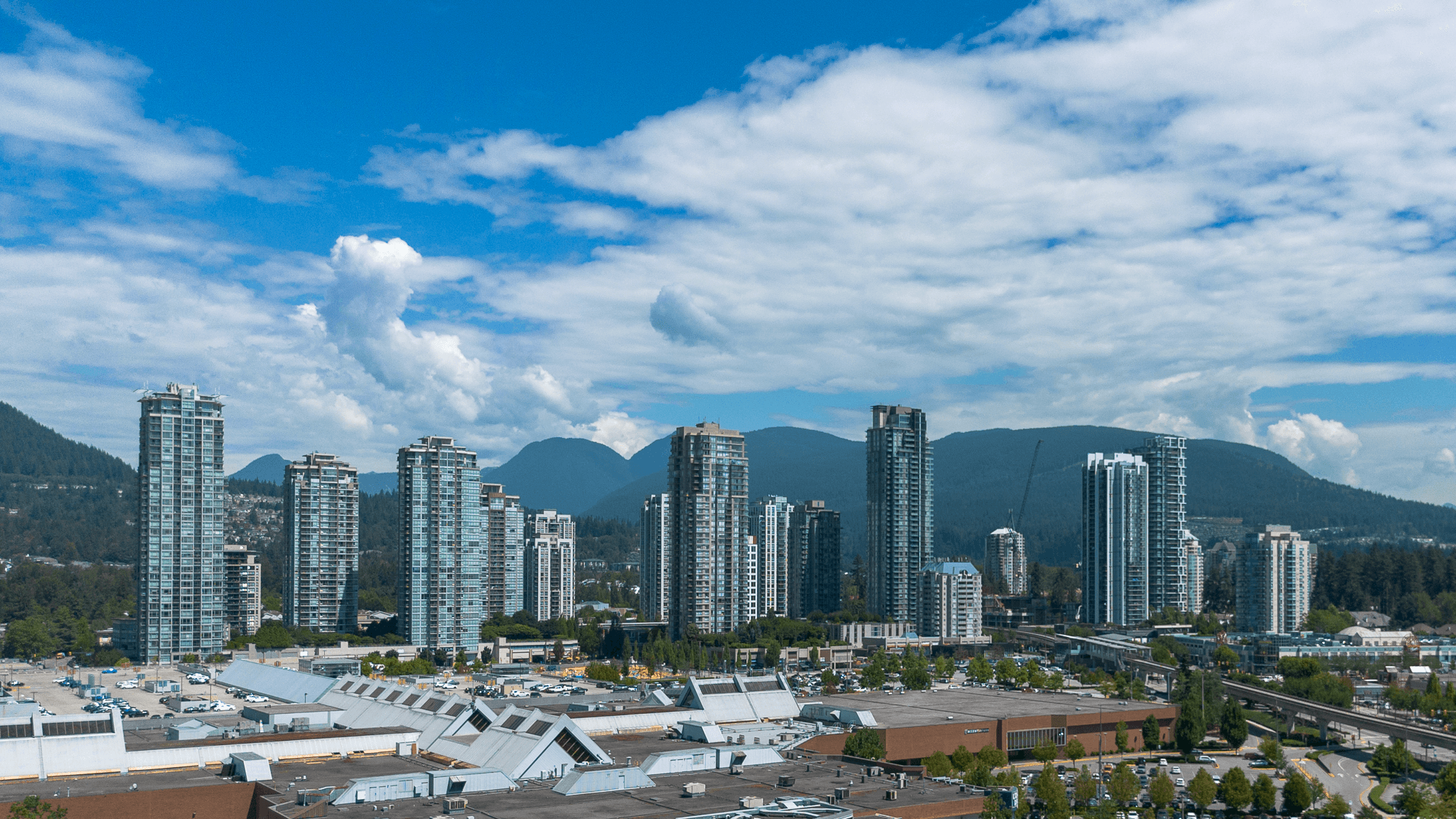


Recent





Victoria Estate Digest is your Go-to source for In-Depth Real Estate Insights, Market Trends, and Expert Analysis in British Columbia.
We cover everything from Housing Affordability and Foreign Investment to Luxury Properties and Emerging Market Opportunities.
Whether you're a Buyer, Seller, or Investor, we provide the Research and Knowledge you need to navigate BC’s ever-changing Real Estate Landscape.