/
/
Why Institutional Investors Are Shifting from Residential to Warehouses
Why Institutional Investors Are Shifting from Residential to Warehouses

The institutional real estate rotation: why logistics, industrial land, and cash-flowing buildings are attracting capital while Vancouver's residential investment model faces a harder financial reality.
For decades, Vancouver investors were told there was only one truly intelligent place to put their money.
Housing.
Buy a condo. Buy another condo. Buy a townhouse. Buy a detached house. Buy land. Buy a presale. Buy something with a roof, preferably near an ocean, and wait for the rest of the world to realize how clever you were.
The building did not necessarily need to produce income.
The rent did not necessarily need to cover the mortgage.
The price did not necessarily need to make sense relative to earnings.
The investment thesis was simple:
Vancouver is desirable. Land is scarce. Population grows. Prices rise.
Congratulations. You are now a real estate investor.
Meanwhile, institutional investors were looking at a much less glamorous category of property.
Warehouses.
Distribution centres.
Cold-storage facilities.
Industrial parks.
Manufacturing buildings.
Logistics terminals.
Properties with loading docks, truck courts, concrete floors, and tenants who care more about electrical capacity than granite countertops.
And increasingly, those assets have something residential investors spent years treating as optional.
A business reason to exist.
A warehouse is not valuable because somebody wants to raise their family next to a loading dock. It is valuable because a company needs somewhere to receive, manufacture, store, process, or distribute goods.
The building is part of an operating system.
Its value can be supported by a stream of rent from a business that needs the premises to function.
That is a fundamentally different investment proposition from buying a Vancouver condominium at a price that requires appreciation to make the economics work.
But there is an important correction to the popular narrative.
Institutional investors have not abandoned residential real estate, and the evidence does not establish a universal migration of capital out of apartments and into warehouses. Large investors are still buying multifamily buildings, financing rental developments, and accumulating residential portfolios.
What has changed is the emphasis.
Rather than assuming every residential asset will appreciate, sophisticated capital is increasingly distinguishing between properties with defensible income and properties whose value depends heavily on future price growth.
Modern industrial property can fit that preference.
So can a well-run apartment building.
A speculative condo flip often cannot.
The real shift is not simply from homes to warehouses.
It is from appreciation-dependent stories toward assets that can justify their price through operating income.
And Vancouver's industrial geography makes that distinction particularly interesting.
The institutional investor does not think like the average condo investor
A private investor might buy a condo because they like the neighbourhood, recognize the developer, believe in appreciation, or think their children may eventually use it.
An institutional investor thinks differently.
Pension funds, REITs, insurance companies, private equity funds, real estate investment managers, and large family offices generally evaluate assets through portfolio-level considerations.
Income durability.
Capitalization rates.
Cost of debt.
Lease terms.
Tenant credit.
Maintenance obligations.
Capital expenditures.
Liquidity.
Concentration risk.
Inflation protection.
Regulatory risk.
Expected return on invested equity.
A large institution is not usually asking whether the warehouse has a nice atmosphere.
It wants to know whether the tenant will pay, whether the building will remain useful, what the next lease will earn, and whether the acquisition price compensates for risk.
This mindset becomes more valuable when property appreciation is uncertain.
During a boom, almost everyone looks smart.
When prices flatten, operating performance becomes visible.
When prices fall, it becomes decisive.
A building that produces reliable net operating income can still have a reason to be owned when asset prices are stagnant.
A property that produces no income and depends on the next buyer paying more has a much more fragile investment thesis.
Institutional investors understand that distinction.
Vancouver's speculative residential market spent years pretending it did not matter.
What the 2026 investment figures actually show
Before turning warehouses into the next real estate religion, look at the numbers.
According to CBRE's September 2026 Canadian investment overview, Canadian commercial real estate investment reached $16.2 billion in Q2 2026, the highest quarterly total since early 2022.
Multifamily was still the largest investment category, attracting $6.5 billion.
Industrial attracted $4.2 billion, substantially above its recent three-year quarterly average.
Those are not numbers showing investors abandoning apartments.
They show significant capital moving into both categories.
The multifamily figure was unusually affected by Welltower's acquisition of Amica Senior Lifestyles, which represented nearly half that quarter's multifamily volume. That transaction also illustrates why a headline investment total does not necessarily represent ordinary apartment-building acquisitions.
CBRE also identified a $326 million acquisition of an Amazon fulfilment centre in Cambridge, Ontario, by Pontegadea as the quarter's largest single-asset transaction.
That is a useful example of the type of property large investors can find attractive: an income-producing logistics facility tied to an established commercial use.
Altus Group's first-half 2026 commercial real estate market update adds another layer.
National industrial investment reached approximately $6.2 billion during the first half of 2026, up 24% year over year.
But national multifamily investment was also strong, rising 67% year over year to approximately $6.9 billion.
In Vancouver specifically, multifamily transaction volume fell 41% year over year to approximately $372 million during the first half of 2026. Vancouver industrial investment volume also declined, by approximately 19%.
So the evidence is more selective than the headline might imply.
Industrial real estate is attracting serious investment interest.
Vancouver residential investment is facing pressure.
But institutions are not universally dumping apartments to buy warehouses.
They are becoming much more selective about which assets actually earn their place in a portfolio.
That is the interesting story.
The warehouse earns its rent by helping someone make money
Consider the difference between two tenants.
A residential tenant needs somewhere to live.
A warehouse tenant needs somewhere to operate.
Both needs are legitimate and durable, but their relationship to the property differs.
A residential tenant primarily evaluates affordability, location, quality of life, convenience, and housing alternatives.
A logistics company evaluates how the building affects its business.
Can trucks get in and out efficiently?
How close is it to the port?
How close is it to customers?
How much storage volume can it accommodate?
How much product can move through the facility each day?
Does it have sufficient electrical capacity?
Can it support automation?
Will the loading configuration reduce labour costs?
Can the location reduce transportation time?
Does it provide space for production, packaging, assembly, refrigeration, or distribution?
An industrial tenant may be willing to pay substantial rent because the building helps generate revenue or reduce operating costs elsewhere.
That does not mean business tenants will pay unlimited rent.
They will not.
It means that industrial rent can be evaluated as part of the tenant's operating economics.
A warehouse is infrastructure for commerce.
The lease is supported by the business's need for that infrastructure.
A Vancouver condo rented for $3,000 per month is constrained by what households can afford.
A well-located distribution facility can be constrained by what businesses can justify operationally.
Different customers.
Different economics.
Different investment thesis.
The landlord may collect rent without carrying every operating cost
Commercial lease structures are another reason industrial properties can be attractive.
In residential rentals, landlords commonly bear property taxes, insurance, building repairs, maintenance, management, and other operating obligations, although tenants may separately pay some utilities.
In commercial industrial property, leases often allocate substantial operating expenses to tenants.
One common structure is a net lease, where base rent is charged separately from some or all of the property's operating expenses.
A lease may require the tenant to reimburse property taxes, building insurance, common-area maintenance, and other defined costs.
A triple-net-style lease can therefore make landlord cash flow more predictable than a traditional residential gross-rent model.
But this is not automatic.
Lease wording matters.
Structural repairs may remain with the landlord.
Roof replacement may be handled differently.
Capital costs may be excluded or amortized.
Expense recoveries may be capped.
Environmental responsibilities may be allocated separately.
Some expenses may be disputed.
And a vacant building produces no recoveries at all.
Still, institutions often appreciate the ability to structure commercial leases around defined responsibilities and predictable operating income.
Compare that with a condo owner receiving $3,000 rent while paying a mortgage, strata fees, insurance, property tax, repairs, and special levies.
The difference is not that warehouse ownership has no expenses.
It is that commercial leases can allocate more of those expenses contractually.
The lease becomes part of the investment product.
And institutions are very good at reading leases.
The rent-control distinction matters too
British Columbia regulates residential rent increases through the Residential Tenancy Act.
For most continuing residential tenancies covered by the Act, landlords face annual rent-increase limits and statutory procedural requirements.
Commercial industrial leases generally operate under a different contractual framework.
A warehouse landlord and tenant can negotiate fixed annual rent increases, scheduled steps, renewal rights, operating-cost recoveries, and other provisions as part of their commercial agreement.
For example, a five-year lease might establish annual base-rent growth of 3%.
A ten-year lease might set fixed rental steps at specified dates.
Another lease might use a different negotiated formula.
That can appeal to investors seeking predictable contractual rent growth.
But there is a trade-off.
A commercial tenant can also negotiate aggressively.
If market rents fall, the landlord may have to offer concessions, reduce renewal rents, provide free rent, or fund tenant improvements.
Commercial leasing provides flexibility.
It does not guarantee perpetual rent increases.
A tenant who can relocate to a better building at a lower cost has leverage.
And warehouses, unlike popular Vancouver housing mythology, do not become more valuable merely because their owners insist they should.
The cash-flow comparison: an investor condo versus a warehouse
Consider a simplified hypothetical comparison.
The assumptions are illustrative, not actual offers or guaranteed market returns.
The residential condo
Purchase price: $850,000
Monthly rent: $3,000
Annual gross rental income: $36,000
The owner pays:
Annual strata fees: $7,200
Property tax: $3,600
Insurance: $1,200
Maintenance allowance: $1,500
Vacancy and turnover allowance: $1,500
Total operating expenses: $15,000
That leaves approximately:
$36,000 − $15,000 = $21,000 net operating income
Before financing and income tax, the implied net operating yield is:
$21,000 ÷ $850,000 = 2.47%
Now assume the investor put 20% down and borrowed $680,000 at approximately 5% amortized over 25 years.
The mortgage payment would be about $3,950–$4,000 per month.
Annual debt service would be approximately $47,000–$48,000.
That leaves a substantial annual cash shortfall.
Some mortgage payments reduce principal, so the entire cash shortfall is not an economic loss. But principal repayment is not spendable rental income, and the owner must still fund the monthly difference.
This investment depends heavily on future appreciation, future rent growth, financing improvement, or some combination.
Now consider the industrial property.
The hypothetical warehouse
Suppose an investor owns a 50,000-square-foot warehouse leased at approximately $19 per square foot per year in net base rent.
That rental rate is broadly comparable to current Metro Vancouver industrial asking-rent benchmarks, although actual negotiated rent depends on location, size, lease terms, condition, incentives, and other factors.
Annual base rental income:
50,000 × $19 = $950,000
Assume the lease structure allows the landlord to recover many operating costs from the tenant and that the landlord retains a reserve for unrecovered expenses, management, capital work, and other obligations.
For this illustration, assume stabilized net operating income of $850,000.
At an illustrative 5% capitalization rate, the implied property value is:
$850,000 ÷ 0.05 = $17,000,000
This is a very different asset.
It is not directly comparable in size or capital required to a single condominium.
But the investment logic becomes clear.
A large part of the property's value can be explained by its actual income.
An investor can analyze the tenant's creditworthiness, lease expiry, rent growth, replacement cost, and local market.
The building has a measurable income stream.
It does not need to depend entirely on a future buyer falling in love with the land.
There is still substantial risk.
But at least the arithmetic starts with cash.
The real distinction is capitalization rate versus appreciation narrative
Commercial investors use capitalization rates to connect property value with income.
The basic formula is:
Capitalization rate = Net operating income ÷ Property value
Rearranged:
Property value = Net operating income ÷ Capitalization rate
The capitalization rate is not the investor's total return.
It does not include financing effects, future capital expenditures, income taxes, appreciation, or the full risk profile.
But it is a useful way to compare the relationship between price and property income.
Suppose two income-producing properties each generate $500,000 in stabilized annual net operating income.
At a 4% capitalization rate:
$500,000 ÷ 0.04 = $12.5 million
At a 5% capitalization rate:
$500,000 ÷ 0.05 = $10 million
At a 6% capitalization rate:
$500,000 ÷ 0.06 = approximately $8.33 million
Same income.
Very different values.
This is why institutions care intensely about cap rates, financing costs, rental growth, tenant quality, and property condition.
A property does not become worth $12.5 million simply because the seller wants a 4% cap rate.
Buyers have to accept that pricing.
When interest rates rise or property risk increases, investors may demand higher yields.
Higher required yields can reduce capital values even when rent is unchanged.
That is especially important in industrial real estate today.
Warehouses have suffered their own valuation correction.
The institutional investor who ignores that is just a condo speculator with a forklift.
Vancouver industrial real estate is not having an uninterrupted boom
Here is where the warehouse story gets much more interesting.
Industrial property enjoyed extraordinary demand during the pandemic-era logistics expansion.
E-commerce accelerated.
Distribution networks expanded.
Vacancies tightened.
Industrial rents rose sharply.
Investors competed for limited assets.
Developers responded with new supply where land and economics permitted.
Then the market cooled.
By the third quarter of 2026, industrial conditions were improving in some respects, but the sector was not experiencing a return to effortless appreciation.
According to CBRE's Canada Industrial Figures Q3 2026, Canada's national industrial availability rate fell to 5.2% in Q3 2026, supported by 10.3 million square feet of positive net absorption, the strongest quarterly result since late 2022.
That is encouraging.
But national net asking rents were still down 2.4% year over year, to approximately $14.77 per square foot.
In Vancouver, CBRE reported a 5.0% year-over-year decline in industrial asking rents.
Even more striking, Vancouver's average industrial asking sale price per square foot fell 13.3% year over year.
That last figure is an asking-price measure, not proof that every completed sale fell 13.3%.
But it matters.
It means industrial ownership has not been immune to repricing.
Warehouses are not replacing residential as the new asset class that always goes up.
They are becoming interesting partly because prices, rents, and investor expectations have had to adjust.
That is a much more sophisticated investment opportunity than buying after years of uninterrupted price increases.
Vancouver industrial vacancy has improved, but tenants still have negotiating power
Colliers' Vancouver Industrial Market Report for Q3 2026, published October 7, reported that industrial vacancy declined to 2.7%, while availability fell to 3.8%.
Asking net rents were approximately $18.98 per square foot, nearly unchanged from $19.03 in Q2.
Colliers also noted that leasing activity was concentrated in small and mid-bay spaces under 30,000 square feet.
That creates a nuanced picture.
Vacancy has tightened.
Demand is returning.
New supply is being absorbed.
But rents are not automatically climbing again.
And different types of industrial space are performing differently.
A small, functional warehouse in a strong infill location may be highly desirable.
An obsolete building with low ceilings, weak power, poor truck access, and inadequate loading may struggle.
A large facility with a highly specific configuration may have fewer replacement tenants.
A modern logistics facility may attract national businesses, but its tenant can still negotiate aggressively if competing space is available.
This is precisely why institutional investors have become more selective.
Industrial property is not one asset class.
It is a collection of operating assets with very different utility.
The right warehouse can be excellent.
The wrong warehouse is a large concrete problem.
Vancouver's geography gives warehouses a structural advantage
Metro Vancouver has a genuine physical constraint that supports well-located industrial property.
The Pacific Ocean is to the west.
Mountains occupy much of the north.
The U.S. border creates a southern limit.
Agricultural land protections, residential development, municipal boundaries, infrastructure constraints, and competing land uses restrict industrial expansion.
Industrial development cannot simply spread indefinitely in every direction.
A warehouse also needs more than land.
It needs roads.
Truck access.
Appropriate zoning.
Utilities.
Sufficient power.
Loading access.
Fire protection.
Servicing.
Often rail or port connectivity.
Sometimes large amounts of outdoor manoeuvring space.
Those requirements make usable industrial land more specialized than its acreage alone suggests.
B.C. government material has previously identified approximately 11,500 hectares of industrial land across Metro Vancouver, representing roughly 4% of the region's land base, with most already developed.
Metro Vancouver subsequently published its 2025 Industrial Lands Inventory, reflecting land conditions as of July 1, 2025, to support regional industrial land protection and planning.
See the Metro Vancouver industrial land inventory catalogue.
The critical point is not that every warehouse is irreplaceable.
It is that a parcel with the right industrial zoning, access, dimensions, infrastructure, and location can be difficult to replicate.
That creates value.
But only if tenants actually need it.
Scarcity is a support for demand.
Not a replacement for demand.
The Port of Vancouver is a real economic engine, not just a waterfront postcard
Vancouver is a Pacific trade gateway.
That gives industrial land in the region a distinct economic role.
Goods entering Canada through Pacific ports need transportation, processing, customs services, temporary storage, distribution, and delivery.
Exports need handling, consolidation, and access to global shipping networks.
Manufacturers need incoming materials.
Retailers need distribution facilities.
Food and beverage companies need warehousing, packaging, cold chains, and regional logistics.
Third-party logistics companies need facilities positioned between ports, transportation corridors, and final customers.
The Port of Vancouver handled approximately 170.4 million metric tonnes of cargo in 2025, a record, including around 3.8 million TEUs of container traffic.
In the first half of 2026, the port handled approximately 88.1 million metric tonnes, up about 3% year over year.
Not every tonne of cargo requires a traditional warehouse. Bulk commodities such as grain and crude oil have different infrastructure needs.
But strong container and general cargo activity helps explain why industrial distribution capacity remains important in the Lower Mainland.
The value is operational.
A warehouse near an efficient transportation corridor may lower shipping time, reduce trucking costs, and improve inventory availability.
That is a real economic function.
It is very different from saying a condo is valuable because an investor expects another investor to buy it later.
The warehouse can be part of a supply chain.
The condo is not.
Location matters differently for warehouses
Residential buyers usually think about schools, views, parks, safety, restaurants, and transit.
Industrial tenants think about logistics.
Two warehouses may have the same square footage but dramatically different operational value.
A facility with efficient access to major highways and the port may be more useful to a distributor than a cheaper building requiring lengthy truck movements through congested roads.
A manufacturer may prioritize electrical capacity, floor loading, building configuration, and proximity to skilled labour.
A food distributor may prioritize refrigerated storage and delivery routes.
An e-commerce fulfilment operator may prioritize last-mile access, loading density, delivery efficiency, and sufficient height for racking.
An automotive parts distributor may prioritize regional highway access and quick inventory turnaround.
In Metro Vancouver, industrial geography includes important concentrations around the port and airport logistics systems, established urban industrial districts, and expanding logistics corridors in the eastern Lower Mainland.
Institutional investors do not simply ask whether the land is expensive.
They ask whether the location gives tenants a durable operational advantage.
That can be a stronger long-term value proposition than residential land speculation.
But it has to be demonstrated.
A warehouse beside a highway is not automatically useful if the trucks cannot legally or efficiently access it.
Commercial property has a wonderful ability to look excellent on a map and terrible from a loading dock.
The last-mile delivery thesis is still real
E-commerce has changed the way goods move.
Companies increasingly need inventory positioned close enough to customers to support efficient delivery.
That creates demand for distribution space, fulfilment centres, smaller infill warehouses, courier depots, and logistics operations.
The most valuable last-mile facilities are not necessarily the biggest.
They are the ones positioned where customer density, transportation cost, delivery time, and building functionality create strong economics.
In a dense and geographically constrained region, that location advantage can be difficult to reproduce.
But investors should be careful with the old e-commerce-growth narrative.
Pandemic-era growth rates were exceptional.
Not every distribution company needs more space every year.
Automation can improve capacity utilization.
Retail sales fluctuate.
Consumer demand weakens.
Some businesses consolidate facilities.
A warehouse that was leased at peak rents may face lower market rents at renewal.
The last-mile thesis remains valid.
The assumption that every warehouse deserves a premium because online shopping exists is not.
Investors should buy a working logistics advantage.
Not a slogan about Amazon.
Modern industrial buildings can become operationally essential
Building specifications matter enormously.
Institutional-grade industrial property often emphasizes usable clear height, efficient loading, sufficient power, appropriate column spacing, strong floor capacity, fire protection, truck circulation, and flexibility for future tenants.
A modern warehouse with taller clear heights can support more vertical storage.
That means more inventory can fit within the same land footprint.
A facility with suitable dock doors and truck courts can handle more shipments efficiently.
A facility with electrical capacity and automation-friendly design can support modern production or distribution.
A facility capable of supporting cold storage or specialized manufacturing may have additional utility for particular tenants.
This is why the distinction between old and new industrial space matters.
A 100,000-square-foot warehouse is not interchangeable with every other 100,000-square-foot warehouse.
The operational capacity may be very different.
Altus Group's 2026 industrial market analysis specifically identified stronger investor preference for modern, functional assets, while older legacy buildings faced greater downward rent pressure.
The problem with older industrial buildings is not necessarily age itself.
It is functional obsolescence.
A perfectly maintained warehouse can still be obsolete if the market needs specifications it cannot provide.
The building may have a roof.
But that does not mean it has a future.
The small-bay industrial market deserves attention
Not every industrial investor wants a giant distribution centre.
Smaller industrial units serve manufacturers, contractors, repair businesses, trades, food processors, distributors, equipment suppliers, service companies, and many other businesses.
These tenants need practical operating space.
They may not require 100,000 square feet.
They may need 5,000, 10,000, or 20,000 square feet with good access, usable loading, and appropriate zoning.
Colliers' Q3 2026 Vancouver report specifically noted leasing concentration in spaces below 30,000 square feet.
That is an important signal.
Demand is not limited to giant e-commerce platforms.
The region's smaller businesses still need somewhere to work.
Small-bay properties can be attractive because there may be a broad local tenant pool and relatively few convenient substitutes in some submarkets.
But size alone does not make them institutional-grade.
A multi-tenant industrial park with modern specifications, diversified tenants, and efficient management can be an attractive institutional asset.
A poorly designed strata industrial unit with inadequate truck access and restrictive bylaws can be a problem.
The investor needs to understand the actual tenants and their operating needs.
Small businesses are not just miniature versions of Amazon.
They are their own market.
Industrial tenants can have real relocation friction
Another attraction is that relocating an industrial operation can be expensive.
A household moving from one condo to another may face inconvenience, moving costs, and disruption.
A business moving a warehouse or factory may face something much larger.
Racking systems.
Machinery.
Conveyors.
Electrical installations.
Refrigeration equipment.
Inventory.
Production downtime.
Staff commuting changes.
Shipping disruptions.
Permits.
Utility connections.
Insurance changes.
Customer delivery schedules.
Operational reconfiguration.
For some businesses, the cost of moving can run into hundreds of thousands or millions of dollars.
That can make a suitable industrial location important to tenant retention.
But it should not be mistaken for guaranteed renewal.
If the landlord demands a rent increase greater than the economic cost of moving, the tenant may relocate anyway.
If the tenant's business contracts, it may need less space.
If it becomes insolvent, the lease may become impaired.
Relocation friction supports landlord negotiating power only within economic limits.
Institutional investors understand the advantage.
They also understand the risk of overplaying it.
Long industrial leases can make income easier to forecast
A large institutional investor may prefer a building leased to a financially strong company for a meaningful remaining term.
Five years.
Ten years.
Sometimes longer.
If the lease contains enforceable rent steps and appropriate expense-recovery terms, the investor can model income with a degree of confidence.
That can be attractive for pension funds, insurance investors, and other managers with long-term liabilities.
A lease with an established distributor or logistics tenant can create a different risk profile from a portfolio of speculative presale contracts.
But long leases also create disadvantages.
If rent is fixed too low, the investor may lose upside.
If operating costs increase faster than recoveries, income can disappoint.
If the tenant defaults, a large percentage of revenue may disappear.
If a specialized facility becomes vacant, replacement can take time and significant capital.
A ten-year lease is valuable only if the rent is appropriate, the tenant can pay, and the property remains useful.
Duration is one component.
Credit quality is another.
A long lease with a weak tenant is not certainty.
It is a longer opportunity to worry.
Single-tenant warehouses create concentration risk
This is the risk warehouse enthusiasts tend to skip.
A single-tenant building can have wonderful cash flow while occupied.
The lease may look excellent.
The tenant may reimburse expenses.
The building may produce predictable income.
Then the tenant leaves.
Occupancy goes from 100% to zero.
There is no diversified rental base to soften the loss.
A 100-unit apartment building losing five tenants has 95 occupied units.
A warehouse with one tenant losing that tenant has no occupied units.
The landlord may still pay property tax, insurance, maintenance, utilities needed to preserve the building, security, and debt service.
Re-leasing may require improvements, commissions, free-rent concessions, and months of marketing.
The space may need substantial modifications to suit a new user.
That can erase years of apparently attractive yield.
Institutional investors therefore care intensely about tenant concentration and lease rollover.
A good warehouse is not simply a building with a tenant.
It is a building that can attract another tenant when the first one leaves.
That distinction is critical.
Multifamily residential still has an important institutional advantage
Here is the strongest argument against the idea that institutions are simply abandoning residential assets.
Apartment buildings offer tenant diversification and persistent housing demand.
People need shelter through recessions.
A large apartment portfolio can distribute vacancy and non-payment risk across hundreds or thousands of units.
Institutions can maintain professional management systems, benefit from scale, and access specialized financing.
Purpose-built rental housing is also becoming more important in Vancouver.
CMHC's Fall 2026 Housing Supply Report notes that purpose-built rental apartments account for approximately 60% of Vancouver-area housing starts, compared with less than 20% a decade earlier.
Developers have increasingly favoured rental projects over condominium projects that have struggled to achieve sufficient sales.
That is not an institutional abandonment of residential.
It is a different way of financing and owning residential real estate.
Instead of selling individual units to condo investors, capital can develop or acquire rental buildings intended to generate long-term income.
A professionally managed rental building can fit the same income-durability philosophy that makes industrial property attractive.
The real loser is not necessarily residential real estate.
It is residential speculation that requires rapid appreciation to produce a return.
There is a difference.
Vancouver rental investment has still become harder
That does not mean multifamily is having an easy year.
CMHC's 2025 Rental Market Survey reported that the Vancouver census metropolitan area's purpose-built rental vacancy rate rose to 3.7% from 1.6% in 2024.
That was a meaningful increase.
More rental supply entered the market.
Population and temporary-resident growth slowed.
Competition increased.
Some newly completed rental projects faced leasing challenges.
Altus Group's first-half 2026 investment analysis reported the 41% decline in Vancouver multifamily investment volume, noting that newly completed purpose-built rentals and investor-owned condo units were increasing tenant choice and tempering rent growth.
Those are genuine headwinds.
An apartment building purchased at a very low cap rate and financed with expensive debt can be a poor investment too.
Rent control can limit how quickly revenue rises on continuing tenancies.
Operating costs and capital expenditures can increase.
New supply can create concessions and vacancy.
And construction costs can undermine the economics of new projects.
The institutional investor's answer is not necessarily to abandon apartments.
It may be to demand a better price.
A better yield.
A better location.
A more affordable tenant base.
Or stronger long-term rental fundamentals.
Again, the central shift is toward underwriting discipline.
Not toward one magical building category.
Warehouses are not completely insulated from tariffs and trade uncertainty
The industrial sector has an obvious vulnerability.
Trade.
Warehouses, factories, and distribution centres are connected to the movement of goods.
Changes in tariffs, trade agreements, supply chains, manufacturing economics, and import demand can alter space requirements.
The 2026 review of the Canada–United States–Mexico Agreement and broader tariff uncertainty have complicated business planning.
Some manufacturers may diversify suppliers.
Some distributors may increase safety stock.
Some companies may bring inventory closer to customers.
Others may reduce imports, consolidate space, automate more aggressively, or delay expansion.
A warehouse near the port is valuable when goods move.
If the volume or type of goods changes, the building's tenant demand can change too.
That is the irony.
Industrial property may offer strong income characteristics, but it is not immune to economic cycles.
It is connected to them.
An investor who buys a warehouse without understanding the businesses that occupy it has simply traded residential market risk for operating-sector risk.
Sometimes that is an improvement.
Sometimes it is not.
The industrial market has its own oversupply problem in some regions
Metro Vancouver land is constrained, but Canada is a large country.
Industrial markets in other regions have experienced meaningful construction waves.
New distribution space has entered markets where available land is less constrained.
Some large-bay facilities built during peak logistics optimism have faced slower absorption than expected.
Altus Group's Q2 2026 national industrial report noted that nearly half of new industrial space completed during the quarter remained uncommitted, while a significant share of the construction pipeline was still available.
That is not a story of universal scarcity.
It is a story of regional differences.
Vancouver is not Calgary.
Calgary is not Toronto.
Toronto is not Montreal.
A warehouse in a mature infill district is not the same as a speculative facility on newly developed land with several competing projects nearby.
Industrial scarcity has to be local.
So does demand.
The investor who thinks every industrial building is scarce because Metro Vancouver has little industrial land is making the same mistake as the condo investor who thinks every condo is valuable because Canada needs housing.
Broad demand is not a substitute for asset-level analysis.
The capitalization-rate trap can still destroy warehouse equity
Return to the hypothetical warehouse producing $850,000 in stabilized net operating income.
At a 5% cap rate, its implied value was:
$17 million
Now assume the investor's required cap rate rises to 6%.
If income stays unchanged:
$850,000 ÷ 0.06 = approximately $14.17 million
That is a decline of about $2.83 million, or 16.7%, without a single dollar of rental income disappearing.
Now imagine market rents also soften.
Suppose stabilized NOI falls to $750,000, and the required cap rate is 6%.
Implied value:
$750,000 ÷ 0.06 = $12.5 million
The value has fallen dramatically from the original $17 million underwriting.
That is the dark side of capitalization rates.
A beautiful lease does not eliminate valuation risk.
If the market demands higher yields or the income weakens, property value can fall quickly.
Institutional investors know this.
That is why pricing matters even when the warehouse itself is excellent.
The correct industrial investment is not simply a warehouse.
It is the right warehouse at a price that compensates for risk.
Industrial strata is not the same thing as institutional industrial property
This distinction matters for smaller Vancouver-area investors.
Industrial strata units have become popular with owner-operators and some investors.
They can provide a way for smaller businesses to own their premises rather than rent.
A manufacturing company, distributor, contractor, equipment supplier, or service business may value that ownership.
But industrial strata has its own risks.
Strata bylaws.
Permitted uses.
Shared truck courts.
Loading limitations.
Power limitations.
Strata fees.
Common-property repairs.
Insurance deductibles.
Special levies.
Restrictions on alterations.
Disputes over parking and outdoor storage.
A unit may be called industrial while lacking the features needed by a large or specialized industrial tenant.
And because industrial strata buyers are often private owner-operators rather than institutional funds, the resale market can behave differently from large investment-grade logistics facilities.
Institutional investors tend to care about scale, control, tenant credit, lease terms, and future marketability.
Owning one small industrial strata unit is not the same investment as owning a modern leased distribution centre.
Both can work.
Both can fail.
But they should not be lumped together just because forklifts are involved.
Industrial property can support real manufacturing, not just storage
There is another reason warehouses and industrial buildings deserve attention.
They are not merely places where boxes wait.
Industrial real estate supports production.
Food processing.
Beverage manufacturing.
Printing and packaging.
Equipment assembly.
Automotive services.
Fabrication.
Building materials.
Machinery.
Refrigeration.
Repair operations.
Distribution.
Businesses like these need operating infrastructure.
A production facility may require high electrical loads, compressed air, ventilation, fire protection, natural gas, loading access, industrial drainage, and appropriate zoning.
A specialized tenant may invest heavily in installing equipment.
That creates a meaningful relationship between the building and the business.
For institutional investors, the opportunity is to own the real estate that enables productive activity.
For business owners, the opportunity may be to control occupancy costs and location over time.
For cities, the benefit can include employment and an industrial tax base.
But the investor still needs to understand whether the building is broadly reusable.
A facility customized for one production process may be valuable to that tenant and less desirable to everyone else.
The best industrial property balances tenant-specific utility with future adaptability.
The landlord wants the current tenant to stay.
But it should never require the current tenant to stay forever.
Sale-leasebacks can be particularly attractive
One way institutional capital enters industrial real estate is through sale-leaseback transactions.
A business owns its manufacturing or warehouse property.
It needs capital for expansion, acquisitions, equipment, working capital, or other strategic priorities.
An institutional investor purchases the property and leases it back to the operating company under an agreed commercial lease.
The business converts an illiquid real estate asset into cash.
The investor acquires an income-producing property with a known tenant and negotiated lease terms.
The arrangement can be attractive to both parties.
But it has trade-offs.
The business gives up ownership and potential future property appreciation.
Its lease obligations become fixed contractual commitments.
The investor assumes tenant credit risk and the risk of property obsolescence.
The price and rent must be economically consistent; otherwise, the transaction can create artificial-looking yields.
And the business may lose some flexibility regarding alterations, expansion, assignment, and long-term occupancy.
Still, it is a useful example of why institutional investors look at industrial real estate differently.
They may not be buying property because they expect another buyer to pay 20% more next year.
They may be buying a stream of income supported by an operating business.
That is an investment structure with an identifiable economic purpose.
The foreign capital angle is interesting
International investment into Canada has not disappeared.
CBRE reported that foreign investors accounted for 43.9% of Canadian commercial real estate acquisitions in Q2 2026, although that figure was heavily influenced by the large Welltower–Amica transaction.
Cross-border commercial real estate investment reached approximately $4.3 billion in that quarter.
That is a striking contrast to the residential foreign-buyer debate.
Canada restricts certain residential purchases by non-Canadians.
It does not impose the same blanket prohibition on commercial industrial assets.
Foreign capital can therefore participate in logistics and other commercial real estate under the applicable ownership, investment, tax, and regulatory rules.
That does not mean every foreign industrial purchase is unrestricted.
Commercial transactions can have foreign investment review considerations, beneficial ownership requirements, taxation, environmental liabilities, financing requirements, and other legal issues.
But the policy environment is different.
Foreign capital buying an income-producing warehouse is not the same as foreign capital buying a detached house for occasional use.
Those transactions have different economic roles.
And institutions notice.
Capital often moves toward structures where investment is legally feasible and operating returns can be justified.
That is not necessarily proof of a wholesale movement away from residential housing.
It is part of the reason industrial assets remain on international investors' radar.
Industrial real estate offers exposure to the economy rather than just household housing budgets
Residential landlords ultimately depend on households.
Household income.
Employment.
Rent affordability.
Population growth.
Household formation.
Mortgage conditions.
Industrial landlords depend on businesses.
Manufacturing.
Trade.
Distribution.
Food supply.
Construction.
Transportation.
Inventory management.
Consumer spending.
Those drivers overlap, but they are not identical.
A national retailer may need distribution capacity even if housing prices are falling.
A food distributor may continue operating through a housing slowdown.
A manufacturer may need additional production space because its customer base is growing outside British Columbia.
A logistics business may relocate to a more efficient facility to reduce costs.
An industrial portfolio can therefore provide economic exposure different from a residential portfolio.
Institutions value that diversification.
But it cuts both ways.
During a severe goods-sector contraction, industrial demand can weaken.
During a residential rent boom, apartments may outperform warehouses.
During inflation, operating expenses and rents may behave differently across sectors.
The correct portfolio does not need to declare a permanent winner.
It needs assets with different risks.
Industrial can be one of them.
Institutional investors are buying functionality, not merely square footage
Perhaps the most important shift is toward functional quality.
Altus Group reported that industrial investors in 2026 were increasingly favouring core, functional properties with income durability rather than speculative assets reliant on strong growth assumptions.
That is a meaningful change from the earlier industrial frenzy.
The investor wants to know:
Is the building in a location that tenants need?
Can it accommodate a broad tenant pool?
Is the lease sustainable?
Is the rent at, below, or above market?
What happens when the lease expires?
Does the building need major capital work?
Are loading and truck access adequate?
Is the electrical system sufficient?
What is the environmental condition?
Can the property accommodate modern equipment?
Is the zoning appropriate?
Can the facility be subdivided?
Is the site difficult to replace?
What is the tenant's financial health?
What is the property's true replacement cost?
A modern building with modest current yield but strong future marketability may be more attractive than an older building with a slightly higher yield and substantial functional risk.
That is not an argument for paying any price for new construction.
It is an argument for understanding the difference between nominal income and durable income.
Institutional buyers are not just hunting rent.
They are hunting rent they believe can continue.
Why the next generation of industrial buildings may cost more to reproduce
Replacement cost is a powerful part of industrial underwriting.
A warehouse is not just concrete and steel.
It involves land acquisition, site preparation, geotechnical work, servicing, electrical infrastructure, fire protection, roads, drainage, stormwater systems, loading areas, permits, development charges, and financing.
In Metro Vancouver, land and infrastructure constraints can be especially significant.
Some sites require environmental remediation.
Some have difficult soils.
Some have limited utilities.
Some cannot support the truck movements needed by modern occupiers.
Some face neighbouring land-use conflicts.
A modern facility may therefore be expensive or difficult to replace in the same location.
That creates potential value for existing functional stock.
But replacement cost is not a guaranteed minimum market price.
If nobody wants to lease the building at an economic rent, the fact that it would be expensive to build does not necessarily make it worth its construction cost.
The same principle applies to residential real estate.
A developer can spend too much building a property.
An investor can pay too much buying it.
Cost is evidence.
Not a guarantee of value.
The institutional rotation is also a change in the meaning of scarcity
Vancouver residential investors have long used scarcity as the foundation of their investment thesis.
Mountains.
Ocean.
Border.
Land constraints.
Population growth.
Industrial investors can make a similar argument, but with an important difference.
They can connect scarcity to an operational requirement.
There may be limited land suitably zoned and serviced for certain industrial uses.
A tenant may need to be within a particular delivery radius.
A manufacturer may require power and truck access.
A distributor may need proximity to port infrastructure.
A logistics operation may benefit measurably from reduced transportation times.
That makes industrial scarcity more specific.
It is not just:
"They are not making more land."
It is:
"They are not easily creating more properly zoned, serviced, truck-accessible industrial land with the required infrastructure within this operating radius."
That is a much stronger thesis.
Because it identifies a business problem.
And business problems can be priced.
Warehouses are not a cure for bad investment discipline
It is tempting to conclude that institutional investors are clever for buying warehouses and residential investors are foolish for buying condos.
That would be too simple.
Institutions can overpay.
They can misjudge demand.
They can use too much leverage.
They can misunderstand tenants.
They can underestimate capital expenditures.
They can finance at the wrong time.
They can build speculative space into a slowing market.
They can assume rental growth that never materializes.
And they can suffer enormous valuation losses when capitalization rates move.
A bad warehouse can be worse than a good apartment building.
A single-tenant industrial property with an insolvent occupant may be riskier than a well-located, fully leased rental building with hundreds of households.
An obsolete warehouse may require millions of dollars in improvements.
A warehouse with environmental contamination can become a major liability.
A property with inadequate access can lose its tenant market.
A speculative warehouse built without preleasing can sit vacant while interest costs accumulate.
So the point is not that industrial is inherently superior.
The point is that industrial investment often forces a more explicit conversation about income, tenant demand, and building functionality.
That conversation is healthy.
Residential investors should have been having it all along.
What Vancouver private investors can learn from institutions
Most individual investors are not buying $17 million warehouses.
That does not mean institutional thinking is irrelevant.
The important lesson is how to evaluate real estate.
Before buying, ask what income the property produces.
Ask what it costs to operate.
Ask what debt service costs.
Ask whether current rent supports the purchase price.
Ask whether the asset will remain competitive.
Ask what happens when the tenant leaves.
Ask how much capital may be required.
Ask what the next buyer will pay based on income rather than emotion.
Ask whether the location has actual economic utility.
Ask what risks are hidden in the lease or strata documents.
Then consider appreciation.
Not before.
An investor condo with a poor yield may still make sense at the right price and with the right personal objectives.
An industrial strata unit may be excellent for a business owner who would otherwise be paying high rent.
A multi-tenant industrial building may be attractive for a long-term income investor.
A purpose-built rental apartment building may be excellent for an institution.
The asset class matters.
The price matters more.
The biggest mistakes warehouse investors make
The first is buying yesterday's industrial rent growth.
If an owner assumes pandemic-era rental increases will repeat indefinitely, the underwriting may be unrealistic.
The second is confusing asking rents with signed rents.
A listing may quote $19 per square foot, but the negotiated effective rent could be different after free rent, allowances, and other concessions.
The third is confusing vacant land with usable industrial supply.
Land without servicing, access, zoning, or suitable geometry may have limited immediate industrial utility.
The fourth is ignoring functional obsolescence.
A low-clearance building with poor loading may need a substantial discount.
The fifth is ignoring tenant concentration.
A single-tenant industrial building can become entirely vacant overnight.
The sixth is failing to distinguish gross rent from net rent.
Operating-expense recoveries, capital obligations, and lease wording matter.
The seventh is assuming a high cap rate means a bargain.
Sometimes the yield is high because the property is risky.
The eighth is using too much leverage.
Industrial valuations can fall even when the tenant keeps paying.
The ninth is neglecting environmental and physical due diligence.
Industrial property can contain liabilities that are difficult to see and expensive to resolve.
The tenth is believing warehouses always appreciate.
That sounds familiar.
Vancouver investors have already tried that philosophy with another building type.
The investor's warehouse due-diligence questions
Before acquiring industrial property, a buyer should understand the following.
The tenant: Who pays rent, how financially strong is the business, and how dependent is the building's income on one occupier?
The lease: What is the remaining term, what are the rent increases, which expenses are recoverable, and what renewal or termination rights exist?
The physical asset: What are the clear height, loading facilities, truck-court dimensions, electrical capacity, structural condition, roof condition, fire protection, and floor-loading limits?
The site: Are zoning, access, parking, outdoor storage, environmental condition, servicing, and permitted uses consistent with the tenant's operations?
The economics: What is the stabilized NOI, what capital expenditures are expected, what is the debt cost, and what happens if rent falls or the building becomes vacant?
The exit: Who is the likely future buyer, what cap rate would they require, and would the property still be competitive with newer industrial facilities?
Those are the questions that make industrial real estate an investment rather than a slogan.
No amount of warehouse enthusiasm can rescue a building that fails them.
What this means for Vancouver residential investors
There is an uncomfortable lesson here.
For years, residential investors were rewarded for buying property even when the underlying rental economics were weak.
The housing shortage became an investment thesis.
The desirability of Vancouver became an investment thesis.
The expectation of more immigration became an investment thesis.
The expectation of lower rates became an investment thesis.
The expectation of the next buyer paying more became an investment thesis.
Some of these factors had real economic importance.
But investors often treated appreciation as guaranteed instead of uncertain.
Now the market is forcing a reassessment.
A condo investor may be paying substantially more each month than the property collects in rent.
A presale investor may face an appraisal gap.
A luxury investor may face rising annual carrying costs.
A detached investor may discover the land's development potential does not justify the price.
Meanwhile, a warehouse investor is being forced to think about rent, tenant demand, operating costs, and exit cap rates.
The residential investor should not respond by blindly buying a warehouse.
They should respond by improving their own financial analysis.
The strongest lesson from institutional capital is not where it is investing.
It is why.
There may be a bigger capital rotation toward productive assets
This is the more interesting long-term possibility.
Residential real estate is essential, but speculation in existing homes does not necessarily create additional housing or productive economic activity.
A productive industrial property can support manufacturing, logistics, exports, employment, food distribution, and commercial services.
That does not mean industrial investment is automatically socially beneficial or that every residential investor adds nothing.
Residential rental development can create desperately needed housing. Apartment ownership can provide professional rental operations. Industrial speculation can also distort markets and make business space unaffordable.
But there is an economic distinction between buying an existing condo primarily to benefit from price growth and financing space used by a business to produce or distribute goods.
The latter may be more directly tied to measurable commercial activity.
If capital increasingly rewards productive utility and durable income rather than the expectation of perpetual asset-price inflation, that would represent a meaningful change in investment discipline.
It does not have to mean housing loses importance.
It means housing is no longer the only real estate story worth telling.
Warehouses can be part of a functioning economy.
Not merely a place to store investment capital.
Will industrial outperform residential in 2027?
Nobody can answer that reliably for every property.
Industrial real estate has supportive fundamentals in parts of Metro Vancouver: constrained suitable land, port connectivity, logistics demand, limited supply of certain functional buildings, and recent improvement in leasing conditions.
It also has risks: declining market rents in some segments, valuation pressure, tenant insolvency, trade uncertainty, expensive borrowing, functional obsolescence, and concentration risk.
Residential real estate has supportive fundamentals too: persistent demand for shelter, long-term housing shortages, limited land, and substantial future rental needs.
It also faces challenges: affordability, new rental supply, investor demand weakness, rent moderation, development costs, taxation, and financing conditions.
The right industrial property may outperform a poorly purchased condo.
The right apartment building may outperform an overpriced warehouse.
A bad acquisition can make any asset class look terrible.
That is why institutional investors focus on income quality, capital structure, risk-adjusted returns, and price discipline.
Not merely property categories.
The warehouse is not the answer.
The underwriting is.
The decision tree for investors considering industrial
If you are considering moving capital from residential into industrial property, start with a simple question:
Why would the tenant choose this building?
If you cannot identify the operational value, do not proceed.
Next ask whether the lease and income support the asking price at a reasonable capitalization rate.
If they do not, examine whether the seller is pricing the property based on outdated industrial rent expectations.
Then test the tenant's financial strength, building condition, zoning, environmental risks, and replacement-tenant market.
If the property is single-tenant, calculate what happens if the building is completely empty for twelve months.
If it is multi-tenant, examine tenant diversification and lease rollover.
Stress-test lower rents.
Stress-test higher cap rates.
Stress-test higher interest costs.
Budget for roof, mechanical systems, paving, environmental compliance, and tenant improvements.
Then ask whether you would still want the building if its market value did not increase for five years.
If the answer is yes because the income is satisfactory, the tenant demand is credible, and the asset is durable, you may have a genuine investment.
If the answer is yes only because you believe industrial land always goes up, you have learned nothing from the residential market.
You have simply exchanged countertops for loading docks.
The bottom line
Institutional investors are not abandoning residential real estate and marching unanimously into warehouses.
The latest Canadian data do not support that simplistic story.
Multifamily remains a major institutional investment sector. Purpose-built rental development is becoming increasingly important. Well-managed apartment portfolios continue to attract capital.
But industrial real estate is attracting serious investment interest for understandable reasons.
Modern warehouses and logistics facilities provide infrastructure that companies need to operate. Commercial leases can allocate significant operating expenses to tenants. Contractual rent steps can improve income visibility. Industrial land in desirable locations can be difficult to replace. Tenant relocation costs can support retention. Logistics, manufacturing, food distribution, and trade provide identifiable sources of space demand.
In Canada, industrial attracted $4.2 billion in investment during Q2 2026, while Altus Group reported $6.2 billion in first-half investment, up 24% year over year.
Metro Vancouver's industrial vacancy improved to 2.7% in Q3 2026 according to Colliers, with asking net rents near $19 per square foot.
Yet the market still has risks. Vancouver industrial asking rents were down year over year, and CBRE reported a substantial decline in industrial asking sale prices. An industrial building can lose value when required yields rise, tenants leave, or rents weaken.
That is why the story should not become another Vancouver real estate mythology.
The lesson is not:
Buy warehouses because warehouses always go up.
That is the same mistake residential investors made.
The lesson is:
Buy assets whose income, function, location, and long-term demand can justify the price—even if appreciation disappoints.
That is the philosophy institutions increasingly emphasize when evaluating real estate.
And it is a philosophy Vancouver investors could use more of.
For years, the city's investment conversation revolved around what a property might be worth tomorrow.
The more important question is what it produces today.
A condo can be a good investment if the numbers work.
An apartment building can be a good investment if the numbers work.
A warehouse can be a good investment if the numbers work.
But a property whose entire financial plan depends on another buyer paying more later is still speculation.
Whether it has a balcony or a loading dock.
Vancouver investors spent years buying a story about land.
Institutional investors are increasingly demanding a story supported by leases, tenants, and operating income.
The next chapter of Vancouver real estate may not belong to whichever property type is the most fashionable.
It may belong to the property type that can actually justify its price.
And somewhere in the Lower Mainland, a boring warehouse full of pallets may be doing a better job of that than a luxury condo with a spectacular view.
The condo has the sunset.
The warehouse has a tenant who needs to make Tuesday's deliveries.
In an income-focused investment market, that difference matters.
Market figures are drawn from CBRE's Q2 2026 Canadian Investment Overview and Q3 2026 Industrial Figures, Colliers' October 7, 2026 Vancouver Industrial Report, Altus Group's September 2026 Commercial Real Estate Market Update, and CMHC's Fall 2026 Housing Supply Report. Financial examples are illustrative and do not represent specific available properties or investment returns.
The institutional real estate rotation: why logistics, industrial land, and cash-flowing buildings are attracting capital while Vancouver's residential investment model faces a harder financial reality.
For decades, Vancouver investors were told there was only one truly intelligent place to put their money.
Housing.
Buy a condo. Buy another condo. Buy a townhouse. Buy a detached house. Buy land. Buy a presale. Buy something with a roof, preferably near an ocean, and wait for the rest of the world to realize how clever you were.
The building did not necessarily need to produce income.
The rent did not necessarily need to cover the mortgage.
The price did not necessarily need to make sense relative to earnings.
The investment thesis was simple:
Vancouver is desirable. Land is scarce. Population grows. Prices rise.
Congratulations. You are now a real estate investor.
Meanwhile, institutional investors were looking at a much less glamorous category of property.
Warehouses.
Distribution centres.
Cold-storage facilities.
Industrial parks.
Manufacturing buildings.
Logistics terminals.
Properties with loading docks, truck courts, concrete floors, and tenants who care more about electrical capacity than granite countertops.
And increasingly, those assets have something residential investors spent years treating as optional.
A business reason to exist.
A warehouse is not valuable because somebody wants to raise their family next to a loading dock. It is valuable because a company needs somewhere to receive, manufacture, store, process, or distribute goods.
The building is part of an operating system.
Its value can be supported by a stream of rent from a business that needs the premises to function.
That is a fundamentally different investment proposition from buying a Vancouver condominium at a price that requires appreciation to make the economics work.
But there is an important correction to the popular narrative.
Institutional investors have not abandoned residential real estate, and the evidence does not establish a universal migration of capital out of apartments and into warehouses. Large investors are still buying multifamily buildings, financing rental developments, and accumulating residential portfolios.
What has changed is the emphasis.
Rather than assuming every residential asset will appreciate, sophisticated capital is increasingly distinguishing between properties with defensible income and properties whose value depends heavily on future price growth.
Modern industrial property can fit that preference.
So can a well-run apartment building.
A speculative condo flip often cannot.
The real shift is not simply from homes to warehouses.
It is from appreciation-dependent stories toward assets that can justify their price through operating income.
And Vancouver's industrial geography makes that distinction particularly interesting.
The institutional investor does not think like the average condo investor
A private investor might buy a condo because they like the neighbourhood, recognize the developer, believe in appreciation, or think their children may eventually use it.
An institutional investor thinks differently.
Pension funds, REITs, insurance companies, private equity funds, real estate investment managers, and large family offices generally evaluate assets through portfolio-level considerations.
Income durability.
Capitalization rates.
Cost of debt.
Lease terms.
Tenant credit.
Maintenance obligations.
Capital expenditures.
Liquidity.
Concentration risk.
Inflation protection.
Regulatory risk.
Expected return on invested equity.
A large institution is not usually asking whether the warehouse has a nice atmosphere.
It wants to know whether the tenant will pay, whether the building will remain useful, what the next lease will earn, and whether the acquisition price compensates for risk.
This mindset becomes more valuable when property appreciation is uncertain.
During a boom, almost everyone looks smart.
When prices flatten, operating performance becomes visible.
When prices fall, it becomes decisive.
A building that produces reliable net operating income can still have a reason to be owned when asset prices are stagnant.
A property that produces no income and depends on the next buyer paying more has a much more fragile investment thesis.
Institutional investors understand that distinction.
Vancouver's speculative residential market spent years pretending it did not matter.
What the 2026 investment figures actually show
Before turning warehouses into the next real estate religion, look at the numbers.
According to CBRE's September 2026 Canadian investment overview, Canadian commercial real estate investment reached $16.2 billion in Q2 2026, the highest quarterly total since early 2022.
Multifamily was still the largest investment category, attracting $6.5 billion.
Industrial attracted $4.2 billion, substantially above its recent three-year quarterly average.
Those are not numbers showing investors abandoning apartments.
They show significant capital moving into both categories.
The multifamily figure was unusually affected by Welltower's acquisition of Amica Senior Lifestyles, which represented nearly half that quarter's multifamily volume. That transaction also illustrates why a headline investment total does not necessarily represent ordinary apartment-building acquisitions.
CBRE also identified a $326 million acquisition of an Amazon fulfilment centre in Cambridge, Ontario, by Pontegadea as the quarter's largest single-asset transaction.
That is a useful example of the type of property large investors can find attractive: an income-producing logistics facility tied to an established commercial use.
Altus Group's first-half 2026 commercial real estate market update adds another layer.
National industrial investment reached approximately $6.2 billion during the first half of 2026, up 24% year over year.
But national multifamily investment was also strong, rising 67% year over year to approximately $6.9 billion.
In Vancouver specifically, multifamily transaction volume fell 41% year over year to approximately $372 million during the first half of 2026. Vancouver industrial investment volume also declined, by approximately 19%.
So the evidence is more selective than the headline might imply.
Industrial real estate is attracting serious investment interest.
Vancouver residential investment is facing pressure.
But institutions are not universally dumping apartments to buy warehouses.
They are becoming much more selective about which assets actually earn their place in a portfolio.
That is the interesting story.
The warehouse earns its rent by helping someone make money
Consider the difference between two tenants.
A residential tenant needs somewhere to live.
A warehouse tenant needs somewhere to operate.
Both needs are legitimate and durable, but their relationship to the property differs.
A residential tenant primarily evaluates affordability, location, quality of life, convenience, and housing alternatives.
A logistics company evaluates how the building affects its business.
Can trucks get in and out efficiently?
How close is it to the port?
How close is it to customers?
How much storage volume can it accommodate?
How much product can move through the facility each day?
Does it have sufficient electrical capacity?
Can it support automation?
Will the loading configuration reduce labour costs?
Can the location reduce transportation time?
Does it provide space for production, packaging, assembly, refrigeration, or distribution?
An industrial tenant may be willing to pay substantial rent because the building helps generate revenue or reduce operating costs elsewhere.
That does not mean business tenants will pay unlimited rent.
They will not.
It means that industrial rent can be evaluated as part of the tenant's operating economics.
A warehouse is infrastructure for commerce.
The lease is supported by the business's need for that infrastructure.
A Vancouver condo rented for $3,000 per month is constrained by what households can afford.
A well-located distribution facility can be constrained by what businesses can justify operationally.
Different customers.
Different economics.
Different investment thesis.
The landlord may collect rent without carrying every operating cost
Commercial lease structures are another reason industrial properties can be attractive.
In residential rentals, landlords commonly bear property taxes, insurance, building repairs, maintenance, management, and other operating obligations, although tenants may separately pay some utilities.
In commercial industrial property, leases often allocate substantial operating expenses to tenants.
One common structure is a net lease, where base rent is charged separately from some or all of the property's operating expenses.
A lease may require the tenant to reimburse property taxes, building insurance, common-area maintenance, and other defined costs.
A triple-net-style lease can therefore make landlord cash flow more predictable than a traditional residential gross-rent model.
But this is not automatic.
Lease wording matters.
Structural repairs may remain with the landlord.
Roof replacement may be handled differently.
Capital costs may be excluded or amortized.
Expense recoveries may be capped.
Environmental responsibilities may be allocated separately.
Some expenses may be disputed.
And a vacant building produces no recoveries at all.
Still, institutions often appreciate the ability to structure commercial leases around defined responsibilities and predictable operating income.
Compare that with a condo owner receiving $3,000 rent while paying a mortgage, strata fees, insurance, property tax, repairs, and special levies.
The difference is not that warehouse ownership has no expenses.
It is that commercial leases can allocate more of those expenses contractually.
The lease becomes part of the investment product.
And institutions are very good at reading leases.
The rent-control distinction matters too
British Columbia regulates residential rent increases through the Residential Tenancy Act.
For most continuing residential tenancies covered by the Act, landlords face annual rent-increase limits and statutory procedural requirements.
Commercial industrial leases generally operate under a different contractual framework.
A warehouse landlord and tenant can negotiate fixed annual rent increases, scheduled steps, renewal rights, operating-cost recoveries, and other provisions as part of their commercial agreement.
For example, a five-year lease might establish annual base-rent growth of 3%.
A ten-year lease might set fixed rental steps at specified dates.
Another lease might use a different negotiated formula.
That can appeal to investors seeking predictable contractual rent growth.
But there is a trade-off.
A commercial tenant can also negotiate aggressively.
If market rents fall, the landlord may have to offer concessions, reduce renewal rents, provide free rent, or fund tenant improvements.
Commercial leasing provides flexibility.
It does not guarantee perpetual rent increases.
A tenant who can relocate to a better building at a lower cost has leverage.
And warehouses, unlike popular Vancouver housing mythology, do not become more valuable merely because their owners insist they should.
The cash-flow comparison: an investor condo versus a warehouse
Consider a simplified hypothetical comparison.
The assumptions are illustrative, not actual offers or guaranteed market returns.
The residential condo
Purchase price: $850,000
Monthly rent: $3,000
Annual gross rental income: $36,000
The owner pays:
Annual strata fees: $7,200
Property tax: $3,600
Insurance: $1,200
Maintenance allowance: $1,500
Vacancy and turnover allowance: $1,500
Total operating expenses: $15,000
That leaves approximately:
$36,000 − $15,000 = $21,000 net operating income
Before financing and income tax, the implied net operating yield is:
$21,000 ÷ $850,000 = 2.47%
Now assume the investor put 20% down and borrowed $680,000 at approximately 5% amortized over 25 years.
The mortgage payment would be about $3,950–$4,000 per month.
Annual debt service would be approximately $47,000–$48,000.
That leaves a substantial annual cash shortfall.
Some mortgage payments reduce principal, so the entire cash shortfall is not an economic loss. But principal repayment is not spendable rental income, and the owner must still fund the monthly difference.
This investment depends heavily on future appreciation, future rent growth, financing improvement, or some combination.
Now consider the industrial property.
The hypothetical warehouse
Suppose an investor owns a 50,000-square-foot warehouse leased at approximately $19 per square foot per year in net base rent.
That rental rate is broadly comparable to current Metro Vancouver industrial asking-rent benchmarks, although actual negotiated rent depends on location, size, lease terms, condition, incentives, and other factors.
Annual base rental income:
50,000 × $19 = $950,000
Assume the lease structure allows the landlord to recover many operating costs from the tenant and that the landlord retains a reserve for unrecovered expenses, management, capital work, and other obligations.
For this illustration, assume stabilized net operating income of $850,000.
At an illustrative 5% capitalization rate, the implied property value is:
$850,000 ÷ 0.05 = $17,000,000
This is a very different asset.
It is not directly comparable in size or capital required to a single condominium.
But the investment logic becomes clear.
A large part of the property's value can be explained by its actual income.
An investor can analyze the tenant's creditworthiness, lease expiry, rent growth, replacement cost, and local market.
The building has a measurable income stream.
It does not need to depend entirely on a future buyer falling in love with the land.
There is still substantial risk.
But at least the arithmetic starts with cash.
The real distinction is capitalization rate versus appreciation narrative
Commercial investors use capitalization rates to connect property value with income.
The basic formula is:
Capitalization rate = Net operating income ÷ Property value
Rearranged:
Property value = Net operating income ÷ Capitalization rate
The capitalization rate is not the investor's total return.
It does not include financing effects, future capital expenditures, income taxes, appreciation, or the full risk profile.
But it is a useful way to compare the relationship between price and property income.
Suppose two income-producing properties each generate $500,000 in stabilized annual net operating income.
At a 4% capitalization rate:
$500,000 ÷ 0.04 = $12.5 million
At a 5% capitalization rate:
$500,000 ÷ 0.05 = $10 million
At a 6% capitalization rate:
$500,000 ÷ 0.06 = approximately $8.33 million
Same income.
Very different values.
This is why institutions care intensely about cap rates, financing costs, rental growth, tenant quality, and property condition.
A property does not become worth $12.5 million simply because the seller wants a 4% cap rate.
Buyers have to accept that pricing.
When interest rates rise or property risk increases, investors may demand higher yields.
Higher required yields can reduce capital values even when rent is unchanged.
That is especially important in industrial real estate today.
Warehouses have suffered their own valuation correction.
The institutional investor who ignores that is just a condo speculator with a forklift.
Vancouver industrial real estate is not having an uninterrupted boom
Here is where the warehouse story gets much more interesting.
Industrial property enjoyed extraordinary demand during the pandemic-era logistics expansion.
E-commerce accelerated.
Distribution networks expanded.
Vacancies tightened.
Industrial rents rose sharply.
Investors competed for limited assets.
Developers responded with new supply where land and economics permitted.
Then the market cooled.
By the third quarter of 2026, industrial conditions were improving in some respects, but the sector was not experiencing a return to effortless appreciation.
According to CBRE's Canada Industrial Figures Q3 2026, Canada's national industrial availability rate fell to 5.2% in Q3 2026, supported by 10.3 million square feet of positive net absorption, the strongest quarterly result since late 2022.
That is encouraging.
But national net asking rents were still down 2.4% year over year, to approximately $14.77 per square foot.
In Vancouver, CBRE reported a 5.0% year-over-year decline in industrial asking rents.
Even more striking, Vancouver's average industrial asking sale price per square foot fell 13.3% year over year.
That last figure is an asking-price measure, not proof that every completed sale fell 13.3%.
But it matters.
It means industrial ownership has not been immune to repricing.
Warehouses are not replacing residential as the new asset class that always goes up.
They are becoming interesting partly because prices, rents, and investor expectations have had to adjust.
That is a much more sophisticated investment opportunity than buying after years of uninterrupted price increases.
Vancouver industrial vacancy has improved, but tenants still have negotiating power
Colliers' Vancouver Industrial Market Report for Q3 2026, published October 7, reported that industrial vacancy declined to 2.7%, while availability fell to 3.8%.
Asking net rents were approximately $18.98 per square foot, nearly unchanged from $19.03 in Q2.
Colliers also noted that leasing activity was concentrated in small and mid-bay spaces under 30,000 square feet.
That creates a nuanced picture.
Vacancy has tightened.
Demand is returning.
New supply is being absorbed.
But rents are not automatically climbing again.
And different types of industrial space are performing differently.
A small, functional warehouse in a strong infill location may be highly desirable.
An obsolete building with low ceilings, weak power, poor truck access, and inadequate loading may struggle.
A large facility with a highly specific configuration may have fewer replacement tenants.
A modern logistics facility may attract national businesses, but its tenant can still negotiate aggressively if competing space is available.
This is precisely why institutional investors have become more selective.
Industrial property is not one asset class.
It is a collection of operating assets with very different utility.
The right warehouse can be excellent.
The wrong warehouse is a large concrete problem.
Vancouver's geography gives warehouses a structural advantage
Metro Vancouver has a genuine physical constraint that supports well-located industrial property.
The Pacific Ocean is to the west.
Mountains occupy much of the north.
The U.S. border creates a southern limit.
Agricultural land protections, residential development, municipal boundaries, infrastructure constraints, and competing land uses restrict industrial expansion.
Industrial development cannot simply spread indefinitely in every direction.
A warehouse also needs more than land.
It needs roads.
Truck access.
Appropriate zoning.
Utilities.
Sufficient power.
Loading access.
Fire protection.
Servicing.
Often rail or port connectivity.
Sometimes large amounts of outdoor manoeuvring space.
Those requirements make usable industrial land more specialized than its acreage alone suggests.
B.C. government material has previously identified approximately 11,500 hectares of industrial land across Metro Vancouver, representing roughly 4% of the region's land base, with most already developed.
Metro Vancouver subsequently published its 2025 Industrial Lands Inventory, reflecting land conditions as of July 1, 2025, to support regional industrial land protection and planning.
See the Metro Vancouver industrial land inventory catalogue.
The critical point is not that every warehouse is irreplaceable.
It is that a parcel with the right industrial zoning, access, dimensions, infrastructure, and location can be difficult to replicate.
That creates value.
But only if tenants actually need it.
Scarcity is a support for demand.
Not a replacement for demand.
The Port of Vancouver is a real economic engine, not just a waterfront postcard
Vancouver is a Pacific trade gateway.
That gives industrial land in the region a distinct economic role.
Goods entering Canada through Pacific ports need transportation, processing, customs services, temporary storage, distribution, and delivery.
Exports need handling, consolidation, and access to global shipping networks.
Manufacturers need incoming materials.
Retailers need distribution facilities.
Food and beverage companies need warehousing, packaging, cold chains, and regional logistics.
Third-party logistics companies need facilities positioned between ports, transportation corridors, and final customers.
The Port of Vancouver handled approximately 170.4 million metric tonnes of cargo in 2025, a record, including around 3.8 million TEUs of container traffic.
In the first half of 2026, the port handled approximately 88.1 million metric tonnes, up about 3% year over year.
Not every tonne of cargo requires a traditional warehouse. Bulk commodities such as grain and crude oil have different infrastructure needs.
But strong container and general cargo activity helps explain why industrial distribution capacity remains important in the Lower Mainland.
The value is operational.
A warehouse near an efficient transportation corridor may lower shipping time, reduce trucking costs, and improve inventory availability.
That is a real economic function.
It is very different from saying a condo is valuable because an investor expects another investor to buy it later.
The warehouse can be part of a supply chain.
The condo is not.
Location matters differently for warehouses
Residential buyers usually think about schools, views, parks, safety, restaurants, and transit.
Industrial tenants think about logistics.
Two warehouses may have the same square footage but dramatically different operational value.
A facility with efficient access to major highways and the port may be more useful to a distributor than a cheaper building requiring lengthy truck movements through congested roads.
A manufacturer may prioritize electrical capacity, floor loading, building configuration, and proximity to skilled labour.
A food distributor may prioritize refrigerated storage and delivery routes.
An e-commerce fulfilment operator may prioritize last-mile access, loading density, delivery efficiency, and sufficient height for racking.
An automotive parts distributor may prioritize regional highway access and quick inventory turnaround.
In Metro Vancouver, industrial geography includes important concentrations around the port and airport logistics systems, established urban industrial districts, and expanding logistics corridors in the eastern Lower Mainland.
Institutional investors do not simply ask whether the land is expensive.
They ask whether the location gives tenants a durable operational advantage.
That can be a stronger long-term value proposition than residential land speculation.
But it has to be demonstrated.
A warehouse beside a highway is not automatically useful if the trucks cannot legally or efficiently access it.
Commercial property has a wonderful ability to look excellent on a map and terrible from a loading dock.
The last-mile delivery thesis is still real
E-commerce has changed the way goods move.
Companies increasingly need inventory positioned close enough to customers to support efficient delivery.
That creates demand for distribution space, fulfilment centres, smaller infill warehouses, courier depots, and logistics operations.
The most valuable last-mile facilities are not necessarily the biggest.
They are the ones positioned where customer density, transportation cost, delivery time, and building functionality create strong economics.
In a dense and geographically constrained region, that location advantage can be difficult to reproduce.
But investors should be careful with the old e-commerce-growth narrative.
Pandemic-era growth rates were exceptional.
Not every distribution company needs more space every year.
Automation can improve capacity utilization.
Retail sales fluctuate.
Consumer demand weakens.
Some businesses consolidate facilities.
A warehouse that was leased at peak rents may face lower market rents at renewal.
The last-mile thesis remains valid.
The assumption that every warehouse deserves a premium because online shopping exists is not.
Investors should buy a working logistics advantage.
Not a slogan about Amazon.
Modern industrial buildings can become operationally essential
Building specifications matter enormously.
Institutional-grade industrial property often emphasizes usable clear height, efficient loading, sufficient power, appropriate column spacing, strong floor capacity, fire protection, truck circulation, and flexibility for future tenants.
A modern warehouse with taller clear heights can support more vertical storage.
That means more inventory can fit within the same land footprint.
A facility with suitable dock doors and truck courts can handle more shipments efficiently.
A facility with electrical capacity and automation-friendly design can support modern production or distribution.
A facility capable of supporting cold storage or specialized manufacturing may have additional utility for particular tenants.
This is why the distinction between old and new industrial space matters.
A 100,000-square-foot warehouse is not interchangeable with every other 100,000-square-foot warehouse.
The operational capacity may be very different.
Altus Group's 2026 industrial market analysis specifically identified stronger investor preference for modern, functional assets, while older legacy buildings faced greater downward rent pressure.
The problem with older industrial buildings is not necessarily age itself.
It is functional obsolescence.
A perfectly maintained warehouse can still be obsolete if the market needs specifications it cannot provide.
The building may have a roof.
But that does not mean it has a future.
The small-bay industrial market deserves attention
Not every industrial investor wants a giant distribution centre.
Smaller industrial units serve manufacturers, contractors, repair businesses, trades, food processors, distributors, equipment suppliers, service companies, and many other businesses.
These tenants need practical operating space.
They may not require 100,000 square feet.
They may need 5,000, 10,000, or 20,000 square feet with good access, usable loading, and appropriate zoning.
Colliers' Q3 2026 Vancouver report specifically noted leasing concentration in spaces below 30,000 square feet.
That is an important signal.
Demand is not limited to giant e-commerce platforms.
The region's smaller businesses still need somewhere to work.
Small-bay properties can be attractive because there may be a broad local tenant pool and relatively few convenient substitutes in some submarkets.
But size alone does not make them institutional-grade.
A multi-tenant industrial park with modern specifications, diversified tenants, and efficient management can be an attractive institutional asset.
A poorly designed strata industrial unit with inadequate truck access and restrictive bylaws can be a problem.
The investor needs to understand the actual tenants and their operating needs.
Small businesses are not just miniature versions of Amazon.
They are their own market.
Industrial tenants can have real relocation friction
Another attraction is that relocating an industrial operation can be expensive.
A household moving from one condo to another may face inconvenience, moving costs, and disruption.
A business moving a warehouse or factory may face something much larger.
Racking systems.
Machinery.
Conveyors.
Electrical installations.
Refrigeration equipment.
Inventory.
Production downtime.
Staff commuting changes.
Shipping disruptions.
Permits.
Utility connections.
Insurance changes.
Customer delivery schedules.
Operational reconfiguration.
For some businesses, the cost of moving can run into hundreds of thousands or millions of dollars.
That can make a suitable industrial location important to tenant retention.
But it should not be mistaken for guaranteed renewal.
If the landlord demands a rent increase greater than the economic cost of moving, the tenant may relocate anyway.
If the tenant's business contracts, it may need less space.
If it becomes insolvent, the lease may become impaired.
Relocation friction supports landlord negotiating power only within economic limits.
Institutional investors understand the advantage.
They also understand the risk of overplaying it.
Long industrial leases can make income easier to forecast
A large institutional investor may prefer a building leased to a financially strong company for a meaningful remaining term.
Five years.
Ten years.
Sometimes longer.
If the lease contains enforceable rent steps and appropriate expense-recovery terms, the investor can model income with a degree of confidence.
That can be attractive for pension funds, insurance investors, and other managers with long-term liabilities.
A lease with an established distributor or logistics tenant can create a different risk profile from a portfolio of speculative presale contracts.
But long leases also create disadvantages.
If rent is fixed too low, the investor may lose upside.
If operating costs increase faster than recoveries, income can disappoint.
If the tenant defaults, a large percentage of revenue may disappear.
If a specialized facility becomes vacant, replacement can take time and significant capital.
A ten-year lease is valuable only if the rent is appropriate, the tenant can pay, and the property remains useful.
Duration is one component.
Credit quality is another.
A long lease with a weak tenant is not certainty.
It is a longer opportunity to worry.
Single-tenant warehouses create concentration risk
This is the risk warehouse enthusiasts tend to skip.
A single-tenant building can have wonderful cash flow while occupied.
The lease may look excellent.
The tenant may reimburse expenses.
The building may produce predictable income.
Then the tenant leaves.
Occupancy goes from 100% to zero.
There is no diversified rental base to soften the loss.
A 100-unit apartment building losing five tenants has 95 occupied units.
A warehouse with one tenant losing that tenant has no occupied units.
The landlord may still pay property tax, insurance, maintenance, utilities needed to preserve the building, security, and debt service.
Re-leasing may require improvements, commissions, free-rent concessions, and months of marketing.
The space may need substantial modifications to suit a new user.
That can erase years of apparently attractive yield.
Institutional investors therefore care intensely about tenant concentration and lease rollover.
A good warehouse is not simply a building with a tenant.
It is a building that can attract another tenant when the first one leaves.
That distinction is critical.
Multifamily residential still has an important institutional advantage
Here is the strongest argument against the idea that institutions are simply abandoning residential assets.
Apartment buildings offer tenant diversification and persistent housing demand.
People need shelter through recessions.
A large apartment portfolio can distribute vacancy and non-payment risk across hundreds or thousands of units.
Institutions can maintain professional management systems, benefit from scale, and access specialized financing.
Purpose-built rental housing is also becoming more important in Vancouver.
CMHC's Fall 2026 Housing Supply Report notes that purpose-built rental apartments account for approximately 60% of Vancouver-area housing starts, compared with less than 20% a decade earlier.
Developers have increasingly favoured rental projects over condominium projects that have struggled to achieve sufficient sales.
That is not an institutional abandonment of residential.
It is a different way of financing and owning residential real estate.
Instead of selling individual units to condo investors, capital can develop or acquire rental buildings intended to generate long-term income.
A professionally managed rental building can fit the same income-durability philosophy that makes industrial property attractive.
The real loser is not necessarily residential real estate.
It is residential speculation that requires rapid appreciation to produce a return.
There is a difference.
Vancouver rental investment has still become harder
That does not mean multifamily is having an easy year.
CMHC's 2025 Rental Market Survey reported that the Vancouver census metropolitan area's purpose-built rental vacancy rate rose to 3.7% from 1.6% in 2024.
That was a meaningful increase.
More rental supply entered the market.
Population and temporary-resident growth slowed.
Competition increased.
Some newly completed rental projects faced leasing challenges.
Altus Group's first-half 2026 investment analysis reported the 41% decline in Vancouver multifamily investment volume, noting that newly completed purpose-built rentals and investor-owned condo units were increasing tenant choice and tempering rent growth.
Those are genuine headwinds.
An apartment building purchased at a very low cap rate and financed with expensive debt can be a poor investment too.
Rent control can limit how quickly revenue rises on continuing tenancies.
Operating costs and capital expenditures can increase.
New supply can create concessions and vacancy.
And construction costs can undermine the economics of new projects.
The institutional investor's answer is not necessarily to abandon apartments.
It may be to demand a better price.
A better yield.
A better location.
A more affordable tenant base.
Or stronger long-term rental fundamentals.
Again, the central shift is toward underwriting discipline.
Not toward one magical building category.
Warehouses are not completely insulated from tariffs and trade uncertainty
The industrial sector has an obvious vulnerability.
Trade.
Warehouses, factories, and distribution centres are connected to the movement of goods.
Changes in tariffs, trade agreements, supply chains, manufacturing economics, and import demand can alter space requirements.
The 2026 review of the Canada–United States–Mexico Agreement and broader tariff uncertainty have complicated business planning.
Some manufacturers may diversify suppliers.
Some distributors may increase safety stock.
Some companies may bring inventory closer to customers.
Others may reduce imports, consolidate space, automate more aggressively, or delay expansion.
A warehouse near the port is valuable when goods move.
If the volume or type of goods changes, the building's tenant demand can change too.
That is the irony.
Industrial property may offer strong income characteristics, but it is not immune to economic cycles.
It is connected to them.
An investor who buys a warehouse without understanding the businesses that occupy it has simply traded residential market risk for operating-sector risk.
Sometimes that is an improvement.
Sometimes it is not.
The industrial market has its own oversupply problem in some regions
Metro Vancouver land is constrained, but Canada is a large country.
Industrial markets in other regions have experienced meaningful construction waves.
New distribution space has entered markets where available land is less constrained.
Some large-bay facilities built during peak logistics optimism have faced slower absorption than expected.
Altus Group's Q2 2026 national industrial report noted that nearly half of new industrial space completed during the quarter remained uncommitted, while a significant share of the construction pipeline was still available.
That is not a story of universal scarcity.
It is a story of regional differences.
Vancouver is not Calgary.
Calgary is not Toronto.
Toronto is not Montreal.
A warehouse in a mature infill district is not the same as a speculative facility on newly developed land with several competing projects nearby.
Industrial scarcity has to be local.
So does demand.
The investor who thinks every industrial building is scarce because Metro Vancouver has little industrial land is making the same mistake as the condo investor who thinks every condo is valuable because Canada needs housing.
Broad demand is not a substitute for asset-level analysis.
The capitalization-rate trap can still destroy warehouse equity
Return to the hypothetical warehouse producing $850,000 in stabilized net operating income.
At a 5% cap rate, its implied value was:
$17 million
Now assume the investor's required cap rate rises to 6%.
If income stays unchanged:
$850,000 ÷ 0.06 = approximately $14.17 million
That is a decline of about $2.83 million, or 16.7%, without a single dollar of rental income disappearing.
Now imagine market rents also soften.
Suppose stabilized NOI falls to $750,000, and the required cap rate is 6%.
Implied value:
$750,000 ÷ 0.06 = $12.5 million
The value has fallen dramatically from the original $17 million underwriting.
That is the dark side of capitalization rates.
A beautiful lease does not eliminate valuation risk.
If the market demands higher yields or the income weakens, property value can fall quickly.
Institutional investors know this.
That is why pricing matters even when the warehouse itself is excellent.
The correct industrial investment is not simply a warehouse.
It is the right warehouse at a price that compensates for risk.
Industrial strata is not the same thing as institutional industrial property
This distinction matters for smaller Vancouver-area investors.
Industrial strata units have become popular with owner-operators and some investors.
They can provide a way for smaller businesses to own their premises rather than rent.
A manufacturing company, distributor, contractor, equipment supplier, or service business may value that ownership.
But industrial strata has its own risks.
Strata bylaws.
Permitted uses.
Shared truck courts.
Loading limitations.
Power limitations.
Strata fees.
Common-property repairs.
Insurance deductibles.
Special levies.
Restrictions on alterations.
Disputes over parking and outdoor storage.
A unit may be called industrial while lacking the features needed by a large or specialized industrial tenant.
And because industrial strata buyers are often private owner-operators rather than institutional funds, the resale market can behave differently from large investment-grade logistics facilities.
Institutional investors tend to care about scale, control, tenant credit, lease terms, and future marketability.
Owning one small industrial strata unit is not the same investment as owning a modern leased distribution centre.
Both can work.
Both can fail.
But they should not be lumped together just because forklifts are involved.
Industrial property can support real manufacturing, not just storage
There is another reason warehouses and industrial buildings deserve attention.
They are not merely places where boxes wait.
Industrial real estate supports production.
Food processing.
Beverage manufacturing.
Printing and packaging.
Equipment assembly.
Automotive services.
Fabrication.
Building materials.
Machinery.
Refrigeration.
Repair operations.
Distribution.
Businesses like these need operating infrastructure.
A production facility may require high electrical loads, compressed air, ventilation, fire protection, natural gas, loading access, industrial drainage, and appropriate zoning.
A specialized tenant may invest heavily in installing equipment.
That creates a meaningful relationship between the building and the business.
For institutional investors, the opportunity is to own the real estate that enables productive activity.
For business owners, the opportunity may be to control occupancy costs and location over time.
For cities, the benefit can include employment and an industrial tax base.
But the investor still needs to understand whether the building is broadly reusable.
A facility customized for one production process may be valuable to that tenant and less desirable to everyone else.
The best industrial property balances tenant-specific utility with future adaptability.
The landlord wants the current tenant to stay.
But it should never require the current tenant to stay forever.
Sale-leasebacks can be particularly attractive
One way institutional capital enters industrial real estate is through sale-leaseback transactions.
A business owns its manufacturing or warehouse property.
It needs capital for expansion, acquisitions, equipment, working capital, or other strategic priorities.
An institutional investor purchases the property and leases it back to the operating company under an agreed commercial lease.
The business converts an illiquid real estate asset into cash.
The investor acquires an income-producing property with a known tenant and negotiated lease terms.
The arrangement can be attractive to both parties.
But it has trade-offs.
The business gives up ownership and potential future property appreciation.
Its lease obligations become fixed contractual commitments.
The investor assumes tenant credit risk and the risk of property obsolescence.
The price and rent must be economically consistent; otherwise, the transaction can create artificial-looking yields.
And the business may lose some flexibility regarding alterations, expansion, assignment, and long-term occupancy.
Still, it is a useful example of why institutional investors look at industrial real estate differently.
They may not be buying property because they expect another buyer to pay 20% more next year.
They may be buying a stream of income supported by an operating business.
That is an investment structure with an identifiable economic purpose.
The foreign capital angle is interesting
International investment into Canada has not disappeared.
CBRE reported that foreign investors accounted for 43.9% of Canadian commercial real estate acquisitions in Q2 2026, although that figure was heavily influenced by the large Welltower–Amica transaction.
Cross-border commercial real estate investment reached approximately $4.3 billion in that quarter.
That is a striking contrast to the residential foreign-buyer debate.
Canada restricts certain residential purchases by non-Canadians.
It does not impose the same blanket prohibition on commercial industrial assets.
Foreign capital can therefore participate in logistics and other commercial real estate under the applicable ownership, investment, tax, and regulatory rules.
That does not mean every foreign industrial purchase is unrestricted.
Commercial transactions can have foreign investment review considerations, beneficial ownership requirements, taxation, environmental liabilities, financing requirements, and other legal issues.
But the policy environment is different.
Foreign capital buying an income-producing warehouse is not the same as foreign capital buying a detached house for occasional use.
Those transactions have different economic roles.
And institutions notice.
Capital often moves toward structures where investment is legally feasible and operating returns can be justified.
That is not necessarily proof of a wholesale movement away from residential housing.
It is part of the reason industrial assets remain on international investors' radar.
Industrial real estate offers exposure to the economy rather than just household housing budgets
Residential landlords ultimately depend on households.
Household income.
Employment.
Rent affordability.
Population growth.
Household formation.
Mortgage conditions.
Industrial landlords depend on businesses.
Manufacturing.
Trade.
Distribution.
Food supply.
Construction.
Transportation.
Inventory management.
Consumer spending.
Those drivers overlap, but they are not identical.
A national retailer may need distribution capacity even if housing prices are falling.
A food distributor may continue operating through a housing slowdown.
A manufacturer may need additional production space because its customer base is growing outside British Columbia.
A logistics business may relocate to a more efficient facility to reduce costs.
An industrial portfolio can therefore provide economic exposure different from a residential portfolio.
Institutions value that diversification.
But it cuts both ways.
During a severe goods-sector contraction, industrial demand can weaken.
During a residential rent boom, apartments may outperform warehouses.
During inflation, operating expenses and rents may behave differently across sectors.
The correct portfolio does not need to declare a permanent winner.
It needs assets with different risks.
Industrial can be one of them.
Institutional investors are buying functionality, not merely square footage
Perhaps the most important shift is toward functional quality.
Altus Group reported that industrial investors in 2026 were increasingly favouring core, functional properties with income durability rather than speculative assets reliant on strong growth assumptions.
That is a meaningful change from the earlier industrial frenzy.
The investor wants to know:
Is the building in a location that tenants need?
Can it accommodate a broad tenant pool?
Is the lease sustainable?
Is the rent at, below, or above market?
What happens when the lease expires?
Does the building need major capital work?
Are loading and truck access adequate?
Is the electrical system sufficient?
What is the environmental condition?
Can the property accommodate modern equipment?
Is the zoning appropriate?
Can the facility be subdivided?
Is the site difficult to replace?
What is the tenant's financial health?
What is the property's true replacement cost?
A modern building with modest current yield but strong future marketability may be more attractive than an older building with a slightly higher yield and substantial functional risk.
That is not an argument for paying any price for new construction.
It is an argument for understanding the difference between nominal income and durable income.
Institutional buyers are not just hunting rent.
They are hunting rent they believe can continue.
Why the next generation of industrial buildings may cost more to reproduce
Replacement cost is a powerful part of industrial underwriting.
A warehouse is not just concrete and steel.
It involves land acquisition, site preparation, geotechnical work, servicing, electrical infrastructure, fire protection, roads, drainage, stormwater systems, loading areas, permits, development charges, and financing.
In Metro Vancouver, land and infrastructure constraints can be especially significant.
Some sites require environmental remediation.
Some have difficult soils.
Some have limited utilities.
Some cannot support the truck movements needed by modern occupiers.
Some face neighbouring land-use conflicts.
A modern facility may therefore be expensive or difficult to replace in the same location.
That creates potential value for existing functional stock.
But replacement cost is not a guaranteed minimum market price.
If nobody wants to lease the building at an economic rent, the fact that it would be expensive to build does not necessarily make it worth its construction cost.
The same principle applies to residential real estate.
A developer can spend too much building a property.
An investor can pay too much buying it.
Cost is evidence.
Not a guarantee of value.
The institutional rotation is also a change in the meaning of scarcity
Vancouver residential investors have long used scarcity as the foundation of their investment thesis.
Mountains.
Ocean.
Border.
Land constraints.
Population growth.
Industrial investors can make a similar argument, but with an important difference.
They can connect scarcity to an operational requirement.
There may be limited land suitably zoned and serviced for certain industrial uses.
A tenant may need to be within a particular delivery radius.
A manufacturer may require power and truck access.
A distributor may need proximity to port infrastructure.
A logistics operation may benefit measurably from reduced transportation times.
That makes industrial scarcity more specific.
It is not just:
"They are not making more land."
It is:
"They are not easily creating more properly zoned, serviced, truck-accessible industrial land with the required infrastructure within this operating radius."
That is a much stronger thesis.
Because it identifies a business problem.
And business problems can be priced.
Warehouses are not a cure for bad investment discipline
It is tempting to conclude that institutional investors are clever for buying warehouses and residential investors are foolish for buying condos.
That would be too simple.
Institutions can overpay.
They can misjudge demand.
They can use too much leverage.
They can misunderstand tenants.
They can underestimate capital expenditures.
They can finance at the wrong time.
They can build speculative space into a slowing market.
They can assume rental growth that never materializes.
And they can suffer enormous valuation losses when capitalization rates move.
A bad warehouse can be worse than a good apartment building.
A single-tenant industrial property with an insolvent occupant may be riskier than a well-located, fully leased rental building with hundreds of households.
An obsolete warehouse may require millions of dollars in improvements.
A warehouse with environmental contamination can become a major liability.
A property with inadequate access can lose its tenant market.
A speculative warehouse built without preleasing can sit vacant while interest costs accumulate.
So the point is not that industrial is inherently superior.
The point is that industrial investment often forces a more explicit conversation about income, tenant demand, and building functionality.
That conversation is healthy.
Residential investors should have been having it all along.
What Vancouver private investors can learn from institutions
Most individual investors are not buying $17 million warehouses.
That does not mean institutional thinking is irrelevant.
The important lesson is how to evaluate real estate.
Before buying, ask what income the property produces.
Ask what it costs to operate.
Ask what debt service costs.
Ask whether current rent supports the purchase price.
Ask whether the asset will remain competitive.
Ask what happens when the tenant leaves.
Ask how much capital may be required.
Ask what the next buyer will pay based on income rather than emotion.
Ask whether the location has actual economic utility.
Ask what risks are hidden in the lease or strata documents.
Then consider appreciation.
Not before.
An investor condo with a poor yield may still make sense at the right price and with the right personal objectives.
An industrial strata unit may be excellent for a business owner who would otherwise be paying high rent.
A multi-tenant industrial building may be attractive for a long-term income investor.
A purpose-built rental apartment building may be excellent for an institution.
The asset class matters.
The price matters more.
The biggest mistakes warehouse investors make
The first is buying yesterday's industrial rent growth.
If an owner assumes pandemic-era rental increases will repeat indefinitely, the underwriting may be unrealistic.
The second is confusing asking rents with signed rents.
A listing may quote $19 per square foot, but the negotiated effective rent could be different after free rent, allowances, and other concessions.
The third is confusing vacant land with usable industrial supply.
Land without servicing, access, zoning, or suitable geometry may have limited immediate industrial utility.
The fourth is ignoring functional obsolescence.
A low-clearance building with poor loading may need a substantial discount.
The fifth is ignoring tenant concentration.
A single-tenant industrial building can become entirely vacant overnight.
The sixth is failing to distinguish gross rent from net rent.
Operating-expense recoveries, capital obligations, and lease wording matter.
The seventh is assuming a high cap rate means a bargain.
Sometimes the yield is high because the property is risky.
The eighth is using too much leverage.
Industrial valuations can fall even when the tenant keeps paying.
The ninth is neglecting environmental and physical due diligence.
Industrial property can contain liabilities that are difficult to see and expensive to resolve.
The tenth is believing warehouses always appreciate.
That sounds familiar.
Vancouver investors have already tried that philosophy with another building type.
The investor's warehouse due-diligence questions
Before acquiring industrial property, a buyer should understand the following.
The tenant: Who pays rent, how financially strong is the business, and how dependent is the building's income on one occupier?
The lease: What is the remaining term, what are the rent increases, which expenses are recoverable, and what renewal or termination rights exist?
The physical asset: What are the clear height, loading facilities, truck-court dimensions, electrical capacity, structural condition, roof condition, fire protection, and floor-loading limits?
The site: Are zoning, access, parking, outdoor storage, environmental condition, servicing, and permitted uses consistent with the tenant's operations?
The economics: What is the stabilized NOI, what capital expenditures are expected, what is the debt cost, and what happens if rent falls or the building becomes vacant?
The exit: Who is the likely future buyer, what cap rate would they require, and would the property still be competitive with newer industrial facilities?
Those are the questions that make industrial real estate an investment rather than a slogan.
No amount of warehouse enthusiasm can rescue a building that fails them.
What this means for Vancouver residential investors
There is an uncomfortable lesson here.
For years, residential investors were rewarded for buying property even when the underlying rental economics were weak.
The housing shortage became an investment thesis.
The desirability of Vancouver became an investment thesis.
The expectation of more immigration became an investment thesis.
The expectation of lower rates became an investment thesis.
The expectation of the next buyer paying more became an investment thesis.
Some of these factors had real economic importance.
But investors often treated appreciation as guaranteed instead of uncertain.
Now the market is forcing a reassessment.
A condo investor may be paying substantially more each month than the property collects in rent.
A presale investor may face an appraisal gap.
A luxury investor may face rising annual carrying costs.
A detached investor may discover the land's development potential does not justify the price.
Meanwhile, a warehouse investor is being forced to think about rent, tenant demand, operating costs, and exit cap rates.
The residential investor should not respond by blindly buying a warehouse.
They should respond by improving their own financial analysis.
The strongest lesson from institutional capital is not where it is investing.
It is why.
There may be a bigger capital rotation toward productive assets
This is the more interesting long-term possibility.
Residential real estate is essential, but speculation in existing homes does not necessarily create additional housing or productive economic activity.
A productive industrial property can support manufacturing, logistics, exports, employment, food distribution, and commercial services.
That does not mean industrial investment is automatically socially beneficial or that every residential investor adds nothing.
Residential rental development can create desperately needed housing. Apartment ownership can provide professional rental operations. Industrial speculation can also distort markets and make business space unaffordable.
But there is an economic distinction between buying an existing condo primarily to benefit from price growth and financing space used by a business to produce or distribute goods.
The latter may be more directly tied to measurable commercial activity.
If capital increasingly rewards productive utility and durable income rather than the expectation of perpetual asset-price inflation, that would represent a meaningful change in investment discipline.
It does not have to mean housing loses importance.
It means housing is no longer the only real estate story worth telling.
Warehouses can be part of a functioning economy.
Not merely a place to store investment capital.
Will industrial outperform residential in 2027?
Nobody can answer that reliably for every property.
Industrial real estate has supportive fundamentals in parts of Metro Vancouver: constrained suitable land, port connectivity, logistics demand, limited supply of certain functional buildings, and recent improvement in leasing conditions.
It also has risks: declining market rents in some segments, valuation pressure, tenant insolvency, trade uncertainty, expensive borrowing, functional obsolescence, and concentration risk.
Residential real estate has supportive fundamentals too: persistent demand for shelter, long-term housing shortages, limited land, and substantial future rental needs.
It also faces challenges: affordability, new rental supply, investor demand weakness, rent moderation, development costs, taxation, and financing conditions.
The right industrial property may outperform a poorly purchased condo.
The right apartment building may outperform an overpriced warehouse.
A bad acquisition can make any asset class look terrible.
That is why institutional investors focus on income quality, capital structure, risk-adjusted returns, and price discipline.
Not merely property categories.
The warehouse is not the answer.
The underwriting is.
The decision tree for investors considering industrial
If you are considering moving capital from residential into industrial property, start with a simple question:
Why would the tenant choose this building?
If you cannot identify the operational value, do not proceed.
Next ask whether the lease and income support the asking price at a reasonable capitalization rate.
If they do not, examine whether the seller is pricing the property based on outdated industrial rent expectations.
Then test the tenant's financial strength, building condition, zoning, environmental risks, and replacement-tenant market.
If the property is single-tenant, calculate what happens if the building is completely empty for twelve months.
If it is multi-tenant, examine tenant diversification and lease rollover.
Stress-test lower rents.
Stress-test higher cap rates.
Stress-test higher interest costs.
Budget for roof, mechanical systems, paving, environmental compliance, and tenant improvements.
Then ask whether you would still want the building if its market value did not increase for five years.
If the answer is yes because the income is satisfactory, the tenant demand is credible, and the asset is durable, you may have a genuine investment.
If the answer is yes only because you believe industrial land always goes up, you have learned nothing from the residential market.
You have simply exchanged countertops for loading docks.
The bottom line
Institutional investors are not abandoning residential real estate and marching unanimously into warehouses.
The latest Canadian data do not support that simplistic story.
Multifamily remains a major institutional investment sector. Purpose-built rental development is becoming increasingly important. Well-managed apartment portfolios continue to attract capital.
But industrial real estate is attracting serious investment interest for understandable reasons.
Modern warehouses and logistics facilities provide infrastructure that companies need to operate. Commercial leases can allocate significant operating expenses to tenants. Contractual rent steps can improve income visibility. Industrial land in desirable locations can be difficult to replace. Tenant relocation costs can support retention. Logistics, manufacturing, food distribution, and trade provide identifiable sources of space demand.
In Canada, industrial attracted $4.2 billion in investment during Q2 2026, while Altus Group reported $6.2 billion in first-half investment, up 24% year over year.
Metro Vancouver's industrial vacancy improved to 2.7% in Q3 2026 according to Colliers, with asking net rents near $19 per square foot.
Yet the market still has risks. Vancouver industrial asking rents were down year over year, and CBRE reported a substantial decline in industrial asking sale prices. An industrial building can lose value when required yields rise, tenants leave, or rents weaken.
That is why the story should not become another Vancouver real estate mythology.
The lesson is not:
Buy warehouses because warehouses always go up.
That is the same mistake residential investors made.
The lesson is:
Buy assets whose income, function, location, and long-term demand can justify the price—even if appreciation disappoints.
That is the philosophy institutions increasingly emphasize when evaluating real estate.
And it is a philosophy Vancouver investors could use more of.
For years, the city's investment conversation revolved around what a property might be worth tomorrow.
The more important question is what it produces today.
A condo can be a good investment if the numbers work.
An apartment building can be a good investment if the numbers work.
A warehouse can be a good investment if the numbers work.
But a property whose entire financial plan depends on another buyer paying more later is still speculation.
Whether it has a balcony or a loading dock.
Vancouver investors spent years buying a story about land.
Institutional investors are increasingly demanding a story supported by leases, tenants, and operating income.
The next chapter of Vancouver real estate may not belong to whichever property type is the most fashionable.
It may belong to the property type that can actually justify its price.
And somewhere in the Lower Mainland, a boring warehouse full of pallets may be doing a better job of that than a luxury condo with a spectacular view.
The condo has the sunset.
The warehouse has a tenant who needs to make Tuesday's deliveries.
In an income-focused investment market, that difference matters.
Market figures are drawn from CBRE's Q2 2026 Canadian Investment Overview and Q3 2026 Industrial Figures, Colliers' October 7, 2026 Vancouver Industrial Report, Altus Group's September 2026 Commercial Real Estate Market Update, and CMHC's Fall 2026 Housing Supply Report. Financial examples are illustrative and do not represent specific available properties or investment returns.
Related Posts
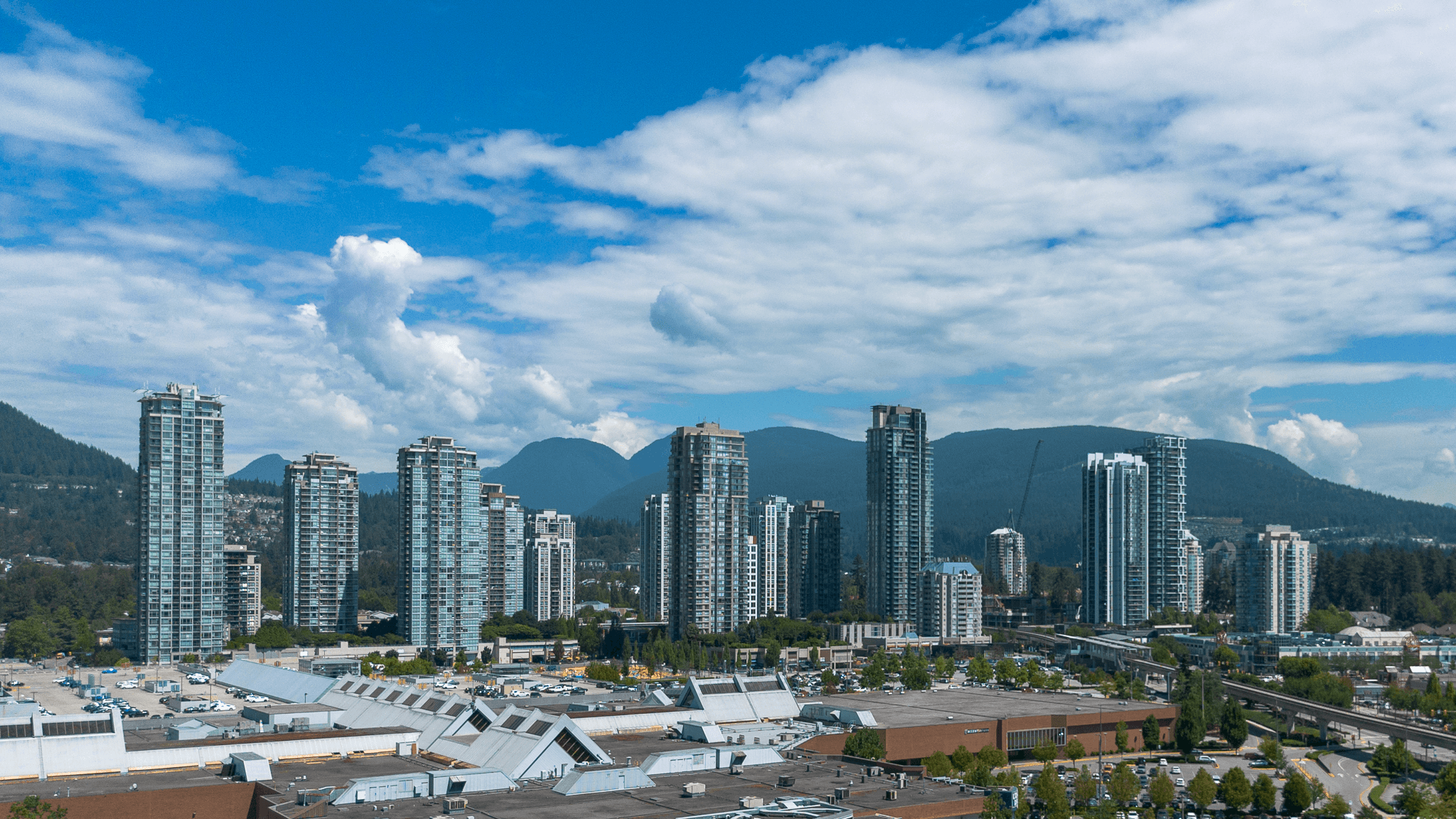



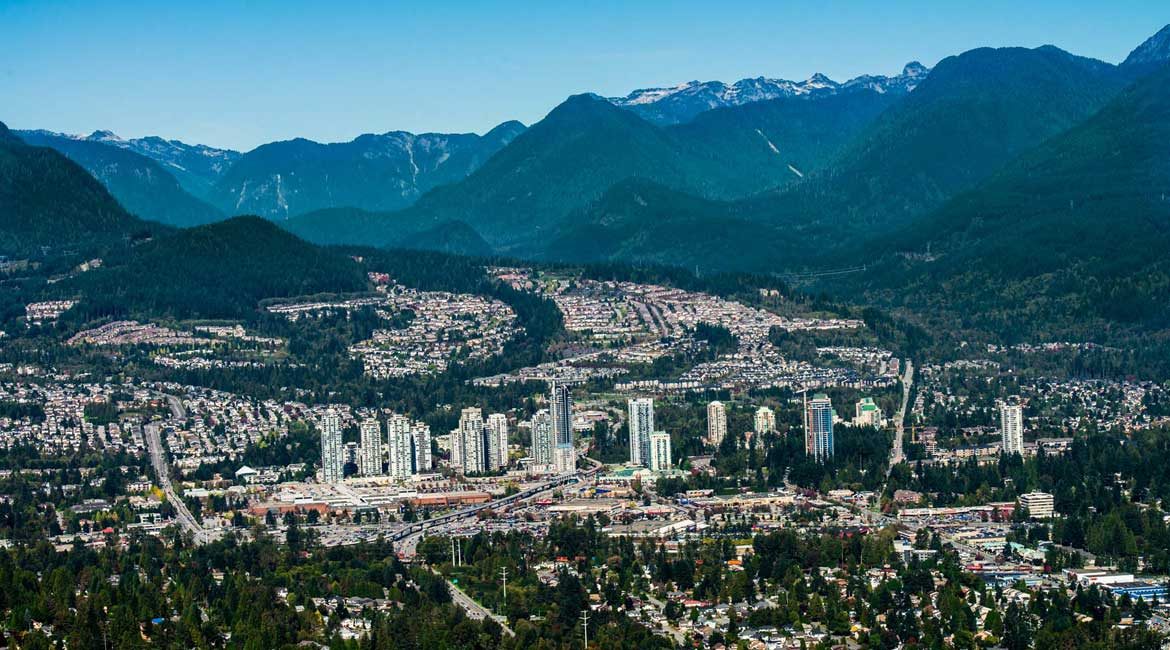
More Articles
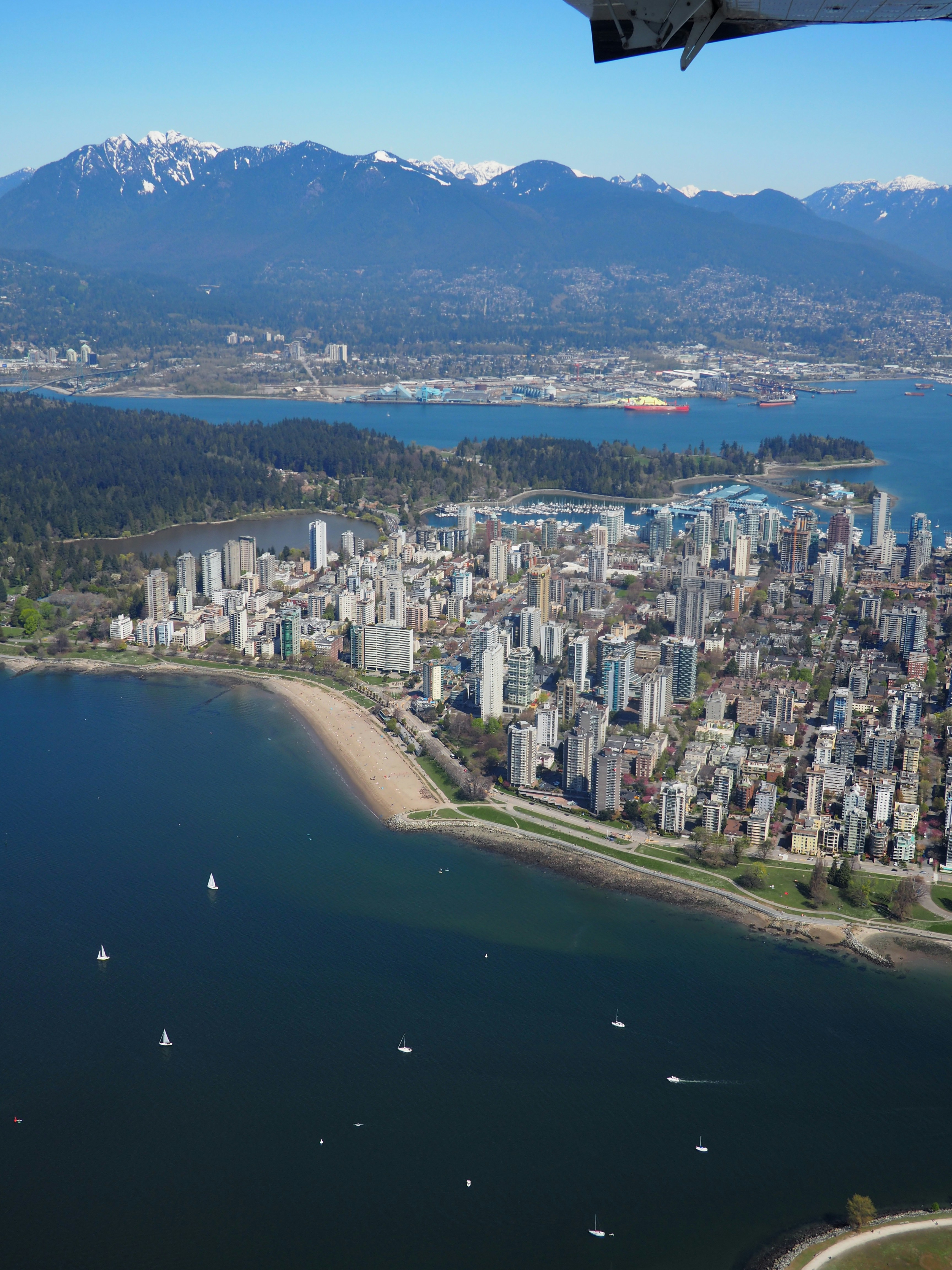



Home Feature Guides
How Homes Work: Guides & Insights
Dive into guides that show what really matters in a house, from construction and materials to design choices and practical usability. Learn what questions to ask, what to watch for, and how to spot hidden issues so every feature—from tennis courts and home gyms to outdoor spaces and custom rooms—delivers the value it promises. These guides give the knowledge to assess every detail like an insider and avoid costly surprises.

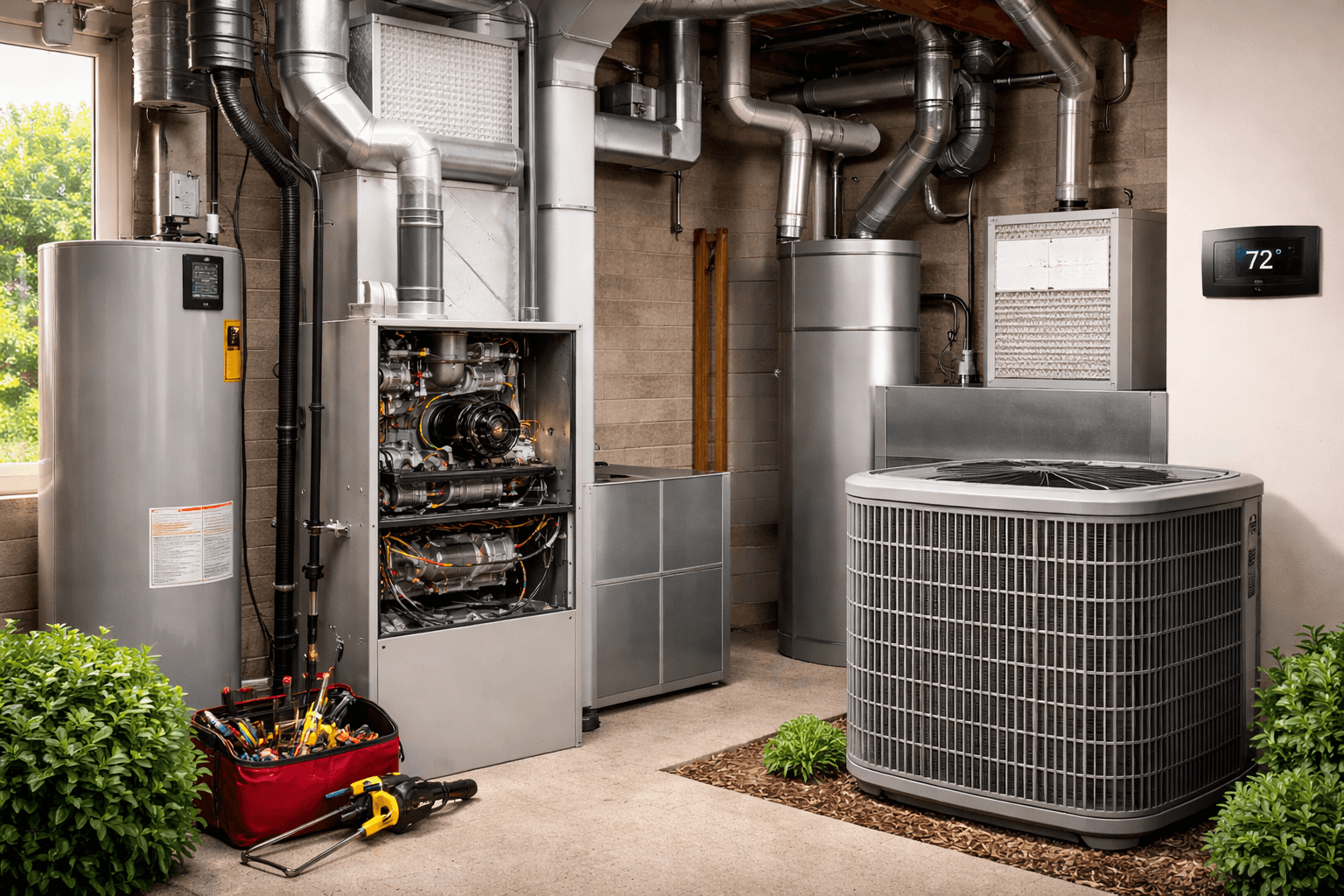




Key Insights

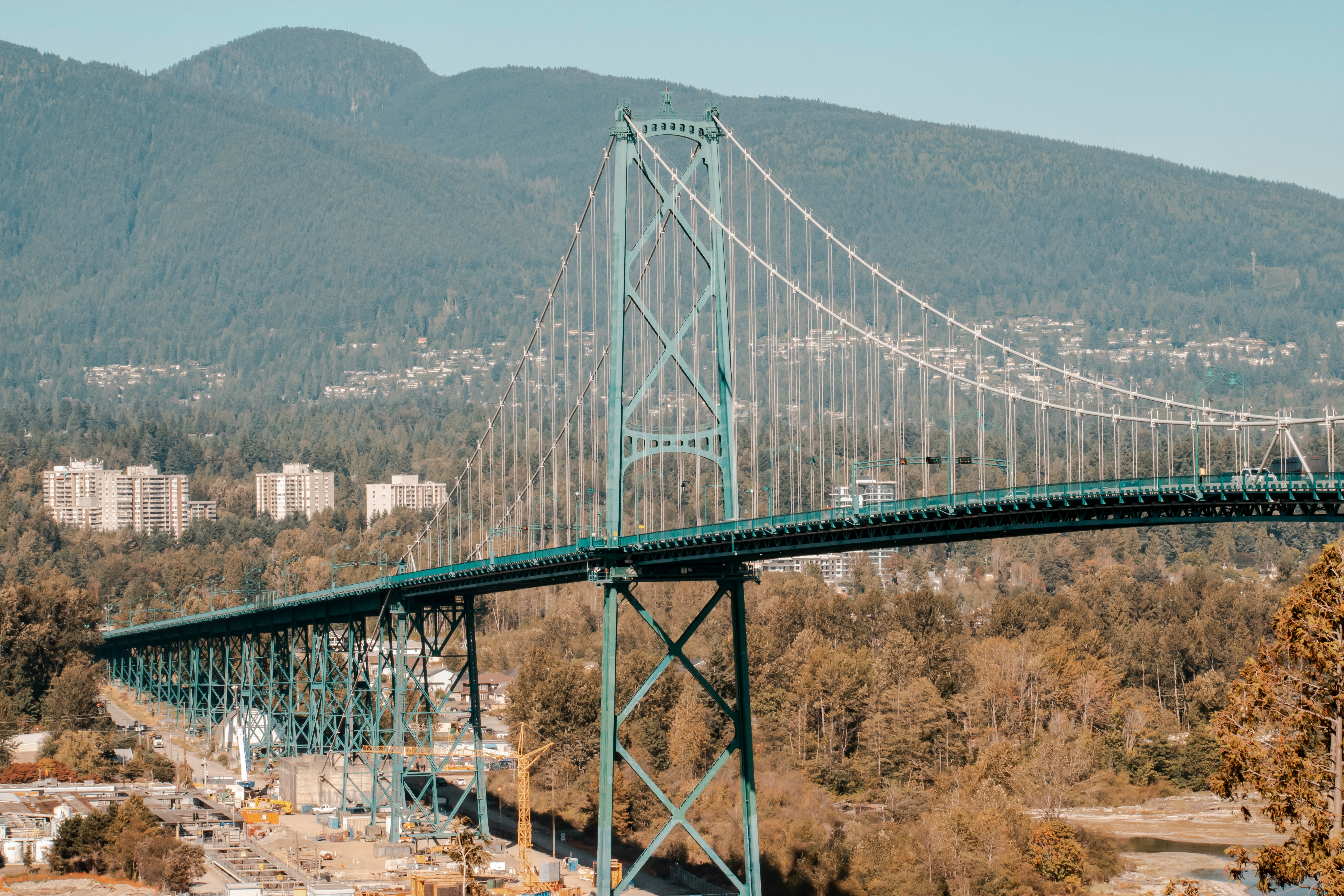


Key Insights

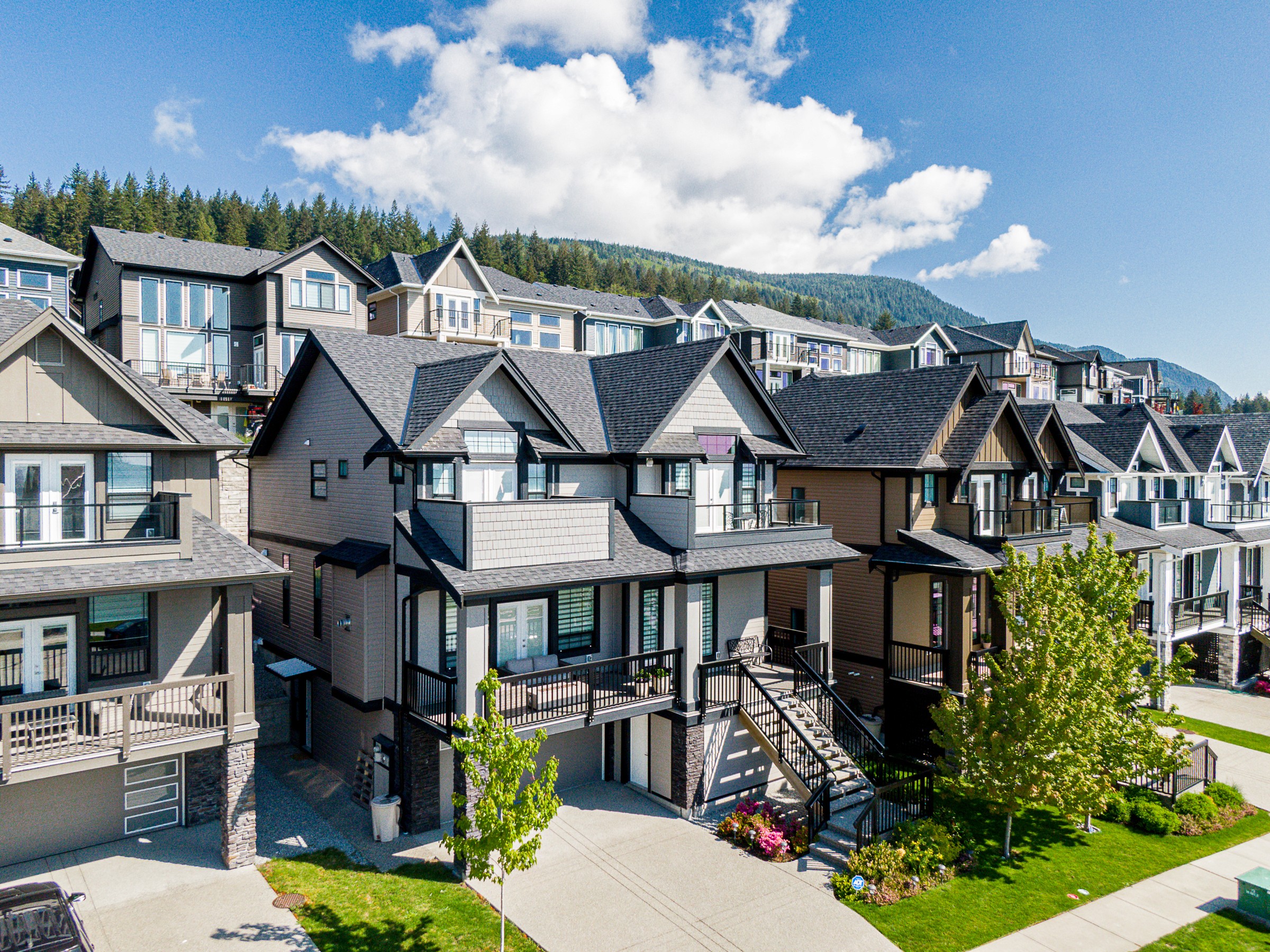

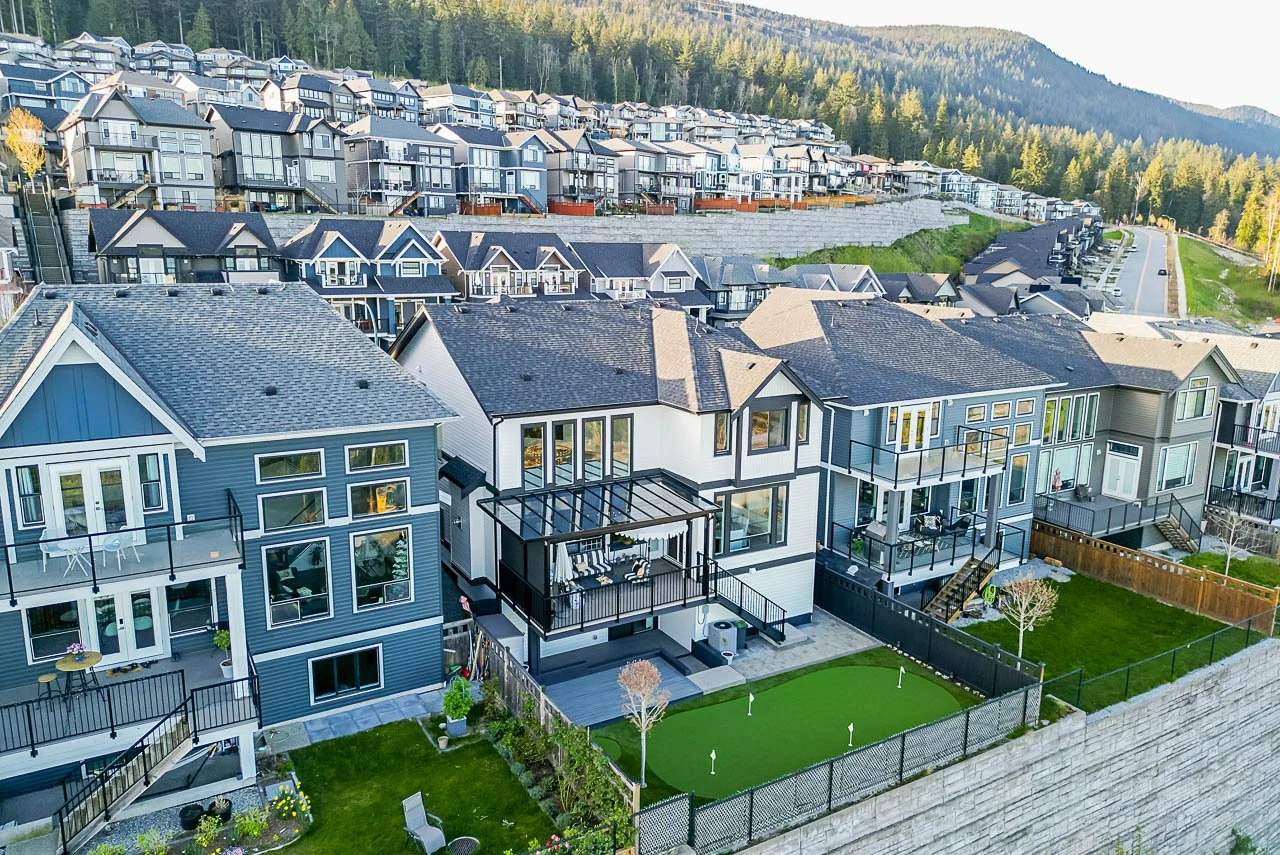




Recent

Recent





Victoria Estate Digest is your Go-to source for In-Depth Real Estate Insights, Market Trends, and Expert Analysis in British Columbia.
We cover everything from Housing Affordability and Foreign Investment to Luxury Properties and Emerging Market Opportunities.
Whether you're a Buyer, Seller, or Investor, we provide the Research and Knowledge you need to navigate BC’s ever-changing Real Estate Landscape.